


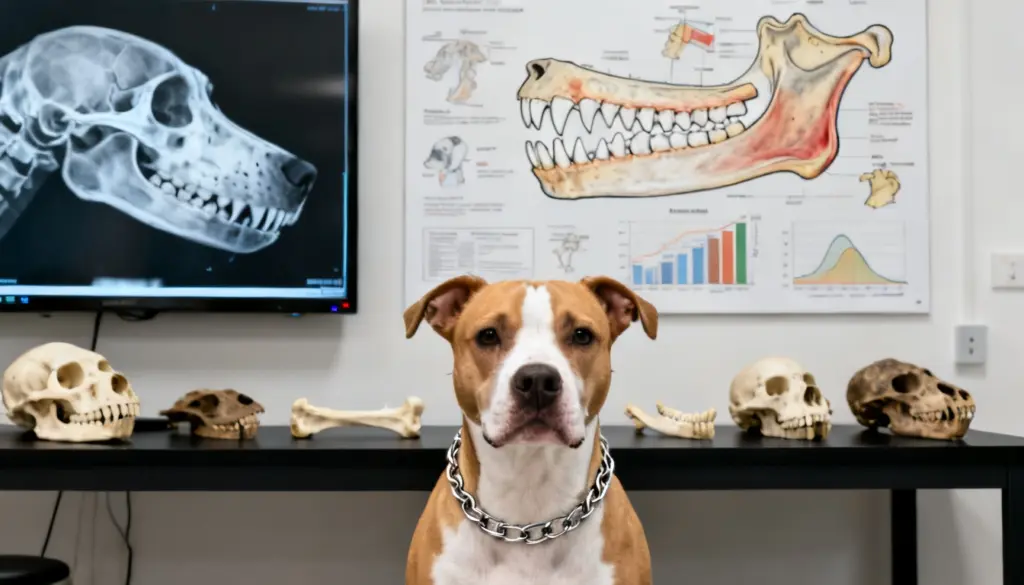
Pit bull bite force is one of the topics I get asked about most, usually right after someone has seen a headline number tossed around online with total confidence.
I agree the confusion is real: PSI figures and claims about locking jaws get repeated as fact when the evidence is far shakier than most articles let on.
Having spent years talking with veterinarians and trainers about how dogs are studied, I want to walk through what the commonly cited numbers mean, where the 235 PSI figure comes from, how pit bulls compare with other breeds, and what real bite data does and does not tell us.
How Strong Is a Pit Bull’s Bite?
A pit bull’s bite force is commonly estimated at around 235 pounds per square inch. Still, that number should be treated as a rough estimate rather than a scientifically confirmed average for every dog carrying the label.
“Pit bull” is also an umbrella term covering several breeds and mixed dogs with similar physical traits, so bite strength can already differ widely based on a dog’s size, skull shape, jaw muscles, age, health, and effort during a bite.
Pit bulls have strong jaws for a medium-sized dog. Still, they do not have the strongest bite among domestic breeds, and PSI alone cannot reliably predict how dangerous any individual dog may actually be.
How Is Bite Force Measured?
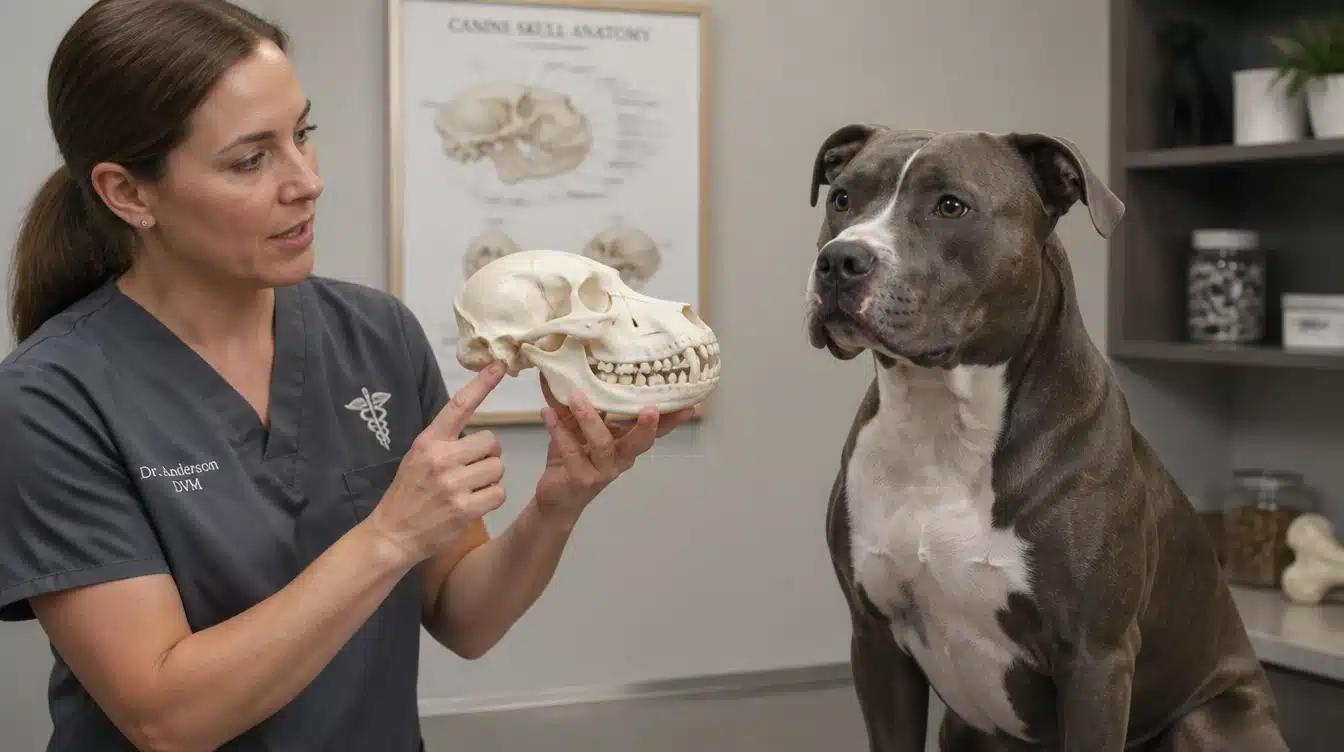
Researchers use a few approaches to study bite force, and the gaps between them explain much of the online disagreement.
1. Pressure Sensors
This method uses a dog biting a padded sleeve or transducer that records the force produced during that attempt.
It has been used in studies involving working breeds such as German Shepherds and Belgian Malinois, trained to bite on command.
The main limitation is motivation: a dog may not bite with full effort during a test, so the recorded number reflects a controlled attempt rather than the maximum force that dog could theoretically produce in a real situation.
2. Computer Models
Here, researchers estimate bite force mathematically using skull shape, jaw-muscle mass, and bone structure, without recording an actual bite.
It is the same general technique used to estimate the bite strength of extinct animals such as Tyrannosaurus rex, where direct measurement is impossible.
This approach can account for anatomy that live testing might miss. Still, it produces a theoretical maximum rather than a real-world result, which is one reason model-based numbers do not always match figures gathered from live dogs.
3. Skull Measurements
This method calculates potential bite force from skull and jaw anatomy alone, using measurements like skull width, muzzle length, and estimated muscle attachment points.
It overlaps somewhat with computer modeling but relies more on direct physical measurement of a specimen than on a full mechanical simulation.
Like the other methods, it predicts what a dog could theoretically produce rather than measuring an actual bite, and small differences in how a skull is measured can shift the estimate noticeably.
What the Bite Data Actually Shows
Beyond PSI, most searchers want real bite and attack numbers, and the honest answer is that the data exists but is hard to interpret.
Public health estimates put U.S. dog bites at roughly 4.7 million per year, with fatalities varying widely by year, from the low dozens up past 100 in recent CDC counts.
Health authorities stopped tracking fatal bites by breed some time ago, noting there is no reliable way to know how many dogs of each breed exist and that breed is hard to identify by sight.
Visual guesses disagree with DNA results at rates that swing widely, and most attacks share preventable, non-breed factors instead of one cause tied to a label.
Where Does the 235 PSI Figure Come From?
The widely repeated 235 PSI figure does not come from one large, controlled, peer-reviewed study built specifically around pit bulls.
Online estimates combine skull-based calculations, small bite-meter demonstrations, and numbers repeated across secondary articles until they sound more certain than the evidence actually supports.
One frequently cited source is a televised bite-pressure demonstration featuring a wildlife expert, in which the pit bull tested reportedly produced less pressure than some other dogs measured that same day.
A single dog’s result in a one-off demonstration cannot represent an entire breed. Once that number appeared in one article, it got copied into dozens more, each treating the last article as its source.
Pit Bull Bite Force vs. Other Breeds
Here is how commonly cited pit bull bite-force estimates line up against other breeds, plus two reference points from outside the dog world for scale, since figures vary by source and method.
| Breed | Approximate Bite Force (PSI) |
|---|---|
| Crocodile (for scale) | ~3,700 |
| Kangal | ~700-743 |
| Cane Corso | ~700 |
| Dogue de Bordeaux | ~556 |
| Rottweiler | ~328 |
| Siberian Husky | ~320 |
| German Shepherd | ~238-291 |
| American Pit Bull Terrier | ~235-330 |
| Average domestic dog | ~230-270 |
| Human | ~120-140 |
These numbers come from different sources and testing conditions, so treat them as general reference points for comparison rather than fixed, scientifically standardized measurements that apply to any individual dog you meet.
What Does PSI Actually Measure?
PSI stands for pounds per square inch, and it measures pressure rather than total force, so a higher figure does not automatically mean more force overall. The term also gets misused often in casual writing about dog bites.
A few things PSI does not tell you, despite how often it gets treated as a complete answer:
- The total force behind an entire bite
- How severe an injury will be
- Anything about a dog’s temperament or likelihood to bite
- A universal value shared by every dog of a type
Keeping these limits in mind helps you read claims with caution instead of taking one number at face value.
What Affects Bite Severity?
PSI is only one piece of a much larger picture, and arguably not the most important one for real-world injury outcomes. Severity typically comes down to:
- Bite style, since sustained shaking can cause more damage than a quick snap regardless of PSI
- The dog’s size and weight, since larger dogs can create deeper wounds
- The age and size of the person bitten, since children and older adults face greater risk
- Training and socialization, which affect bite risk more than breed alone
- The circumstances of the bite, since fear or a perceived threat can trigger it
- The number and location of bites, since a single bite and repeated bites carry different risk
None of these factors depend on breed labels, which is why the same PSI figure can describe two very different real-world outcomes depending on the exact situation surrounding a bite.
Do Pit Bulls Have Locking Jaws?
No dog breed, including pit bull-type dogs, has a special anatomical mechanism that locks the jaw in place.
What people describe as a locked jaw is simply a strong, sustained grip, which comes down to muscle endurance and determination rather than any unique skeletal feature.
Veterinary anatomists who have examined pit bull skulls and jaw structure directly have found nothing that sets them apart from other dogs of similar size.
The myth persists partly because pit bulls are strong, muscular dogs capable of holding on during play, work, or a fight, and that visible strength gets mistaken for a mechanical feature rather than ordinary canine anatomy paired with real determination.
Bite Force Isn’t Aggression
It is easy to assume that a dog capable of a strong bite must also be more likely to use it, but bite force and behavioral aggression are separate traits shaped by different factors. Veterinary and public-health organizations are consistent that predicting aggression from breed alone is not supported by evidence.
What actually predicts bite risk far more reliably than breed:
- A dog’s individual bite or growl history
- Overall health and pain levels
- Supervision and management around people
- The specific circumstances of an interaction
Many pit bull owners describe their dogs as affectionate and responsive to training, while also recognizing that these strong dogs need real exercise and consistent boundaries at home.
Common Myths About Bite Force
Claims about locking jaws and exceptional bite strength are still widely repeated, but the evidence does not support most of them, so here is where belief and fact part ways.
| Common Myth | What the Evidence Says | Important Context |
|---|---|---|
| Pit bulls have locking jaws | No locking mechanism exists | Gripping is behavior, not anatomy |
| Pit bulls bite harder than every dog | Larger breeds often rank higher | PSI doesn’t predict aggression |
| All pit bulls have the same bite force | Pressure varies by size and effort | “Pit bull” covers several breeds |
| Pit bulls are naturally aggressive | Breed alone can’t predict behavior | Training matters more than breed |
These distinctions matter because pit bull bite behavior cannot be explained through jaw myths or PSI rankings alone, no matter how confidently claims get repeated across other websites and forums.
Final Thoughts
After digging through testing methods, incident data, and the myths around pit bull bite force, my honest takeaway hasn’t changed: no single PSI number tells you how dangerous a dog will be.
The commonly cited 235 to 330 PSI range is a starting point, not a scientific verdict, and it says nothing about temperament or the circumstances behind a real bite. Health, socialization, and supervision shape actual risk far more than one repeated statistic.
If you are considering a pit bull-type dog for your family or trying to separate fact from noise online, treat bite force as one small piece of a bigger decision.
Share your own experience with pit bull-type dogs in the comments below.
Frequently Asked Questions
Can Two Pit Bulls from The Same Litter Have Different Bite Force?
Yes. Littermates can grow to different adult sizes and develop different jaw and skull proportions, and both affect the force a dog can produce. Genetics set a range, but individual growth still creates real differences within the same litter.
Do Bite Force Numbers Affect Dog Insurance or Legal Cases?
Some insurers and legal proceedings reference bite force or breed reputation when assessing risk or liability, though practice varies. Individual bite history and local regulations tend to carry more weight than a single PSI figure.
Why Do Some Websites List Pit Bull Bite Force Over 300 PSI?
Higher figures often come from broader estimate ranges, less rigorous testing methods, or simple repetition of unverified numbers across sites. Once a large figure appears on one page, it tends to get copied elsewhere without anyone rechecking the source.