You love your dog like family, so when something goes wrong, even small decisions can feel overwhelming.
A sudden illness, something they shouldn’t have eaten, or a messy wound and panic sets in fast.
In those moments, quick home remedies often come to mind, and one common question surfaces: is hydrogen peroxide safe for dogs?
It sounds simple, almost harmless, sitting there in your medicine cabinet. But is it really the solution you hope for, or could it do more harm than good?
As a veterinarian, I’ve taken calls from panicked owners who already gave their dog hydrogen peroxide before dialing in, sometimes with the right instinct, sometimes not.
In this blog, you will learn when vets may suggest it, when to avoid it, what risks to watch for, and why a vet call should always come first.
Why Do People Use Hydrogen Peroxide for Dogs?
The main reason dog owners reach for hydrogen peroxide is to make their dog vomit after it eats something harmful, such as a grape, certain medications, or a piece of xylitol-containing gum.
The logic makes sense: if the stomach hasn’t had time to absorb much, getting it out fast seems like the right call.
Knowing the signs of poisoning in dogs before you act can help you make calmer, more informed decisions in those first critical minutes.
A secondary reason people use it is wound cleaning. The fizzing action feels like it’s doing something, and for years, it was a go-to first-aid staple.
I’ve seen owners use it routinely on small cuts, assuming it’s harmless, only to wonder why the wound is taking longer to heal than expected.
The tissue damage is subtle but real, and it adds up with repeated applications.
Is Hydrogen Peroxide Safe for Dogs?
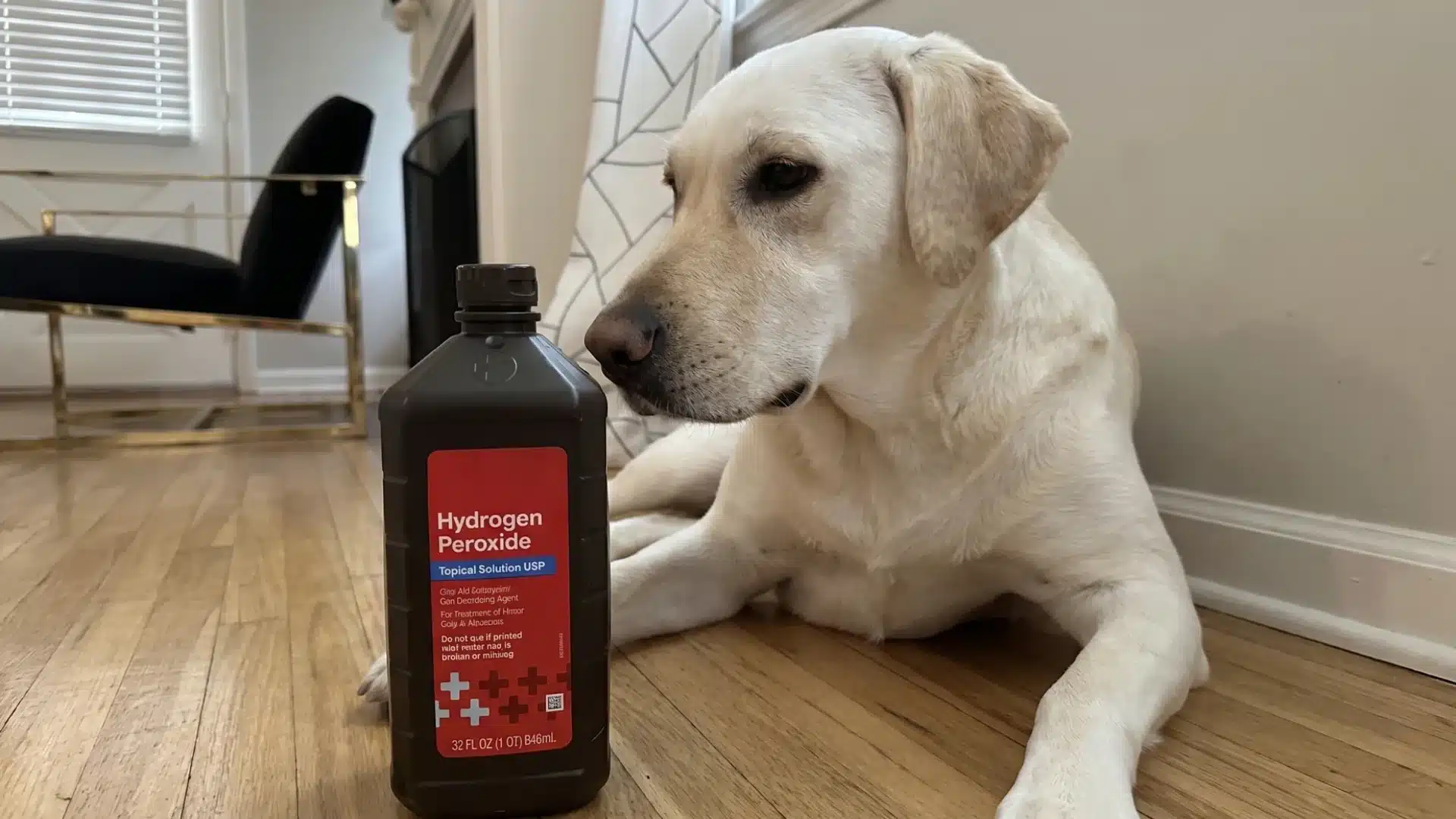
Hydrogen peroxide is sometimes safe for dogs, but only when used with proper caution and vet guidance. It is not a general treatment for every poisoning scare, wound, or stomach issue.
In some cases, a vet may recommend a 3% hydrogen peroxide solution to help induce vomiting after a dog swallows something harmful.
This is usually done only when the substance is safe to bring back up, and the timing is right.
It should never be used for sharp objects, chemicals, oils, or if the dog is weak, unconscious, or having trouble breathing.
The wrong dose can irritate the stomach, cause repeated vomiting, or lead to more serious problems.
Before giving anything, call your vet or a pet poison helpline so they can guide you based on your dog’s size, health, and what was swallowed.
Risks and Side Effects of Hydrogen Peroxide for Dogs
Even though it is used in some cases, hydrogen peroxide can cause serious side effects if not handled carefully or given in the wrong situation.
Emergency animal hospitals like DoveLewis explain why vets advise against it for most situations. The side effects are predictable and sometimes serious.
- Stomach irritation: It can irritate the stomach lining, leading to discomfort, drooling, and repeated nausea that may last longer than expected.
- Esophagus irritation: As the liquid comes back up, it can inflame the throat and esophagus, causing pain, gagging, and difficulty swallowing.
- Ulcers: Frequent or incorrect use may damage internal tissues, increasing the risk of painful ulcers in the stomach or digestive tract.
- Too much vomiting: Instead of controlled vomiting, it can trigger excessive episodes, which may lead to dehydration and weakness.
- Aspiration risk: Flat-faced breeds like Bulldogs, French Bulldogs, and Pugs face a higher risk of aspiration due to their compressed airway anatomy, which makes vomiting more dangerous for them specifically.
When Might a Vet Consider Hydrogen Peroxide for Dogs?
There is a narrow window where a vet may give the go-ahead to use hydrogen peroxide. All of the following conditions must apply at once, not just one or two.
- The dog must have swallowed something harmful within the last 30 to 60 minutes.
- The substance must be safe to vomit back up, meaning it is not a corrosive chemical, sharp object, petroleum product, or anything that causes more damage on the way back up.
- The dog must be alert, standing, and able to swallow normally. And the concentration must be exactly 3%, the standard drugstore variety.
On dosing, vets typically cite approximately 1 teaspoon (5 ml) per 5 lbs of body weight, with a maximum of 3 tablespoons regardless of size.
Detailed guidance from Garden State Veterinary Service on hydrogen peroxide emergencies in dogs reinforces that dosing must always be confirmed by a professional, not estimated at home.
If vomiting doesn’t occur within 15 minutes of the first dose, do not give a second dose without speaking to a vet first.
In my experience, the cases where this goes smoothly are the ones where the owner called before acting. The cases where it gets complicated are usually the ones where someone guessed the dose or waited too long.
Hydrogen Peroxide for Dogs: Real User Experiences
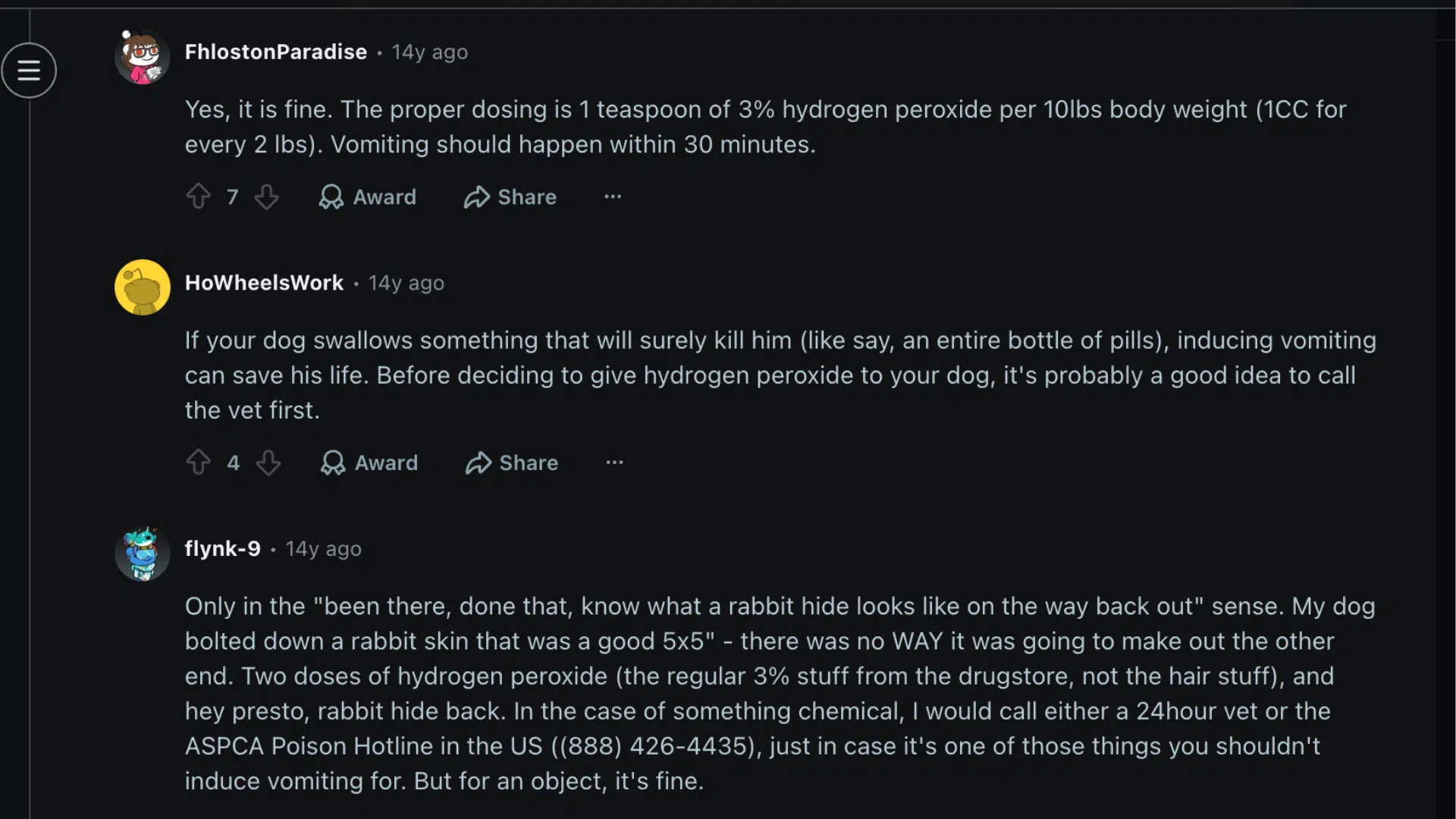
Reddit users often describe hydrogen peroxide for dogs as something they would only use in urgent situations, especially when a dog has swallowed something dangerous.
Several users mention that vets may recommend 3% hydrogen peroxide, with dosing based on body weight, and that vomiting is usually expected within about 30 minutes.
One person shared that inducing vomiting could be life-saving if a dog eats something extremely harmful, like a large amount of medication, but they still stressed calling a vet first.
Another user said their vet suggested pouring peroxide over bread to make it easier for the dog to take.
Overall, these reviews show one clear theme: hydrogen peroxide may be helpful when used correctly, but the amount, timing, and vet guidance matter most.
Substances You Should NOT Induce Vomiting For
Not every toxin should come back up, as some substances can burn, tear, or enter the lungs during vomiting and cause serious harm.
Contact a vet, a nearby emergency clinic, or a pet poison helpline like ASPCA Animal Poison Control Center at (888) 426-4435 as soon as possible for accurate guidance.
- Caustic chemicals: Bleach, drain cleaners, and similar products can burn the throat, mouth, and esophagus if vomited back up.
- Petroleum products: Gasoline, motor oil, paint thinner, and similar liquids carry a high aspiration risk and can enter the lungs.
- Sharp objects: Bones, broken glass, needles, or sharp plastic pieces can tear the throat, esophagus, or stomach lining.
- Serious symptoms: Never induce vomiting if your dog is unconscious, seizing, already vomiting, weak, or struggling to breathe.
- Delayed ingestion: If more than 2 hours have passed, the substance may have moved beyond the stomach, making vomiting unsafe or ineffective.
Safer Alternatives for Cleaning Minor Dog Skin Issues
When dealing with minor cuts or skin irritation, gentler options can clean the area effectively without causing the damage that harsher solutions might.
- Saline rinse: A mild and safe option that helps flush out dirt and debris without irritating the skin or slowing the natural healing process.
- Warm water: Simple rinsing with clean, lukewarm water can remove surface dirt and is often enough for very minor issues.
- Vet-approved antiseptic wash: Specially formulated products designed for pets can clean wounds, support healing, and reduce the risk of infection.
- Hypochlorous acid sprays: These are gentle, non-toxic solutions that help disinfect wounds without causing stinging or tissue damage.
- Diluted chlorhexidine solution: Commonly recommended by vets, it helps control bacteria and is safe for regular use when properly diluted.
For anything more than a superficial scrape, I always tell owners: if you’re not sure whether it needs more than a rinse, it probably does. A quick vet visit is faster and cheaper than treating an infected wound a week later.
Conclusion
When asking is hydrogen peroxide safe for dogs, the answer is not a simple yes or no. It can be useful in very specific situations, but it also carries real risks if used incorrectly.
Knowing when it helps and when it harms makes all the difference in protecting a dog’s health.
As covered in this guide, hydrogen peroxide for dogs may sometimes be used to induce vomiting, but only with the right 3% solution, correct weight-based dose, and expert guidance.
It can become unsafe when used for the wrong toxin, given too often, or used without knowing the risks.
Always consider breed, symptoms, and the substance involved before taking action, and when in doubt, professional guidance is the safest route.
Have you ever had to handle a poisoning scare with your dog? Share your experience or questions in the comments below.
Frequently Asked Questions
Can Hydrogen Peroxide Make a Dog’s Fur Lighter?
Yes, it may lighten or discolor fur if it sits on the coat for too long. It can also dry out the skin, so it should not be used as a grooming product.
Can Puppies be Given Hydrogen Peroxide?
Puppies are more sensitive than adult dogs, so never give them without direct vet guidance. Their smaller size makes dosing mistakes more dangerous.
How Should Hydrogen Peroxide Be Stored Around Pets?
Keep it sealed, upright, and out of reach in a closed cabinet. Dogs may chew on bottles, and accidental ingestion can cause irritation or vomiting.