
Finding chocolate wrappers near your dog can be immediately concerning. Even when your dog appears normal, waiting for vomiting, shaking, or other symptoms may delay necessary care.
During more than 15 years of veterinary practice in Minnesota, I have learned that every chocolate exposure needs to be assessed using the same key details.
Your dog’s weight, the chocolate type, the amount swallowed, and the product’s caffeine and theobromine content all affect the risk. Dark chocolate, baking chocolate, and cocoa powder can cause poisoning in much smaller quantities than milk chocolate.
How much chocolate can a dog eat depends on these factors. Remove the remaining product, save the packaging, estimate the missing amount, and call your veterinarian or animal poison control promptly.
Urgent safety note: If your dog has eaten chocolate, contact your veterinarian or an animal poison service now. Online information cannot calculate your dog’s individual risk or confirm that monitoring at home is safe. |
Can Dogs Eat Chocolate?
Dogs should not be intentionally given chocolate. Chocolate contains theobromine and caffeine, which can affect a dog’s digestive system, heart, and nervous system.
The risk depends on your dog’s weight, the product type, cocoa concentration, amount swallowed, additional ingredients, and time since ingestion.
Dark chocolate, baking chocolate, and cocoa powder can cause poisoning in much smaller quantities than milk chocolate. White chocolate contains little theobromine, but its fat and sugar may still cause vomiting, diarrhea, or trigger a pancreatitis flare-up in some dogs.
If your dog ate chocolate, save the packaging and contact your veterinarian or animal poison control for a case-specific assessment.
What to Do Right Away
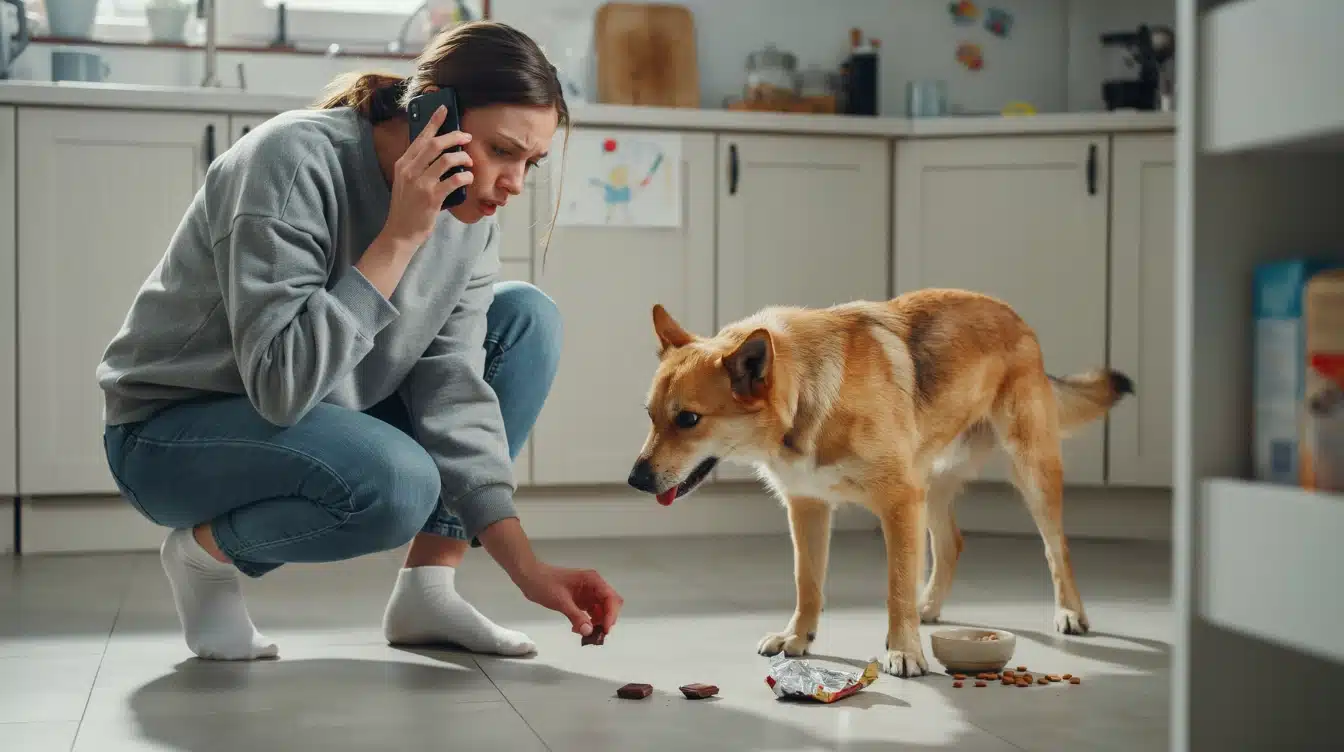
Prompt action matters even when your dog appears normal. I recommend gathering the following information before calling, but do not delay the call if you cannot find all the details.
- Remove the remaining product. Move the chocolate and packaging out of your dog’s reach.
- Save the packaging. Keep the wrapper or take a clear photo of the ingredient list and product label.
- Estimate the missing amount. Check how much chocolate may have been eaten and whether any pieces remain.
- Note the time. Record when the exposure happened or the last time you saw the product untouched.
- Find your dog’s weight. Use a current weight or the most recent figure from your veterinarian.
- Check for other hazards. Look for raisins, xylitol, macadamia nuts, coffee, espresso, or missing wrappers.
Call for professional guidance. Contact your veterinarian, the ASPCA Poison Control Center at 888-426-4435, or the Pet Poison Helpline at 855-764-7661. Consultation fees may apply.
Do not induce vomiting or give hydrogen peroxide, salt, activated charcoal, food, or medication unless a veterinarian or poison specialist provides case-specific instructions.
How Much Chocolate Can a Dog Eat?
There is no single safe amount for every dog. I assess the total methylxanthine dose, mainly theobromine and caffeine, relative to the dog’s body weight.
According to FDA chocolate data, approximate theobromine content varies by chocolate type:
| Chocolate Type | Approximate Theobromine |
|---|---|
| Milk chocolate | 57 mg per ounce |
| Semisweet chocolate chips | 136 mg per ounce |
| Dark chocolate with 70%–85% cacao | 227 mg per ounce |
| Unsweetened baking chocolate | 364 mg per ounce |
Mild signs may occur at about 9 mg of theobromine per pound of body weight, while higher doses can cause heart or nervous-system problems. Product concentrations and individual responses vary, so I do not recommend using this table to decide that an exposure is safe.
Give the packaging, amount, time, and your dog’s weight to a veterinarian or poison specialist. These details allow a more dependable case-specific calculation.
Riskiest Chocolate Types
Chocolate products contain different amounts of theobromine and caffeine. In general, darker and more concentrated cocoa products pose a greater risk in smaller quantities.
- Cocoa powder and unsweetened baking chocolate: These contain high concentrations of methylxanthines and can cause poisoning in relatively small amounts.
- Dark or semisweet chocolate: These products present a high risk, but the cocoa concentration varies between brands.
- Milk chocolate: Milk chocolate contains less theobromine but can still cause poisoning when a dog eats enough.
- White chocolate: White chocolate contains little theobromine, but its fat and sugar may cause vomiting, diarrhea, or pancreatitis.
I recommend checking the exact product label rather than judging risk by color alone, since recognizing early poisoning symptoms matters more than the chocolate’s color when you’re deciding how urgently to call. Cocoa percentage, serving size, fillings, and additional ingredients can change the response.
Symptoms to Watch For

Your dog may appear normal immediately after eating chocolate. Signs may begin within about 2 to 12 hours and can last longer in severe cases.
Early signs may include:
- Vomiting
- Diarrhea
- Restlessness or pacing
- Increased thirst
- Increased urination
- Fast breathing
- Heavy panting
- An increased heart rate
More serious signs include:
- An irregular heartbeat
- Loss of coordination
- Muscle tremors
- Seizures
- Marked weakness
- Collapse
- Fever
- Coma
I recommend calling based on the exposure rather than waiting for these signs. A symptom-free period immediately after ingestion does not confirm that your dog is safe.
When to Seek Emergency Care
A veterinarian or poison specialist can assess an exposure before symptoms begin. I recommend calling after ingestion of dark chocolate, baking chocolate, cocoa powder, an unknown product, an uncertain amount, or chocolate containing another harmful ingredient.
Go directly to an emergency veterinary hospital if your dog has:
- Tremors or seizures
- Collapse or marked weakness
- A rapid or irregular heartbeat
- Repeated vomiting
- Severe restlessness
- Loss of coordination
- Trouble breathing
- Symptoms that are worsening quickly
If you cannot reach a veterinarian or poison specialist and your dog is developing symptoms, leave for the nearest emergency hospital. Bring the packaging and call the hospital while traveling when another person can make the call safely.
What Treatment May Involve
Veterinary treatment depends on the product, calculated dose, time since ingestion, and your dog’s condition. I cannot determine the appropriate treatment from the amount of chocolate alone.
A veterinarian may induce vomiting when doing so is medically appropriate, following the same careful process used for other toxic exposures. Treatment may also include activated charcoal, IV fluids, nausea control, heart monitoring, and medication for abnormal heart rhythms, tremors, or seizures.
Some dogs require hospitalization for continued observation. Dogs with smaller exposures or mild signs generally have a good prognosis when treated promptly, while seizures, collapse, abnormal heart rhythms, and other severe signs create greater concern.
Treatment disclaimer: The procedures described here are performed or directed by veterinary professionals. They are not home-treatment instructions, and the appropriate response depends on the exposure and your dog’s condition. |
Other Risky Ingredients
Chocolate products may contain ingredients that create separate poisoning risks. I recommend giving the veterinary team the complete ingredient list instead of reporting only the chocolate type.
- Xylitol: Some sugar-free chocolate and baked goods contain this sweetener. The FDA xylitol warning advises immediate veterinary or poison-control contact after suspected ingestion.
- Raisins: Chocolate-covered raisins, trail mix, and baked products can create a separate kidney risk, one the FDA lists among common pet hazards alongside chocolate itself.
- Macadamia nuts: These may cause vomiting, weakness, poor coordination, tremors, or overheating, and appear on that same FDA hazard list.
- Coffee or espresso: These ingredients add caffeine to the chocolate exposure.
- Wrappers: Foil, plastic, or paper packaging may create choking or intestinal-obstruction risks.
These ingredients may change the urgency and treatment plan. Keep the product label available when you call.
Preventing Another Chocolate Exposure
Chocolate exposures often happen when food is left on counters, inside bags, or in accessible trash. I recommend treating cocoa powder, baking chocolate, candy, and chocolate-flavored products as items that always require secure storage.
- Store chocolate and cocoa products inside closed cabinets.
- Keep handbags, backpacks, groceries, and gift boxes off the floor.
- Use a secure lid on kitchen and outdoor trash cans.
- Keep dogs away from baking areas and holiday candy displays.
- Ask children and guests not to share food with your dog.
- Check sugar-free products for xylitol.
- Practice a reward-based “leave it” cue.
- Save your veterinarian’s and emergency hospital’s phone numbers.
These habits reduce the chance of another exposure and make it harder for your dog to reach chocolate, wrappers, or baking ingredients.
Final Thoughts
No single amount of chocolate is safe for every dog. When you ask how much chocolate a dog can eat, consider body weight, chocolate type, cocoa concentration, quantity, and any additional ingredients.
Do not wait for symptoms or try to make your dog vomit unless a veterinarian or poison specialist instructs you. Save the wrapper, note when the exposure happened, estimate the missing amount, and call with your dog’s current weight.
If your dog has tremors, seizures, collapse, marked weakness, or an abnormal heartbeat, go to an emergency veterinary hospital immediately.
As a veterinarian, my clearest advice is simple: save both emergency numbers in your phone and act promptly after any uncertain exposure.
Frequently Asked Questions
Can Chocolate Poisoning Cause Dehydration?
Yes. Theobromine and caffeine can increase urination, while vomiting and diarrhea may cause further fluid loss. Dehydration is more likely when signs are severe or prolonged, so a dog showing these changes needs veterinary assessment.
Are Puppies More Sensitive to Chocolate Than Adult Dogs?
Chocolate is dangerous to dogs of every age. Puppies are often smaller than adults, so the same piece can deliver a larger dose for their body weight. Contact a veterinarian or poison specialist for an individual risk assessment.
Are Cacao Nibs Dangerous for Dogs?
Yes. Cacao nibs contain concentrated cocoa solids and can supply substantial amounts of theobromine and caffeine. Risk depends on the product, amount swallowed, and dog’s weight. Contact a veterinarian or animal poison service after any uncertain exposure.
How Long Can Poisoning Signs Continue?
Dogs clear theobromine slowly, and signs can continue for one to three days in severe cases. The duration depends on the dose, treatment, and complications, so affected dogs may require extended veterinary monitoring.