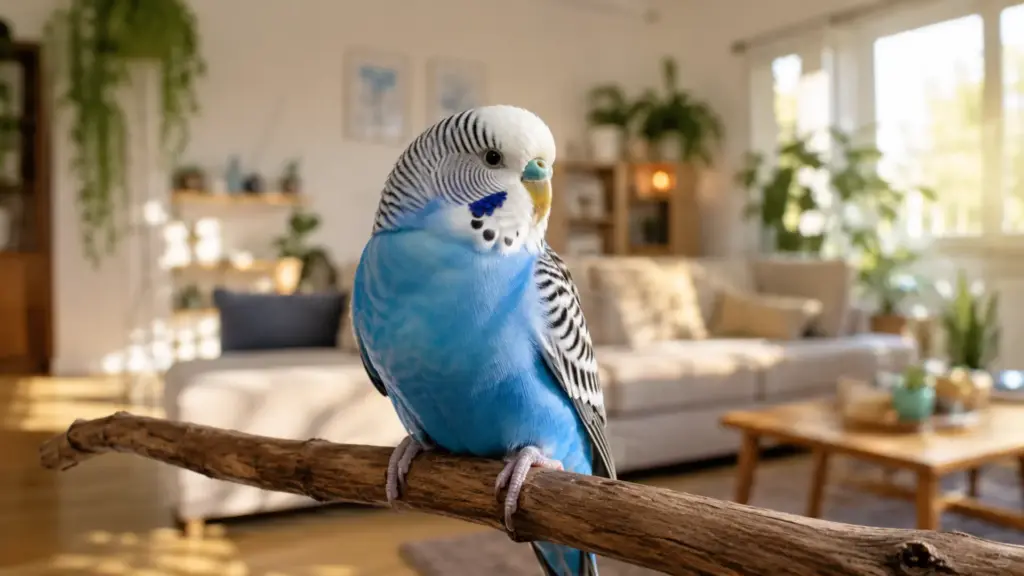
At some point, every budgie owner asks the same question: How long will my bird live?
It’s a question I hear from almost every new budgie owner: Will my little bird be around for a long time? The honest answer is that it depends more on you than on luck.
I once treated a budgie named Archie who was still active and alert at eleven years old.
His longevity came down to simple habits: a balanced diet, daily out-of-cage time, and an owner who paid attention to changes in his behavior and sought care early when something seemed wrong.
More than genetics or luck, those everyday choices often determine how long a budgie lives.
How Long Do Budgies Live: Lifespan by Care and Type
Budgie lifespan varies significantly based on diet, environment, and care. Most pet budgies live between 7 and 12 years under average conditions.
Birds that receive a balanced diet, daily out-of-cage flight time, and regular health monitoring can live 13 to 15 years. American budgies, which are closer to wild Australian stock, typically live 8 to 14 years.
English budgies, bred for size and appearance, often have shorter lifespans of 6 to 9 years due to the effects of selective breeding.
Seed-only diets, limited space, and skipped vet visits reduce life expectancy, while attentive care, social interaction, and a stress-free environment help budgies live longer, healthier lives.
Understanding Budgie Life Stages
A budgie’s life isn’t one long plateau. It moves through distinct phases, and knowing what each one looks like helps you give the right care at the right time.
| Life Stage | Age Range | Key Characteristics | Care Focus |
|---|---|---|---|
| Fledgling to Juvenile | 0–6 months | Personality forms; socialization is critical; striped forehead and dark eyes. | Regular handling: introduce pellets and vegetables early. |
| Young Adult | 6 months–3 years | High energy, vocal, playful, generally healthy. | Establish vet care, varied diet, and ample flight time. |
| Middle Age | 3–7 years | Calmer behavior; often more bonded and personable. | Monitor weight and droppings for early health changes. |
| Senior | 7+ years | Lower energy, more sleep, reduced immune resilience. | Annual vet checks and closer health monitoring. |
American Budgie vs. English Budgie: Does Type Affect Lifespan?
This question comes up often, and the answer is yes, in a meaningful way. Most people don’t realize there are two distinct types commonly kept as pets, and they age quite differently.
The American budgie (also called the standard or Australian budgerigar) is smaller, closer in build to wild budgies, and typically lives 8 to 12 years with good care.
Some reach 15 or beyond. Their constitution tends to be sturdier because the breeding focus has stayed closer to functional health rather than appearance.
The English budgie is noticeably larger, bred primarily for the show bench. The rounder head, fuller feathering, and heavier body come with trade-offs. English budgies typically live 6 to 9 years.
The intensive selective breeding associated with show traits has been linked to weaker constitutions and higher susceptibility to respiratory and genetic conditions.
Neither type is inferior as a pet. English budgies are often calmer and quieter, which suits some households well.
But if longevity is a priority, the standard budgerigar is the safer bet. And regardless of type, the care decisions you make every day still matter more than genetics.
Common Health Problems that Shorten How Long Budgies Live
Understanding what typically goes wrong gives you a real head start. Most of the conditions that cut a budgie’s life short are preventable or manageable when caught early.
Knowing the friendliest types of pet birds is a great start, but understanding their specific vulnerabilities is equally important. Conditions to watch for that shorten how long budgies live:
- Fatty liver disease: The most common diet-related killer in pet budgies. Develops slowly over years on seed-heavy diets. Signs include weight gain, changes in droppings, and reduced activity. Mostly preventable with a balanced diet from the start.
- Tumors: Budgies have a higher tumor rate than most pet birds, particularly kidney and reproductive tumors. They often go undetected until advanced. Regular vet checks with a bird-experienced practitioner are the only reliable way to catch these early.
- Respiratory infections: Budgies are sensitive to airborne toxins and bacterial infections. Discharge around the nostrils, labored breathing, or tail-bobbing while breathing are all signs that something is wrong. Act quickly; respiratory issues escalate fast in small birds.
- Psittacosis (parrot fever): A bacterial infection that can affect budgies and is transmissible to humans in rare cases. Symptoms include lethargy, discharge, and breathing difficulty. Any new bird should be quarantined for at least 30 days before mixing with existing birds.
- Scaly face mites: A parasitic infection that causes crusty, scaly buildup around the beak, eyes, and legs. Easily treated when caught early, but left alone, it causes disfigurement and chronic discomfort.
- Egg binding: It affects female budgies. A stuck egg becomes life-threatening quickly. Females on poor diets or who breed frequently are at higher risk. Any female budgie sitting fluffed at the cage bottom should be seen by a vet the same day.
Disclaimer: This information is for general guidance only. Always consult a licensed avian veterinarian for diagnosis and treatment of any health concerns in your bird.
Budgie Aging Signs Every Owner Should Know

Knowing when your budgie is entering their senior years is something that sneaks up on owners. Budgies typically begin showing aging signs around year eight or nine, though some stay remarkably energetic longer than that.
- Reduced activity: Older budgies sleep more and fly less. This is normal, but a sudden shift in energy can indicate illness rather than age.
- Changes in grip: Weakening foot grip, wobbling on perches, or difficulty holding poses are common in senior birds.
- Feather and cere changes: The cere, the fleshy area around the nostrils, can change color or texture with age, particularly in females. Feathers may lose some sheen.
- Appetite shifts: A gradual decrease in food interest can reflect normal slowing. A sudden drop in appetite is always a reason to call the vet.
- Vocalization changes: Some owners notice a shift in their bird’s call tone as they age. It can be subtle, but owners who know their birds well often pick up on it.
Charlie and the Outliers: How Long Can Budgies Really Live?
Charlie, a budgerigar kept by J. Dinsey in Stonebridge, London, was born in April 1948 and died in June 1977 at 29 years and 2 months. He holds the Guinness World Record for the oldest budgerigar in captivity.
Is that achievable for your bird? Almost certainly not. Charlie is an outlier in the way that 115-year-old humans are outliers.
But the record tells us something useful: the upper ceiling for this species is far beyond what most care guides suggest.
The realistic goal for a well-cared-for budgie is somewhere between 10 and 15 years. A few will push beyond that. The difference between a bird that makes it to 8 and a bird that makes it to 14 is rarely one dramatic decision.
It’s the accumulation of daily choices: what goes in the food bowl, how much time outside the cage, whether a vet visit happened when the bird seemed slightly off.
What the Community Says About Budgie Lifespans
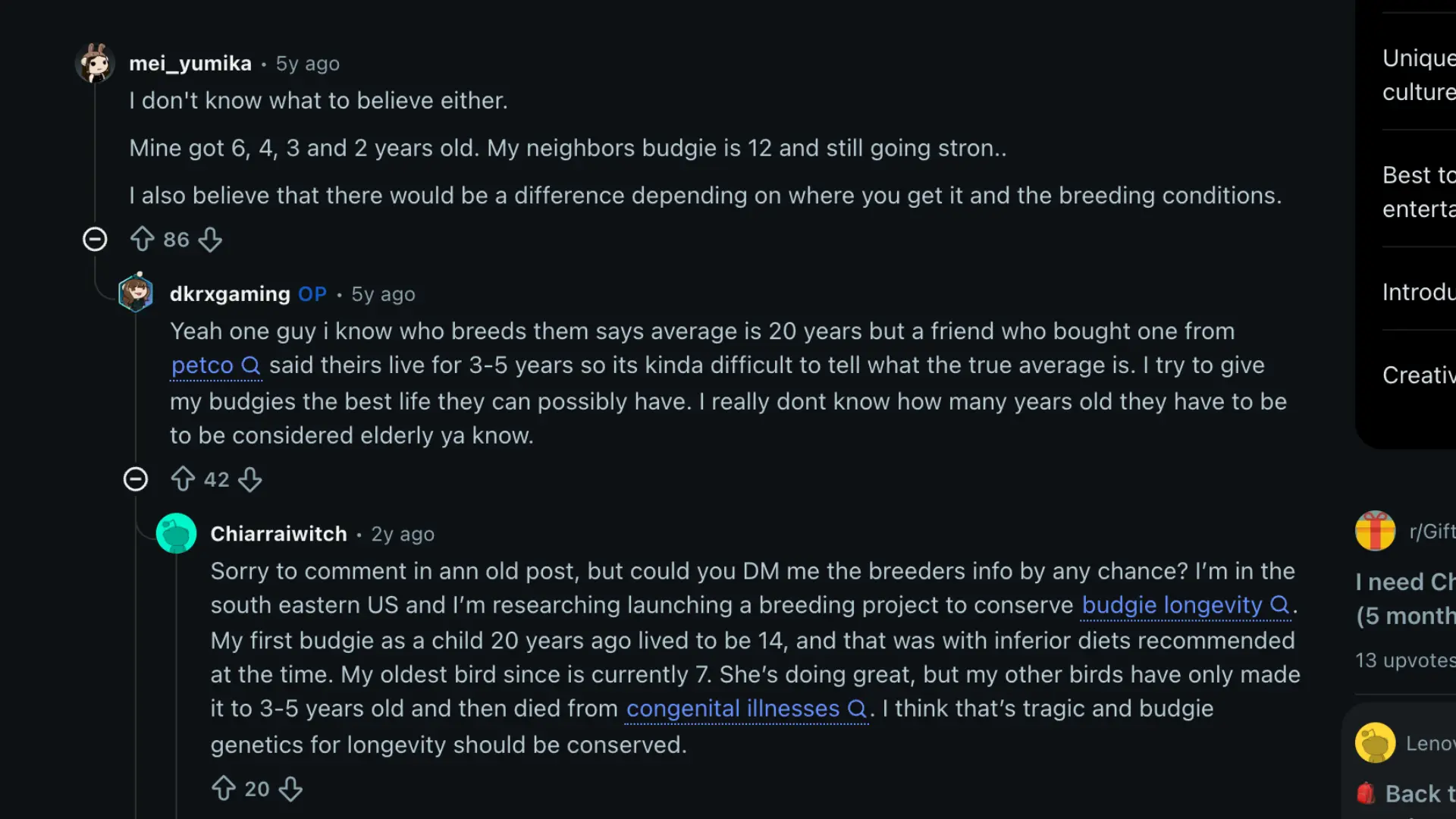
Reddit owners report wide variation in how long budgies live, showing real‑world lifespan differences.
Some have seen budgies live comfortably for 7–12 years with good nutrition, exercise, and attention, and a few exceptional birds have reached 15–20+ years with dedicated care.
Others describe losses at 3–5 years, often tied to genetics, early illness, or poor conditions. Breeder quality and origin affect longevity too, with budgies from responsible breeders sometimes living longer than those from pet shops with unclear lineage.
Owners emphasize that balanced diets, mental stimulation, ample flight time, and vet visits are common factors in longer lifespans, while seed‑only diets or untreated health problems often coincide with early deaths
Household Hazards that Cut Budgie Lives Short
The environment your budgie lives in affects their health in ways that go well beyond food and vet care. This is something I see come up in consultations far more often than owners expect, usually after an incident has already happened.
- Non-stick cookware (PTFE/Teflon): When overheated, these coatings release fumes toxic to birds. Avian vet literature documents rapid death from this exposure. Many budgie owners switch to stainless steel or cast iron entirely.
- Aerosols and sprays: Air fresheners, hairspray, cleaning sprays, and scented candles all present respiratory risks. Budgies have highly efficient respiratory systems that make them far more sensitive than humans or dogs to airborne chemicals.
- Draughts and temperature swings: Budgies tolerate a reasonable temperature range but do poorly with cold draughts. Placing a cage near a frequently opening window or an air conditioning vent can cause stress and respiratory issues over time.
- Stress from isolation: Extended periods without stimulation or company lead to behavioral issues that reflect genuine psychological stress. Feather-plucking in a solo budgie is almost always a signal that something needs to change.
Practical Ways to Help Your Budgie Live Longer
This is the part that actually matters. Knowing the lifespan range is useful; knowing what moves a bird toward the higher end of it is what changes outcomes.
- Swap seed-heavy diets gradually. Don’t pull seeds overnight. Mix increasing amounts of pellets into the seed bowl over several weeks. Add fresh food alongside it. Most budgies come around when they see food consistently there and feel safe eating it.
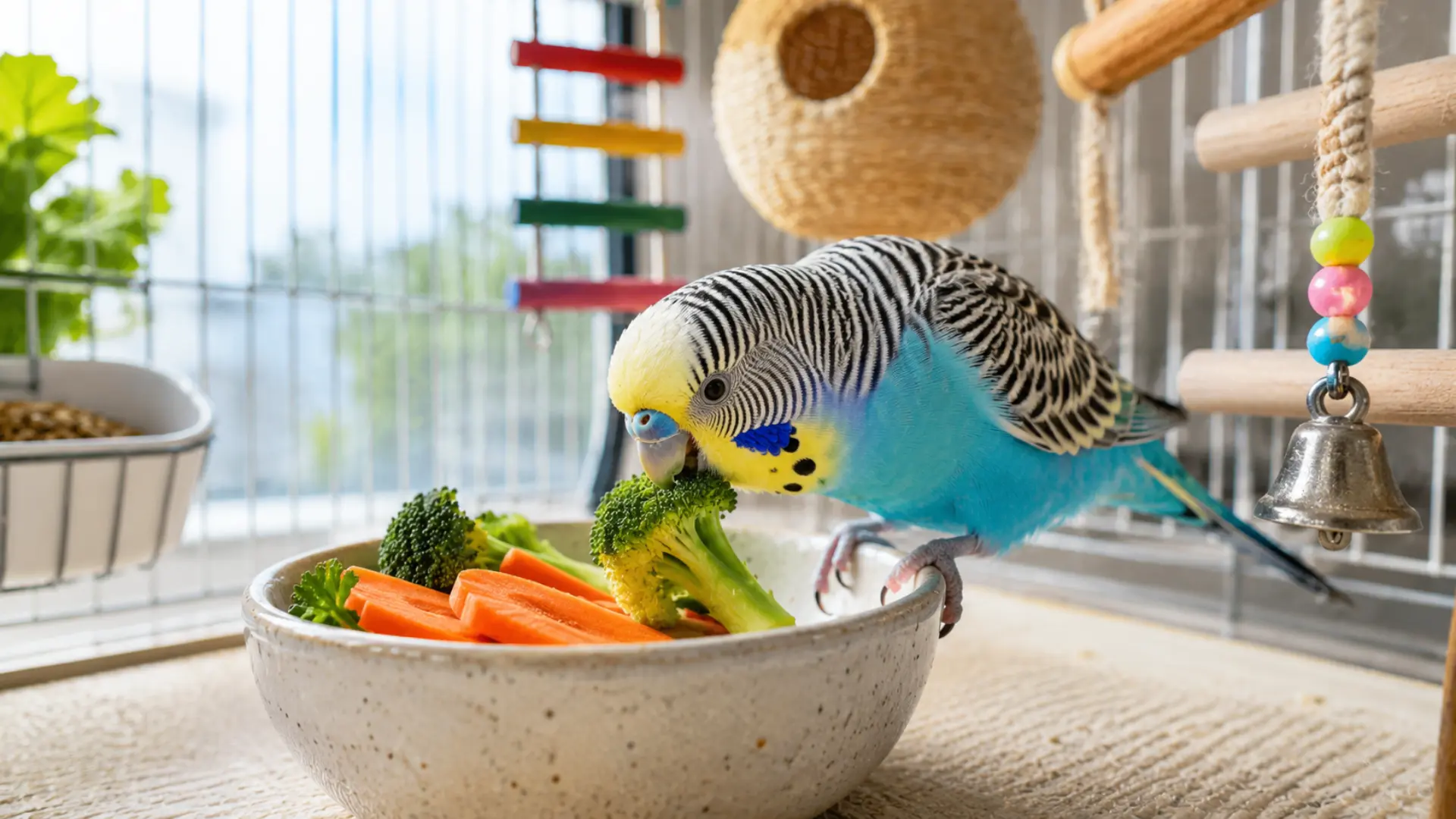
- Offer fresh food daily, even small amounts. Leafy greens, broccoli florets, bell pepper strips, grated carrot. It doesn’t need to be elaborate. Even a small addition over the years makes a measurable difference to liver health and immune function.
- Give real flight time. Out-of-cage time in a bird-safe room, ideally daily, keeps muscles strong and weight healthy. Budgies weren’t designed to sit in a cage all day. The ones that fly regularly just look different from the ones that don’t.
- Find an avian vet before you need one. General practice vets vary widely in bird experience. Locating an avian specialist when your bird is healthy means you’re not scrambling when something goes wrong. A yearly checkup, including basic bloodwork after age five, catches problems while they’re still manageable.
- Keep the environment stable. Dramatic temperature changes, constant household chaos, loud unpredictable noise, and frequent moves all add to chronic stress. Stress is genuinely bad for immune health over time. A calm, predictable home environment costs nothing.
- Consider a companion. A well-matched second budgie provides stimulation your bird can’t get from toys or even from you. Introduction takes patience and should happen gradually, but the payoff in terms of behavior and engagement is real.
Conclusion
Budgies don’t ask for much. A varied diet, a bit of space to fly, a companion to talk to, and an owner who pays attention.
In return, they’ll give you somewhere between seven and fifteen genuinely good years, sometimes more. The community knows this.
The people who’ve loved one of these birds and lost one, and then gotten another, all say the same thing: you don’t expect to feel so much for something that small.
If your budgie is young, you have a real window to get the care right. If they’re getting older, there’s still plenty you can do to make their days better.
Either way, we’d love to hear your story. Drop a comment below and tell us how long your budgie has lived, or what you’ve learned that made a difference. The community learns from real experience more than from any care guide.
Frequently Asked Questions
Do Male and Female Budgies Live Different Lengths of Time?
Not significantly. Females may face reproductive issues such as egg binding, which can affect lifespan, but genetics and overall care have a much greater impact than sex.
Can a Budgie Live Alone and Still Reach a Good Age?
Yes. A single budgie can live a long, healthy life if it receives daily interaction and mental stimulation. Without enough social engagement, loneliness and stress can affect health.
How Can I Tell How Old My Budgie is?
Budgies under four months typically have forehead bars extending to the cere. After their first molt, these bars disappear, and a clear cap develops. Eye color also changes from solid dark to a lighter iris ring as they mature. After one year, age is difficult to estimate without breeder records.