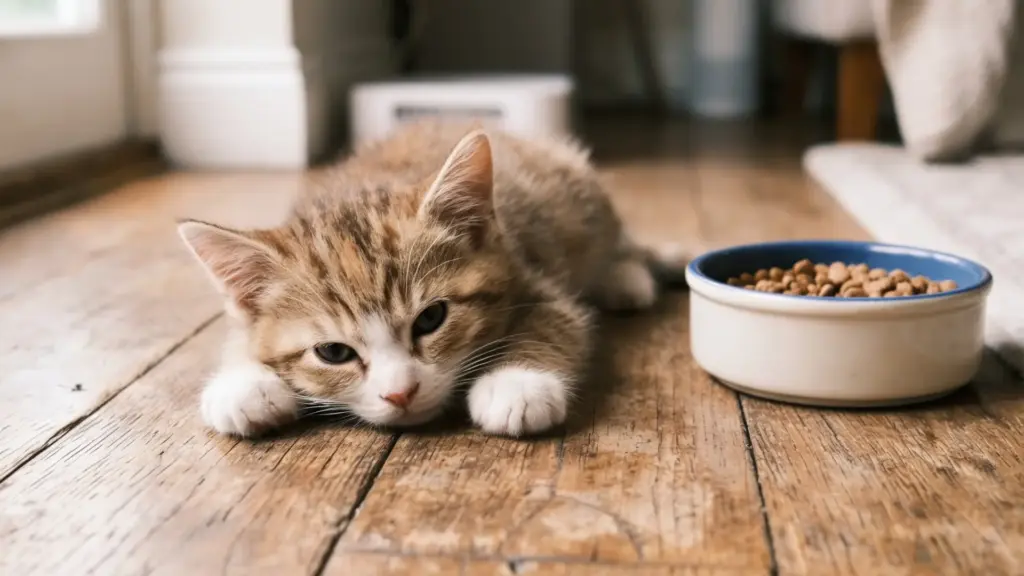
A cat skipping one meal is not always an emergency, but a cat not eating for longer than a day should never be ignored.
Unlike many other animals, cats can become seriously ill after a relatively short period without food, even if they continue drinking water.
If you’ve found yourself wondering “how long a cat can go without eating”, you’re not alone.
Many owners notice a full food bowl, a sleepy cat, and no obvious signs of illness, making it difficult to know whether to wait or act.
The key is understanding what causes appetite loss, how long it is considered safe, and the warning signs that mean your cat needs veterinary care without delay.
The Real Timeline: How Long Can a Cat Survive without Food?
A healthy adult cat with steady access to water can go roughly one to two weeks without eating before starvation itself becomes life-threatening.
That number is often quoted, and it’s technically accurate. It’s also misleading if you read it as permission to relax.
Cats aren’t built like humans when it comes to fasting. Within two to four days of eating little or nothing, a cat’s body starts breaking down fat reserves for energy.
The cat’s liver isn’t equipped to process that much fat at once, and the fat backs up inside liver cells. That’s hepatic lipidosis, and it can spiral fast, sometimes within days rather than weeks.
So while the survival ceiling sits around two weeks, the practical safety window is much shorter.
Most vets agree that 24 hours without food is the point at which it’s worth getting your cat checked, even if she seems otherwise fine.
When a Cat Not Eating Becomes an Emergency?
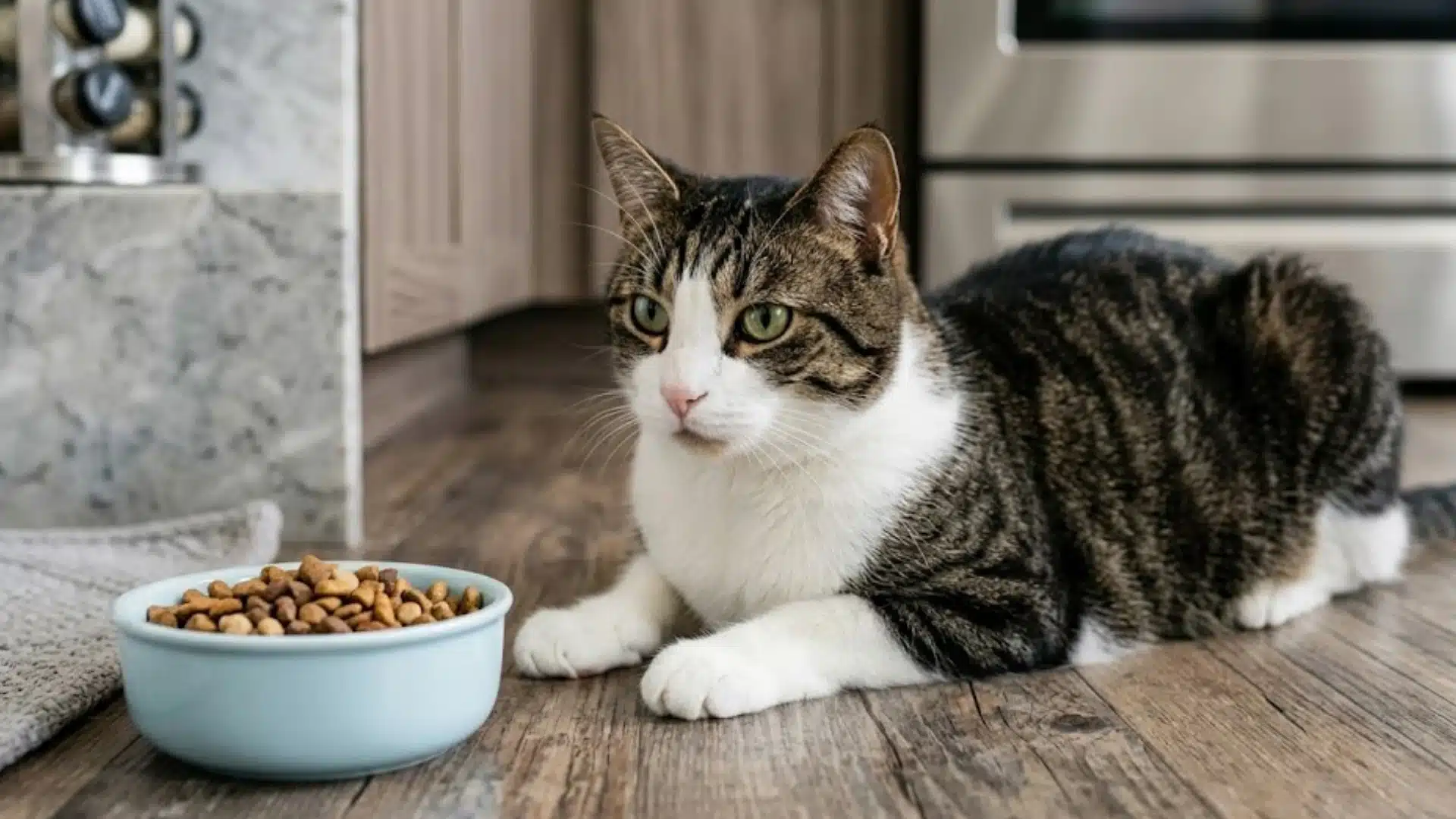
A cat that stops eating needs prompt attention when appetite loss is accompanied by clear signs of pain, illness, or weakness.
- Not eating for 24 to 48 hours: A full day without food is concerning. By 48 hours, it should be treated as urgent.
- Vomiting: Repeated vomiting can lead to dehydration and may mean stomach trouble, infection, blockage, or toxin exposure.
- Diarrhea: Loose stools can quickly deplete fluids, especially if the cat is also refusing food or drinking less water.
- Hiding: Cats often hide when they feel sick, stressed, painful, or too weak to act normally.
- Weakness: A weak cat may move slowly, sleep more, avoid people, or seem unable to stand or walk properly.
- Drooling: Drooling can indicate mouth pain, nausea, poisoning, dental trouble, or something stuck in the mouth.
- Trouble breathing: Fast, noisy, or difficult breathing is always an emergency and requires veterinary care right away.
- Yellow gums or eyes: Yellowing can indicate liver trouble, which is serious when a cat has stopped eating.
Common Reasons Cats Stop Eating
Cats may stop eating for minor reasons, but appetite loss can also indicate pain, illness, or a more serious health problem.
- Stress or routine change: Moving, travel, loud sounds, guests, or a new pet can upset a cat and make food feel unsafe or unappealing.
- New food: Cats can reject sudden changes in food because the smell, texture, flavor, or temperature feels unfamiliar compared with their usual meal.
- Dental pain: Sore gums, broken teeth, mouth ulcers, or infections can make chewing painful, so the cat may sniff food and walk away.
- Hairballs or stomach upset: Nausea, gas, hairballs, or mild digestive trouble can make a cat avoid food until the stomach feels better. If your cat is also throwing up regularly rather than just skipping meals, it’s worth reading about why cats sometimes throw up their food to see whether there’s a pattern to catch early.
- Fever or infection: A sick cat may lose interest in food and seem tired, warm, withdrawn, achy, or less active than usual.
- Kidney disease: Kidney problems can cause nausea, weight loss, bad breath, changes in thirst, and poor appetite, especially in older cats.
- Liver disease: Liver trouble can cause cats to stop eating and may also lead to vomiting, weakness, yellow gums, or yellowing of the eyes.
- Pancreatitis: Pancreatitis can cause belly pain, nausea, vomiting, low energy, and sudden loss of appetite, even when the cat seemed normal earlier.
What Does it Look Like When Your Cat Skips a Meal?
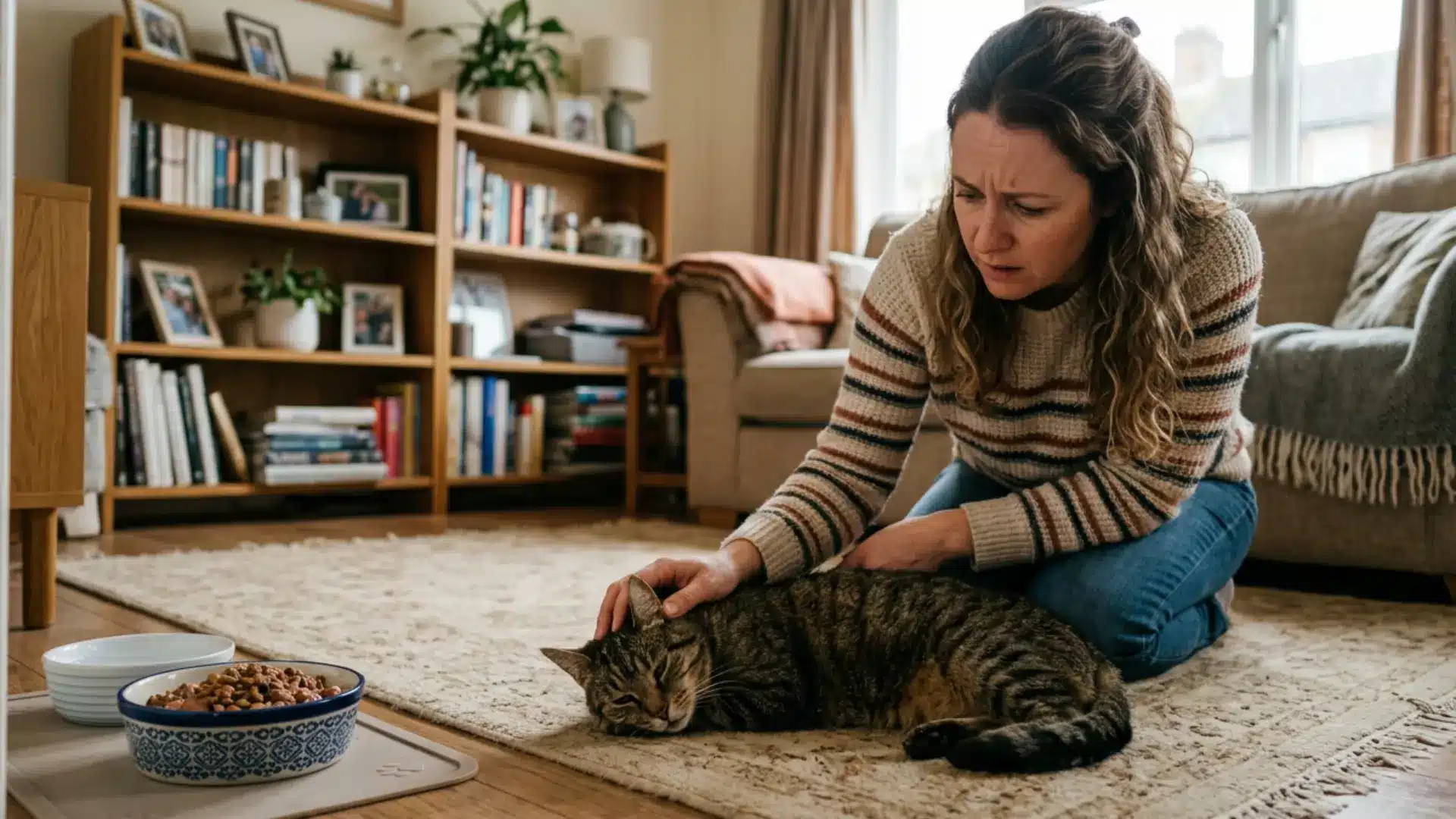
Not every untouched bowl means trouble. Cats skip the occasional meal out of pure stubbornness.
Maybe the food smells different because you opened a new bag, or maybe your cat is just having a moody Tuesday.
A single skipped meal, with your cat otherwise acting normal, eating later that day, and using the litter box as usual, usually isn’t an emergency.
What’s different is a pattern. A cat that refuses food at breakfast, again at dinner, and again the next morning isn’t being picky anymore.
The line between a finicky pause and a genuine refusal is time and consistency. One missed meal is a shrug. Two days of an untouched bowl is a phone call.
This is also where paying attention to your cat’s normal habits pays off. A cat that typically inhales her food and now sniffs it and walks away is telling you something, even if nothing else looks wrong yet.
Special Cases: Kittens, Senior Cats, and Sick Cats
Some cats cannot safely wait as long as healthy adult cats. Their bodies have less reserve energy, so appetite loss can become more pronounced more quickly.
- Kittens: Kittens can weaken quickly because their bodies are small and growing. Even a short time without food can lead to low energy, low blood sugar, and dehydration.
- Senior cats: Older cats may already have hidden health problems, such as dental pain, kidney disease, or digestive trouble. Appetite loss can be the first clear sign.
- Cats with health issues: Cats with diabetes, kidney disease, liver disease, or thyroid problems need prompt care because missed meals can quickly worsen their condition.
Any known medical condition lowers the safe waiting time. If a kitten, senior cat, or sick cat stops eating, calling a vet early is the safer choice.
What is Hepatic Lipidosis and Why Does it Happen so Fast in Cats?
One of the biggest risks of a cat not eating is a condition called hepatic lipidosis, also known as fatty liver disease.
This happens when a cat’s body starts using stored fat for energy because it is no longer getting enough calories from food.
While this is a normal survival response in many animals, cats process fat differently. Their liver cannot handle large amounts of fat all at once.
As more fat is sent to the liver, it accumulates within the liver cells rather than being processed efficiently. Over time, the liver stops working properly, making it harder for the body to perform essential functions.
The condition can also make your cat feel nauseous, tired, and even less interested in food. As a result, they eat even less, causing even more fat to accumulate in the liver.
This creates a dangerous cycle that can quickly become life-threatening without treatment. That is why veterinarians recommend taking action if your cat has not eaten for 24 to 48 hours.
Early treatment greatly improves the chances of recovery and helps prevent serious liver damage.
Note: This section is for informational purposes only and does not constitute medical advice. Consult a qualified veterinarian before making any decisions about your cat’s care.
What if Your Cat Has Not Eaten for Two Days?
If your cat has gone a full 48 hours without food, treat it as urgent, not just concerning. Call your vet or an emergency clinic the same day, especially if any of the following show up alongside the missed meals.
- Lethargy or unusual hiding, more withdrawn than her normal self
- Vomiting or throwing up, especially repeated episodes
- Diarrhea or visible weight loss
- Yellowish tint to the gums or whites of the eyes, a possible sign of jaundice
- Labored breathing or noticeable weakness
- Straining in the litter box without producing urine, which is a same-day emergency on its own
Even without any of those signs, two days of refusing food in an otherwise healthy adult cat warrants a same-day call to your vet’s office.
They can often tell you over the phone whether to come in immediately or schedule a visit for the next morning.
How Vets May Treat a Cat That Is Not Eating?
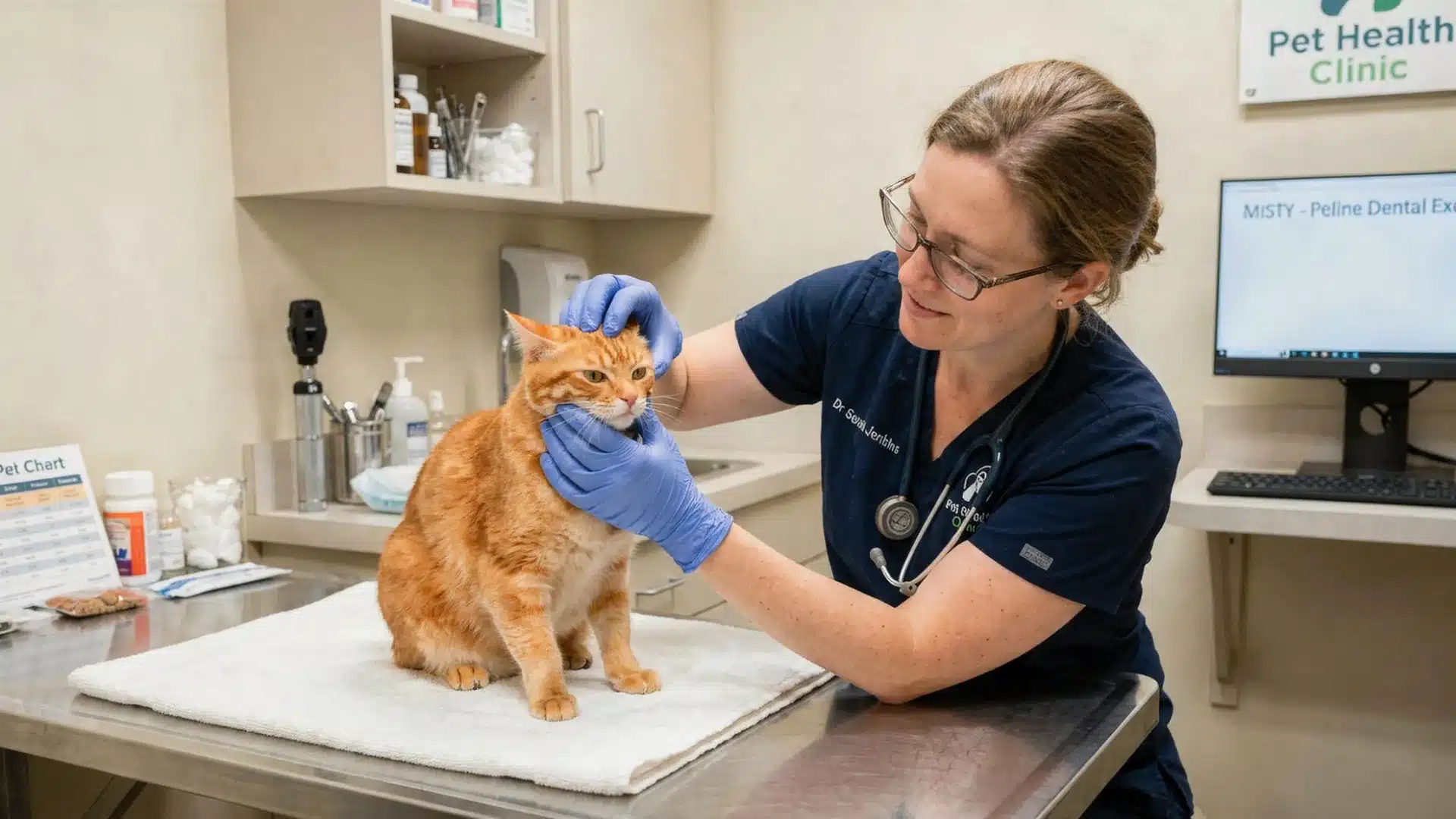
A vet will usually start with a physical exam to check the cat’s mouth, belly, weight, hydration, temperature, and overall condition.
Bloodwork may be done to look for infection, kidney problems, liver changes, diabetes, or other hidden issues. If the cat is dehydrated, fluids may be given to help the body recover.
Some cats also need anti-nausea medicine, pain relief, or appetite support so they feel well enough to eat again.
If dental pain is the cause, the vet may recommend dental care or treatment for sore gums, broken teeth, or infection.
In serious cases, feeding support may be needed until the cat can eat safely on its own. Home tips can help in mild cases, but they should not replace veterinary care when a cat is not eating.
How to Safely Encourage Eating at Home?
For mild appetite changes, a few simple feeding tricks may help while waiting for vet advice. The goal is to make food smell better and feel less stressful.
- Warm, wet food: Slightly warm the food so the smell is stronger, but make sure it is not hot before serving.
- Try stronger-smelling food: Offer a familiar favorite, tuna water, or a vet-approved topper to make the meal more tempting.
- Offer small portions: Give a small amount at a time, since a full bowl can feel overwhelming for a nauseous cat.
- Use a quiet feeding space: Feed in a calm room away from noise, pets, kids, and busy foot traffic.
- Keep bowls clean: Keep food away from the litter box, and wash bowls thoroughly so smells or residue do not put the cat off.
These tips can help with mild cases, but they are not a cure for illness. If the cat seems sick or keeps refusing food, call a vet.
Conclusion
If you’re wondering how long a cat can go without eating, the safest answer is not to wait too long before taking action.
While a healthy cat may survive for several days without food, even 24 hours without eating can signal a problem that warrants attention.
The earlier the cause is identified, the easier it often is to treat. Keep an eye on your cat’s eating habits, energy level, water intake, and other behavioral changes rather than focusing on food alone.
Never force food into your cat’s mouth. It causes stress and can lead to aspiration. If your cat won’t eat after gentle encouragement, that’s your answer: it’s time to call the vet rather than keep trying tricks.
Has your cat ever suddenly stopped eating? Share your experience or questions in the comments below.
Frequently Asked Questions
Will a Cat Eventually Eat if it Gets Hungry Enough?
Not always, and that’s the dangerous assumption. Cats can develop a learned aversion to food during illness, or they may stop eating entirely as a symptom of the underlying problem rather than out of stubbornness.
Why Won’t My Cat Eat, but Seems to Be Acting Normal Otherwise?
This often points to something subtle, such as mild nausea, a stuffy nose that affects the sense of smell, or early dental discomfort. Normal behavior with reduced appetite still warrants a call to the vet if it lasts longer than 24 to 48 hours.
Should I Force-Feed My Cat if She Refuses to Eat?
No. Forcing food can cause stress, aspiration, or a fear association with mealtime. Hand-feeding small, tempting amounts is fine, but if your cat won’t eat on its own, a visit to the vet is the safer next step.