Your dog just came in from the yard foaming at the mouth, pawing at their face, and acting like something has gone terribly wrong.
If your dog just licked or mouthed a toad, the next few minutes matter more than you think. Are toads poisonous to dogs?
The real answer is more nuanced than a simple yes or no. Most toads found across North America cause temporary discomfort that passes on its own.
A small number of species, however, can send a dog into cardiac arrest within minutes.
Knowing which category the toad in your yard falls into and what to do right now is exactly what this guide is here for.
Why are Dogs Attracted to Toads?
It is not stubbornness or bad luck. Dogs are naturally wired to investigate small, moving creatures, and a slow-hopping toad ticks every box their prey drive responds to.
Toads also tend to gather near outdoor water bowls, porch lights, and garden beds, all of which dogs already patrol during their evening roam.
Insects flock to light sources at dusk, toads follow the insects, and curious dogs follow the toads. There is also a scent factor.
Toads release mild secretions even when resting, and a dog’s nose picks that up long before their eyes do.
Are Toads Poisonous to Dogs?

Yes, toads are poisonous to dogs, but the level of danger depends almost entirely on the species your dog encountered.
Every toad produces toxins through parotoid glands, those bumpy ridges sitting just behind their eyes.
When a dog licks, bites, or mouths a toad, those secretions are absorbed directly through the gums and tongue within minutes.
Most toads found across North America cause mild, temporary irritation that resolves on its own.
Two species, however, the cane toad and the Colorado River toad, carry toxins potent enough to be fatal without emergency treatment.
Signs Your Dog Licked or Ate a Toad: Mild to Severe
Toad toxins do not affect every dog the same way. The species involved, your dog’s size, and the extent of contact all shape how quickly symptoms appear and how severe they become.
These symptoms can overlap with other types of dog poisoning, so it helps to know the broader signs of dog poisoning too.
Here is what to watch for across all three levels:
- Mild: Heavy drooling, foaming, head shaking, and pawing at the mouth. Typically resolves within an hour for common native toad encounters.
- Moderate: Loss of balance, fast heartbeat, disorientation, and incontinence. The toxin is spreading systemically. Call your vet or poison control without delay.
- Severe: Seizures, collapse, breathing difficulty, cyanosis, and abnormal heart rhythm. This is a life-threatening emergency requiring immediate veterinary care.
When in doubt, always treat toad exposure as an urgent situation rather than a minor inconvenience. A quick call to your vet costs nothing, but waiting on a moderate or severe case can cost your dog its life.
Which Toads are Dangerous to Dogs?

Not every toad your dog meets is a medical emergency. Toxicity varies widely by species, and knowing which toads pose a real threat versus which ones cause temporary discomfort can mean the difference between a quick rinse at home and a late-night vet visit.
1. Cane Toad (Marine Toad)
The cane toad is primarily found in Florida, Texas, Hawaii, Louisiana, and other Gulf Coast states.
It is the most dangerous toad species in the United States, and any exposure should be treated as a veterinary emergency without hesitation.
This toad secretes bufotoxins from large triangular glands behind its eyes, toxins potent enough to cause cardiac arrhythmias, seizures, and death within minutes in small dogs.
Size is your fastest ID clue: cane toads measure six to nine inches long, making them noticeably larger than most native species.
2. Colorado River Toad (Sonoran Desert Toad)
The Colorado River toad is native to the southwestern United States, with its range covering southern Arizona, New Mexico, California, and parts of Texas.
It ranks as the second most toxic toad species in the country and produces some of the most potent naturally occurring bufotoxins known in North American wildlife.
Dogs in these regions who encounter one face the same urgent risk as those who encounter a cane toad.
Any licking or mouthing of this species requires an immediate call to your vet or the ASPCA Animal Poison Control Center, not a wait-and-see approach.
3. Common American Toads
The American toad and other widespread native species, including the Woodhouse toad and the Great Plains toad, carry mild to moderate toxicity.
A dog that licks one will almost certainly drool heavily, paw at its mouth, shake its head, and may vomit.
These symptoms are distressing to watch, but typically resolve on their own within an hour.
Understanding toxic substances and dog safety more broadly can help you stay prepared for situations like this, not just toad encounters.
Real Owner Concerns on Dog and Toad Encounters
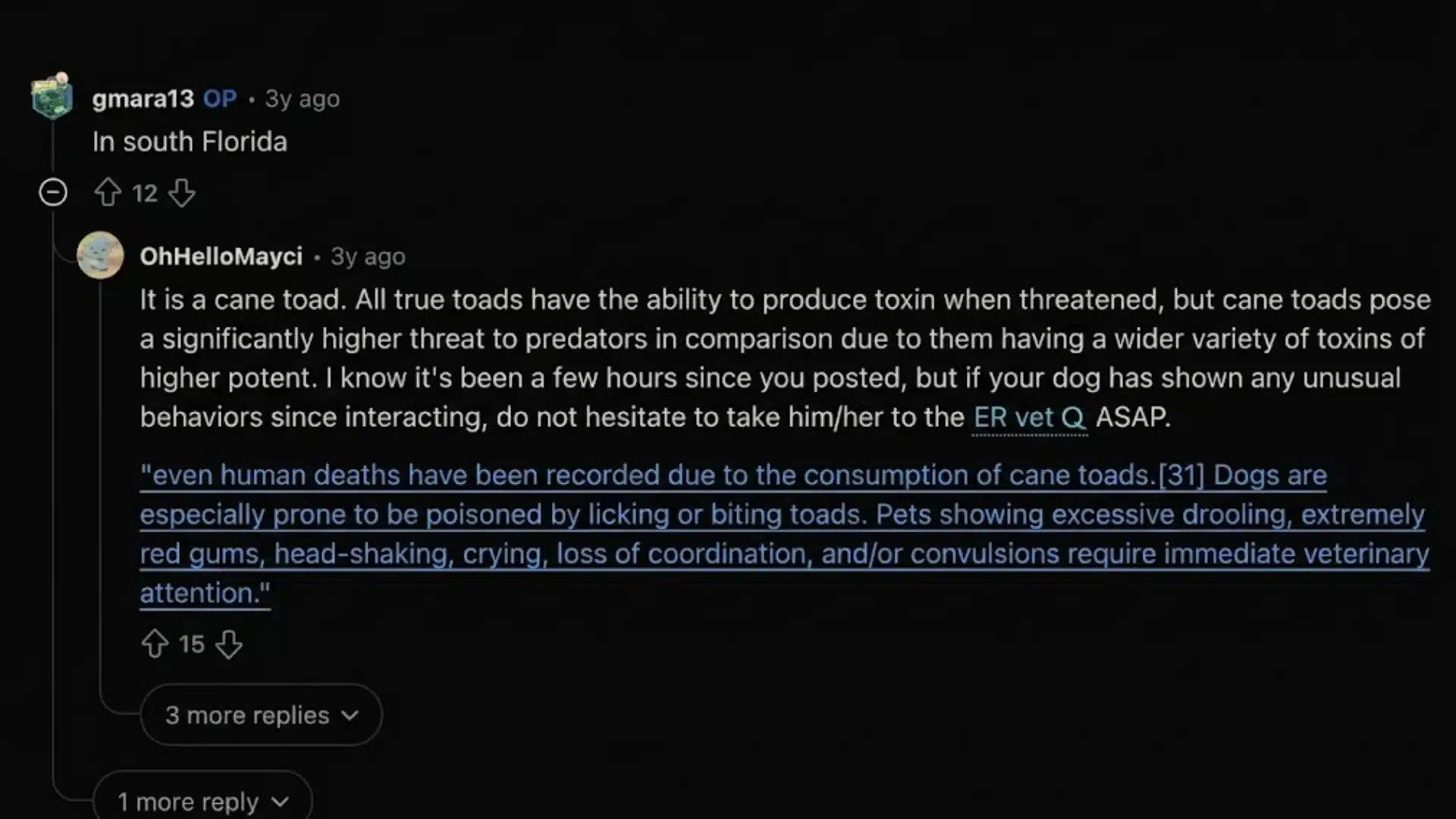
Reddit discussions show how quickly dog owners panic after encountering a toad, especially when they cannot identify the species.
In one South Florida thread, several users suspected the toad was a cane toad, while others thought it looked more like a Gulf Coast toad.
That uncertainty is exactly why owners should watch for symptoms rather than guessing from appearance alone.
Commenters mentioned drooling, sneezing, red gums, head shaking, loss of coordination, and seizures as warning signs.
One owner said their dog was okay after a quick mouth rinse and a vet’s blood work, while another shared that they had just returned from the ER after their dog ate a cane toad.
The main takeaway is simple: rinse the mouth fast, monitor closely, and contact a vet if symptoms appear.
What to Do Right Now If Your Dog Licked a Toad?
The first few minutes after toad exposure matter more than most pet parents realize. Stay calm, move quickly, and follow these steps in order:
- Separate your dog from the toad immediately and move them indoors.
- Wipe the mouth firmly with a damp towel if your dog is seizing or disoriented. Do not use running water on an unstable dog.
- Flush the mouth gently with running water for 5 to 10 minutes if your dog is calm and stable.
- Call the ASPCA Animal Poison Control Center at 888-426-4435 or your vet right away.
- Take a photo of the toad if it is safe to do so, as species identification helps your vet assess risk quickly.
Do not waste time on home remedies like milk, lemon juice, or egg yolks. None of these neutralize toad toxins. The same fast-action mindset applies to dog-swallowed chicken bone situations, too.
When to See a Vet
See a vet if your dog’s symptoms do not improve within 15 to 20 minutes after careful mouth flushing, or if signs become worse.
Mild drooling, lip licking, or mouth irritation from a common native toad may settle with a quick rinse and close monitoring, but ongoing discomfort requires professional advice.
Emergency care is needed right away if your dog shows loss of balance, shaking, seizures, breathing trouble, extreme weakness, collapse, repeated vomiting, or abnormal behavior.
Puppies, small breeds, senior dogs, and dogs with existing health issues should be treated more cautiously because toxins can affect them faster.
Even if the exposure seems minor, calling your vet is the safest course of action.
A quick call can confirm whether home monitoring is enough or whether your dog needs urgent treatment before symptoms become serious.
What Can Vets Do for Toad Poisoning?
There is no specific antidote for toad toxin, so veterinarians focus on removing the toxin, stabilizing your dog, and treating any life-threatening complications until the effects wear off.
- Complete Oral Flushing: The vet may thoroughly rinse your dog’s mouth to remove any remaining toxin that could continue to be absorbed through the gums.
- Heart Monitoring: Dogs showing signs of serious poisoning may be connected to an ECG to watch for dangerous changes in heart rhythm.
- Seizure Control: If seizures or severe muscle tremors occur, medications may be given to stop them quickly and reduce the risk of further complications.
- Intravenous (IV) Fluids: IV fluids help maintain hydration, support blood circulation, and provide a route for emergency medications if needed.
- Oxygen Therapy: Dogs with breathing difficulties may receive oxygen to improve oxygen levels while the toxin’s effects are treated.
- Medications for Heart Problems: If the toxin causes abnormal heart rhythms, the veterinarian may use medications to stabilize the heartbeat.
- Temperature Management: Dogs with severe poisoning may develop dangerously high body temperatures due to sustained muscle activity, so the veterinary team will cool them safely if necessary.
This section is for general information only and is not a substitute for veterinary diagnosis or treatment. Contact a vet or emergency clinic immediately if symptoms appear or worsen.
Tips for Keeping Your Dog Safe From Toads
You cannot toad-proof the entire outdoors, but you can make your yard and daily routine significantly less inviting for them. A few simple habits go a long way, especially during peak toad season from March through September:
- Remove outdoor food and water bowls at night: Toads are drawn to food scraps and will sit in standing water bowls, contaminating them even without direct contact.
- Elevate water bowls: A raised bowl is harder for a ground-hopping toad to access, reducing the risk of contamination.
- Supervise outdoor time at dusk and dawn: these are peak hours for toad activity, especially after rainfall.
- Clear hiding spots from your yard: Leaf piles, wood stacks, and low-hanging shrubs are favorite toad shelters. Removing them reduces the chances of an unexpected encounter.
- Keep your dog leashed near ponds or marshy areas: Toads breed near water and congregate in high numbers around these spots during warm months.
Conclusion
Most toad encounters end with a frightened dog, a lot of drool, and a very relieved pet parent.
The scary part is that you rarely know which kind of toad your dog just mouthed, and that uncertainty is exactly why a fast, calm response matters every single time.
Flush the mouth, assess the symptoms, and call your vet if anything feels off. The two-minute check is always worth it.
Toads are not going anywhere, and neither is your dog’s curiosity.
But with the right knowledge about which species are dangerous, what symptoms to watch for, and how to respond, you are already better prepared than most.
Has your dog ever had a run-in with a toad? Drop how you handled it in the comments below.
Frequently Asked Questions
Can a Dog Die from Licking a Toad?
Yes, but it depends entirely on the species involved. Cane toads and Colorado River toads can cause fatal poisoning in dogs within minutes of exposure if left untreated. Most other native North American toads cause temporary discomfort that resolves on its own.
Are Frogs as Dangerous to Dogs as Toads?
Most frogs pose little to no toxicity risk for dogs compared to toads. A few species, like the poison dart frog, are highly toxic, but these are not native to North America and are rarely encountered outside of captivity.
How Long Does Toad Poisoning Last in Dogs?
Mild symptoms from common native toads typically resolve within an hour with proper mouth flushing. For cane or Colorado River toad exposure, recovery depends on how quickly treatment begins, but most dogs treated within 30 minutes recover within 12 hours.