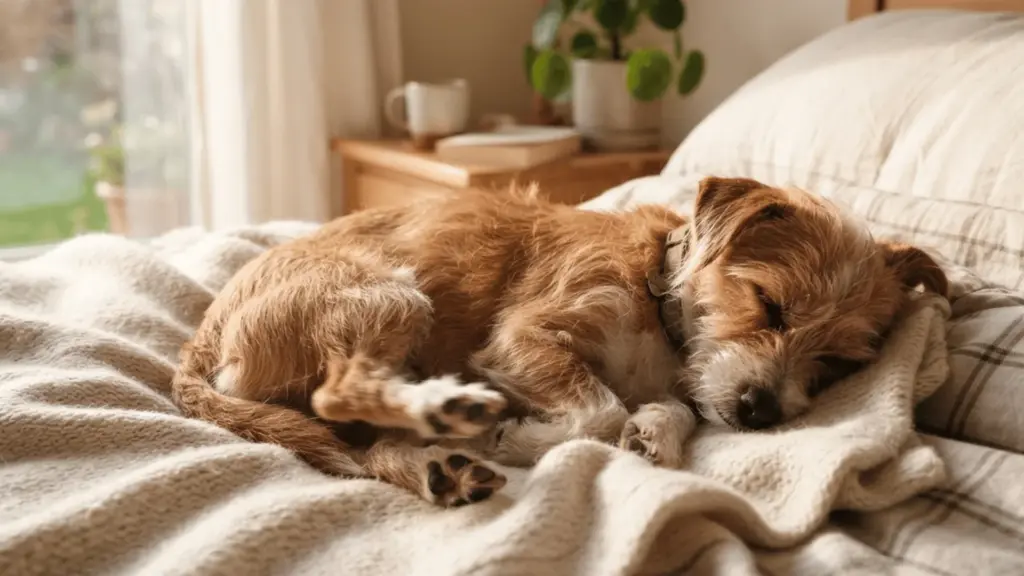
A sleeping dog suddenly kicking, twitching its paws, or making tiny sounds can stop anyone in their tracks and raise immediate concern.
These unexpected movements often occur during deep rest and can appear alarming, even though they are tied to natural brain activity during sleep cycles.
In most cases, these brief episodes reflect normal stages of dreaming in which muscles relax while the mind remains active, producing visible movement without real distress.
This blog breaks down what sleep twitching actually means, how it appears, and when it may signal something more serious to watch carefully.
Understanding these patterns helps distinguish harmless sleep movements from conditions that require closer attention or veterinary evaluation.
Dog Twitching in Sleep: What Does It Mean?
Dogs sleep far more than humans, often spending around 12 to 14 hours a day resting, with puppies and senior dogs sometimes sleeping even longer.
This wide range is completely normal and varies with age, activity level, and overall health, as every dog’s sleep requirement is different.
This extended rest creates multiple opportunities for the brain to cycle through different sleep stages, including the deeper phase in which muscle control is partially reduced.
During this stage, small movements like paw flicks, tail twitches, or facial shifts become visible.
Sleep is not a single steady condition but a repeating cycle that alternates between lighter and deeper states throughout the night.
Most noticeable movements occur in the deeper phase, which is also strongly linked to dreaming activity in dogs.
Signs of Dog Twitching in Sleep
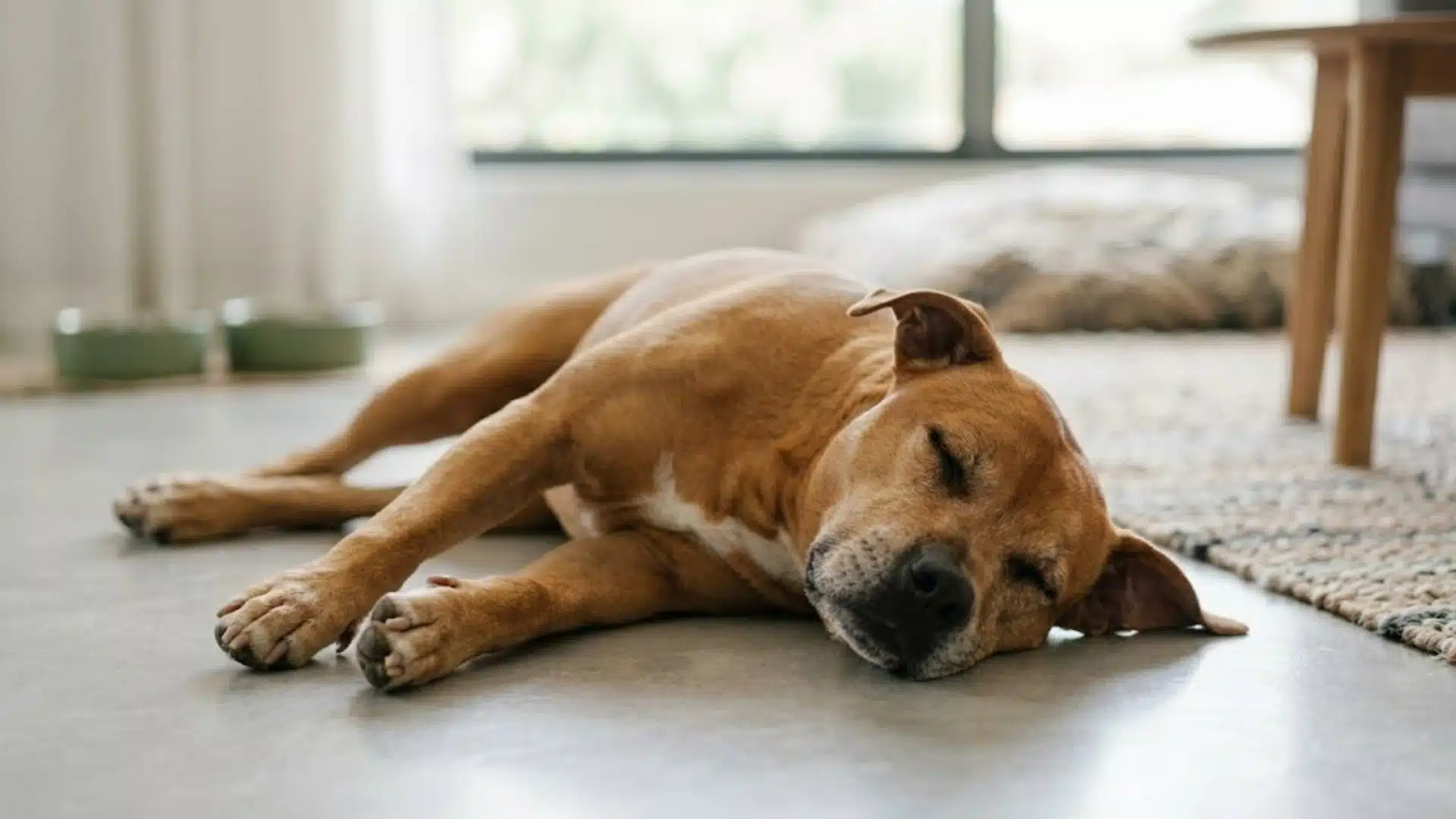
Sleep twitching in dogs is a normal movement during deep rest, involving small muscle jerks, subtle sounds, and temporary changes in breathing or limb activity.
1. Leg Twitches Or Paddling
Leg twitches or paddling often appear as quick, involuntary movements in one or more legs during deep sleep. A dog may stretch, kick, or move all four paws as if running.
These motions usually reflect active dreaming stages. They are brief, typically lasting only a few seconds, and naturally stop as sleep cycles shift into lighter or deeper phases of rest.
2. Tail Movement
Tail movement during sleep can appear as a slow wag, a light flick, or small rhythmic motions without the dog waking up. It often happens alongside dreaming activity and does not indicate discomfort.
The movement is brief and irregular, stopping as sleep deepens or shifts between stages. Most dogs show this occasionally and return quickly to still, relaxed sleep afterward.
3. Eye Movement
Eye movement beneath closed eyelids is a common feature of active sleep, where rapid or gentle shifts occur as the dog processes dreams.
Eyelids may flutter slightly, and the eyes can roll or move side to side. This stage is linked with REM sleep. The behavior is normal, short-lived, and stops when the dog transitions into a calmer sleep phase.
4. Soft Sounds
Soft sounds during sleep may include whimpers, small yips, or occasional low barks. These noises often reflect dreaming activity and emotional processing during deep rest.
They are usually mild and short, lasting only a few seconds. Dogs may remain fully asleep while making these sounds, then settle back into quiet breathing without waking or showing signs of distress afterward.
5. Breathing Changes
Breathing changes during sleep can include slightly faster or uneven patterns compared to deep rest. These variations often align with dreaming phases and are not usually a cause for concern.
The dog may take short bursts of quicker breaths before returning to a steady rhythm. This normal fluctuation reflects shifting sleep cycles and typically resolves on its own without intervention.
Why Do Dogs Twitch, Kick, or Move While Sleeping?
Dogs can move in their sleep for a few simple reasons, and most of the time, it is part of normal rest.
- Dreaming: Dogs may twitch, kick, or make soft sounds because they are dreaming about things they did during the day.
- REM sleep: This is the sleep stage when dreaming is most active, so small body movements can occur more often.
- Muscle signals: The brain can still send tiny signals to the muscles while the dog is asleep, causing slight twitching or paw movements.
- Puppy development: Puppies may twitch more because their brains and bodies are still growing, and sleep supports that development.
- Body relaxation: As the body settles into deep rest, small movements can occur in response to sounds, memories, or normal daily activity.
What Dogs Might Be Dreaming About?
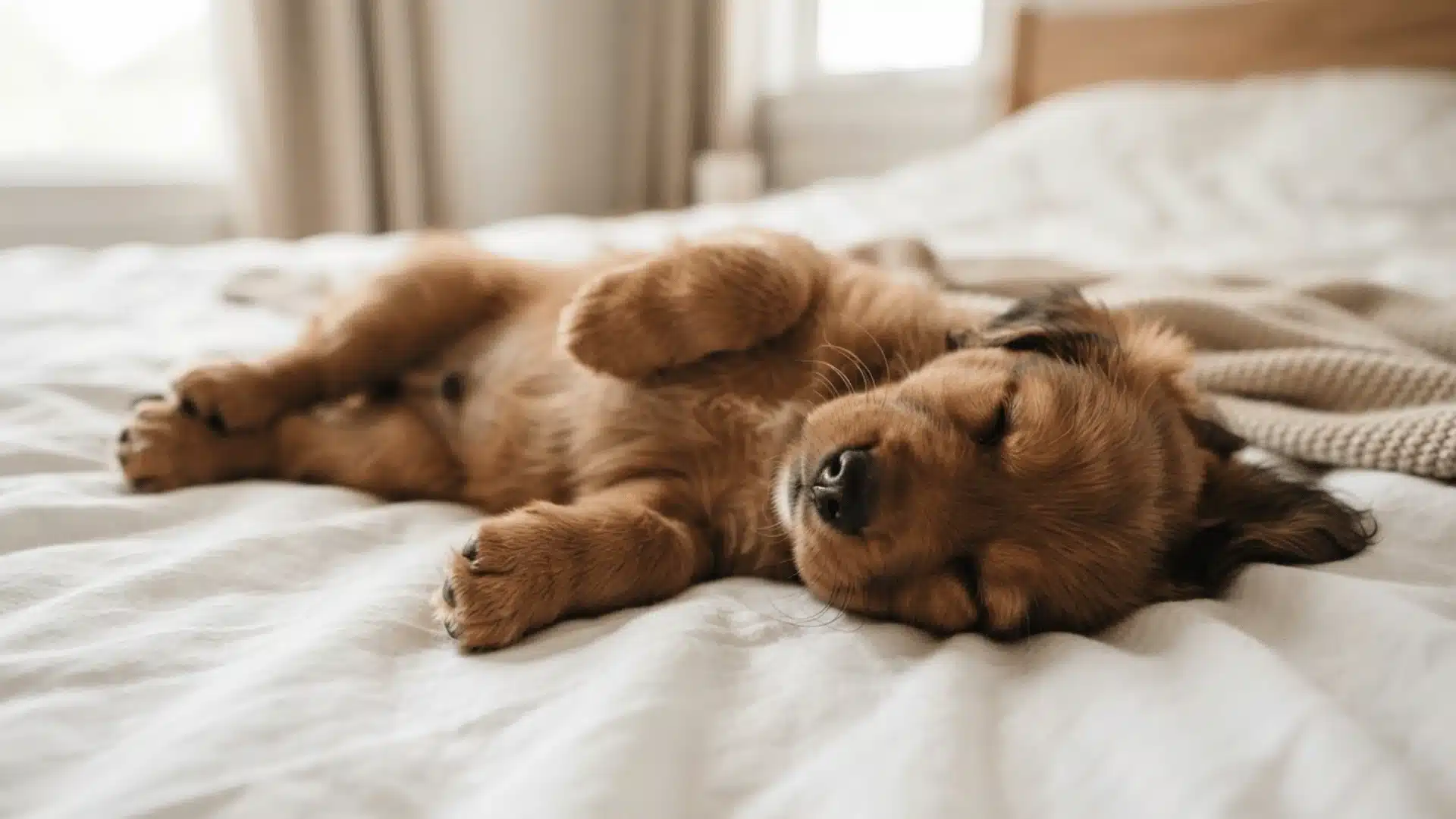
No one can know exactly what a dog sees in a dream, but sleep movements often seem tied to normal daily life.
A dog may twitch, paddle, or make soft sounds after a busy day because the brain is resting and sorting through familiar moments.
- Running: Small leg kicks may look like a dog running across a yard or open space.
- Playing: Paw movement or soft noises may occur after playtime with toys or family.
- Chasing toys: Quick twitches can look like a dog is chasing a ball, a rope, or a favorite squeaky toy.
- Walking: Gentle leg movement may occur after a long walk or active outdoor time.
- Social moments: A dog may react in its sleep after meeting people, other dogs, or pets.
So, dog twitching in sleep can simply be part of a normal dreaming pattern.
Dog Twitching in Sleep vs Seizures: Key Differences
Most twitching is nothing more than a dream in motion, but it helps to know the difference between that and a seizure, since the two can look similar at a glance.
| What to check | Normal twitching | Seizure |
|---|---|---|
| Movement style | Light, rhythmic kicks or paddling | Stiff, rigid, or violently jerking |
| Duration | Usually under 30 seconds | Often 1 to 2 minutes or longer |
| Response to name | Wakes up if called | Does not respond during the episode |
| After it ends | Stretches and goes back to normal | May seem confused, drool, or lose bladder control |
Veterinary experts describe the same pattern when differentiating dreams from seizures, noting that dreaming movements are brief and intermittent, while seizing limbs tend to be stiff and forceful.
If there’s real doubt about which one is happening, filming the episode on a phone gives a vet something concrete to look at rather than a secondhand description.
When is Twitching Usually Not a Problem?
Most sleep twitching is not a big concern when the dog looks calm, rests normally, and wakes up without any odd behavior.
- Mild movements: Small paw twitches, ear flicks, tail movement, or gentle leg kicks are usually part of normal sleep.
- Dog stays asleep: If the dog continues sleeping peacefully and does not seem upset, the twitching is usually not a cause for concern.
- Breathing looks normal: Calm and steady breathing is a good sign that the body is resting the way it should.
- Twitching stops on its own: Normal sleep movements usually fade without help and do not continue for long.
- Dog wakes up normally: If the dog wakes up alert, relaxed, and aware of its surroundings, it is usually nothing to worry about.
- No confusion after waking: A dog that gets up normally and responds as usual is less likely to be experiencing a serious episode.
- No pain signs: If there is no crying, limping, stiffness, or sudden discomfort upon waking, the twitching is usually harmless.
Should You Wake a Dog Twitching in Sleep?
The short answer is no, not unless there is a clear reason. Twitching during sleep is usually part of the REM stage of sleep, when the brain is active and the body remains relaxed.
Most dogs settle back into calm sleep within seconds without any help. Waking them during this phase can be confusing and may trigger a startled reaction, causing a snap or scratch as a reflex rather than aggression.
If checking in feels necessary, calling the dog’s name softly from a short distance is safer than reaching in.
A calm voice can bring the dog out of deeper sleep without sudden shock and avoid touching the face or paws, since even a familiar dog may react defensively when startled.
In rare cases where twitching is intense or unusual, observing from a distance or seeking veterinary advice is best.
How to Support Healthy Sleep in Dogs?
A calm, predictable sleep setup can reduce restlessness and, in some cases, cut down on excessive twitching tied to stress or a disrupted routine.
- Keep bedtime consistent: Follow the same wind-down routine each night so the dog’s body learns when it is time to rest.
- Create a calm sleep space: Choose a quiet, dim, and comfortably cool area away from heavy foot traffic or sudden noise.
- Use a supportive bed: Select bedding suited to age and size, with extra cushioning for seniors or dogs with joint sensitivity.
- Add daily activities: Include regular walks and mental stimulation to help both body and mind settle more easily at night.
- Avoid late stimulation: Skip rough play or loud excitement before bed to allow time for a gradual transition into rest.
Dog Twitching in Sleep: What Do Owners Say Online?

Reddit highlights how common dog twitching during sleep is among pet owners, with many describing it as normal dreaming behavior rather than a medical concern.
Many owners report their dogs paddling, twitching paws, or making soft noises while asleep, then waking up calm and behaving completely normally.
Puppy cases are frequently mentioned, with users noting more frequent movement during sleep due to active brain development and deeper REM activity.
Some pet owners initially worry about seizures, but later comments and observations suggest the movements align with normal sleep cycles instead.
Veterinary advice shared in discussions emphasizes that brief twitching is harmless unless movements become violent, prolonged, or occur while awake.
Overall, community experiences indicate that sleep twitching is a normal part of canine rest cycles and usually resolves without intervention or cause for concern for owners.
When to Call the Vet
Most twitching episodes in dogs usually require little concern and often only a brief observation, but a vet appointment becomes important when the pattern changes or shows more serious signs.
Movement that appears rigid, forceful, or continues beyond 30 seconds can indicate something more significant.
A dog that does not respond to a call during an episode should also be checked. Twitching that occurs while the dog is fully awake rather than during sleep is another warning sign.
Additional symptoms such as drooling, confusion, or loss of bladder control after the event add further concern. An increase in frequency or intensity over time is also significant.
Veterinary teams often use duration and repetition as key indicators when assessing seizure-related issues.
Keeping a simple record and capturing a short video can help clarify the consultation.
Conclusion
Most sleep twitching in dogs is normal, especially when mild, and the dog wakes up calmly.
Small paw kicks, ear flicks, tail movements, soft sounds, or gentle body twitches can happen during dreaming or REM sleep.
Puppies may move more because their brains and bodies are still growing, while senior dogs may twitch due to sleep changes or body discomfort.
The main thing is to watch the pattern, not panic over one small movement.
Dog twitching in sleep is usually harmless when breathing stays steady, the body relaxes, and the dog acts normally afterward. When in doubt, record the episode and share it with your vet.
Have you noticed your dog twitching, kicking, or making sounds while sleeping? Comment below and share what your dog does during sleep.
Frequently Asked Questions
Can Dog Twitching Increase After Vaccination or Medication?
Yes, mild sleep movement changes can occasionally occur after medication or vaccines due to temporary changes in energy levels or sleep patterns. This is usually short-lived and not harmful.
Is It Normal for Dogs to Twitch Every Time They Sleep?
Yes, frequent twitching during every sleep cycle can be normal, especially in puppies or active breeds. It simply reflects regular REM sleep activity rather than a health issue.
Does Sleeping Position Affect Twitching?
Some dogs twitch more visibly when sleeping on their sides because their muscles are more relaxed and their movements are easier to observe.