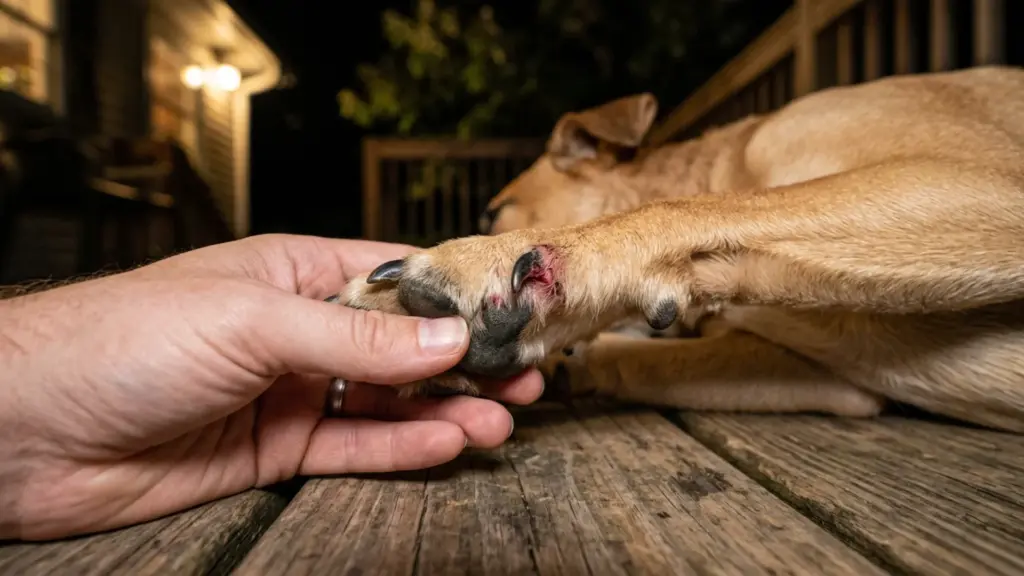
A dog’s broken nail can look worse than it is, especially when there’s blood on the floor and your dog suddenly refuses to put weight on the paw.
I’ve had that panic moment too: one second my dog is running around, and the next they’re holding up a paw like something terrible happened.
A dog’s broken nail is painful, messy, and confusing because a dog’s bleeding nail can make even a small tear seem serious. The hardest part is knowing whether to handle it calmly at home or call the vet right away.
This blog explains what to do first when your dog has a broken nail, how to stop the bleeding, when a quick-exposed nail needs care, and when a dog’s broken nail is more than a simple at-home fix.
What Causes a Dog to Break a Nail?
Dogs can break their nails during normal play, walks, or even inside the house. It often happens when the nail hits rough ground, hard pavement, or rocky paths with too much force.
A nail can also get caught in carpet, furniture, a crate, or a deck gap, then tear when the dog pulls away.
Long or overgrown nails are more likely to break because they touch the ground first and take more pressure with every step.
Weak, dry, or brittle nails can also split more easily, especially in older dogs or dogs with poor nail health.
Sudden twists during running, jumping, or rough play can bend the nail the wrong way. Even a simple turn can cause a painful tear if the nail catches or is already weak.
Dog Broken Nail: When is it an Emergency?
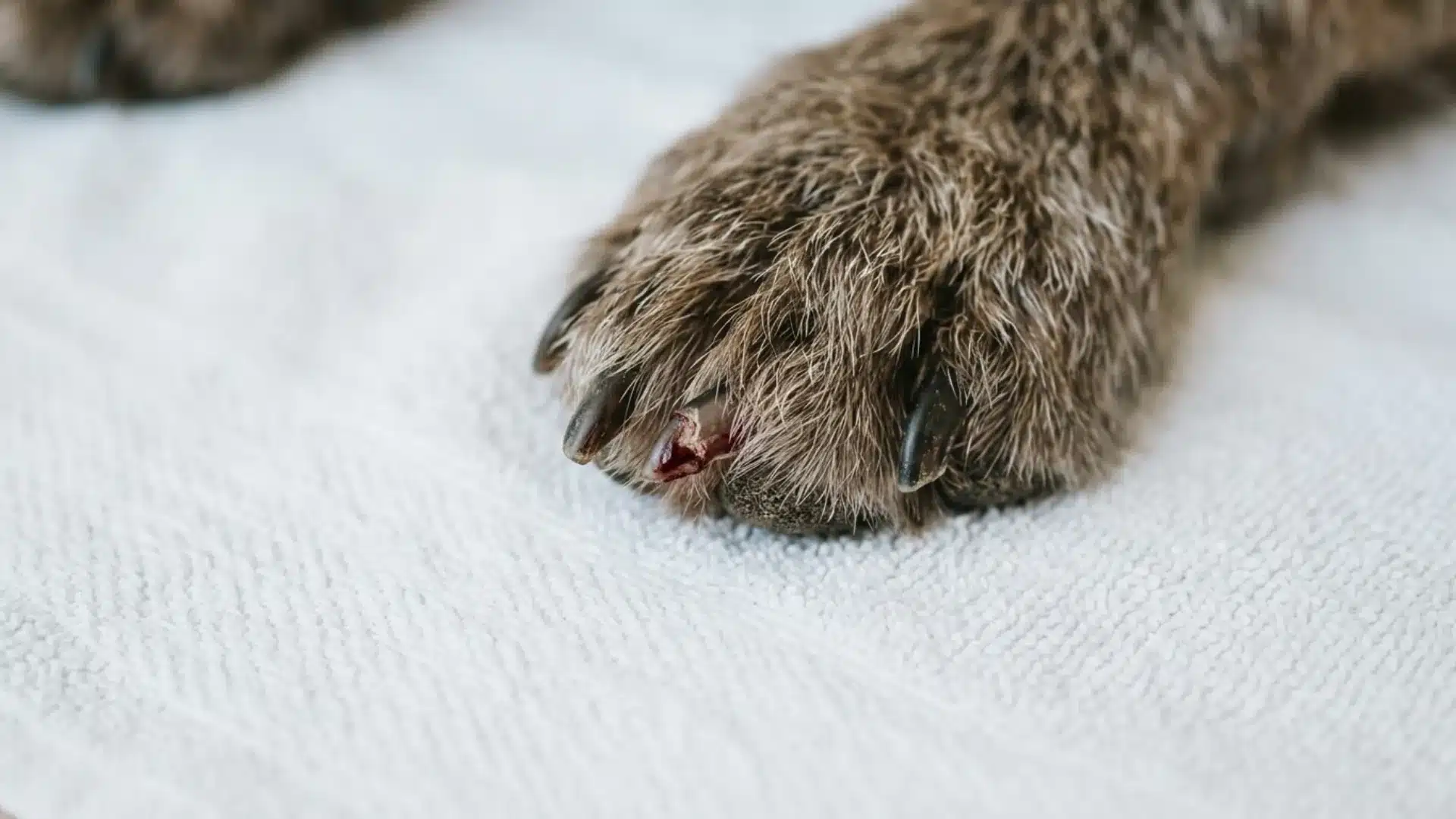
A broken nail is not always serious, but some signs indicate your dog needs prompt care rather than simple home treatment.
- Heavy bleeding: If the bleeding keeps flowing after steady pressure for several minutes, the quick may be badly torn and needs vet attention.
- Hanging nail: If the nail is barely attached, do not pull it off because it can tear deeper and cause more pain.
- Fully exposed quick: When the quick is fully visible, the nail bed is open, painful, and more likely to collect dirt or bacteria.
- Paw swelling: Swelling around the toe or paw can mean the injury is deeper than the nail and may need proper treatment.
- Limping or crying: If your dog cannot walk normally, cries, or keeps holding the paw up, the break is likely very painful.
- Signs of infection: Redness, pus, heat, bad smell, or constant licking can mean infection is starting and should be checked by a vet.
When Can You Monitor a Broken Nail at Home?
A minor nail break can sometimes be treated at home if it is small, clean, and not causing your dog much pain. The main thing is to check that the injury is only near the tip and not close to the quick.
- Small crack near the tip: The break is at the outer end of the nail and does not reach the sensitive inner part.
- No bleeding: There is no active bleeding, dried blood, or open wound around the nail.
- Walking normally: Your dog is putting weight on the paw without limping, crying, or pulling away.
- Nail is not loose: The nail is still firmly attached and does not move when gently checked.
- Paw is not swollen: The toe and paw look normal without redness, heat, or puffiness.
- Not licking nonstop: Light attention is normal, but constant licking can worsen the area.
Keep checking the nail for a few days. If bleeding, swelling, limping, or licking starts, call your vet.
Why Even a Small Nail Tear Can Hurt So Much?
A broken nail may be only part of the injury, especially if your dog’s paw was crushed, twisted, or caught in something.
In these situations, the force that damaged the nail can also affect the surrounding tissues, including the toe joints, ligaments, or even the bone itself.
If the amount of limping seems much worse than the nail damage you can see, or if your dog continues to favor the paw after the initial pain should have eased, it’s worth having a veterinarian check for a toe fracture or deeper tissue injury.
How to Stop a Dog’s Nail from Bleeding Fast?
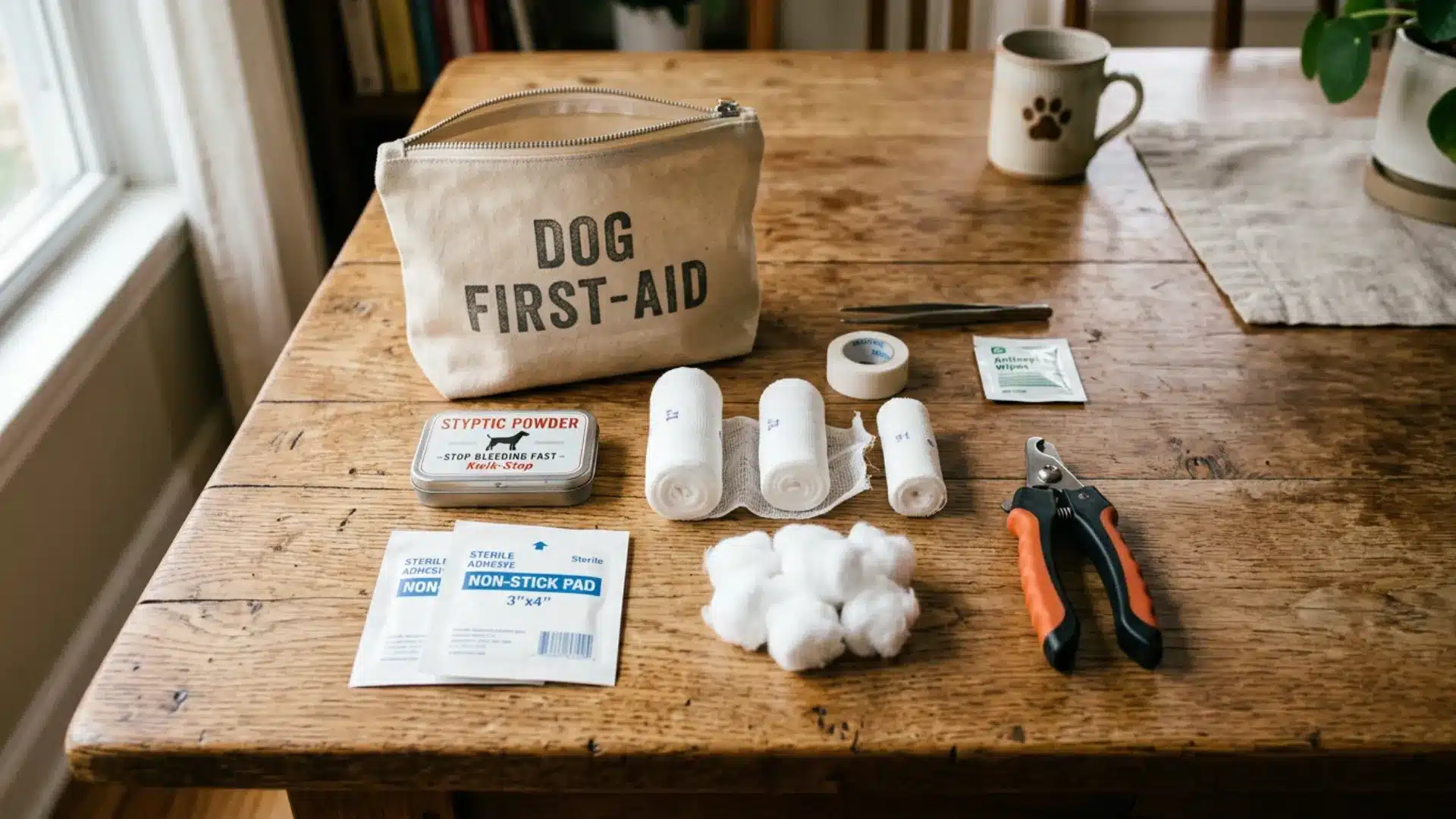
Before doing anything else, stop the bleeding. A torn nail often bleeds much more than you’d expect because the living tissue inside the nail is highly vascular.
Start by applying firm, steady pressure with a clean cloth or gauze pad directly over the tip of the nail. Hold it in place for several minutes without lifting it to check, as peeking too soon can restart the bleeding.
If pressure alone isn’t enough, try one of these:
- Styptic Powder. The best option if you have it. Apply a small amount to the bleeding nail and hold it in place for about 30 seconds. It helps constrict the blood vessels and stop the bleeding quickly.
- Cornstarch, Flour, or Baking Soda. These aren’t as effective as styptic powder, but they can work in a pinch. Simply dip the bleeding nail into a small dish of the powder.
- A Bar of Soap. Gently press the bleeding nail into a softened bar of plain, unscented soap for a minute or two. This can help plug the nail and slow the bleeding.
One important tip: Avoid the superglue trick on a nail that’s split lengthwise. As superglue hardens, it creates heat that can burn the exposed skin, making an already painful injury even worse.
Step-by-Step First Aid for a Broken or Torn Nail
Once the bleeding has stopped, the next priority is protecting the injured nail so it can heal without becoming infected or reopening. Follow these steps in order, and move slowly if your dog seems anxious or uncomfortable.
Step 1: Keep Your Dog Calm and Assess the Injury
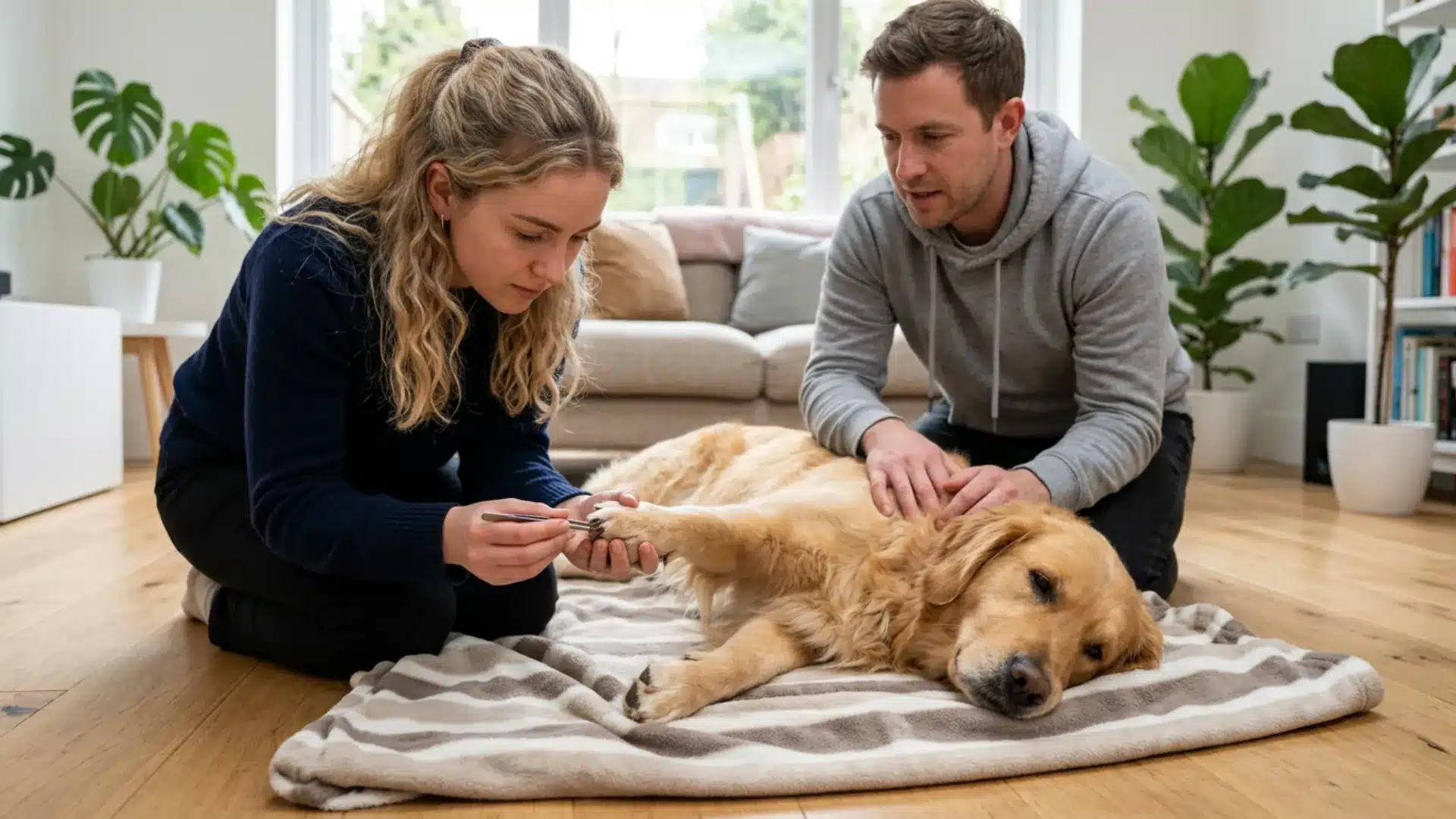
Before handling the paw, gently restrain your dog so they can’t pull away suddenly.
Even the friendliest dogs may react when a painful nail is touched, so having another person help hold them can make the process much safer. Take a close look at the nail and confirm the bleeding has completely stopped.
Check whether the nail is split, partially torn, or completely missing, as this will help you decide whether home care is appropriate or if veterinary treatment is needed.
Step 2: Remove Loose Nail Pieces Only if They Come Away Easily
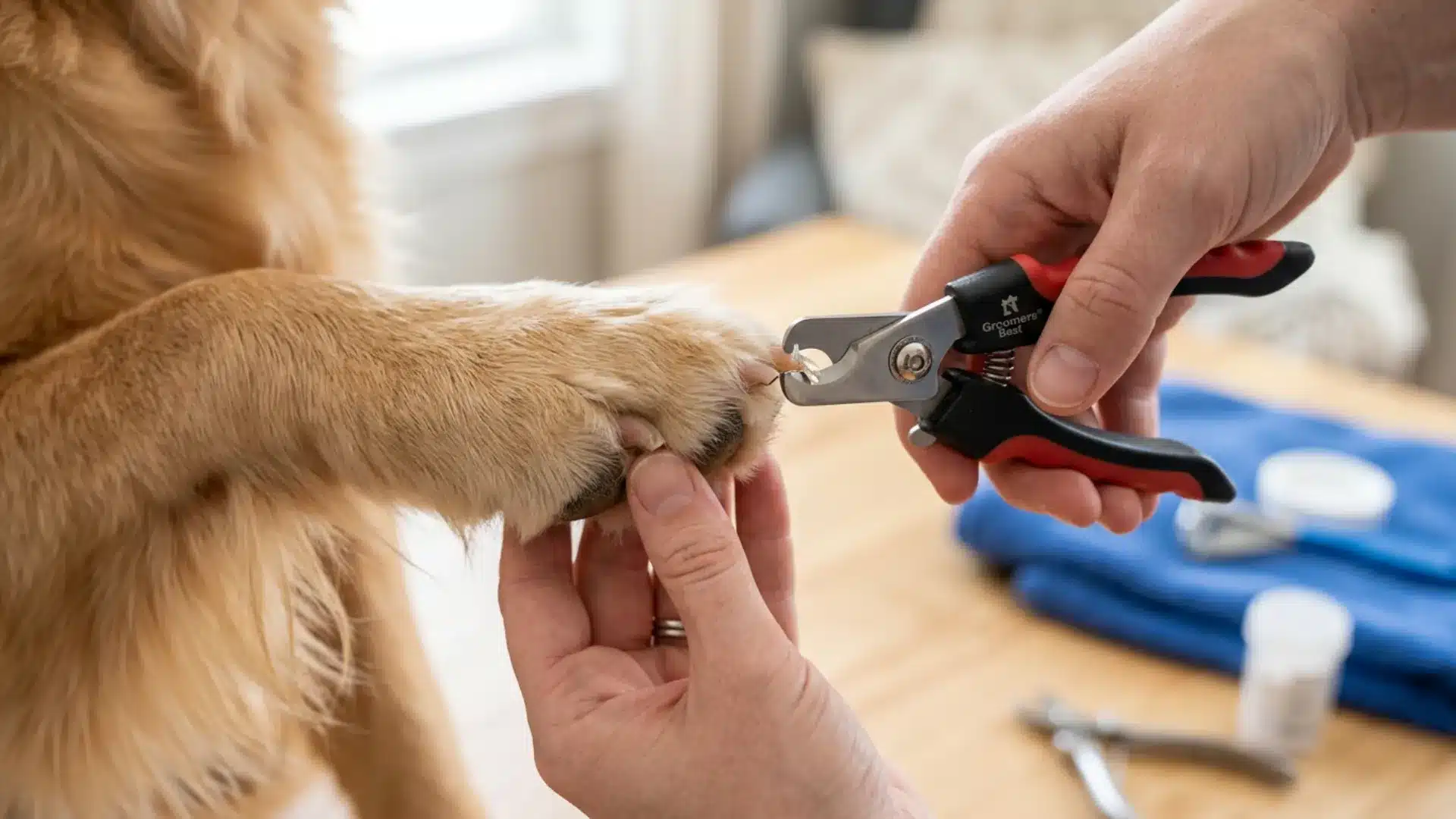
If a small section of the broken nail is hanging by a thin piece and comes away with little effort, you can carefully trim it using clean nail clippers.
Removing a loose flap helps prevent it from catching on carpets, grass, or bedding and causing more pain. Never pull on the nail or force it if you feel resistance or if your dog reacts in pain.
If the damaged nail is still firmly attached, it’s safest to let your veterinarian trim it back to healthy tissue under proper pain control.
Step 3: Clean and Protect the Injured Toe
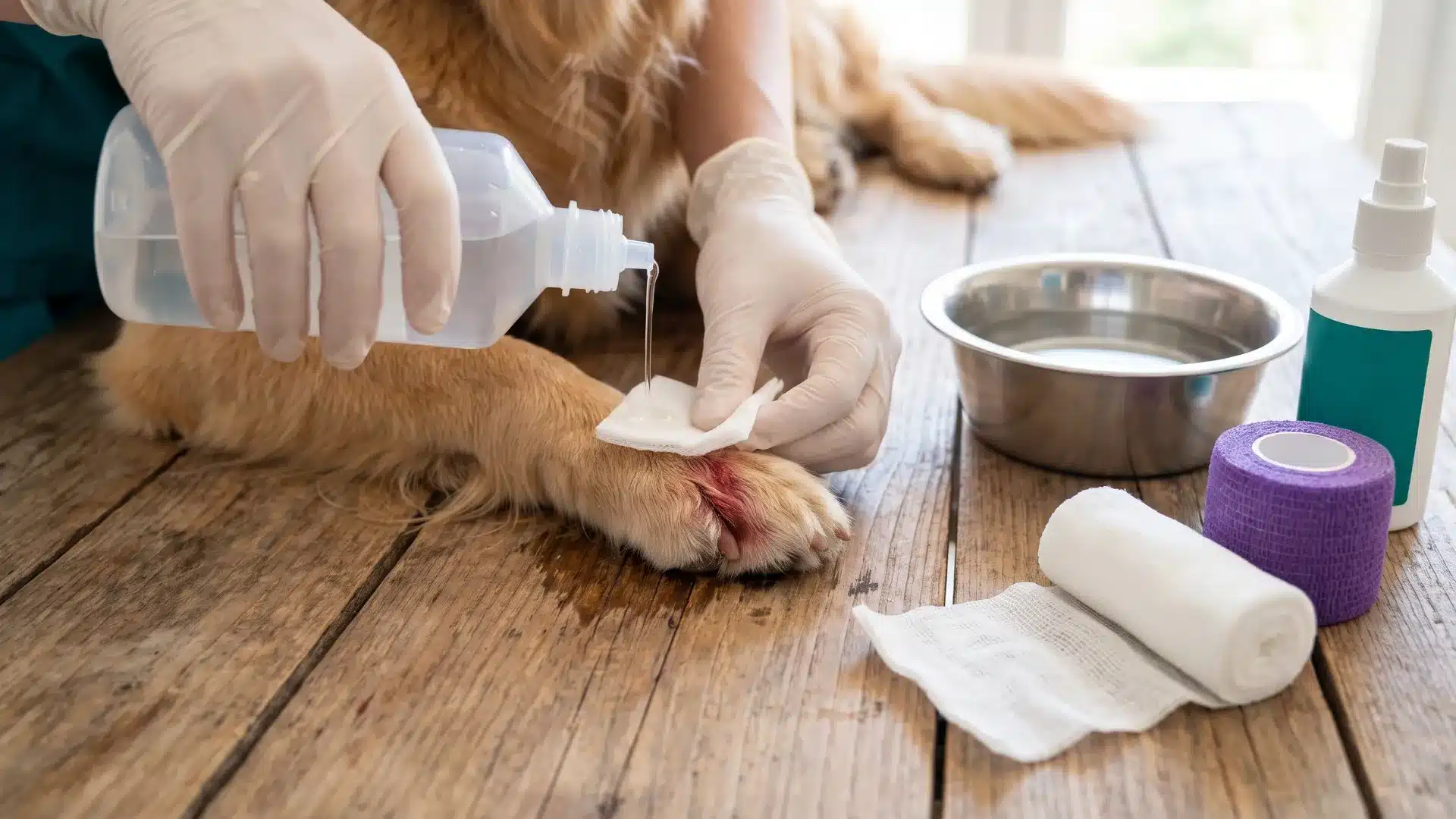
Gently rinse the injured toe with warm water or sterile saline to remove dirt, grass, and other debris. If long fur around the paw is getting into the wound, carefully trim it away to keep the area cleaner as it heals.
When the nail bed is exposed, place a non-stick dressing over the wound, wrap it with gauze, and secure it with a self-adhesive bandage.
The bandage should be snug enough to stay in place but never tight enough to affect circulation.
Step 4: Monitor the Nail and Know When to See a Vet
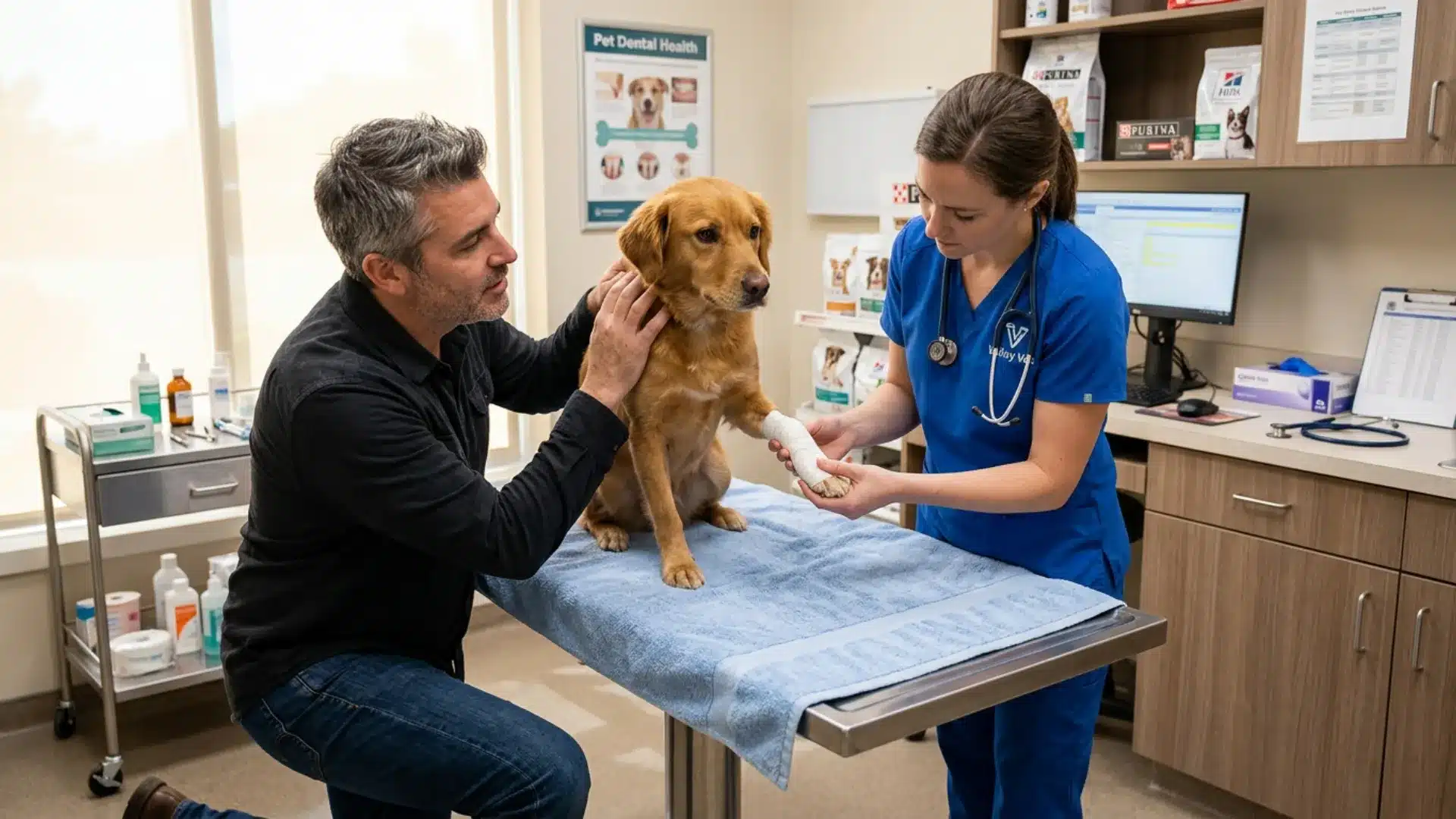
Check the bandage daily and watch for ongoing bleeding, swelling, discharge, a bad smell, or excessive licking, as these can be signs of infection or a more serious injury.
Keeping your dog from chewing or licking the paw, often with an Elizabethan collar, gives the nail the best chance to heal. If the nail is torn down to the base, hanging by a large piece, or your dog continues to limp or show significant pain, don’t try to remove it yourself.
These injuries are often best treated by a veterinarian, who can safely remove damaged tissue, thoroughly clean the wound, and prescribe pain relief or antibiotics if necessary.
How Long Does a Broken Dog Nail Take to Heal?
Most dogs start feeling better within a few days, but complete healing depends on the severity of the injury.
A small chip or crack may heal in 3 to 7 days, while a torn nail with an exposed quick often takes 1 to 2 weeks before it’s comfortable again.
If part or all of the nail is missing, it can take several weeks to a few months for a new nail to fully grow back.
During recovery, keep the paw clean, change bandages as needed, and prevent your dog from licking or chewing the injured toe.
If the bleeding returns, the swelling worsens, or you notice discharge or a bad odor, contact your veterinarian, as these may be signs of an infection.
What Happens if You Leave a Hanging Nail Alone?
It can be tempting to leave a hanging nail alone and hope it heals on its own, but that’s rarely the safest choice.
Unlike a small hangnail, a torn dog nail often exposes living tissue, making it painful and more likely to develop complications if it’s left untreated.
- Higher Risk of Infection. An exposed cuticle allows bacteria to enter the nail bed. If left untreated, the infection can spread deeper into the toe and, in severe cases, even reach the bone. Signs of a paw infection can include swelling, redness, discharge, or a foul odor.
- Longer Healing Time. A loose nail can catch on carpets, grass, furniture, or bedding, reopening the wound and delaying recovery every time it snags.
- More Pain for Your Dog. A nail that’s hanging by a thread rarely improves on its own. Removing or trimming the damaged piece, either safely at home or by a veterinarian, usually leads to a faster and more comfortable recovery.
How to Help Prevent Another Broken Nail?

Most broken nails are preventable, and regular trimming is the biggest reason why.
Long nails are more likely to catch on carpets, grass, furniture, or uneven ground, increasing the risk of painful tears. As a general rule, trim your dog’s nails every 3 to 4 weeks, or sooner if you hear them clicking on hard floors.
Don’t forget the dewclaws, which don’t wear down naturally and are especially prone to snagging. For more tips on keeping your dog’s nails healthy between trims, check out our guide to dog nail care.
Diet also plays a role. Strong, healthy nails are less likely to split than brittle ones, so feeding a balanced diet with the right nutrients supports healthier nail growth over time.
If your dog struggles with nail trims, taking time to make the experience less stressful is far better than rushing and accidentally causing an injury.
How a Vet May Treat a Broken Nail?
A vet will first examine the paw to see how deep the nail break is and whether the quick, toe, or nail bed is injured.
If a damaged nail fragment is loose or hanging, the vet may trim it back or safely remove the broken part to prevent it from tearing again.
After that, they usually clean the area to remove dirt and lower the chance of infection. If the nail is still bleeding, the vet can use appropriate tools or medication to stop the bleeding.
The paw may also be wrapped with a light bandage to protect the nail as it starts to heal. If the injury is painful, the vet may give safe pain relief made for dogs.
This helps the dog walk more comfortably and prevents the injury from worsening.
Conclusion
I’ve learned that staying calm is often the biggest help when dealing with a dog’s broken nail.
Most cases look scarier than they really are, and with a little first aid, many dogs are back on their paws surprisingly quickly.
But if the bleeding won’t stop, the quick is exposed, or something just doesn’t feel right, trusting your instincts and calling your veterinarian is always the safer choice.
Every dog and every injury is different, so there’s no harm in asking for professional advice when you’re unsure. A few minutes on the phone can save your dog days of pain and give you peace of mind.
Have you ever dealt with a dog’s broken nail? Share what happened and what helped in the comments. Your experience could reassure another worried pet parent who’s going through the same thing today.
Frequently Asked Questions
Will My Dog’s Nail Grow Back After It Breaks?
Yes. Most broken nails grow back within a few weeks, although the new nail may look slightly different at first before returning to normal.
Can I Trim the Rest of the Broken Nail Myself?
Only if the loose piece comes away easily. If the nail is firmly attached or your dog is in pain, let your veterinarian remove it safely.
Why Does My Dog’s Nail Keep Bleeding Even with Styptic Powder?
The injury may be deeper than it appears, or the styptic powder may not have fully covered the bleeding area. If bleeding continues after 15 minutes of firm pressure, contact your veterinarian.
Is a Broken Black Nail Harder to Treat?
Yes, slightly. The quick is harder to see in black nails, making it more difficult to judge the extent of the injury. When in doubt, have your veterinarian examine it.