Late at night, your dog is curled up nearby, and their breathing suddenly looks faster than usual.
That tiny rise and fall of your dog’s chest can feel oddly loud when the house is quiet. One moment, your dog looks peaceful; the next, every breath feels like something to question.
You count, pause, count again, and still wonder if something is wrong. That worry is familiar to many pet parents.
The helpful part is that a few simple at-home checks can give you real clues before fear takes over.
With a timer, a calm moment, and a little practice, you can learn what is normal for your dog, notice early warning signs, and feel more confident when something doesn’t feel right.
What is a Normal Dog Respiratory Rate?
Resting respiratory rate is the number of full breaths your dog takes per minute while relaxed, lying down, or sleeping.
One full breath includes the chest or belly rising and falling once. It should be counted when your dog is not panting, playing, dreaming, or excited.
Most healthy dogs breathe about 15 to 30 times per minute at rest.
A sleeping dog may breathe slightly slower, while an awake but alert dog may breathe a little faster. The most useful number is your dog’s normal pattern, so try checking it at the same quiet time each day.
This simple habit can be an early health clue. A rising resting breathing rate may appear before coughing, tiredness, or changes in appetite, especially in dogs at risk of heart disease.
How to Count Your Dog’s Breathing Rate at Home?
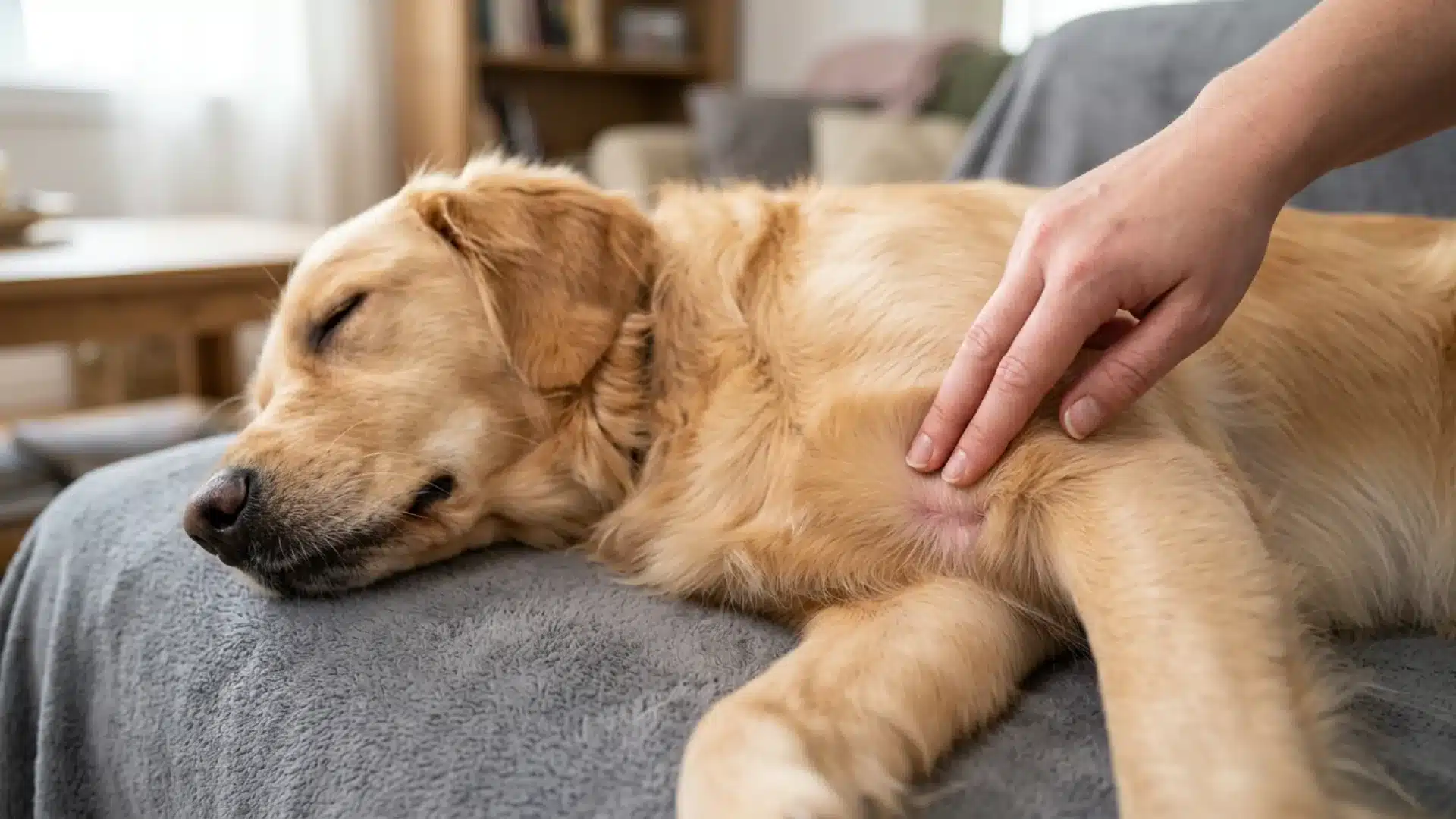
Counting breaths takes less than a minute once you know where to look. The trick is timing it right and watching the right spot, since a sleeping dog’s chest movement is easy to miss if you’re not paying attention.
1. Wait for Complete Rest and Calm State
To get an accurate reading, your dog must be fully relaxed, ideally sleeping or lying quietly for several minutes.
Avoid checking after playtime, walks, eating, or excitement, since these activities naturally increase breathing rate.
A calm environment is also important because noise, heat, or distractions can affect results. The goal is to observe natural breathing without any external influence, so the reading reflects the true resting respiratory rate.
2. Watch the Chest or Rib Area Closely
Focus on the chest or the area just behind the ribs, where breathing movement is easiest to see. Each gentle rise and fall of the chest counts as one full breath.
Some dogs breathe very softly when asleep, so careful observation is important.
Avoid touching or disturbing your dog while counting, as even small movements can change breathing rhythm and affect the accuracy of your measurement.
3. Count Breaths for a Full 30 Seconds
Use a timer and count every complete rise and fall of the chest for 30 seconds. Try to stay focused and avoid distractions during this time.
One full movement in and out equals one breath.
This short-term method helps reduce errors and provides a quick, reliable snapshot of your dog’s breathing pattern at rest without requiring a long observation period.
4. Multiply to Get Breaths Per Minute
After counting for 30 seconds, multiply the number by two to estimate breaths per minute. This gives you the resting respiratory rate in a simple way.
For example, if you counted 15 breaths in 30 seconds, that would the 30 breaths per minute. This number can then be compared with normal ranges to see if your dog’s breathing is within a healthy range.
5. Repeat for a More Accurate Reading
One reading is not always enough, so check your dog’s breathing at different times during rest.
Take a few measurements over the course of the day or across different days to find a consistent average. This helps you understand your dog’s normal baseline more clearly.
Small changes between readings are normal, but consistently high or low values may need attention from a veterinarian.
What’s a Normal Dog Heart Rate at Rest?
A dog’s resting heart rate can feel surprisingly fast, especially in smaller breeds. Size makes a big difference.
| Dog Group | Normal Resting Heart Rate (bpm) |
|---|---|
| Puppies (under 1 year) | 120–160 |
| Small/toy breeds (under 30 lbs) | 100–160 |
| Medium to large breeds (30 lbs+) | 60–120 |
| Senior dogs | Often 10–20 bpm lower than adult baseline |
Very active, athletic adult dogs may also have lower resting heart rates because their hearts work more efficiently.
The most important factor is timing. Do not check right after play, excitement, stress, or a car ride. For the most useful reading, wait until your dog has rested quietly for 15 to 20 minutes.
How to Check Your Dog’s Heart Rate and Pulse?
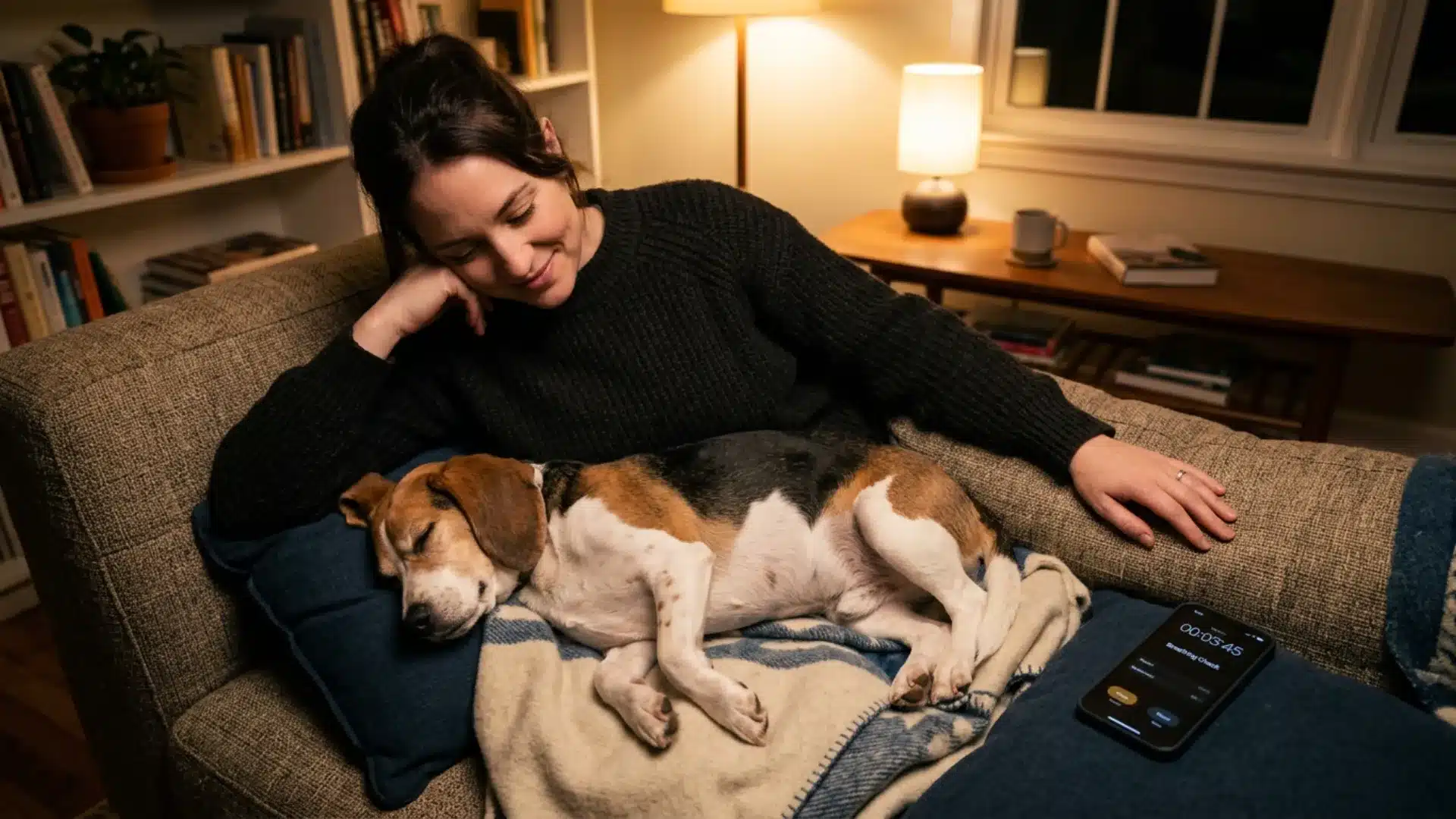
Checking your dog’s heart rate at home is a simple way to monitor overall health and spot early changes. It helps you understand how the heart is working when your dog is calm and resting.
1. Keep Your Dog Calm and at Rest
Start by making sure your dog is completely relaxed, ideally lying down or sleeping for several minutes.
Avoid checking right after exercise, excitement, or eating because these activities naturally increase heart rate. A calm environment is very important for accuracy.
Sit quietly near your dog and wait until breathing and behavior look steady before beginning the pulse check for the most reliable result.
2. Find the Heartbeat or Pulse Location
You can feel your dog’s heartbeat by placing your hand on the left side of the chest just behind the front leg. Another option is the femoral artery, located in the upper hind leg.
Press gently until you feel a steady pulse. It may take a few tries to locate it clearly, especially in overweight or very active dogs with stronger movement.
3. Count Beats for 15 Seconds
Once you find the pulse, use a timer and count each heartbeat for 15 seconds. Keep your fingers still and avoid pressing too hard, as it can make the pulse harder to feel.
Each beat counts as one. Stay focused during this short window, since distractions can easily lead to incorrect counting or missed beats in the measurement process.
4. Multiply to Get Beats Per Minute
After counting for 15 seconds, multiply the number by four to estimate beats per minute. For example, if you counted 25 beats, the heart rate is about 100 beats per minute.
This gives a quick resting heart rate reading. Repeat the process a few times during rest periods to get a more accurate and consistent baseline for your dog’s normal heart activity.
Factors that Can Affect Breathing and Heart Rate
A dog’s breathing and heart rate can change due to many everyday internal and external influences. Understanding these factors helps pet owners avoid misreading normal fluctuations as health problems and focus on true warning signs when monitoring at home.
- Exercise and activity: Physical exertion temporarily increases breathing and heart rate until full recovery occurs naturally.
- Stress and anxiety: Emotional stress triggers faster breathing and an elevated heart rate, even without physical activity.
- Heat and environment: High temperatures or poor ventilation can significantly increase both respiratory and heart rates at rest.
- Pain or discomfort: Injury or illness often causes elevated vital signs as the body responds to stress signals.
- Age and breed: Puppies, small breeds, and active dogs naturally have faster heart and breathing rates overall.
- Flat-faced breeds: Brachycephalic dogs, such as pugs, bulldogs, and boxers, often breathe more loudly and faster than other breeds due to their airway structure. Unusual breathing patterns in these breeds are worth tracking closely with your vet, since what looks alarming in another dog may be closer to normal for them.
Signs You Should Call the Vet
This section is for informational purposes only and is not medical advice. Always speak with a qualified veterinarian before making decisions about your dog’s health.
A dog’s breathing and heart rate can change for many harmless reasons, but persistent or worsening changes should never be ignored.
Monitoring trends over time is more important than a single reading. If values stay abnormal or your dog shows discomfort, it may indicate an underlying health issue that needs veterinary attention.
- Consistently high resting breathing rate above the normal range over multiple checks
- Sudden increase in heart rate compared to your dog’s usual baseline
- Labored breathing with visible effort or strong abdominal movement
- Open-mouth breathing while fully at rest or sleeping
- Pale, gray, or blue gums along with fast breathing or weak pulse
- Weakness, collapse, or unusual fatigue with abnormal heart rate patterns
If any of these signs appear, it is important to contact a veterinarian promptly. Early evaluation can help identify serious conditions before they become emergencies.
Quick action often leads to better outcomes and safer recovery for your dog.
Tips for Getting an Accurate Reading Every Time
Getting a consistent, accurate reading every time depends on a few simple habits that reduce mistakes and improve reliability.
- Same Time, Same Conditions: Check in the evening or morning when your dog is naturally calm, and keep the room setting and temperature consistent.
- Skip It After Excitement: Wait 15 to 20 minutes after play, walks, meals, or stressful moments before counting.
- Watch the Environment: Heat and stress can temporarily raise breathing and heart rate, so avoid using a hot afternoon for baseline readings.
- Keep a Simple Log: Use a notes app or calendar to record numbers. Over a few weeks, patterns become easier to see.
- Address Stress Separately: If handling your dog makes them anxious, calming them first can help you get more accurate results.
Conclusion
The first time you check your dog’s breathing or heart rate, it may feel a little awkward, but it quickly becomes a simple habit.
The goal is not to memorize every normal range. It is to learn what is normal for your own dog.
Once you have a personal baseline, it becomes much easier to notice meaningful changes early, rather than second-guessing every unusual breath or heartbeat.
Choose a quiet evening when your dog is relaxed, record both readings, and keep them somewhere easy to find for future comparison.
That small step can make you feel more confident about your dog’s everyday health.
If you found this helpful, share it with another dog owner and leave a comment below with your dog’s resting numbers or any questions you have.
Frequently Asked Questions
Does Panting Count When Checking Respiratory Rate?
No. Panting is fast, shallow, open-mouth breathing used for cooling, so it can give a falsely high count. Wait until your dog is calm, resting, and breathing normally through the nose.
Can Stress or Excitement Raise My Dog’s Vitals?
Yes. Stress, excitement, heat, play, or travel can temporarily raise both breathing and heart rate. The numbers should usually settle after 10 to 30 minutes of calm rest.
How Often Should I Check My Dog’s Vitals at Home?
For a healthy dog, once or twice a week is enough. Dogs with heart or lung conditions may need daily checks, but follow your veterinarian’s specific advice.
Is a Pulse Oximeter or Fitness Tracker Worth Using at Home?
Consumer pulse oximeters and pet fitness trackers can offer a rough estimate, but they are not built or validated for veterinary accuracy. The manual chest-count and pulse-check methods above remain the most reliable way to track your dog’s baseline at home.