Vestibular disease in dogs can look very scary when it starts suddenly. A dog may lose balance, tilt the head, stumble, fall, or act like the room is spinning.
Some dogs also feel sick, refuse food, or move their eyes in a strange way. Seeing this can make any owner panic, especially when the dog seemed fine earlier.
The good news is that not every case means something severe is happening. Some dogs improve with vet care, rest, and a little time, especially when the cause is not serious.
Still, a vet check is important because balance problems can have different causes.
In this blog, you will learn what causes it, what signs to watch for, how vets diagnose it, what treatment may include, and what real dog owners often notice during the healing stage.
What is Vestibular Disease in Dogs?
The vestibular system is the part of the body that helps a dog stay balanced.
It works through parts of the inner ear, nerves, and brain. This system helps the body understand position, movement, and direction.
It also helps control eye movement, so the eyes can stay steady when the head moves. When this system is not working well, a dog may seem dizzy or unsteady.
The dog may walk like the ground is moving, fall to one side, tilt the head, or have eyes that move back and forth. These signs can appear very fast, which is why many owners feel worried.
The problem can come from different places. That is why vets often look at the symptoms carefully before explaining the type.
Early Signs of Vestibular Disease in Dogs
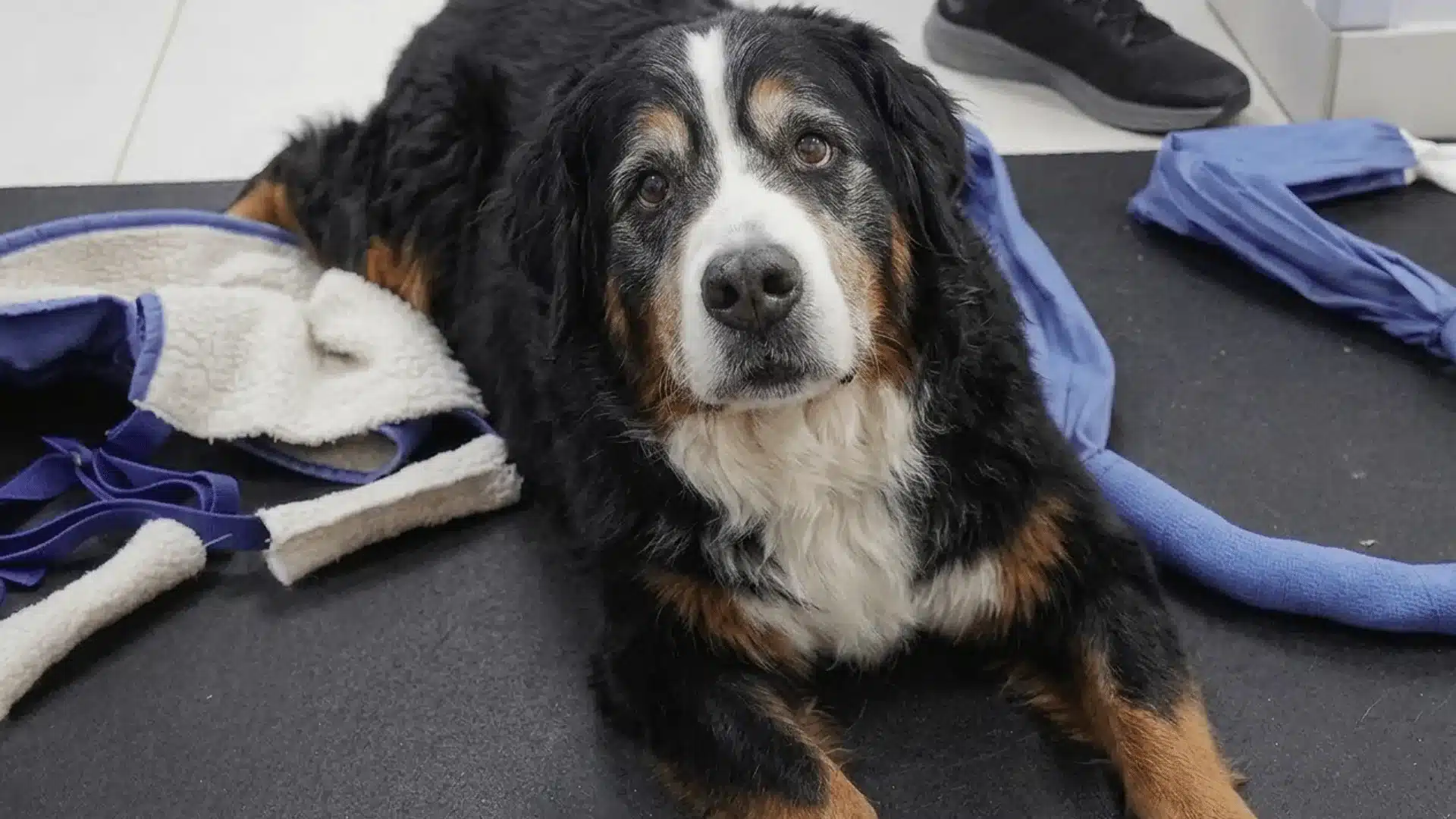
These symptoms often appear quickly and can make a dog look dizzy, weak, confused, or unable to move normally.
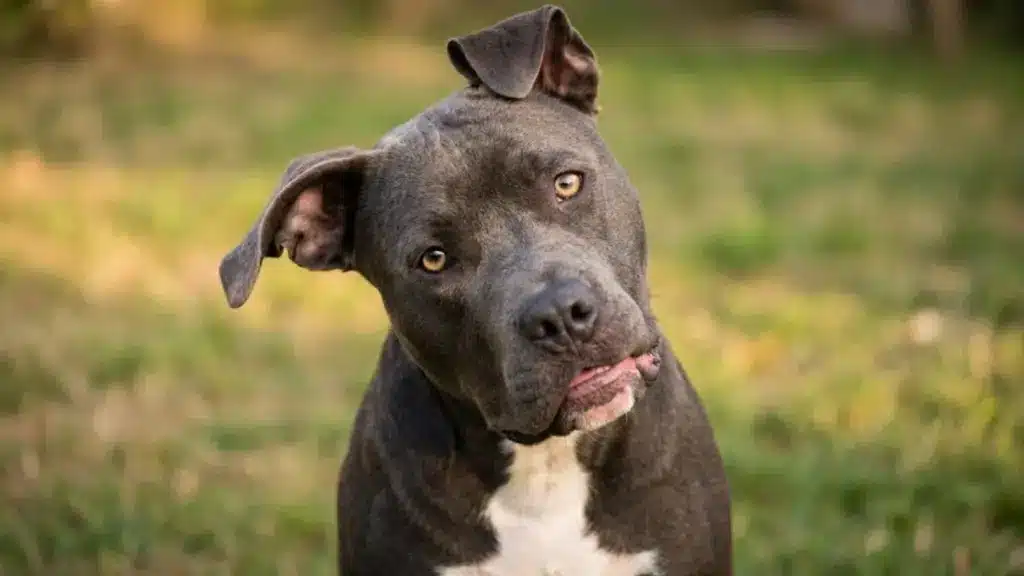
- Head tilt: The dog may hold the head to one side most of the time, even while sitting, standing, or trying to walk.
- Loss of balance: The dog may wobble, lean into walls, stumble across the floor, or walk like the ground is moving.
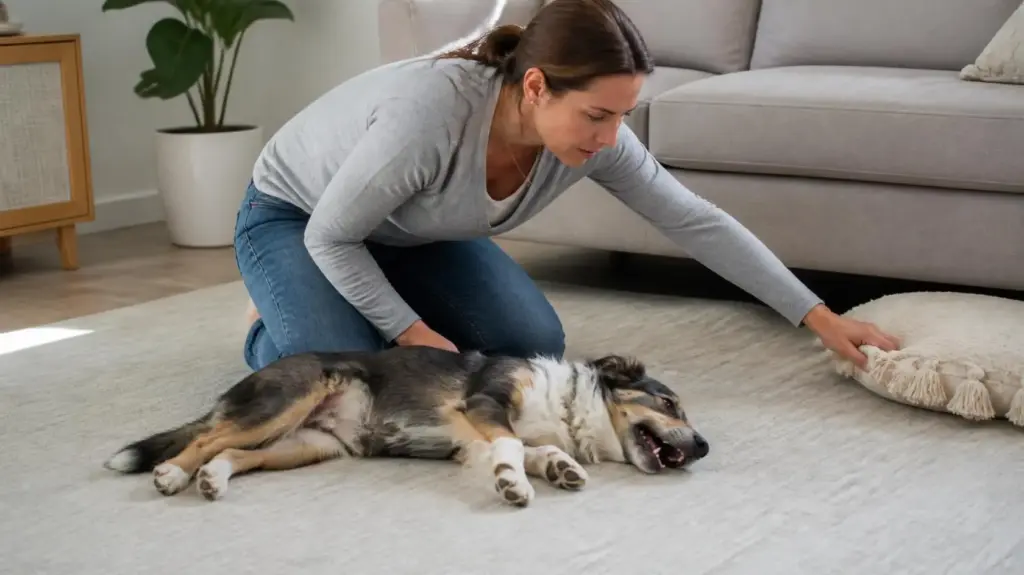
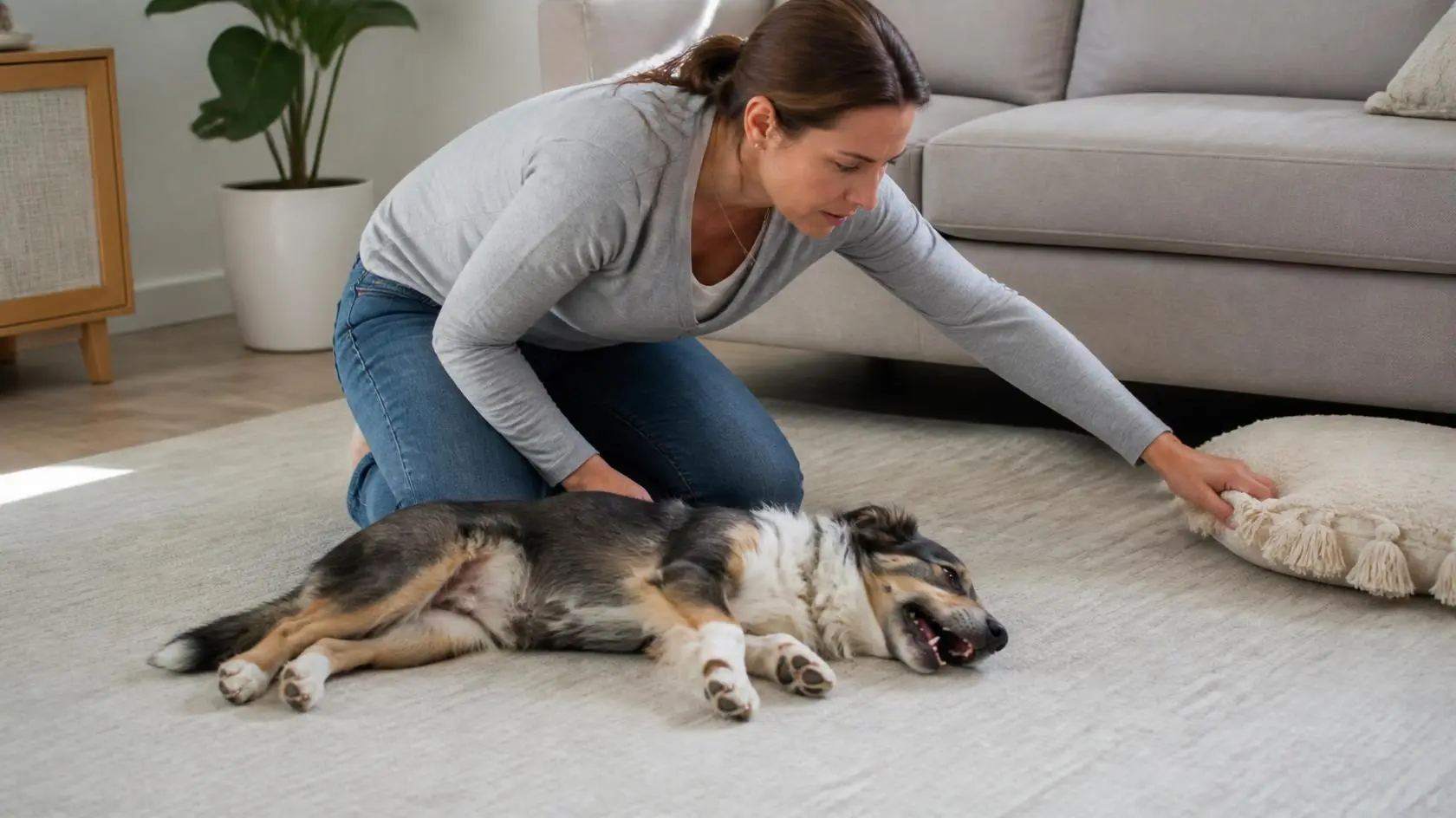
- Falling or rolling: Some dogs fall toward one side, roll over, or struggle to stay upright after trying to stand.
- Rapid eye movement: The eyes may flick side to side or move up and down, even when the dog is not moving.
- Nausea or vomiting: Dizziness can cause the dog to drool, gag, vomit, or seem restless because the body feels off-balance.
- Walking in circles: The dog may turn in one direction repeatedly instead of walking straight across the room.
- Trouble standing: Some dogs may need help getting up, going outside, climbing steps, or staying steady on smooth floors.
- Loss of appetite: Nausea, stress, and dizziness may make the dog refuse food, avoid treats, or drink less water than usual.
What Causes Vestibular Disease in Dogs?
Vestibular problems can occur for several reasons, and the cause often affects treatment, recovery time, and the severity of the case.
1. Idiopathic Vestibular Disease
Idiopathic vestibular disease means the vet cannot find one clear cause after checking the dog.
It is often seen in older dogs, which is why some people call it old dog vestibular disease. The signs can appear suddenly, even when the dog seemed normal earlier in the day.
This can feel scary for owners, but many dogs start to improve over time with rest and supportive veterinary care.
2. Ear Infections
Middle or inner ear infections can affect the balance system because the inner ear plays a major role in steady movement.
When an infection reaches the deeper parts of the ear, a dog may tilt its head, stumble, or appear to be dizzy.
Some dogs may also scratch the ears, shake the heads, cry when touched, or have odor and discharge. These cases require veterinary care because the infection may require proper treatment.
If you want to understand how vets treat these infections at the source, our guide to dog ear infection care walks through the signs and at-home support that pairs with veterinary treatment.
3. Injury or Trauma
A head injury or severe trauma can disrupt the nerves, inner ear, or brain regions that help control balance.
This may happen after a fall, accident, rough impact, or another injury. The signs can appear quickly and may come with pain, swelling, weakness, or unusual behavior.
Any dog with balance problems after trauma should be checked by a vet, even if the injury looks minor from the outside.
4. Tumors or Brain Disease
Some cases may involve deeper nerve or brain problems, including growths, inflammation, or other diseases affecting the balance pathway.
This does not mean every dizzy dog has a serious condition, but vets may consider these causes when signs are unusual, severe, or not improving.
Extra testing may be needed if the dog shows weakness, behavioral changes, seizures, or symptoms that worsen over time.
5. Medication or Toxin Exposure
Some medicines, chemicals, or toxins can affect a dog’s balance, movement, or nervous system.
This may happen after a new medication, wrong dose, accidental exposure, or contact with something harmful at home or outside.
Owners should tell the vet about recent medicines, ear drops, supplements, flea products, plants, cleaners, or possible toxin exposure.
This helps the vet understand whether the symptoms may be linked to something the dog took or touched.
Peripheral vs Central Canine Vestibular Disease
Peripheral and central vestibular disease affect different parts of the balance system. Peripheral cases usually involve the inner ear or vestibular nerve, while central cases involve the brain or brainstem.
Knowing the difference helps explain why some dogs recover with basic support, while others need deeper testing.
- Peripheral Vestibular Disease: This often causes head tilt, nausea, rapid eye movements, and a tendency to fall to one side. It may be linked to ear infections or idiopathic vestibular disease.
- Central Vestibular Disease: This may cause loss of balance, weakness, seizures, behavioral changes, or worsening symptoms. These signs can point to a more serious brain or nerve problem.
Is Vestibular Disease Serious?
Yes, vestibular disease in dogs can be serious, but not every case is life-threatening. The symptoms often look alarming because they can appear suddenly and affect balance, walking, appetite, and comfort.
- Mild cases: Some dogs have a short episode and begin to improve with rest, safety support, and veterinary care.
- Cases that need testing: Dogs with severe signs, weakness, seizures, pain, or worsening symptoms may need blood work, ear checks, or imaging.
- Overall health matters: Age, cause, symptom severity, and existing health problems can change how serious the condition is.
Even if your dog seems comfortable, do not assume the condition is harmless. A veterinary examination is the safest way to identify the underlying cause and determine whether treatment or additional testing is needed.
When Should a Dog See a Vet Right Away?
Some vestibular signs can wait until a same-day vet visit, but these symptoms require prompt medical attention and should not be ignored.
- Sudden collapse: If the dog drops, cannot get up, or seems too weak to stand, get help right away.
- Seizures: Shaking, stiffening, paddling, drooling, or loss of control of the body may indicate a more serious problem.
- Weakness on one side: Dragging one side, falling only one way, or uneven movement may need urgent testing.
- Severe vomiting: Repeated vomiting can lead to dehydration and may make dizziness much harder for the dog to handle.
- Loss of consciousness: If the dog faints, becomes unresponsive, or cannot react normally, treat it as an emergency.
- Trouble breathing: Heavy breathing, choking sounds, blue gums, or gasping should be checked by a vet immediately.
How Do Vets Diagnose Vestibular Disease?
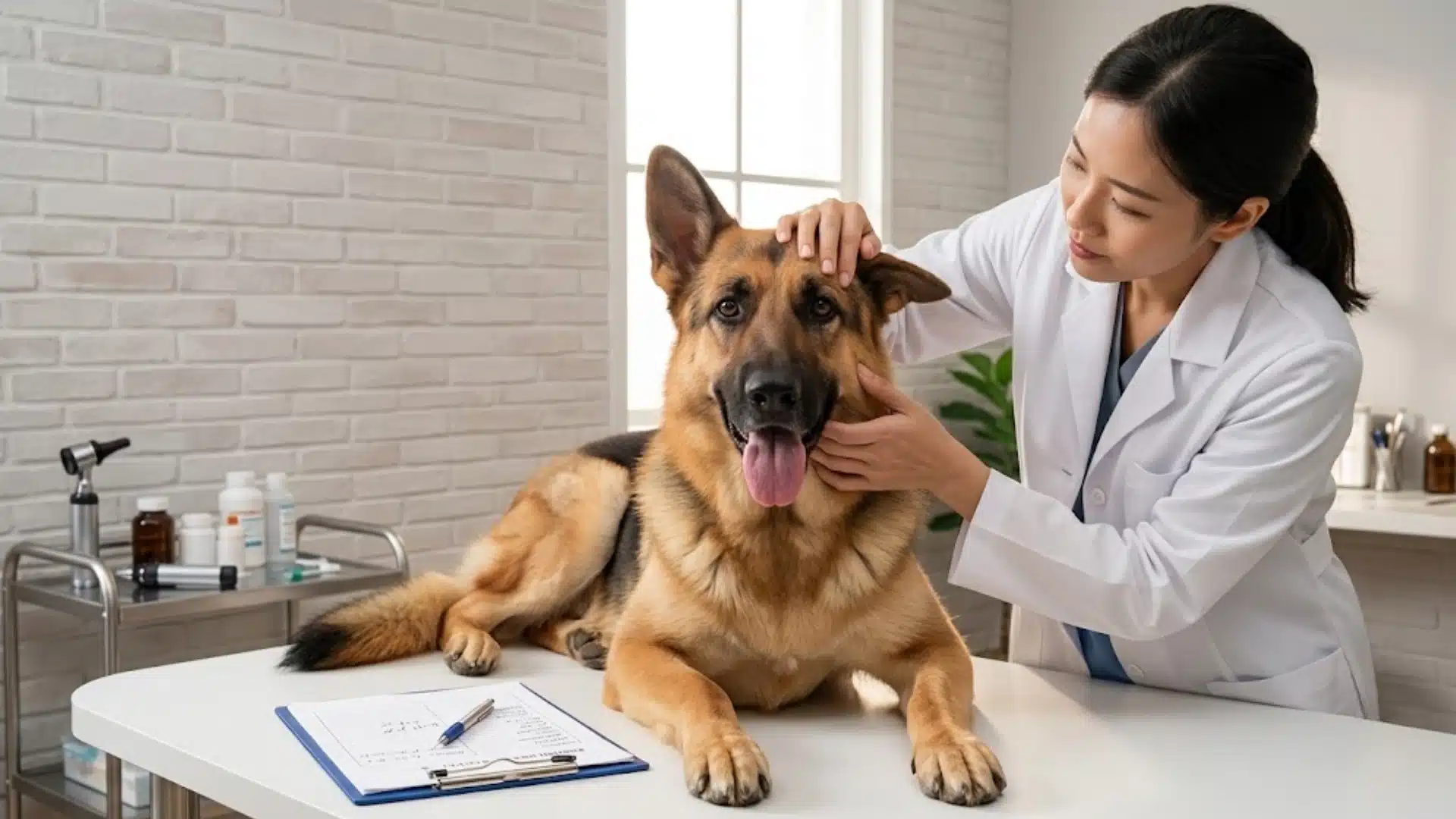
A vet usually starts by looking at the dog’s symptoms and overall condition. The exam may include checking balance, posture, eye movements, walking, and the dog’s response to touch or sound.
The vet may also look inside the ears because ear infections can affect the balance system.
A neurological check may help show whether the problem seems linked to the inner ear, nerves, or brain.
Depending on the signs, the vet may suggest blood tests, ear swabs, deeper ear testing, X-rays, CT scans, MRI, or a referral to a specialist. Not every dog needs advanced testing right away.
Diagnosis often depends on the dog’s age, health history, exam findings, how severe the symptoms are, and whether the signs begin to improve over the next few days.
Standard Treatment Options for Vestibular Disease
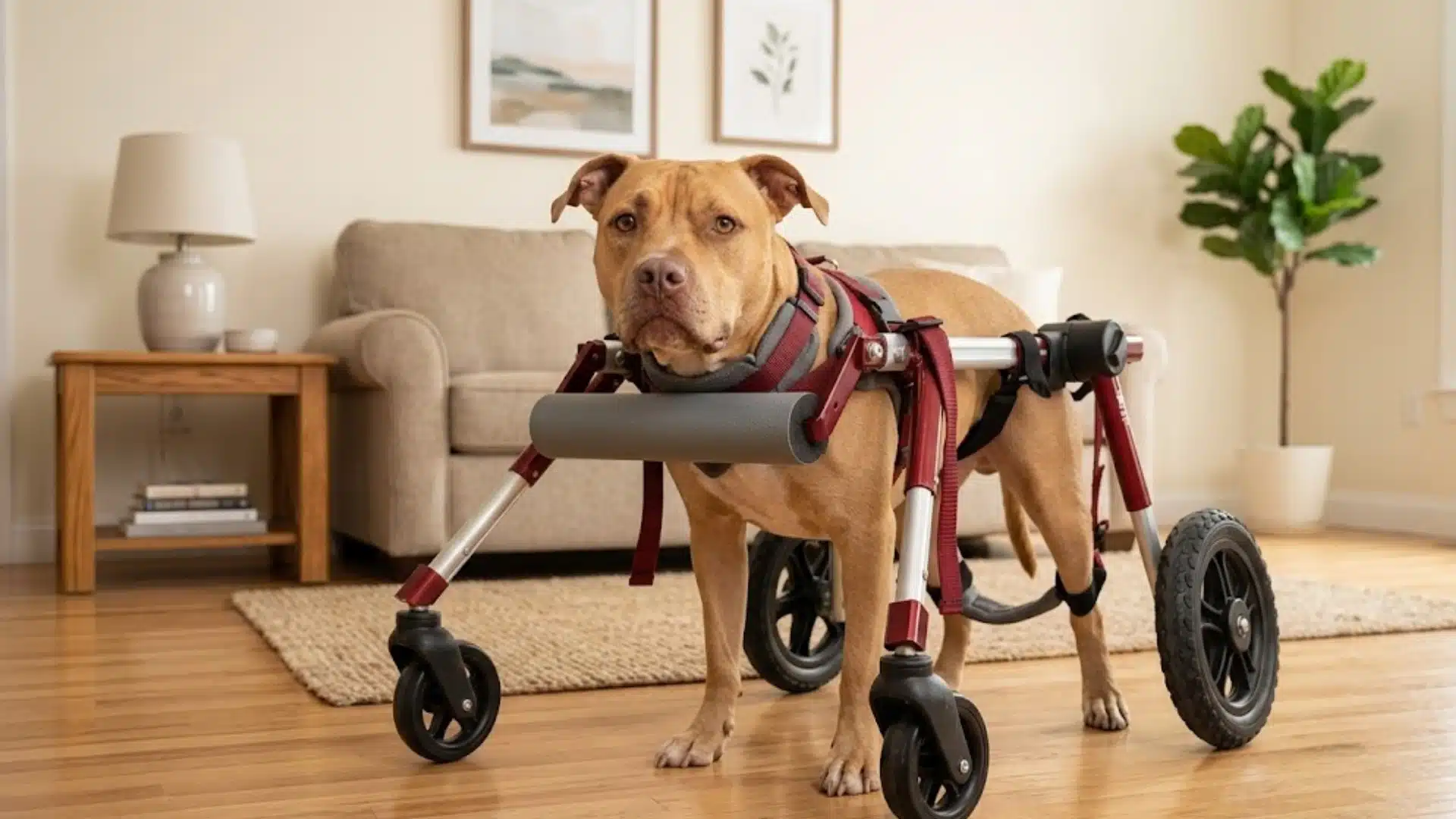
Treatment depends on the cause and symptoms, but most plans focus on comfort, safety, hydration, and steady recovery.
1. Treating Ear Infections
If the vet finds a middle or inner ear infection, treatment may include ear medicine, oral antibiotics, anti-inflammatory medicine, or careful cleaning.
Deep ear infections can take time to heal, so the full plan should be followed even if the dog looks better.
Owners should not use leftover eardrops unless the vet approves them, as some products may cause problems if the eardrum is damaged.
2. Anti-Nausea Medicine
Dogs with vestibular symptoms often feel dizzy, which can lead to drooling, vomiting, pacing, or refusing food.
A vet may give anti-nausea medicine to help the dog feel more settled. A vet may prescribe anti-nausea medicine to settle the stomach, similar to the approach covered in our piece on nausea in dogs.
Once nausea improves, the dog may be more willing to eat, drink, and rest. This support does not fix every cause, but it can make recovery much easier during the worst part of the episode.
3. Fluids if the Dog is Dehydrated
If the dog is vomiting, drinking less, or too dizzy to stand, dehydration can become a concern.
The vet may give fluids under the skin or through an IV, depending on the dog’s condition. Fluids help support strength, hydration, and recovery.
This can be especially important for older dogs, small dogs, or dogs with other health problems that make dehydration harder to handle.
4. Support with Eating and Drinking
Some dogs need help because dizziness makes it hard to bend toward a bowl or keep their balance while eating.
The vet may suggest placing food and water close by, using a raised bowl, offering soft food, or hand-feeding small amounts.
If the dog refuses water, cannot keep food down, or seems weaker, the vet should be updated because extra care may be needed.
5. Safe Resting Space
A quiet, safe resting space helps prevent falls when the dog is dizzy, weak, or unsteady. Soft bedding can make the dog more comfortable, while rugs, yoga mats, or non-slip flooring can help with grip.
Stairs should be blocked, and sharp furniture edges should be avoided when possible. Keeping the dog in one calm room can also make it easier to watch symptoms, offer water, and help with bathroom breaks.
Loud noises, bright lights, visitors, and excessive movement may increase stress in some dogs during the early recovery stage.
6. Help with Walking
Dogs with balance problems may need support when standing, walking outside, or going to the bathroom. A body harness, towel sling, or gentle hand support can help the dog move without slipping or falling.
Owners should avoid pulling the neck, rushing the dog, or forcing longer walks before the dog feels ready.
Short, slow trips on flat ground are usually safer than on stairs, when jumping, or on smooth floors. Some dogs may also need help turning around, getting into position to potty, or settling back down after walking.
Real Owner Experiences with Vestibular Disease in Dogs
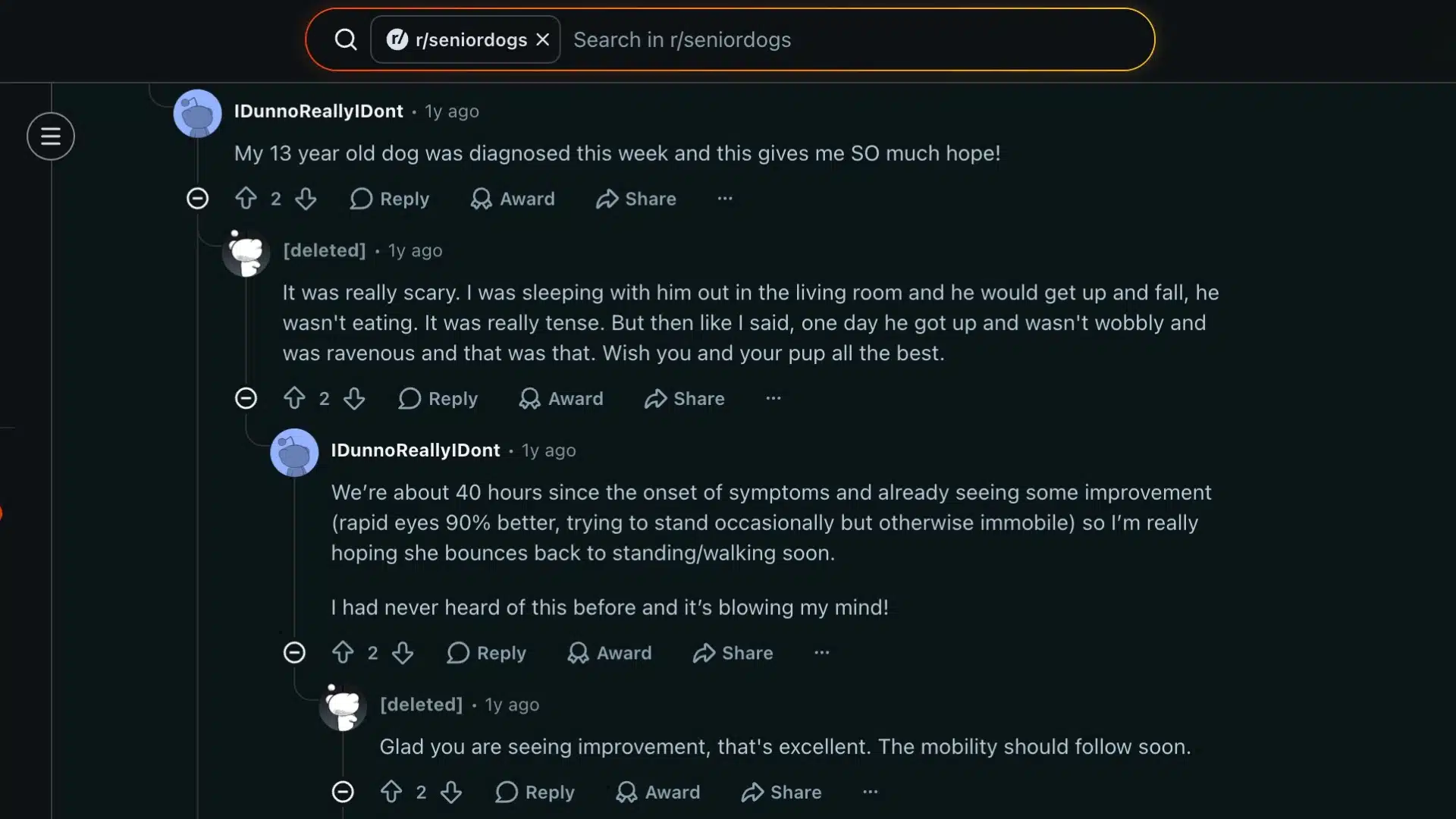
Reddit dog owners often describe vestibular disease in dogs as frightening at first, especially when symptoms appear suddenly.
One owner said their dog took almost two weeks to recover, even after medicines did not seem to help much. Then, one day, the dog got up, walked normally, and ate breakfast again.
Another owner shared that their 15-year-old dog improved, had another episode, and was even treated for a possible ear infection, but the symptoms faded with time.
A third owner said their dog recovered enough to eat, drink, and go outside after about a week. A mild head tilt and weaker balance remained, but the dog still seemed happy.
These stories show that recovery can feel slow, uneven, and worrying, but many dogs do improve with patience and vet guidance.
What Does Recovery Usually Look Like?
Recovery can look different for each dog because it depends on the cause, age, symptoms, and overall health. Some dogs improve quickly, while others need more time and support.
- First few days: Many dogs with idiopathic vestibular disease begin to show small signs of improvement within a few days. They may stand better, seem less nauseous, or look more aware.
- Balance may return slowly: Walking can stay wobbly for a while, even when the dog is getting better. Short, safe movement and rest often help during this stage.
- Mild head tilt may remain: Some dogs recover well but keep a slight head tilt. This does not always mean the dog is still suffering.
Older dogs may need extra help with walking, eating, drinking, and getting outside until they feel steady again.
Prognosis for Dogs with Vestibular Disease
Many dogs recover well from vestibular problems, especially when the cause is idiopathic or linked to a mild, treatable condition.
In idiopathic cases, improvement often starts within a few days, though full recovery may take longer.
The dog may still look wobbly at first, but small changes like improved balance, reduced nausea, and greater interest in food are good signs.
The prognosis is usually better when the cause can be managed, such as an ear infection or temporary irritation. Older dogs or those with other health problems may need more support during recovery.
If the cause involves the brain, nerves, tumors, severe infection, or symptoms that keep getting worse, care may take longer. Some dogs may also need advanced testing, follow-up visits, or specialist support.
Conclusion
Vestibular symptoms can be scary to watch, especially when a dog suddenly loses balance, tilts the head, vomits, or struggles to stand.
The good thing is that these signs do not always mean the worst. Some dogs improve with time, safety support, and the right vet care.
Still, it is important to get a vet check because balance problems can come from mild issues, ear infections, toxins, injuries, or deeper nerve problems.
A proper exam helps separate the cases that may improve with support from the ones that need more testing.
With vestibular disease in dogs, recovery often depends on the cause, age, symptoms, and overall health. Many dogs can regain comfort and stability with patience.
Has your dog ever had a sudden loss of balance? Share your experience in the comments to help other dog owners.
Frequently Asked Questions
Can Vestibular Disease in Dogs Affect Both Sides of the Body?
Yes, but many dogs show stronger signs on one side, such as leaning, falling, or tilting the head in one direction. In some cases, both sides may appear affected, especially if the dog is very weak, dizzy, or has a more pronounced balance problem.
Should a Dog with Vestibular Disease Be Kept in a Crate?
A crate may help some dogs rest safely, but it is not right for every case. Some dogs feel calmer in a small space, while others may panic if they feel trapped. A safe room with soft bedding, blocked stairs, and good floor grip may be better.
Can Stress Make Vestibular Symptoms Worse in Dogs?
Stress does not usually cause the main balance problem, but it can make a dizzy dog seem more upset or restless. Loud noise, too much handling, visitors, bright lights, or constant movement may make recovery harder.