One minute your dog is happily chasing a ball, and the next they’re squinting, pawing at one eye, and refusing to open it.
A corneal ulcer in dogs can develop faster than most owners expect, and the treatment routine often feels more challenging than the diagnosis itself.
When I first dealt with it, I quickly realized the hardest part wasn’t the eye drops.
It was getting them into a wiggly dog, keeping the cone on, and wondering whether the eye was actually healing or if I was missing something important. If you’re feeling the same way, you’re not alone.
This blog walks through what a corneal ulcer is, what daily care really looks like, and how to recognize the signs that a dog’s eye ulcer is healing.
What is a Corneal Ulcer in Dogs?
A corneal ulcer in dogs is an open sore or scratch on the clear surface of the eye called the cornea.
This layer protects the inner parts of the eye, so even a small injury can cause pain and discomfort.
It often happens when something scratches the eye, such as dust, a sharp object, rough play, or a foreign particle getting trapped.
In some cases, underlying problems such as dry eye or eye infections in dogs can also make the cornea more prone to breakdown.
The condition can range from mild surface damage to deeper wounds that need urgent treatment.
Without proper care, it may worsen quickly and affect vision, so early attention and veterinary treatment are important for safe healing and recovery.
Early Signs of a Corneal Ulcer in Dogs
Maybe you’re here because your dog’s eye just started looking off and you haven’t been to the vet yet. Here’s what usually shows up:
- Squinting or Closing: This is often the first sign owners notice and usually means the eye is painful.
- Eye Redness: The white of the eye may appear bright red and inflamed rather than slightly pink.
- Watery Discharge: Clear tearing is common, but yellow or green discharge may signal a secondary infection.
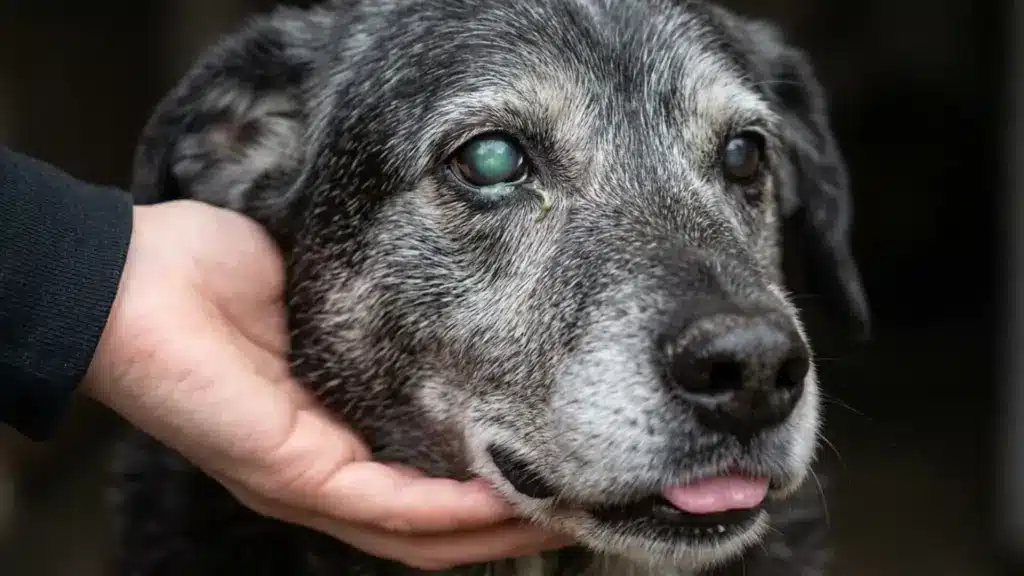
- Cloudy Eye: The eye may appear cloudy, bluish, or slightly milky as the damaged cornea swells.
- Face Rubbing: Dogs often paw at the eyes or rub their faces on furniture, which can worsen the ulcer.
Any one of these signs is enough to schedule a same-day veterinary visit. If your dog suddenly cannot open the eye, the eye starts bleeding, or something appears stuck in it, seek emergency veterinary care immediately.
When to Call the Vet About a Dog’s Eye Ulcer
Most simple corneal ulcers begin improving within a few days. If your dog’s eye isn’t following that pattern, don’t wait and hope it gets better. Contact your veterinarian if you notice:
- The eye may look worse after 2 to 3 days of treatment, with increased redness, swelling, or squinting.
- Colored discharge appears, especially yellow or green, instead of normal clear tears.
- Cloudiness spreads or becomes thicker, covering a larger area of the cornea.
- Pain increases with more pawing, rubbing, or the dog keeping the eye closed more often.
- A dent or bubble forms on the cornea, which may appear as a crater or a raised spot.
These changes may mean the ulcer is deeper, infected, or not healing as expected. While many simple ulcers heal within about a week, indolent and complicated ulcers often require different treatment.
How Do Vets Diagnose a Corneal Ulcer?
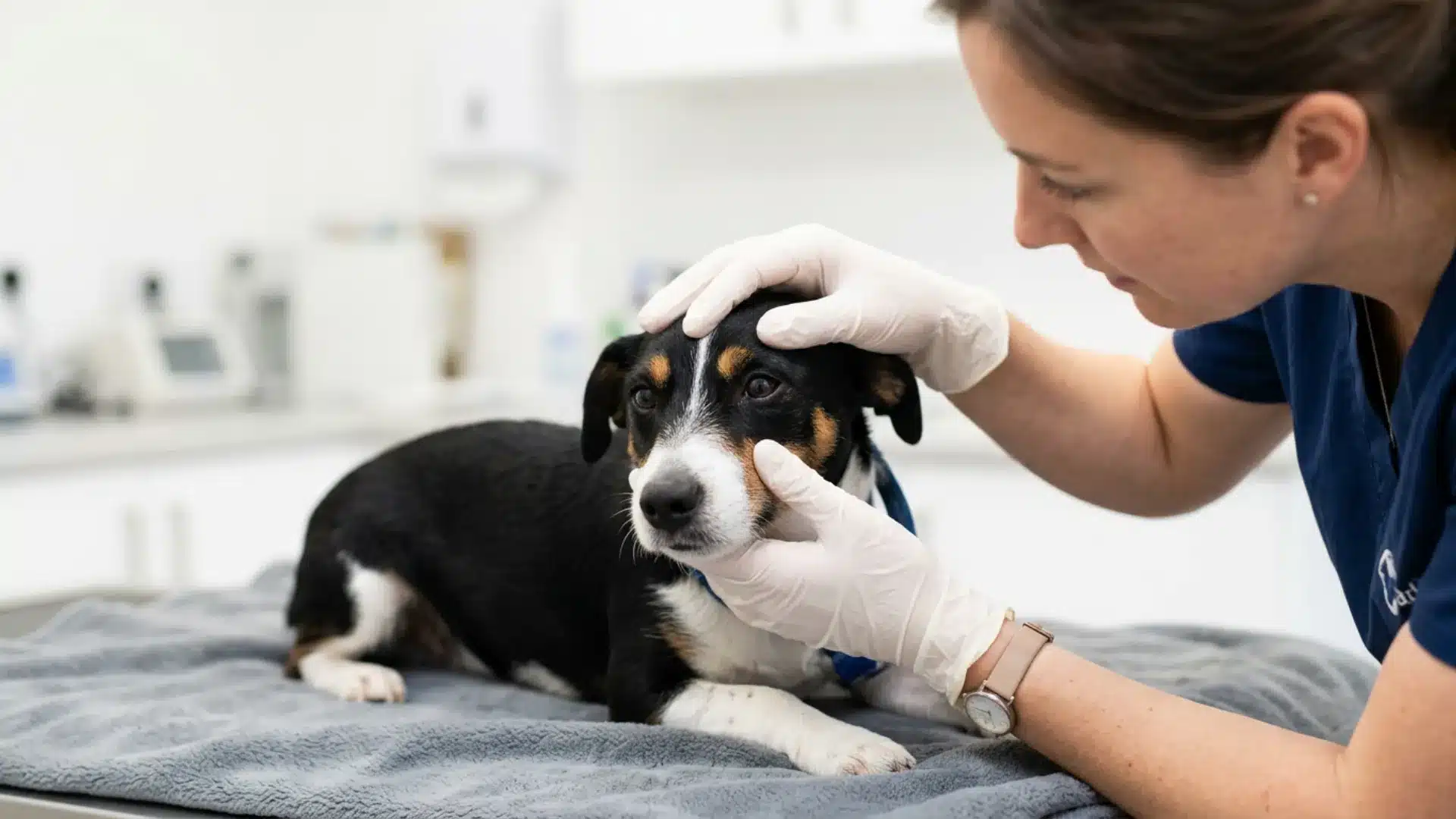
If your veterinarian suspects a corneal ulcer, they’ll usually begin with a thorough eye examination.
The most common test is a fluorescein stain, a harmless orange dye that sticks to damaged areas of the cornea, making the ulcer visible under blue light.
Depending on what they find, your vet may also check tear production, look for a trapped eyelash or a foreign object, measure intraocular pressure, or assess how deep the ulcer extends.
These tests help determine whether the ulcer is simple, infected, or deep enough to require more advanced treatment.
In some cases, a gentle eyelid exam is also done to rule out abnormal eyelid growth or irritation.
This comprehensive assessment ensures the correct treatment plan is chosen quickly, helping to reduce pain, prevent complications, and support faster healing of the dog’s eye condition.
Daily At-Home Care Routine for a Dog with a Corneal Ulcer
Treating a corneal ulcer at home comes down to four things: eye drops on schedule, the cone actually staying on, a calm environment, and daily eye checks. Here’s what that looks like in practice.
- Set drop reminders: Most corneal ulcers require medication 2 to 4 times a day. Phone alarms keep doses evenly spaced rather than clustering around your schedule.
- Warm the drops slightly: Cold drops straight from the fridge tend to trigger more blinking and resistance. Rolling the bottle between your palms for a few seconds makes application easier.
- Try a towel wrap for wriggly dogs: Wrap a small or anxious dog snugly in a towel, arms included, to free up your hands and stop them from pawing at your face mid-drop.
- Keep the cone on during naps, not just walks: Most accidental scratches happen when the cone comes off “just for a minute” on the couch. Leave it on unless you’re actively supervising with a hand on the dog.
- Dim harsh light: Ulcers make eyes light-sensitive. Partly closed blinds indoors and avoiding direct sun on walks both cut down on squinting and discomfort.
- Skip rough play and swimming: Wrestling, fetch, and pools all increase the risk of debris or water reaching the eye before it heals.
Signs a Dog Eye Ulcer is Healing
Healing is usually gradual rather than dramatic. Instead of expecting a major change overnight, look for small improvements that continue over several days.
These are the most reliable signs your dog’s eye is moving in the right direction:
- Less Squinting: Your dog keeps the affected eye open longer rather than holding it tightly shut.
- Fading Redness: The white of the eye changes from bright red to a lighter pink as inflammation settles.
- Less Discharge: Tearing becomes less frequent, and any discharge gradually decreases rather than increases.
- Improved Comfort: Your dog seems calmer, paws at the eye less, and returns to normal activities.
- New Blood Vessels: Tiny blood vessels may grow toward the ulcer to support healing. They can look alarming but are usually a normal sign of recovery.
Compare your dog’s eye every day or two instead of every few hours. The overall pattern of steady improvement is a much better sign than expecting noticeable changes from one day to the next.
How Long Does a Corneal Ulcer Take to Heal?
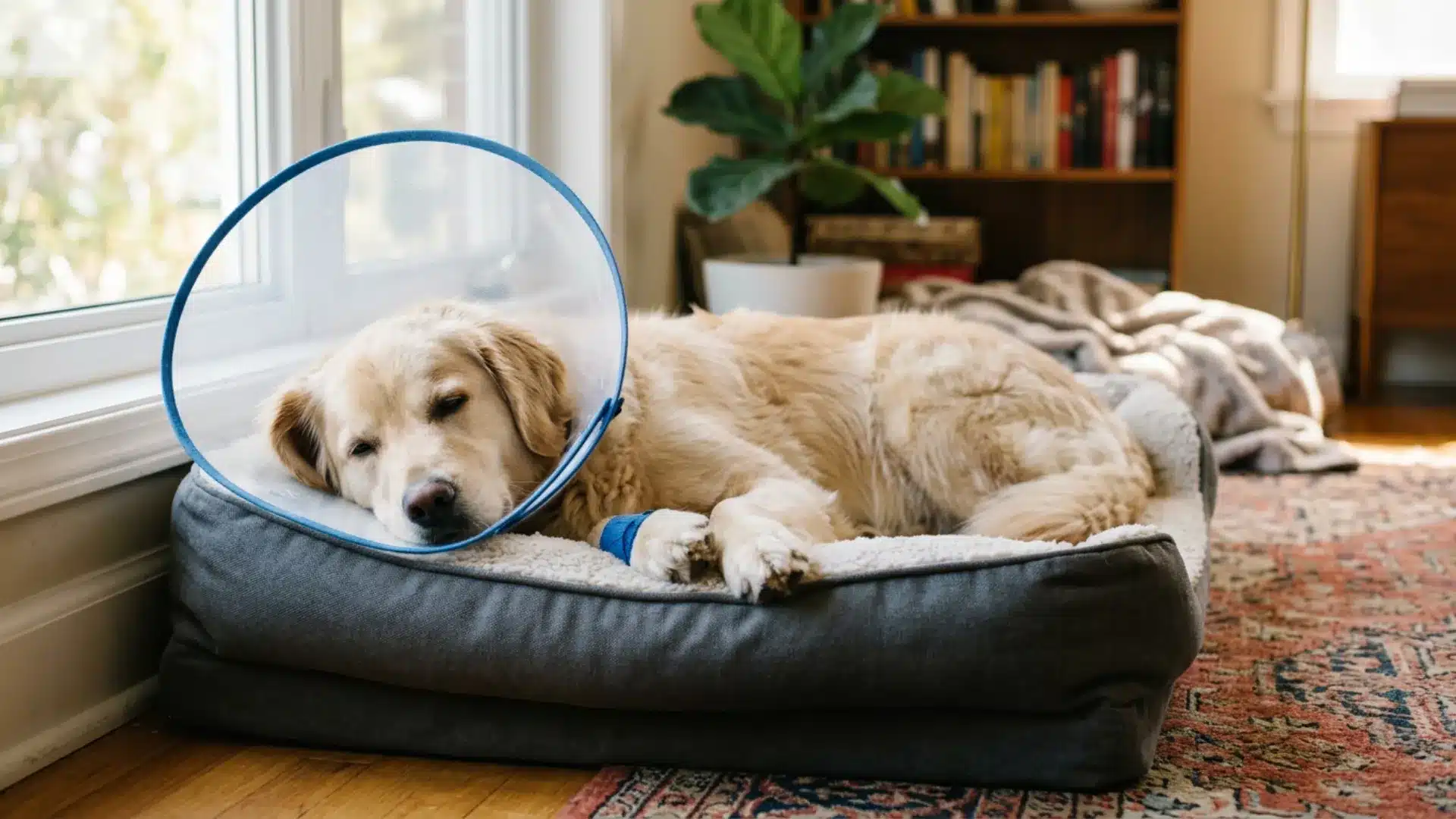
Recovery depends on how deep the ulcer is and what caused it. Most simple, superficial corneal ulcers heal within 5 to 10 days when eye drops are used as prescribed, and the cone stays in place.
Deep, infected, or indolent ulcers often take several weeks to heal and may require additional treatment or a minor in-clinic procedure before healing can begin.
Your veterinarian will usually schedule a recheck after about a week. Even if the eye looks much better, the ulcer may not be fully closed, and only a fluorescein stain test can confirm it’s healed.
One easy habit that makes tracking recovery much easier is taking a clear photo of your dog’s eye once a day in the same lighting.
It makes subtle changes easier to spot, gives your veterinarian a better way to compare progress between visits, and can help determine whether what you’re seeing is normal healing or a reason to come back sooner.
Corneal Ulcer Healing Stages
A corneal ulcer heals in four rough stages. Knowing what each one looks like makes it much easier to judge your own daily photos against what’s normal.
| Stage | Typical Day Range | What You’ll See | Comfort Level |
|---|---|---|---|
| Active inflammation | Day 1 to 2 | Bright red eye, heavy tearing, eye held shut, light sensitivity | High pain, frequent squinting |
| Early surface repair | Day 2 to 5 | Redness starts to soften, surface cells begin covering the wound, and occasional cloudiness | Moderate discomfort, less constant blinking |
| Tissue rebuilding | Day 5 to 10 | Cloudy or bluish tint fades, tiny new blood vessels may appear near the ulcer | Mild discomfort, dog resumes normal habits |
| Full healing | Day 10 to 14 (simple ulcers) | Eye looks clear, or has a faint permanent haze; no discharge or squinting | No pain |
Deep, infected, or indolent ulcers move through these same stages more slowly and may take several weeks to reach stage four.
When comparing your daily photos, focus on three things: how red the white of the eye is, whether the cornea looks cloudy or clear, and how much of the eye your dog is willing to keep open.
Small day-to-day noise, like a bit more tearing right after a nap, matters far less than the overall five-day trend.
Common Mistakes that Can Delay Recovery
Recovery from a corneal ulcer in dogs can slow down when small mistakes in care occur at home. These issues often seem minor but can increase irritation, delay healing, or even worsen the condition.
- Skipping prescribed eye medication: Missing doses reduces healing effectiveness and allows infection or inflammation to return quickly during recovery.
- Letting the dog rub the eye: Rubbing can reopen the ulcer, increase pain, and cause more serious corneal damage.
- Using human eye drops: Many human medications irritate dog eyes and may worsen the ulcer instead of helping it heal.
- Stopping treatment early: Ending medication once symptoms improve can lead to relapse or incomplete healing of the cornea.
- Ignoring follow-up visits: Vet checks ensure the ulcer is closing properly and no hidden complications are developing inside the eye.
- Exposure to dust or wind: Environmental irritants can slow recovery and increase inflammation in the already sensitive corneal surface.
Acting early, much like you would with an infected wound, often prevents a minor issue from becoming more serious.
Note: These are general home care tips and should never replace the treatment plan your veterinarian has prescribed for your dog’s specific ulcer.
Real Experiences with Dog Corneal Ulcers

Dog owners on Reddit often share detailed personal experiences about dealing with corneal ulcers, especially the challenges of treatment and recovery at home.
Many users describe how stressful the condition can be in the early days, particularly when administering eye drops multiple times a day.
A common theme is that dogs often resist treatment at first, but gradually improve with consistency, patience, and positive reinforcement.
Owners also highlight that healing is not always linear, and some cases take weeks or even require surgical intervention when ulcers are deep or recurrent.
Overall, Reddit discussions reflect that early veterinary attention, strict medication schedules, and emotional persistence from owners are key factors in successful recovery and preventing complications.
Can a Dog Go Blind From a Corneal Ulcer?
Yes, a dog can go blind from a corneal ulcer, but it usually happens only in severe, deep, or untreated cases.
Most simple corneal ulcers heal well with timely veterinary care and do not cause permanent vision loss.
The risk of blindness increases when the ulcer becomes infected, is left untreated, or worsens into more serious corneal damage.
In serious cases, complications such as scarring, corneal rupture, or ongoing infection can permanently affect vision.
If the eye suddenly appears cloudier, more painful, or more swollen during treatment, immediate veterinary attention is necessary.
How to Help Prevent Corneal Ulcers in Dogs?
Not every corneal ulcer can be prevented, but a few simple habits can greatly reduce your dog’s risk. Protecting the eyes from everyday injuries and treating minor problems early often prevents more serious damage.
- Trim Facial Hair: Keep long facial hair regularly trimmed so it does not rub, poke, or irritate the sensitive eye surface during blinking or movement.
- Avoid Eye Irritants: Prevent shampoo, dust, smoke, and household chemicals from entering the eyes, as they can cause irritation and weaken the corneal surface.
- Watch Outdoor Play: Supervise outdoor activities near sticks, grass seeds, and thorny bushes that can accidentally scratch or injure your dog’s delicate eyes.
- Treat Eye Problems Early: Address redness, tearing, discharge, or squinting immediately with veterinary advice to stop minor irritation from turning into serious corneal damage.
- Protect High-Risk Breeds: Flat-faced and eye-prominent breeds need regular eye checks because their eye shape increases exposure and risk of corneal injuries and dryness.
Conclusion
The first time I dealt with a corneal ulcer dog diagnosis, I realized the biggest challenge wasn’t understanding the condition.
It was staying consistent with the eye drops, keeping the cone on, and reminding myself that staying consistent with the treatment made far more difference than I expected.
Looking back, those small daily improvements mattered more than I expected. Most simple corneal ulcers recover well with prompt treatment and good home care.
Focus on the overall progress instead of expecting dramatic changes overnight, and never hesitate to contact your veterinarian if something doesn’t seem right.
If you’ve gone through this with your own dog, what helped the most? Share your best recovery tip or cone survival trick in the comments.
Frequently Asked Questions
Can a Dog’s Corneal Ulcer Heal without an E-Collar?
Yes, but veterinarians strongly recommend an E-collar because it protects the healing eye throughout recovery.
Is It Normal for My Dog’s Eye to Look Worse After Starting Eye Drops?
A little extra tearing or brief squinting right after applying the drops is normal. If the eye looks worse several hours later or continues to worsen the next day, contact your veterinarian.
Can I Use Coconut Oil or Other Home Remedies on a Corneal Ulcer?
No. Never put coconut oil or any home remedy into an eye with an active corneal ulcer unless your veterinarian specifically recommends it. They can irritate the eye and interfere with healing.
Will My Dog’s Eye Return to Normal After the Ulcer Heals?
Most simple corneal ulcers heal completely without leaving a visible mark. Deeper or recurring ulcers may leave a small scar or cloudy area, although this doesn’t always affect vision.