When people ask how dogs see the world, they are usually trying to picture what life looks like from a dog’s eye level.
The answer is not as simple as saying dogs see less than humans. They see differently. Colors are softer; some shades blend together, and moving objects often grab their attention faster than still ones.
Their world is also shaped by smell, light, focus, and tiny changes in body movement. So a walk around the block may feel very different to your dog than it does to you.
In this blog, you will learn what colors dogs can see, how clear or blurry their vision may be, and how smell changes the way they understand everything around them.
How Do Dogs See the World Compared to Humans?
Humans and dogs notice the world in very different ways. People usually depend on clear details, bright colors, and sharp shapes.
A person may look across a yard and notice the red flowers, green grass, and small pattern on a fence. A dog may not care about those details as much.
Dogs rely more on movement, smell, and body language to understand what is happening around them. Their vision is more action-focused.
Human vision is more colorful and detailed, while dog vision works better for spotting movement and reading signals.
A simple way to picture it is this: you may notice the color of a ball first, but your dog may notice where it moves and who threw it.
What Colors Can Dogs Actually See?
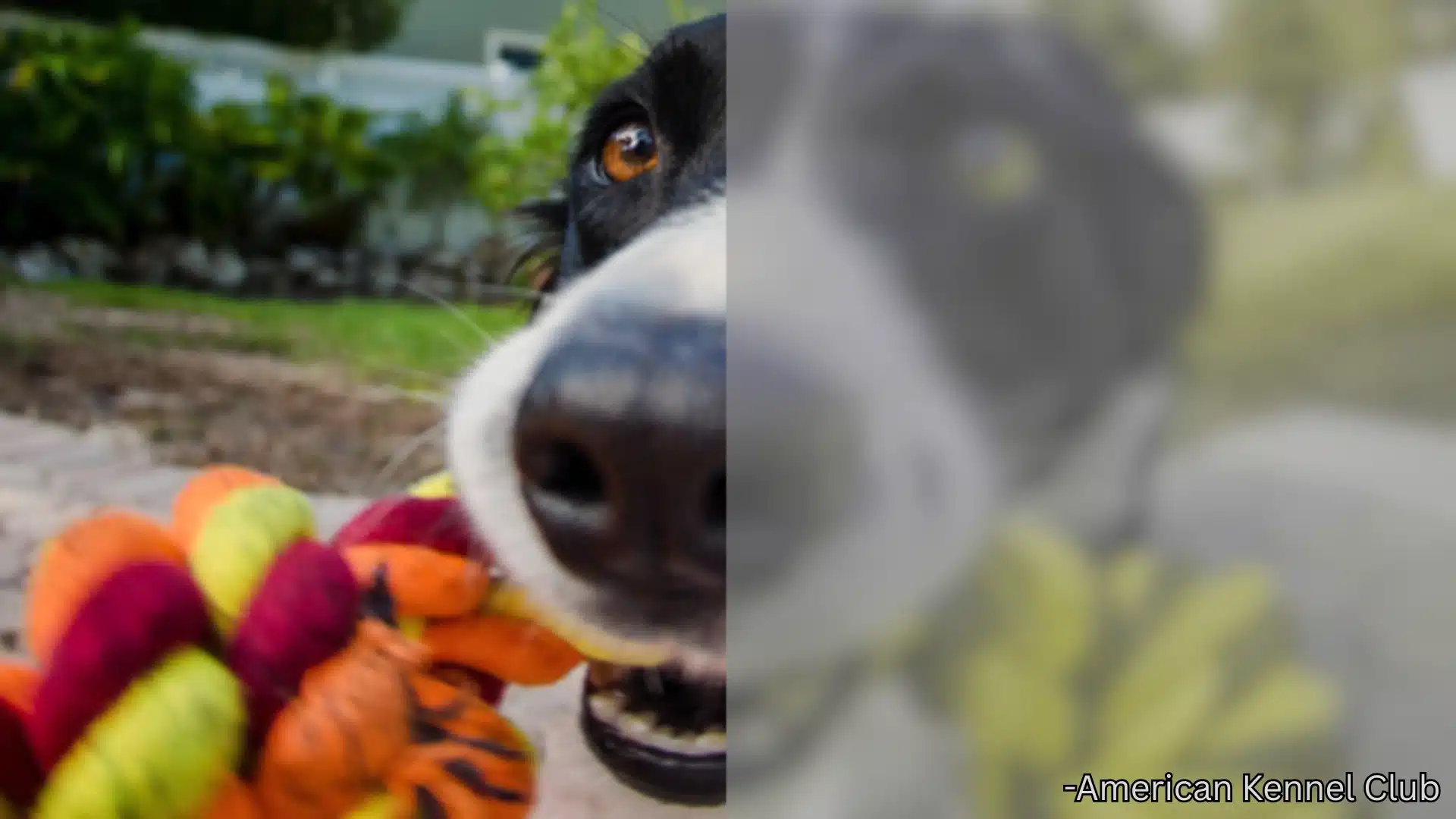
Dogs are not fully colorblind, but they do not see colors the same way humans do. Their eyes mainly pick up shades of blue and yellow. This means some colors that look bright to people may look dull or harder for dogs to distinguish.
- Blue and yellow: These colors usually stand out better in a dog’s vision, so toys, bowls, or markers in these shades may be easier to spot.
- Red and green: These shades can look dull, muddy, brownish, or grayish, which can make them harder for dogs to tell apart clearly.
- Red ball on grass: A red ball sitting on green grass may not stand out well because both colors can blend together for many dogs.
- Blue toy outside: A blue toy may be easier for a dog to notice during play, especially when it moves across grass or dirt.
What Does the World Look Like Through a Dog’s Eyes?
So, color matters when choosing toys. Dogs may still find red toys by smell or movement, but blue and yellow can be more visible.
The world through a dog’s eyes may look softer and less colorful than it does to humans.
Imagine lowering the brightness on some colors, blurring faraway details a little, and making movement stand out more. That is a simple way to picture it.
A bright red toy may not look bold to a dog, but a moving toy can catch attention fast. A still object across the yard may seem less clear, while a squirrel running along the fence may pop out right away.
Dogs also handle dim light better than people, so evening walks or shadowy rooms may not feel as hard for them to read.
So, how do dogs see the world? Not with perfect detail, but with strong motion sense, better low-light vision, and a nose adding extra meaning.
Do Dogs See Clearly or Blurry?
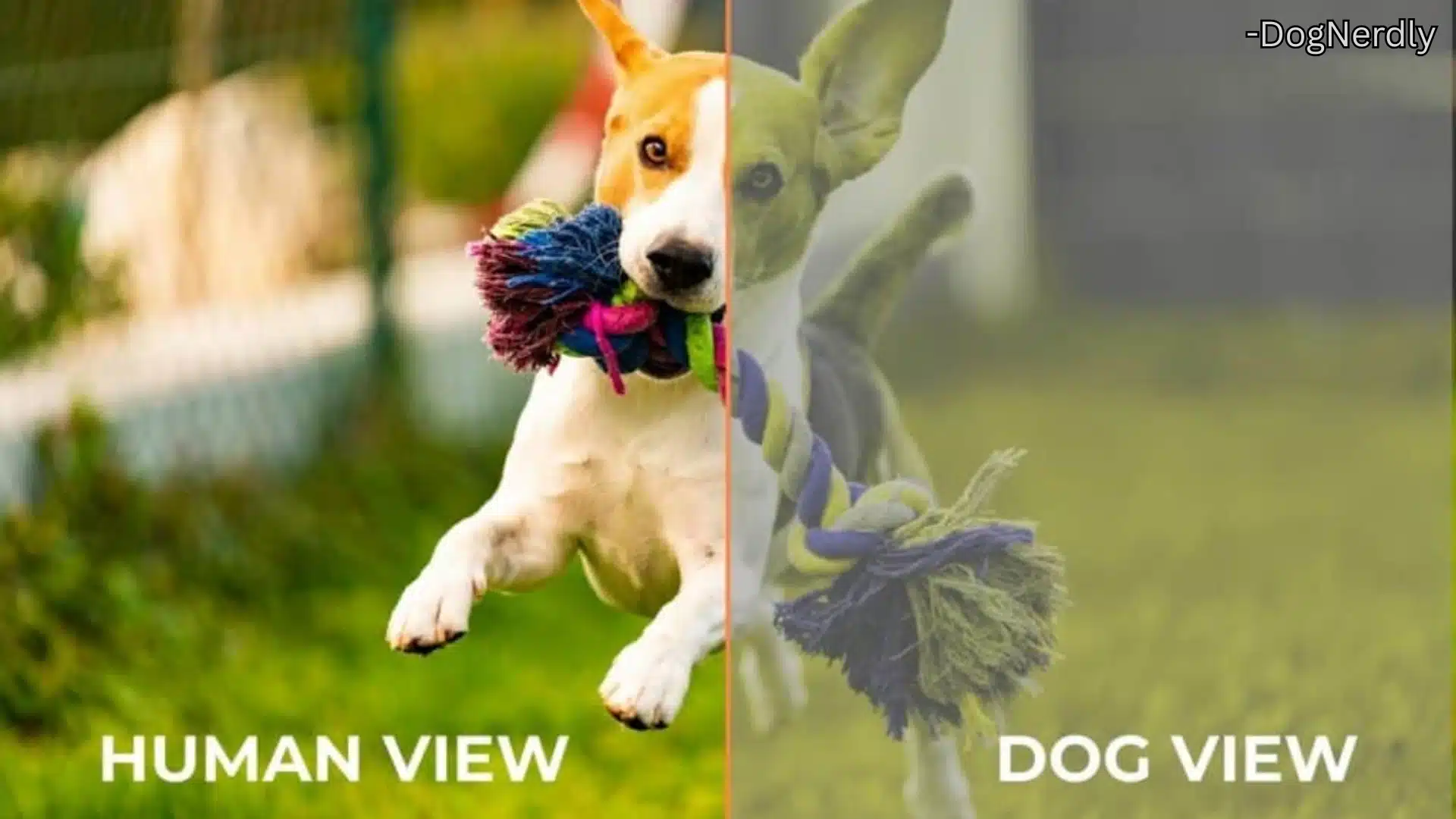
Dogs can see the world clearly enough to move, play, and follow action, but they do not see fine details as sharply as humans.
A person may notice small patterns, sharp edges, or tiny objects from farther away. For a dog, those same things may look softer or less clear, especially at a distance.
- Small details: Dogs may not notice tiny patterns or fine shapes as clearly as people do, even when the object is nearby.
- Faraway objects: Things across a yard, park, or street may look softer, which is why movement often helps dogs recognize them faster.
- Smell and hearing: Dogs often rely on scent and sound first, so they may recognize who or what is nearby before they see it clearly.
This is why dog vision works with the whole body. Their eyes help, but smell and hearing fill in the missing details.
How Sharp is a Dog’s Vision Compared to Ours?
Dogs have an average visual acuity of 20/75, compared with 20/20 in humans. In practical terms, what you can see clearly from 75 feet away, most dogs need to be about 20 feet away to see just as clearly.
This means distant faces, fine details, and small objects appear softer, while nearby objects remain easy for them to recognize.
Some working breeds are an exception. Labrador Retrievers, for example, often have sharper vision that can approach 20/20, one reason they have been so successful as guide dogs and service animals.
A dog’s eyesight also changes with age. Puppies continue to develop visual acuity during their early puppy growth stages, while senior dogs may gradually lose sharpness, making them more cautious around stairs, unfamiliar places, or low-light environments.
Why Do Dogs Notice Movement Before Anything Else?
Dogs are very good at noticing movement. Their eyes may not catch every tiny detail, but they can react quickly when something shifts, runs, flies, or flashes past them. This is one reason a calm yard can suddenly become exciting when one small thing moves.
- Running squirrel: A squirrel crossing the fence can grab a dog’s attention fast because quick movement stands out more than still background details.
- Flying toy: A ball or frisbee moving through the air is easier for dogs to track than one lying still on the ground.
- Moving shadow: A shifting shadow, leaf, or reflection may catch a dog’s eye because the motion feels like something worth checking.
Still objects may seem less interesting until they move, make noise, or carry a strong smell. This helps explain chasing, playful pouncing, and alert barking.
How Wide is a Dog’s Field of View?
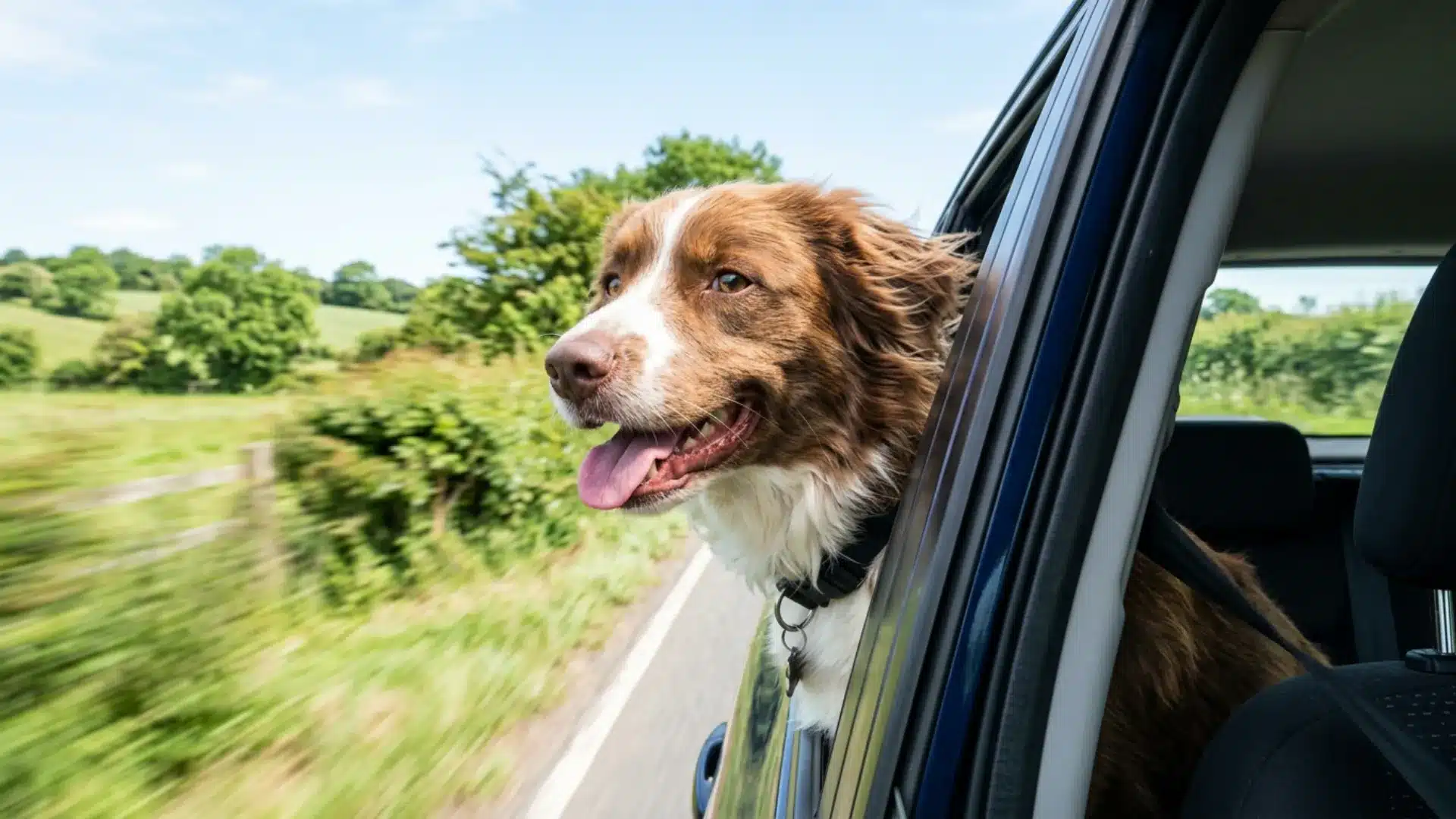
Dogs can see much more of their surroundings than humans, thanks to the position of their eyes. This wider field of view helps them notice movement from the sides without turning their heads. The trade-off is slightly reduced depth perception, especially in their peripheral vision, because both eyes overlap less than ours do.
- Humans: About 180° of vision with stronger depth perception.
- Most Dogs: Around 240–270° of vision, especially long-nosed breeds.
- Flat-Faced Breeds: Pugs and Boxers have a narrower field of view that’s closer to humans.
- The Trade-off: Less binocular overlap means weaker depth perception at the edges.
- Everyday Advantage: A wider field of view helps dogs notice movement from the sides sooner, making them better at tracking running animals and staying aware of their surroundings.
How Well Can Dogs See in the Dark?
Dogs often see better than humans in low light, but that does not mean they can see in total darkness.
Their eyes are built to capture more light, which helps them move around in the early morning, at night, or in dim indoor settings.
This is why your dog may notice movement in a dark hallway before you do. A big reason is the reflective layer inside their eyes.
It sends light back through the eye, giving the eye a second chance to use it. That layer is also why a dog’s eyes may glow when light hits them at night.
So, dogs do not need bright light to understand their surroundings as well as people often do.
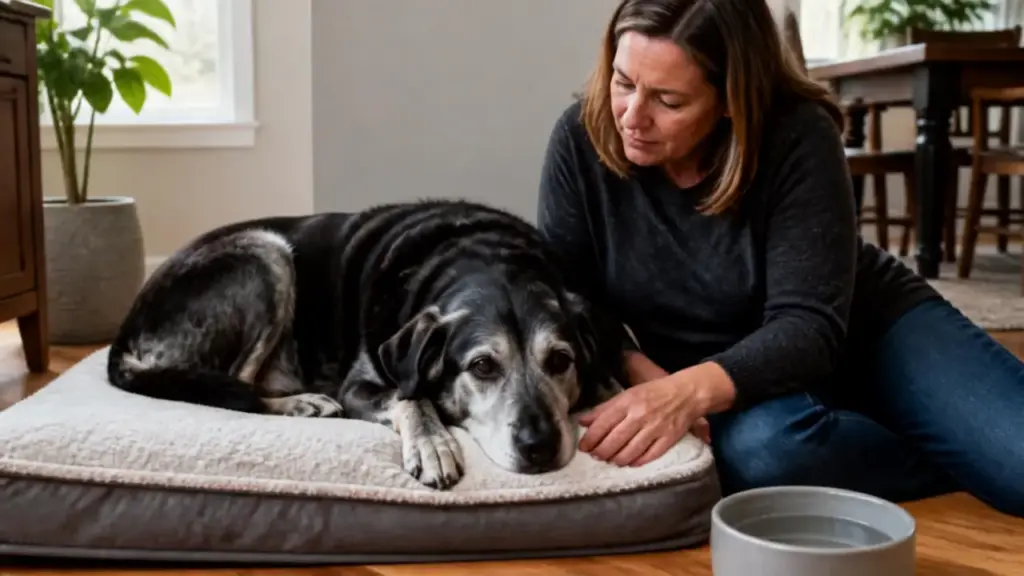
How to Tell if Your Dog’s Vision is Changing?
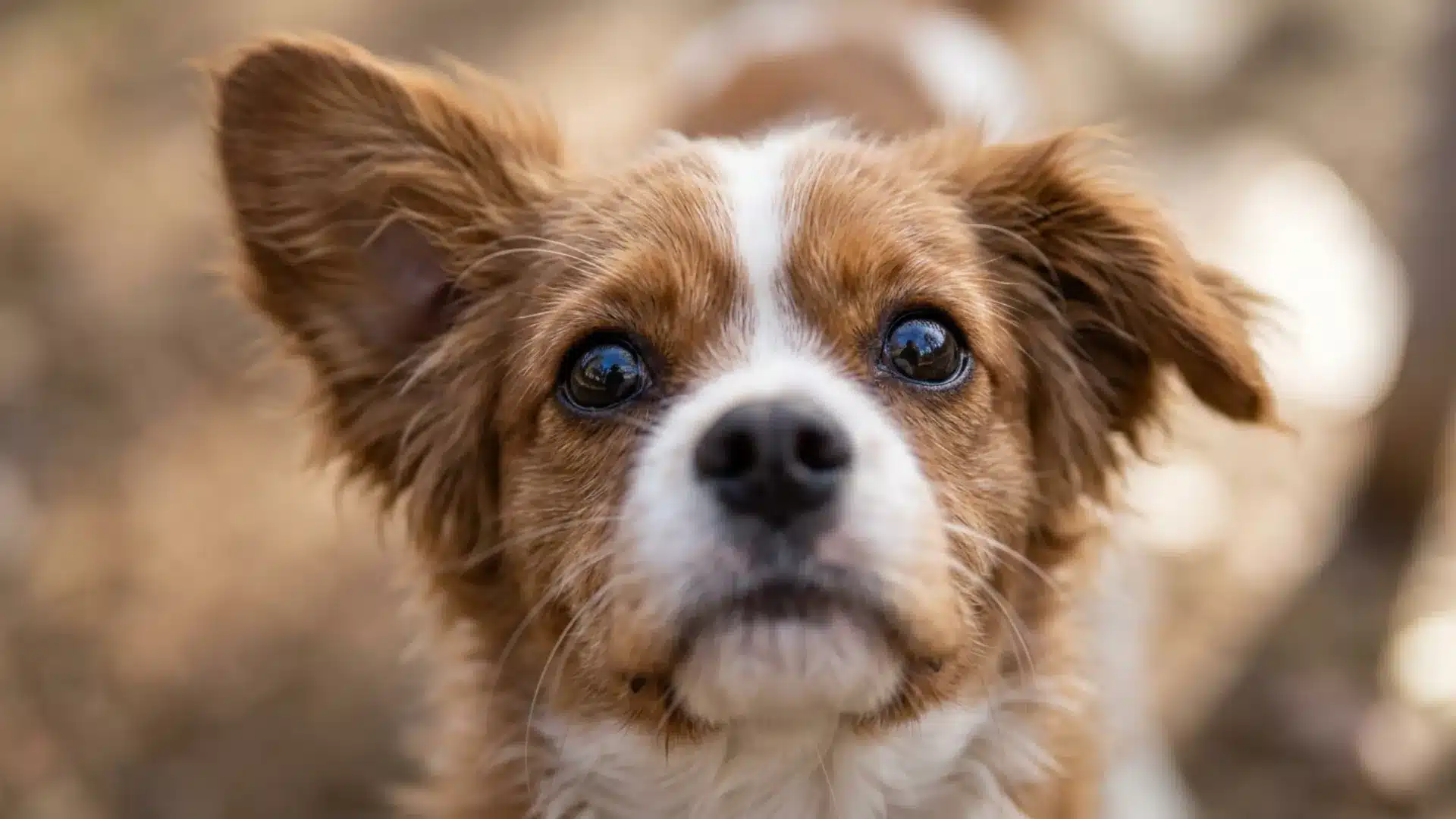
Just like humans, a dog’s eyesight can change with age or underlying health conditions. Some vision changes occur gradually, making them easy to miss until they begin to affect daily activities.
Recognizing the early signs can help you seek veterinary care sooner and protect your dog’s quality of life.
- Bumping into Objects: Your dog may walk into furniture, walls, doorways, or objects that have been in the same place for a long time.
- Hesitating on Stairs: Your dog may pause, move slowly, or seem nervous on steps, especially when going down or entering darker areas.
- Cloudy or Bluish Eyes: A cloudy, bluish, gray, or hazy appearance in one or both eyes can signal a change in vision or eye health.
- Losing Interest in Fetch: Your dog may stop chasing toys, miss moving balls, or struggle to track items they once followed easily.
- Startling More Often: Your dog may jump, bark, or react suddenly because they did not notice a person, pet, or object coming closer.
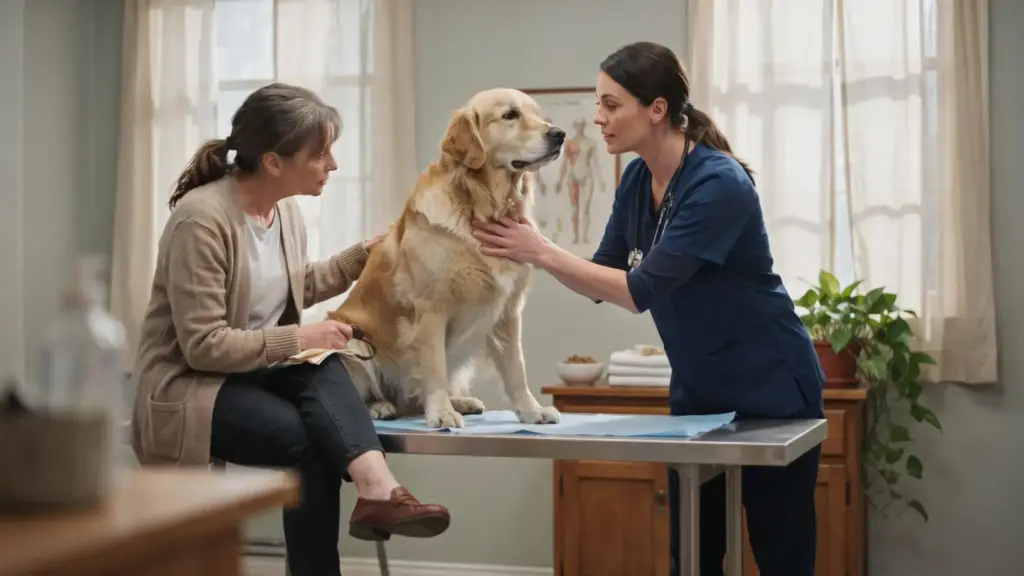
Many of these signs can also be caused by conditions other than vision loss, including signs of a dog eye infection. A veterinary eye examination is the best way to determine the cause and, if needed, begin treatment.
Disclaimer: This section is not a substitute for veterinary advice. If you notice any of the signs below, schedule an examination with your veterinarian.
How to Use Your Dog’s Vision to Your Advantage?
Understanding dog vision can make everyday life easier. A few simple changes can improve playtime, training, and your dog’s confidence in different environments.
- Choose blue or yellow toys for outdoor play.
- Use clear hand signals alongside voice commands.
- Keep furniture in familiar positions for older dogs.
- Turn on a light during evening walks or bathroom breaks.
Blue and yellow toys are easier for dogs to spot than red or green ones, especially on grass.
Clear hand movements are often easier for dogs to notice than subtle gestures because their eyes are built to detect motion.
If your dog is aging, keeping furniture in the same place can help them move around more confidently.
And while dogs see better than humans in low light, a porch light or flashlight still makes nighttime outings safer for both of you.
Conclusion
Dogs do not see the world as sharply or as colorfully as humans, but their view is not boring. It is softer, less detailed, and built around action.
They may miss some fine patterns or struggle with red and green shades, but they can notice movement fast, see better in low light, and use scent to understand what their eyes cannot fully explain.
That is why a moving toy, a quiet sound, or a familiar smell can mean more to them than a bright color.
Once you understand how dogs see the world, it becomes easier to choose better toys, use clearer signals, and understand what grabs their attention outside.
What surprising thing has your dog noticed before you did? Share your story in the comments below!
Frequently Asked Questions
Do All Dog Breeds See the Same Way?
No. Long-nosed breeds generally have a wider field of view, while flat-faced breeds have more forward-facing eyes and a narrower viewing angle.
Does a Dog’s Vision Change as it Gets Older?
Yes. Many senior dogs develop cloudier lenses and reduced visual sharpness over time, although the rate of change varies by breed and overall health.
Can Puppies See Immediately After Birth?
No. Puppies are born with their eyes closed and usually open them at around two weeks of age. Until then, they depend primarily on touch and smell.