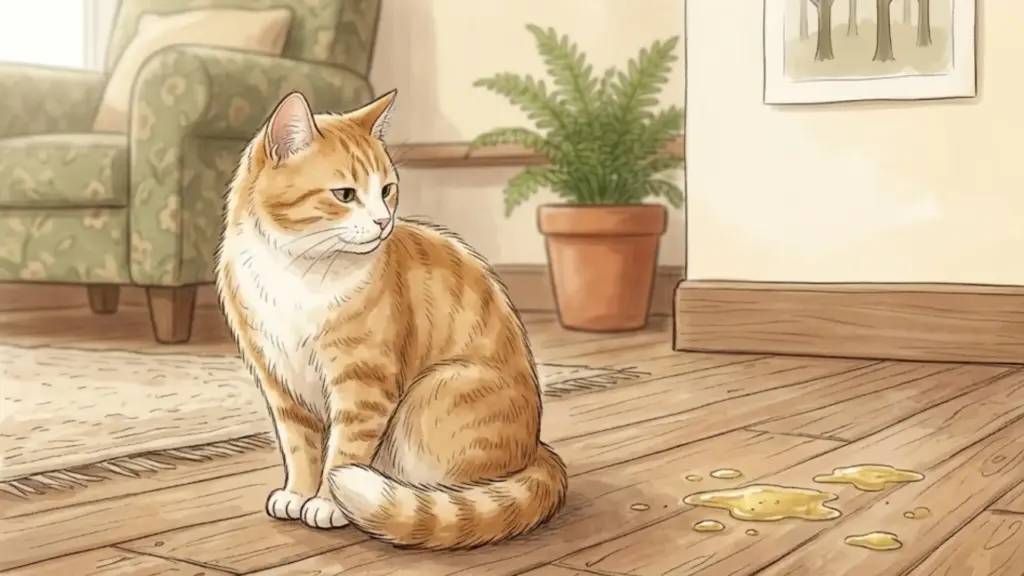
You hear that sharp retching sound in the middle of the night, then find a small yellow puddle on the floor while your cat sits nearby as if nothing happened.
It looks alarming, especially when the vomit is bright, watery, or foamy. The first thought is usually panic.
The second is wondering whether a cat throwing up yellow liquid is an emergency or just another strange cat thing. Yellow vomit often indicates bile, which can appear when the stomach is empty or irritated.
Sometimes it is a one-time mess. Sometimes it is the first clue that your cat’s routine, appetite, or digestion needs closer attention.
The key is knowing what else is happening around the vomit: how often it occurs, how your cat acts afterward, and when a vet should step in.
What Does Yellow Cat Vomit Usually Mean?
The yellow liquid is usually bile. Bile is a thin yellow-green digestive fluid made by the liver and stored in the gallbladder. Its main job is to help break down fat in the small intestine.
Normally, it moves forward through the digestive tract and does not enter the stomach. When a cat’s stomach stays empty for too long, acid can build up and irritate the stomach lining.
That irritation may trigger vomiting and sometimes cause bile to flow backward from the small intestine.
The result is a watery or foamy yellow liquid on the floor. The color comes from bilirubin, a liver pigment made when old red blood cells break down.
One episode can occur on an empty stomach, but repeated episodes of yellow vomiting warrant closer attention.
Why is My Cat Throwing up Yellow Liquid?
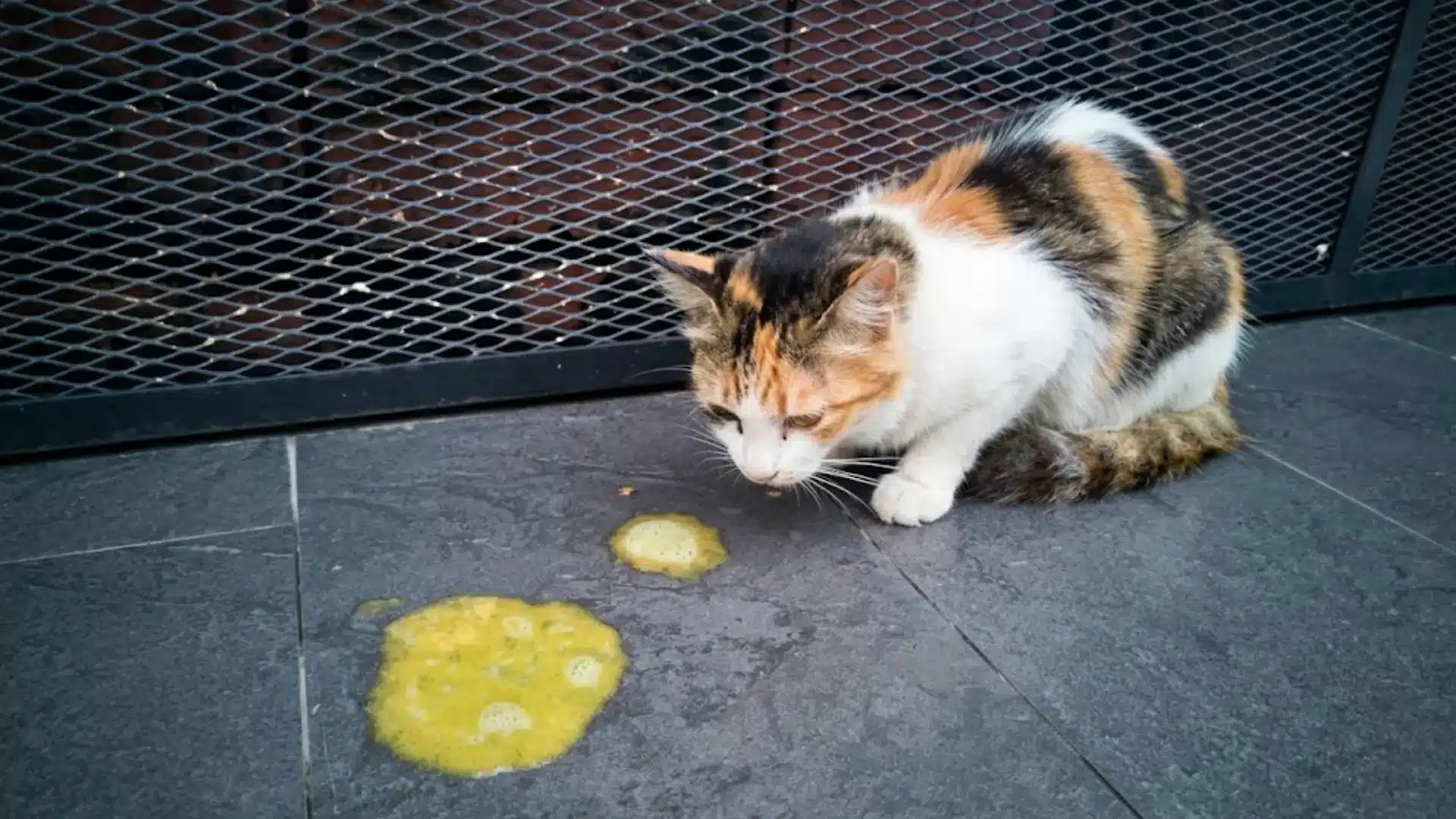
Yellow vomit does not point to one single problem. It can mean something as simple as an empty stomach, or it can be a warning sign that your cat needs a vet. The pattern, timing, and your cat’s behavior afterward are what matter most.
1. Bilious Vomiting Syndrome
Empty stomach or Bilious Vomiting Syndrome is one of the most common causes of a cat throwing up yellow liquid.
When a cat goes too long without food, stomach acid and bile can irritate the empty stomach lining.
This often happens early in the morning or late at night, right before a meal. A small bedtime snack or more frequent meals may help, but repeated vomiting still needs a vet check.
2. Hairballs
Hairballs can cause yellow vomiting even when no clear hairball appears afterward.
Cats swallow fur while grooming, and that fur can irritate the stomach or intestines before it forms a visible clump.
Some cats vomit bile first, then pass hair later in stool or bring up fur another day.
Frequent hairball-related vomiting paired with appetite changes, constipation, or repeated retching should be checked by a vet.
Reducing loose fur at the source through regular brushing can cut down on how much your cat swallows while grooming.
3. Eating Too Fast
Eating too fast can overwhelm a cat’s stomach before digestion has time to settle. Some cats swallow large mouthfuls, gulp air, then vomit soon after meals.
Yellow liquid may appear on its own or mixed with partially digested food. This is more likely in multi-cat homes, anxious eaters, or cats on strict feeding schedules.
Slow feeder bowls, smaller portions, and quieter meal spaces can reduce the problem without changing the diet.
4. Food Sensitivity
Food sensitivity can cause repeated yellow vomiting when the gut stays mildly irritated after meals. The trigger may be a protein, additive, sudden diet change, or a treat your cat does not tolerate well.
Unlike an empty-stomach episode, sensitivity-related vomiting tends to recur over days or weeks and may be accompanied by diarrhea, itching, gas, or changes in appetite.
Do not keep switching foods randomly; ask your vet about a controlled diet trial.
5. Gastrointestinal Conditions
Gastrointestinal disease can also show up as yellow vomit, especially when vomiting becomes frequent or is paired with poor appetite, weight loss, diarrhea, pain, or low energy.
Conditions such as gastritis, inflammatory bowel disease, pancreatitis, and intestinal obstruction can irritate the digestive tract enough to bring up bile.
These problems do not improve with a bedtime snack alone. If vomiting recurs, worsens, or your cat seems unwell, schedule a veterinary exam.
6. Kidney Disease
Kidney disease is a common cause of yellow vomiting in senior cats.
When the kidneys stop filtering toxins efficiently, those toxins build up in the blood and make cats feel persistently nauseous.
The vomiting is usually paired with weight loss, reduced appetite, increased thirst, or low energy.
This isn’t something a feeding schedule adjustment will fix. If your cat is over seven and vomiting regularly, kidney function is one of the first things a vet will want to test.
7. Hyperthyroidism
Hyperthyroidism is the overactivity of the thyroid gland and is common in older cats.
Some thyroid hormones directly affect bile production, so an overactive thyroid can lead to excess bile and repeated vomiting.
Other signs include weight loss despite a strong appetite, increased thirst, restlessness, and a fast heart rate.
Like kidney disease, this is a condition that shows up through blood tests. It’s also very manageable once diagnosed.
Disclaimer: This information is for general guidance only. It is not a substitute for veterinary diagnosis or treatment. If your cat is vomiting repeatedly or showing other symptoms, contact your veterinarian.
What Cat Owners Say About Yellow Vomit
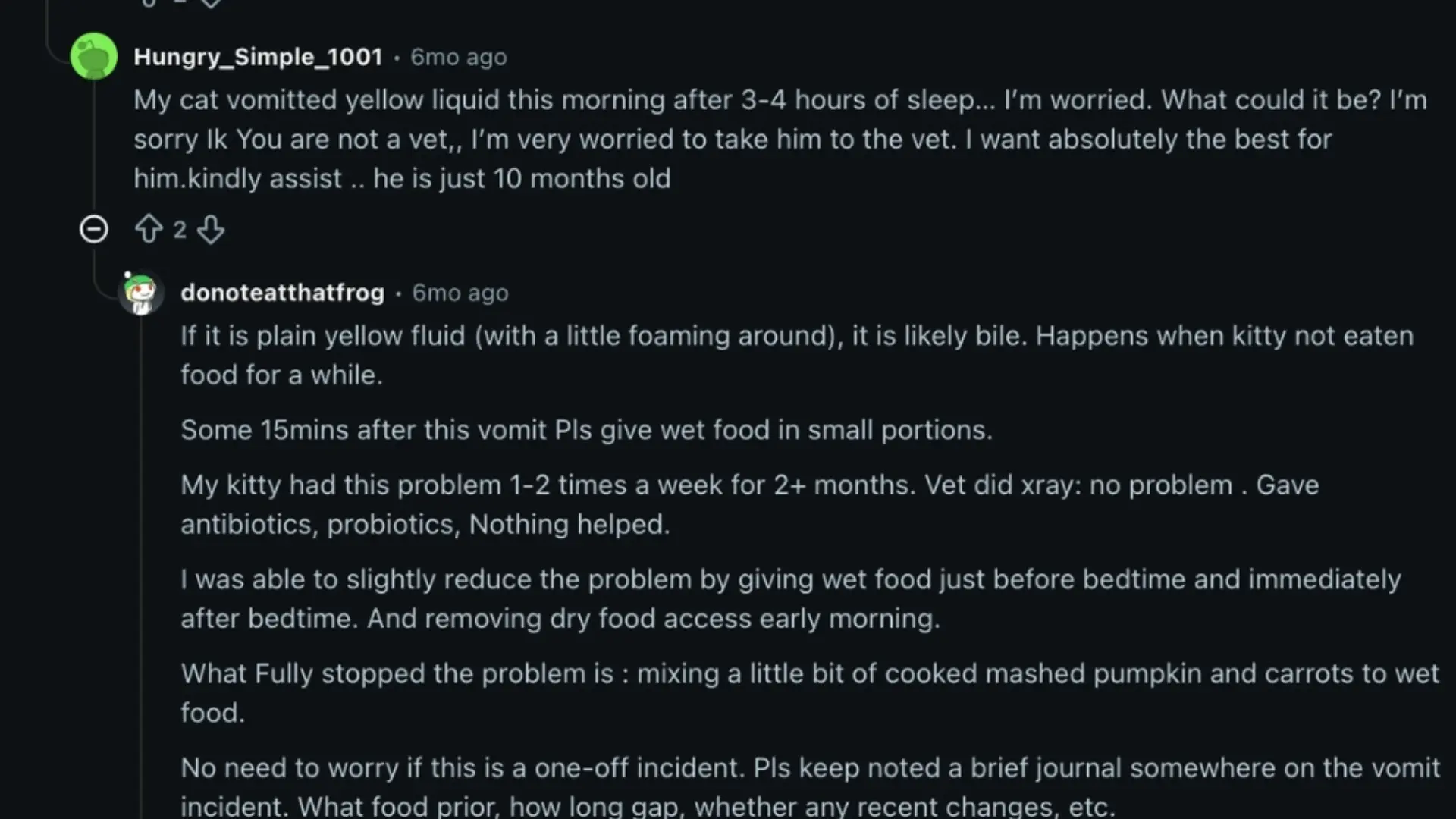
Reddit users described yellow, clear, or foamy vomit as likely bile, especially when it happens after a long gap without food, after sleep, or when a cat drinks water too quickly.
One commenter said their cat had repeated bile vomiting for months, with X-rays and medication not solving it, but smaller wet food portions around bedtime and a little mashed pumpkin or carrot helped.
Others said their cats vomit this way after skipping snacks during long naps or chugging water late at night.
The overall advice was to track timing, food gaps, recent diet changes, and behavior after vomiting.
A single episode may not be urgent, but repeated vomiting, appetite changes, brown vomit, or illness signs should be discussed with a vet.
Cat Vomit Color Chart: What Each Shade Can Mean
Vomit color helps your vet understand urgency, but color alone is not a diagnosis. Use this quick chart with timing, frequency, and your cat’s behavior afterward.
| Color | What It May Mean |
|---|---|
| Yellow or greenish yellow | Bile, empty stomach, or GI irritation |
| Clear or white foam | Stomach acid or minor irritation |
| Brown food color | Partly digested food or eating fast |
| Dark brown or black | Possible digested blood |
| Red or pink | Fresh blood |
| Green | Bile, plant eating, or toxin risk |
| Undigested chunks | Eating fast or possible blockage |
Yellow vomit is common, but context matters. Repeated episodes, appetite loss, lethargy, pain, or blood should prompt you to shift from watching to calling your vet.
When to Call the Vet About Cat Throwing Up Yellow Liquid?
One episode of yellow vomit may not mean an emergency if a cat eats, drinks, uses the litter box, and acts normally afterward.
Concern rises when vomiting repeats or appears with appetite changes, low energy, weight loss, pain, or unusual posture. These signs can point to a problem that needs proper vet attention.
- Repeated vomiting: More than two or three vomiting episodes within 24 hours means the stomach is not settling, and the risk of dehydration can rise.
- No appetite: Refusing food for 24 hours can be dangerous for cats, as hepatic lipidosis may develop when they stop eating.
- Lethargy or hiding: A cat that withdraws, stays still, ignores play, or avoids people may be feeling worse than it appears.
- Blood or pain: Red, pink, black, or dark brown vomit, hunching, crying, or a tense belly needs urgent vet care.
Senior cats over 10 need extra caution when yellow vomiting is new, frequent, or worsening.
Older cats may have kidney, thyroid, liver, stomach, or pancreatic problems that first show up as vomiting.
When in doubt, call the vet, describe the vomit’s color, share the timing, and mention any changes in behavior or eating.
What Not To Do When a Cat Vomits Yellow Liquid?
When a cat vomits yellow liquid, the first reaction is often panic. Still, some quick fixes can make things worse. These points help pet owners avoid common mistakes and respond more safely.
- Human medicine: Common painkillers, stomach tablets, and home remedies can harm cats. Call a vet before giving anything outside prescribed cat medicine.
- Repeated vomiting: One episode may pass, but repeated yellow liquid, foam, or bile can signal irritation, illness, blockage, or dehydration risk.
- Forced feeding: Pushing food too soon can upset the stomach again. Offer small amounts only when the cat seems settled and alert.
- Weakness or hiding: A cat that hides, drools, collapses, pants, or refuses water needs quick vet advice, not home guessing.
- Hunger as the only cause: Yellow vomit can come from an empty stomach, but it may also point to infection, inflammation, toxins, or organ issues.
- Plant chewing: Many plants can upset a cat’s stomach or cause poisoning. Remove unknown plants and check safety before keeping them.
- String or plastic swallowing: Ribbon, thread, hair ties, and plastic can cause dangerous blockages. Call a vet if chewing or swallowing happened.
- Frequent food changes: Switching foods again and again may worsen vomiting. Keep notes on meals, timing, vomit color, and behavior changes.
How to Prevent Yellow Vomit in Cats
If yellow vomiting happens once, monitor it. If it happens often, treat it like a pattern and adjust the routine before it becomes chronic.
- Feed smaller meals: Two or three smaller meals plus a bedtime snack can help prevent an empty stomach overnight.
- Use a slow feeder: Puzzle bowls help cats that eat too fast and vomit soon after meals.
- Brush more often: Regular grooming reduces swallowed fur and hairball-related vomiting of bile. This matters most for long-haired cats, and our most popular cat breeds guide can help identify breeds that need more grooming.
- Review the food: Highly digestible, protein-rich food may be easier on the stomach. Some cats also do better with wet food.
- Book routine vet checks: After age seven, bloodwork can catch kidney disease, thyroid issues, or IBD before vomiting becomes frequent.
Conclusion
Yellow cat vomit can be scary, but it does not always mean the worst.
Sometimes the clue points to an empty stomach and a feeding schedule that needs adjusting. Other times, it points to something deeper that deserves a vet’s eyes.
Use the cat vomit color chart as a simple guide, but trust your instincts when something feels off.
Your best tool is not panic; it is pattern watching. Notice the timing, the color, the appetite, and the way your cat acts afterward. If your cat bounces back, adjust and monitor.
Repeated vomiting, blood, pain, hiding, weight loss, or possible string chewing should always lead to a vet call.
Share your experience in the comments below so other cat parents can learn from it and compare notes with care.
Frequently Asked Questions
My Cat Threw Up Yellow Liquid and Then Acted Normally. Should I Worry?
Usually not, if it happened once and your cat is eating, drinking, using the litter box, and acting like herself afterward. But if it happens again, your cat skips meals, hides, seems tired, or vomits more than once, call your vet.
How is Yellow Vomit Different From a Hairball?
A hairball usually contains a tube-like clump of fur, sometimes with a little liquid around it. Yellow vomit is mostly liquid bile and may look watery or foamy. Cats can retch with both, so the contents matter. If your cat keeps retching but no hair comes up, or yellow vomiting happens often, a vet check is safer.
How To Treat Cat Vomiting Yellow At Home?
Offer fresh water, pause food briefly, then serve small bland meals. Avoid human medicine. Call a vet if vomiting continues, blood appears, or your cat seems weak, painful, or dehydrated.