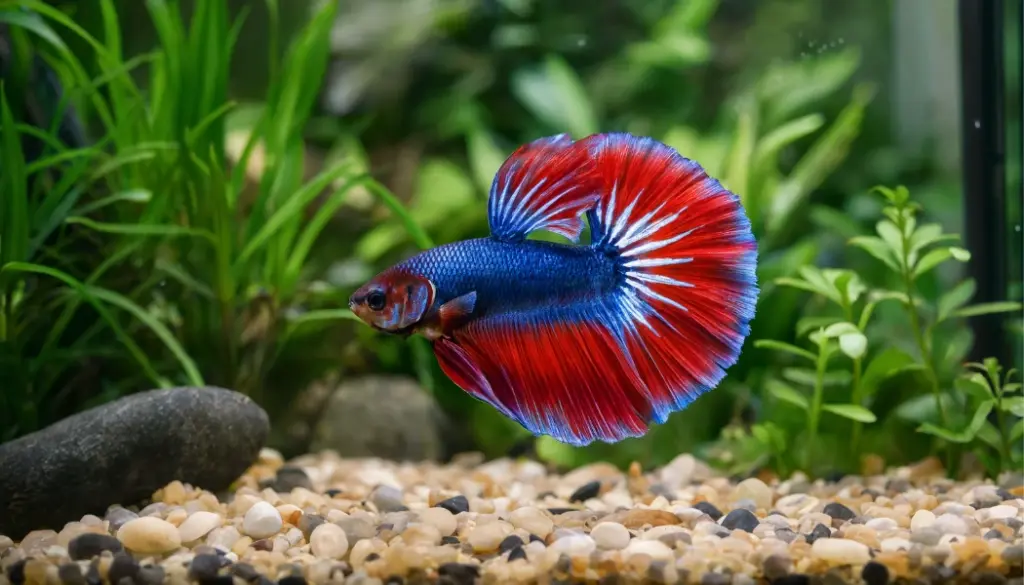
You’ve seen them at the pet store: a tiny cup, barely enough water to turn around in, and a betta with those stunning fins pressed flat against the sides.
Maybe you’ve even brought one home, quietly wondering how big a tank a betta fish needs. That nagging feeling? It’s valid. Bettas are small, but they need space to thrive, not just survive.
The right tank can make all the difference in their color, behavior, and lifespan. But here’s the thing: getting a betta into a proper home isn’t complicated or expensive.
With a few simple betta fish tank requirements and the right-size setup, you can give your fish a life full of swimming, exploring, and showing off those fins without the stress and health risks of a tiny cup.
How Big of a Tank Does a Betta Fish Need?
A betta needs at least 5 gallons to maintain stable water conditions, provide swimming space, and dilute waste, while smaller tanks leave little margin for error.
| Tank size | What it supports | Verdict |
|---|---|---|
| Under 2.5 gallons | Nothing reliably; ammonia spikes fast, no room for a heater | Avoid |
| 2.5 gallons | One betta, bare minimum, requires very frequent maintenance | Acceptable only if space is truly limited |
| 5 gallons | One betta, comfortably, stable water, fits a heater and a gentle filter | Ideal Starting Size |
| 10 gallons | One betta with enrichment, compatible snails, or a small community | Ideal for most owners |
| 20 gallons | Planted tanks, sorority setups (experienced owners only) | For Experienced Keepers |
A 5-gallon tank makes betta care easier by keeping water stable, reducing stress, and allowing natural swimming. Our rundown of aquarium fish for beginners is worth a read before committing to a setup.
Betta Fish Tank Requirements Beyond Gallons
Tank size is important, but it is only one part of creating a healthy environment for a betta fish. Bettas are tropical fish with a labyrinth organ that lets them breathe air from the surface.
That adaptation evolved in shallow, warm, oxygen-poor waters in Southeast Asia. It does not mean they can survive in stagnant, unfiltered bowls
- Heater: Maintain water between 76-82°F, ideally 78-80°F, using a reliable heater sized at 3-5 watts per gallon.
- Low-flow filter: Choose a sponge or adjustable-flow filter that keeps water clean while preventing strong currents that stress bettas.
- Lid: Install a secure, ventilated lid because bettas are excellent jumpers and can easily escape open aquariums.
- Water conditioner: Treat tap water during every water change to remove chlorine and chloramines that can harm fish.
- Thermometer: Check water temperature daily with a thermometer since heater settings may be inaccurate or fluctuate unexpectedly.
- Tank cycling: Cycle the aquarium for 2-4 weeks to establish beneficial bacteria before introducing a betta safely.
If you’re planning a tank, our guide to the best fish for a ten-gallon setup covers compatible species and stocking ideas in one place.
How Does Betta Fish Tank Size Affect Health?
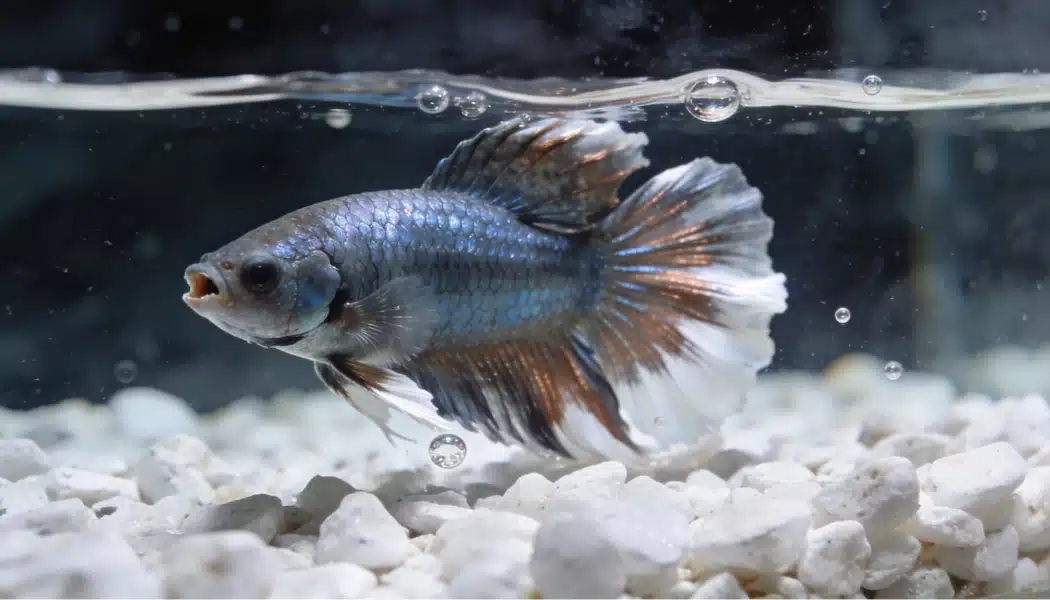
Water volume directly impacts a betta’s health. In small tanks, waste breaks down into ammonia faster than the water can dilute it.
Ammonia damages gills, weakens the immune system, and causes fin rot and lethargy.
Larger tanks dilute waste across more water, giving beneficial bacteria time to process it before it reaches harmful levels.
A peer-reviewed study published by the National Institutes of Health tested male bettas in tanks from 1.5 liters to 19 liters.
Fish in larger tanks were more active, rested normally, and exhibited fewer stress behaviors, such as hovering or wall-swimming.
The study recommended at least 5.6 liters for display tanks and larger home tanks with gravel, plants, and hiding spots.
Temperature swings are dramatic in small volumes, making fish susceptible to ich and bacterial infections. Stress behaviors, such as glass surfing, pacing, or clamped fins, are common.
Despite their marketing appeal, tiny bowls and 1-gallon desktop kits make life harder for the fish and the owner. Bettas need space to explore, establish territories, and remain healthy, which small tanks fail to provide.
Best Tank Dimensions and Shape for Betta Fish
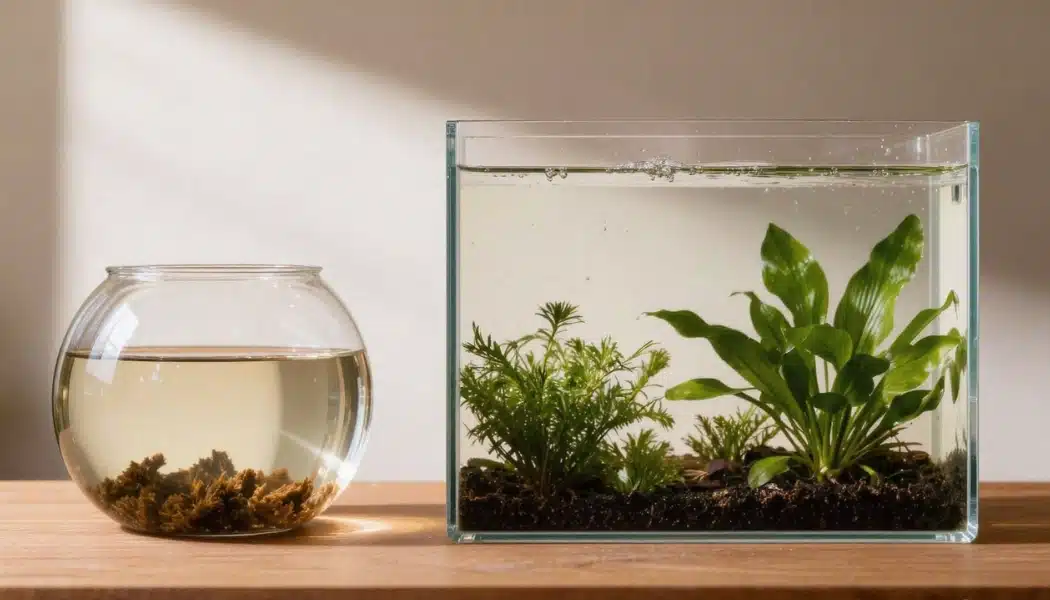
Gallons matter, but tank shape is equally important. Bettas swim horizontally and need floor space to move naturally.
A tall, narrow column may hold 5 gallons, but the fish will spend most of its time turning around instead of swimming comfortably.
Wider tanks also support better oxygen exchange, easier plant placement, and a more stable equipment setup.
Recommended tank dimensions:
- 5-gallon tank: 16 inches long by 8 inches wide
- 10-gallon tank: 20 inches long by 10 inches wide
Extra length allows the betta to explore, rest, patrol its space, and display natural behaviors.
The best option is a standard rectangular aquarium because it maximizes usable swimming space and makes filtration, heating, cleaning, and aquascaping much easier.
Signs Your Betta Fish Tank is Too Small
If your betta is kept in a tank that’s too small, it may show clear signs of stress. Watch for the following indicators:
- Faded or dull coloring: Loss of bright color can signal long-term stress, poor water quality, unstable temperature, or an unsuitable tank environment.
- Clamped fins: Fins held tightly against the body often show discomfort, stress, illness, or poor water conditions in a cramped tank.
- Lethargy: A betta sitting at the bottom, hiding often, or ignoring food may be reacting to stress or unstable water.
- Glass surfing: Repeated pacing along the glass can mean the tank feels too small, boring, reflective, or stressful for the betta.
- Excessive surface breathing: Constant gasping at the surface may point to low oxygen, ammonia buildup, poor filtration, or unsafe water conditions.
- Loss of appetite: Refusing food for multiple days can signal stress, illness, poor water quality, or discomfort from a small tank.
Regular monitoring and proper tank size are essential to prevent these issues.
If your betta shows more than two signs of stress, first test the water for ammonia, nitrite, and pH, then evaluate whether the tank is large enough to maintain stable conditions.
Betta Tank Maintenance and Cost
Bigger betta tanks are often easier and cheaper to maintain over time than tiny bowls or 2.5-gallon setups.
A 2.5-gallon tank may cost less upfront, around $20 to $40, but it needs water changes every 2 to 3 days and becomes stressful fast.
A 5-gallon tank usually costs $40 to $80 and works better with weekly 25 to 30% water changes.
A 10-gallon tank may cost $60 to $120, but it gives the best stability, needs only weekly 20 to 25% water changes, and keeps the temperature steadier.
Heating costs stay low because small heaters usually use only 25 to 50 watts. Larger tanks also make filtration easier with sponge, adjustable, or low-flow filters.
In the long run, a 5 or 10-gallon tank saves effort, reduces water problems, and supports healthier betta care.
How to Set Up a Betta Fish Tank the Right Way?
Setting up the tank correctly before adding your betta makes care easier and keeps the fish healthy.
- Choose the tank: Pick a rectangular tank of at least 5 gallons with a secure lid, avoiding bowls and column tanks.
- Rinse substrate: Wash gravel or sand well with plain water to remove dust, but never use soap or chemicals.
- Add plants and hides: Use live or silk plants with smooth caves to create resting spots and avoid sharp plastic decorations.
- Fill and dechlorinate: Add tap water, then use water conditioner as directed to remove chlorine and chloramines safely.
- Install heater and filter: Set the heater to 78–80°F and use a gentle, low-flow filter suitable for bettas.
- Cycle the tank: Run the tank for 2–4 weeks and test ammonia and nitrite before adding your betta.
- Acclimate the betta: Float the bag for 15–20 minutes, then release the fish gently into the prepared tank.
Following these steps ensures a stable environment, reduces stress, and gives your betta the best chance to thrive.
Common Betta Fish Tank Setup Errors
Even careful owners can make setup mistakes that stress a betta and damage water quality. Avoid these common problems:
- Skipping cycling: A new tank needs beneficial bacteria to process waste safely, so cycle the aquarium before adding your betta.
- Too much filter flow: Strong currents can stress bettas, so use a sponge filter or adjustable filter with gentle movement.
- Sharp decor: Rough plastic plants or hard decorations can tear delicate fins, so choose silk plants, live plants, and smooth hiding spots.
- Overfeeding: Extra food quickly dirties the water, so feed only what your betta can finish in two to three minutes.
- Unstable temperature: Bettas need warm, steady water, so use a reliable heater and thermometer to prevent sudden temperature drops.
- Rushed tank mates: Adding tank mates too quickly can cause stress, so research carefully and choose safer options in larger tanks.
- No water testing: Poor water can look clear, so test ammonia, nitrite, nitrate, and pH regularly to catch problems early.
- Tiny bowls: Small bowls create unstable water conditions, so choose at least a five-gallon rectangular tank for healthier betta care.
Avoiding these mistakes keeps betta care calmer, cleaner, and healthier, while preventing avoidable stress and illness later.
Conclusion
Tank size isn’t just a number it shapes your betta’s health, behavior, and overall well-being.
Five gallons provides safe water and enough room to swim, while 10 gallons lets your betta truly explore and display natural behaviors.
Small bowls may look appealing, but they compromise water stability, increase stress, and make care harder.
A properly sized tank reduces emergencies, keeps water stable, and lets you enjoy your fish instead of constantly managing problems.
Upgrading is more affordable than many expect, and the difference in your betta’s activity, color, and happiness is immediate.
If you’re setting up your first tank or upgrading, share your current setup or questions in the comments and join a community committed to giving bettas the space they deserve.
Frequently Asked Questions
Can Two Betta Fish Live in the Same Tank?
Male bettas should never be housed together because they are highly territorial and will often fight. Female groups require large, carefully managed aquariums and are recommended only for experienced keepers.
What Substrate is Best for a Betta Fish Tank?
Both gravel and aquarium sand work well for bettas. The best choice is a smooth substrate that is easy to clean and safe for delicate fins.
How Long Do Betta Fish Typically Live in a Proper Tank?
With good care, stable water conditions, and a properly sized aquarium, most betta fish live between 3 and 5 years, though some can live even longer.