

Goldfish are one of the most popular aquarium pets, loved for their vibrant colors and peaceful behavior. Yet, many owners struggle to know how often and how much to feed them.
Overfeeding is far more dangerous than underfeeding, as it can pollute the tank water, stress your fish, and lead to digestive issues.
Proper feeding is key to keeping them healthy, active, and long-lived. Understanding their dietary needs can prevent common health problems and improve water quality.
This blog provides detailed instructions for feeding goldfish at all life stages, adjusting for temperature, and maintaining a healthy tank.
Why Proper Feeding Frequency is Essential for Goldfish Health
Goldfish don’t have a stomach. Food passes directly through their intestines, which means they digest quickly but can’t hold reserves.
That sounds efficient, but it creates a real problem: uneaten food and poor portion timing cause more harm to goldfish than almost anything else in their environment.
Overfeeding leads to uneaten food decomposing into ammonia, which stresses fish and pollutes the water. Goldfish also beg constantly, but frequent begging doesn’t mean they’re hungry.
Feeding on a consistent schedule, small portions once or twice daily, keeps them healthy, prevents swim bladder and digestive issues, and helps maintain clear water.
Finally, proper feeding frequency supports water quality. Less uneaten food in the tank means lower ammonia levels, fewer algae blooms, and reduced strain on your filter.
It is important to understand freshwater ammonia criteria to know how this compound affects aquatic life. So getting feeding frequency right isn’t just about nutrition.
How Often to Feed Goldfish by Age?
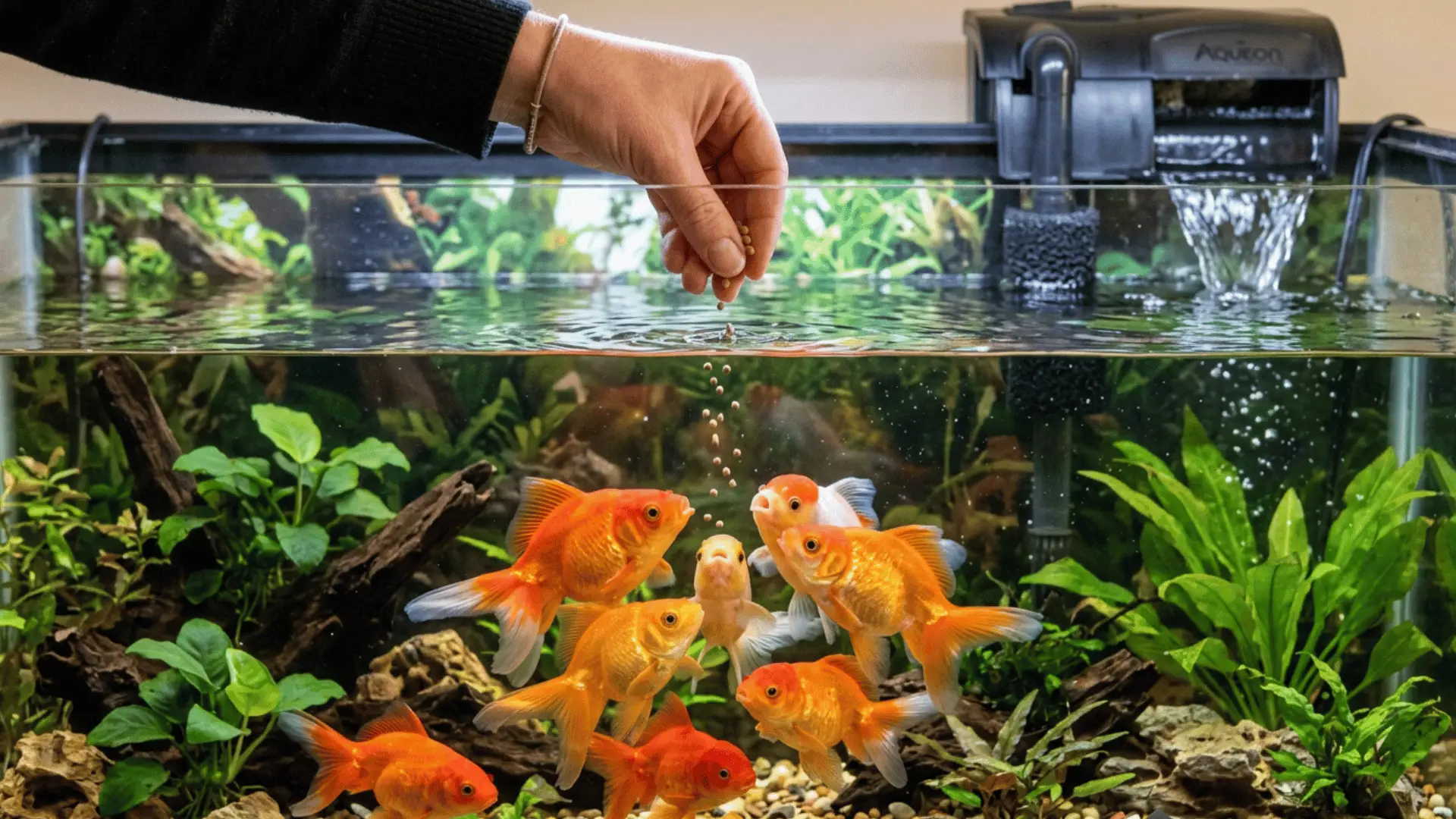
Feeding needs change as goldfish grow from fry to adults. Age and size of fish determine how often they should be fed and how much food they need. Adjusting portion sizes and feeding frequency helps support healthy growth and prevent overfeeding.
1. Fry (0-8 Weeks)
Goldfish fry require frequent feeding because they grow rapidly during their first few weeks of life. Feed infusoria, baby brine shrimp, or high-quality powdered fry food 4–6 times a day in very small amounts.
Their stomachs are tiny, so overfeeding can quickly pollute the water and harm their health. Maintaining clean water is just as important as providing adequate nutrition during this stage.
Frequent observation during feeding helps ensure fry receive enough nutrition for steady growth. Careful portion control also reduces waste buildup and helps maintain stable water conditions.
2. Juvenile Goldfish (Under 1 Year)
Juvenile goldfish need a steady supply of nutrients to support healthy growth and development. Feed 2-3 small meals per day, offering only what they can consume within about 2 minutes.
Small, frequent feedings help maximize growth while minimizing waste buildup in the tank.
A varied diet that includes pellets, vegetables, and occasional protein-rich treats can also promote stronger immune function.
Rapid growth during this stage increases the need for balanced nutrition and dietary variety. Offering a variety of foods supports healthy development and promotes strong immune function.
3. Adult Goldfish (1 Year and Older)
Most adult goldfish thrive on a single balanced meal each day. Some keepers prefer splitting the daily portion into two smaller feedings, but the overall amount should remain the same.
Overfeeding is a common mistake and can lead to obesity, digestive problems, and poor water quality.
A consistent feeding routine helps adults maintain a healthy weight and stable digestion. Regularly monitoring body condition makes it easier to adjust portions as needed.
How Feeding Needs Vary Between Fancy and Common Goldfish
Different goldfish varieties have slightly different feeding needs, with fancy goldfish generally requiring more careful portion control than common varieties.
| Goldfish Type | Feeding Needs | Key Concern |
|---|---|---|
| Fancy Goldfish (Oranda, Ranchu, Ryukin) | Smaller, easily digestible meals | More prone to swim bladder and digestive issues |
| Common Goldfish | Can handle slightly larger portions | Avoid overfeeding to maintain water quality |
| Comet Goldfish | Higher activity may require more food | Adjust portions based on activity level |
Regardless of variety, observing your goldfish after feeding is one of the best ways to judge whether portions are appropriate. Healthy fish should eat eagerly, remain active, and leave little to no uneaten food behind.
How Does Water Temperature Affect Feeding?
Goldfish are cold-blooded; their metabolism depends on water temperature. Adjust feeding according to seasonal or indoor temperature changes:
- Above 70°F (21°C): Goldfish digest quickly in warm water, so feed twice daily with high-protein pellets or gel food. Occasional blanched vegetables like peas help digestion and activity.
- 60–70°F (15–21°C): Metabolism slows slightly, so feed once daily with sinking pellets or gel food. Portion carefully to avoid leftover food polluting the tank.
- 50–60°F (10–15°C): In cooler water, feed every other day with small portions of easily digestible food. Overfeeding can cause constipation and water quality issues.
- Below 50°F (10°C): Digestion nearly stops; do not feed pond goldfish. They rely on stored fat and natural foods, while you focus on clean water and stress monitoring.
How Much Food to Give Per Feeding
Goldfish should only be given what they can eat in about two minutes; this is called the two-minute rule. For adults, a visual guide is feeding an amount roughly the size of one of their eyes.
Feeding more than your goldfish can finish at each meal leaves uneaten food that quickly decomposes, polluting the tank and stressing your fish.
Always remove uneaten food promptly, and remember that small, frequent meals are healthier than large portions. This approach keeps both your goldfish and tank water in optimal condition.
Using sinking pellets instead of flakes can reduce air gulping and improve digestion. Varying the diet with occasional blanched vegetables or high-quality gel food ensures balanced nutrition and prevents constipation.
Best Foods for Goldfish at Different Life Stages
Feeding the right food at each stage ensures healthy growth and proper digestion. Goldfish nutritional needs change as they grow, so adjusting their diet helps maintain overall health, energy levels, and water quality.
| Life Stage | Main Foods |
|---|---|
| Fry (0–8 Weeks) | Infusoria, liquid fry food, crushed high-protein flakes |
| Juveniles (Under 1 Year) | Sinking pellets, gel food, and blanched vegetables |
| Adults (1 Year and Older) | Sinking pellets, gel food, vegetables, occasional treats |
Supplementing their staple food with occasional vegetables or treats provides variety while helping maintain good digestion and long-term health.
Choosing the right food is one piece of a broader goldfish care tank setup, water cycling, and regular maintenance, all of which interact with how your fish processes what it eats.
Signs of Overfeeding in Goldfish
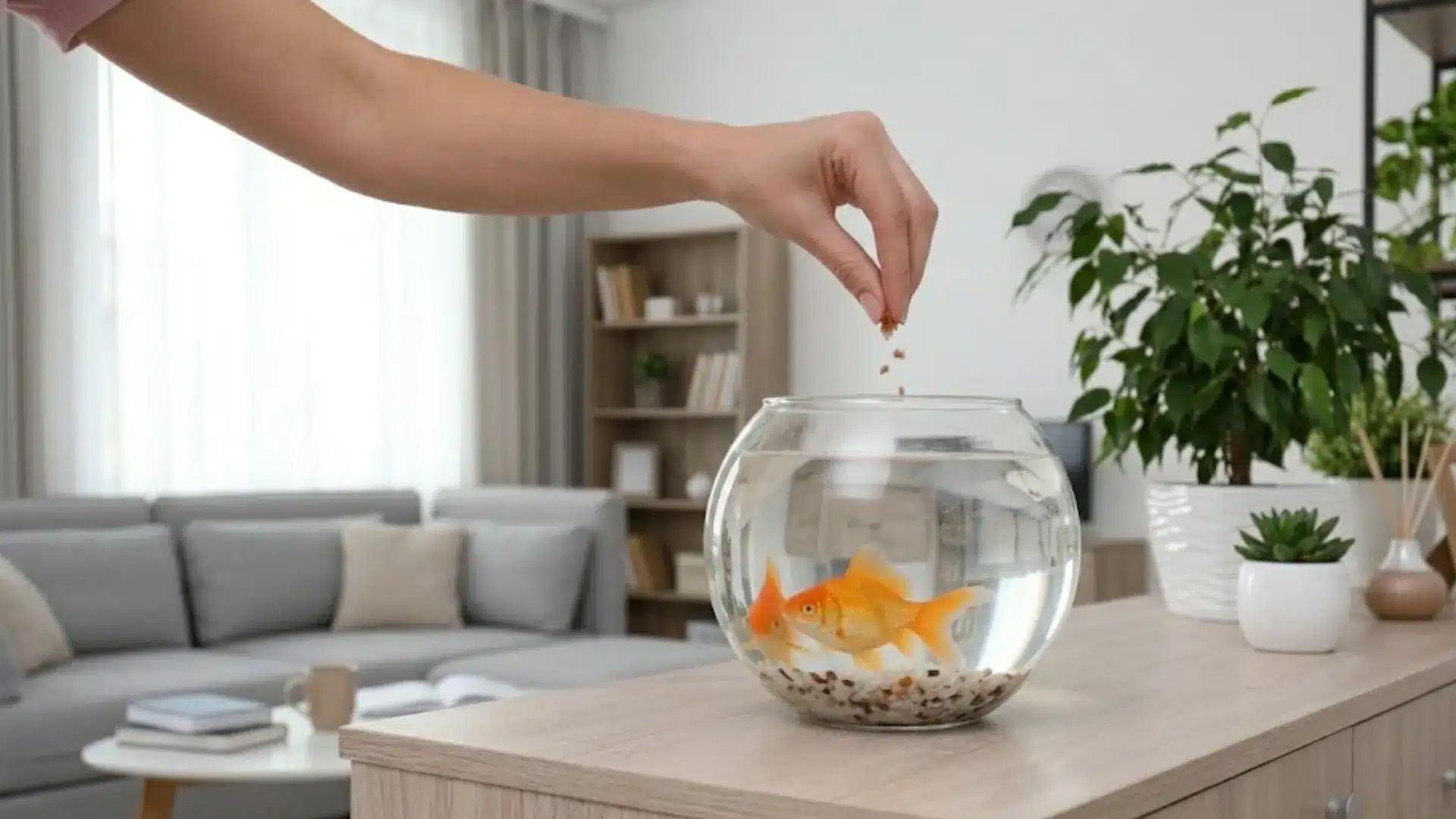
Overfeeding can quickly affect your goldfish’s health and tank water quality. Extra food breaks down into waste, causing cloudy water, digestive stress, ammonia buildup, and poor fish behavior.
- Cloudy water or algae blooms: Uneaten food breaks down in the tank, making water cloudy, feeding algae growth, and stressing goldfish through poor water conditions.
- Bloating or swelling: An overfed goldfish may look swollen or rounded because extra food can strain digestion and trigger swim bladder problems.
- Lethargy or inactivity: Goldfish that sit near the bottom or move slowly may be reacting to waste buildup and poor water quality.
- Loss of appetite: Refusing food after heavy feeding can signal digestive discomfort, ammonia buildup, or stress from dirty and unstable tank water.
When do Goldfish Need a Different Feeding Routine?
Goldfish feeding is not always fixed. Their appetite changes with stress, illness, breeding condition, and seasonal temperature shifts.
Adjusting food at the right time helps prevent overfeeding, digestive trouble, and poor water quality. Watch how your fish eats, swims, and reacts after meals before changing portions or frequency.
- New fish: Feed very small portions while new goldfish settle in, then increase slowly once they eat consistently and show normal behavior.
- Recovering fish: Offer soft, easy-to-digest foods in smaller amounts while monitoring swimming, appetite, and signs of improvement during recovery.
- Breeding fish: Provide slightly larger, nutrient-rich meals more often, but remove leftovers quickly to prevent ammonia spikes and dirty water.
- Spring pond feeding: Start with small amounts of wheat-germ food as temperatures rise, then increase portions as activity and appetite return.
Feeding adjustments should always be gradual. Sudden increases can pollute the water and strain digestion, even when fish seem hungry.
Test water regularly, remove uneaten food, and reduce feeding if fish become sluggish, bloated, or uninterested in meals.
A flexible routine based on behavior, health, and temperature keeps goldfish stronger and the tank or pond easier to manage.
How Long Can Goldfish Go without Food?
Healthy goldfish can survive roughly 10 to 14 days without food, and potentially longer if the tank contains algae or natural plant matter to graze on.
This makes them one of the more forgiving aquarium fish for short trips away from home.
For absences of a week or less, most healthy adult goldfish will be fine without any special provisions.
For longer trips, an automatic feeder set to small daily portions is a better solution than leaving a large lump of food before you leave. That lump will decompose and harm water quality before your fish can finish it.
Fry and juveniles are more sensitive. They can’t fast as long as adults and should not go more than a couple of days without food during active growth phases.
Mistakes to Avoid When Feeding Goldfish
Even experienced goldfish owners can make feeding mistakes that affect fish health and water quality. Understanding these common errors helps prevent digestive problems and unnecessary tank maintenance issues.
- Overfeeding: Giving too much food causes bloating, digestive stress, and poor water quality. Stick to small portions your fish can finish quickly, following the two-minute rule.
- Feeding only flakes: Flakes float and often cause goldfish to gulp air, which can lead to swim bladder problems. Mixing in sinking pellets or gel food supports healthy digestion.
- Ignoring temperature: Cold water slows goldfish metabolism, so feeding the same amount as in warm water can overwhelm digestion. Adjust both portion size and feeding frequency according to water temperature.
- Excessive treats: Treats like peas, leafy greens, or frozen foods are good in moderation, but too many can upset digestion and unbalance nutrition.
- Leaving uneaten food: Any leftover food pollutes the water, stresses your fish, and encourages algae growth. Always remove uneaten portions promptly and avoid adding more until the previous food is gone.
Conclusion
Caring for goldfish is more than feeding; it’s about timing, portion control, and adapting to their age and environment.
A consistent routine with balanced, appropriate food keeps them healthy, active, and less prone to digestive issues. Knowing how often to feed goldfish also helps prevent overfeeding and poor water quality.
Observing behavior and adjusting for life stage, temperature, or special conditions supports better health, cleaner water, and brighter colors.
With these practices, feeding becomes a simple way to maintain a healthy aquarium.
Have questions or personal feeding tips? Share them in the comments and help other goldfish owners care for their fish better.
Frequently Asked Questions
Can Goldfish Eat Vegetables Daily?
Yes, goldfish can eat small amounts of blanched vegetables daily, but portions should stay tiny to prevent digestive issues and water pollution.
Are Treats Necessary for Goldfish?
Treats are not necessary, but occasional frozen, live, or vegetable-based foods add variety, enrichment, and extra nutrients to a balanced diet.
How Do I Tell if My Goldfish Is Hungry?
Goldfish often beg even when full, so use portion control and the two-minute rule instead of feeding every time they act hungry.
Can Goldfish Share Food with Other Species?
Goldfish can share food with compatible tank mates, but monitor feeding closely so faster or aggressive fish do not steal all the food.