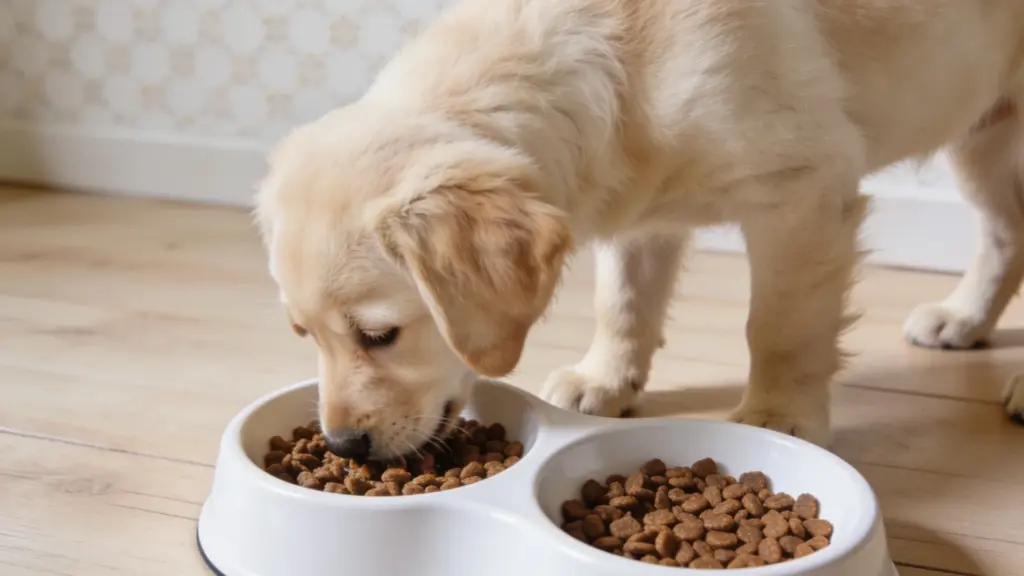
It was 11 p.m. You were squinting at a tiny chart on the back of a dog food bag, trying to figure out if your eight-week-old Golden Retriever belonged in the “medium” or “large” column. Sound familiar?
We’ve been there. That panicked first-night question, “Am I feeding too much or too little?” is one of the most common things new puppy parents ask.
The good news is that once a few basics make sense, feeding stops feeling like a mystery and starts feeling manageable.
This puppy feeding guide gives you real numbers, clear charts, and simple formulas so you can feed your puppy with confidence from week one.
Why Puppy Feeding Differs from Adult Dog Feeding
Puppies need far more nutrition than adult dogs because their bodies are building muscle, bone, and organ tissue every single day.
Per pound of body weight, a puppy may need up to twice the daily calories of an adult dog from the same breed.
That extra energy supports muscle growth, bone strength, organ development, and healthy weight gain.
Puppy food is also formulated with higher levels of protein, fat, and DHA for brain development, along with carefully balanced calcium and phosphorus for proper bone and tooth formation.
Adult dog food is not designed for this stage and can leave real nutritional gaps during the growth window that matters most.
Most adult dogs do well on two meals a day. Young puppies need three to four meals because their stomachs are small and their energy needs stay consistently high between meals.
Puppy Feeding Chart by Age, Breed Size, and Meal Schedule
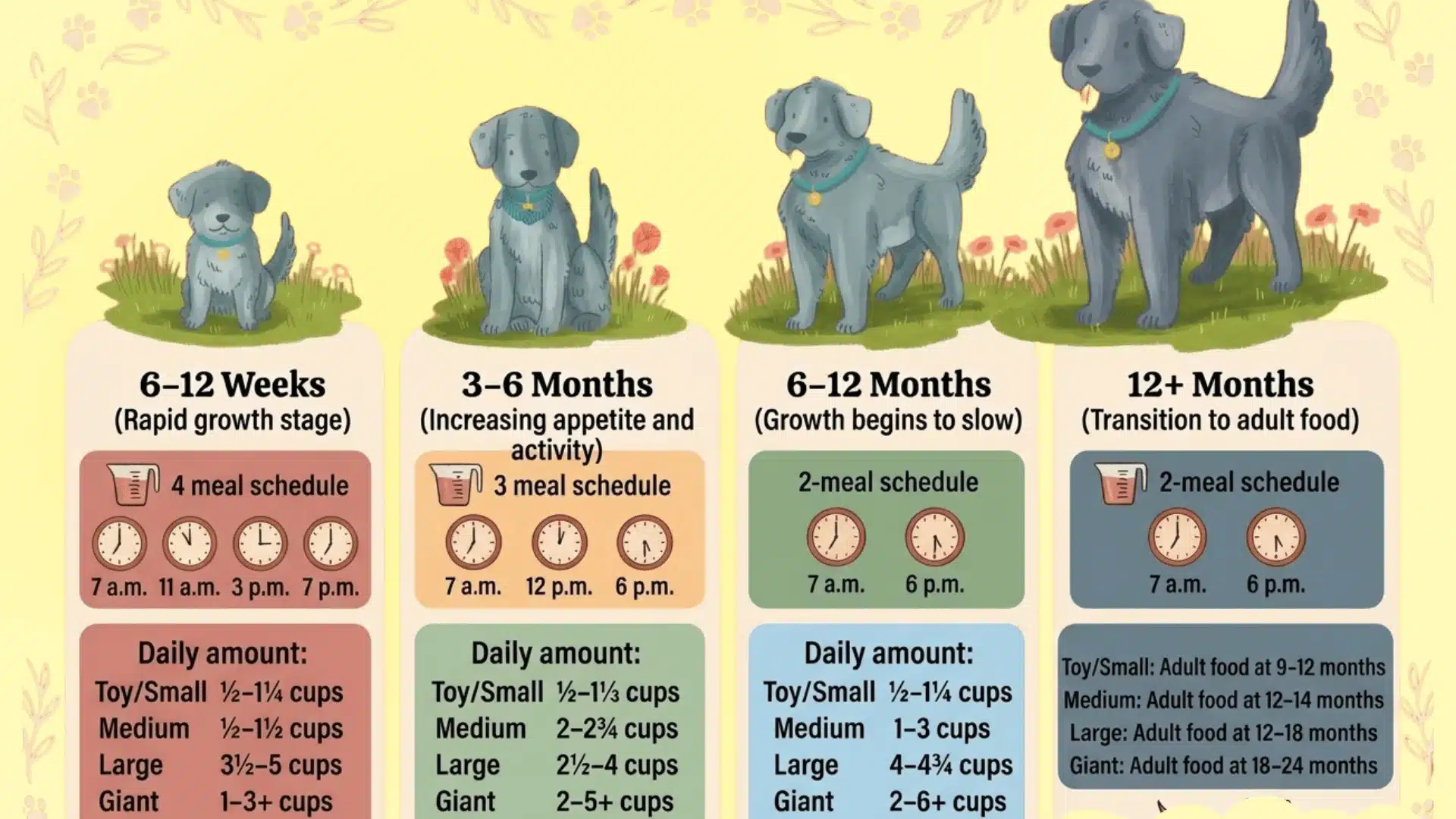
Puppy feeding schedules change as growth rate, stomach capacity, and breed size all shift. Use these age ranges as a starting point, then adjust portions based on body condition, activity level, food calories, and your vet’s advice.
1. 6 to 12 Weeks
Puppies at this age need steady feeding because their stomachs are small and growth is fast. Timing should remain consistent, while portion size should match the expected adult size and breed-specific needs.
Sample times: 7 a.m. / 11 a.m. / 3 p.m. / 7 p.m. (4 meals)
Approximate daily amounts (dry food, adjust per food label):
- Toy/Small (<25 lbs adult): ½–1¼ cups per day
- Medium (25–50 lbs): ½–1½ cups per day
- Large (50–100 lbs): 3½–5 cups per day (for 30–50 lb puppies)
- Giant (>100 lbs): 1–3+ cups per day (use large-breed formula)
Young puppies need frequent meals because their stomachs can’t hold enough food in one sitting to meet their energy needs for growth.
Large and giant breed puppies should be eating unmoistened dry food by 9 to 10 weeks; small breed puppies by 12 to 13 weeks.
2. 3 to 6 Months
This stage brings faster body changes, a stronger appetite, and better stomach capacity. A regular daytime schedule helps with digestion, potty training, and portion control as your puppy gains weight.
Sample times: 7 a.m. / 12 p.m. / 6 p.m.
Approximate daily amounts (dry food):
- Toy/Small: ½–1⅓ cups per day
- Medium: 2–2¾ cups per day (for 20–30 lb puppies)
- Large: 2½–4 cups per day (for 20–40 lb puppies)
- Giant: 2–5+ cups per day (controlled portions important)
3. 6 to 12 Months
Many puppies settle into a simpler feeding rhythm during this stage. Portions should still reflect breed size, activity level, and body condition, especially after spaying or neutering.
Sample times: 7 a.m. / 6 p.m. (2 meals)
Approximate daily amounts (dry food):
- Toy/Small: ½–1¼ cups per day
- Medium: 1–3 cups per day
- Large: 4–4¾ cups per day (for 50–70 lb puppies)
- Giant: 2–6+ cups per day (stay on puppy/large-breed formula)
4. 12 Months Plus
Most puppies are nearing or at adult size, but larger breeds may still be growing. Transition to adult food gradually over 7–10 days when appropriate.
Sample times: 7 a.m. / 6 p.m. (2 meals)
Transition timing:
- Toy/Small (<25 lbs adult): 9–12 months
- Medium: 12–14 months
- Large: 12–18 months
- Giant: 18–24 months (or until skeletal maturity)
Small breeds transition earlier; large/giant breeds benefit from staying on puppy or large-breed formulas longer for proper joint and bone development.
A common veterinary nutrition guideline is to consider the adult-food transition once a puppy is close to 80% of their expected adult size, while still factoring in breed size, growth rate, body condition, and your vet’s advice.
How to Tell If Your Puppy Is at a Healthy Weight
A healthy puppy should score 4 to 5 on a 9-point Body Condition Score. Run both hands along the ribcage while your puppy is standing.
- Healthy weight: ribs are easy to feel with light finger pressure, but not visible from across the room.
- Underweight: ribs, hip bones, or spine look obvious, and ribs feel sharp under the skin.
- Overweight: ribs are hard to feel unless you press firmly, and the waist looks rounded from above.
From the side, the belly should rise slightly behind the ribs. From above, the waist should narrow gently behind the ribcage. If weight looks off, adjust food by 10% for 1 to 2 weeks, then recheck.
Puppy Feeding Portion Formula for Food Calories
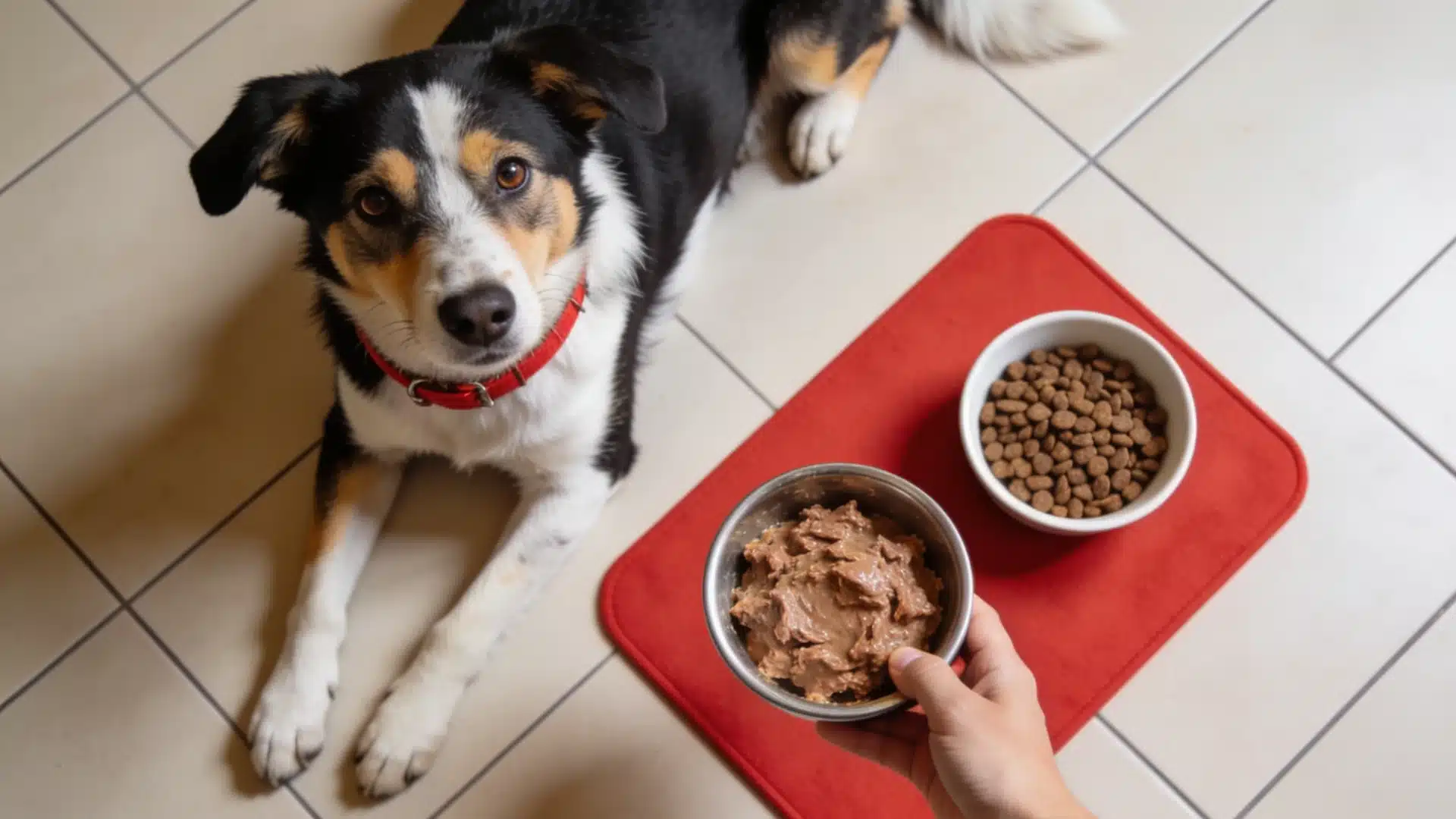
The general charts assume average calorie density (often 350–400 kcal per cup), but every bag is different. Calculating from the actual kcal per cup on your label is the most accurate way to determine portions across any brand.
- Find the kcal per cup on your bag: usually listed near the guaranteed analysis or feeding instructions. Example: 360 kcal per cup.
- Start with the food bag first: Check the feeding chart on your puppy food label, as it already accounts for the formula’s calorie density.
- Use RER for a closer estimate (if needed): Veterinary nutritionists calculate the Resting Energy Requirement (RER), then multiply by a puppy growth factor of about 2 to 3 times (typically 3× for puppies under 4 months and 2× for older puppies).
- Divide daily calories by kcal per cup: Example: 500 kcal needed ÷ 360 kcal per cup = ~1.4 cups per day total.
- Split that total across the day’s meals: On a three-meal schedule, that’s about 0.45–0.5 cups per meal.
- Adjust by 10% increments: Weigh your puppy weekly, assess body condition (ribs palpable but not visible; waist visible from above), and increase or decrease portions by no more than 10% before reassessing. Consult your vet for personalized targets.
Key reminder: One kibble at 320 kcal/cup vs. another at 430 kcal/cup means the same number of cups can lead to very different growth rates. Always prioritize the specific food’s feeding chart and monitor your puppy’s condition closely.
Dry Food vs. Wet Food: Get the Portions Right
Dry and wet food have different calorie density, water content, and measuring needs, so portions should not be swapped cup for cup.
| Feature | Dry food (kibble) | Wet food (canned or pouched) |
|---|---|---|
| Water content | Around 10% | Around 75 to 80% |
| Calorie density | Higher per cup (300 to 420 kcal) | Lower per cup (250 to 380 kcal per can) |
| Daily portion by volume | Smaller volume for the same calories | Larger volume for the same calories |
| Ease of measuring | Simple to scoop and track | Requires weighing or can fractions |
| Mixed feeding rule | Reduce dry by the calorie value of wet added | Never stack on top of a full dry portion |
| Best for | General daily feeding, dental benefits | Picky eaters, puppies needing extra hydration |
The most common mixed-feeding mistake is treating wet food as a topping while keeping the full dry portion intact.
That quietly doubles calories. If wet food adds 100 kcal to a meal, remove roughly a quarter cup of kibble, depending on your bag’s kcal per cup, to keep the day’s total on target.
How to Read Your Puppy Food Label
A puppy food label tells you whether the formula fits your puppy’s growth stage, calorie needs, breed size, and feeding plan.
- Life stage statement: Choose food labeled “formulated for growth” or “for all life stages.” Adult maintenance food does not meet puppy nutritional needs.
- Age range: Match the formula’s age guidance to your puppy’s expected adult size, especially for large breeds needing longer growth support.
- Weight range reference: Feeding charts usually use projected adult weight. Use that column instead of your puppy’s current weight.
- AAFCO statement: Look for food labeled for growth. This confirms the food is formulated for puppy needs
- Adjustment notes: Follow notes for activity level, spaying, or neutering. These reflect real differences in calories that can affect portion sizes.
How Much Water Should a Puppy Drink?
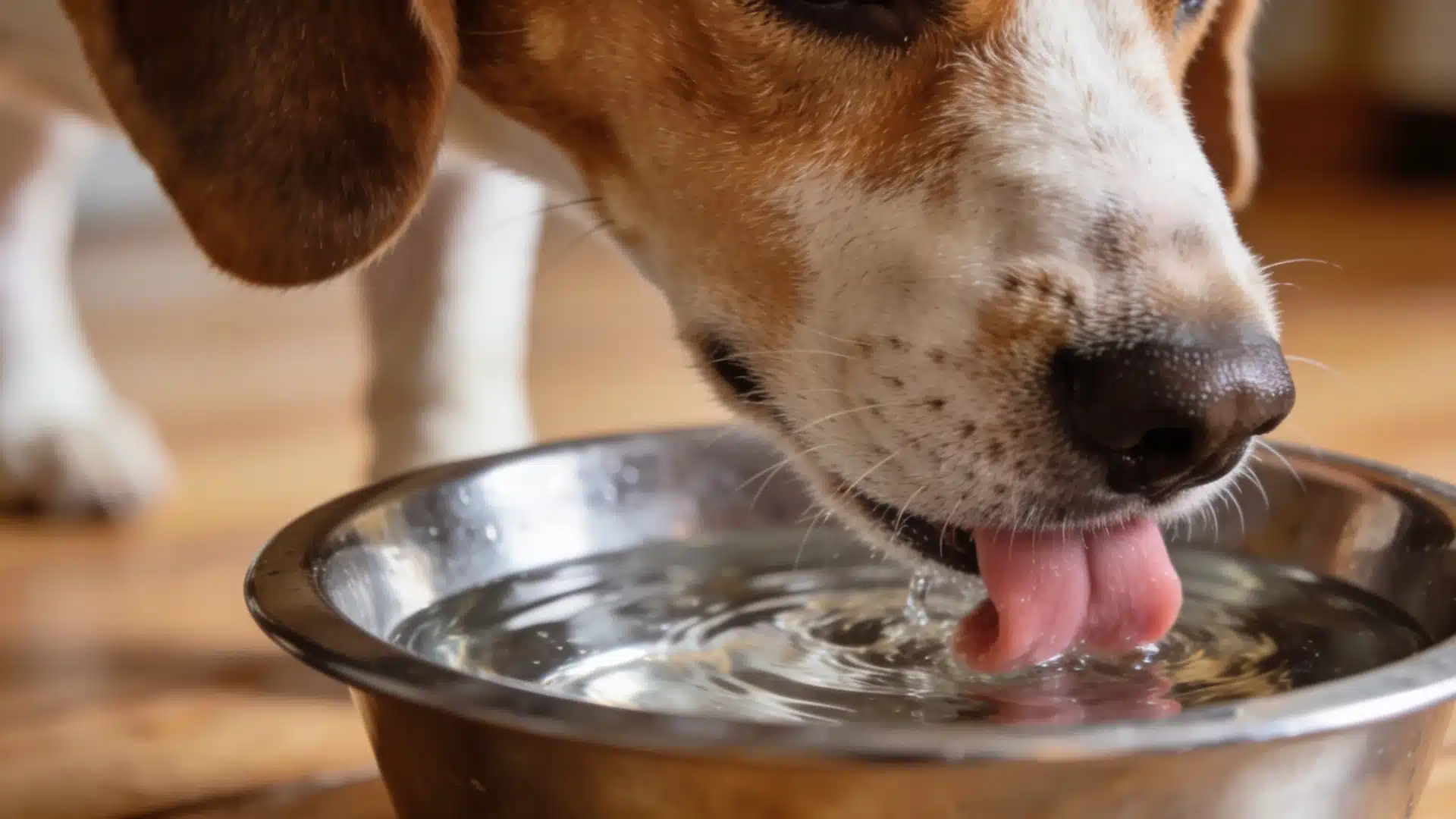
Hydration matters just as much as food because water supports digestion, portion tolerance, and kidney health.
Puppies generally need roughly half an ounce to one ounce of water per pound of body weight each day, so a 10-pound puppy may need around 5 to 10 ounces daily.
Fresh water should be offered before and after meals, especially when feeding dry kibble, since water helps digestion and makes meals easier to tolerate.
Puppies eating wet food or softened kibble may drink less from the bowl, which is normal as long as total fluid intake stays steady.
Watch for sudden drops in drinking around meals because this can point to pain, nausea, or early illness.
If it lasts longer than 24 hours, call your vet. Warm weather and active play can raise water needs, so refill bowls often and keep an extra bowl near your puppy’s favorite play area.
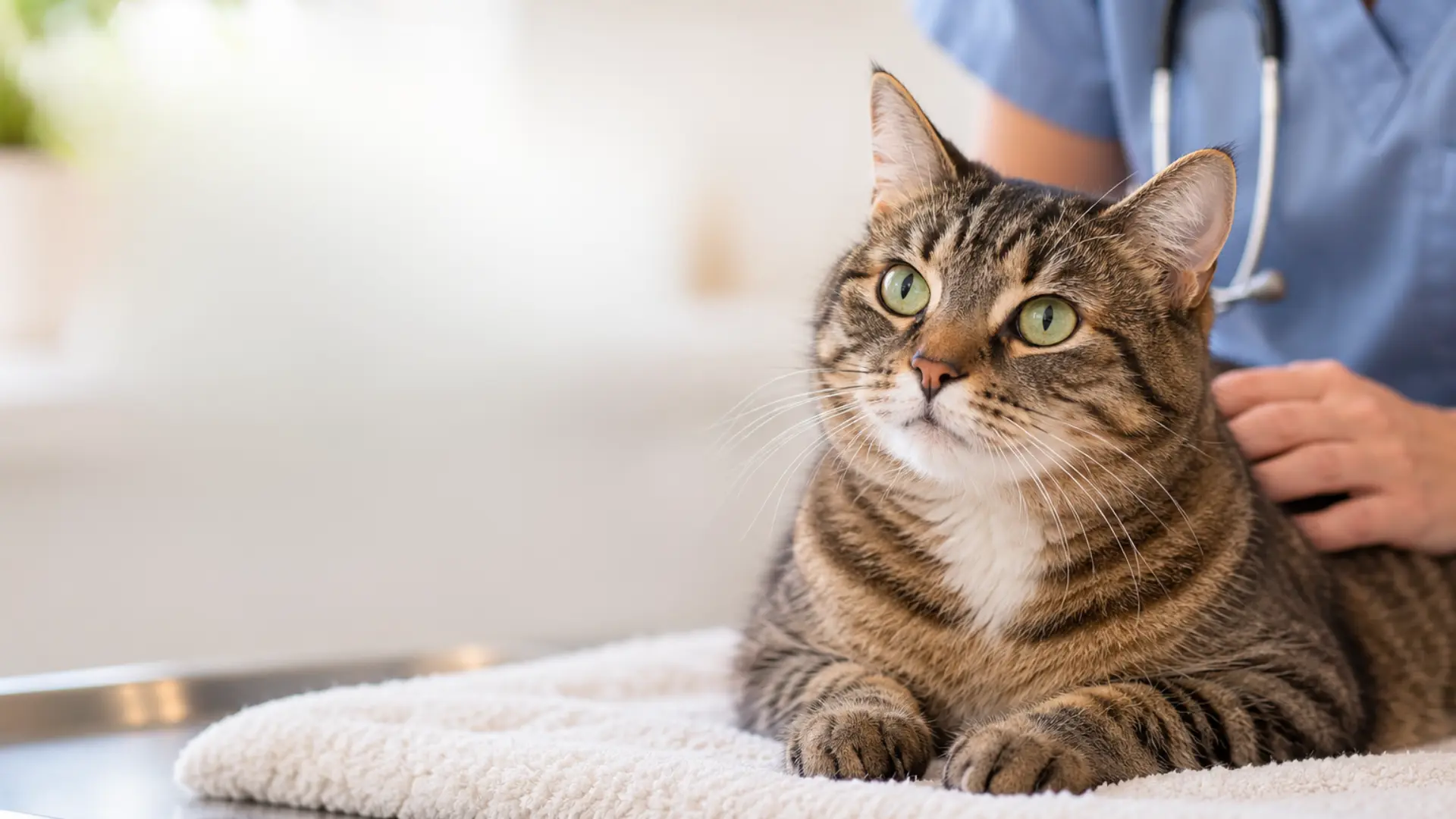
When to Ask a Vet About Puppy Feeding
Charts and guides handle the majority of situations, but some signs mean the conversation needs to happen with a professional, not a feeding chart.
- Frequent vomiting: Call your vet if your puppy vomits after meals often, especially when it happens more than once in a day.
- Diarrhea over 24 hours: Ask your vet if diarrhea lasts longer than one day or keeps returning after briefly improving.
- Poor weight gain: Get advice if your puppy eats the recommended amount but stays thin or grows more slowly than expected.
- Sudden weight gain: Check with your vet if weight rises quickly without extra food, treats, or reduced activity.
- Allergy signs: Ask about food sensitivity if itching, ear inflammation, paw licking, or red skin keeps coming back.
- Skipped meals: Contact your vet if your puppy refuses two meals in a row without stress, travel, or schedule changes.
For a deeper look at breed-appropriate formulas at each life stage, the vet-approved puppy foods guide covers what nutritionists actually look for by breed size.
Disclaimer: the situations above are general guidance only. A vet is the only person who can assess your individual puppy’s health and give a personalized feeding plan. When in doubt, call before making changes.
Common Puppy Feeding Mistakes
Small feeding mistakes can affect appetite, digestion, and growth. Avoid these habits to keep your puppy’s feeding routine more consistent.
- Free feeding all day: Use scheduled meals so appetite, missed meals, and portion intake are easier to track.
- Too many treats: Count treat calories and reduce kibble slightly so treats do not push daily calories too high.
- Sudden food changes: Mix old and new food gradually over 7 to 10 days to lower the risk of stomach upset.
- Switching to adult food too early: Keep puppy food until the breed-appropriate transition age, especially for large and giant breeds.
- Ignoring breed size: Choose food made for your puppy’s expected adult size, especially large-breed formulas for bigger dogs.
Conclusion
A healthy feeding routine is not about chasing perfect numbers.
It is about paying attention to patterns, making small adjustments when needed, and learning what works best for your puppy as they grow.
Every puppy develops at a slightly different pace, which is why observation often matters as much as any chart or recommendation.
Staying consistent, monitoring energy levels, and keeping regular vet checkups can help you spot changes early and make informed decisions with confidence.
Over time, those daily habits add up and support a strong foundation for the years ahead.
Use this puppy feeding guide as a starting point, then share your feeding tip, question, or experience in the comments.
Frequently Asked Questions
Is Grain-Free Puppy Food a Good Choice?
Grain-free puppy food is usually unnecessary unless a vet confirms sensitivity. Most puppies do well on grain-inclusive formulas while research continues.
Can Puppies Eat Homemade Food Instead of Commercial Kibble?
Homemade puppy food can work, but only with a veterinary nutritionist’s plan. Puppies need precise nutrients that general recipes often miss.
What Happens if I Accidentally Feed My Puppy Adult Dog Food for a Few Days?
A few days of adult food are usually fine. Switch back to puppy formula gradually, since long-term adult food can miss key growth nutrients.