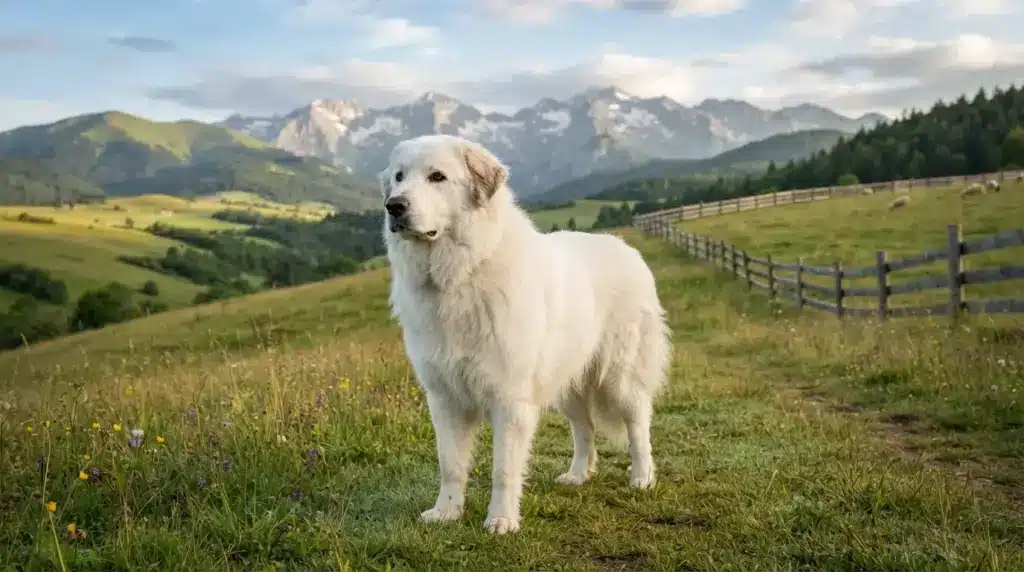
A Pyrenees dog can look calm and easygoing while quietly tracking every sound around the home. That watchful nature comes from centuries of livestock guarding, not simple stubbornness.
Great Pyrenees behavior is shaped by independence, territorial awareness, and a strong attachment to family, which can make the breed rewarding but demanding. Size, shedding, barking, training style, health screening, and secure fencing all affect daily life with this giant dog.
Understanding its origin, temperament, care needs, and behavior around people and pets makes it easier to judge how well it may fit your household.
Those details matter before taking responsibility for a powerful dog with strong guarding habits and a mind of its own.
Where Does the Great Pyrenees Dog Come From?
The Great Pyrenees developed in the Pyrenees Mountains between France and Spain, where shepherds used the breed to protect livestock from wolves, bears, and other predators.
Working with limited human direction shaped its calm confidence, protective nature, and independent thinking. The official breed standard provides the main physical and temperament details:
| Feature | Details |
|---|---|
| Breed Name | Great Pyrenees |
| Other Names | Pyrenean Mountain Dog, Chien de Montagne des Pyrénées |
| Origin | Pyrenees Mountains between France and Spain |
| Breed Group | Working |
| Size | Large to giant |
| Height | Males: 27–32 inches; females: 25–29 inches |
| Weight | About 100 pounds for males and 85 pounds for females, varying by build |
| Lifespan | Around 10–12 years |
| Coat Type | Thick, weather-resistant double coat |
| Temperament | Calm, loyal, protective, and independent |
This working history still affects Great Pyrenees behavior in family homes. They may bark at unfamiliar sounds, watch strangers carefully, and make independent decisions during training. Early socialization and consistent boundaries help these guarding habits fit safely into household life.
What Does a Great Pyrenees Look Like?
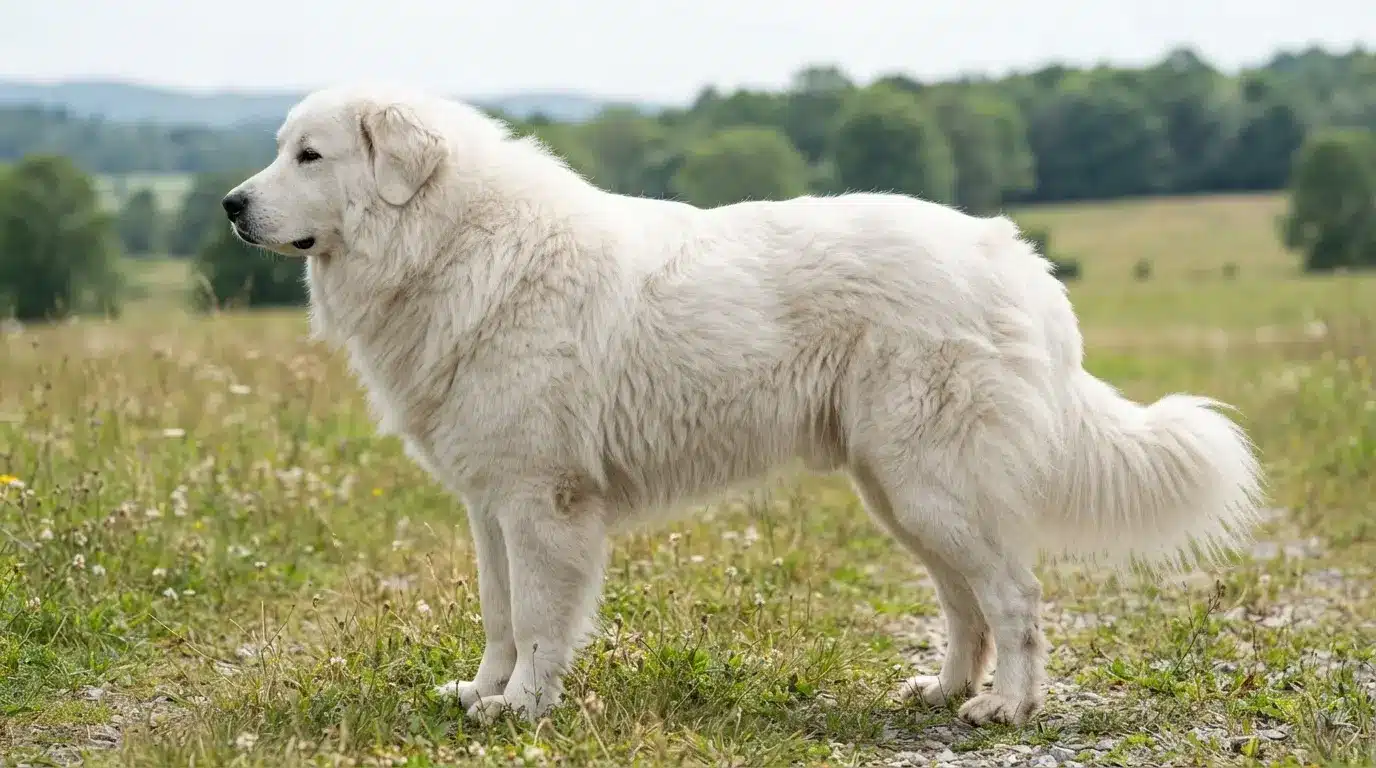
A Great Pyrenees has a powerful appearance that reflects its history as a livestock guardian. Their large frame, thick coat, and confident posture make them easy to recognize. Main physical features include:
- Large body structure: Their strong build helps them handle outdoor conditions and protect animals.
- Thick double coat: The dense outer coat and soft undercoat protect them from cold weather, but they need the right grooming tools to stay tangle-free.
- White coloring: Most Great Pyrenees have a white coat, sometimes with gray, tan, or badger-colored markings.
- Dark eyes: Their eyes often convey a calm, thoughtful expression.
- Plumed tail: Their long, feathered tail is usually carried low when relaxed and raised when alert.
Despite their size, Great Pyrenees often move with surprising grace. Their appearance is not meant for speed or chasing but for endurance and steady protection.
Great Pyrenees Traits that Shape their Unique Personality
Great Pyrenees combine giant size, protective awareness, independent thinking, and moderate activity needs. Each trait reflects the breed’s long history of guarding livestock without constant human direction.
1. Size and Physical Maturity
The Great Pyrenees is a giant breed that grows rapidly during puppyhood and may continue gaining muscle and body mass until around 18 to 24 months.
The breed standard gives about 100 pounds for a 27-inch male and 85 pounds for a 25-inch female. These figures are reference points rather than fixed limits.
Adult weight should remain proportionate to height and body structure. Genetics, nutrition, health, and activity can affect how each dog develops.
2. Protective Awareness
Great Pyrenees naturally pay close attention to movement, unfamiliar sounds, visitors, and changes around their territory.
Their territorial barking is usually a warning response rather than aggression, so effective barking control should address triggers and reward calm behavior.
Barking may become more noticeable at night because the breed remains alert after dark. A stable dog should stay calm and attentive while assessing a situation.
Early socialization helps it recognize routine household activity and respond more appropriately to guests, neighbors, and unfamiliar animals.
3. Independent Thinking
The breed’s independence comes from working as a livestock guardian with limited human direction.
A Great Pyrenees may understand a command but pause before responding because it is assessing the situation for itself. This does not mean the dog lacks intelligence or cannot learn. It means obedience may be less immediate than with breeds developed to follow frequent commands.
Short sessions, consistent rules, useful tasks, and timely rewards usually hold attention better than repeated instructions or harsh corrections.
4. Activity Level and Daily Rhythm
Great Pyrenees generally have moderate activity needs, but they still require daily movement and mental engagement.
Their working style relies more on steady patrols and endurance than speed or constant high-intensity exercise. Regular walks, supervised time in a securely fenced area, and scent-based activities suit many adults.
Some become more active after dark because livestock guardians traditionally remained alert at night. Exercise should match the dog’s age, body condition, health, mobility, and local weather.
Together, these traits explain why the breed can appear calm while remaining highly aware of its surroundings. Clear expectations help owners manage its size, independence, activity, and guarding behavior fairly.
Pyrenees Social Behavior with People and Pets
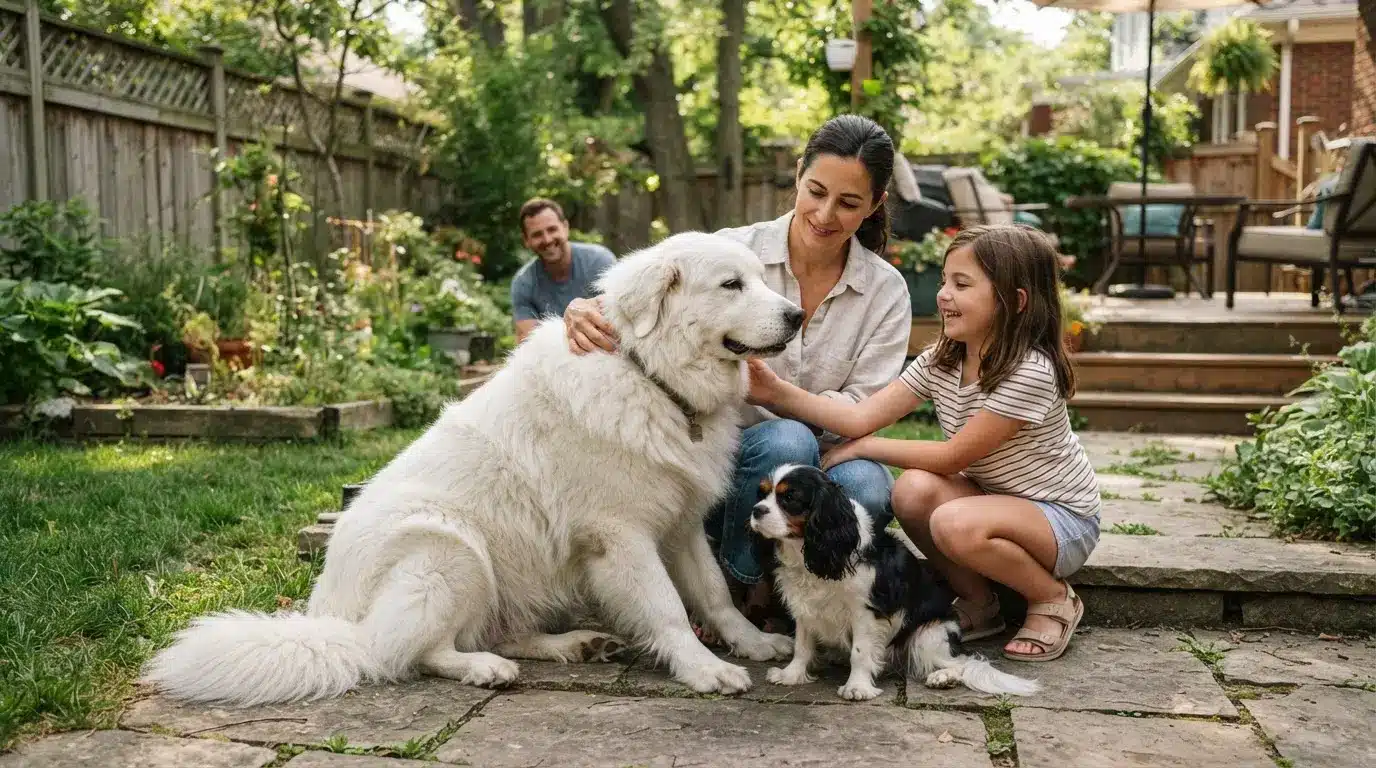
A Great Pyrenees usually forms close bonds with the people and animals in its home. Its reactions depend on early socialization, training, past experiences, and individual temperament.
With family members, the breed is often gentle, devoted, and quietly protective. Many are patient with children, but adult supervision remains necessary because such a large dog can accidentally knock over a small child during play.
Around strangers, a Great Pyrenees may remain reserved and watch carefully before relaxing. Calm introductions allow the dog to observe the visitor without feeling pressured or threatened.
Many can live peacefully with dogs, cats, and other household animals, especially after slow introductions. However, reactions vary between individual dogs. Guarding instincts may cause excessive watchfulness around unfamiliar people or pets, so owners should supervise early meetings and reward calm behavior.
Clear boundaries and positive experiences help these dogs become dependable household companions.
Great Pyrenees Care Essentials Every Owner Should Know
Caring for a Great Pyrenees requires attention to training, coat care, feeding, exercise, and routine health checks. Consistent daily care can prevent avoidable health and behavior problems.
- Training and socialization: Start early with short sessions, clear commands, and rewards. Consistent leash training helps manage this large dog safely, while basic obedience and visitor boundaries support better behavior at home.
- Grooming and shedding: Brush the thick double coat several times each week and more often during seasonal shedding. Use suitable grooming tools to remove loose undercoat and prevent tangles. Check the ears, nails, teeth, and skin regularly.
- Diet and portion control: Choose food carrying a complete and balanced label for the dog’s life stage. Measure each meal, limit excessive treats, provide fresh water, and monitor body condition to prevent unnecessary weight gain.
- Exercise and rest: Provide steady walks, supervised outdoor activity, and a comfortable indoor resting area. Adjust activity according to the dog’s age, health, mobility, and weather conditions.
- Routine health care: Arrange regular veterinary visits and follow recommended vaccination, parasite prevention, dental care, and health-screening schedules. Report changes in appetite, movement, breathing, or behavior promptly.
Meeting these care needs helps protect the dog’s coat, weight, movement, and behavior. It also makes daily responsibilities easier to manage in a family home.
Real Owner Experiences with Great Pyrenees
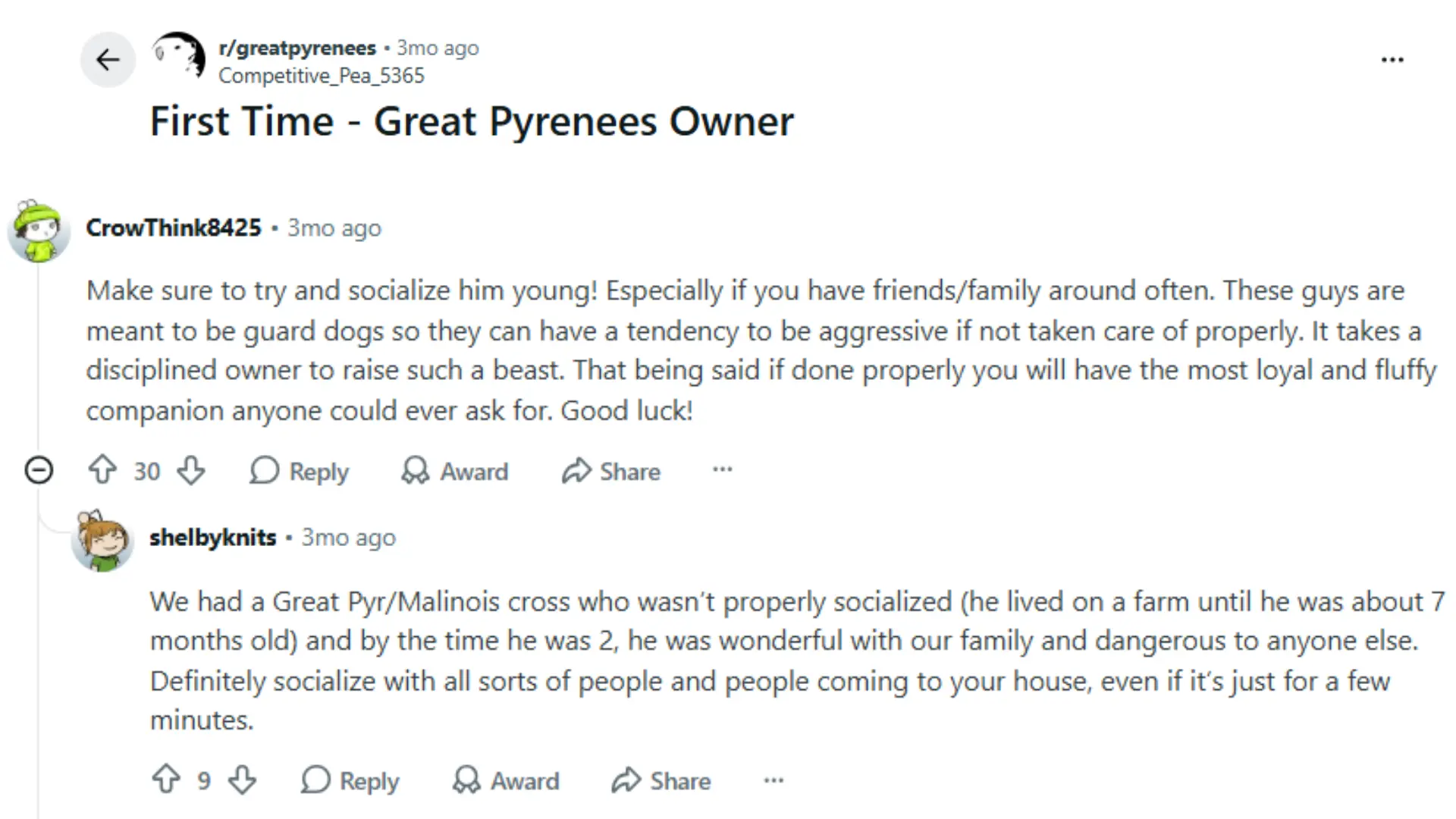
Reddit users in the r/greatpyrenees community discussed the experiences as first-time Great Pyrenees owners and shared advice on raising this protective breed.
Owners emphasized the importance of early socialization, noting that these dogs need exposure to a variety of people, pets, and environments when they are young.
Several commenters noted that poor socialization can pose challenges due to the breed’s strong guarding instincts. Others highlighted the importance of getting puppies comfortable with grooming, handling, vet visits, nail trims, and regular brushing early in life.
The discussion also reflected that, with proper training and care, these dogs can become loyal, gentle, and affectionate companions while still maintaining their natural protective personality.
Great Pyrenees Health Concerns and Screening
Great Pyrenees can develop joint, knee, eye, heart, thyroid, and genetic conditions. This does not mean every condition is common, but proper screening can help buyers assess a breeder’s health practices.
The GPCA health statement recommends hip and patella testing for breeding dogs, plus at least one additional approved screening.
| Health Area | What Owners Should Know |
|---|---|
| Hip Dysplasia | Breeding dogs should receive an approved hip evaluation |
| Patellar Luxation | A patella examination is required for the breed’s CHIC number |
| Additional Screening | Options include elbow, cardiac, thyroid, eye, hearing, shoulder, and genetic tests |
| GDV or Bloat | A sudden swollen stomach, dry retching, restlessness, weakness, or collapse requires emergency care |
| Weight and Mobility | Healthy weight and regular veterinary checks can reduce avoidable strain on joints |
Large dogs can also face gastric dilatation-volvulus, which occurs when the stomach expands and twists. Cornell University states that GDV requires immediate medical and surgical care.
Ask breeders for public OFA or CHIC records rather than relying only on verbal claims. A veterinarian should assess any changes in appetite, movement, breathing, or behavior.
Great Pyrenees Lifespan and Long-Term Care
A healthy Great Pyrenees usually lives around 10–12 years, with its lifespan depending on genetics, healthcare, nutrition, and overall lifestyle. A balanced diet helps maintain healthy body weight, while regular exercise supports strength, movement, and joint health.
Routine veterinary care plays an important role in identifying health concerns early and supporting long-term wellness.
Maintaining proper weight is especially important because excess weight can place stress on their large frame.
As Great Pyrenees age, their care needs may change, requiring gentler exercise, comfortable resting areas, and closer attention to mobility. Even in their senior years, they often remain calm and loyal, enjoying time with their family members.
Is a Great Pyrenees Right for Your Home?
A Great Pyrenees can be a calm family companion, but its size and guarding instincts require careful planning. Daily routines must account for barking, shedding, training, fencing, and close supervision around unfamiliar people or animals.
| Household Factor | Good Fit | May Not Suit |
|---|---|---|
| Living Space | Enough indoor room and secure outdoor access | Limited space without dependable outdoor routines |
| Noise | A household prepared for alert barking, especially at night | A home that requires a consistently quiet dog |
| Training | Patient owners who use clear rules and rewards | Anyone expecting quick obedience or dependable off-leash control |
| Fencing | A securely fenced property with supervised outdoor time | Open land without boundaries or regular leash use |
| Grooming | Regular brushing and tolerance for heavy shedding | Anyone wanting minimal coat care |
| Family Life | Daily attention and supervised introductions | Long periods alone without interaction |
| Handling | Adults able to control a strong, giant dog | Anyone uncomfortable managing a powerful breed |
First-time owners can manage this breed when they understand its strength, independence, and need for structure. A household unable to provide secure boundaries, coat care, patient training, and daily attention should consider a smaller or more responsive breed.
How to Prepare for a Great Pyrenees
Preparation should begin before the dog arrives. A safe setup can prevent early problems and make the adjustment easier for everyone in the household.
- Check gates, fences, and outdoor boundaries for weak areas.
- Choose a strong leash, collar, harness, and large dog bed.
- Set aside space for food, water, grooming tools, and supplies.
- Arrange an initial veterinary appointment.
- Confirm vaccination, microchip, and health-screening records.
- Introduce children and other pets slowly under supervision.
- Plan short training sessions using clear commands and rewards.
- Budget for food, grooming, veterinary care, and emergencies.
Having these basics ready gives the dog a steady routine from the first day. It also helps the household manage its size, strength, and guarding habits safely.
Final Thoughts
A Pyrenees dog suits a household that can manage a giant, independent guardian with patience and clear boundaries.
Great Pyrenees behavior makes more sense when barking, roaming, stranger awareness, and slower responses to commands are viewed as working traits rather than disobedience.
Secure fencing, early socialization, routine coat care, suitable nutrition, and verified breeder health testing should be planned before adoption.
Families must also consider shedding, nighttime noise, veterinary costs, and the physical strength required to handle such a large animal.
In the right setting, this breed can be calm, affectionate, and dependable without losing its protective instincts. Share your experience or questions in the comments to help other potential owners make an informed choice.
Frequently Asked Questions
Can an Adult Dog Adjust to a New Family?
Many adult dogs adjust well to a new household when introductions, routines, and boundaries remain consistent. A trial period can help families assess compatibility, especially when children, other pets, or unfamiliar visitors are part of daily life.
Does this Breed Drool Heavily?
This breed usually drools less than heavy-jowled giant breeds, though individual dogs vary. Drooling may increase after drinking, eating, exercise, excitement, or exposure to heat. Sudden excessive drooling can also signal illness and deserves veterinary attention.
Why Does It Have Double Dewclaws?
Double rear dewclaws are a recognized physical feature in the official breed standard. They are attached to the rear legs and require regular nail trimming because overgrown nails can catch on surfaces or become uncomfortable.
Can It Handle Hot Summers?
The thick double coat requires careful heat management during hot weather. Provide indoor cooling, shade, fresh water, and exercise during cooler hours. Watch for heavy panting, weakness, confusion, vomiting, or collapse and seek veterinary care immediately.