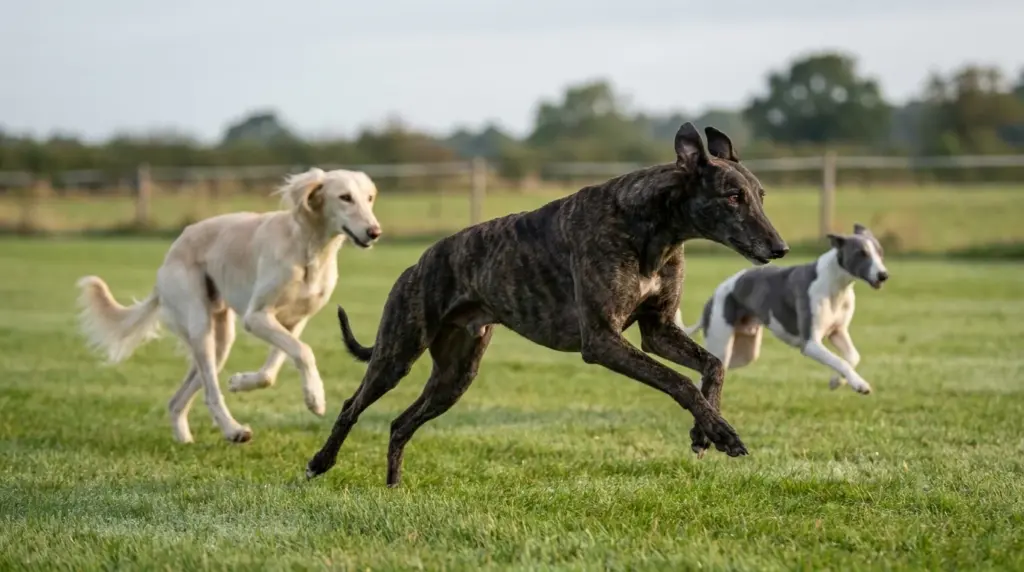
Watch a Greyhound break into a full sprint and a Border Collie snap into a hard turn chasing a ball, and you’re seeing two completely different kinds of athletes. One is built to explode off the line.
The other is built to stop, pivot, and go again without missing a beat. Both are “fast”, just not in the same way.
That’s the piece that usually gets lost in these rankings. A single mph number can’t tell you whether a dog is a sprinter, a distance runner, or an agility machine, and it definitely can’t tell you which one would actually make a good running partner for you.
The Greyhound still tops the list; most estimates put their peak sprint near 45 mph, with sighthounds and a handful of athletic sporting breeds filling out much of the rest.
Below, we’ll walk through the fastest breeds out there, explain what’s actually happening in their bodies to make that speed possible, and help you separate flat-out sprinting from the kind of stamina and agility that matters more day to day.
How the Fastest Dog Breed is Measured
Here’s something that trips a lot of people up: a dog’s highest instant speed and its average speed over a set distance are two different measurements entirely. Numbers pulled from different surfaces, distances, and timing setups shouldn’t be treated as directly comparable.
A few of the ways these figures actually get collected:
- AKC Fast CAT times one dog at a time over a straight 100-yard lure course and converts the finish time to mph. Height handicaps affect title points, not the recorded speed itself.
- AKC breed standings average a dog’s three fastest qualifying runs, which reflects participating dogs under Fast CAT conditions, not a hard ceiling for every dog in the breed.
- Other estimates come from racing, radar, GPS tracking, or repeated published figures, and things like age, fitness, motivation, weather, and surface can all shift the result.
So treat everything below as an approximate upper estimate, not a guarantee for any individual dog.
Fastest Dog Breeds by Estimated Top Speed
These commonly cited estimates come from racing, timed events, and breed references rather than one controlled test. Breeds sharing the same figure are grouped together, with tied groups arranged alphabetically instead of implying a proven difference.
1. Greyhound: Up to 45 mph (72 km/h)
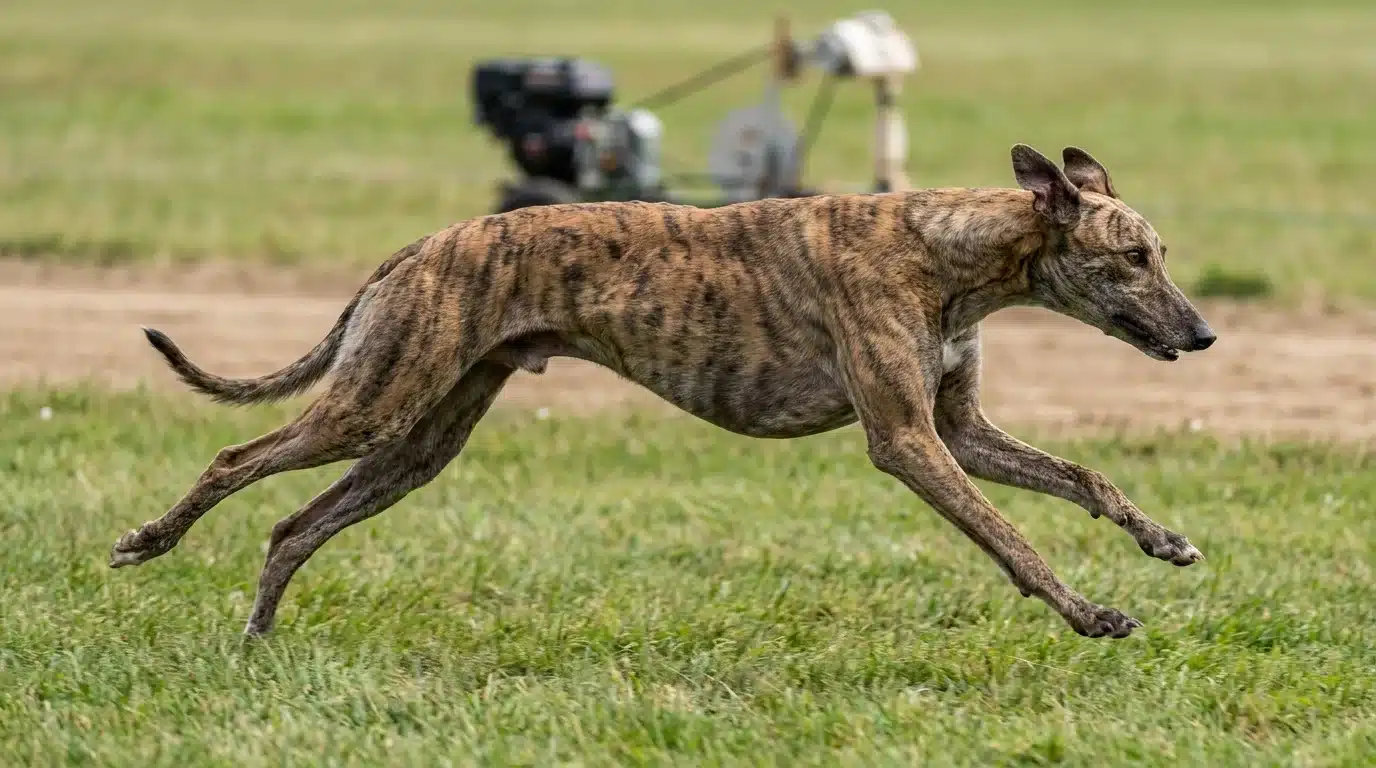
The Greyhound is widely regarded as the fastest dog breed, with a commonly cited upper estimate of 45 mph during a short sprint. Verified results and published research generally place measured speeds closer to 40 to 42 mph.
Its long legs, flexible spine, deep chest, narrow waist, and muscular hindquarters support a wide double-suspension gallop.
The Greyhound sits above all other breeds in commonly published speed rankings because of its specialized sprinting ability. Individual results still depend on fitness, surface, motivation, and timing method.
2. Saluki: Up to 42 mph (68 km/h)
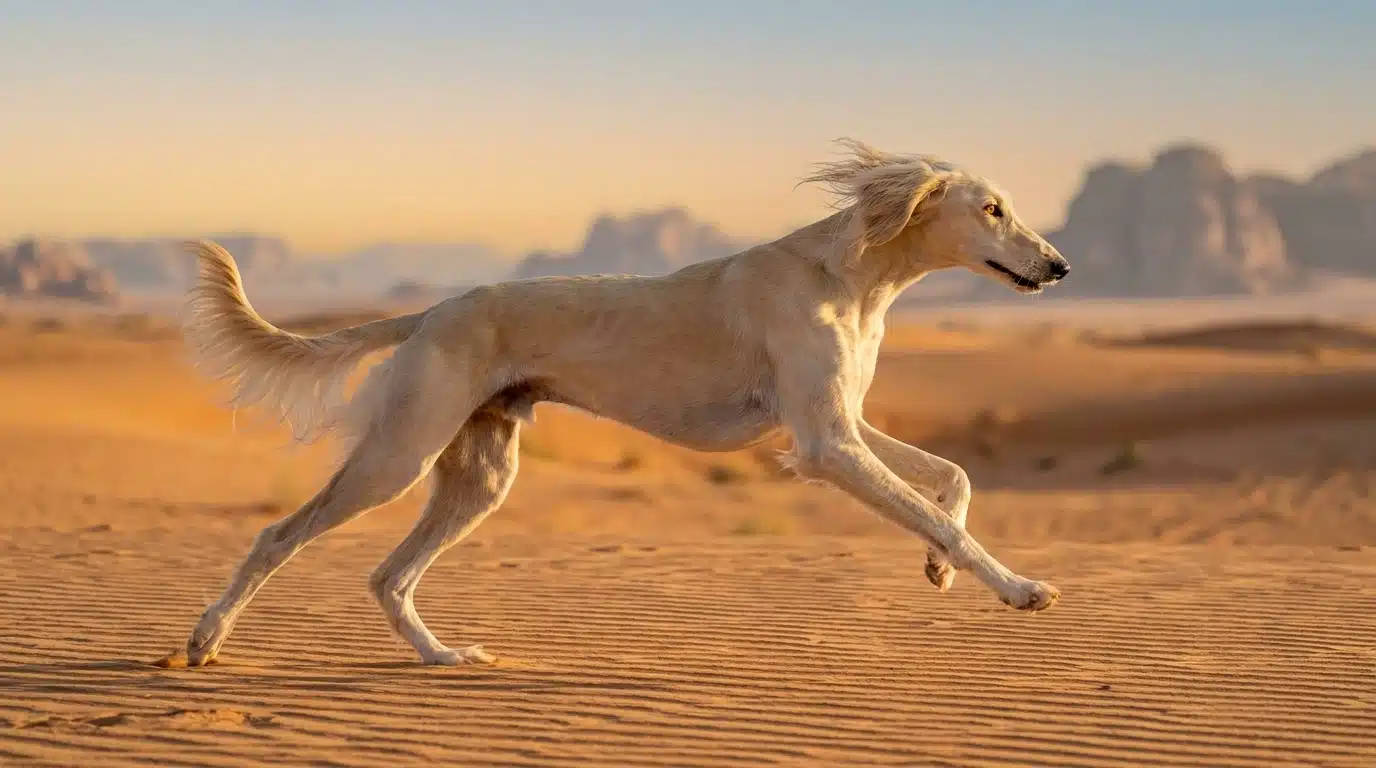
The Saluki reaches a commonly cited upper estimate of 42 mph. It was developed to pursue fast-moving game across broad, open terrain, linking its history with speed and sustained movement.
Its lean frame, long limbs, deep chest, and well-padded feet help it move over firm or uneven ground without carrying excess body weight.
The Saluki follows the Greyhound in many published rankings and remains one of the fastest sighthounds. Its speed reflects breed capability, not a guarantee that every Saluki will outrun every breed below it.
3. Sloughi: Up to 42 mph (68 km/h)
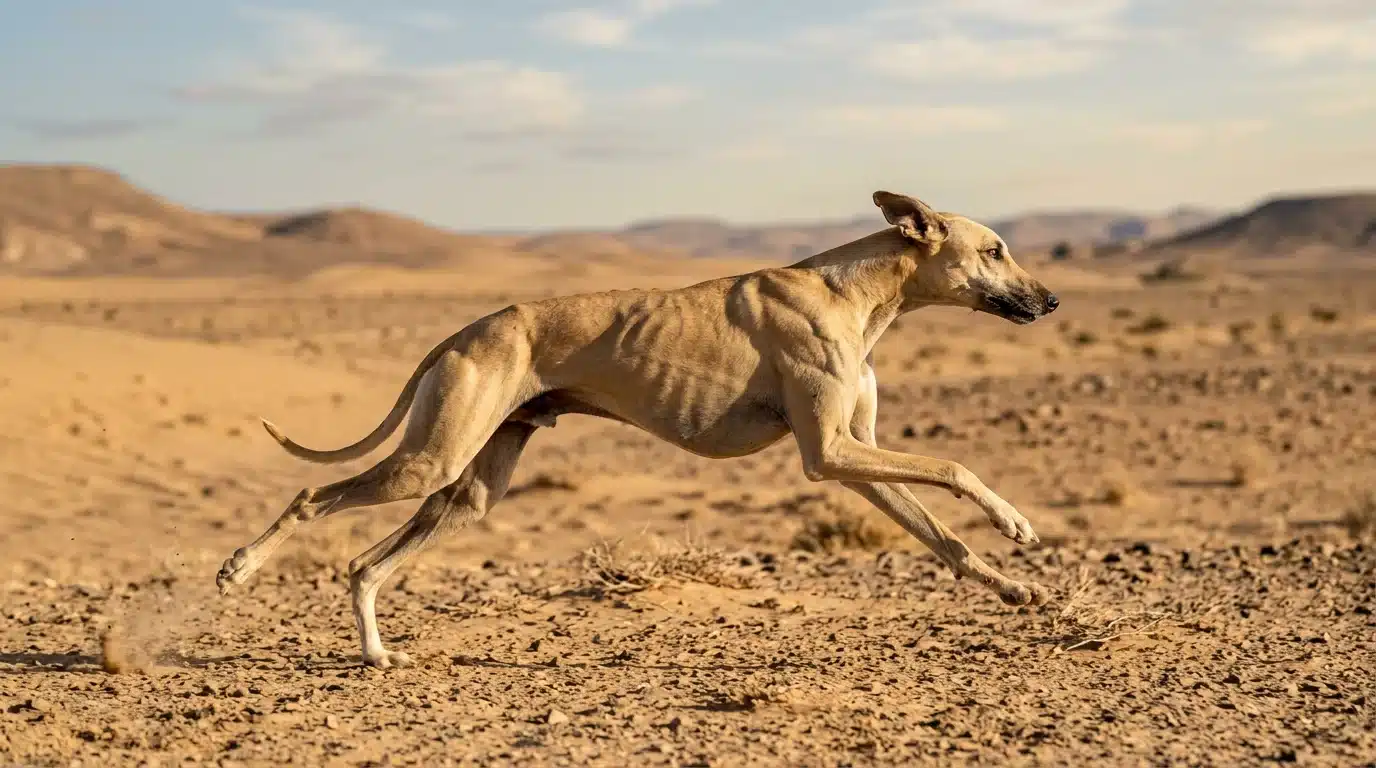
The Sloughi has a commonly cited upper estimate of 42 mph. This North African sighthound was developed for pursuing game across open country, where a light body and ground-covering gait were useful.
Its narrow torso, long legs, deep chest, and tucked abdomen resemble the proportions seen in other fast sighthounds.
The Sloughi shares its listed estimate with the Saluki, so the two breeds are generally considered close in speed. Individual dogs may perform differently depending on conditioning and running conditions.
4. Afghan Hound: Up to 40 mph (64 km/h)
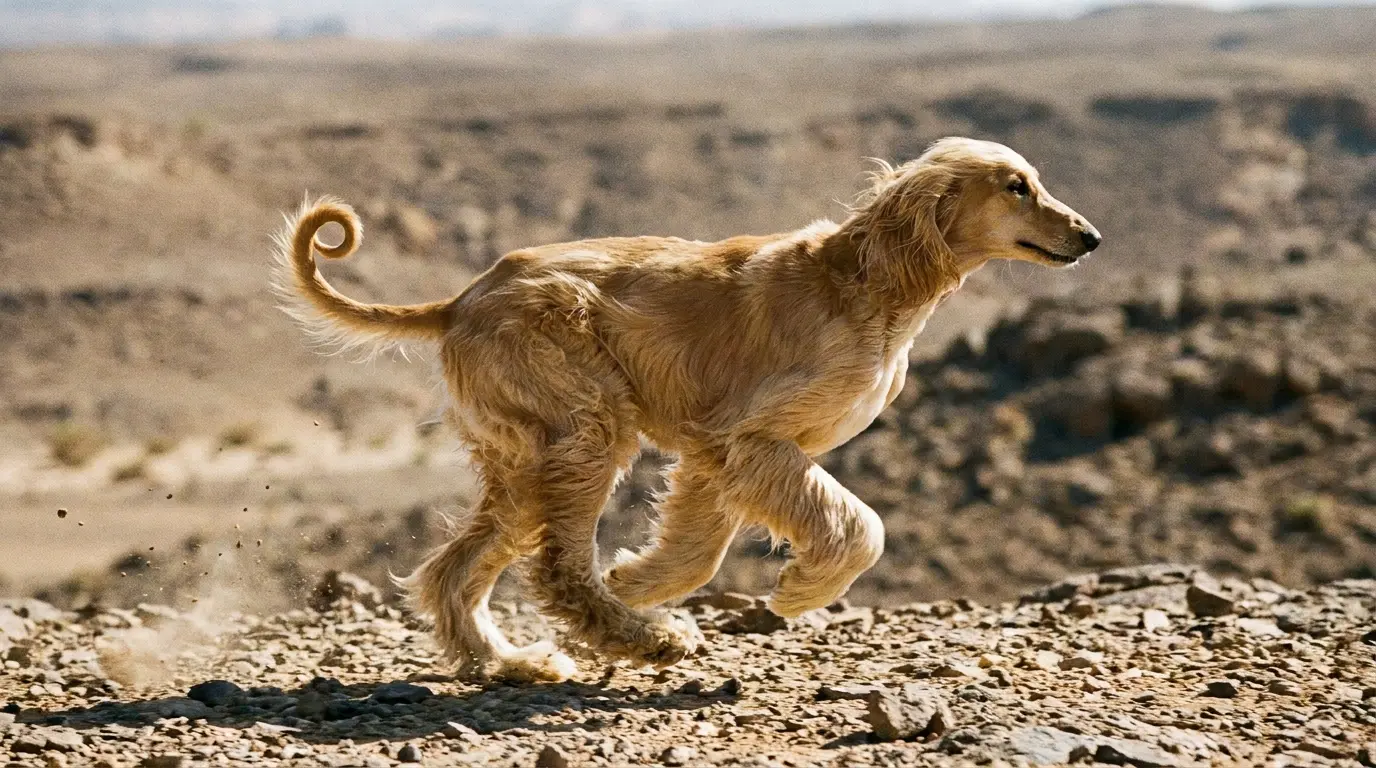
The Afghan Hound reaches a commonly cited upper estimate of 40 mph. Its history is connected with hunting across mountainous and uneven terrain rather than running only on flat racing surfaces.
Long legs, prominent hip bones, a deep chest, and large, well-padded feet support wide strides and secure footing. Its long coat does not indicate a heavy body beneath it, though keeping up with the right coat-care routine takes real commitment for an owner.
The Afghan Hound remains among the fastest traditional sighthounds. Its placement reflects the commonly reported estimate rather than a controlled comparison with every breed.
5. Azawakh: Up to 40 mph (64 km/h)
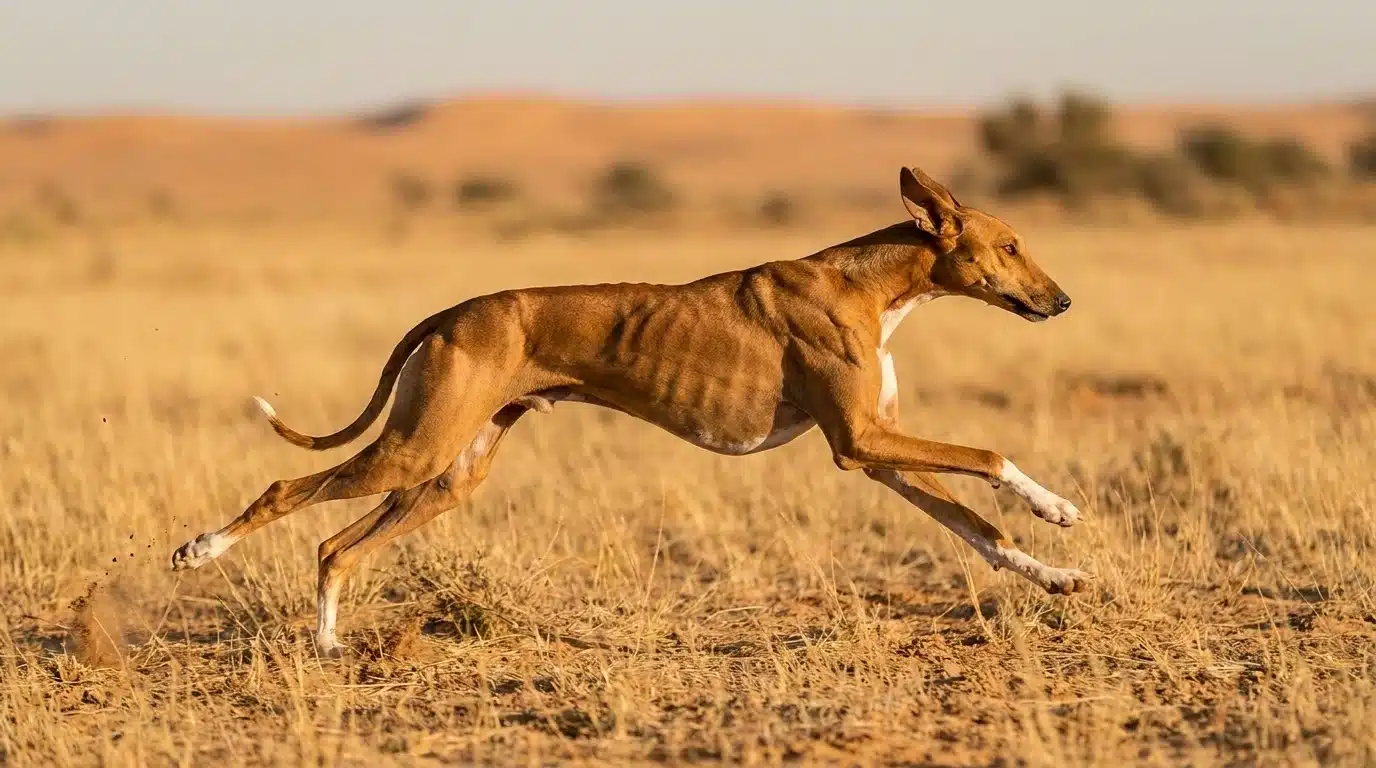
The Azawakh reaches an estimated maximum of about 40 mph. This West African sighthound was developed for pursuit and guarding in hot, open regions where low body weight helped reduce unnecessary physical strain.
Its tall legs, visible muscle definition, narrow waist, and deep chest create the light outline associated with fast-running hounds.
The Azawakh is grouped with other 40 mph breeds because available estimates place them at a similar level. Exact differences between individual dogs are difficult to measure.
6. Ibizan Hound: Up to 40 mph (64 km/h)
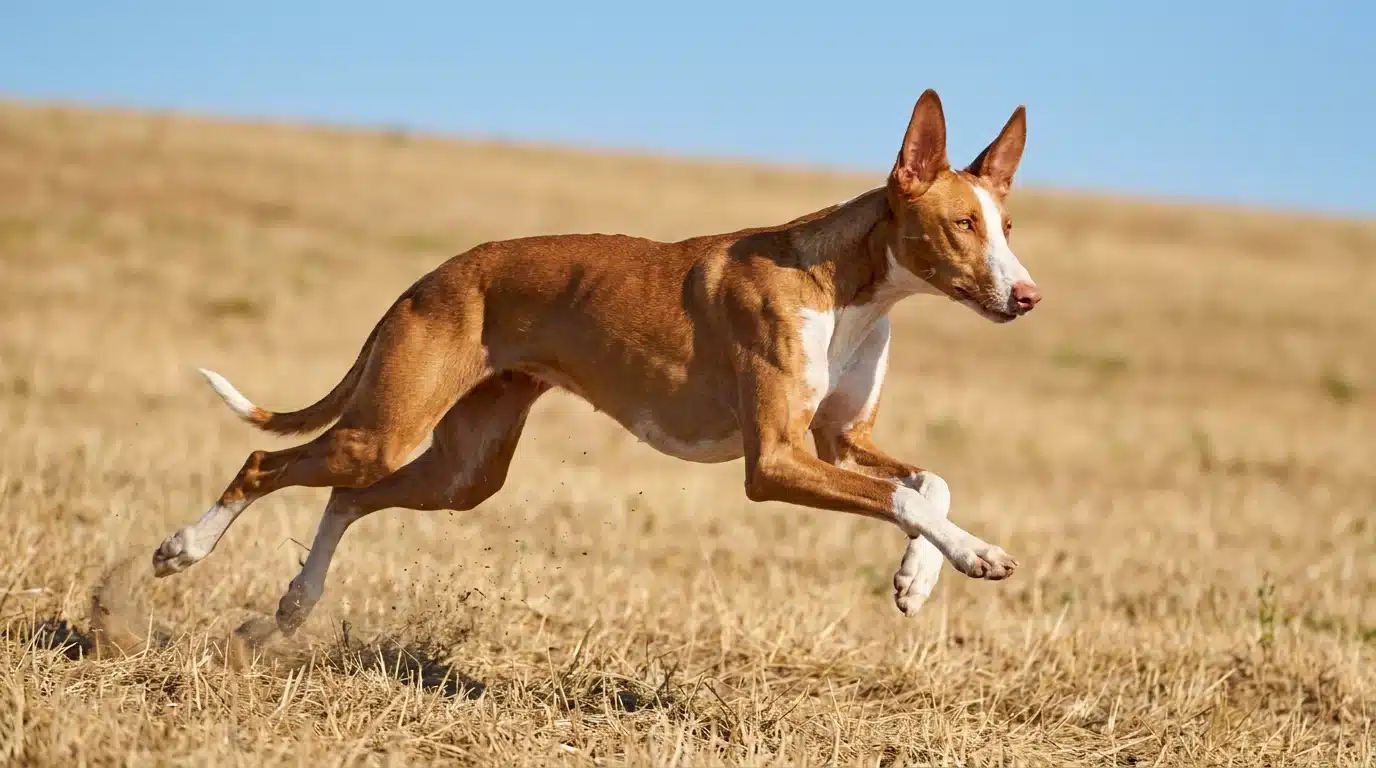
The Ibizan Hound reaches a commonly cited upper estimate of 40 mph. Its hunting background involved pursuing rabbits across uneven island terrain, requiring quick movement, jumping, and frequent directional changes.
Long, springy legs and a light sighthound body support rapid acceleration. Large upright ears are a defining breed feature but are not the source of its running speed.
The Ibizan Hound remains one of the fastest hunting breeds due to its athletic build and quick reactions. Its estimated speed places it among the top sighthounds.
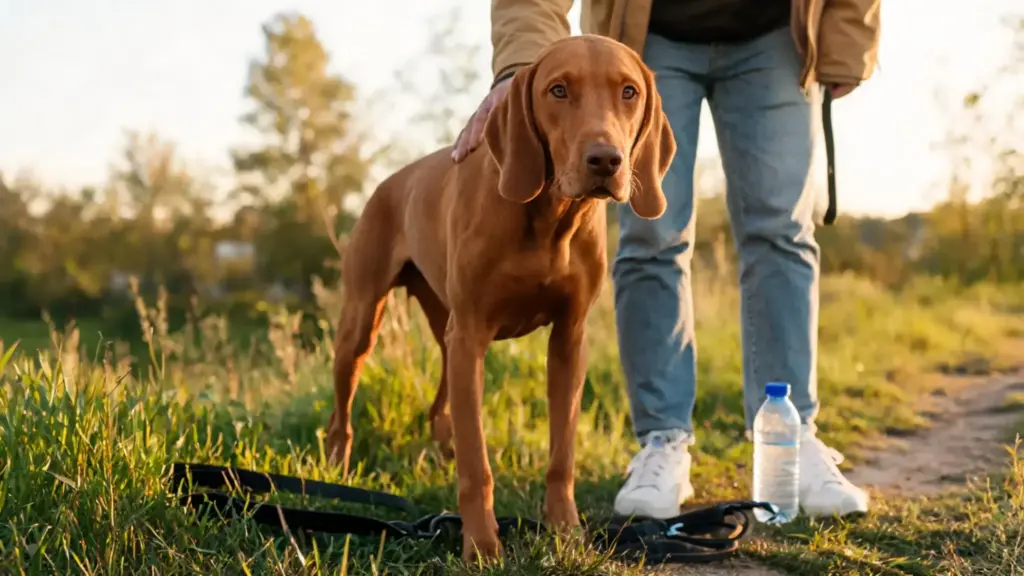
7. Vizsla: Up to 40 mph (64 km/h)
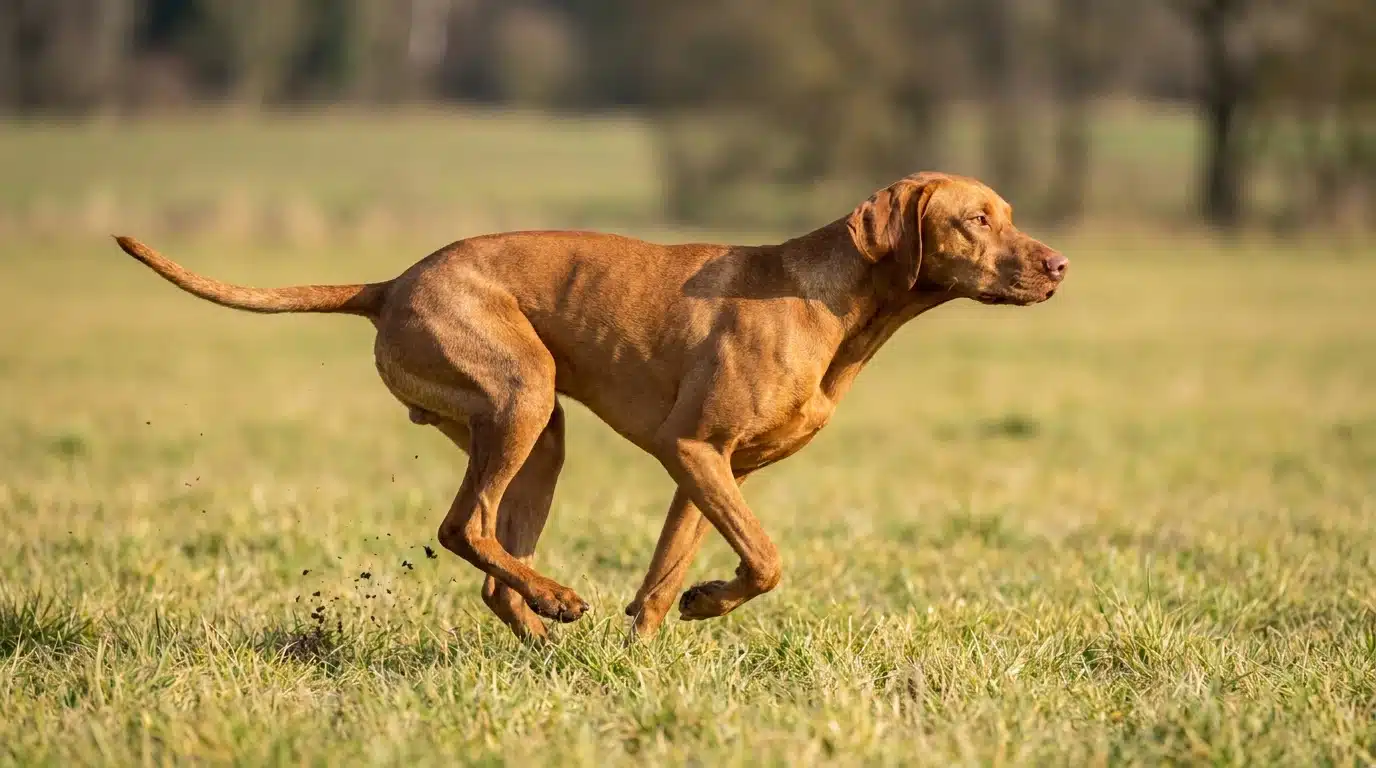
The Vizsla reaches an estimated maximum of about 40 mph. Unlike specialized racing hounds, it was developed as a pointing and retrieving breed capable of remaining active during fieldwork.
Its light, muscular frame, long legs, deep chest, and close-fitting coat support free movement without carrying excessive weight. Regular conditioning also affects an individual dog’s running capacity.
The Vizsla stands out because it combines speed with endurance and field ability. Its estimated maximum places it alongside several faster hunting breeds.
8. Dalmatian: Up to 37 mph (60 km/h)
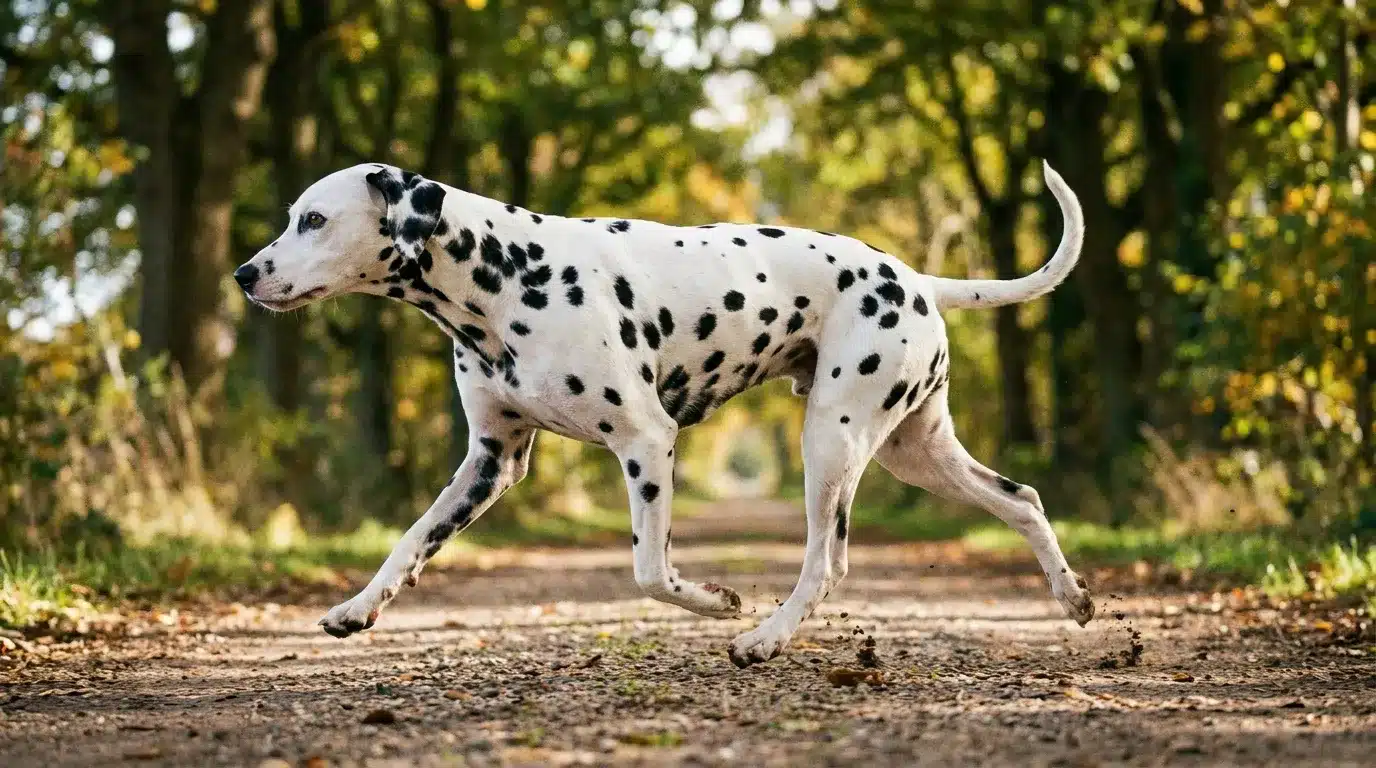
The Dalmatian reaches a commonly cited upper estimate of 37 mph. Its historical work included traveling beside horse-drawn coaches, which required steady movement across longer distances rather than one brief dash.
A balanced body, muscular hindquarters, firm feet, and an economical gait support that active background. The breed remains athletic, though individual energy and fitness differ.
Its listed maximum places it below the 40 mph group and above many working and sporting breeds. The difference is approximate because the figures were not measured in one controlled event.
9. Borzoi: Up to 36 mph (58 km/h)
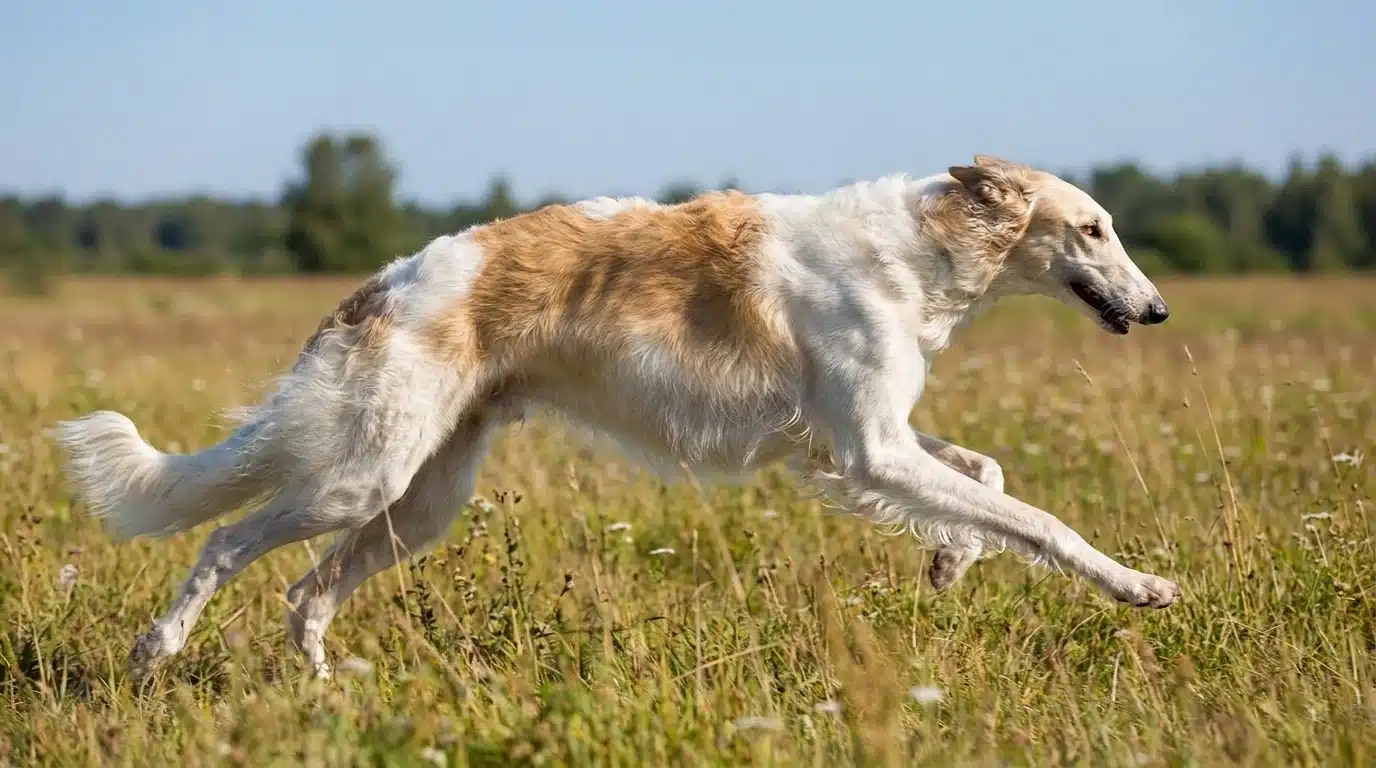
The Borzoi reaches a commonly cited upper estimate of 36 mph. This tall sighthound was developed for pursuing game across open Russian terrain, where long strides helped it cover broad areas.
Its narrow body, deep chest, flexible back, and long limbs support a wide gallop. The breed usually needs room to build speed safely rather than a cramped or slippery surface.
The Borzoi remains one of the quickest large sighthounds. Its speed comes from its long stride and specialized hunting structure.
10. Whippet: Up to 36 mph (58 km/h)
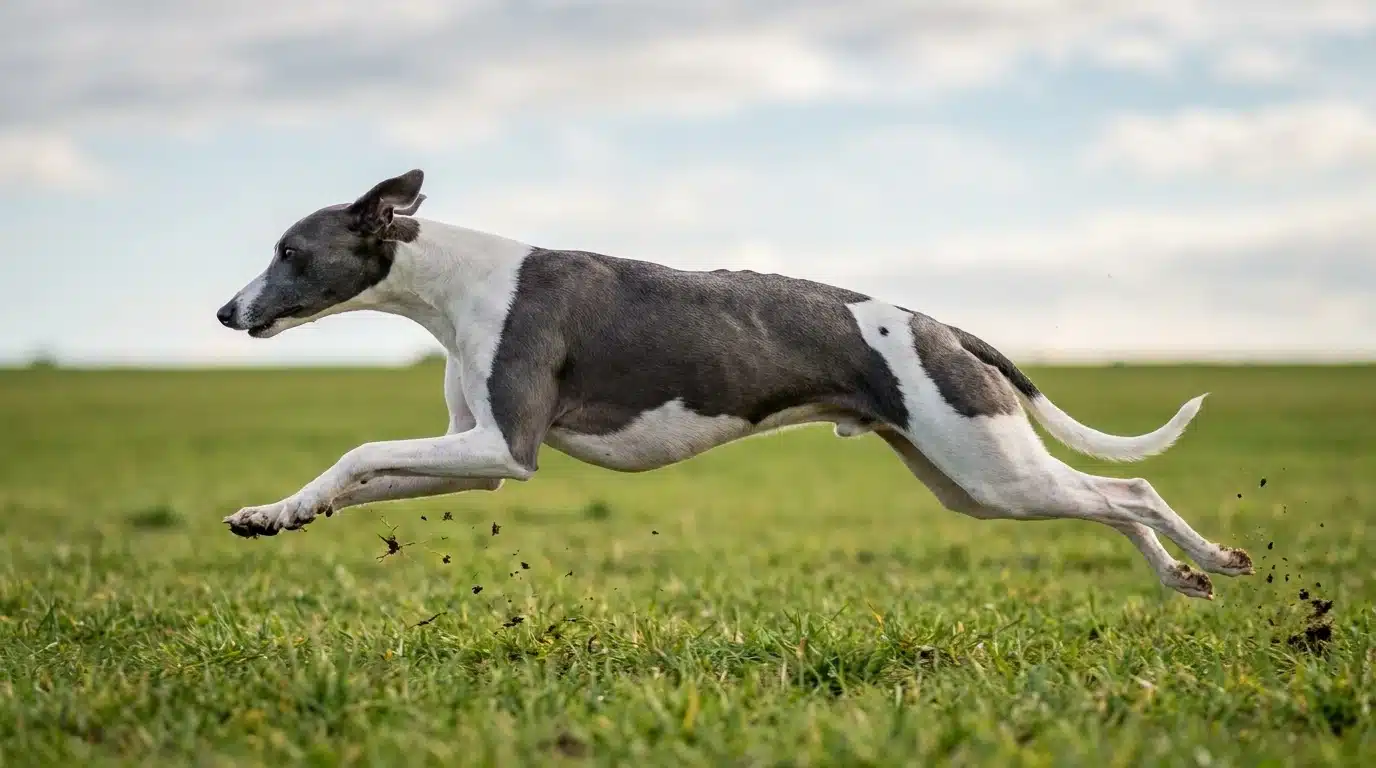
The Whippet reaches an estimated maximum of about 36 mph and is known for producing substantial speed from a medium-sized frame. Its history includes racing and pursuing small game over short distances.
Powerful hindquarters, a deep chest, slim waist, and flexible spine support its double-suspension gallop. Low body weight also reduces the mass moved through each stride.
The Whippet is among the fastest smaller breeds and shares its estimate with the larger Borzoi. Individual acceleration can vary between dogs.
11. German Shorthaired Pointer: Up to 35 mph (56 km/h)
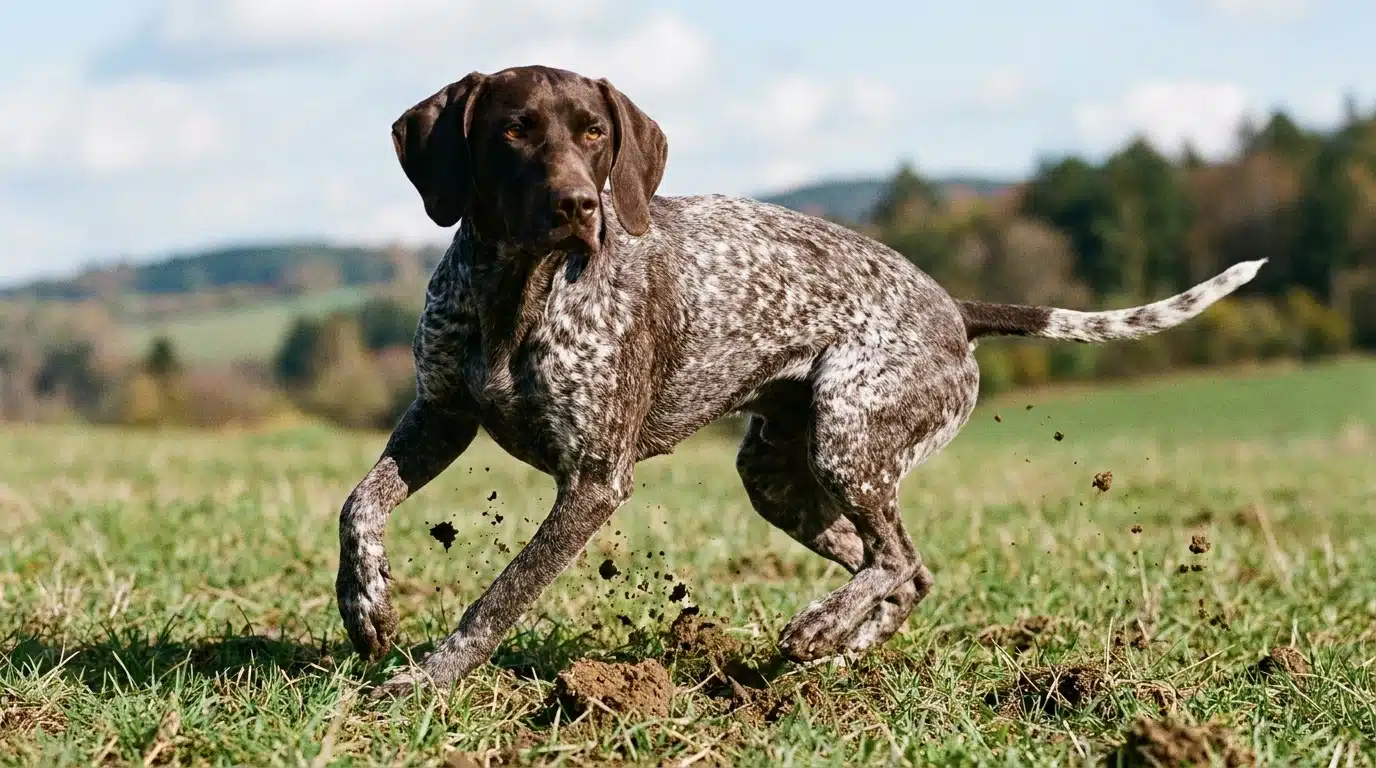
The German Shorthaired Pointer reaches a commonly cited upper estimate of 35 mph. Its fieldwork background requires active movement, scenting, pointing, and retrieving across varied ground.
A balanced sporting body, deep chest, muscular rear legs, and compact feet support steady movement through grass and soil. The breed’s fitness level heavily affects its running ability, and scent-based games and puzzles can complement its natural fieldwork instincts on quieter days.
The German Shorthaired Pointer combines speed with stamina, making it one of the quickest sporting breeds. Its placement reflects the commonly reported estimate.
12. Pharaoh Hound: Up to 35 mph (56 km/h)
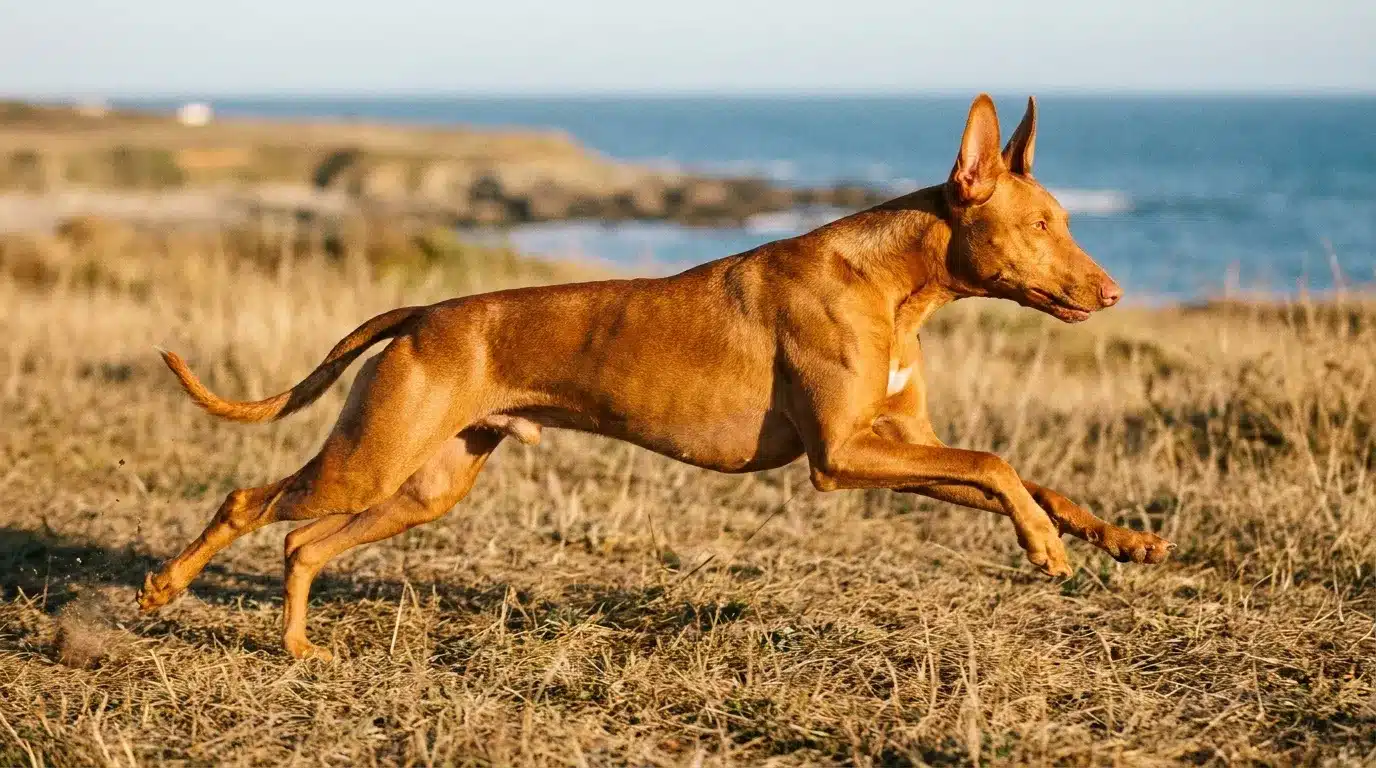
The Pharaoh Hound reaches an estimated 35 mph and is associated with short, fast pursuits. Its lean body keeps unnecessary weight low, allowing it to move with a light, ground-covering stride.
Long legs, a deep chest, and a tucked abdomen give the breed the outline expected of a quick hunting dog. Individual speed still depends on conditioning and running conditions.
The Pharaoh Hound shares its maximum estimate with other fast sporting breeds. Its placement reflects the commonly reported speed range rather than a verified head-to-head comparison.
13. Weimaraner: Up to 35 mph (56 km/h)
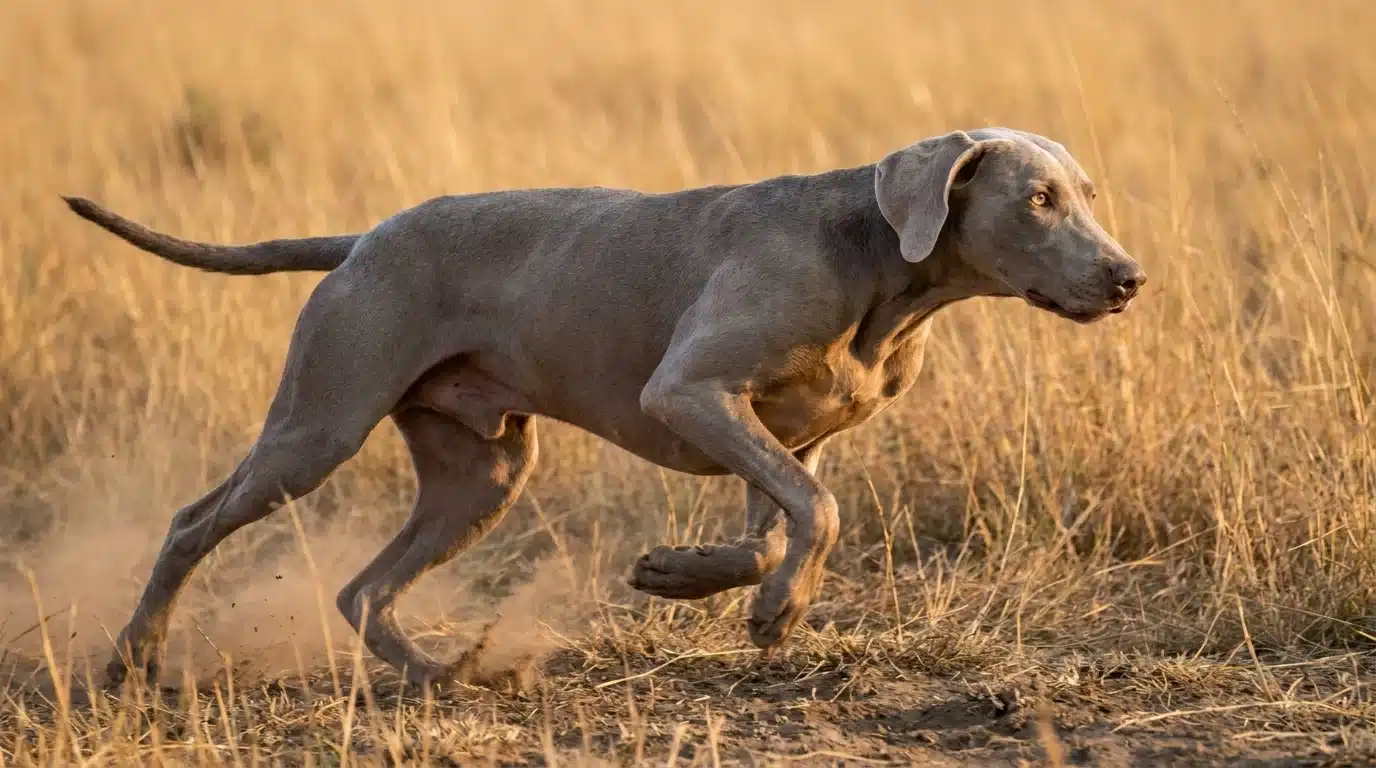
The Weimaraner reaches a commonly cited upper estimate of 35 mph. It was developed as an active hunting breed, so its physical ability includes steady field movement as well as faster bursts.
Its long legs, deep chest, muscular frame, and firm feet support a broad, efficient stride. Regular activity is necessary to maintain the strength and conditioning behind that movement.
The Weimaraner remains one of the fastest sporting breeds, combining speed with endurance for field work. Its estimate places it close to other 35 mph breeds.
14. Jack Russell Terrier: Up to 34 mph (55 km/h)
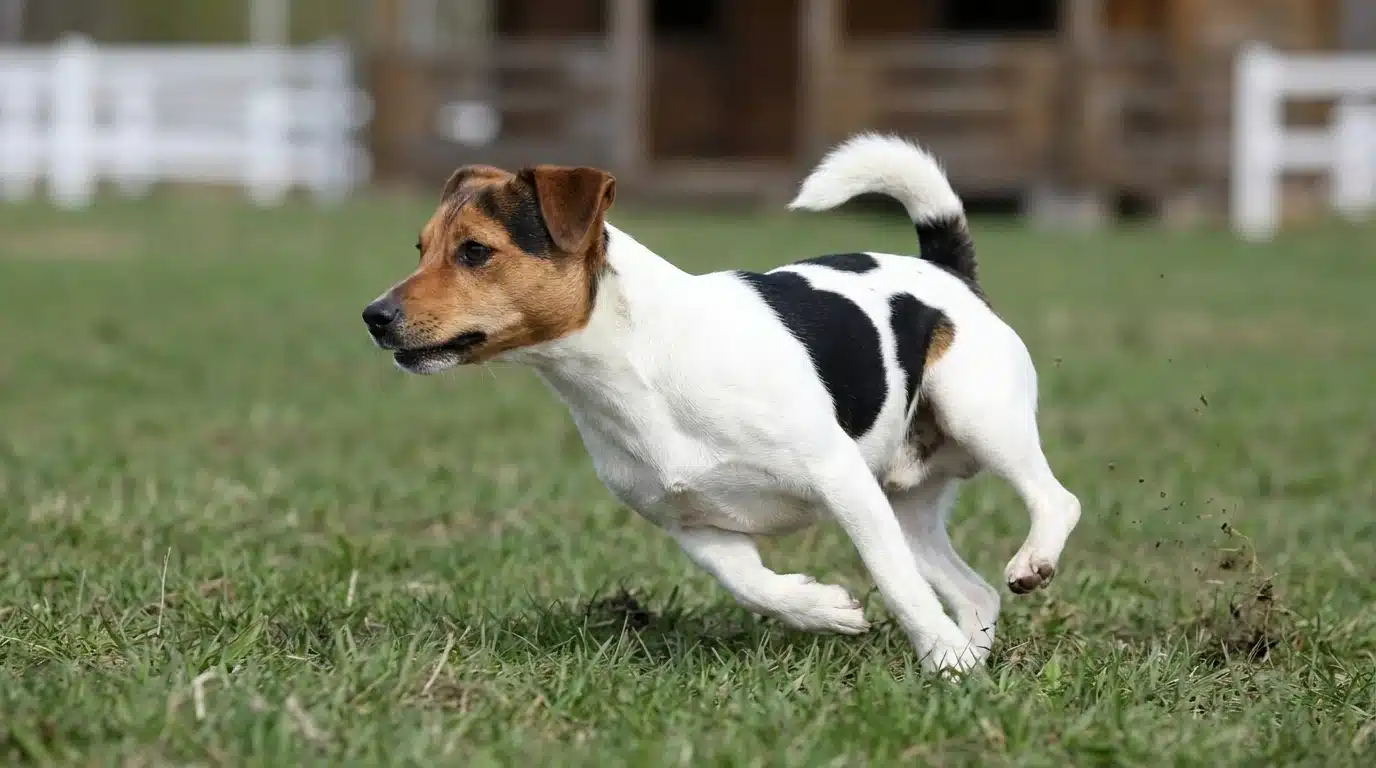
The Jack Russell Terrier reaches a commonly cited upper estimate of 34 mph, which is notable for such a small breed. Its historical work required quick movement while pursuing and locating quarry.
Strong rear legs, low body weight, a compact torso, and rapid stride frequency support fast acceleration and close directional changes. Size alone does not determine a dog’s maximum pace.
Its estimated speed places it among the fastest small dog breeds. The reported difference from larger breeds above it remains approximate rather than an exact margin.
15. German Pinscher: Up to 33 mph (53 km/h)
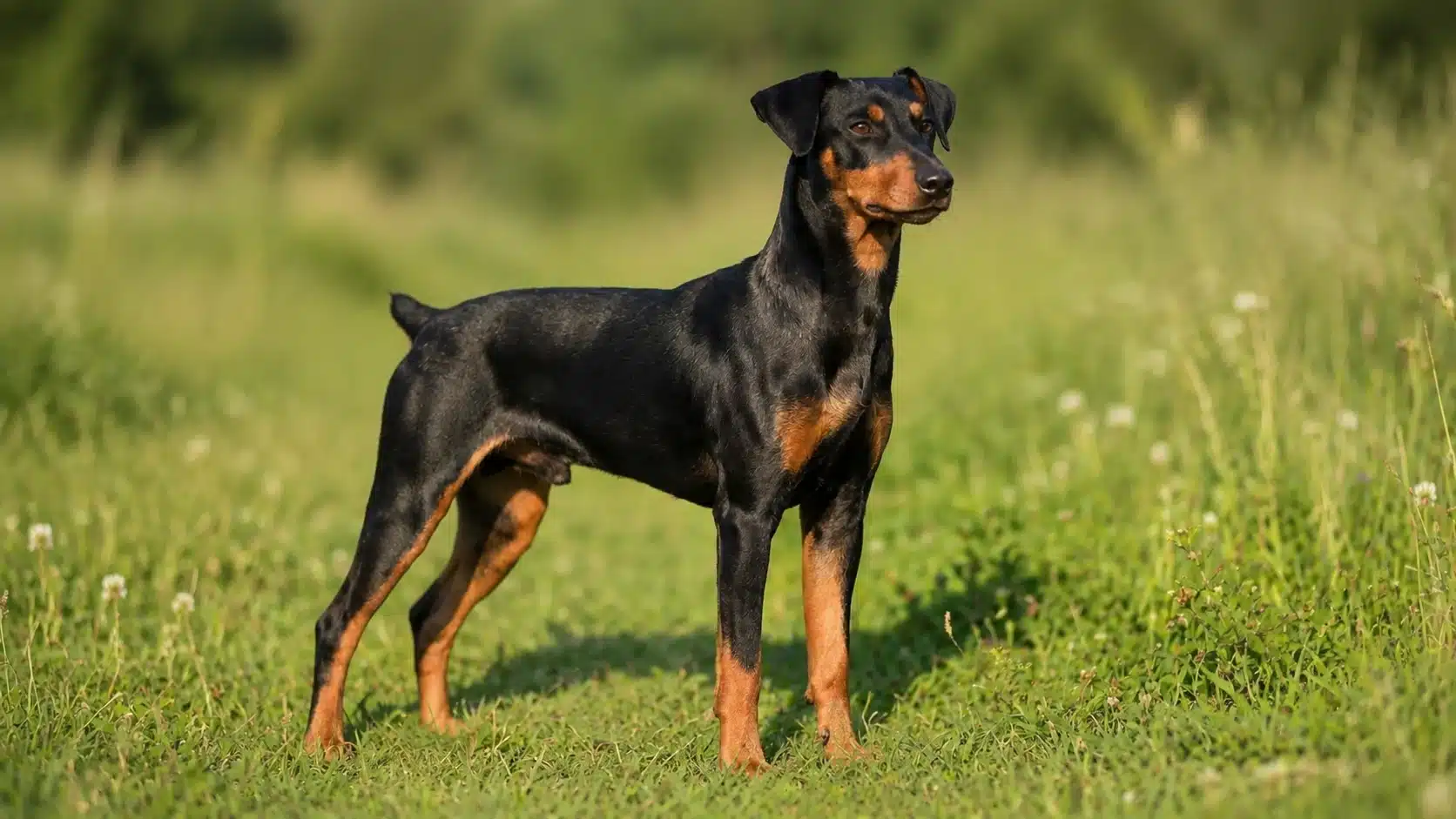
The German Pinscher reaches a commonly cited upper estimate of 33 mph. It was developed as an active working and vermin-control breed rather than a specialized racing dog.
A compact square body, muscular legs, moderate chest depth, and firm feet support quick movement and physical control. Its lighter build separates it from many heavier working breeds.
The German Pinscher remains a fast medium-sized working breed with strong acceleration. Its ranking reflects reported speed estimates rather than controlled race results.
16. Doberman Pinscher: Up to 32 mph (51 km/h)
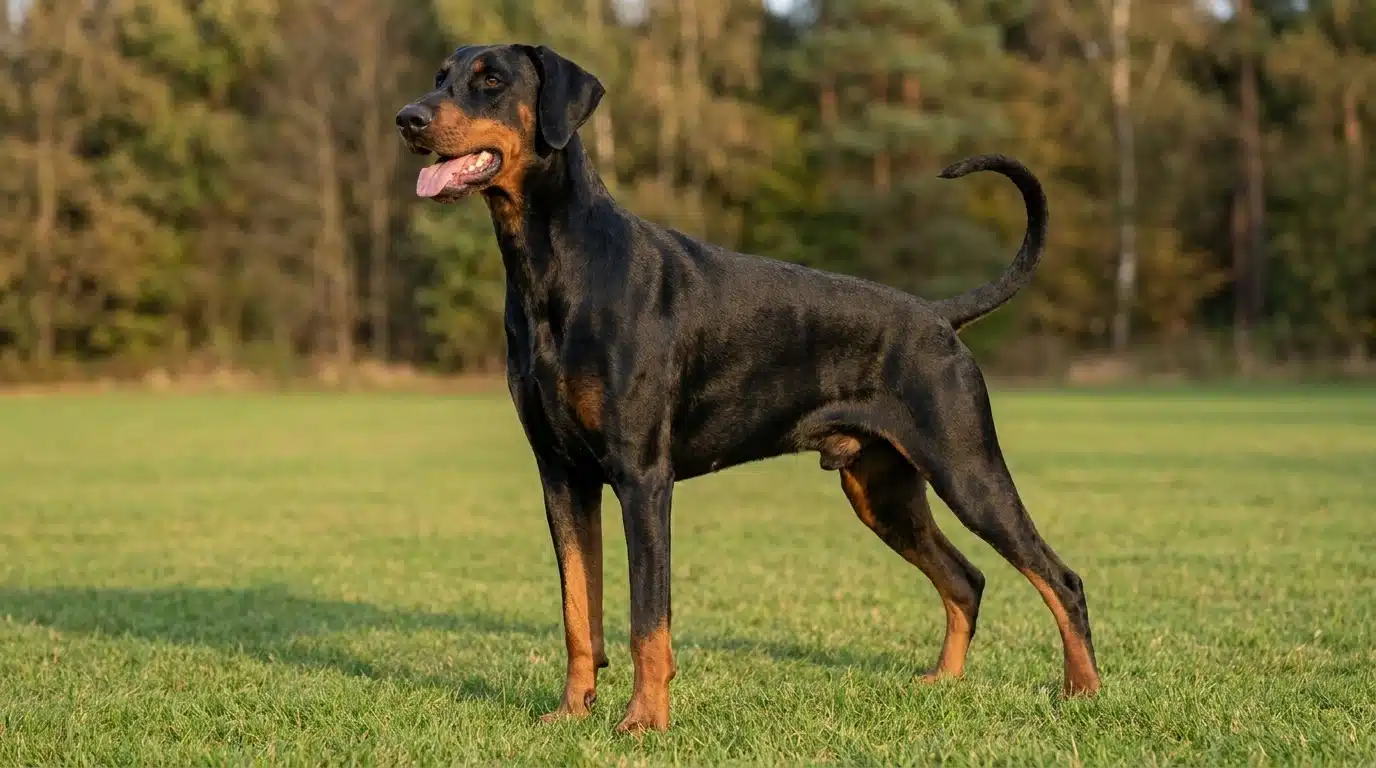
The Doberman Pinscher reaches a commonly cited upper estimate of 32 mph. Its working background required strength, responsiveness, and controlled movement rather than speed alone.
Long legs, a square body, a deep chest, and muscular hindquarters help produce a powerful stride. The breed carries more muscle than most sighthounds, giving it a different running build.
Its estimate places it below the German Pinscher and among the faster large working breeds. Individual performance depends on fitness, structure, and conditioning.
17. American Foxhound: Up to 30 mph (48 km/h)
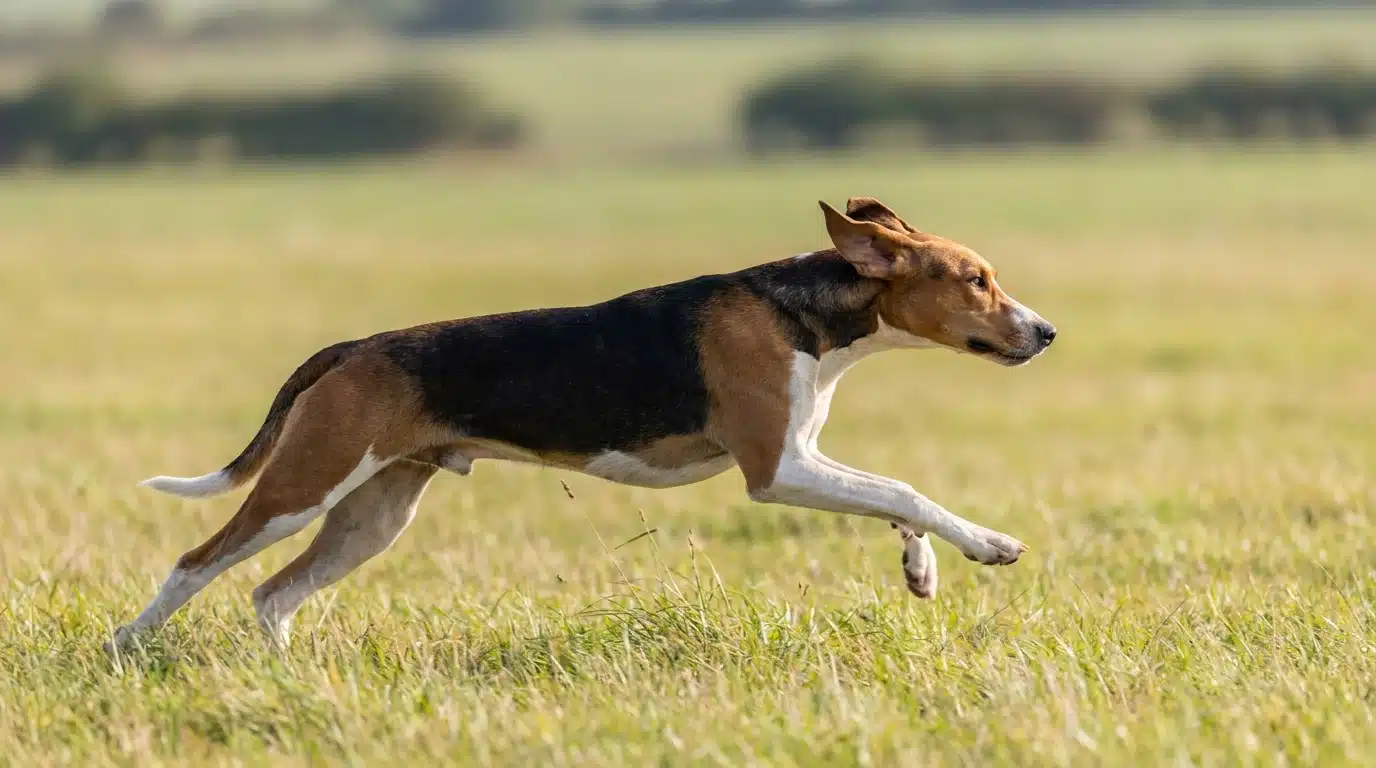
The American Foxhound reaches a commonly cited upper estimate of 30 mph. It was developed for following scent and traveling during extended hunts, linking its running ability more closely with endurance than short racing.
Long legs, a deep chest, a light hound frame, and firm feet support steady movement across open ground. Individual working lines may differ in build and activity level.
The American Foxhound is one of several breeds commonly listed around the 30 mph range. Its speed reflects its hunting background and efficient movement.
18. Australian Kelpie: Up to 30 mph (48 km/h)
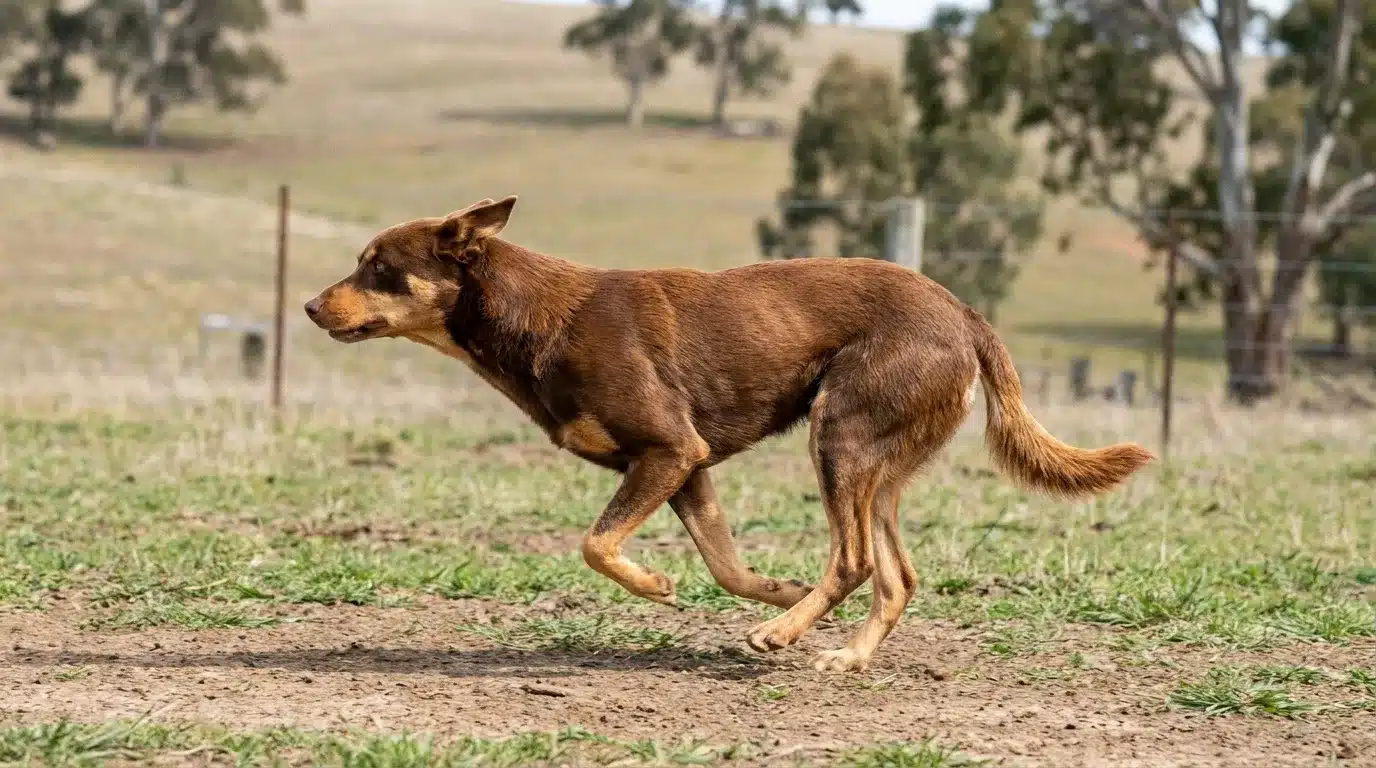
The Australian Kelpie reaches a commonly cited upper estimate of 30 mph. Its livestock work requires repeated movement, fast responses, and careful foot placement across changing ground.
A medium-sized muscular body, moderate weight, strong legs, and an efficient gait allow it to remain active without carrying excessive bulk. Its work often involves stop-start movement rather than straight sprinting.
The Kelpie’s speed supports its demanding herding role, and owners without livestock often turn to structured activities that mimic work to keep that drive satisfied. Its ranking is based on estimated maximum pace, not only agility or working ability.
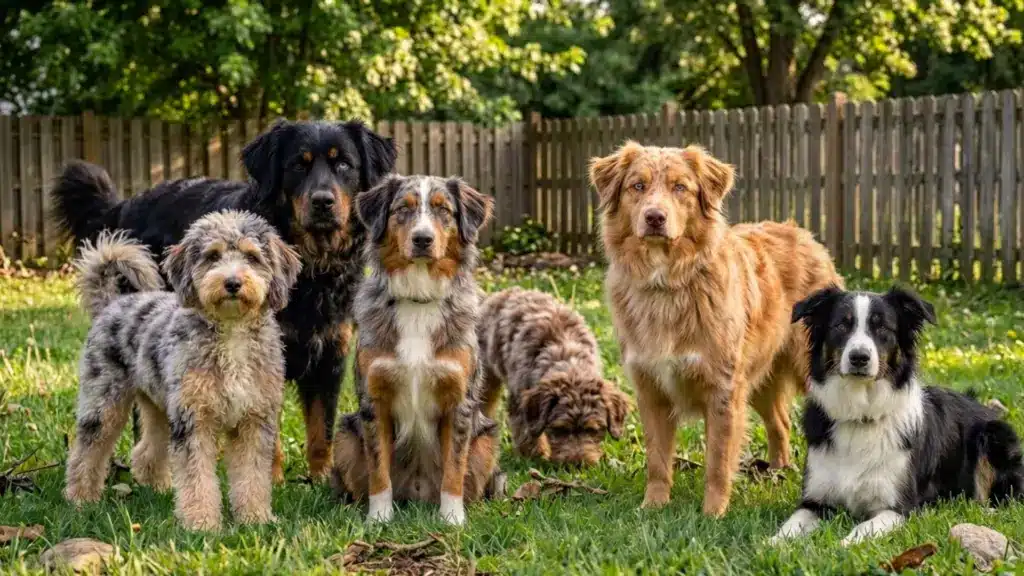
19. Australian Shepherd: Up to 30 mph (48 km/h)
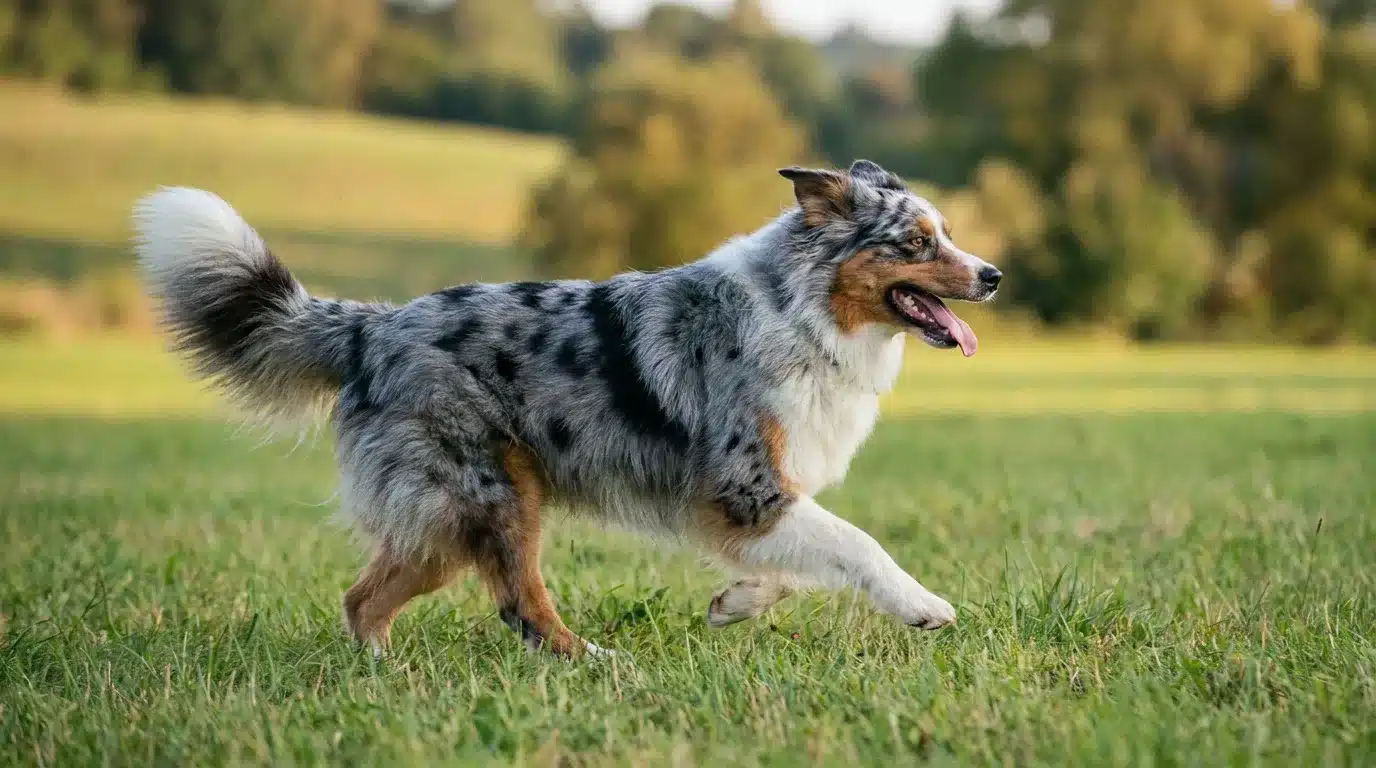
The Australian Shepherd reaches a commonly cited upper estimate of 30 mph. Its herding background requires quick reactions, directional changes, and repeated periods of movement around livestock.
A balanced medium-sized body, strong hindquarters, and agile footwork support those tasks. Coat length may make the breed appear heavier than the athletic frame underneath.
The Australian Shepherd remains a fast and agile working breed. Its movement style focuses on control and endurance as much as straight-line speed.
20. Belgian Malinois: Up to 30 mph (48 km/h)
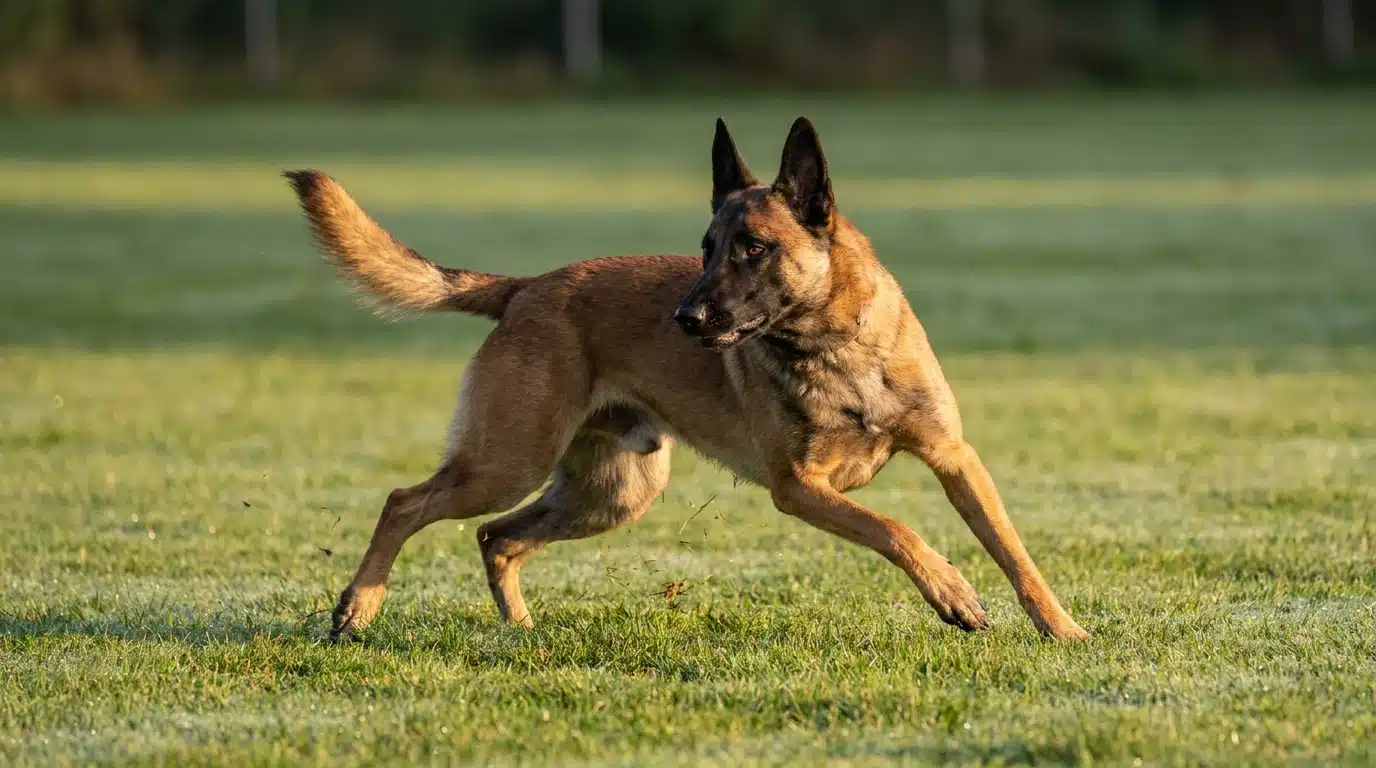
The Belgian Malinois reaches a commonly cited upper estimate of 30 mph. Its working roles involve acceleration, braking, jumping, and quick responses to a handler rather than pure straight-line racing.
A square body, moderate weight, strong hindquarters, and firm feet support rapid controlled movement. High physical drive does not mean every individual can safely perform strenuous runs.
The Malinois belongs to the large group of breeds commonly listed around 30 mph. Its working ability depends on more than speed alone.
21. Border Collie: Up to 30 mph (48 km/h)
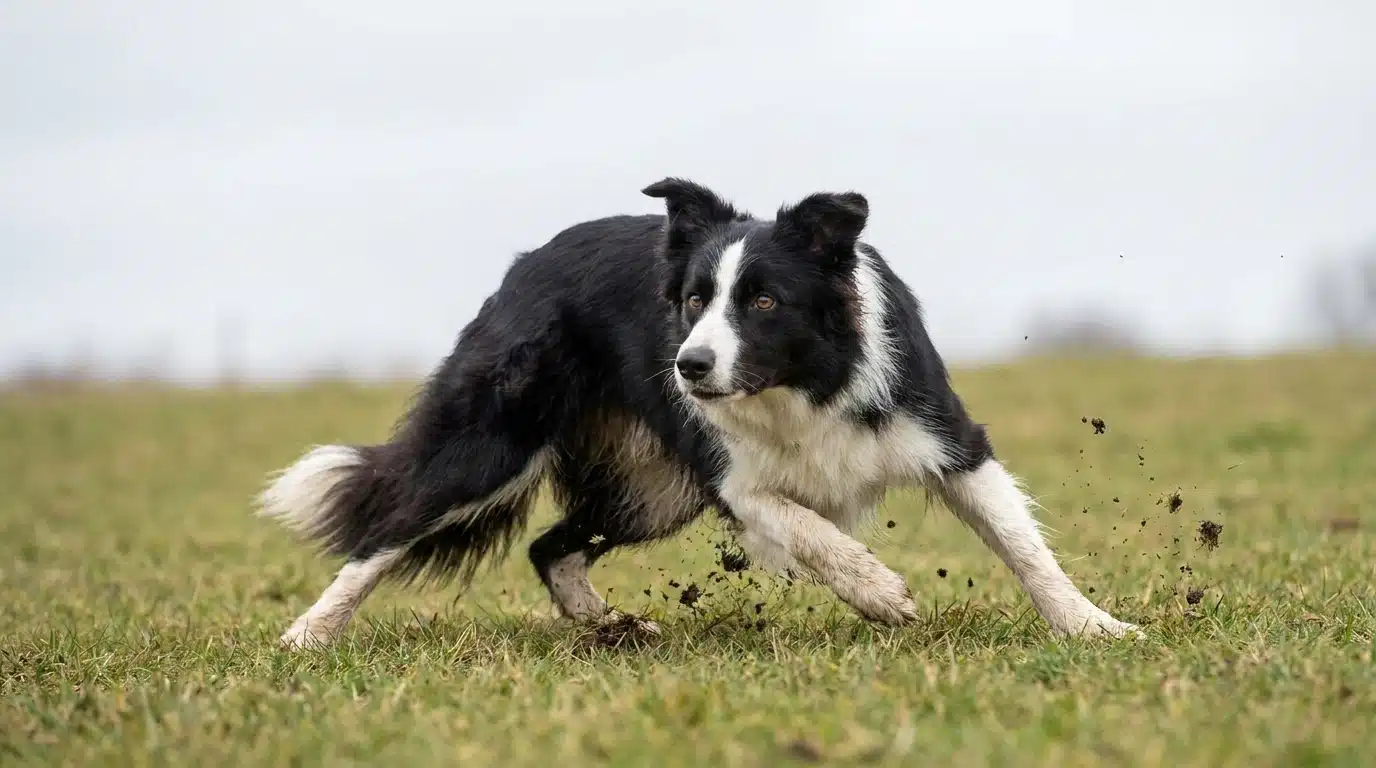
The Border Collie reaches a commonly cited upper estimate of 30 mph. While herding, it relies on rapid starts, stops, turns, and changes of pace to control livestock.
Its light frame, muscular rear legs, low working posture, and quick reactions support that form of movement. Maximum straight-line speed is only one part of its physical ability.
The Border Collie is known more for control and agility than maximum speed. Its estimated pace still places it among the quicker working breeds.
22. English Setter: Up to 30 mph (48 km/h)
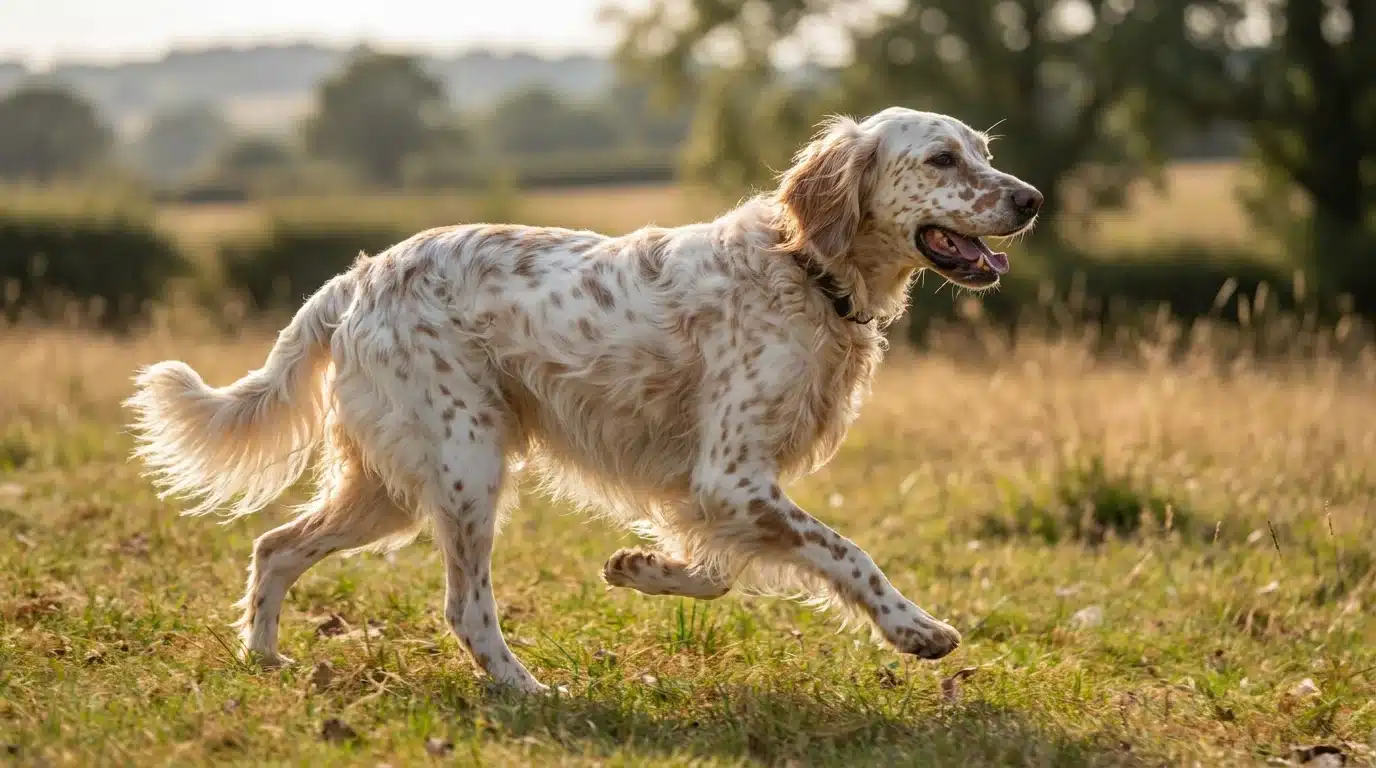
The English Setter reaches a commonly cited upper estimate of 30 mph. Its field background involves covering broad areas while locating game rather than running one short, measured sprint.
A balanced sporting frame, deep chest, long legs, and steady gait support sustained movement across grass and uneven land. Coat length does not prevent the breed from being physically active.
The English Setter remains a capable running breed due to its hunting background. Its speed estimate places it with other active sporting dogs.
23. German Shepherd: Up to 30 mph (48 km/h)
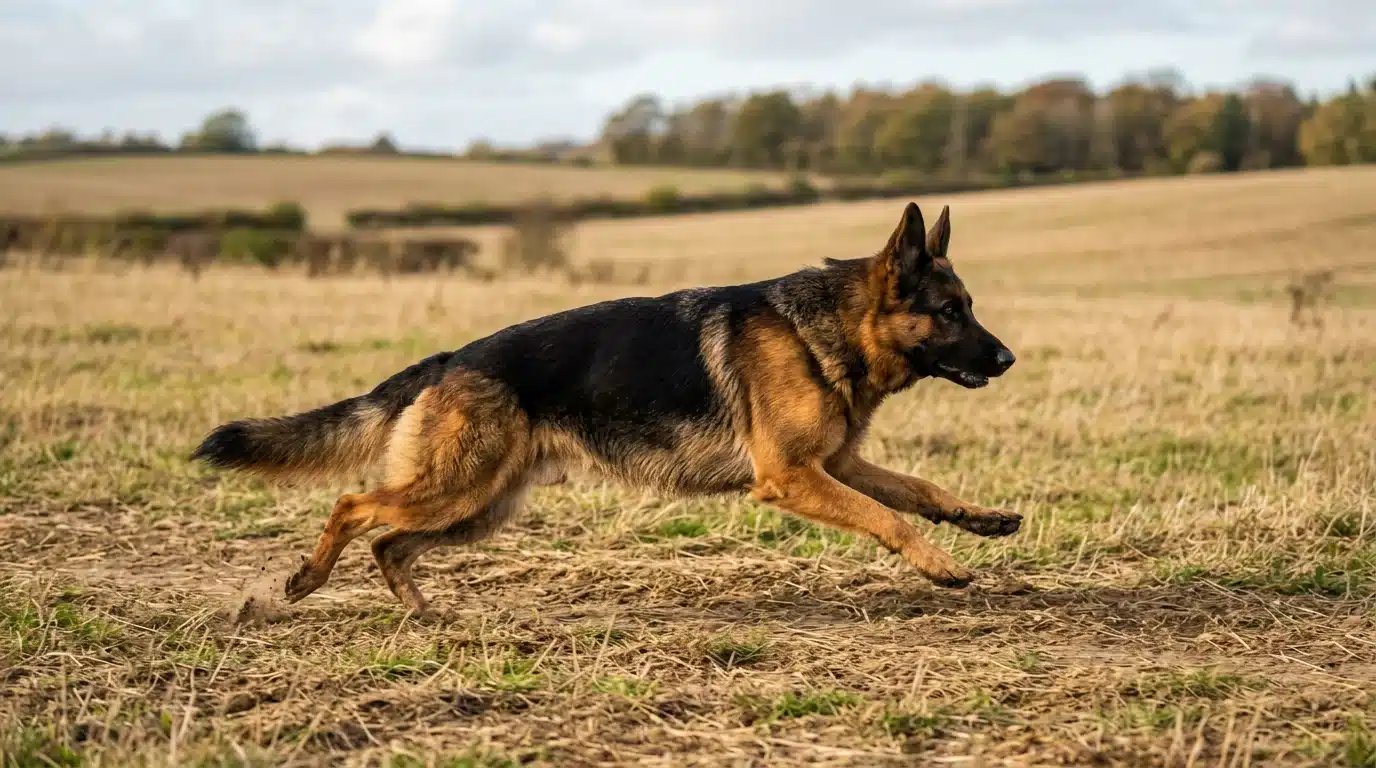
The German Shepherd reaches a commonly cited upper estimate of 30 mph. Its working history calls for controlled movement, stamina, responsiveness, and physical strength across many tasks.
Muscular hindquarters, a deep chest, moderate body weight, and a ground-covering gait support active movement. Structural differences between individual dogs may affect comfort and performance.
The German Shepherd combines speed with strength and endurance. Its placement reflects the estimated top speed rather than overall working ability.
24. Great Dane: Up to 30 mph (48 km/h)
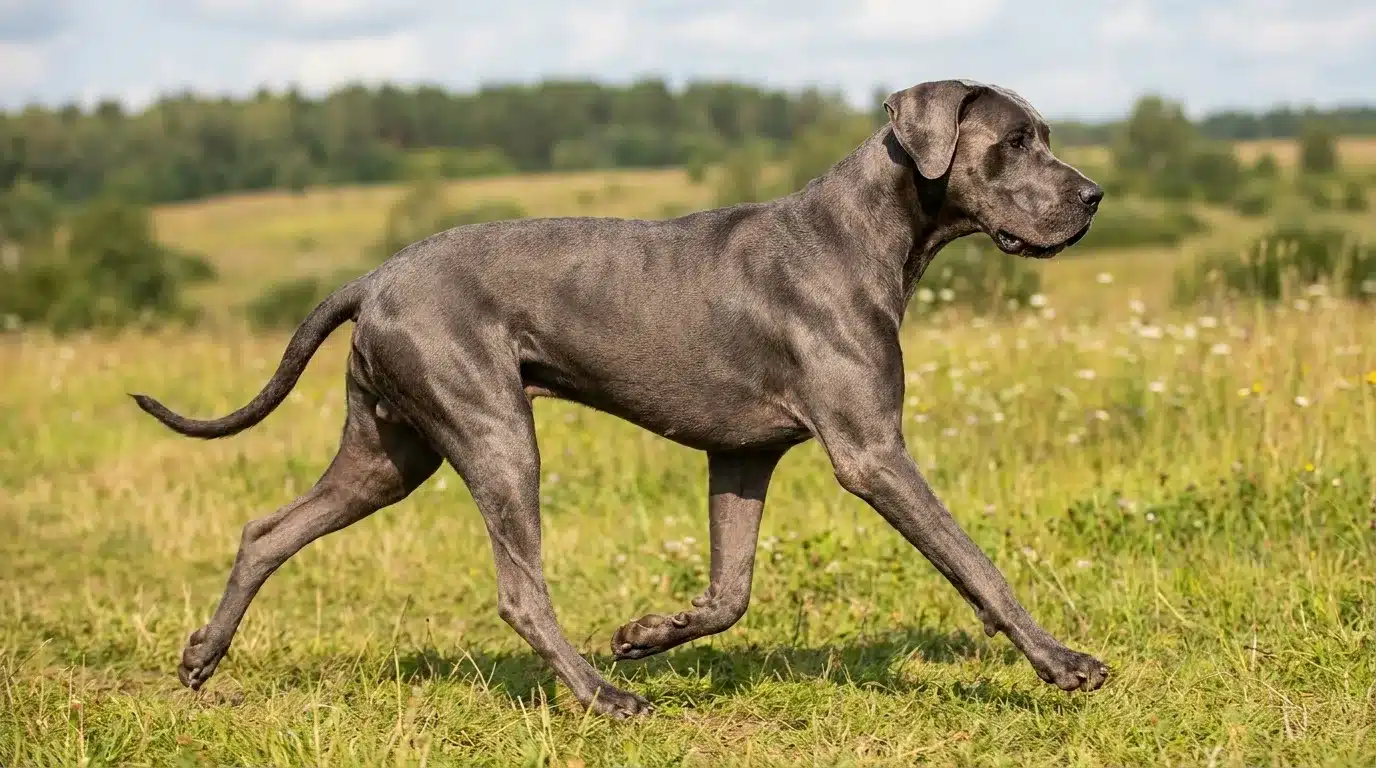
The Great Dane reaches a commonly cited upper estimate of 30 mph once its large body gains momentum. Its height creates a long stride that can cover substantial ground.
Long legs, a deep chest, and powerful muscles support brief periods of faster movement. Its considerable size and weight make repeated sprinting less suitable than controlled exercise.
The Great Dane shows that size can contribute to stride length but does not guarantee greater acceleration. Its ranking is based on estimated maximum speed.
25. Rhodesian Ridgeback: Up to 30 mph (48 km/h)
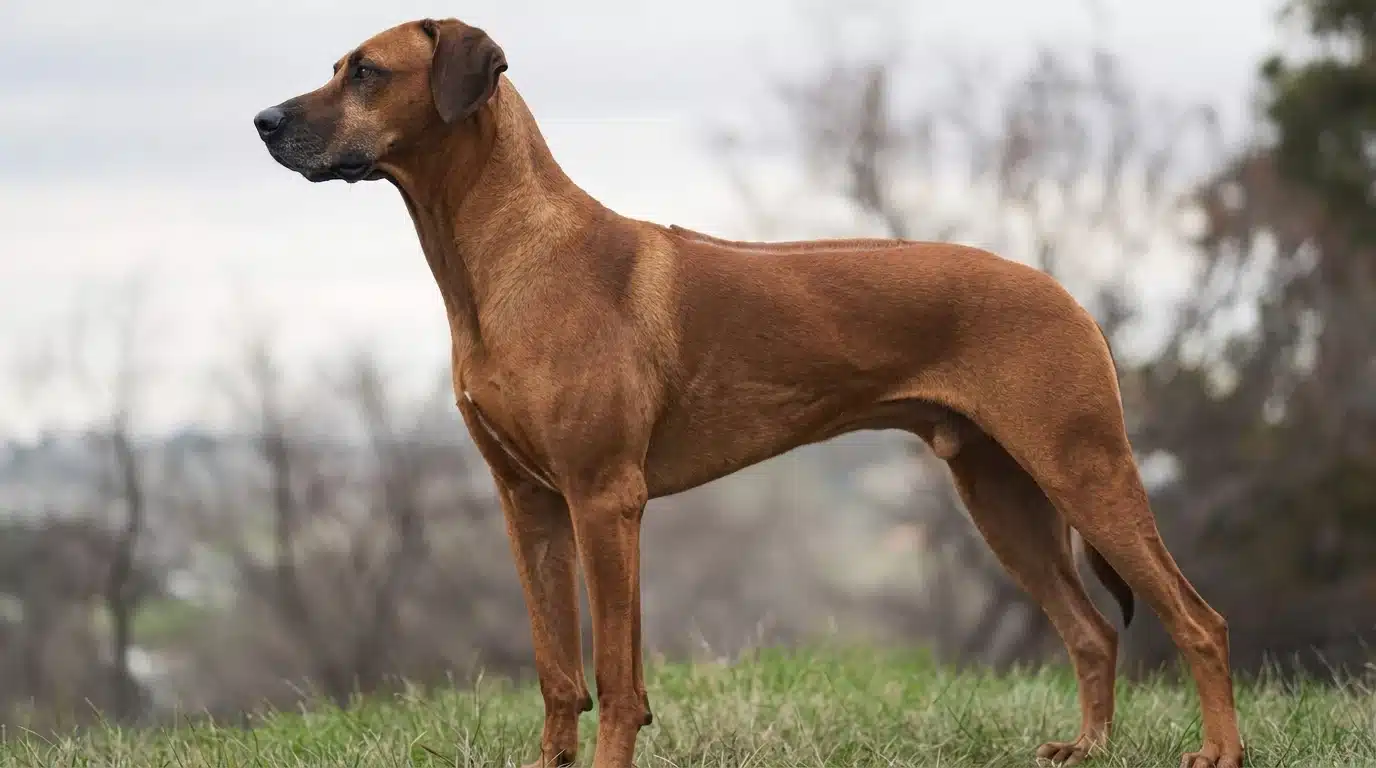
The Rhodesian Ridgeback reaches a commonly cited upper estimate of 30 mph. Its history includes tracking and holding game across the varied conditions of southern Africa.
A muscular but balanced frame, deep chest, strong hindquarters, and firm feet support extended activity. The breed is heavier than most sighthounds but remains physically capable.
The Rhodesian Ridgeback combines strength with running ability. Its speed estimate reflects its athletic hunting background.
26. Standard Poodle: Up to 30 mph (48 km/h)
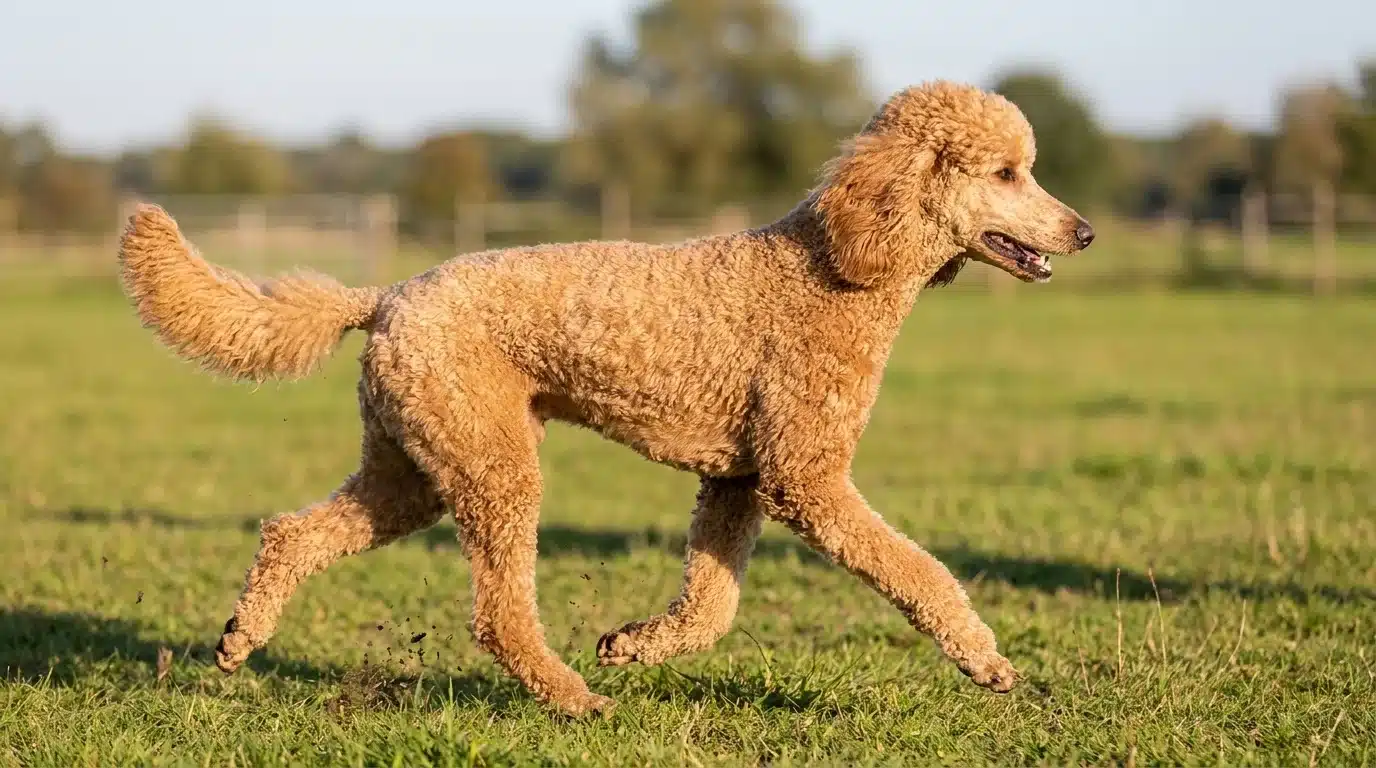
The Standard Poodle reaches a commonly cited upper estimate of 30 mph. Beneath its familiar coat is an athletic water-retrieving breed developed for active work.
Strong hindquarters, a balanced body, moderate weight, and a light gait support running, swimming, and other physical activity. Coat style does not determine athletic ability.
The Standard Poodle remains one of the faster non-sighthound breeds. Its physical ability comes from its original working purpose and athletic structure.
27. Giant Schnauzer: Up to 28 mph (45 km/h)
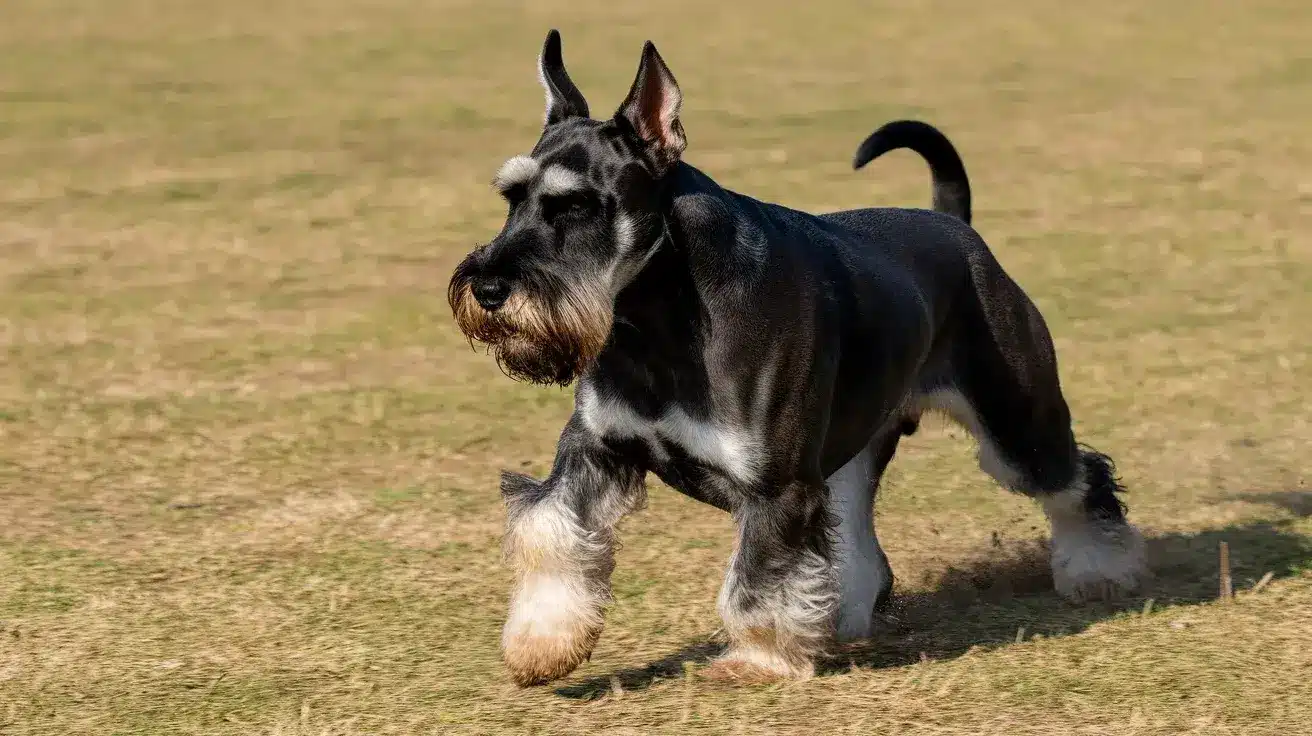
The Giant Schnauzer reaches a commonly cited upper estimate of 28 mph. Its working history required physical strength, alert movement, and the ability to remain active during demanding tasks.
A square body, muscular hindquarters, deep chest, and firm feet support forceful forward movement. The breed carries more body mass than the sighthounds placed higher in the ranking.
The Giant Schnauzer remains a fast working breed despite its heavier build. Its speed reflects power and control rather than racing specialization.
28. Scottish Deerhound: Up to 28 mph (45 km/h)
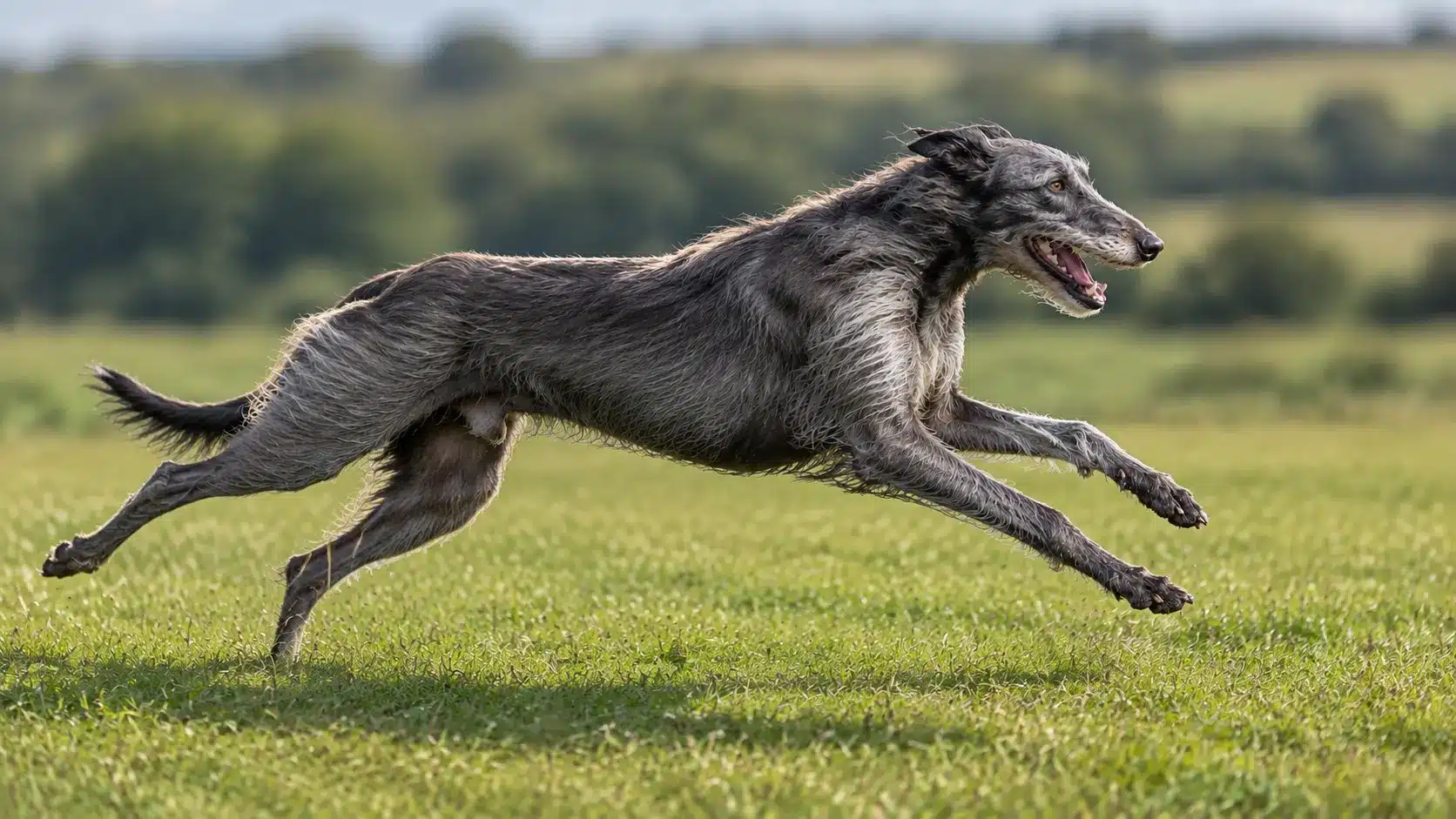
The Scottish Deerhound reaches a commonly cited upper estimate of 28 mph. It was developed to pursue deer across open and uneven Scottish land.
Long legs, a deep chest, narrow waist, and flexible sighthound body support a broad gallop. Its rough coat protects the body but does not indicate a heavy underlying frame.
The Scottish Deerhound remains among the faster large sighthounds. Its running ability comes from its long stride and hunting structure.
29. Siberian Husky: Up to 28 mph (45 km/h)
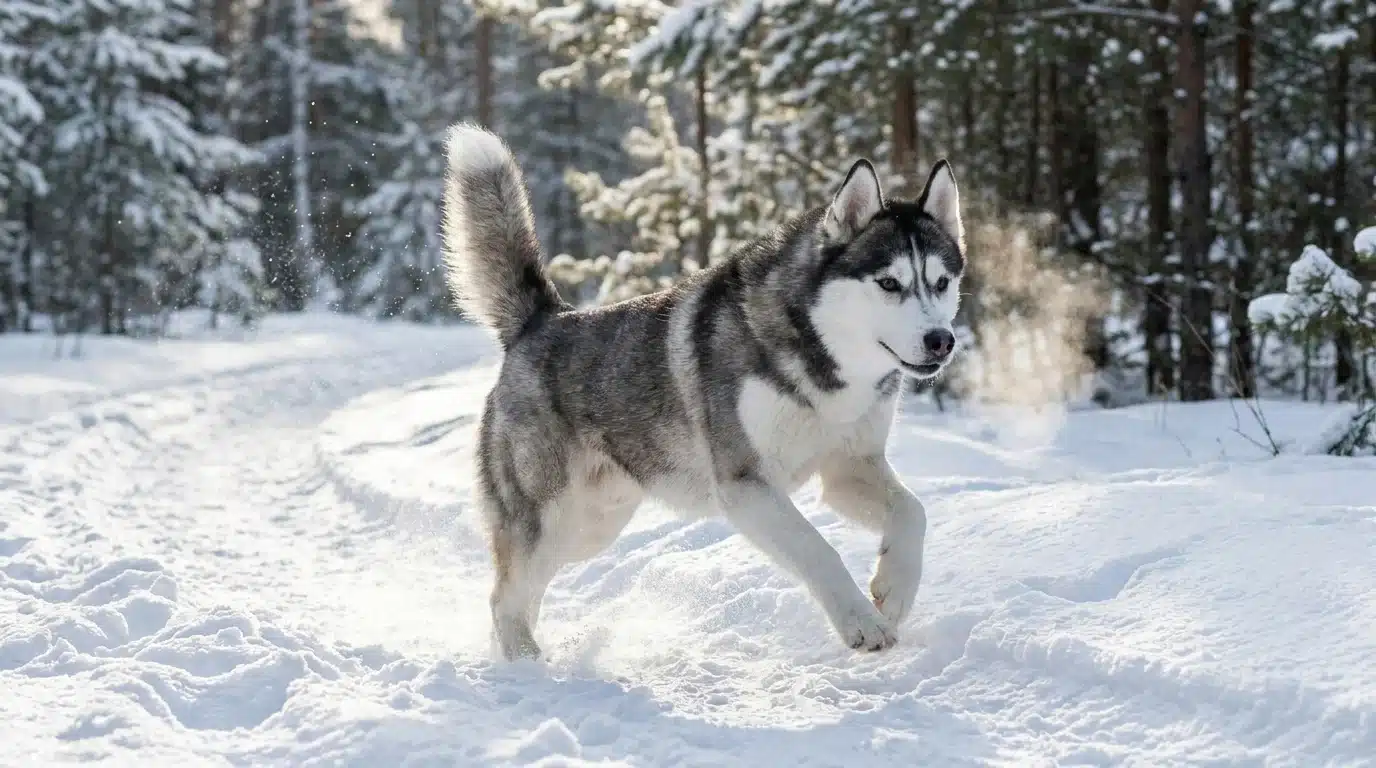
The Siberian Husky reaches a commonly cited upper estimate of 28 mph, though its normal working pace is much lower. The breed is associated with efficient travel while pulling light loads over distance.
A compact frame, balanced gait, firm feet, and strong conditioning support prolonged movement in cold environments. Sprinting is not the central purpose behind its body.
The Husky’s strength comes from endurance and efficiency rather than maximum sprint speed. Its placement reflects estimated top pace only.
30. Rat Terrier: Up to 27 mph (43 km/h)
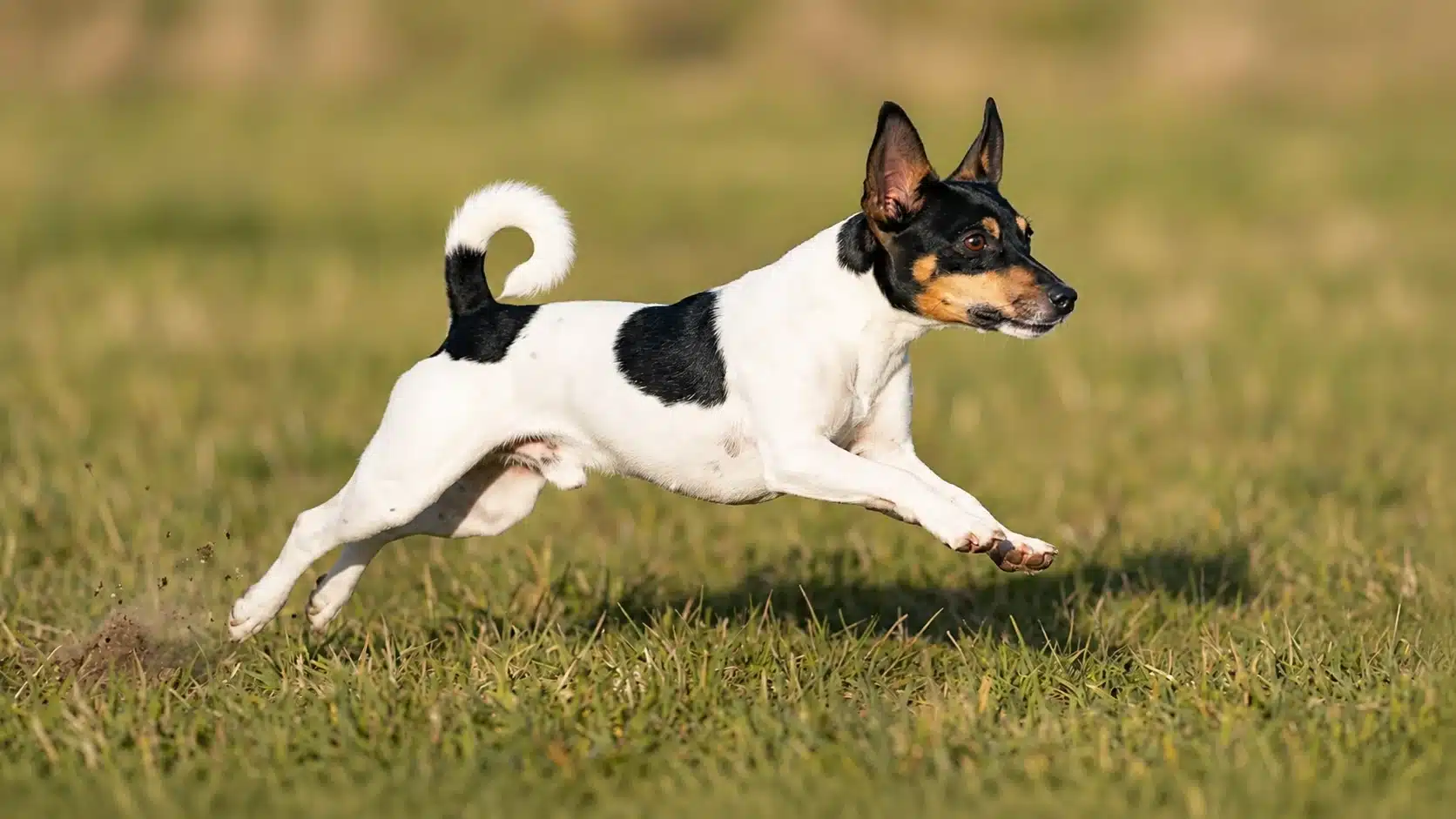
The Rat Terrier reaches a commonly cited upper estimate of 27 mph. Its background in vermin control required quick acceleration, rapid reactions, and movement through smaller spaces.
Low body weight, muscular rear legs, a compact chest, and fast stride frequency help it move quickly for its size. Taller individuals may cover more ground than smaller dogs within the breed.
The Rat Terrier remains one of the quickest small working breeds. Its speed comes from a lightweight build and fast reactions.
31. Basenji: Up to 25 mph (40 km/h)
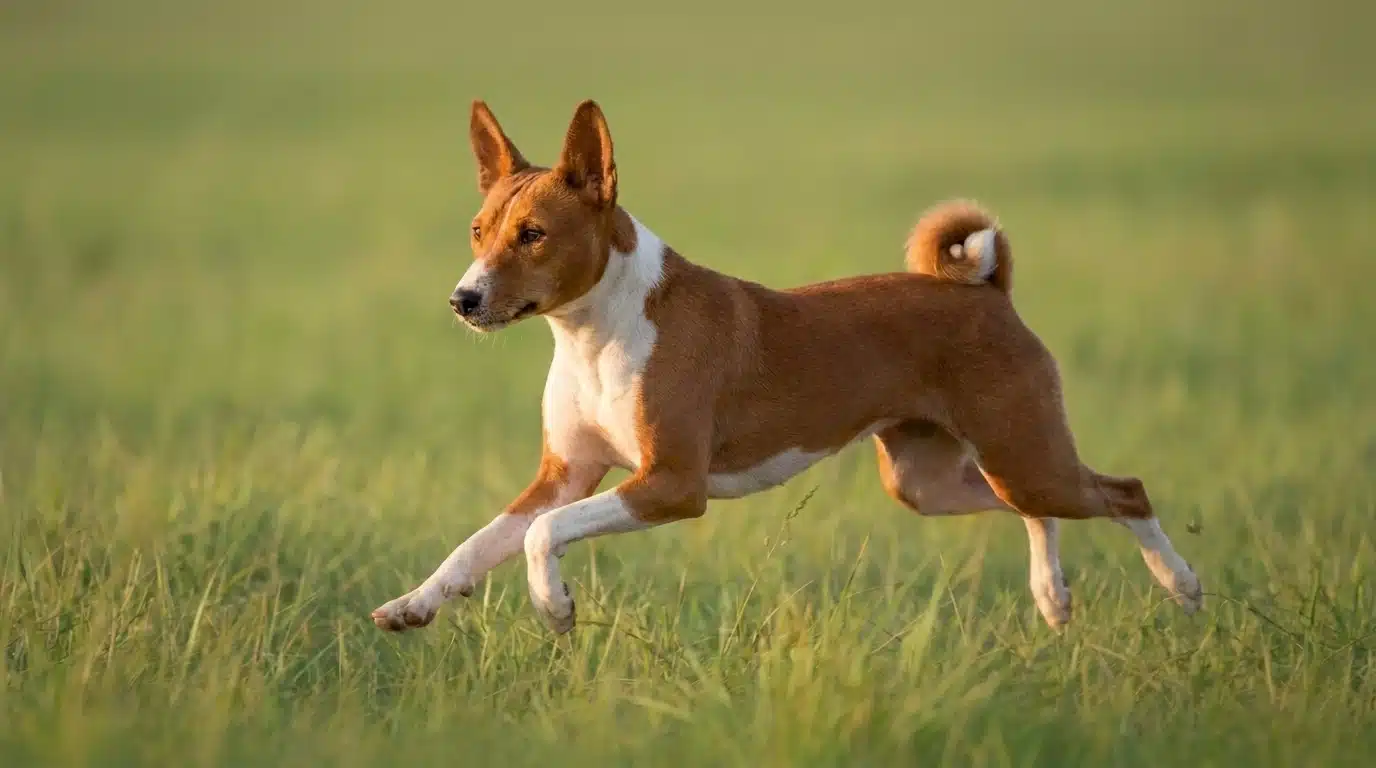
The Basenji reaches a commonly cited upper estimate of 25 mph. This compact hunting breed was developed for moving through varied terrain while locating and driving game.
Long legs relative to its body, a light frame, a tucked abdomen, and quick foot placement support agile movement. Its physical ability involves more than straight-line speed alone.
The Basenji remains an athletic small breed with efficient movement. Its estimated speed reflects its hunting background.
32. Italian Greyhound: Up to 25 mph (40 km/h)
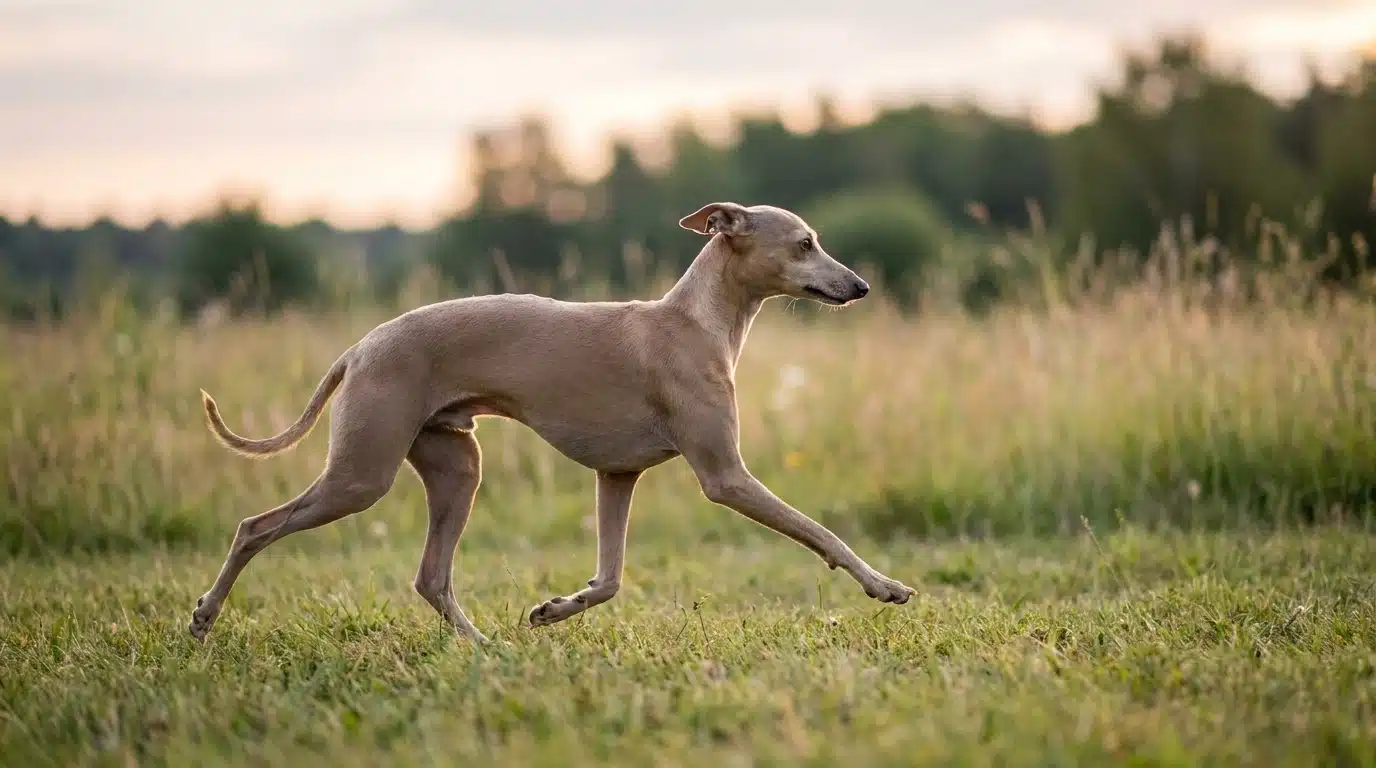
The Italian Greyhound reaches a commonly cited upper estimate of 25 mph. Although much smaller than the Greyhound and Whippet, it retains the familiar proportions of a sighthound.
A deep chest, narrow waist, flexible body, and fine legs support quick bursts over short ground. Its light bones require suitable surfaces and careful exercise management.
The Italian Greyhound shares its speed estimate with other small fast breeds. Its smaller frame creates different movement limits compared with larger sighthounds.
33. Boxer: Up to 24 mph (39 km/h)
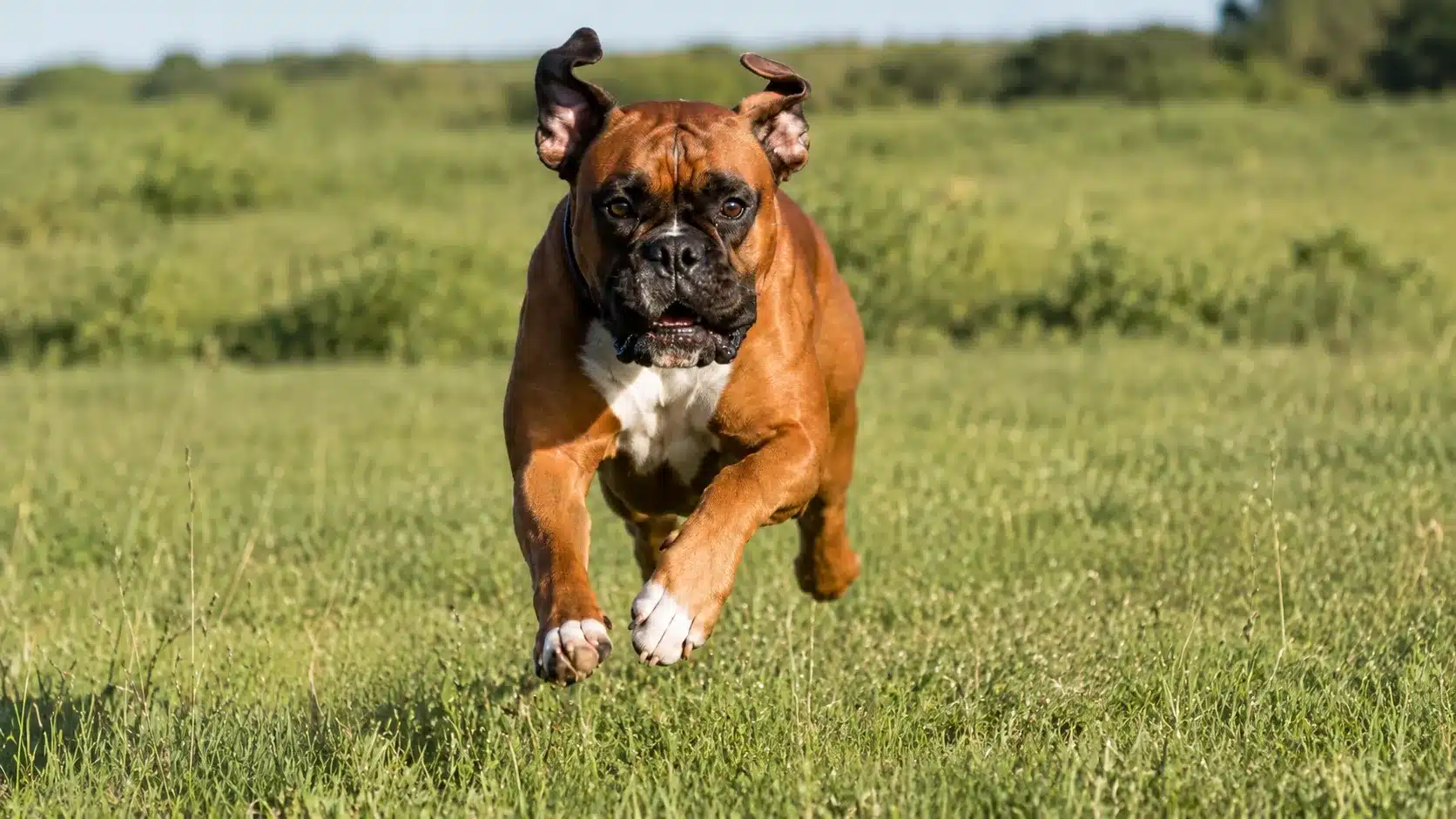
The Boxer reaches a commonly cited upper estimate of 24 mph. Its powerful build allows quick movement over short distances, though it was not developed as a specialized racing breed.
Muscular hindquarters, a broad chest, and a compact working body support brief acceleration. Its shorter muzzle can make heat and strenuous exercise harder to tolerate, especially in warm or humid conditions.
The Boxer closes the ranking just below the fastest small breeds. Its placement reflects estimated speed rather than its overall athletic ability.
Which Fast Dogs Suit Different Activities?
Maximum pace should be considered alongside stamina, training needs, health, and behavior. The quickest sprinter is not automatically the best running partner or household match.
| Activity | Suitable Breeds | Main Strength | Main Consideration |
|---|---|---|---|
| Short, enclosed sprints | Greyhound, Whippet, Borzoi | High short-distance pace | Strong pursuit instinct |
| Steady distance running | Vizsla, Weimaraner, Dalmatian | Stamina and efficient pacing | Gradual conditioning |
| Trail running | Rhodesian Ridgeback, German Shorthaired Pointer | Movement across varied ground | Heat and surface conditions |
| Agility and quick turns | Border Collie, Jack Russell Terrier, Belgian Malinois | Braking and repeated acceleration | Training and mental activity |
| Endurance work | Siberian Husky, American Foxhound, Australian Kelpie | Sustained movement | Lower working pace |
| Indoor rest after exercise | Greyhound, Whippet | Short activity followed by rest | Secure outdoor handling |
Breed is only a starting point. Age, orthopedic health, weather tolerance, recall, physical condition, and individual behavior should guide the activity you choose.
Before starting a running routine, Texas A&M University advises owners to consider a veterinary assessment, gradual conditioning, weather, water, obedience, and the running surface.
Final Thoughts
The Greyhound remains the fastest dog breed, with verified and research-based figures generally near 40 to 42 mph.
Salukis, Whippets, Borzois, and other sighthounds also perform well in short pursuits, while sporting and working breeds may be better suited to stamina or repeated changes of pace.
Published estimates come from different distances, surfaces, and testing methods, so use them as broad comparisons rather than fixed records. Age, fitness, health, motivation, and weather can change an individual result.
A high ranking also does not determine household suitability. Compare temperament, exercise needs, recall, and pursuit instinct before choosing a companion, then discuss strenuous running with your veterinarian.
Which fast dog breed surprised you the most? Share your thoughts in the comments and pass this list along to other dog lovers.
Frequently Asked Questions
Does a Timed Dash Measure Peak Speed?
Fast CAT measures average speed across a timed 100-yard course, not the highest instant reached during the run. Radar or GPS equipment may capture a brief peak, so results collected through different methods should not be compared directly.
Can Weather Change a Dog’s Recorded Time?
Wind, heat, rain, footing, slope, and lure placement can affect a timed run. Even the same dog may record different speeds on separate days, so one result should not be treated as the breed’s permanent limit.
Can a Small Dog Outrun a Larger Dog?
A small dog can be quick for its height because acceleration depends on power, weight, stride frequency, and motivation. Larger dogs often have longer strides, but additional height and body weight do not automatically produce a higher maximum speed.
Does a Fast Dog Automatically Have Good Recall?
No. A strong chase response may help during lure events, but recall is trained separately. Many sighthounds need enclosed exercise areas or a leash because moving animals can trigger pursuit before the dog responds to its handler.