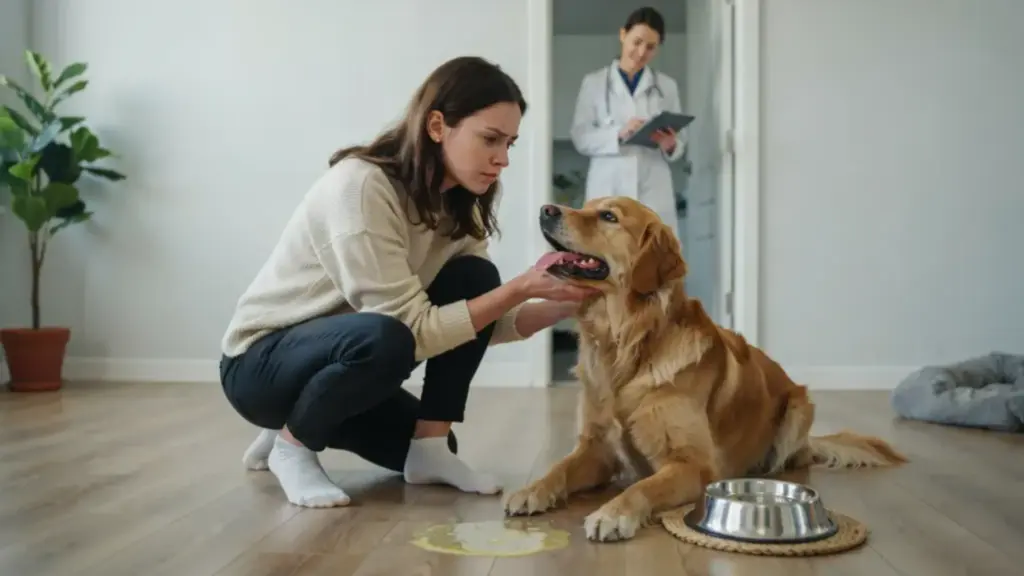
I have treated thousands of dogs in my Minnesota practice, and yellow vomit is one of the most common concerns pet owners bring to me.
If your dog is throwing up yellow foam, you are likely wondering whether it is minor or a sign that requires urgent care.
The yellow color almost always indicates bile, a digestive fluid produced by the liver, but the reason it shows up can range from a simple empty stomach to a health problem that needs treatment.
Below, you will find what yellow vomit usually means, how to tell a mild case from a serious one, and the exact steps to take next for your dog’s comfort and safety.
What Does Yellow Vomit Mean in Dogs?
Before looking at the causes, it helps to know what the yellow color actually is.
Yellow vomit is usually bile, a fluid made in the liver and stored in the gallbladder until your dog eats. Bile normally travels into the small intestine to help break down fat, but on an empty stomach it can move backward into the stomach instead.
Once bile mixes with stomach acid, it irritates the stomach lining and triggers vomiting. The result is a liquid that looks yellow or slightly green, and it often comes out foamy because it mixes with air, saliva, and mucus on the way up.
As VCA Animal Hospitals explains, vomiting is a symptom of many different conditions rather than a specific disease, so the color alone never tells the whole story.
Why is My Dog Throwing Up Yellow?
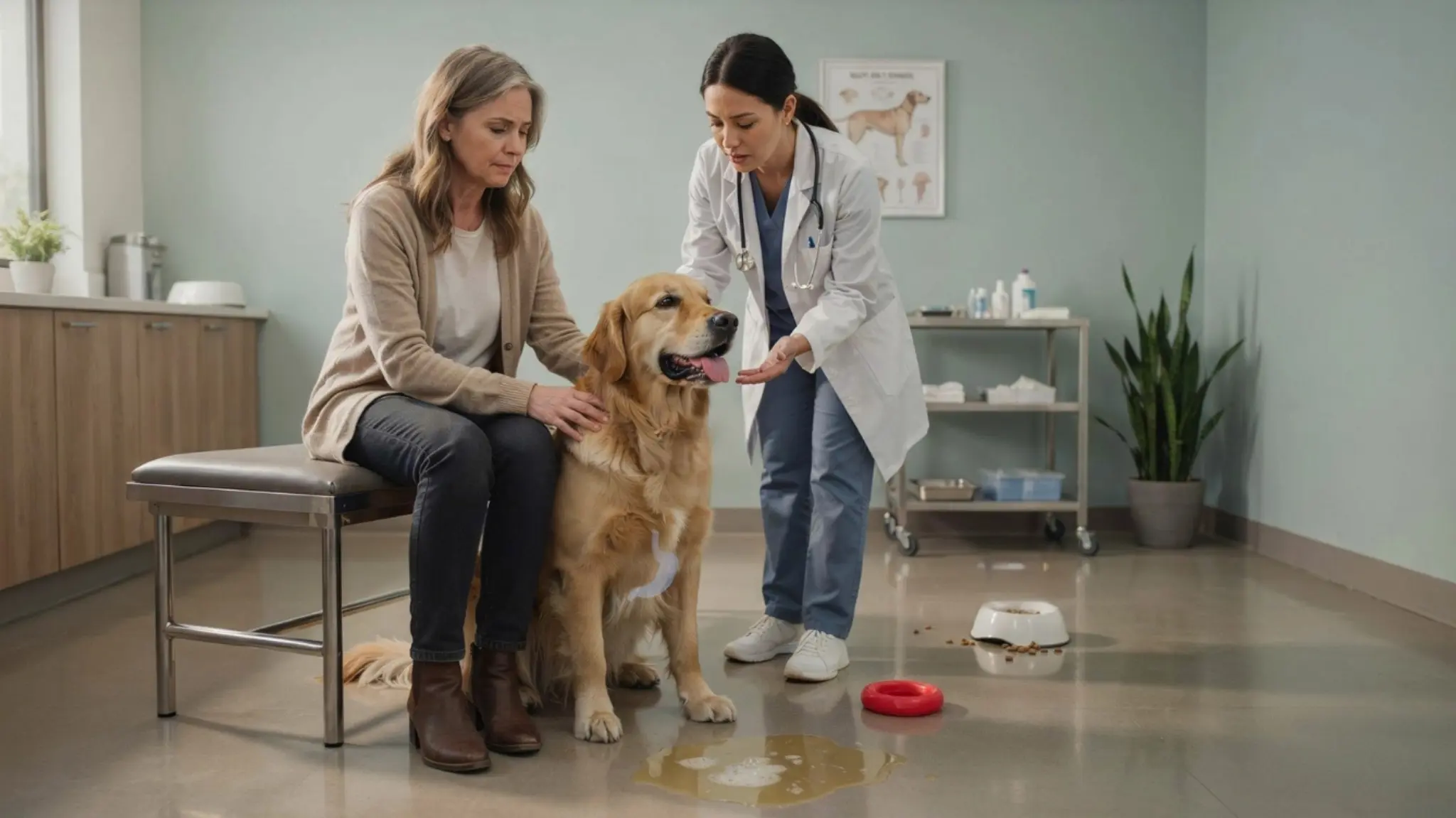
The reasons behind yellow vomit differ from one dog to the next, and the color alone will not tell you which one applies. Some causes are harmless, while others need prompt veterinary care.
1. Empty Stomach and Bilious Vomiting Syndrome
Long gaps between meals, especially overnight, allow bile to build up in the stomach and irritate its lining.
Dogs affected by this pattern usually vomit once, early in the morning, before they have eaten anything. Afterward, they tend to act completely normal and eat well for the rest of the day.
Veterinarians use the term bilious vomiting syndrome when this pattern repeats regularly over time, particularly in dogs fed only once or twice a day.
2. Something Eaten That Did Not Agree
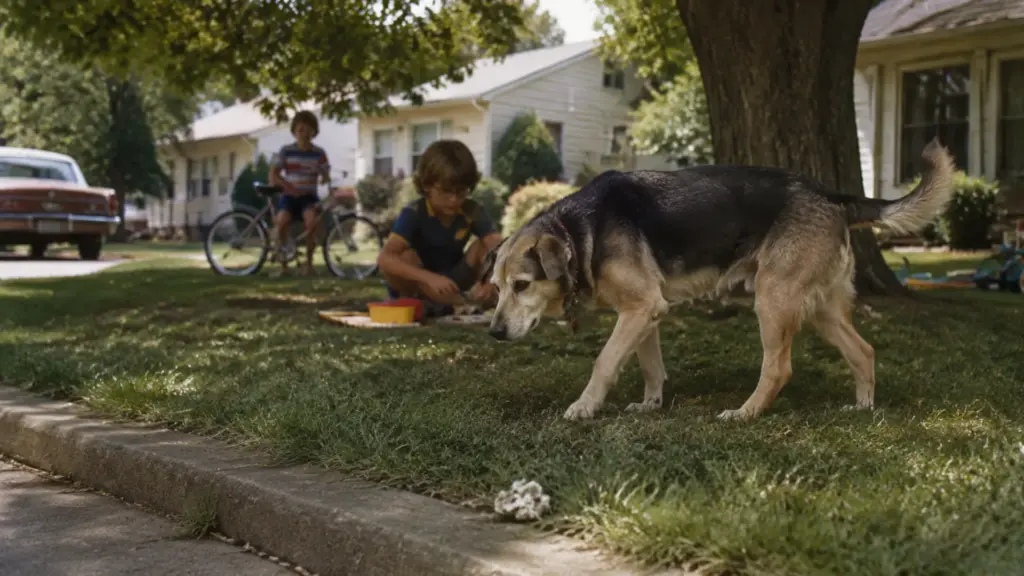
Garbage, spoiled food, or table scraps can irritate the stomach lining and bring on a bout of yellow vomit.
Dogs are naturally curious eaters, and it does not take much to upset the digestive system, especially in dogs prone to scavenging on walks.
According to VCA Animal Hospitals, dietary indiscretion is one of the most frequent causes of short-term vomiting and diarrhea in dogs, and most mild cases settle within a day or two. If something toxic was involved rather than just spoiled food, it helps to recognize the common symptoms of dog poisoning early.
3. Stomach Irritation (Gastritis)
Ongoing irritation of the stomach lining, known as gastritis, can develop from a sudden change in diet, a new medication, or a mild infection.
Dogs with gastritis often vomit yellow bile along with partially digested food, and they may seem less interested in eating for a day or two while the stomach heals.
Mild cases often improve on their own with rest and a bland diet, but symptoms lasting more than two days deserve a veterinary check. If loose stool joins the vomiting, knowing how to stop dog diarrhea quickly can help you manage both symptoms together.
4. Pancreatitis
A fatty meal, greasy table scraps, or a sudden change in diet can inflame the pancreas, a painful condition called pancreatitis.
Dogs with pancreatitis often vomit repeatedly, sometimes bringing up yellow bile, and may hold a hunched or praying position with their front legs down and hindquarters raised due to abdominal pain. Recognizing the fuller list of signs of pancreatitis early can help you seek treatment sooner.
They frequently refuse both food and water, and their energy drops noticeably. This condition needs prompt veterinary care, since untreated pancreatitis can lead to dehydration and further complications.
5. Intestinal Blockage
Toys, bones, socks, corn cobs, and other swallowed objects can lodge in the intestine and stop digestion completely.
Dogs with a blockage may vomit repeatedly, including yellow bile once the stomach has emptied, and often show severe lethargy along with visible abdominal pain or a hunched posture.
According to PetMD, a blockage combined with severe low energy and abdominal pain is a medical emergency that needs immediate attention. Surgery is sometimes required to safely remove the object.
Disclaimer: Yellow vomit that happens once in an otherwise normal dog may be less concerning, but repeated vomiting or vomiting with severe lethargy, abdominal pain or swelling, inability to keep water down, blood, weakness, or suspected ingestion of a toxin or foreign object needs prompt veterinary attention. Puppies, senior dogs, and dogs with existing health problems may need earlier assessment. Avoid giving human medications or trying to induce vomiting unless a veterinarian specifically tells you to.
When Should You Call the Veterinarian?
A short checklist can help you decide how quickly to act, since the right response often depends on more than the vomiting alone.
- Vomiting happens more than once in a day, or continues past 24 hours
- Vomit contains blood or looks like coffee grounds
- Your dog seems weak, painful, or unusually quiet
- The belly looks swollen or feels tender to the touch
- Your dog refuses food or water for more than a few hours
- The dog is a puppy or a senior showing any of the above signs
Calling early costs you little, while waiting out a serious cause can turn a manageable problem into a costly emergency, so when in doubt, check in with your veterinarian’s office.
My Dog Vomited Yellow: What Now?
Once you know your dog is vomiting yellow, the next question is simple: what should you actually do right now? Use this quick reference to match your dog’s specific situation with the appropriate next step.
| Situation | What to Do |
|---|---|
| Vomited once, acting normal | Watch closely and offer a light meal later |
| Vomited more than twice today | Call your veterinarian for guidance |
| Vomiting along with pain or weakness | Seek care the same day |
| Puppy or senior dog vomiting | Call the vet sooner rather than later |
| Blood present in the vomit | Treat as an emergency |
This table is a starting point, not a diagnosis, so trust your instincts if something about your dog still feels off, and do not hesitate to call your veterinarian for personalized guidance whenever you are unsure.
How to Help Your Dog at Home

For mild, isolated cases, a few simple adjustments at home can settle the stomach.
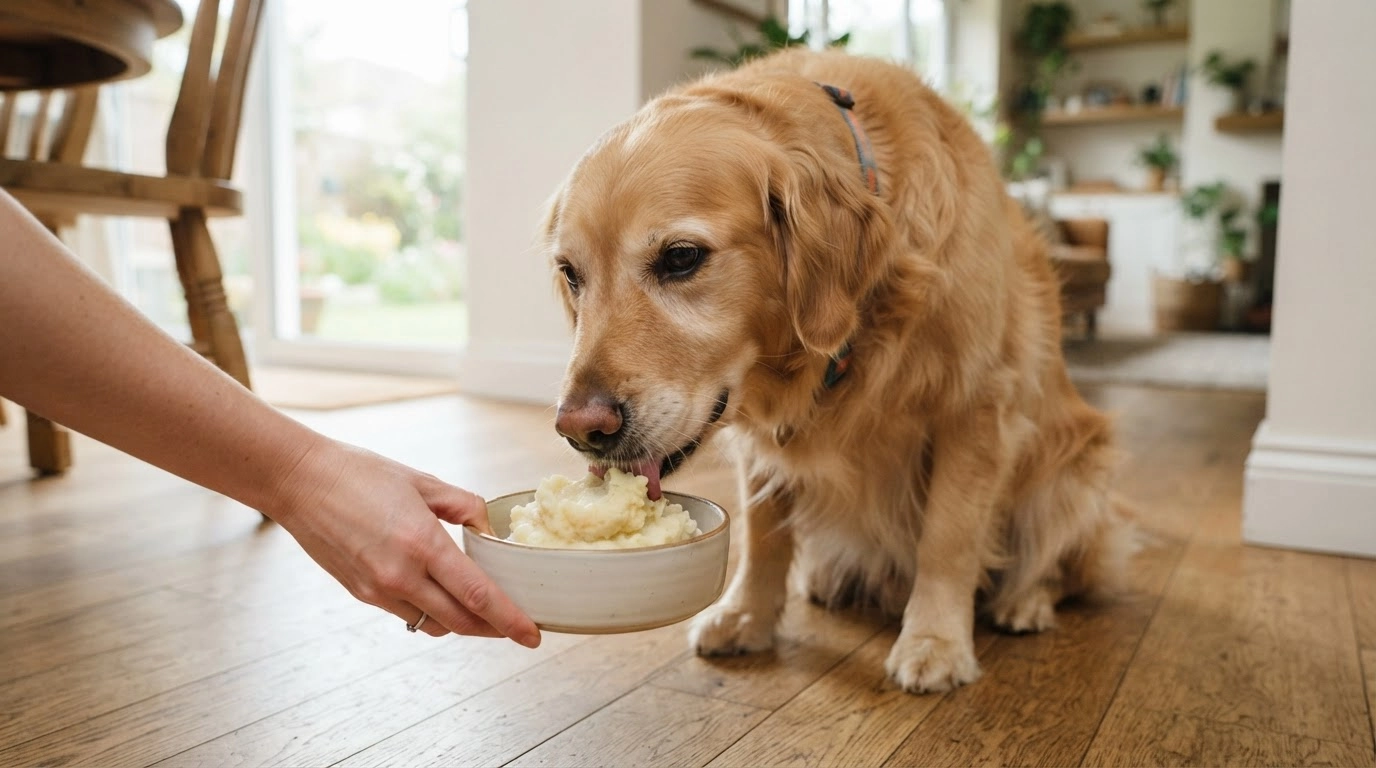
Start by withholding food for a few hours, but keep offering small amounts of water so your dog does not become dehydrated. Once your dog seems settled, offer a light meal such as plain boiled chicken and rice in a small portion.
Feeding three or four smaller meals through the day, instead of one or two large ones, reduces the empty-stomach gaps that lead to bile buildup. A small snack before bed often helps dogs that vomit yellow first thing in the morning.
Avoid switching foods suddenly, since a fast diet change can upset the stomach further, and always follow any specific instructions your veterinarian has given based on your dog’s history.
How to Prevent Yellow Vomiting in Dogs
A few consistent habits, practiced daily rather than occasionally, can meaningfully lower the odds of repeat episodes and help you avoid unnecessary trips to the veterinary clinic over the long term.
| Prevention Habit | Why It Helps |
|---|---|
| Smaller, more frequent meals | Keeps the stomach from staying empty too long |
| Consistent feeding schedule | Reduces bile buildup overnight |
| Slow food transitions over 7 to 10 days | Prevents stomach upset from a sudden diet change |
| Keeping trash and scraps out of reach | Lowers the chance of dietary indiscretion |
| Routine veterinary checkups | Catches underlying conditions early |
None of these habits guarantee your dog will never vomit again. Still, together they meaningfully reduce how often it happens, and small, consistent changes to feeding and food storage often make the biggest long-term difference.
Final Thoughts
Yellow vomit in dogs is common, and most cases connect to something as simple as an empty stomach or a bite of food that did not sit well. Still, the story does not end with the color alone.
Repeated episodes, pain, blood, or a dog that stops eating are signs your dog needs a veterinary exam, not a wait-and-see approach.
Keep track of when the vomiting occurs, what your dog ate, and how your dog is acting, since these details help your vet find the cause more quickly.
If your dog is throwing up yellow and you are unsure what to do, call your veterinarian today and describe what you have seen.
Frequently Asked Questions
Can Stress or Anxiety Make a Dog Throw up Yellow Foam?
Yes, stress can upset a dog’s digestive system and contribute to vomiting. Changes like travel, new environments, separation, or household changes may trigger stomach irritation, especially in dogs already prone to digestive sensitivity.
Is Yellow Foam Vomiting Different from Regular Dog Vomiting?
Yes. Yellow foam vomiting usually contains bile mixed with stomach fluids, while regular vomiting may contain food or other stomach contents. The appearance can provide clues, but your dog’s overall health matters more.
Should I Give My Dog Probiotics After Yellow Vomiting?
Probiotics may support digestive health in some dogs, but they are not a solution for every vomiting episode. Ask your veterinarian before adding supplements, especially if vomiting is frequent or linked to another condition.
Is Yellow Vomit a Sign of Liver Disease in Dogs?
Sometimes. Liver problems can affect bile production and digestion, but yellow vomit alone does not confirm liver disease. Additional symptoms and veterinary testing are needed to identify the actual cause.