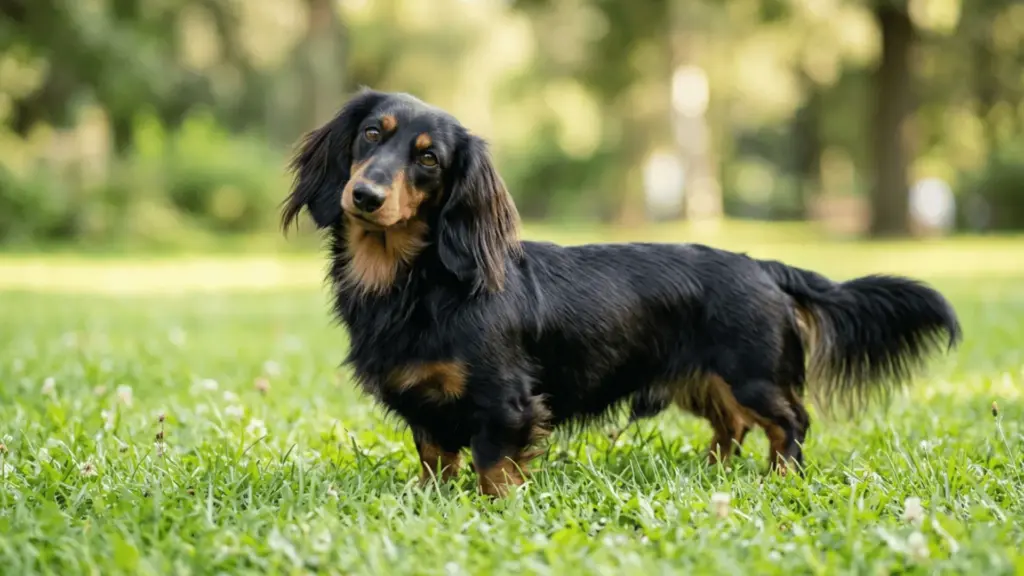
A cuddle with a long-haired dachshund can feel like the softest little pause in the day until you stand up and spot silky strands on your sweater.
For many owners, the surprise comes later, while brushing fur off a blanket, car seat, or favorite hoodie, and realizing that this tiny dog leaves behind more hair than expected.
Long-haired dachshunds do shed, but not in the dramatic way some heavy-shedding breeds do. Their coat is soft, feathered, and more noticeable on fabric, which can make the shedding feel bigger than it really is.
This guide breaks down what owners actually find, why the coat sheds, when shedding picks up, and how a simple grooming routine can keep things under control.
Do Long-Haired Dachshunds Shed?
Long-haired dachshund shedding usually shows up in small, everyday moments rather than giant piles of fur around the house.
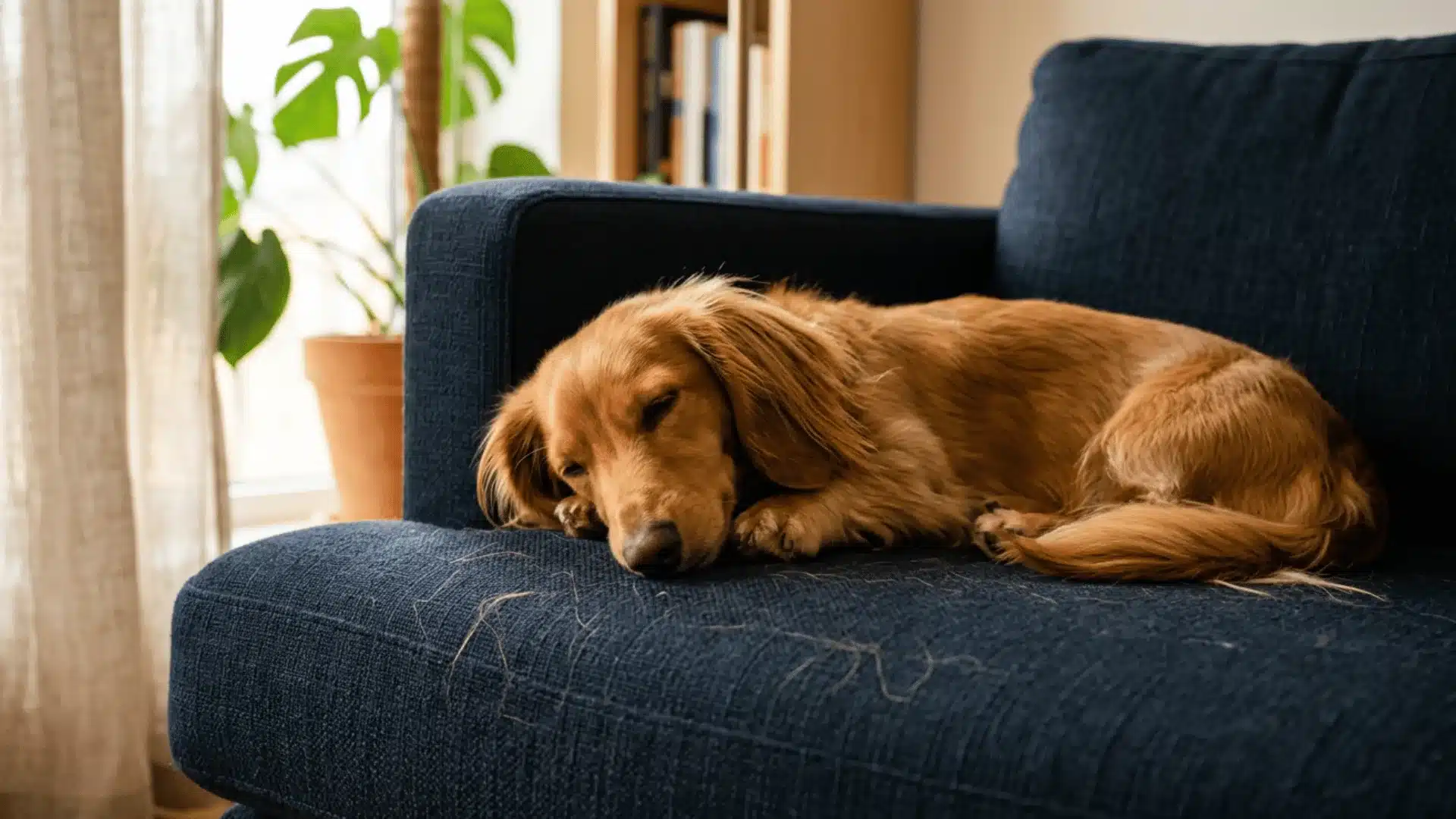
A few silky hairs may stick to a dark sweater after a cuddle. Soft strands may collect on a favorite blanket, couch cushion, dog bed, or car seat after a nap.
Most owners notice the fur more on black clothing, fleece, velvet, and other textured fabrics because the longer, silky coat is easier to see and catch on these surfaces.
The shedding can feel more noticeable than it actually is, especially during brushing season, seasonal coat changes, or after long cuddle sessions at home.
Loose hair around the home does not usually mean something is wrong. The coat naturally sheds old hair to make room for healthy new growth throughout the year.
Many owners find that brushing several times a week keeps shedding under control and makes cleanup much easier.
How Do Long-Haired Dachshund Coats Actually Work?
Long-haired dachshunds have a coat made for softness, warmth, and movement. Their coat usually has two main parts: a softer undercoat and a longer outer coat.
The undercoat sits closer to the skin. It helps with insulation and changes with the seasons. The outer coat is the silky layer most people notice first. It gives long-haired dachshunds their feathered ears, chest, belly, legs, and tail.
Dog hair also moves through a natural growth cycle. The first stage is Anagen, when hair grows. Catagen is the short transition stage. Telogen is the resting stage. Exogen is the shedding of old hair.
Hair growth cycles run all year, which is why some shedding is normal. Longer outer hairs make the process easier to see. A few long strands on a sweater can look like a lot, even when the total shed amount is normal.
Shedding by Coat Type: Long-Haired, Smooth, and Wire-Haired
All dachshunds shed to some degree, but coat type changes how that shedding looks and how much grooming is needed.
| Dachshund coat type | Shedding level | Seasonal pattern | Grooming frequency |
|---|---|---|---|
| Long-haired dachshund | Moderate | Light year-round shedding with spring and fall increases | Brush several times a week, daily during heavier shedding |
| Smooth dachshund | Low to moderate | Steady light shedding, sometimes more in seasonal changes | Brush weekly with a soft brush or grooming mitt |
| Wire-haired dachshund | Low to moderate | Less obvious shedding, but the coat needs maintenance | Brush weekly, with occasional hand stripping or grooming |
Long-haired dachshunds are not necessarily the biggest shedders by volume, but they are the most noticeable. Their feathered areas trap loose fur quickly, which is why regular brushing matters more for them than for the other two coat types.
Why Does Shedding Pick up in Spring and Fall?
Spring and fall are when most long-haired dachshund owners notice more fur around the house. A dog’s coat responds to changes in daylight and temperature.
As spring days lengthen, the undercoat loosens, so the dog stays comfortable in warmer weather. In the fall, the coat shifts to prepare for cooler months. This is sometimes called “blowing coat.”
Long-haired dachshunds may not blow their coat as heavily as thick-coated breeds, but the change is noticeable.
More hair comes out during brushing, more strands appear on blankets, and the coat may look slightly thinner for a few weeks.
Indoor dogs can also shed lightly year-round because heating, air conditioning, and artificial light soften the natural seasonal pattern. Fur in January does not mean something is wrong.
Easy Grooming Routine for Long-Haired Dachshunds
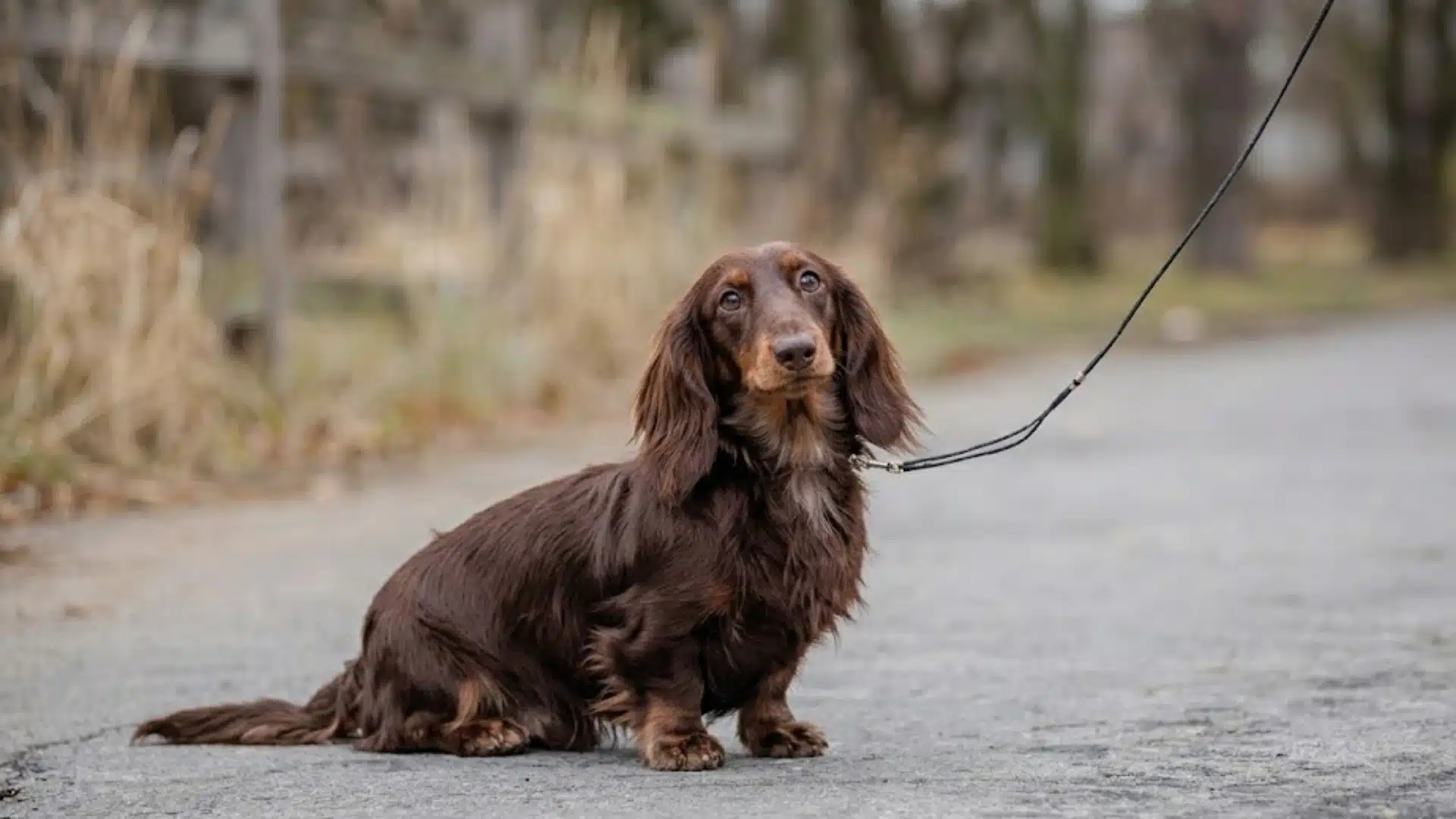
A good grooming routine does not need to feel complicated. For long-haired dachshunds, the goal is to remove loose hair before it ends up on clothes and furniture while keeping the feathered coat free of tangles.
1. Daily Brushing for Loose Hair and Tangles
Daily brushing is one of the easiest ways to control shedding in long-haired dachshunds.
A slicker brush works well for loose hair and light tangles, while a pin brush helps smooth the silky outer coat without pulling too much.
Brush gently through the ears, chest, belly, legs, and tail because these feathered areas collect loose fur quickly. Short, calm brushing sessions are better than rushing through the coat.
2. Bathing, Drying, and Coat Support
Bathing every 6 to 8 weeks is enough for many long-haired dachshunds, unless the dog gets dirty or has a skin issue. Too much bathing can dry the skin and make the coat look dull.
After a bath, dry the coat well, especially around the ears, belly, legs, and tail. Damp feathering can tangle more quickly if left to air-dry without brushing.
Food and hydration matter too. A balanced diet, fresh water, and healthy fats can support skin and coat condition. Diet will not stop natural shedding, but it can help the coat stay stronger and healthier.
3. Checking the Coat After Outdoor Walks
Long-haired dachshunds can pick up dirt, grass, small twigs, and moisture during outdoor walks, especially around the paws, belly, and feathered legs.
Quick coat checks after walks help stop tangles and buildup before they become harder to manage. Regular checks also make it easier to spot small mats, skin irritation, or loose fur before the coat starts looking messy.
Use a soft towel to wipe damp areas and gently brush out anything caught in the fur. This habit keeps the coat cleaner, reduces matting, and helps loose hair fall out during brushing instead of around the house.
Real Owner Experiences: Do Long-Haired Dachshunds Shed a Lot?
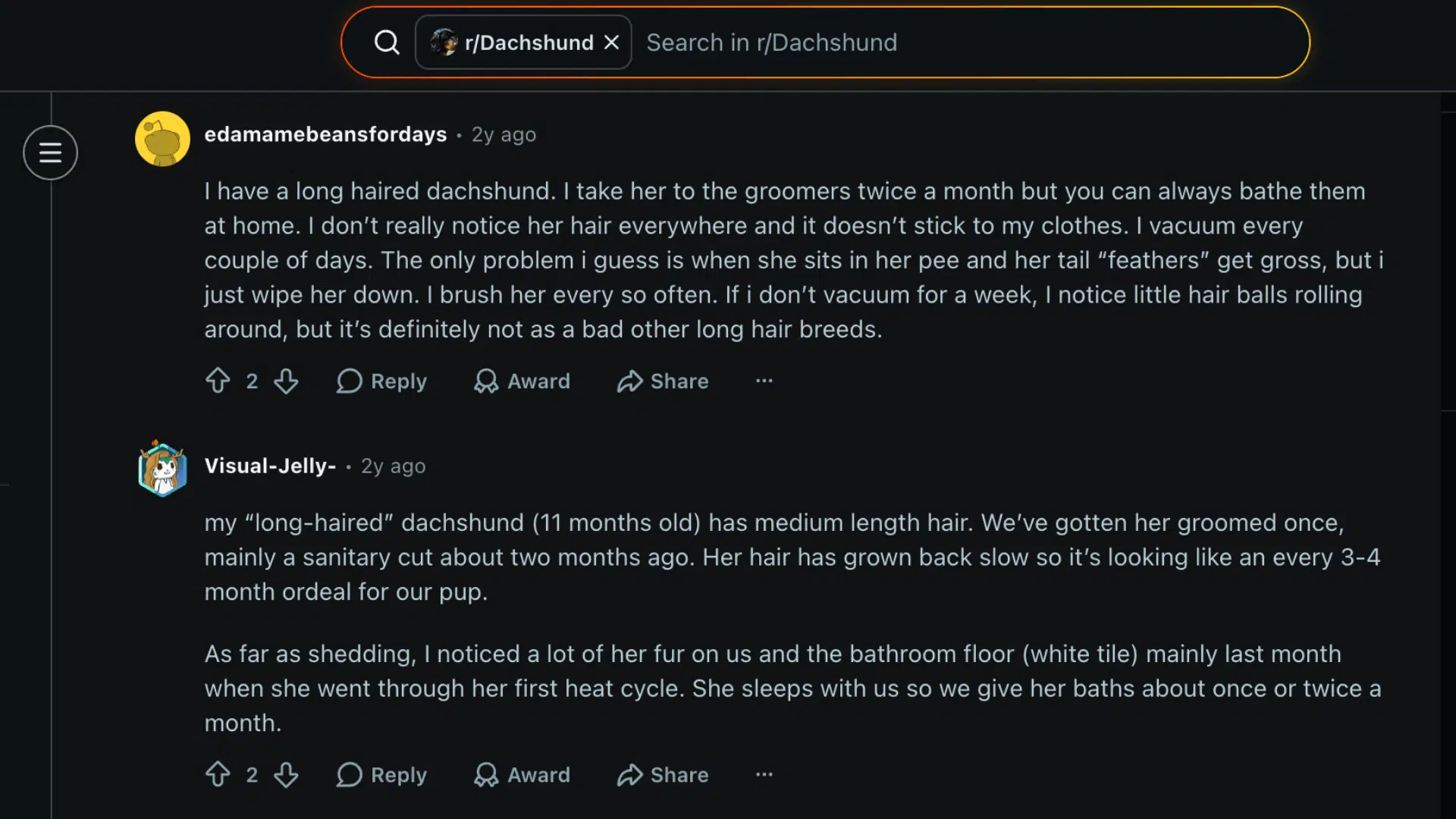
Many owners on Reddit say long-haired dachshunds shed less than expected, while others notice more loose hair as the coat grows thicker with age.
One owner shared that regular grooming appointments and vacuuming every few days keep shedding manageable, with very little fur sticking to clothes or furniture.
Another mentioned that their young dachshund only sheds heavily during certain times, especially around the first heat cycle, when loose fur became more noticeable on bathroom floors and bedding.
Some owners also notice shedding increases around 10 months of age as the adult coat develops fully.
A black long-haired dachshund owner explained that fur started showing up everywhere in the house, but regular brushing, deshedding during baths, and lint rollers helped control the mess.
Experiences vary, but grooming clearly makes a big difference.
Common Reasons Behind Unusual Shedding
Unusual shedding is not always serious, but it helps to know what may be affecting a long-haired dachshund’s coat, skin, and overall comfort.
- Poor diet effects: A weak diet can leave the skin dry and the coat dull, brittle, flaky, rough, or more likely to shed.
- Allergy-related itching: Food, pollen, dust, or grooming products can cause scratching, redness, irritation, hot spots, and hair loss.
- Stress-shedding response: Major routine changes, anxiety, discomfort, travel, or household stress may trigger excessive shedding in some dachshunds.
- Parasites or infections: Fleas, mites, yeast, bacteria, or skin infections can make shedding worse and irritate the skin. A natural flea and tick spray used consistently can help prevent infestations before they affect the coat.
- Dilute coat concerns: Color-dilution alopecia may affect some blue- or Isabella-colored dachshunds, causing patchy or uneven hair loss.
Grooming Mistakes That Can Make Shedding Worse
Small grooming mistakes can dry out the coat, cause tangles, and leave more loose hair around the home than most owners expect.
- Bathing Too Often: Frequent baths can remove natural skin oils and leave the coat dry, itchy, dull, and more likely to shed around furniture and clothing.
- Skipping the Metal Comb: Brushes often miss hidden tangles near the skin. A metal comb helps find knots before they turn into painful mats under the coat.
- Pulling Through Mats Quickly: Tugging on mats can hurt sensitive skin and make grooming stressful. Slow detangling is safer and helps avoid coat damage or irritation.
- Using Harsh Human Shampoo: Human shampoos may dry out the skin and coat because they are not balanced for dogs with sensitive skin or long fur.
- Ignoring Feathered Areas: The ears, belly, legs, and tail trap loose fur easily. These areas need regular brushing to prevent hidden tangles and heavy shedding.
- Shaving Without Advice: Shaving can expose the skin to irritation and sunlight. Long coats help protect the body and should not be removed unnecessarily.
Are Long-Haired Dachshunds Good for People Who Hate Dog Hair?
Long-haired dachshunds may work for some people who dislike heavy shedding, but honest expectations are important before bringing one home.
They do shed throughout the year, so some loose fur on clothes, bedding, and furniture is normal. Regular brushing and vacuuming help keep the hair under control, but they are not completely low-shedding dogs.
These dogs are also not hypoallergenic. Their coats, dander, and saliva can still trigger allergies in sensitive people.
Anyone with strong pet allergies should spend time around the breed before making a decision.
Compared to many larger long-haired breeds, long-haired dachshunds are usually easier to manage because of their smaller size.
There is simply less fur overall, and grooming sessions often take less time. Many owners feel the shedding stays manageable with consistent coat care.
Conclusion
Life with a long-haired dachshund comes with a little fur, a little brushing, and a lot of charm. The shedding is usually normal, seasonal, and easy to manage once the coat has a steady routine.
A few silky hairs on clothes do not take away from the joy of those warm naps, happy greetings, and soft ears resting in your lap.
With regular brushing, smart home habits, and attention to skin health, coat care becomes less of a chore and more of a small bonding ritual.
Have a long-haired dachshund at home? Share your best grooming tip in the comments so other owners can learn from real experience.
Frequently Asked Questions
Can Indoor Humidity Affect a Dachshund’s Coat?
Yes, very dry indoor air can sometimes make the skin drier and the coat more brittle, especially during colder months. Using balanced indoor humidity may help the coat stay softer and reduce static or dryness.
Do Long-Haired Dachshunds Shed More After Neutering or Spaying?
Some owners notice mild coat texture or shedding changes after spaying or neutering because hormones can influence hair growth cycles. Changes are usually gradual and vary from dog to dog.
Can Sleeping Habits Affect Where Fur Collects Most?
Yes, long-haired dachshunds often leave the most fur in their favorite sleeping spots. Dogs that nap repeatedly on the same couch corner, blanket, or bed may create heavier fur buildup in those specific areas.
Do Long-Haired Dachshunds Shed More as They Age?
Some long-haired dachshunds may shed differently with age because coat texture, hormones, and skin condition can change over time. Older dogs may also develop a thinner coat or slower hair regrowth, especially if health issues are present.