There’s a moment most dog owners recognize without fully understanding it. A dog that was just active suddenly slows down, starts breathing faster, and looks for the coolest spot in the room.
Sometimes it is tile flooring, sometimes a shaded patch outside, sometimes right under a fan.
That shift feels intentional, almost calculated. And it usually leads to one question that doesn’t get a satisfying answer right away.
How do dogs sweat, and what is actually happening inside their body when heat starts building up?
This blog breaks that down in a way that actually helps. It connects what you see at home with what is happening inside your dog’s body, so you can recognize normal cooling behavior, spot early warning signs, and make better decisions in warm conditions.
Do Dogs Sweat at All?
Yes, dogs do sweat, but not in the way most people expect. When people ask this, they are usually thinking of visible moisture across the skin, similar to human sweating.
That type of sweating does not occur in dogs. Biologically, dogs are not built to rely on sweat for cooling. Their skin has far fewer active sweat glands, and their fur limits how effective evaporation can be.
Even when sweat is produced, it does not spread across the body or significantly lower the internal temperature. Instead, sweating plays a very limited role.
It occurs in small amounts and only in specific areas, rather than across the entire body. This is why most owners rarely notice it in everyday situations.
So while dogs do sweat, it functions only as a minor support system, not their primary method of heat control.
Where Do Dogs Sweat From?
To fully understand how dogs sweat, it helps to examine the exact locations and functions of their sweat glands. Dogs have two main types of sweat glands, each serving a different function.
1. Merocrine Glands
Merocrine glands are primarily located in a dog’s paw pads and are the only sweat glands that contribute, even slightly, to temperature regulation.
They release small amounts of moisture, which can help cool the body through minimal evaporation.
In real situations, this is why dogs may leave faint, damp paw prints on smooth surfaces during warm conditions. It is one of the few visible signs that sweating is actually happening.
However, the cooling effect is extremely limited. The surface area of the paw pads is too small to significantly impact overall body temperature, especially compared to more effective systems like panting.
These glands can also activate due to stress or anxiety, not just heat. If your dog’s paws feel damp in a comfortable environment, it may indicate emotional discomfort rather than a response to temperature alone.
2. Apocrine Glands
These glands are spread throughout the skin, located at hair follicles across the body. They are not involved in temperature regulation.
Instead, they release pheromones and scent signals that help dogs communicate with one another. They are essentially the dog’s chemical identification system.
Beyond communication, these glands also play a quieter maintenance role: they help keep the skin soft and pliable, and research suggests they have mild antimicrobial properties that protect the skin surface.
It’s a function most owners don’t know about, but it matters for long-term skin health. This distinction is important. Many assume all sweat glands cool the body, but in dogs, most do not contribute to heat control at all.
One more detail worth knowing: merocrine glands don’t only activate in the heat. They can also respond to stress and anxiety.
If your dog’s paws are noticeably damp but the temperature is comfortable, it may be worth considering whether something in the environment is causing them distress, such as a noise, a new person, or a change in routine.
How Dogs Actually Regulate Body Temperature
Sweat plays only a small role in temperature control. Instead, dogs depend on a combination of breathing, circulation, and instinctive behavior to manage heat.
These systems work together, not separately, which is why cooling appears as a mix of physical and behavioral changes rather than a single response.
1. Panting as an Evaporative Cooling System
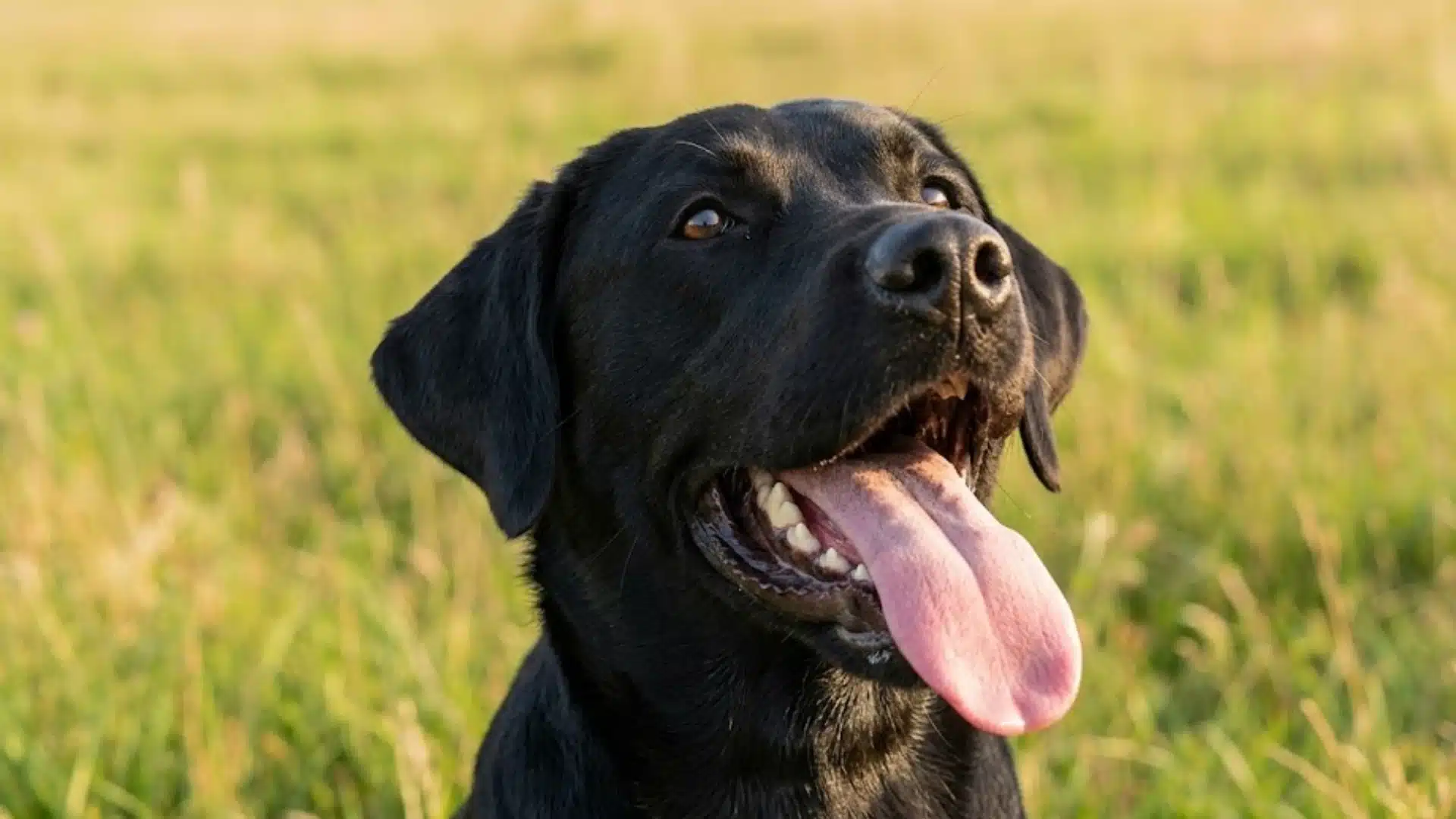
Panting is more than rapid breathing. It is a controlled process that efficiently releases heat. As air moves quickly across the moist surfaces of the tongue, mouth, and upper airways, moisture evaporates, carrying heat away.
At the same time, blood flowing through these areas cools slightly before circulating back through the body. In practice, the intensity of panting often reflects how much heat the dog is trying to shed.
2. Vasodilation and Heat Transfer
As body temperature rises, blood vessels near the skin dilate, allowing warm blood to move toward the surface. This helps release heat into the surrounding air.
Areas with less fur, such as the ears and face, tend to play a larger role in this process. While less visible than panting, this internal adjustment supports steady heat loss alongside other cooling mechanisms.
3. Behavioral Adjustments
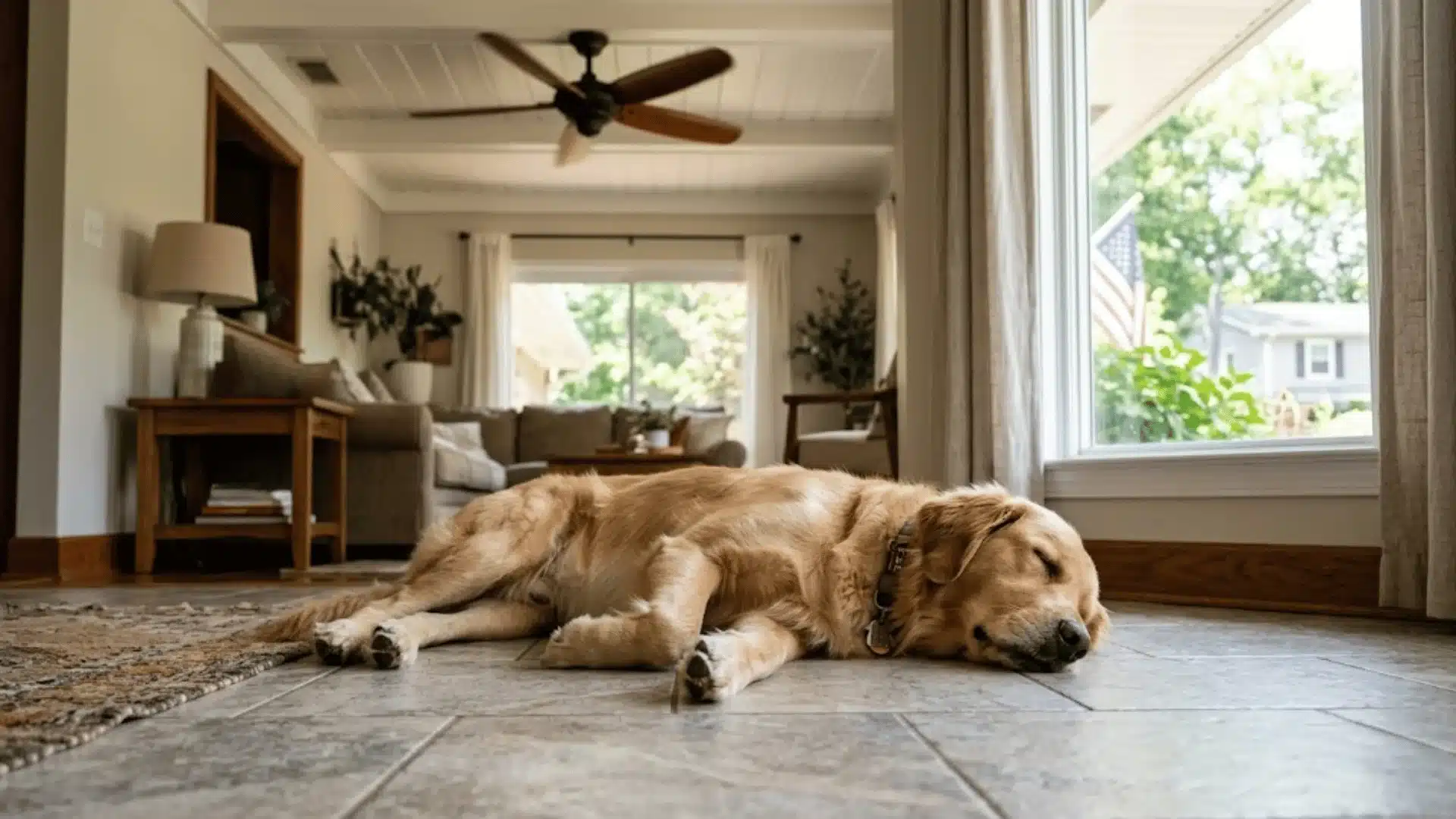
Dogs naturally adjust their behavior to reduce heat buildup. They may seek shade, lie on cooler surfaces, or limit movement to avoid generating more heat. These actions are not random.
They are part of a coordinated response that complements panting and circulation. When a dog consistently chooses a cooler spot or reduces activity, it is actively helping its body maintain a safer temperature.
Keeping your dog mentally engaged during warmer months doesn’t have to mean long walks or intense play; low-exertion enrichment activities can go a long way, especially when the heat is on.
4. Drooling as a Secondary Evaporative Mechanism
Drooling is a cooling tool that often goes unmentioned. When saliva evaporates from the mouth and muzzle, it carries heat away in the same way panting does.
Dogs that do not typically drool but suddenly start may be showing an early sign of overheating.
If you notice this in a dog that is usually dry-mouthed, it is worth taking steps to cool them down and monitoring them closely.
How Fast Can Dogs Overheat?
One of the more serious aspects of this topic is how quickly the temperature can rise when cooling mechanisms are overwhelmed.
In moderate to high heat, especially with humidity, panting becomes less effective because evaporation slows down.
A healthy dog’s body temperature typically falls between 101°F – 102.5°F (38.3°C – 39.2°C). Anything above 104°F is cause for concern. Temperatures above 106°F can be life-threatening.
In clinical practice, dogs have been documented to reach dangerously high temperatures within 20 to 30 minutes of being in a hot, enclosed space or of exercising hard in humid conditions.
The window between “seems fine” and “needs emergency care” is shorter than most owners expect.
How to Tell If Your Dog Is Overheating
Recognizing early warning signs can help you act quickly before the situation becomes serious, as overheating can escalate faster than most dog owners expect.
- Heavy panting: Rapid, intense breathing that does not slow down even after rest or moving to a cooler area
- Excess saliva: Thick, sticky drool that may hang from the mouth or appear more than usual
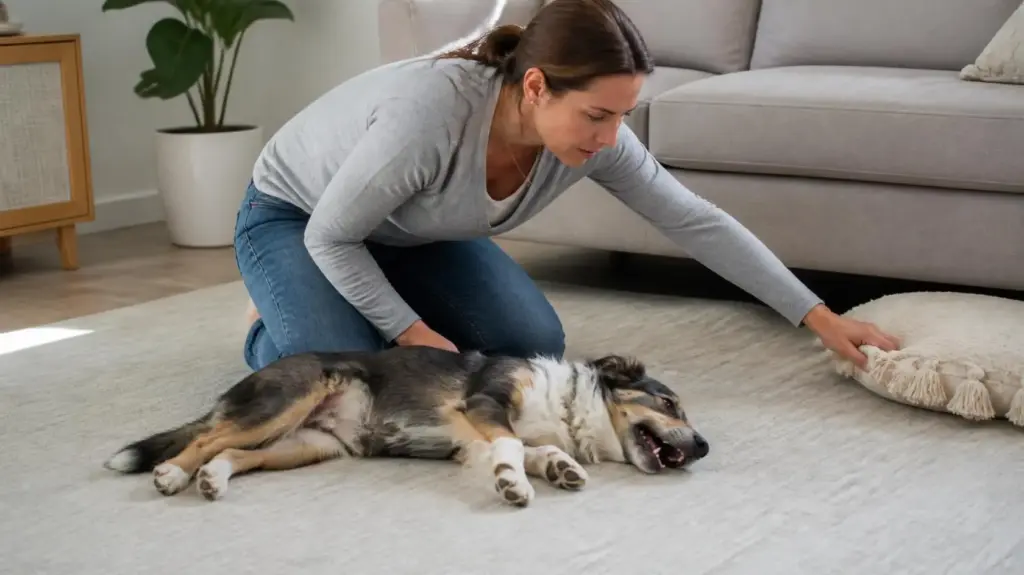
- Weakness: Reduced coordination, stumbling, or unusual tiredness during normal movement
- Gum color changes: Bright red, pale, or even bluish gums instead of a healthy pink shade
- Digestive distress: Vomiting, confusion, or signs of disorientation that indicate internal stress
For more on when wound or skin abnormalities warrant a vet visit, see our guide on recognizing signs that need professional care.
Which Dogs Are More Vulnerable?
Not all dogs handle heat the same way, and some naturally struggle more with regulating their body temperature, which makes understanding their cooling system especially important.
Breeds with shorter airways, such as pugs and bulldogs, often face difficulty because restricted airflow reduces the efficiency of panting, while dogs with dense or double coats tend to retain more heat, especially in warmer environments.
If your dog has a double coat, shaving it in summer is not recommended, as the undercoat acts as insulation that helps regulate temperature by trapping cooler air close to the skin, and removing it exposes the skin to heat and UV damage.
Body weight also plays a role, since overweight dogs generate more heat during movement, and age matters too, as puppies and older dogs have less efficient temperature control.
In these cases, external support like shade, airflow, and controlled activity becomes essential to prevent overheating.
Practical Ways to Help Your Dog Stay Cool
Understanding how dogs sweat becomes more useful when it connects directly to everyday care. Once it’s clear that sweat plays only a small role, the focus naturally shifts to supporting the systems that actually keep dogs cool.
A few simple adjustments can make a noticeable difference:
- Keeping fresh water available at all times
- Scheduling activity during cooler parts of the day
- Providing shaded or ventilated resting areas
- Allowing access to cool indoor surfaces
- Using fans or airflow to support evaporation
- Avoiding hot pavement surfaces that are uncomfortable to touch with the back of your hand are hot enough to injure paw pads
- Never leaving a dog unattended in a parked car, even briefly, interior temperatures can rise dangerously within minutes
The biggest risk factor is not heat itself, but misunderstanding how dogs respond to it. Owners often assume sweating will balance things out.
It does not, as dogs rely on systems that work well within limits but can fail quickly when those limits are crossed. That is why understanding how dogs sweat is less about sweat and more about recognizing the full cooling process.
Conclusion
Do dogs sweat? Yes, but only in small, specific areas like the paw pads. The real work happens through panting, blood flow adjustments, and instinctive behavior.
Knowing this changes how heat is managed. Small adjustments in routine, timing, and environment can prevent serious issues.
Pay attention to early signs, respect the limits of your dog’s cooling system, and respond before heat becomes a problem. That is what keeps dogs safe.
Have you ever noticed your dog acting differently in the heat and wondered if it was normal or something to worry about? Share your experience or thoughts in the comments.
Frequently Asked Questions
Can Dogs Sweat Through Their Nose?
No, dogs do not sweat through their noses to cool down. A wet nose is usually due to mucus and moisture from licking, not sweat. It helps with scent detection rather than temperature control.
Do Dogs Sweat More in Hot Weather?
Dogs may produce slightly more moisture from their paw pads in heat, but the increase is minimal. Their main response to rising temperatures is faster panting, not increased sweating.
Do Indoor Dogs Sweat Less Than Outdoor Dogs?
There is no major difference in how much dogs sweat between indoor and outdoor living. The environment affects temperature exposure, but sweating remains minimal in both cases.