


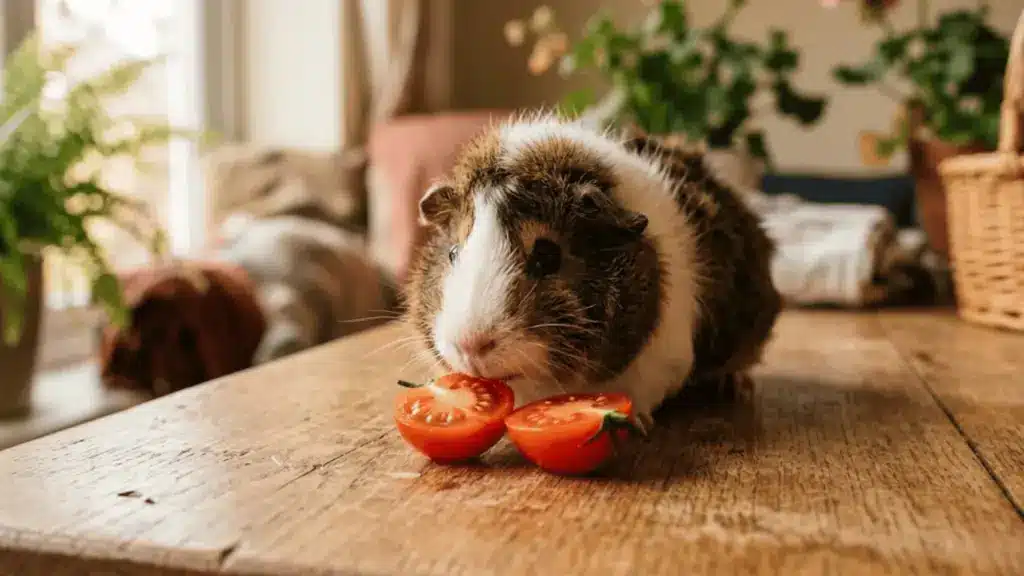
A single bite of the wrong tomato part could turn an innocent treat into a serious health concern for your guinea pig. Yet tomatoes remain one of the most debated fruits among cavy owners.
Some swear by them as a healthy snack, while others avoid them entirely. So, what’s the real story? Before you add tomatoes to your guinea pig’s bowl, there are a few important things every owner should know.
Not all parts of the tomato plant are safe, and even the edible portions come with rules that shouldn’t be ignored.
In this blog, we’ll explore whether guinea pigs can eat tomatoes, the nutritional benefits they offer, potential risks to watch for, safe serving sizes, and which tomato varieties are suitable.
Can Guinea Pigs Eat Tomatoes?
Yes, guinea pigs can safely eat ripe tomatoes, and many absolutely love the juicy flavor.
According to Guinea Lynx’s veterinary nutrition resource , tomatoes have about 19.1 mg of vitamin C per 100 grams, which guinea pigs cannot produce on their own.
Ripe red tomatoes offer some valuable nutrition and make a tasty occasional treat. The flesh, skin, and seeds are safe, but only the ripe fruit should be given.
Green parts of the plant and unripe tomatoes must be avoided entirely. Serve them in moderation as part of a varied diet.
Nutritional highlights: Tomatoes provide vitamin C, along with other beneficial nutrients such as antioxidants, potassium, fiber, and hydration support, while remaining low in calcium.
Health Benefits of Tomatoes for Guinea Pigs

Tomatoes can be a healthy occasional treat for guinea pigs when served in moderation. They provide valuable nutrients, hydration, and digestive support while adding variety to your pet’s diet.
1. Supports Vitamin C Requirements
Guinea pigs cannot produce their own vitamin C, making this nutrient essential for their overall health. A deficiency can lead to serious issues such as scurvy, lethargy, poor wound healing, and weight loss.
Tomatoes contain vitamin C, which can help contribute to your guinea pig’s daily intake.
While they shouldn’t be the primary source, tomatoes can complement other vitamin C-rich vegetables in a balanced diet.
2. Helps Maintain Healthy Digestion
Tomatoes contain insoluble fiber, which supports healthy digestion and helps maintain regular gut movement.
Since guinea pigs rely on a fiber-rich diet to keep their digestive systems functioning properly, small amounts of tomato can be a beneficial addition.
Combined with unlimited hay and other fresh vegetables, tomatoes may help promote digestive comfort and support overall gastrointestinal health.
3. Provides Extra Hydration
With a water content of approximately 95%, tomatoes can provide a refreshing source of extra hydration for guinea pigs.
This can be especially helpful during warmer weather or for pets that do not drink much water on their own.
Offering a small slice of tomato occasionally can help supplement fluid intake while providing a tasty and nutritious treat.
4. Low-Calcium Treat for Guinea Pigs
Guinea pigs that are prone to bladder stones or urinary sludge need foods that won’t load them with calcium. Tomatoes are naturally low in calcium, so they can slot into a careful diet without adding unnecessary urinary risk.
I often recommend them as one of the safer treat options for piggies already managing urinary issues, in small amounts and not daily.
For a broader look at small pet care basics, including how diet choices affect long-term health across different small animals, our guide on hamster care is a useful companion read.
Which Parts of the Tomato Plant Are Safe?
Guinea pigs can safely eat ripe red tomato fruit in small amounts, but all green parts of the tomato plant are toxic and should be avoided.
| Tomato part/type | Safe for guinea pigs? | Notes |
|---|---|---|
| Ripe red tomato fruit | Yes, in moderation | Feed only small amounts occasionally. |
| Tomato seeds | Yes | Safe to eat. |
| Tomato skin | Yes | Safe to eat. |
| Tomato leaves | No | Toxic; never feed. |
| Tomato stems | No | Toxic; never feed. |
| Tomato vines | No | Toxic; never feed. |
| Unripe or green tomatoes | No | Toxic; should not be fed. |
As a simple rule, if it’s a green part of the tomato plant, keep it away from your guinea pig; if it’s ripe red tomato fruit, it’s safe as an occasional treat in small amounts.
How Much Tomato Can a Guinea Pig Eat?
No, tomatoes should be an occasional treat for guinea pigs, not a daily food. Offering them two to three times per week is enough. A safe serving is one cherry tomato or a small slice about the size of your thumb.
Fresh vegetables should complement a guinea pig’s hay-based diet, not replace it, and tomatoes are best included as part of a varied vegetable rotation.
When introducing tomatoes for the first time, start with a piece smaller than a cherry tomato and monitor your guinea pig for a day or two.
Watch for soft stools, digestive upset, or signs of mouth irritation before offering a full serving.
It’s also a good idea to introduce a range of vegetables while guinea pigs are young, as this helps prevent picky eating habits and makes long-term diet management easier.
Risks of Feeding Tomatoes to Guinea Pigs
While ripe tomatoes can be a healthy occasional treat for guinea pigs, they also come with a few important risks.
Understanding these potential dangers will help you feed tomatoes safely and avoid health problems caused by toxic compounds, excessive acidity, or overfeeding.
1. Tomatine
Tomatine is a natural glycoalkaloid found in tomato leaves, stems, vines, and unripe green tomatoes.
Although small amounts rarely affect humans, guinea pigs are far more sensitive because of their small size.
Consuming any green part of the tomato plant can lead to digestive upset and potentially serious health complications. Only fully ripe, red tomatoes are considered safe for guinea pigs to eat.
2. Cheilitis
Tomatoes are naturally acidic, and excessive consumption can contribute to cheilitis, a painful condition that causes sores, scabs, and irritation around a guinea pig’s mouth and lips.
Many owners have reported this issue after offering tomatoes too frequently. To minimize the risk, serve tomatoes only in moderation.
A couple of cherry tomatoes a few times per week is generally sufficient.
3. Diarrhea and Digestive Upset
Feeding too much tomato at one time can overwhelm a guinea pig’s sensitive digestive system, resulting in loose stools, diarrhea, or stomach discomfort.
This risk is especially common when tomatoes are introduced suddenly or in large portions.
If your guinea pig has never eaten tomatoes before, start with a small piece and monitor their droppings and overall behavior for the next 24 hours.
4. Unripe Tomatoes are a No-Go
Unripe tomatoes contain significantly higher levels of tomatine than fully ripened fruit, making them unsuitable for guinea pigs.
Even partially green tomatoes may pose a risk and should be avoided.
Before offering any tomato, inspect it carefully and ensure it is completely ripe, red, and free from green patches to keep your pet safe from potential toxicity.
What Tomato Varieties Can Guinea Pigs Eat?
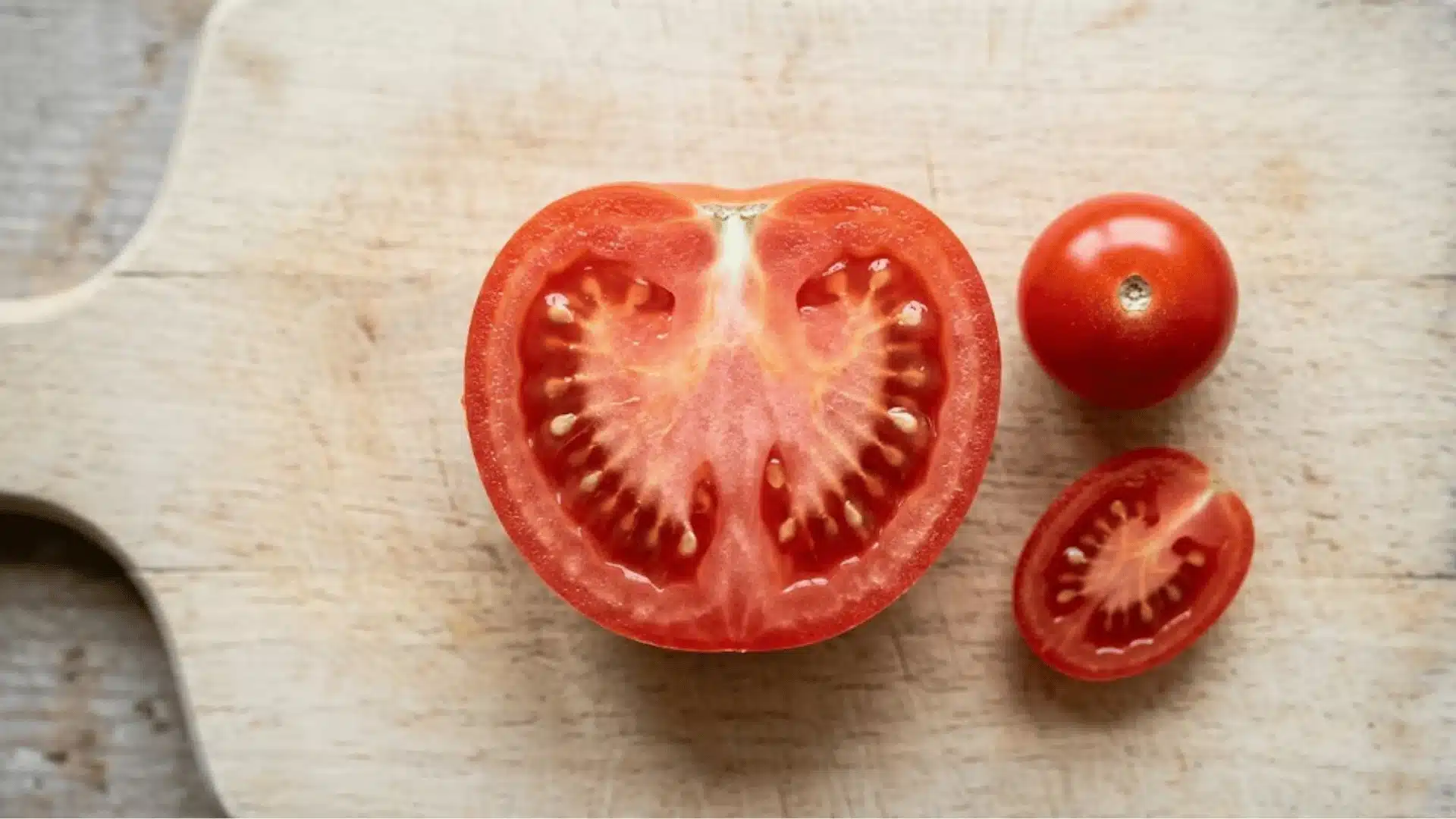
Different tomato varieties can be safe for guinea pigs, but only when they are ripe, fresh, and served in small amounts.
- Cherry tomatoes: Cherry tomatoes are the simplest option because their small size makes portion control easy. Serve one fully ripe tomato, washed well, as an occasional treat.
- Grape tomatoes: Grape tomatoes are also safe when fully ripe and fresh. Their shape differs from that of cherry tomatoes, but one small tomato is still enough.
- Plum tomatoes: Plum tomatoes are safe for guinea pigs when fully ripe, but they are larger, so offer only a small slice occasionally.
- Roma tomatoes: Roma tomatoes have a meatier texture and less juice, making them fine in tiny amounts. Serve one small chunk, fresh and ripe.
- Beefsteak tomatoes: Beefsteak tomatoes are safe when ripe, but their large size means even one small slice can be plenty for a guinea pig.
Avoid canned, cooked, sauced, or pasted tomatoes, especially anything with salt, sugar, preservatives, seasonings, or additives. Guinea pigs need fresh raw food.
What Do Guinea Pig Owners Say About Feeding Tomatoes?
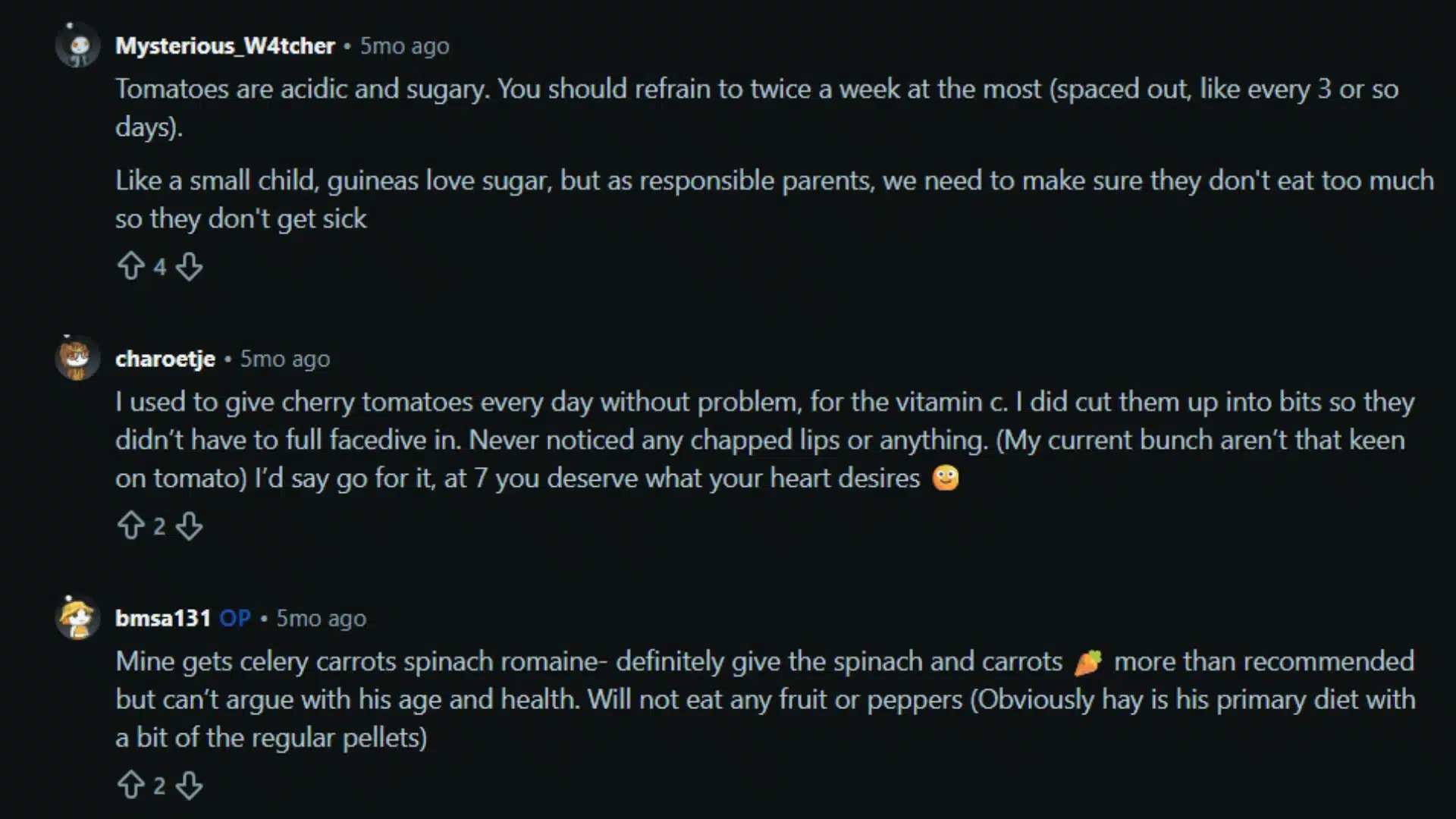
Among guinea pig owners, tomatoes are widely regarded as a favorite treat.
Many owners report that their pets become excited the moment they hear the tomato container or bag being opened, with cherry tomatoes being the clear favorite.
However, one caution comes up repeatedly in community discussions: overfeeding tomatoes can lead to cheilitis, a condition that causes sore, crusty patches around the lips.
Several owners shared experiences of feeding tomatoes too frequently or in large amounts and later needing to remove acidic foods from the diet and consult a veterinarian.
Because guinea pigs respond so enthusiastically to them, many owners also use cherry tomatoes as an occasional training reward.
The general consensus is that tomatoes are safe and enjoyable when fed in moderation, with small cherry-tomato-sized portions offered two to three times per week being the recommended limit.
Best Vitamin C Foods for Guinea Pigs Besides Tomatoes
Tomatoes are a fun treat, but they’re not a great main source of vitamin C. Compared to other vegetables, they’re on the lower end of the vitamin C scale.
For a guinea pig that needs 10 to 20 mg of vitamin C daily, one cherry tomato provides only about 2 mg. That means tomatoes work best when they’re part of a broader fresh-food rotation.
Here are better vitamin C sources to feed alongside tomatoes:
| Food | Approx. Vitamin C per 100g | Notes |
|---|---|---|
| Red bell pepper | 128 mg | The highest common source: a small slice goes a long way |
| Broccoli | 89 mg | Good source; can cause gas in large amounts, so keep portions small |
| Kale | 93 mg | High in C but also high in calcium and oxalates; limit to 2x per week |
| Cilantro | 27 mg | Most piggies love it; a great daily option |
| Ripe tomato | 19 mg | Lower C content; better as a variety treat than a primary source |
The goal is variety. Rotating through a range of vegetables means your guinea pig gets a well-rounded nutrient profile rather than depending on any single food.
The same principle applies to small pets; understanding how to balance treat foods in a small pet’s diet helps you make smarter choices for any cavy or small animal in your home.
When Should You Call a Vet?
Most guinea pigs handle a small piece of ripe tomato without any trouble. But there are situations where a vet call is the right move, and knowing them in advance can save your piggy a lot of discomfort.
Call your vet if you notice any of the following after feeding tomatoes:
- Your guinea pig ate tomato leaves, stems, or vines: Don’t wait for symptoms to appear. Tomatine toxicity can progress quickly in small animals, and early intervention is far more effective than a wait-and-see approach.
- Lethargy or sudden loss of energy: A piggy that was active and is now sitting hunched, unwilling to move, or unusually quiet needs to be seen.
- Diarrhea lasting more than 24 hours: Loose stools after a new food can happen, but persistent diarrhea leads to dehydration fast in guinea pigs.
- Loss of appetite or refusal to drink water: If your guinea pig skips more than one meal or stops drinking, that’s a red flag regardless of the cause.
- Mouth sores, crusty patches, or drooling around the lips: These are signs of cheilitis, which can become painful and infected if left untreated. A vet can confirm the cause and advise on dietary changes.
- Bloating or a visibly distended belly: This can signal gas buildup or a more serious digestive issue and should be evaluated promptly.
- Blood in urine or straining to urinate: While not directly caused by tomatoes, changes in diet can sometimes aggravate existing urinary conditions. If you see this, contact your vet the same day.
In my experience, owners often wait too long, hoping symptoms will pass on their own. With guinea pigs, acting early almost always leads to a better outcome.
When in doubt, a quick call to your vet’s office costs nothing and gives you real peace of mind.
Conclusion
Guinea pigs can have tomatoes, but the answer comes down to balance and care.
Ripe tomato flesh can be a refreshing treat with helpful nutrients, but it should never become a daily food or replace hay, pellets, and leafy greens.
The safest approach is simple: serve small pieces, remove stems and leaves, avoid unripe parts, and watch how each guinea pig responds.
Now that the question: Can guinea pigs have tomatoes is clear, use that knowledge to feed with confidence.
If your piggy has given you that look of pure joy over a cherry tomato, it’s a small pleasure worth getting right.
Have a tomato feeding tip or question? Drop a comment below and tell us how your guinea pig reacted to their first taste; we’d love to hear it.
Frequently Asked Questions
Can Baby Guinea Pigs Eat Tomatoes?
Wait until they’re over four months old. Start with hay, pellets, and leafy greens; later, offer a tiny piece and monitor their reaction.
Why Does My Guinea Pig Love Tomatoes So Much?
Tomatoes are naturally sweet, juicy, and aromatic, making them highly appealing to many guinea pigs. Their strong scent and high water content often make them a favorite treat.
How Long Can I Store Tomatoes for My Guinea Pig?
Use only firm, fresh tomatoes without soft spots. Serve within 1-2 days. Discard any that show mold or wrinkles to avoid bacteria.