


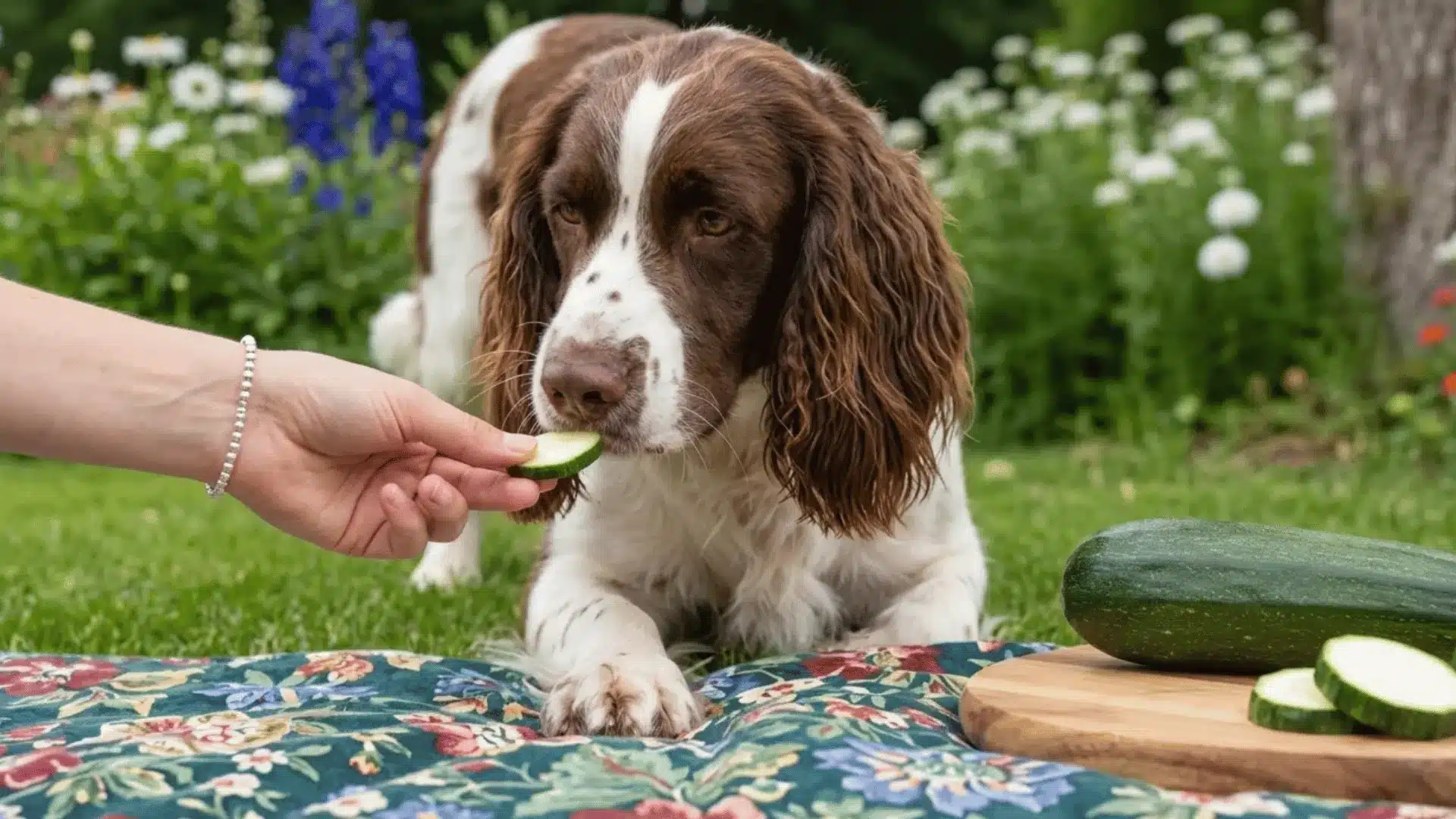
A simple slice of zucchini can start a bigger question at the dinner table.
Before sharing it with a wagging tail beside you, it is fair to wonder: Can dogs eat zucchini without facing stomach trouble or hidden risks?
Many pet parents want to add fresh foods to their dog’s routine, but not every human food fits safely into a canine diet.
As a certified pet nutritionist, I have spent years helping dog owners make safer feeding choices with confidence.
This blog post breaks down what pet parents should know about zucchini, including its possible benefits, serving tips, portion concerns, and the mistakes that can turn a healthy-looking snack into a problem.
Can Dogs Eat Zucchini?
Yes, dogs can eat zucchini, and it is generally safe for most healthy dogs when served the right way.
Plain zucchini is the best choice because seasonings, butter, oil, garlic, onion, or salty toppings can upset a dog’s stomach or cause more serious issues.
You can offer zucchini raw or cooked, but it should always be washed and cut into small pieces before serving.
Start with a small amount, especially if your dog has never tried it before, because too much fiber may lead to gas or loose stool.
Zucchini can be good for dogs as a light snack, but it is not something they need every day. A balanced dog food should still provide the main nutrition your dog depends on.
I consider zucchini a smart snack swap for many dogs, not a cure or complete food for their daily diet.
For more ideas on turning fresh vegetables into everyday dog snacks, the safe vegetables for dogs guide has a full breakdown of what works and what to skip.
Nutritional Benefits of Zucchini for Dogs

Zucchini can add light nutrition to a dog’s treat routine, especially when served plain, in small portions, and alongside balanced daily meals for steady wellness.
1. Low-Calorie Snack Option
Zucchini is naturally low in calories, which makes it a helpful treat for dogs that gain weight easily.
Many biscuits and packaged snacks can add extra calories quickly, especially when given several times a day.
Small pieces of plain zucchini can satisfy a dog’s urge to snack without adding much to the daily calorie count.
It should still be given in moderation, but it can be a better choice than heavy treats for dogs needing lighter rewards between meals or training.
2. Gentle Fiber Support
Zucchini contains fiber, which may help support regular digestion in some dogs. Fiber can add gentle bulk to the stool and may help meals feel more satisfying.
This can be useful when a dog needs a light snack that still feels filling. However, too much zucchini can have the opposite effect.
A sudden large serving may lead to gas, bloating, or loose stool. Start with a small amount and watch how your dog’s stomach responds before offering it again.
3. Hydration Support
Zucchini has a high water content, so it can add a little extra moisture to your dog’s snack routine. This does not replace fresh drinking water, but it may be useful for dogs that enjoy juicy, fresh foods.
Small pieces of zucchini can also be mixed into regular meals to make the bowl feel more interesting.
For picky dogs, soft-cooked zucchini may be easier to enjoy. Always keep it plain and avoid sauces, salt, butter, or oil.
4. Vitamins and Minerals
Zucchini offers small amounts of helpful nutrients, including vitamin A, vitamin C, vitamin B6, potassium, magnesium, and natural antioxidants.
These nutrients support normal body functions, but zucchini should not be treated as a main source of nutrition. A complete dog food should still handle your dog’s daily needs.
Think of zucchini as a simple snack that can add variety and light nutrition to the diet. Plain, fresh zucchini is the best option because added ingredients can remove its health-friendly value.
How Much Zucchini Can Dogs Eat?
Zucchini should stay in the treat category. All treats combined, including any vegetables like zucchini, should make up no more than 10% of your dog’s daily calorie intake. The remaining 90% should come from a complete and balanced dog food.
| Dog size | Daily serving |
|---|---|
| Small (under 20 lbs) | 1-2 teaspoons |
| Medium (20-50 lbs) | 1-2 tablespoons |
| Large (50+ lbs) | 2-4 tablespoons |
Introduce it gradually over a few days rather than offering a full serving right away. Any new food can cause stomach upset if added too fast, and going slow lets you catch any sensitivity early.
You can find more ideas on pairing vegetables like zucchini with other fiber foods for dogs to round out a fresh-food routine.
Risks of Feeding Zucchini to Dogs
Zucchini is usually safe for dogs, but portion size, texture, freshness, and feeding habits can create problems if pet parents are not careful.
1. Digestive Upset
Too much zucchini can upset a dog’s stomach, especially if it is added too quickly. Since zucchini contains fiber and water, a large serving may cause gas, bloating, soft stool, or diarrhea.
Some dogs handle fresh foods well, while others react after only a small amount. This is why slow introduction matters.
Start with one or two small pieces and watch your dog’s stool, appetite, and comfort. If stomach trouble appears, stop feeding zucchini and return to the regular diet.
2. Choking Risk
Zucchini can become a choking risk when it is served in large chunks or thick slices. Small dogs, puppies, senior dogs, and fast eaters are more likely to swallow food without chewing properly.
Raw zucchini can also feel firmer than cooked zucchini, making size even more important. Cut it into small, bite-sized pieces before serving.
For dogs with weak teeth or chewing problems, lightly cooked zucchini may be easier to manage. Always supervise your dog when offering any new fresh snack.
3. Too Much Fiber
Fiber can support normal digestion, but too much at once may cause problems. Zucchini has gentle fiber, yet a large portion can still lead to loose stool, extra gas, or stomach discomfort.
This is more likely when a dog is not used to vegetables. Fiber works best when it fits into the overall diet, not when it suddenly replaces regular food.
Keep zucchini as a small snack or topper. If your dog already eats a high-fiber diet, ask a vet before adding more.
4. Bitter or Spoiled Zucchini
Fresh zucchini should smell clean and taste mild. If it tastes bitter, looks slimy, feels mushy, or has mold, it should not be given to dogs.
Spoiled vegetables can irritate the stomach and may lead to vomiting or diarrhea. Bitter zucchini can also be unpleasant and may signal that the vegetable is not suitable for eating.
Always check the texture, smell, and freshness before serving. Wash it well, remove damaged parts, and throw it away if anything seems off.
5. Nutritional Imbalance
Zucchini should never replace a complete dog food. It can be a light snack, but it does not provide all the protein, fat, calories, and nutrients a dog needs each day.
Feeding too much zucchini may leave less room for balanced meals, which can affect long-term nutrition.
This matters most for puppies, active dogs, seniors, and dogs on planned diets. Keep zucchini as an extra, not a main food. A balanced diet should always stay at the center of your dog’s routine.
How to Prepare Zucchini for Dogs?

Preparing zucchini for dogs is simple, but clean handling, small pieces, plain serving, and careful storage help keep this vegetable safer for most family dogs.
- Wash and trim: Rinse the zucchini well under running water to remove dirt and possible pesticide residue. Cut off the stem because it is tough and harder for dogs to digest.
- Cut into small pieces: Slice zucchini into small bite-sized pieces before serving. This helps lower the choking risk for all dogs, including large breeds and fast eaters.
- Serve it plain: Do not add salt, butter, oil, garlic, onion, sauces, or spices. Plain zucchini is the safest and gentlest option for dogs.
- Try it frozen: Small frozen zucchini pieces make a refreshing snack during warmer weather. Freeze plain bite-sized pieces for a couple of hours and offer them as a cool treat, no prep beyond that
- Start slowly: Offer a small amount the first time, then wait 24 hours. Watch for gas, loose stool, vomiting, or any change in appetite.
- Store leftovers safely: Keep extra zucchini in an airtight container in the fridge. Use it within 3 days and throw it away if it smells odd or looks spoiled.
Can Dogs Eat Zucchini Flowers and Leaves?
Yes, the entire zucchini plant, including the flowers, leaves, and stem, is non-toxic to dogs. The flowers are edible and safe in the same way the vegetable itself is.
That said, if you grow zucchini in a home garden, pay attention to what else is planted nearby.
Some common garden vegetables are toxic to dogs, including onions, garlic, and certain nightshades.
A dog that grazes freely through a mixed vegetable patch could eat something harmful even if the zucchini itself is fine.
Serve zucchini flowers plain and in small amounts, just as you would the vegetable. Fried or batter-coated zucchini flowers, popular in cooking, are not suitable for dogs.
When Should Dogs Avoid Zucchini?
Zucchini is safe for many dogs, but some health, diet, and chewing concerns make it better to wait before adding it to meals.
- Stomach trouble: Skip zucchini if your dog currently has diarrhea, vomiting, gas, or belly discomfort. Adding a new food during stomach upset may make symptoms worse.
- Elimination diet: Avoid zucchini if your dog is on a strict food trial to find allergies or sensitivities. New foods can confuse the results.
- Medical diet needs: Dogs with pancreatitis, chronic digestive issues, or a vet-planned low-fiber diet should only eat zucchini after professional guidance.
- Past bad reaction: Do not offer zucchini again if your dog had vomiting, diarrhea, itching, or discomfort after eating it before. Ask your vet first.
- Chewing or swallowing issues: Dogs that struggle with solid foods may choke on raw or firm zucchini pieces. Wait until your vet confirms a safer texture or feeding method.
If your dog has a chronic medical condition, takes prescription medication, or follows a veterinarian-directed diet, discuss dietary changes before adding new foods such as zucchini.
Conclusion
Zucchini can be a useful treat when it is served with care, but it should stay as a small extra in your dog’s routine.
For pet owners wondering about healthy snacks, the answer to can dogs eat zucchini comes down to preparation. Use fresh zucchini, keep it plain, cut it into small pieces, and introduce it slowly.
Dogs with stomach issues, chewing problems, or medical diets need extra caution, so vet advice matters before adding anything new. The real goal is balance.
Your dog’s main food should still provide the daily nutrition, while zucchini can work as a lighter reward or meal topper.
Have you tried giving zucchini to your dog? Share your experience in the comment section below.
Frequently Asked Questions
Is Raw or Cooked Zucchini Better for Dogs?
Both are safe, but cooked plain zucchini is generally easier to digest, especially for dogs with sensitive stomachs or older dogs
Can Dogs Eat Zucchini Bread?
No. Zucchini bread typically contains sugar, butter, oil, and spices, and some recipes include chocolate, raisins, or xylitol, all of which are harmful to dogs
Can Dogs Eat Yellow Zucchini?
Yes. Yellow zucchini is safe for dogs under the same rules as green zucchini: plain, washed, cut into small pieces, and served in moderation.
Can Puppies Eat Zucchini?
No, puppies under six weeks old should not eat solid food of any kind, including zucchini, because their digestive systems are still developing.