Your bunny does not need words to ask for a strawberry. One twitch of the nose, one little hop closer, and suddenly that bright red berry feels like a treat worth sharing.
But rabbits have delicate stomachs, and not every cute begging moment should end with food from your bowl.
That is where many rabbit owners pause. Strawberries look fresh, natural, and harmless, but the way they are served matters more than most people think.
A tiny piece can be fine for some bunnies, while too much can cause trouble fast.
Before giving in to those hopeful eyes, it helps to know what part of the strawberry is safe, what should be limited, and when this sweet snack is not worth the risk.
Nutrition Breakdown of Strawberry
Before feeding strawberries to a rabbit, it helps to see what this fruit offers in a normal nutritional breakdown. Strawberries are mostly water, with small amounts of fiber, carbohydrates, and natural plant compounds.
| Nutrient | Amount per 100 g |
|---|---|
| Calories | 32 |
| Water | 91 g |
| Carbohydrates | 7.7 g |
| Fiber | 2 g |
| Protein | 0.7 g |
| Fat | 0.3 g |
| Key nutrients | Vitamin C, folate, manganese, potassium |
| Plant compounds | Anthocyanins, Quercetin, Ellagic acid |
For rabbits, this nutrition profile makes strawberries more of a light treat than a core food.
They can add moisture, flavor, and variety to snack time, but hay, leafy greens, and clean water should stay at the center of a rabbit’s daily diet.
Can Bunnies Eat Strawberries?
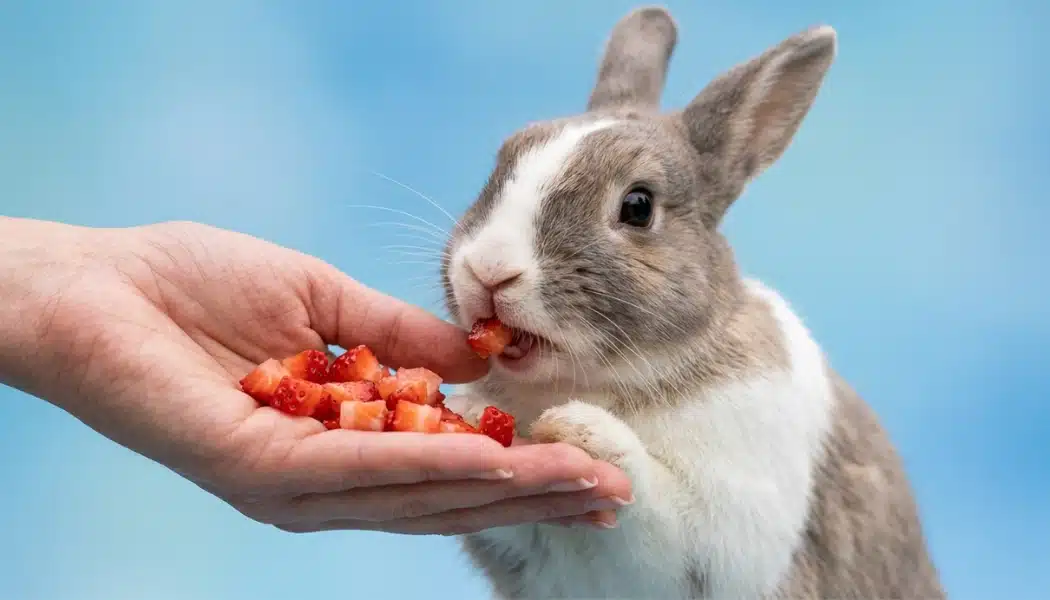
Yes, bunnies can eat strawberries. They are non-toxic to rabbits and can be offered as a small treat, not a daily food.
Many rabbits like strawberries because they are sweet, soft, and fragrant, but their sugar content is the main concern.
A rabbit’s digestive system depends on steady fiber from hay, fresh greens, and clean water. Too much fruit can disturb that balance, reduce appetite for hay, or cause soft stool.
Start with a tiny piece, watch your bunny’s reaction, and avoid giving strawberries too often. The safest rule is simple: strawberries should stay in the treat category.
When given in the right amount, they can add variety and make snack time more enjoyable without replacing the foods rabbits need most, such as hay, leafy greens, and proper daily pellets.
Are Strawberries Good for Rabbits?
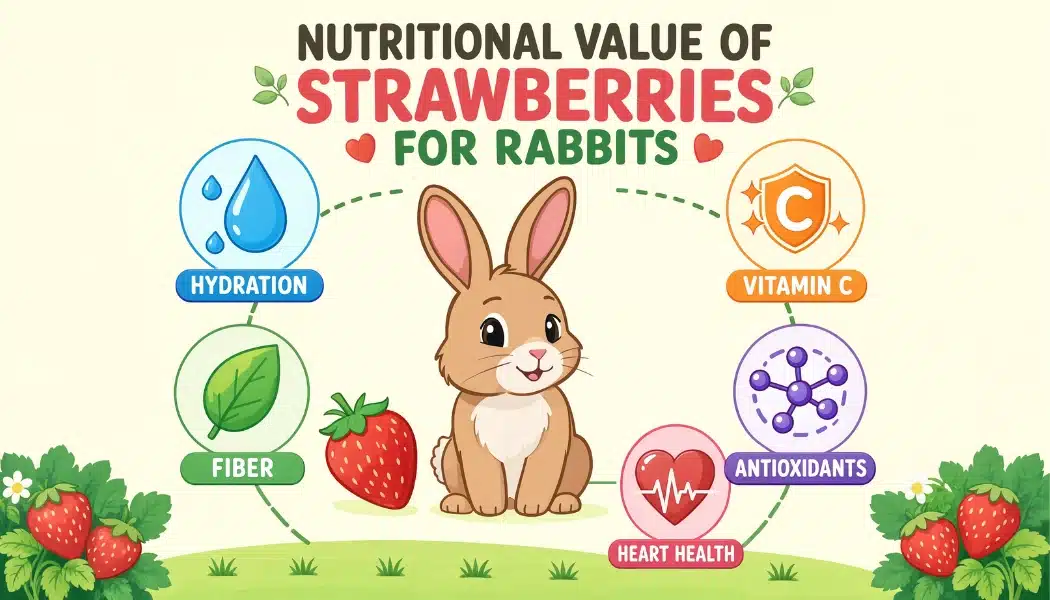
Strawberries offer nutrients, but rabbit portions are too small to make them a main health food.
Research published in PubMed (NIH) confirms that strawberries rank among the highest dietary sources of polyphenols and antioxidant capacity, including ellagic acid, anthocyanins, and quercetin.
These compounds may support cells in small amounts, but they do not replace a rabbit’s core diet.
As said before, strawberries should remain occasional treats. Hay, leafy greens, pellets, and clean water should stay the daily foundation for digestion, dental health, and gut balance.
Serving size still matters because excess sugar can quickly disrupt digestion.
Can Strawberries Upset a Rabbit’s Stomach?
Note: This section covers digestive health information. If your rabbit shows signs of GI distress, consult a rabbit-savvy veterinarian before making diet changes.
Rabbits have sensitive digestive systems, and too much sugar can disrupt gut bacteria. Even natural sugar from strawberries can feed harmful bacteria, slow digestion, and raise the risk of GI stasis.
This condition can become dangerous because a rabbit’s gut must keep moving for normal digestion and waste output. What wild rabbits actually eat is worth knowing before building a treat routine.
Too many sweet treats may also cause:
- Soft stool or diarrhea: Excess sugar can lead to mushy stools and an imbalance in the gut.
- Obesity: Small animals gain weight quickly from extra calories.
- Dental problems: Sugar can affect teeth and make eating harder.
- Less hay intake: Rabbits may choose sweet foods over hay, which supports digestion and tooth wear.
A small piece of strawberry once or twice a week is very different from a daily serving. Portion control helps keep treats safe and protects gut health.
Can Baby Rabbits Eat Strawberries?
Baby rabbits, also called kits, should not eat strawberries in their first weeks because their digestive systems are still developing and need mother’s milk first, followed by hay, pellets, and greens introduced slowly.
A complete guide to feeding and caring for kits covers the full nutritional timeline from birth through the weaning stage, including what to watch for when introducing solid foods.
Use this age guide:
| Rabbit Age | Strawberry Feeding |
|---|---|
| 0 to 3 weeks | Mother’s milk only. No solid food. |
| 3 to 7 weeks | Kits may nibble hay and pellets while weaning. No fruit. |
| 7 to 12 weeks | Hay, pellets, and limited greens can be introduced gradually. Avoid strawberries. |
| 12 weeks and older | A tiny strawberry slice may be tested if the rabbit is healthy. |
Start with a piece no larger than a thumbnail and wait 24 hours. Avoid strawberry leaves and tops for young kits unless a vet approves.
Can Rabbits Eat Strawberry Tops?
Yes, strawberry tops are safe for rabbits and are often a better option than the red fruit. Key benefits include:
- Lower sugar content: The calyx contains much less sugar than the fruit, reducing the risk of digestive upset and gut imbalance.
- Higher fiber: The fibrous leafy texture supports gut motility, chewing, and proper digestion.
- Antioxidants: Strawberry tops contain polyphenols like quercetin and ellagic acid that help support the immune system and reduce inflammation.
- Frequent feeding: Because of lower sugar, strawberry tops can be included more often in a rabbit’s regular leafy green rotation.
- Preparation safety: Always wash tops thoroughly to remove pesticide residue, and avoid non-organic tops if possible.
Feeding strawberry tops instead of the fruit allows rabbits to enjoy a safe, nutritious treat while minimizing sugar intake and digestive stress.
Can Rabbits Eat Strawberry Leaves and Seeds?
Strawberry leaves are safe and fibrous, helping rabbits maintain healthy teeth while providing vitamins and minerals. Strawberry seeds are tiny, non-toxic, and pass through the digestive tract without causing any issues.
Can Rabbits Eat Strawberry Leaves?
Strawberry leaves are safe and healthy for rabbits. They are fibrous, which helps maintain proper tooth grinding.
Leaves provide vitamins A, C, and K, plus minerals like calcium, iron, potassium, and magnesium. They also contain polyphenols with anti-inflammatory properties.
Homegrown or wild leaves can be fed as part of a leafy green mix, provided they are free from pesticides, herbicides, or chemical fertilizers.
Always wash leaves before offering them to your rabbit.
Are Strawberry Seeds Safe for Rabbits?
Strawberry seeds are safe for rabbits. The tiny seeds on the fruit pass through the digestive tract without causing choking or gut issues.
They are non-toxic and do not need to be removed before feeding. Rabbits can safely eat the seeds along with the fruit.
The seeds do not interfere with digestion, nutrient absorption, or gut health, making them completely harmless. This makes strawberry seeds a convenient and safe addition to occasional rabbit treats.
How Much Strawberry Can a Rabbit Eat?
Control fruit portions carefully, since larger rabbits may need slightly bigger servings, but the frequency rule stays the same for all sizes.
Rotating strawberries with other low-sugar vegetables helps prevent sugar buildup throughout the week.
| Rabbit’s Body Weight | Maximum Strawberry Serving | Frequency |
|---|---|---|
| Under 2 lbs (dwarf breeds) | ½ teaspoon | Once a week |
| 2–4 lbs | 1 teaspoon | 1–2 times per week |
| 4–6 lbs | 1–2 teaspoons | 1–2 times per week |
| 6–9 lbs (medium breeds) | 2 teaspoons | 1–2 times per week |
| 9+ lbs (giant breeds) | 1 tablespoon max | 1–2 times per week |
When offering strawberries to your rabbit, follow a few key rules. Never give strawberries daily, regardless of the rabbit’s size.
Rotate fruit treats by alternating strawberries with blueberries, raspberries, or apple slices to prevent overconsuming sugar.
Count strawberry tops separately if providing both the fruit and tops; reduce the fruit portion accordingly.
Always serve fresh strawberries, avoiding dried, canned, or frozen versions, as these can contain added sugar or preservatives that are harmful to rabbits.
How to Feed Strawberries to Your Rabbit Safely
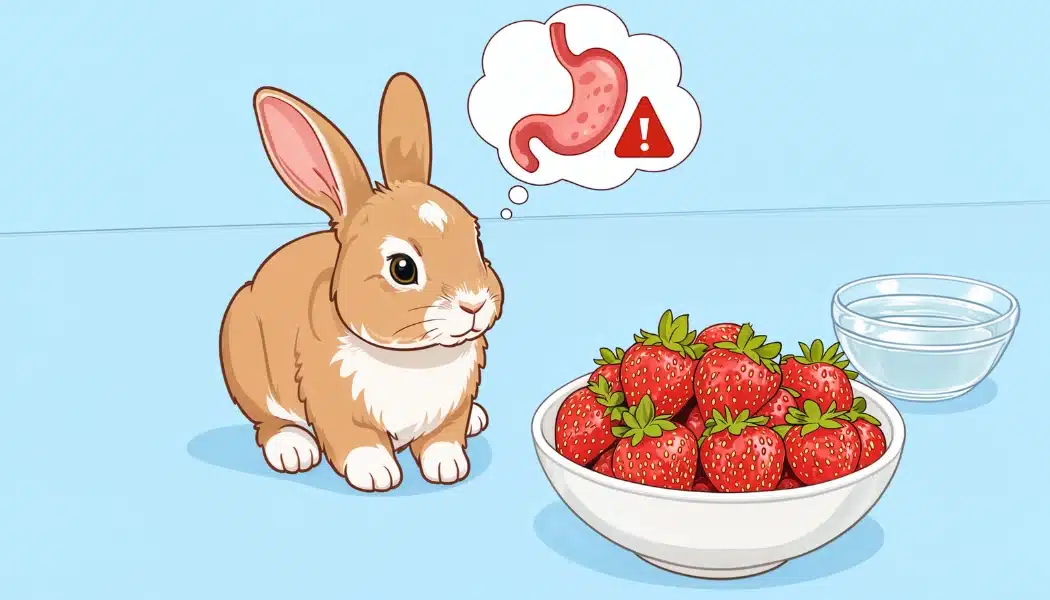
Even with careful feeding, rabbits can overconsume strawberries if left unsupervised. Watch for these warning signs:
- Soft or watery droppings: The earliest indicator of digestive upset caused by excess sugar.
- Reduced appetite for hay or pellets: Filling up on sweet treats may lead rabbits to skip essential fiber-rich foods.
- Lethargy or hunched posture: Signs of abdominal discomfort or early stages of GI stasis.
- Bloating or hard abdomen: Press gently; a firm or distended belly requires immediate veterinary attention.
- No droppings at all: A critical emergency. GI stasis may be occurring, which can become life-threatening quickly.
If a rabbit consumes too many strawberries and shows any serious symptoms, contact a rabbit-savvy veterinarian immediately, as GI stasis can develop rapidly and become fatal if untreated.
Proper portion control and observation are essential to keep rabbits healthy.
Common Myths About Bunnies and Strawberries
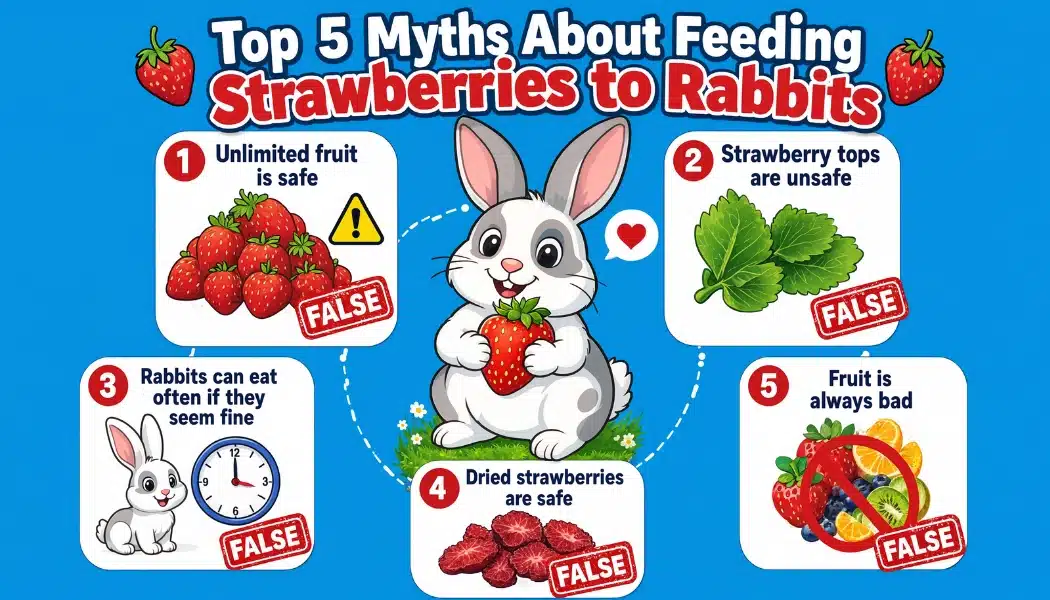
Rabbits’ nutrition is full of misconceptions. Here are the most frequent myths about feeding strawberries, explained and corrected.
Myth 1: Rabbits Can Eat Unlimited Fruit Because It Is Natural
False. Wild rabbits rarely encounter the large, cultivated, high-sugar strawberries found in grocery stores. In nature, they might nibble on small wild berries occasionally, but do not feast on bowls of fruit.
Domesticated strawberries have been selectively bred for sweetness far beyond what any wild rabbit would encounter, making unlimited access unsafe for domestic rabbits, even if it seems natural.
Myth 2: Strawberry Tops are Unsafe for Rabbits
False. Strawberries belong to the rose family (Rosaceae), not the nightshade family. Strawberry tops are completely safe for rabbits.
The nightshade misconception is common online, but there is no toxic risk from feeding the leafy calyx of a strawberry, and it can be safely included in their diet in moderation.
Myth 3: A Rabbit Can Eat Strawberries Often If It Seems Fine
Not true. Rabbits can hide symptoms of digestive upset. A rabbit that appears fine after eating strawberries may still experience silent gut disruption.
Short-term tolerance does not mean long-term safety, and repeated overfeeding can lead to digestive imbalance, obesity, and other health issues over time.
Myth 4: Dried Strawberries are Safe for Rabbits
False. Dried strawberries have a higher sugar concentration because the water is removed, making a single dried piece equivalent to several fresh berries.
This high sugar content can quickly disrupt a rabbit’s gut balance and contribute to obesity and other health risks. They should be avoided entirely.
Myth 5: Fruit is Always Bad for Rabbits
Also false. Fresh fruit in small amounts can provide nutritional variety, mental enrichment, and opportunities for bonding. The key is moderation and frequency.
Fruit like strawberries is a safe occasional treat when portioned properly and does not replace a rabbit’s essential diet of hay, leafy greens, and pellets.
Conclusion
Yes, bunnies can safely enjoy strawberries, but only as an occasional treat. Portion control, gradual introduction, and careful observation are essential.
Remember, the green leafy tops are often the healthiest part of the strawberry, offering fiber and nutrients with minimal sugar.
Always monitor your rabbit for any digestive changes after new foods and consult a rabbit-savvy vet if anything seems off.
Want to see your rabbit’s eyes light up? Try offering a small piece of strawberry top today and watch their reaction.
Which part do they prefer: the juicy red fruit or the leafy green crown? Share your experiences and favorite treat stories in the comments below, and join the conversation with fellow rabbit lovers!
Frequently Asked Questions
Can Strawberries Cause Dental Problems in Rabbits?
Strawberries contain natural sugar and mild acidity, which, if overfed, can contribute to dental issues over time. Rabbits’ teeth grow continuously, and sugary fruits can accelerate enamel wear or encourage plaque buildup.
Do Strawberries Help with Rabbit Hydration or Urinary Health?
Strawberries are about 91% water, so small portions can contribute slightly to a rabbit’s hydration. While they can add moisture to the diet, they should not replace clean drinking water.
Limited strawberry servings are unlikely to prevent urinary issues such as bladder sludge, but maintaining proper hydration, a high-fiber diet, and fresh water are essential for urinary tract health.
Can Rabbits Eat White Strawberries?
Yes. White strawberries, also called pineberries or white alpine strawberries, are safe for rabbits.
Treat them the same as red strawberries: offer in small portions, introduce gradually, and monitor for any digestive issues. Stick to recommended portion sizes to avoid sugar-related problems.
Can Rabbits Eat the Strawberry Plant Itself?
Yes. The leaves, stems, and calyx of the strawberry plant are all non-toxic to rabbits.
If your rabbit nibbles on untreated strawberry plants in a garden, there is no cause for concern as long as the plants have not been treated with pesticides or chemical fertilizers.