

Seeing red in your dog’s poop can stop you in your tracks. I know that the first look can make your mind jump to the worst case.
Blood in a dog’s stool can result from mild gut irritation, but it can also indicate parasites, infection, toxins, ulcers, or a serious digestive issue. The color, amount, texture, and your dog’s behavior all matter.
A tiny red streak once is not the same as black stool, repeated bloody diarrhea, vomiting, weakness, or pale gums.
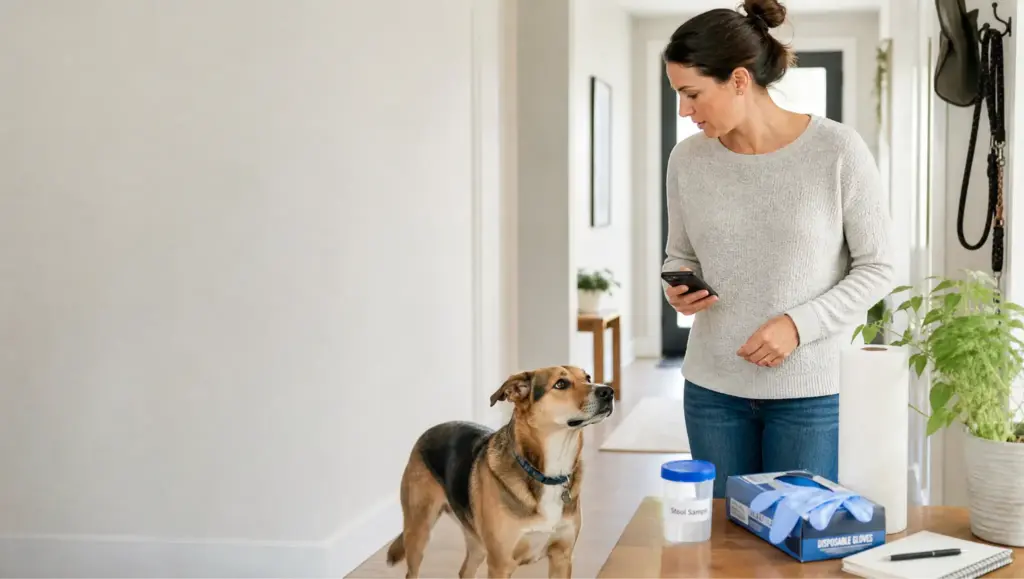
Start by checking your dog, taking a photo of the stool, and calling your vet for clear advice. Fast action can help you avoid guessing when your dog needs care.
First Steps When You See Blood in Your Dog’s Poop
Before you focus only on the stool, look at your dog’s overall condition. The poop matters, but your dog’s behavior often tells you how urgent the moment is. Check energy, appetite, vomiting, belly pain, gum color, and how many times blood has appeared.
| What you see | What it may suggest | What to do |
|---|---|---|
| One small red streak | Mild lower gut or rectal irritation | Call your vet for advice |
| Bright red blood with soft stool | Colon irritation, parasites, diet upset, or infection | Book a vet check |
| Jelly-like mucus with blood | Lower bowel inflammation or colitis | Call your vet sooner if repeated |
| Black, sticky, tar-like stool | Digested blood from higher in the gut | Seek urgent vet care |
| Bloody diarrhea with vomiting or weakness | Serious illness, dehydration, toxin, or infection risk | Emergency vet now |
Merck Veterinary Manual says acute hemorrhagic diarrhea syndrome in dogs can cause sudden vomiting and diarrhea, and IV fluid therapy is often the main treatment.
If your dog is a puppy, senior, very small, already sick, or unvaccinated, act faster because dehydration and weakness can become serious more quickly.
Why is My Dog Pooping Blood?
If you are asking, “why is my dog pooping blood,” several problems can cause it. Some are mild, while others need fast care.
Common causes include sudden food change, eating trash or spoiled food, bones, sticks, toys, rich table scraps, parasites, stress-related colitis, viral or bacterial infection, anal gland problems, rectal strain, medication reaction, rat poison, toxins, ulcers, foreign object blockage, inflammatory bowel disease, tumors, or cancer.
Puppies with bloody diarrhea need extra caution. The American Veterinary Medical Association says canine parvovirus is highly contagious and attacks white blood cells and the digestive tract.
This is why the same symptom can mean very different things. Your vet will look at the full pattern, not just the red color.
What to Check and Do Right Away
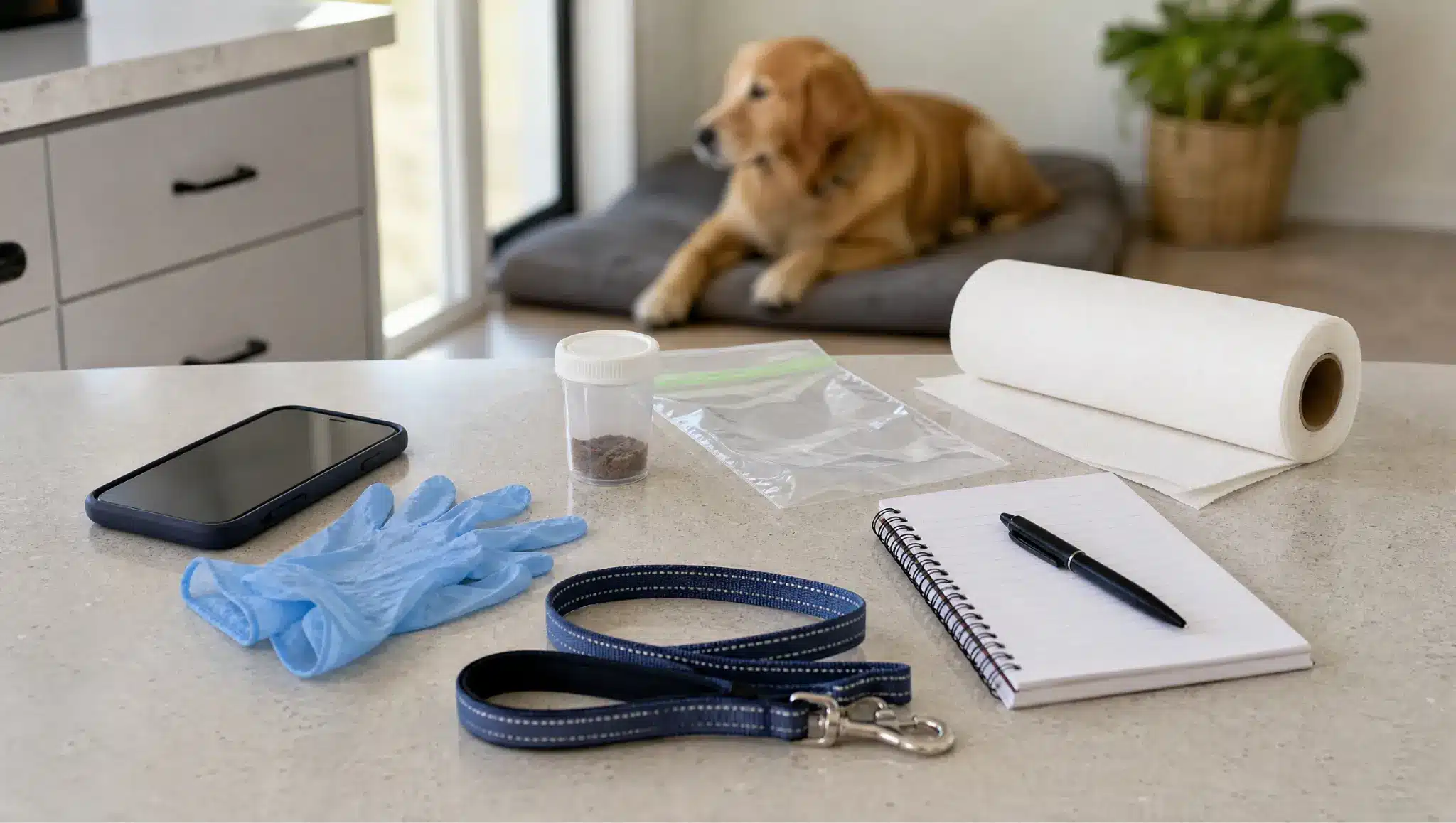
Start with a quick check of your dog, then look at the stool. These details help you explain the problem clearly and help your vet decide how urgent the situation is.
Try to stay calm as you check each point. You are not trying to diagnose the cause at home. You are collecting the signs that matter most.
- Check your dog’s behavior: Look for vomiting, low energy, pain, shaking, poor appetite, drooling, fever, weakness, or belly discomfort.
- Look at the gum color: Pale or white gums can also be a sign of anemia in dogs, especially if accompanied by weakness, tiredness, or rapid breathing.
- Take a stool photo: Take a clear picture before cleaning it up. This can help your vet see the color, texture, and amount of blood.
- Notice the blood color: Bright red blood often looks fresh and may appear as streaks, drops, or red mucus. Black, sticky, tar-like stool can be more serious.
- Check for mucus or watery stool: Jelly-like stool usually means mucus is mixed in, which can happen when the lower bowel is irritated or inflamed.
- Call your vet: Share your dog’s age, weight, symptoms, stool details, any changes in diet, vaccine status, and any possible exposure to trash, bones, toxins, or medications.
- Save a sample if you can: Use a clean bag or container, but do not delay emergency care just to collect one.
These steps give your vet a clearer picture of what is happening. If your dog seems weak, keeps bleeding, vomits, has pale gums, or the stool looks black and sticky, skip home watching and seek urgent care.
When to Watch Closely and When to Get Emergency Care
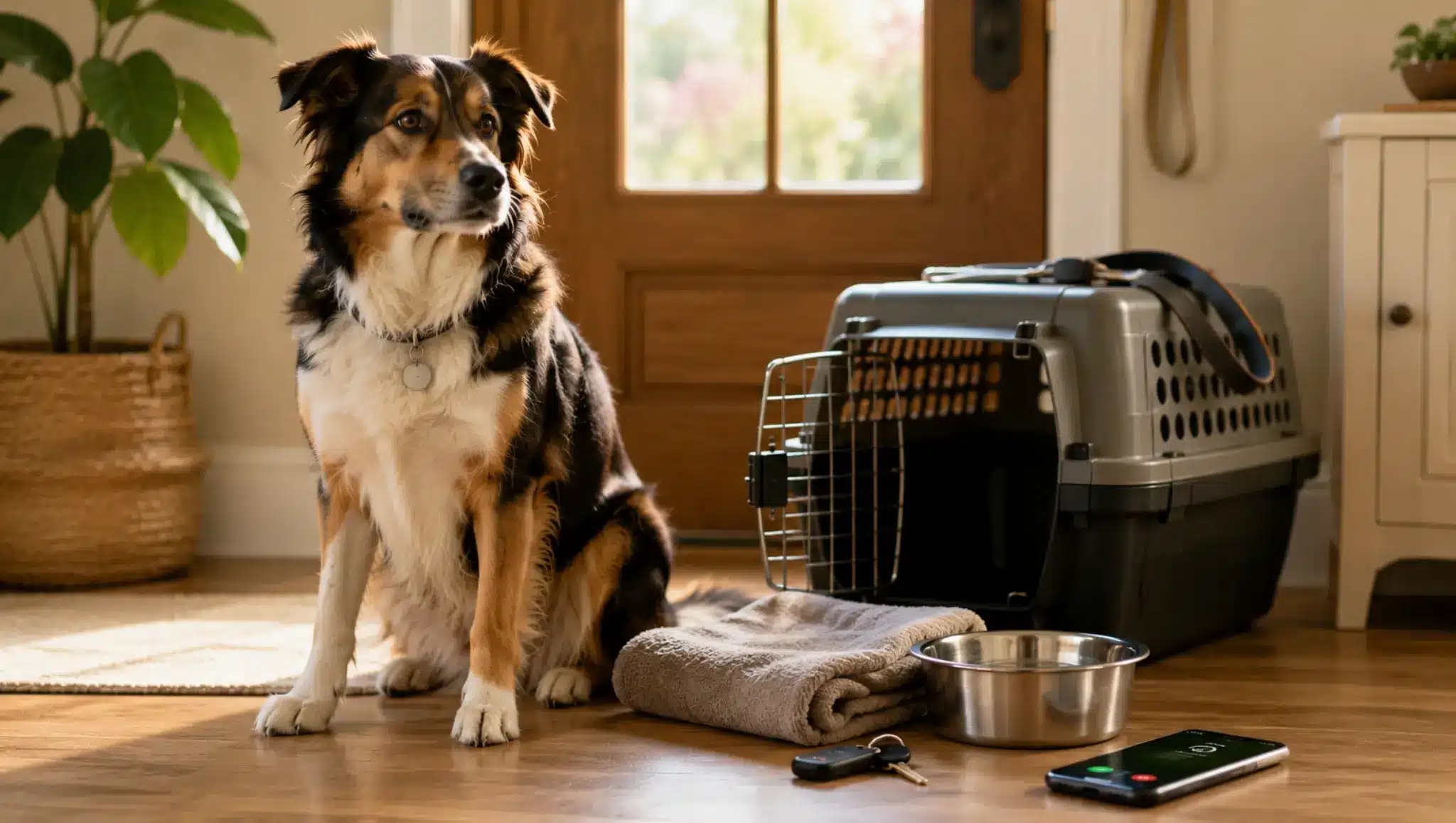
Some dogs seem normal after the first episode of bloody stool, but the situation can change quickly. If your vet recommends monitoring your dog at home, pay close attention to how the symptoms develop over the next several hours.
Watch for these changes:
- Bleeding increases: A small streak becomes repeated bleeding or a larger amount of blood.
- Stool gets worse: Diarrhea develops, the stool turns black or tar-like, or more mucus appears.
- New vomiting starts: Vomiting, especially with blood, makes the situation more urgent.
- Energy drops: Weakness, collapse, shaking, or unusual tiredness develops. In rare cases, these signs can also occur with internal bleeding in dogs, which requires immediate veterinary attention.
- Changes in appetite or water intake: Refusing food or water after the first episode can be a warning sign.
- New symptoms appear: Pale gums, fast breathing, severe belly pain, repeated straining, or dehydration should never be ignored.
Go to an emergency vet if your dog has black or tar-like stool, repeated bloody diarrhea, heavy bleeding, vomiting, pale gums, collapse, severe weakness, belly pain, fast breathing, dehydration, or possible exposure to toxins, bones, toys, or other sharp objects.
Puppies, senior dogs, and unvaccinated dogs should be seen sooner because they can become seriously ill more quickly.
If your dog’s symptoms worsen or new warning signs appear, stop monitoring at home and seek veterinary care immediately.
What Not to Give at Home
Home fixes can sound tempting, but bloody stool is not the time to test random medicine. Some common human drugs can hurt dogs.
Do not give ibuprofen, naproxen, or aspirin unless prescribed; leftover antibiotics; human anti-diarrhea medicine; essential oils; random supplements; or old medicine from another pet.
The U.S. Food and Drug Administration warns pet owners not to give pain medicine to pets unless a veterinarian says it is safe.
Do not induce vomiting unless a vet or poison control expert tells you to do it. ASPCA says inducing vomiting at home can be dangerous without veterinary guidance.
Your vet may suggest a bland diet, probiotics, rest, or increased access to water in mild cases. Let them decide what is safe for your dog.
What to Say and Bring to the Vet
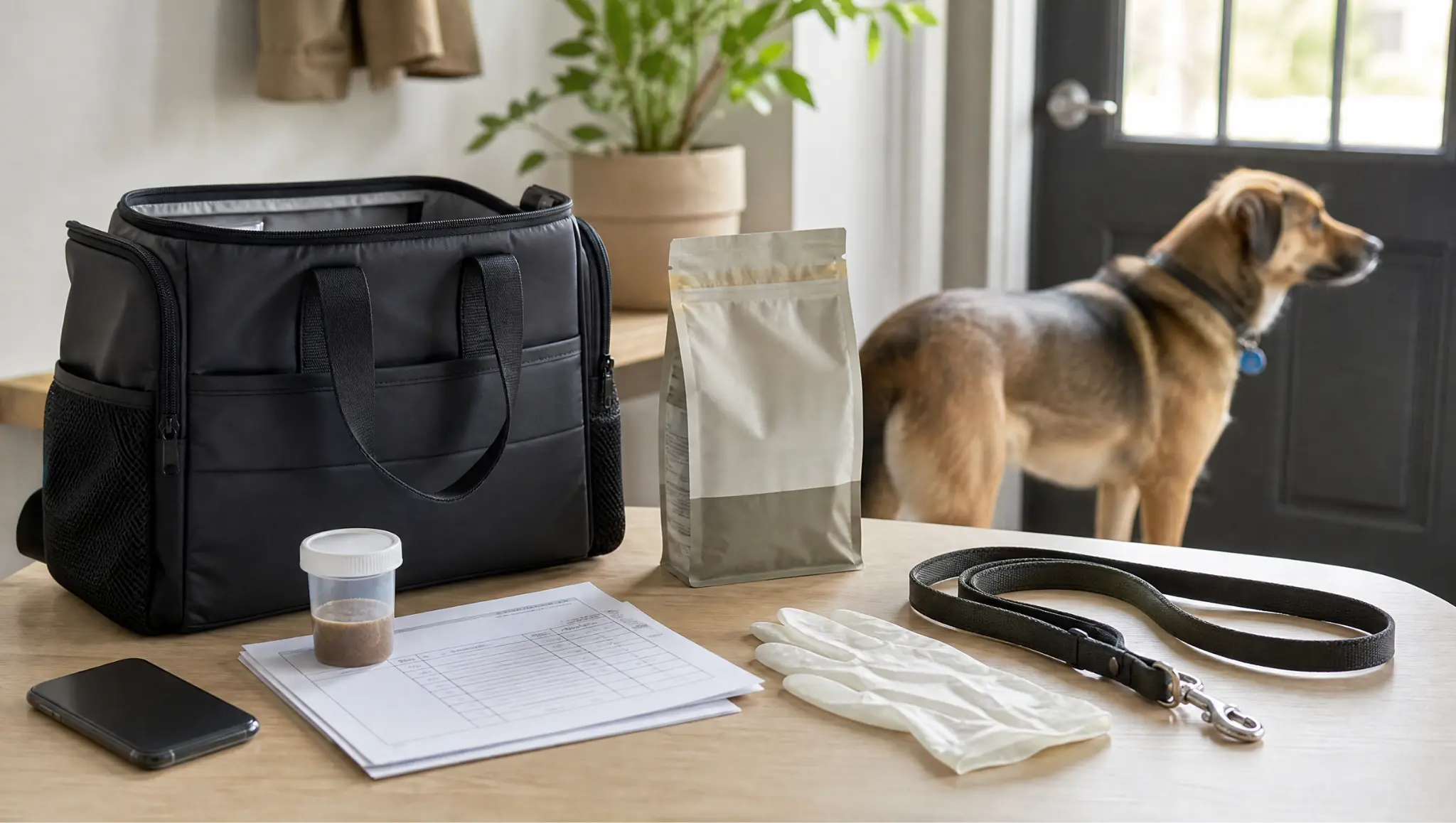
A few clear details can help your vet understand the problem faster. You do not need perfect medical words. Just explain what you saw, how your dog is acting, and what may have changed recently.
You can say: “Hi, my dog has blood in their stool. They are acting normal, low energy, or vomiting. The blood is bright red, dark, or jelly-like. It has happened once or more than once. Should I come in today or go to emergency care?”
Also mention your dog’s age, symptoms, stool color, vaccination status, and any possible exposure to trash, toxins, medications, bones, toys, or food.
If you go in, bring what you can: a stool photo, a fresh stool sample, food and treat names, a list of medicines and supplements, vaccine records, and any wrappers, plant material, toy pieces, bones, medicines, or toxin packages your dog may have reached.
Do not delay emergency care just to gather everything. Share what you know and let your vet tell you the next step.
What the Vet May Check
Your vet will try to find the cause, not just stop the bleeding. The visit often starts with your dog’s history and a physical exam.
Your vet may ask about recent diet changes, access to trash or other objects, stress, travel, boarding, vaccines, parasite prevention, current medications, supplements, and past stomach issues. Tests and treatment may include:
| What the vet may do | Why it may help |
|---|---|
| Stool test | Checks for parasites, bacteria, or other stool clues. |
| Blood work | Checks for dehydration, anemia, signs of infection, and organ health. |
| Parvo test | Often considered for puppies or unvaccinated dogs. |
| X-rays or ultrasound | May help if a swallowed object, blockage, or belly issue is possible. |
| Clotting tests | May be needed if poisoning or a bleeding issue is suspected. |
| Fluids | Help with dehydration from diarrhea or vomiting. |
| Anti-nausea medicine | May help if vomiting or nausea is present. |
| Parasite treatment | Used when parasites are found or strongly suspected. |
| Vet-approved food plan | Gives the gut easier food while it settles. |
| Hospital care or surgery | Needed in some severe cases, especially if blockage or injury is suspected. |
Knowing the possible steps can make the clinic visit feel less stressful. Your dog may not need every test or treatment listed here, but these are common ways vets check for the cause and protect dogs from dehydration, infection, blood loss, or blockage. The exact plan depends on your dog’s symptoms, age, history, and exam.
How to Lower the Risk Next Time
Not every case can be prevented, but a few simple habits can reduce the risk of recurring stomach trouble.
- Keep risky items out of reach: Store trash, bones, small toys, food wrappers, cleaners, rodent poison, and human medicine where your dog cannot reach them.
- Switch food slowly: Change food over several days rather than all at once.
- Stay current on vaccines: This matters more for puppies, newly adopted dogs, and dogs that spend time around other dogs.
- Use parasite prevention: Follow your vet’s advice for flea, tick, worm, and parasite protection.
- Watch after high-risk outings: Pay closer attention after dog parks, daycare, grooming, boarding, travel, or outdoor walks.
- Track repeat stool changes: Watch for mucus, soft stool, straining, appetite changes, or repeat stomach upset.
Prevention is not about perfect control. It is about making risky items harder to reach and noticing changes early.
Conclusion
Seeing blood in a dog’s stool is one of those moments when quick action matters. Some cases come from mild irritation, but others involve parasites, infection, toxins, ulcers, or severe gut illness.
Start with your dog’s behavior, stool color, blood amount, and any vomiting or weakness. Bright red streaks may be less urgent than black, sticky stool, but repeated bleeding should not be ignored.
I would call the vet instead of guessing, even if your dog seems normal.
Take a photo, save a stool sample if you can, and call your vet today if the bleeding repeats, worsens, or is accompanied by other symptoms.
Frequently Asked Questions
Can It Happen Once and Stop?
Yes, a small red streak can occur once due to mild irritation or straining. Still, ask your vet for advice. If it returns, increases, or appears with diarrhea or vomiting, your dog needs care soon today.
What Does Jelly-Like Red Poop Mean?
Jelly-like stool usually means mucus is mixed with red material. This often points to colon irritation or inflammation. It can happen with diet upset, stress, parasites, or infection, so repeated episodes should be checked.
What Will the Vet Usually Do?
The vet may examine your dog, ask about food and toxin exposure, test a stool sample, run blood work, or check for parvo. Treatment depends on the cause and may include fluids, medication, a vet-approved diet, or hospital care.
Are Home Fixes Safe?
Only use home care your vet approves. Human pain medicine, leftover antibiotics, random anti-diarrhea drugs, and forced vomiting can harm dogs. A phone call is safer before making any changes to your diet or starting any new medicine.