A Bernese Mountain Dog can look like an oversized teddy bear, right until a bouncy adolescent barrels through the room or leans their full weight against your legs. That contrast is part of living with this affectionate working breed.
After more than a decade researching breeds, volunteering with rescues, and interviewing canine professionals, I have learned not to treat the Bernese Mountain Dog temperament as a promise.
Breed tendencies offer useful context, but genetics, early experiences, health, training, and daily life shape each dog. Some Berners are outgoing, while others remain reserved or need help with confidence.
The important question is not whether every Berner fits one description. It is whether this breed’s likely needs and behaviors fit your household.
Bernese Mountain Dog Temperament Overview
The official breed standard offers a useful description of the temperament breeders aim to preserve, but it cannot guarantee one dog’s personality. Behavior also reflects inherited traits, early experiences, health, learning, and the home environment.
The official breed standard describes the Bernese Mountain Dog as self-confident, alert, good-natured, steady, and never sharp or shy. It also notes that a Berner may remain aloof toward attention from strangers.
A typical Berner does not need to greet every visitor enthusiastically. Calm reserve can fit the standard, while persistent fear, panic, aggression, or difficulty recovering after a stressful event deserves attention.
Use the standard as a reference point while judging the individual dog in front of you.
Common Personality and Behavior Tendencies
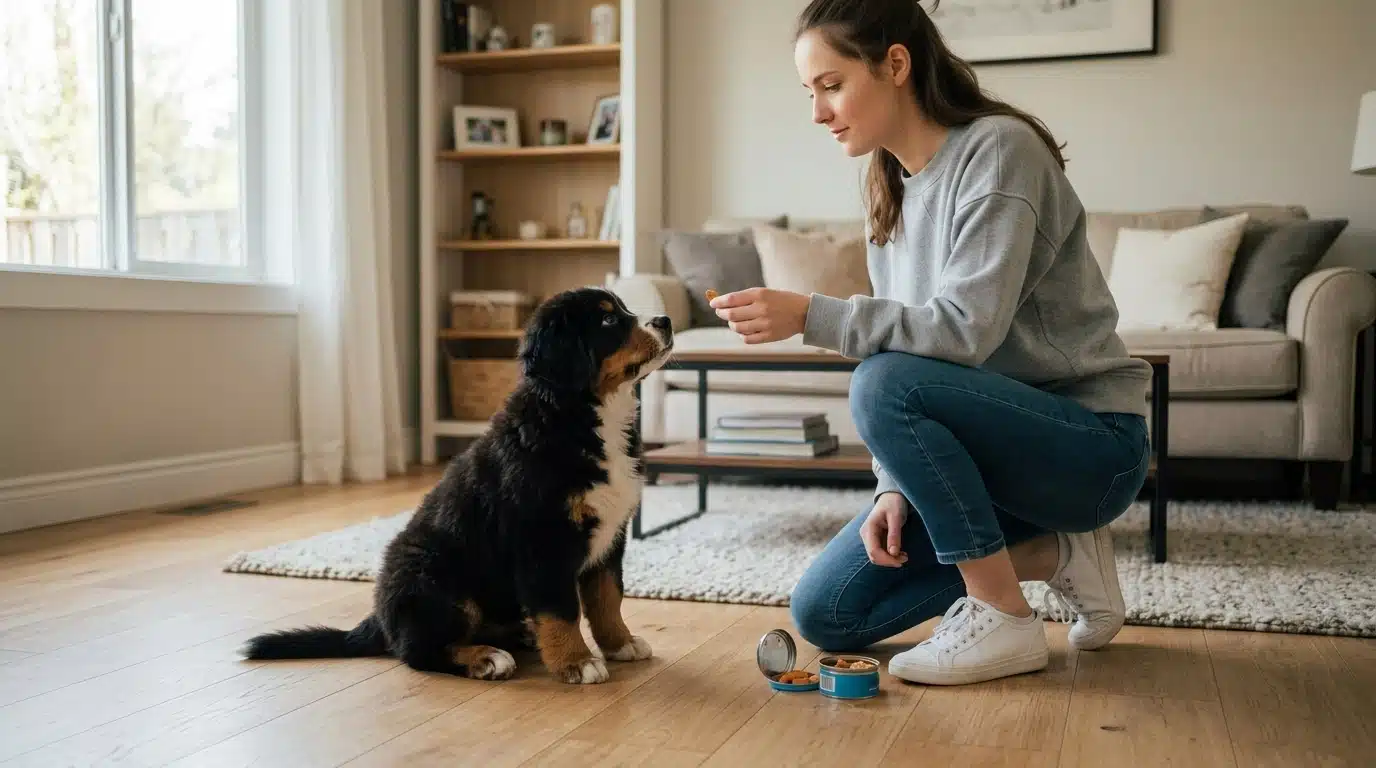
Several tendencies are commonly associated with Berners, but none should be treated as guaranteed. Observe the individual dog’s body language, learning history, and comfort in each situation.
- Affection and closeness: Many Berners enjoy staying near familiar people and may lean against them or follow them between rooms. Other individuals prefer more physical space.
- Good-natured behavior: The breed standard calls for a good-natured, steady dog. Early socialization and reward-based training can support confidence but cannot manufacture a particular personality.
- Reserve with strangers: Some Berners greet visitors warmly, while others remain politely aloof. Fearful avoidance, lunging, or escalating barking requires more support than ordinary reserve.
- Alert behavior: A Berner may bark when someone approaches the home or an unfamiliar sound occurs. Assess persistent barking by its cause rather than dismissing it as a breed habit.
- Object carrying: Some individuals enjoy carrying toys or greeting people with an object. Provide safe items and prevent access to anything that could be swallowed or guarded.
These tendencies describe possibilities, not requirements. When researching vetted breeders in your area, ask each breeder or rescue to discuss the individual dog’s confidence, sociability, handling tolerance, and recovery after stress.
Living With Children and Other Animals
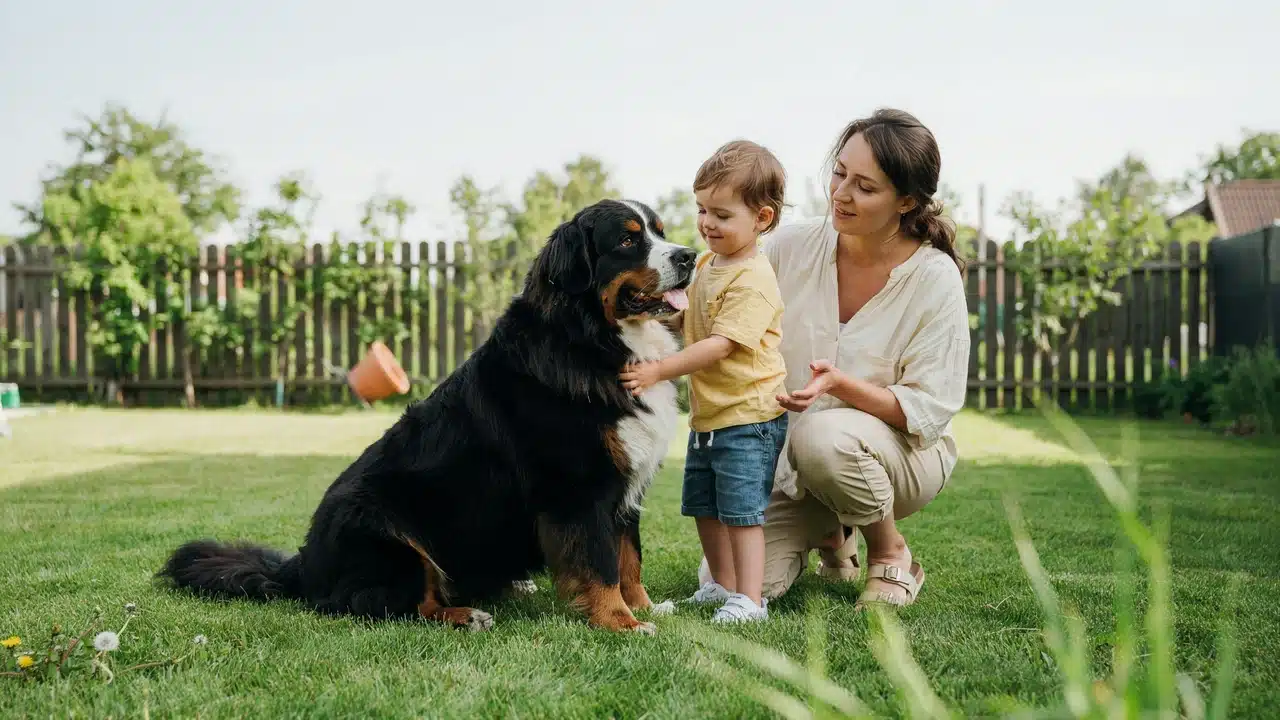
Berners can live successfully with children and other animals, but breed reputation cannot replace supervision or careful introductions. Size, excitement, fear, pain, and individual history all influence safety.
Around children:
- Supervise interactions, especially with young children.
- Teach children not to climb on, hug, chase, or disturb a resting or eating dog.
- Give the dog a quiet retreat that children cannot enter.
- Interrupt play before either the child or dog becomes overwhelmed.
- Teach calm greetings to reduce accidental knocks from a large dog.
Young children require supervision around dogs regardless of breed.
With other animals, begin with controlled introductions and separate resources such as food, beds, and valued toys. Do not assume adulthood makes a dog safe with cats, small animals, or unfamiliar dogs.
The American Kennel Club advises that young children need supervision around dogs. Assess compatibility based on the behavior of every animal involved.
| Safety note: No breed is automatically safe with children or other animals. Supervise interactions and assess each dog’s behavior, history, size, and comfort level before allowing closer contact. |
Training, Socialization, and Time Alone
Early learning helps a large dog develop manners that make family life safer and easier. Training should build confidence and cooperation rather than rely on fear or physical control.
The American Veterinary Society of Animal Behavior recommends safe socialization during the first months of life. Introduce people, surfaces, sounds, handling, animals, and environments at an intensity the puppy can manage without forcing interaction.
Use rewards, clear cues, and short practice sessions. The organization’s training position recommends reward-based methods and advises against physical or psychological punishment.
Teach alone time separately. Start with short, comfortable absences and gradually increase the duration through gradual crate and separation practice. Use a crate only if your dog rests comfortably inside it.
Persistent vocalizing, pacing, drooling, destruction near exits, elimination, food refusal, or escape attempts can indicate separation-related distress. The American Society for Prevention explains that these signs require more than simply ignoring the dog.
Training progress varies, so adjust the pace according to your dog’s behavior rather than age or a fixed timetable.
| Behavior note: Training needs and progress vary by dog. Persistent fear, aggression, panic, or separation-related distress may require help from a veterinarian or qualified reward-based behavior professional. |
How Behavior Can Change With Maturity
A large adolescent may look physically grown before their judgment and impulse control become dependable. Maturity develops gradually and follows its own timeline, much like how long Berners typically live varies from dog to dog, so no exact age guarantees calm behavior or compatibility with other pets.
| Life Stage | Common Possibilities | Helpful Support |
|---|---|---|
| Puppy | Mouthiness, short attention span, frequent rest needs, and excitement around movement | Brief training, safe socialization, structured rest, and close supervision |
| Adolescent | Greater strength, inconsistent responses, boundary testing, and renewed sensitivity to unfamiliar situations | Consistent routines, reward-based practice, and managed greetings |
| Adult | More predictable habits and an improved ability to settle when training has been maintained | Regular activity, mental engagement, and continued reinforcement |
| Older adult | Reduced tolerance, mobility changes, altered sleep, or new behavior linked to discomfort | Veterinary assessment and adjustments to activity or the home setup |
These are broad developmental patterns, not deadlines. Introduce new animals according to the individual dog’s behavior, not the age listed on a calendar.
What Real Owners Say

Real owner threads make one thing obvious: no single description fits every Berner. In one Reddit thread asking about ownership experience, responses ranged wildly.
One owner described a dog that’s affectionate with family but reactive and stubborn with everyone else, barking at cars from a mile away with almost no self-control. Another joked that personal space simply doesn’t exist with a Berner underfoot, even in the bathroom.
A third called theirs a gentle, snuggly giant who does great with consistent training and daily walks, needing only some extra skin care after getting wet. Same breed, three very different dogs.
When Your Berner Does Not Match the Stereotype
Not every Berner is outgoing, cuddly, calm, or immediately comfortable with strangers. Individual temperament can differ because of genetics, early experiences, learning, health, and the current environment.
Mild reserve may be manageable when the dog can remain relaxed and recover after an unfamiliar event. Fear that is worsening, interfering with normal life, or leading to lunging, snapping, escape attempts, or prolonged distress needs professional attention.
Avoid forcing a fearful dog to approach people or animals. Create distance, pair manageable situations with rewards, and seek help from a veterinarian or qualified reward-based behavior professional.
A sudden personality change also warrants a veterinary examination because pain or illness can affect behavior.
Temperament Strengths and Practical Challenges
The same quality can feel positive in one household and difficult in another. Consider how each tendency would fit your daily schedule, space, and experience.
| Possible Strength | Related Challenge |
| Often affectionate with familiar people | May seek more contact than some households want |
| Breed standard favors good-natured steadiness | Individual dogs may still be fearful, reactive, or excitable |
| Often responsive to reward-based training | Large adolescent behavior can be physically difficult to manage |
| May alert to visitors or unfamiliar sounds | Barking can become disruptive if its cause is not addressed |
| Can live with children or other pets | Size and individual behavior require supervision and management |
These are tendencies rather than guarantees. Meet the individual dog and ask detailed questions before deciding whether the match is suitable.
Is This Temperament Right for Your Household?
A Berner’s affectionate reputation is only one part of the decision. Your schedule, tolerance for shedding, ability to manage a large adolescent, and commitment to training matter just as much.
Ask yourself:
- Can I provide regular company while still teaching comfortable independence?
- Can I manage a large, strong puppy through adolescence?
- Will I supervise interactions with children and other animals?
- Can I provide reward-based training and safe socialization?
- Can I accommodate heavy shedding and regular grooming?
- Can I respond calmly if the dog is reserved, fearful, or slower to adjust?
- Does the individual dog’s history fit my household?
If you are adopting, ask the rescue about handling, strangers, children, other animals, resource guarding, alone time, and recovery after stress. If purchasing a puppy, meet the mother when possible and ask how both parents behave in ordinary situations.
Choose according to the individual dog and your household’s capacity, not the “gentle giant” label alone.
Final Take
After years of researching breeds and speaking with breeders, veterinarians, and trainers, I see the Bernese Mountain Dog temperament as a useful starting point, not a guarantee.
The breed standard describes a good-natured, alert, self-confident dog that may be aloof with strangers, yet every Berner develops as an individual.
A suitable home can provide close companionship, reward-based training, careful socialization, supervised time with children, and safe introductions to other animals.
It must also be ready for a large adolescent whose size may mature before their judgment does. Before adopting, meet the individual dog, ask about the parents’ behavior and early experiences, and honestly consider your daily schedule. Then speak with the breeder or rescue about the match.
Frequently Asked Questions
Can a Rescue Dog Adjust to Children?
Yes, provided the individual dog is comfortable with children and introductions are carefully managed. Ask the rescue about known behavior, use barriers initially, supervise every interaction, and give the dog a quiet place where children cannot follow.
Can Pain Cause a Personality Change?
Yes. Pain, sensory loss, hormonal disease, neurologic problems, or other illness can cause withdrawal, irritability, fear, or aggression. A sudden personality change deserves a veterinary examination before it is treated only as a training problem.
Can Littermates Have Different Personalities?
Yes. Puppies inherit different combinations of traits and have different prenatal, birth, social, learning, and health experiences. Breed and parent information may suggest tendencies, but it cannot guarantee that littermates will develop the same personality.
Can This Breed Do Therapy Work?
Possibly, but calm behavior in public, comfort with handling, reliable manners, and enjoyment of unfamiliar people matter more than breed. A suitable dog needs individual assessment, careful training, and certification through the organization providing therapy visits.