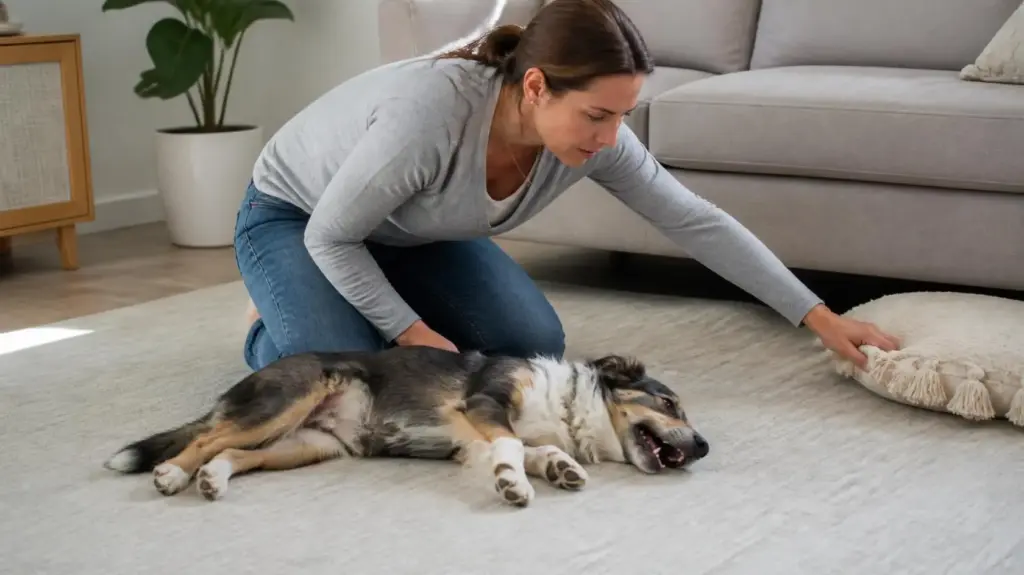
We know that feeling: you’re watching your dog cross the living room, and something’s just… off. Maybe a paw drags. Maybe they sway like they’ve had one too many treats. Maybe they stumble on a turn they’ve made a thousand times before.
Your stomach drops a little, and suddenly you’re googling at 11 p.m., heart racing, trying to figure out what’s wrong with your best friend.
If that’s you right now, take a breath. Ataxia in dogs sounds scary, and in some cases it is a sign of something serious, but it’s not automatically a worst-case scenario.
It’s a symptom, not a diagnosis, and understanding what’s behind it is the first real step toward helping your dog feel safe and steady again.
What is Ataxia in Dogs?
Ataxia is the word vets use when a dog loses its normal sense of balance, coordination, or body control. It’s not a disease on its own; it’s a signal that something along the communication line between the brain, spinal cord, nerves, or inner ear has gotten disrupted.
You might notice your dog looking unsteady on their feet, stumbling, falling, or having trouble figuring out where to place their paws.
Some dogs tilt their head, have little tremors, seem weaker than usual, or their eyes move in ways that just don’t look right.
How serious it is and what’s actually causing it depend a lot on the dog.
Some pups pick up a bit of wobble from something temporary and bounce right back. Others are dealing with an inherited condition, like cerebellar or spinocerebellar ataxia, that shows up gradually and needs long-term support. Getting to the “why” is what helps you and your vet figure out the right path forward.
Types of Ataxia in Dogs Explained
Ataxia can develop in different parts of a dog’s nervous system. Identifying the type helps explain why symptoms appear and what care options may be available.
1. Cerebellar Ataxia in Dogs
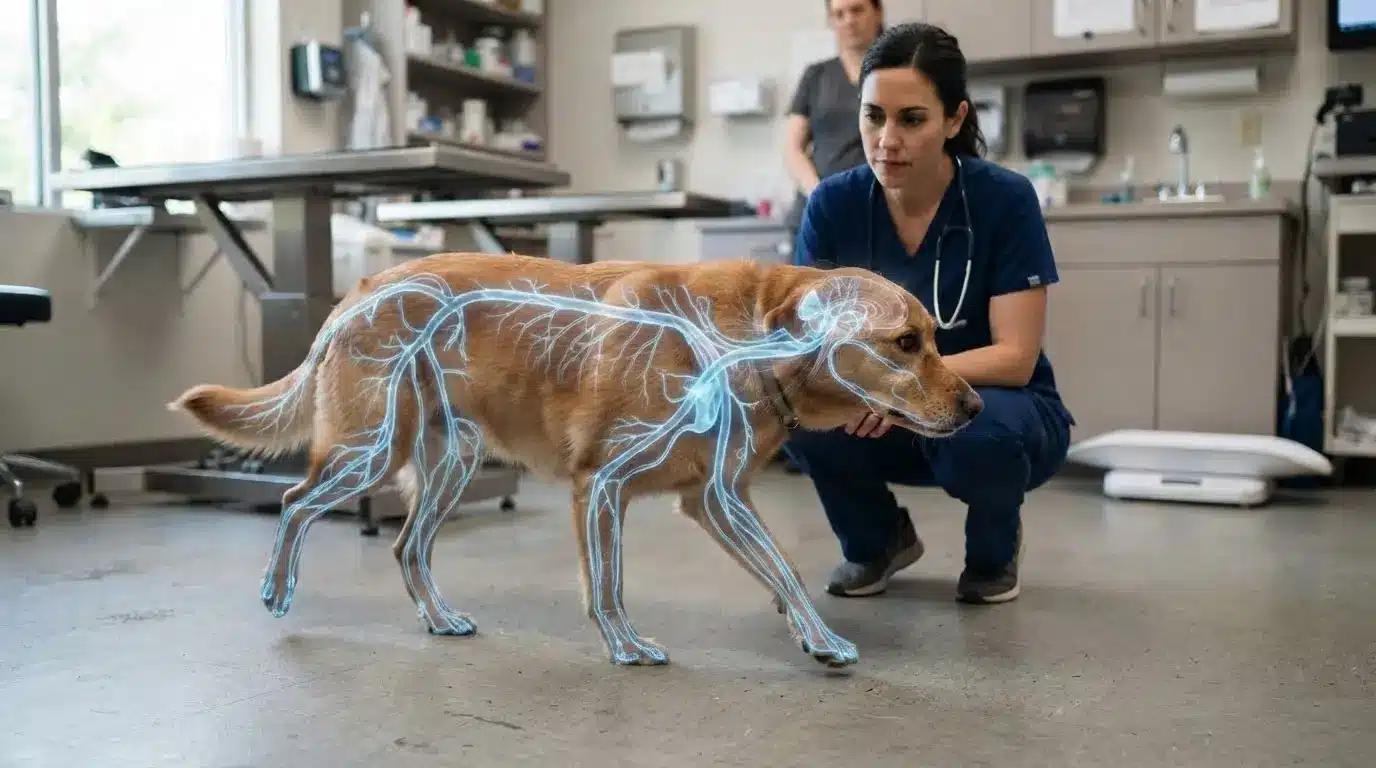
Cerebellar ataxia happens when the cerebellum, the part of the brain responsible for coordination and movement control, is affected. Dogs with this condition often exhibit exaggerated movements, an unusual gait, and difficulty judging where to place their feet. Common signs include:
- Wide-legged stance
- Head or body tremors
- Uncontrolled movements
- Trouble walking in a straight line
- Overstepping or high-stepping movements
Some cases develop because of injury, inflammation, or disease, while others are linked to inherited genetic conditions.
2. Hereditary Cerebellar Ataxia
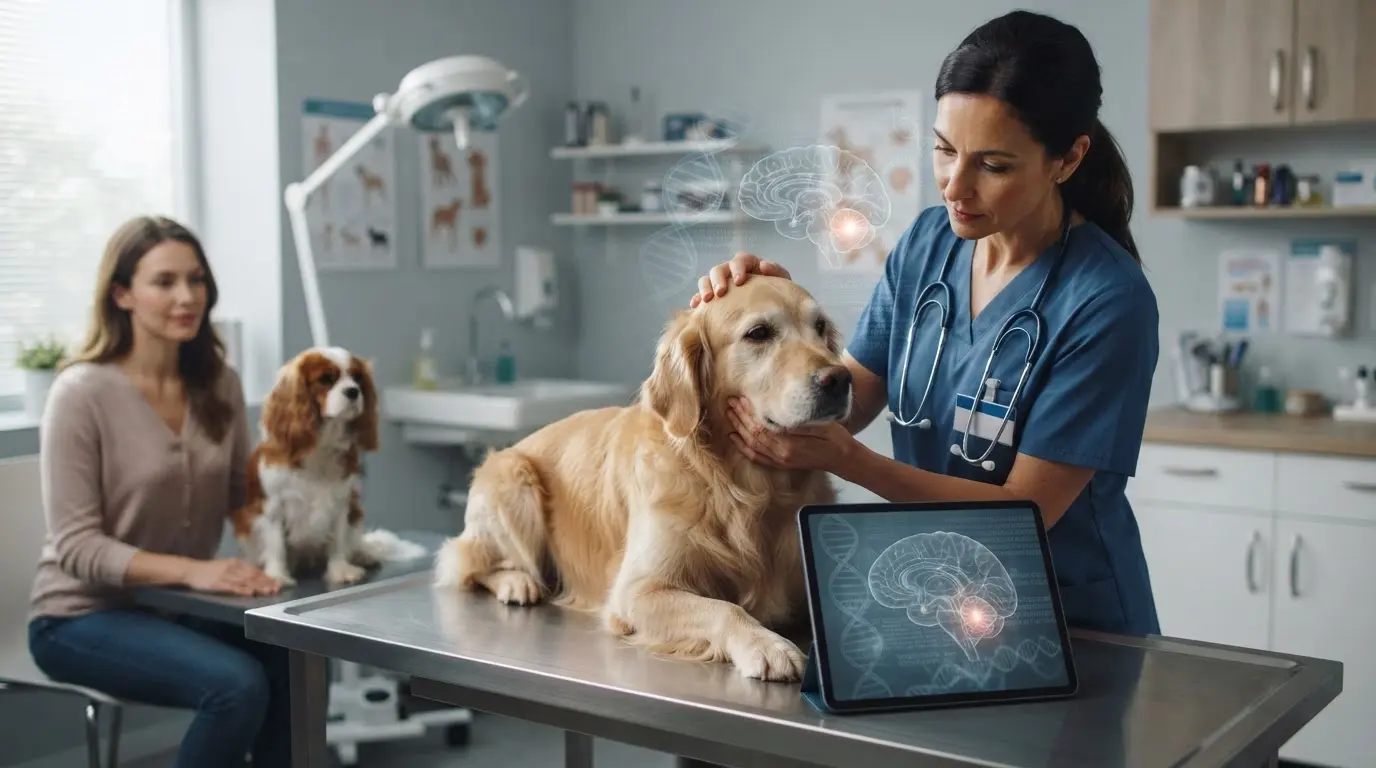
Inherited cerebellar ataxia results from genetic changes passed through certain bloodlines. Symptoms may appear when a dog is young or during adulthood, depending on the specific condition. Breeds associated with hereditary cerebellar disorders include:
- American Staffordshire Terriers
- Gordon Setters
- Brittany Spaniels
- Old English Sheepdogs
Genetic testing can sometimes help identify these conditions. While hereditary forms cannot usually be reversed, supportive care may help maintain comfort and mobility.
3. Spinocerebellar Ataxia in Dogs
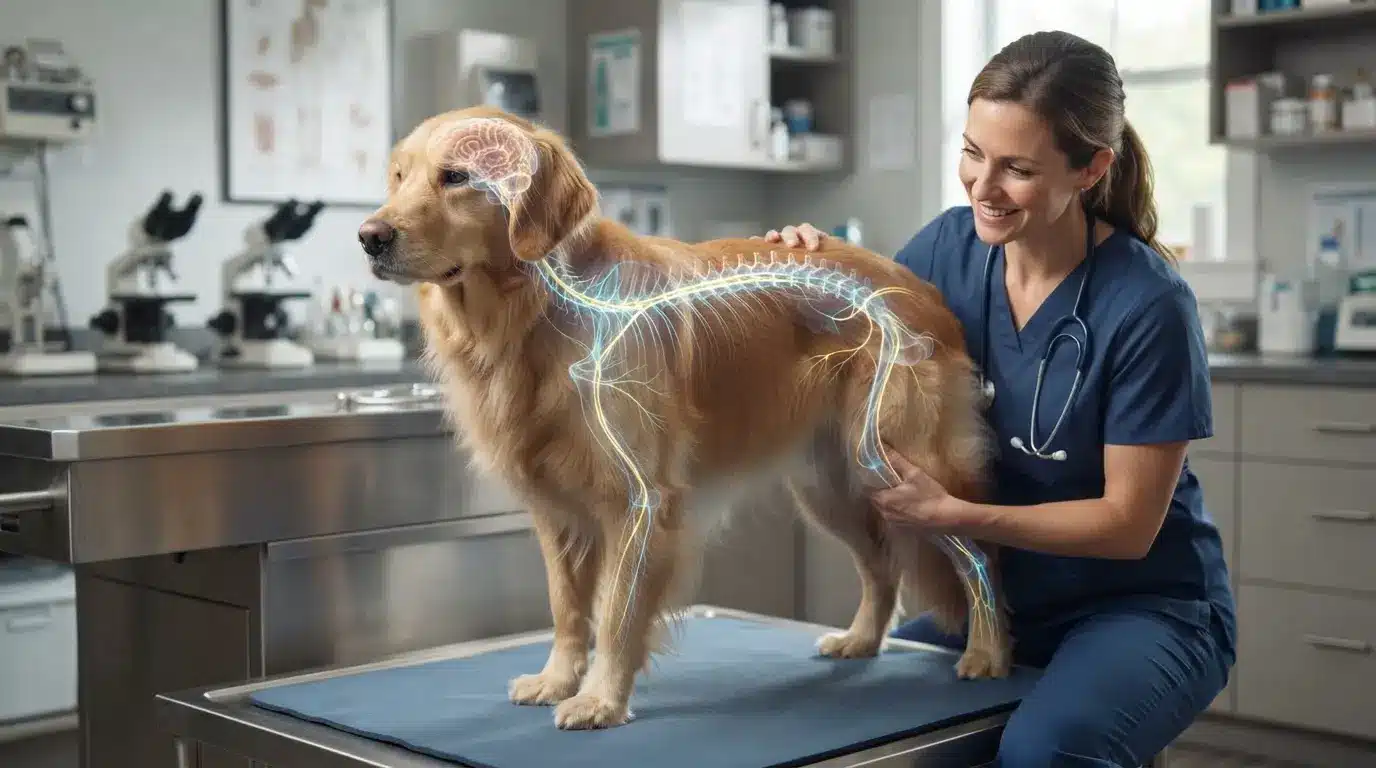
Spinocerebellar ataxia affects communication between the spinal cord and cerebellum. When these pathways are damaged, the brain struggles to control body movements properly. Dogs may show:
- Poor coordination
- Weakness in the legs
- Difficulty maintaining balance
- Progressive movement problems
Some forms are inherited and are linked to specific breeds. Jack Russell Terriers and related breeds are known to have certain genetic spinocerebellar conditions. Because this type often progresses over time, regular veterinary monitoring helps track changes and adjust care as needed.
4. Sensory Ataxia in Dogs
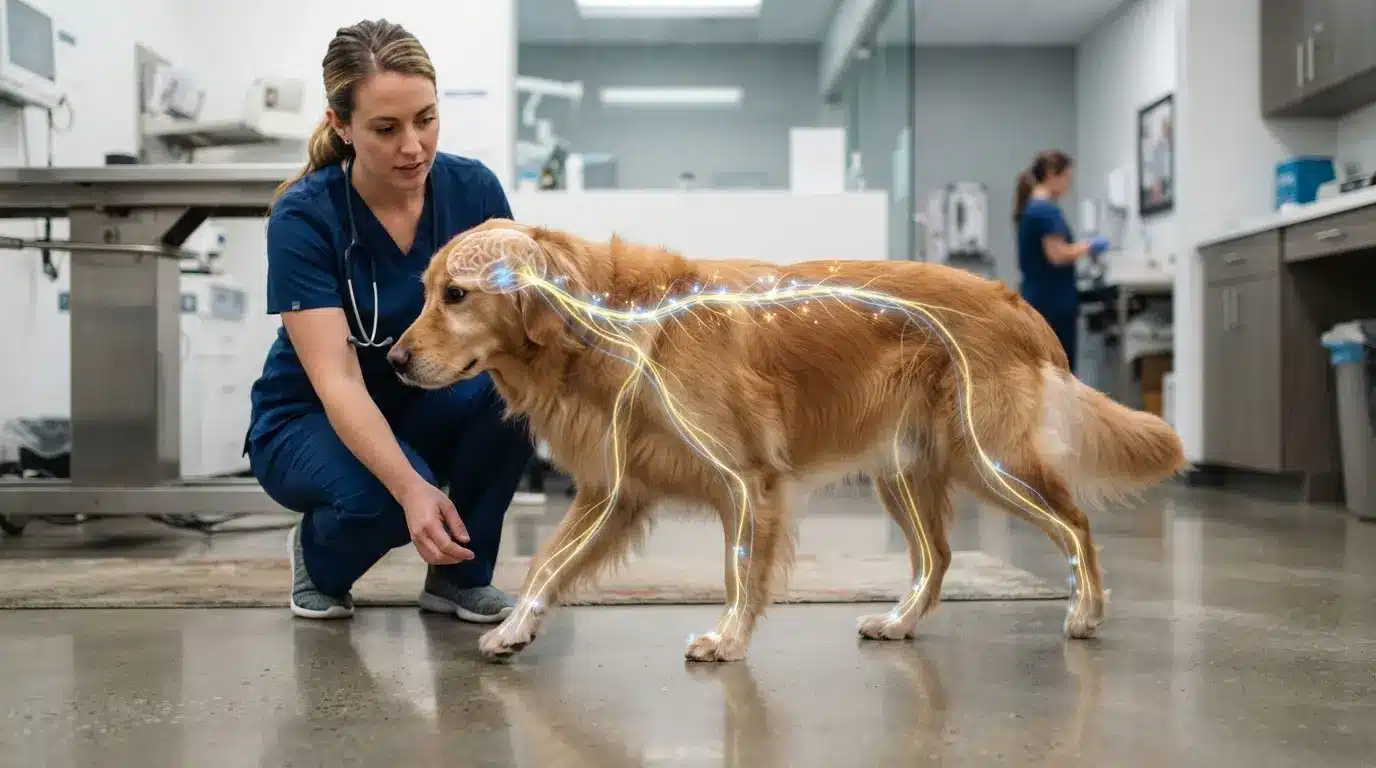
Sensory ataxia develops when a dog has trouble understanding its body’s position. This usually happens because signals between the nerves, spinal cord, and brain are disrupted. Signs may include:
- Knuckling paws while walking
- Paw dragging
- Unstable footing
- Difficulty moving on slippery floors
Possible causes include spinal injuries, nerve damage, disc problems, and conditions affecting the spinal cord. Treatment depends on the underlying issue. Some dogs improve when the cause is identified early, while others may need long-term support.
5. Vestibular Ataxia in Dogs
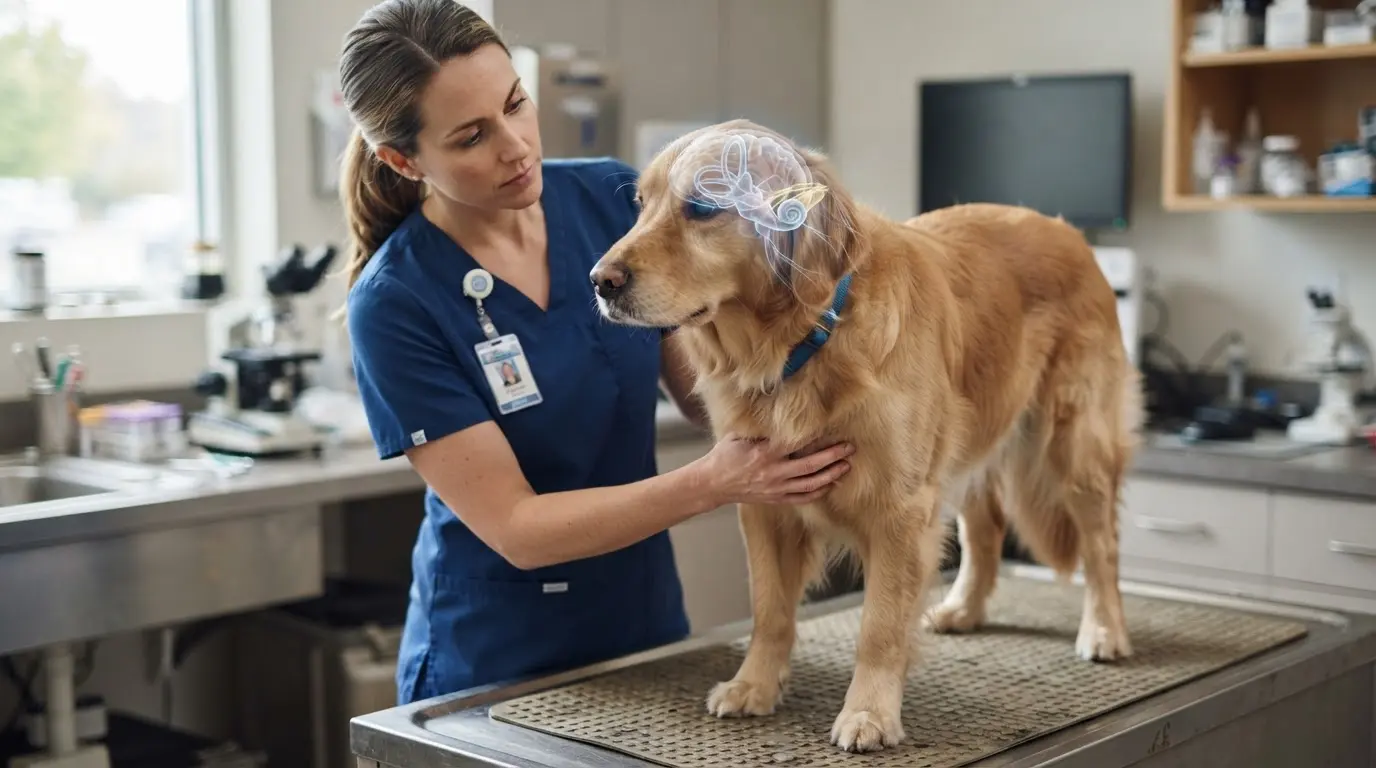
Vestibular ataxia affects the system responsible for balance and body orientation. Problems may occur in the inner ear or areas of the brain that control balance. Dogs with vestibular problems may show:
- Head tilting
- Circling behavior
- Falling toward one side
- Rapid eye movements
- Sudden loss of balance
Peripheral vestibular disease often involves the inner ear, while central vestibular disease affects the brain. The cause determines how serious the condition may be and what treatment is required.
Caution: The signs and progression of different ataxia types can vary between dogs. A breed association or symptom pattern does not confirm a diagnosis, and veterinary testing may be needed for accurate identification
Common Reasons Dogs Develop Ataxia
Ataxia may develop due to different conditions affecting a dog’snervous system. Finding the cause helps determine the right treatment and care approach.
| Cause of Ataxia | How It Affects Dogs | Common Examples |
|---|---|---|
| Genetic and Hereditary Conditions | Genetic changes can affect brain or spinal cord function and may cause gradual loss of coordination. | Cerebellar degeneration, spinocerebellar disorders, breed-related diseases |
| Spinal Cord Problems | Spinal damage interrupts signals between the brain and body, affecting movement control. | Disc disease, injuries, nerve compression, spinal tumors |
| Brain-Related Causes | Brain problems can disrupt balance, coordination, and normal movement. | Brain tumors, inflammation, infections, degeneration, trauma |
| Other Possible Causes | Certain health issues or external factors can affect nervous system function. | Ear infections, toxins, nutritional issues, medications, metabolic disorders |
Note: Many conditions can cause balance and coordination problems in dogs. Avoid assuming the cause based only on symptoms, as treatment depends on identifying the specific condition affecting the nervous system.
Identifying the underlying cause helps separate temporary problems from progressive conditions. A proper veterinary evaluation can guide treatment choices and support better long-term care
Early Signs of Ataxia in Dogs Owners Should Notice
Ataxia can creep in slowly or hit all at once, depending on what’s driving it. Either way, catching small changes early gives you and your vet more room to work with.
- Walking changes: Affected dogs may sway while walking, stumble, take unusual steps, fall during turns, or have difficulty with stairs and jumping.
- Coordination problems: Dogs with ataxia may place their paws incorrectly, cross their legs while walking, slip on smooth surfaces, lose balance while standing, or struggle to get up after resting.
- Neurological signs: Some dogs may also develop muscle tremors, head tilting, rapid eye movements, weakness, changes in alertness, or unusual body posture.
Caution: Sudden changes in walking, balance, or behavior may indicate a serious health problem. Seek veterinary advice promptly, especially if symptoms appear quickly or worsen over a short period.
Sudden changes in balance, movement, or behavior should be checked by a veterinarian because some causes of ataxia may require quick attention. Tracking when symptoms appear can also help identify the cause.
When to Euthanize a Dog with Ataxia?
Making the decision about euthanasia is one of the hardest choices a dog owner may face. Ataxia alone does not always mean a dog’s life has become unbearable.
The decision usually depends on comfort, happiness, independence, and whether daily needs can still be met.
A dog with severe or progressive ataxia may eventually struggle with basic activities. Paying attention to changes in behavior and comfort can help identify when extra support may no longer be enough.
Signs that quality of life may be affected include:
- Frequent falls that cause open wounds or cuts
- Inability to stand or walk without constant assistance
- Ongoing pain or distress
- Loss of interest in favorite activities
- Difficulty eating or drinking
- Repeated accidents due to mobility problems
- More difficult days than comfortable ones
A veterinarian can help assess whether symptoms are manageable or causing ongoing suffering.
Breeds More Commonly Associated with Hereditary Ataxia
Some forms of ataxia are linked to inherited genetic conditions that occur more often in certain breeds. However, being part of a listed breed does not mean every dog will develop the condition.
Breed-Related Neurological Conditions
Genetic testing and responsible breeding practices can help identify some inherited risks. Symptoms and progression can vary even among dogs with the same condition.
| Breed | Associated Ataxia Type |
|---|---|
| American Staffordshire Terrier | Cerebellar ataxia |
| Jack Russell Terrier | Spinocerebellar ataxia |
| Gordon Setter | Cerebellar degeneration |
| Brittany Spaniel | Hereditary neurological disorders |
| Old English Sheepdog | Cerebellar conditions |
Note: Being part of a breed associated with hereditary ataxia does not mean every dog will develop the condition. Genetic risks can vary, and only proper testing can confirm inherited disorders.
Owners of breeds with known risks should discuss any unusual changes in movement with a veterinarian early.
Dog Owners Share Experiences Managing Cerebellar Ataxia
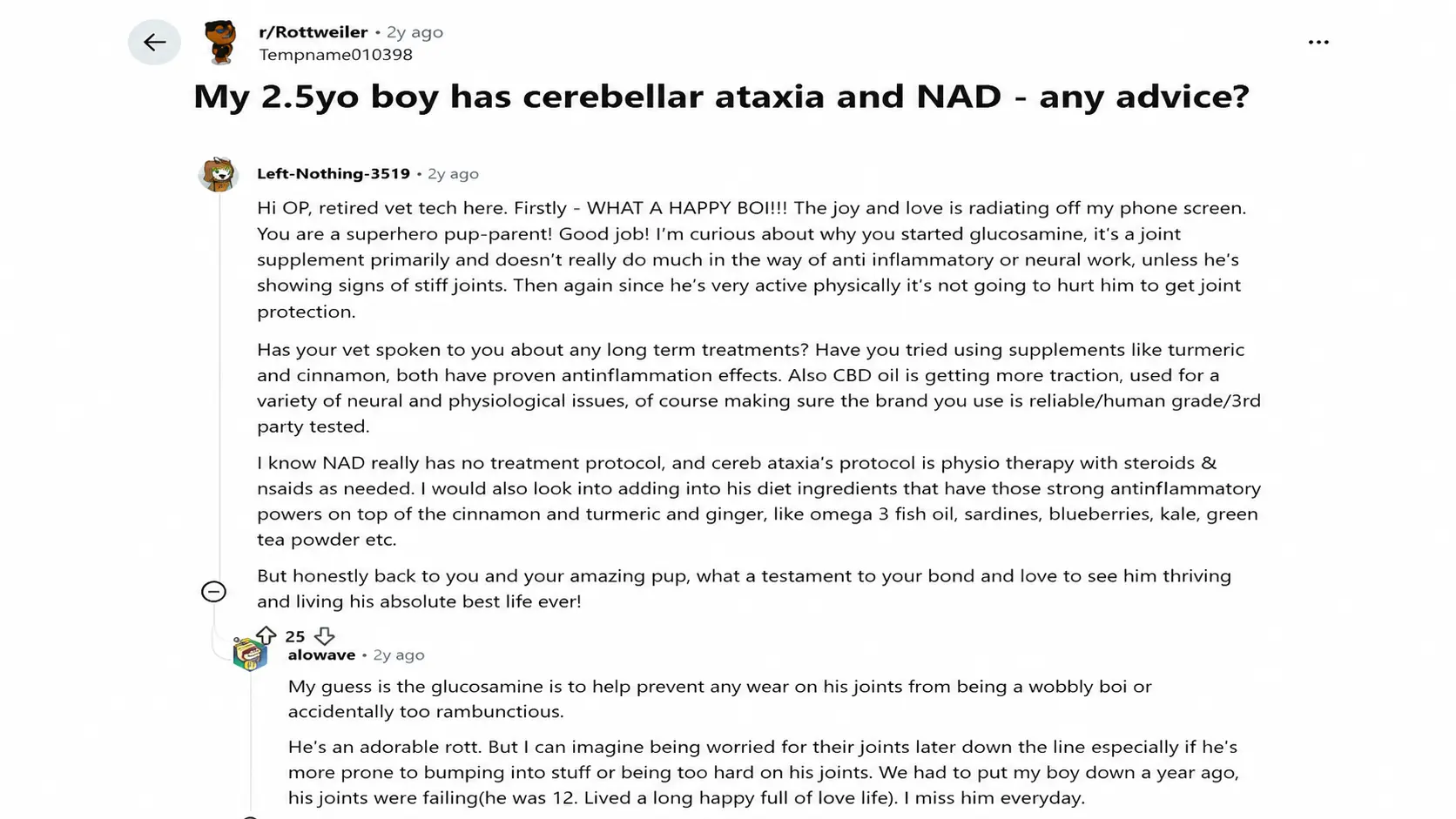
Reddit discussions in the r/Rottweiler community highlight a dog owner seeking advice for a 2.5-year-old Rottweiler diagnosed with cerebellar ataxia and NAD. The comments focus on managing the condition, long-term care options, and ways to support the dog’s comfort.
Users discuss treatments and supportive approaches, including physical therapy, veterinary guidance, supplements, and maintaining joint health due to mobility challenges.
Some owners share personal experiences with aging dogs, mobility decline, and the emotional challenges of caring for pets with neurological conditions.
The discussion also highlights the importance of monitoring symptoms, consulting professionals, and providing a safe environment while helping dogs maintain a good quality of life despite movement difficulties.
How Vets Diagnose Ataxia?
Because so many different conditions can cause similar wobbles and stumbles, your vet will usually start with a full physical and neurological exam, watching how your dog walks, stands, and reacts to different movements, and checking reflexes, strength, and paw placement to narrow down whether the issue is coming from the brain, spinal cord, nerves, or balance system.
From there, depending on symptoms, breed, and age, they may recommend:
| Test | What It Helps Identify |
|---|---|
| Blood tests | Infections, metabolic issues, toxins |
| X-rays | Bone changes or spinal problems |
| MRI scans | Brain and spinal cord abnormalities |
| CT scans | Structural problems |
| Genetic testing | Inherited neurological conditions |
| Spinal fluid analysis | Inflammation or infection |
Not every dog needs the full workup, but for severe, unusual, or worsening symptoms, these tests give your vet the clearest map for treatment.
How to Support a Dog with Ataxia at Home
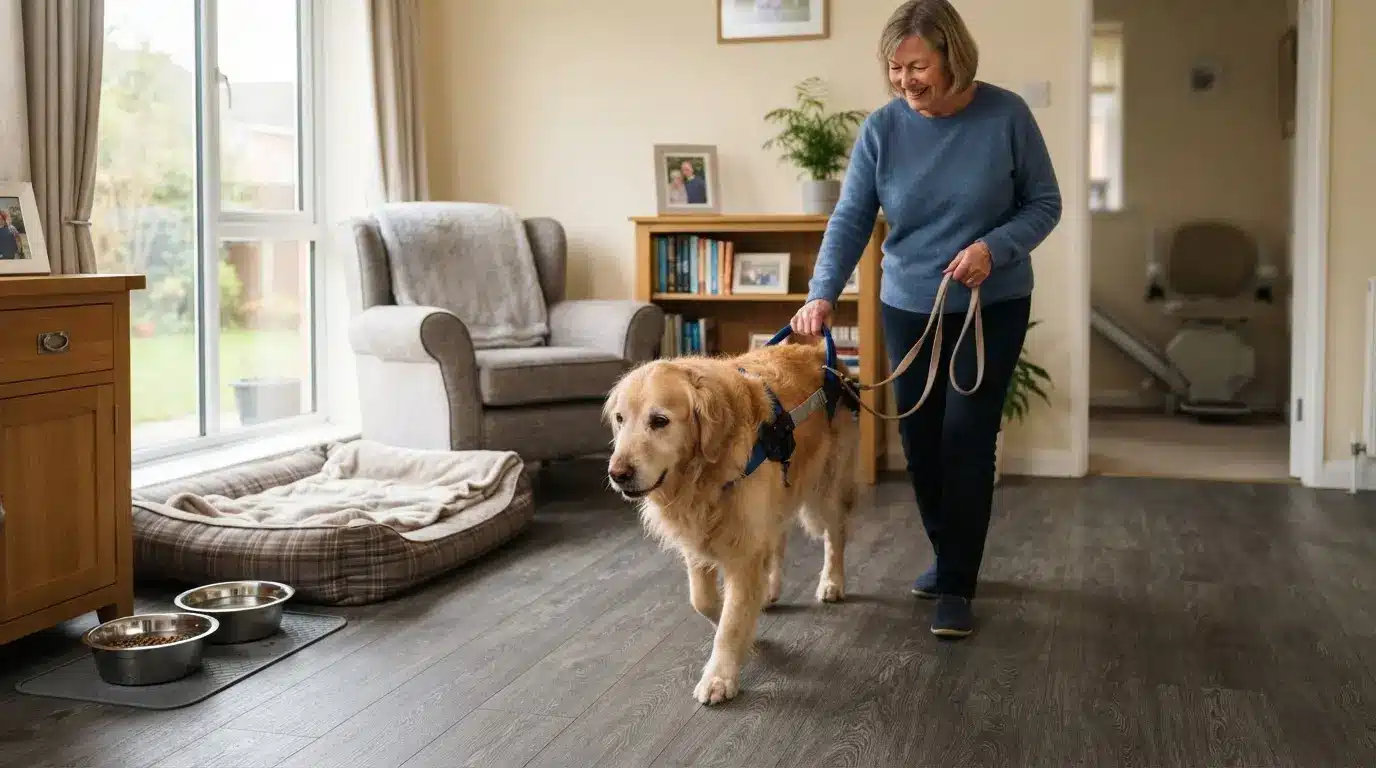
Daily care can help dogs with ataxia stay safer and more comfortable. Small changes in the home and routine can reduce fall risks, support mobility, and make daily activities easier. Helpful steps include:
- Create a safer environment: Use non-slip mats, clear walking areas, add stair gates, and provide soft bedding to prevent injuries and improve comfort.
- Support daily movement: Use mobility aids like harnesses, rear-leg supports, or wheelchairs when needed, and encourage gentle activities that match the dog’s ability.
- Make daily tasks easier: Keep food and water accessible, assist with outdoor breaks, and adjust routines based on the dog’s changing needs.
- Monitor health changes: Track walking ability, appetite, energy levels, and comfort while maintaining a healthy weight to support easier movement.
- Follow veterinary advice: Regular checkups and timely discussions about new symptoms can help adjust care and provide better support.
Caution: Home adjustments can improve safety and comfort but cannot replace treatment for underlying neurological conditions. Avoid starting mobility equipment, supplements, or exercises without discussing them with a veterinarian.
These simple changes can help dogs with ataxia maintain comfort, reduce accidents, and continue enjoying daily routines.
Common Mistakes Owners Make with Dogs Experiencing Ataxia
Managing a dog with ataxia requires careful attention because small mistakes can affect comfort, safety, and daily wellbeing. Avoiding common care errors can help owners provide better support while adapting to their dog’s changing needs.
| Common Mistake | Why It Can Be A Problem |
|---|---|
| Skipping regular veterinary checkups | Progressive conditions may change over time, and missed appointments can delay necessary care adjustments. |
| Using unsafe mobility aids without guidance | Incorrectly fitted harnesses or equipment may cause discomfort or make movement more difficult. |
| Overprotecting the dog from all activity | Avoiding all movement may reduce strength and confidence when gentle activity is still possible. |
| Changing medications without veterinary advice | Stopping, increasing, or adding treatments without guidance may affect the dog’s condition or recovery. |
| Ignoring changes in eating habits | Appetite changes may indicate discomfort, stress, or progression of an underlying health problem. |
Making informed care decisions and adjusting support as needed can improve a dog’s daily comfort. Paying attention to small changes helps owners respond better as the condition develops.
Final Thoughts
Ataxia can change how a dog moves, but it does not always mean quality of life disappears. I believe understanding the cause, tracking symptoms, and providing proper support can help you make calmer decisions for your pet.
Ataxia in dogs can range from temporary balance problems to progressive inherited conditions, so each case needs individual attention. The most important factors are comfort, happiness, and daily wellbeing.
If your dog is showing changes in coordination, start with a veterinary evaluation and continue monitoring their needs over time.
Share your experiences or helpful care tips in the comments, and check out related dog health topics for more guidance.
Frequently Asked Questions
Can Ataxia Affect a Dog’s Emotions or Behavior?
Ataxia mainly affects movement and coordination, but some dogs may appear less active or different because of discomfort, frustration, or difficulty performing normal activities. Behavior changes should always be discussed with a veterinarian.
Can a Dog with Ataxia Travel Safely?
Dogs with ataxia can sometimes travel with proper preparation. Short trips, secure carriers, comfortable bedding, and regular breaks can help reduce stress. Severe mobility issues may require veterinary advice before traveling.
Can Puppies Be Tested for Ataxia Before Symptoms Appear?
Some hereditary forms of ataxia can be identified through genetic testing before noticeable symptoms develop. Testing availability depends on the specific condition and breed-related risks.
Does Ataxia Affect a Dog’s Lifespan?
Ataxia itself does not determine lifespan. A dog’s outlook depends on the underlying cause, disease progression, overall health, and the level of care provided throughout the condition.
Can Dogs with Ataxia Still Enjoy a Normal Life?
Many dogs with ataxia can continue enjoying daily activities with adjustments. Their experience depends on symptom severity, comfort levels, and the support provided to help them adapt.