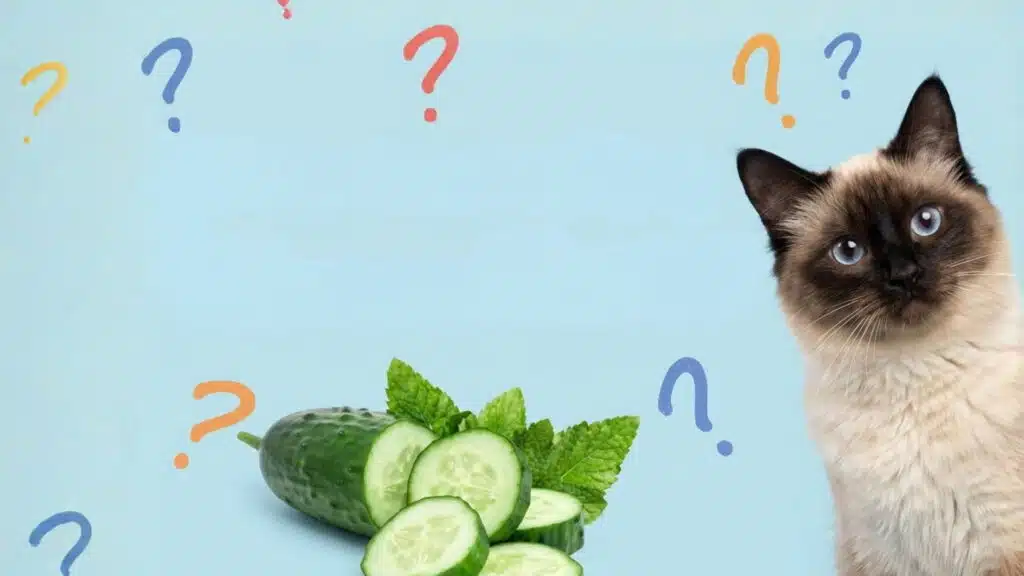
Cats and cucumbers became one of the internet’s strangest pet trends for a simple reason: the reactions looked too dramatic to ignore.
One moment, a cat is calmly eating. Next, it spots a cucumber behind it and jumps as if it has seen a threat.
But does that mean cats are scared of cucumbers, or are these videos just staged for laughs?
The truth is more about surprise than the cucumber itself. Many cats react because the object appears suddenly in a space where they felt safe.
In this blog, we will look at why cats jump at cucumbers, whether the fear is real or not, and how cats can eat cucumbers safely.
Are Cats Scared of Cucumbers?
Some cats are, but most are reacting to surprise rather than the cucumber itself. Not every cat responds, and that part tends to get lost in the meme. The viral videos you’ve seen are a curated selection.
For every cat that launched itself across the kitchen, there are probably five that turned around, sniffed the cucumber, and walked away without caring.
Reaction compilations don’t show the cats that weren’t impressed.
What the videos do capture is a genuine fear response. The cats aren’t performing. They’re startled, and the instinct driving that is real.
But here’s the thing: the cucumber itself isn’t what frightens them. It’s the combination of timing, placement, and the cat’s nervous system doing exactly what it evolved to do.
Is the Cat vs Cucumber Trend Real or Just an Internet Meme?
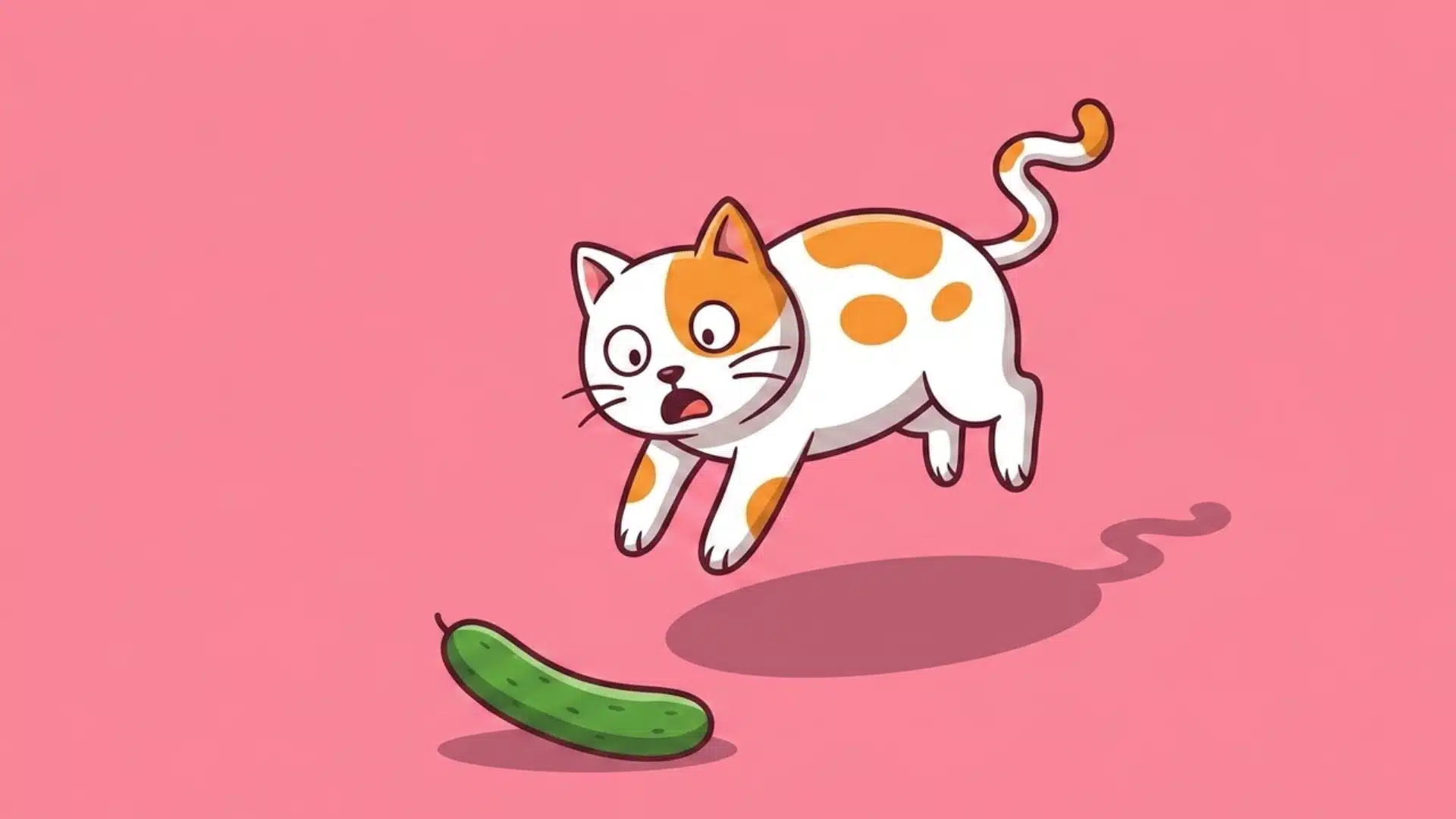
The honest answer is that it’s a bit of both, and the distinction matters more than most people think.
The fear response itself is completely real. Startling a cat near its food bowl will elicit a genuine reaction, one grounded in actual feline behavior and evolutionary physiology, not performance.
What makes it a meme is the framing around it.
Some videos are deliberately staged to maximize the drama: the cat is placed in a vulnerable position at a carefully chosen moment, and only the most spectacular leaps and scrambles make it to social media.
That selection bias creates the impression that all cats are universally terrified of cucumbers, when the reality is far more nuanced than that.
How did the Cats vs Cucumbers Meme Start?
The Cats vs Cucumbers meme did not start because cats had a known cucumber phobia.
It began as a viral prank format in 2015, when people noticed how dramatic some cats looked after finding a cucumber placed behind them. The surprise, the jump, and the timing made the videos spread fast online.
- In May 2015, Doki Doki uploaded a video of a cat jumping after finding a cucumber behind it.
- The video reportedly reached more than 2.2 million views within six months.
- In November 2015, multiple compilation videos went viral and pushed the trend into wider internet culture.
- National Geographic later covered the trend and warned that scaring cats for laughs could cause stress.
Other outlets, including Slate, Mental Floss, and ABC News, also discussed the prank and cat behavior behind it.
The trend led to copycat videos, subreddit discussions, and expert comments about why cats react that way.
That is why the meme became bigger than one funny clip. It mixed surprise, animal behavior, and internet timing into something people instantly wanted to share.
Why are Cats Scared of Cucumbers?
There are a few overlapping reasons, and most vets and animal behaviorists point to surprise as the main driver. The snake theory gets most of the media attention, but it’s probably not the full story.
1. Cats Get Startled Easily
A cat’s nervous system is built for speed. Cats are both predator and prey, which means their threat-detection system is always running in the background, even when they look completely relaxed.
Any sudden change in their environment, especially one they didn’t hear or smell approaching, can trigger an immediate escape response.
This isn’t anxiety, but rather physiology. Unlike dogs, cats don’t have a pack to rely on for safety.
They’ve evolved to handle threats alone, which means their startle reflex has to be fast and decisive. There’s no time to pause and assess.
2. The Cucumber Appears without Warning
The prank works precisely because of how it’s staged. The cucumber is placed quietly while the cat is looking the other way, usually while eating, which means the cat’s attention is fully elsewhere.
When it turns around, the object wasn’t there before and is now. That’s enough to trigger a threat response in most animals.
Any unexpected object placed this way would likely produce the same jump.
Zucchini, bananas, and other similarly sized objects have been shown to provoke the same reaction.
3. Cats Feel Vulnerable While Eating
Cats are territorial about their feeding areas in a way that runs pretty deep. In the wild, a distracted predator eating its catch is at risk.
That instinct doesn’t disappear just because your cat’s food comes in a can.
When a cat is eating, it’s in one of its most mentally unguarded states. An unexpected object appearing in that space doesn’t just startle it.
It triggers a protective reflex from a position of perceived vulnerability.
4. Cucumbers Look Like Snakes
This is the theory that got the most traction online, and there’s some logic to it.
Animal behaviorist Con Slobodchikoff, author of Chasing Doctor Dolittle , told ABC News that cats are hardwired to avoid snakes, and a cucumber’s elongated shape might activate that response.
The green color adds to the resemblance in some cats.
Cats have fewer color-detecting cones than humans, which means their vision struggles with certain shades, particularly darker greens against flooring.
The sudden appearance of a long, greenish shape could reasonably register as a threat.
Can Cats Eat Cucumbers?
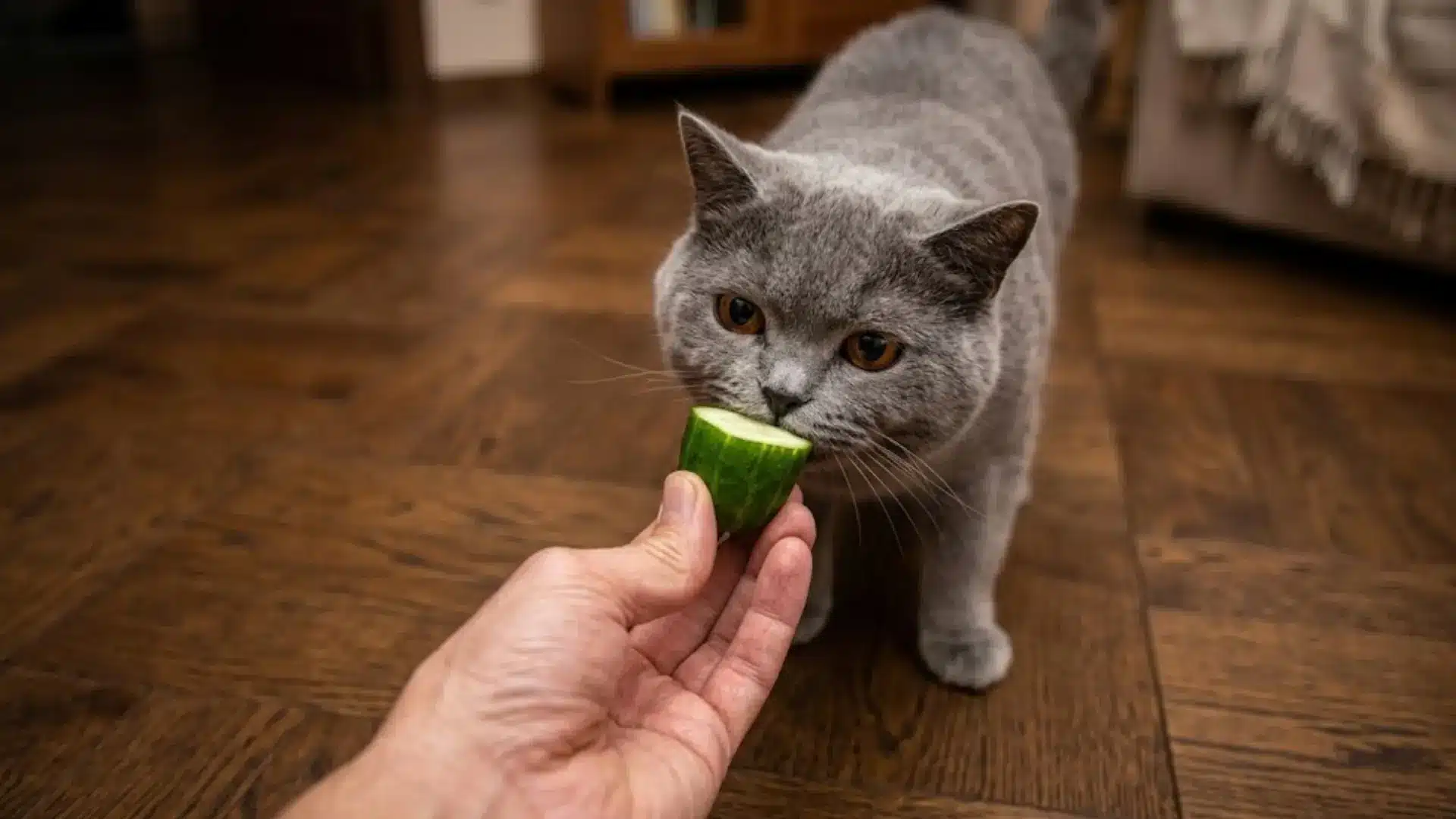
Yes, plain cucumber is safe for cats in small amounts.
It’s not toxic, and it won’t cause harm if your cat takes a nibble. That said, it’s worth knowing what you’re actually offering before you make it a habit.
Cats are obligate carnivores, meaning their bodies require animal protein.
Cucumber doesn’t supply the nutrients a cat’s diet is built around, so it has no place as a regular food.
Think of it as a low-stakes treat rather than a health food.
If you’re curious about what proteins actually belong in your cat’s diet, our guide on can cats eat salmon is a good place to start.
Risks of Scaring Your Cat with Cucumbers
Cats don’t forget frightening experiences, especially ones that happen in spaces they consider safe. Here’s what repeated scares can actually do to your cat.
- Food bowl avoidance: A cat scared near its feeding spot may stop returning to it, quietly reducing how much it eats and drinks.
- Negative room associations: Cats link spaces to experiences, so a frightened cat may start avoiding the kitchen or any room where the scare happened.
- Chronic stress and anxiety: Repeated scares raise a cat’s baseline stress level, showing up as hiding, over-grooming, appetite changes, or increased aggression.
- Litter box problems: Stress is a well-documented trigger for litter box avoidance in cats, and it’s one of the harder habits to reverse once it sets in.
- Accidental injury: A cat bolting in full panic has no spatial awareness, and collisions with furniture, slipping on floors, and falls from height are all real possibilities.
What Should You Do Instead of Scaring Your Cat?
A cat’s curiosity is one of the most entertaining things about living with one, and you genuinely don’t need to frighten it to see something worth watching.
The instincts that make cats leap at cucumbers are the same ones that make them endlessly fascinating to observe in calmer, more intentional ways.
- Cat toys: Use wand toys, feather teasers, or rolling balls to let your cat chase, pounce, and jump without feeling trapped, surprised, or unsafe during play time.
- Puzzle feeders: Puzzle feeders slow eating, keep the brain active, and give your cat a rewarding challenge without shock, fear, or sudden changes nearby at meal time.
- Supervised play sessions: Short daily play sessions help burn energy, reduce boredom, and build trust because your cat knows you are part of the fun, not the threat.
- Calm object introductions: Place new objects in an open area and let your cat approach slowly, sniff, walk away, or return whenever it feels ready on its terms.
- Sniff first exploration: Let your cat investigate with its nose first instead of forcing contact, so curiosity grows naturally and confidence stays stronger over time inside the home.
The difference between a prank and enrichment is simple: one leaves your cat more anxious, the other leaves it more confident.
A cat that feels safe in its home is a cat that shows you its full personality, quirks, and all, every single day.
How Much Cucumber Can a Cat Eat?
A small cube or two is plenty for one sitting, and that’s true regardless of how much your cat seems to enjoy it.
Cucumber is around 95% water, which sounds harmless until you realize that too much at once can cause loose stools, bloating, or an upset stomach in a cat’s short, meat-adapted digestive tract.
A piece roughly the size of your thumbnail is a reasonable amount. Anything beyond that starts pushing into territory where the water load outweighs any benefit.
Think of it the way you’d think of any treat.
A small addition to an otherwise balanced diet, offered occasionally, never as a substitute for the protein-rich food your cat actually needs to thrive.
Tips for Giving a Cucumber to Your Cat Safely
Cucumber is harmless in small amounts, but how you prepare and serve it makes a real difference. Follow these simple steps to keep it safe and stress-free for your cat.
- Wash it thoroughly: Cucumber skins can carry pesticide residue from commercial growing and storage.
- Peel the skin: It’s harder to digest and concentrates the most pesticide exposure, so peeling is the safer choice.
- Cut into small cubes: Thin rounds are a choking risk. Small, bite-sized cubes are much easier for a cat to manage.
- Serve it raw: Cooking changes the texture and offers no added benefit. Raw and plain is always the right call.
- Skip all seasonings: No salt, dips, dressings, or spices. Onion and garlic are toxic to cats, and most condiments contain ingredients that have no place in a cat’s diet.
- Start with a tiny amount: If it’s your cat’s first time, offer one small piece and watch for any reaction before offering more.
- Keep it occasional: A small piece now and then is fine. It should never replace any part of a balanced, protein-based meal.
Conclusion
Cats are not scared of cucumbers. They’re startled by objects that silently appear behind them, especially when they’re in a vulnerable spot, like their feeding area.
A cucumber triggers that reaction because of how it’s placed, not what it is.
The viral trend captured real fear responses, but the framing made it look like a universal phobia. It’s not.
As for eating them: small, plain, peeled pieces of cucumber are safe for most cats as an occasional treat.
There’s no compelling nutritional reason to offer cucumber regularly, but if your cat takes an interest, it won’t cause harm in moderation.
Has your cat ever reacted to something completely unexpected? Drop it in the comments and let us know.
Frequently Asked Questions
Why Do Cats Jump When They See Cucumbers?
The jump is a startle response, not a cucumber-specific fear. When a cat turns around and finds an object that wasn’t there before, its nervous system registers a potential threat and triggers an immediate escape reflex.
Can Cats Eat Cucumber Skin?
Small amounts of cucumber skin are not toxic, but peeling is the safer choice. The skin contains more fiber than the flesh, which can upset a cat’s digestion in larger amounts.
Can Cats Eat Cucumbers with Salt?
No. Salt is harmful to cats even in small amounts and can cause dehydration, sodium poisoning, and kidney strain. Always serve cucumber plain with no seasoning of any kind.