


Hearing a new puppy cry from the crate can leave you torn. Comfort them too quickly, and you may worry about reinforcing the noise; wait too long, and you could miss fear, pain, or a bathroom need.
In 14 years of dog training and behavior work, I have learned that puppy crying should not trigger one automatic response. First check for toileting, illness, discomfort, hunger, thirst, and unsafe conditions.
If those needs are met and the whining stays mild, give your puppy a brief chance to settle while you remain nearby.
If it escalates into panic, frantic escape attempts, or physical distress, step in and make the next practice easier. The right response depends on the cause, intensity, and context.
Why Do Puppies Cry
Puppies vocalize for several reasons, and the sound alone rarely identifies the cause. Look at when the crying begins, what happened immediately beforehand, and what your puppy’s body is doing.
A new puppy may miss sleeping beside their mother and littermates, which is often a normal litter-separation adjustment, or feel uncertain in an unfamiliar home. Crying can also signal a bathroom need, hunger, thirst, an uncomfortable temperature, pain, fear, frustration, or a desire for contact.
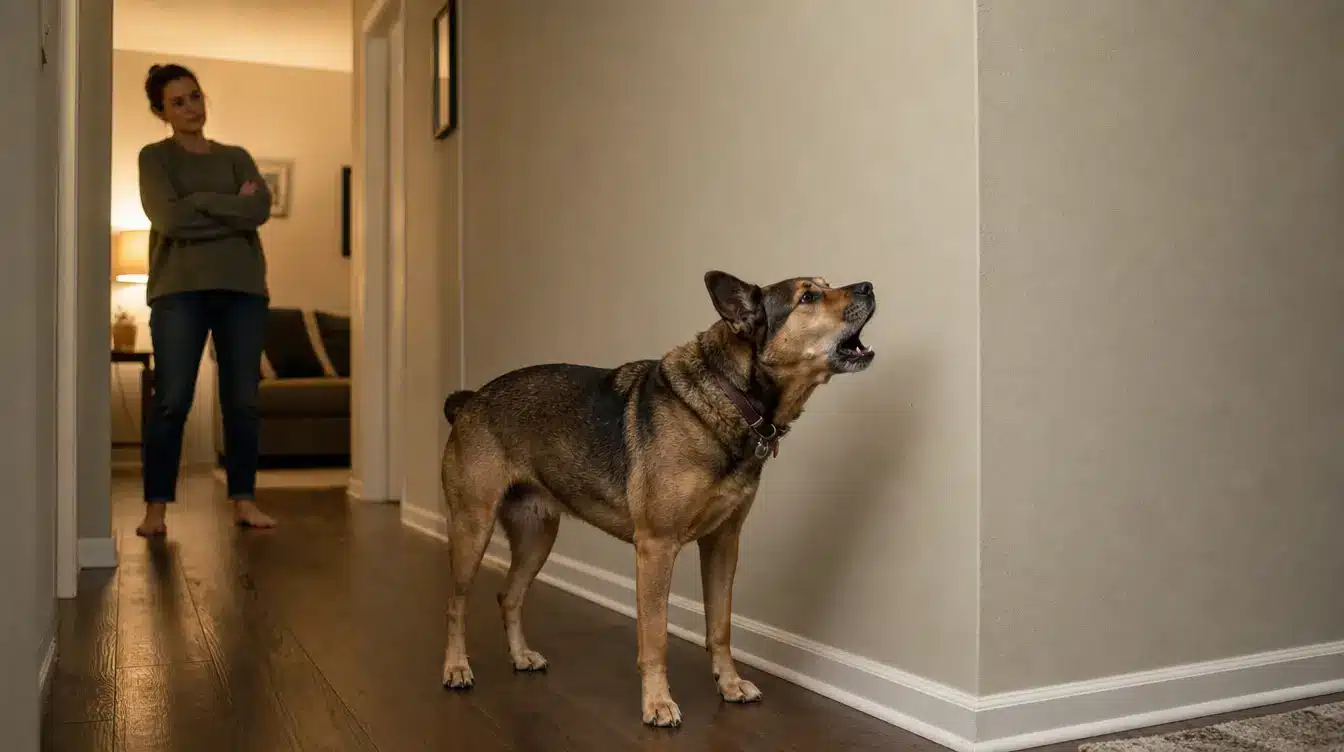
Check for patterns. Vocalizing after several hours of sleep may indicate a bathroom need, while whining that begins as you prepare to leave may relate to separation. Panting, drooling, trembling, pacing, freezing, or frantic escape attempts suggest more than mild frustration.
The American Animal Hospital Association includes these behaviors among common signs of distress. Context helps you choose an appropriate response instead of treating every sound in the same way.
Puppy Crying: When to Comfort and When to Wait

Do not automatically ignore every cry or immediately release your puppy whenever they make noise. First assess the cause, intensity, timing, and accompanying body language.
1. Check Physical Needs First
Consider whether your puppy needs a bathroom trip, a meal from their regular feeding schedule, water, comfortable bedding, or a safer temperature.
Crying after sleep, meals, drinking, or active play often signals a need to go out. Take your puppy outside quietly, then return without starting play. Sudden or unusual vocalizing may require veterinary attention.
2. Allow Mild Whining to Settle
Mild protest may involve intermittent whining with pauses and relaxed body language. If your puppy’s physical needs are met, stay nearby and give it a brief opportunity to settle.
Reward a quiet pause, relaxed posture, or interest in a safe toy. Do not rely on a fixed crying timer.
3. Comfort a Distressed Puppy
Respond when vocalizing becomes louder or occurs with panting, drooling, trembling, freezing, food refusal, or frantic scratching.
These signs suggest fear or distress, sometimes tied to a normal developmental fear stage, rather than simple attention-seeking. End the situation safely and help your puppy recover. Make the next crate or separation session shorter and easier.
4. Avoid Rewarding Demanding Behavior
Some puppies learn that whining brings play, food, attention, or immediate release. When the puppy is relaxed and all physical needs are met, wait for a brief pause before providing the desired response. Keep your reaction quiet and predictable. Never scold, frighten, or physically correct the puppy.
The aim is to meet genuine needs while teaching independence at a pace your puppy can manage. If severe distress continues, contact a veterinarian or qualified reward-based behavior professional.
Why Is My Puppy Crying at Night?
Nighttime can be difficult because a recently rehomed puppy is adjusting to unfamiliar sounds, smells, and sleeping arrangements. Young puppies may also wake because they need to eliminate before morning.
Take your puppy outside shortly before bed and keep the sleeping area close enough for you to notice restlessness or distress. If a bathroom trip is needed, keep it quiet and brief, then return your puppy to bed without starting play.
Do not use a fixed crying timer. Mild whining may stop while you observe, but escalating vocalizing, heavy panting, drooling, or frantic escape behavior requires support and an easier training step.
A predictable bedtime routine can help, but progress should be judged by your puppy’s behavior rather than a set number of nights.
How to Handle Crying in a Crate
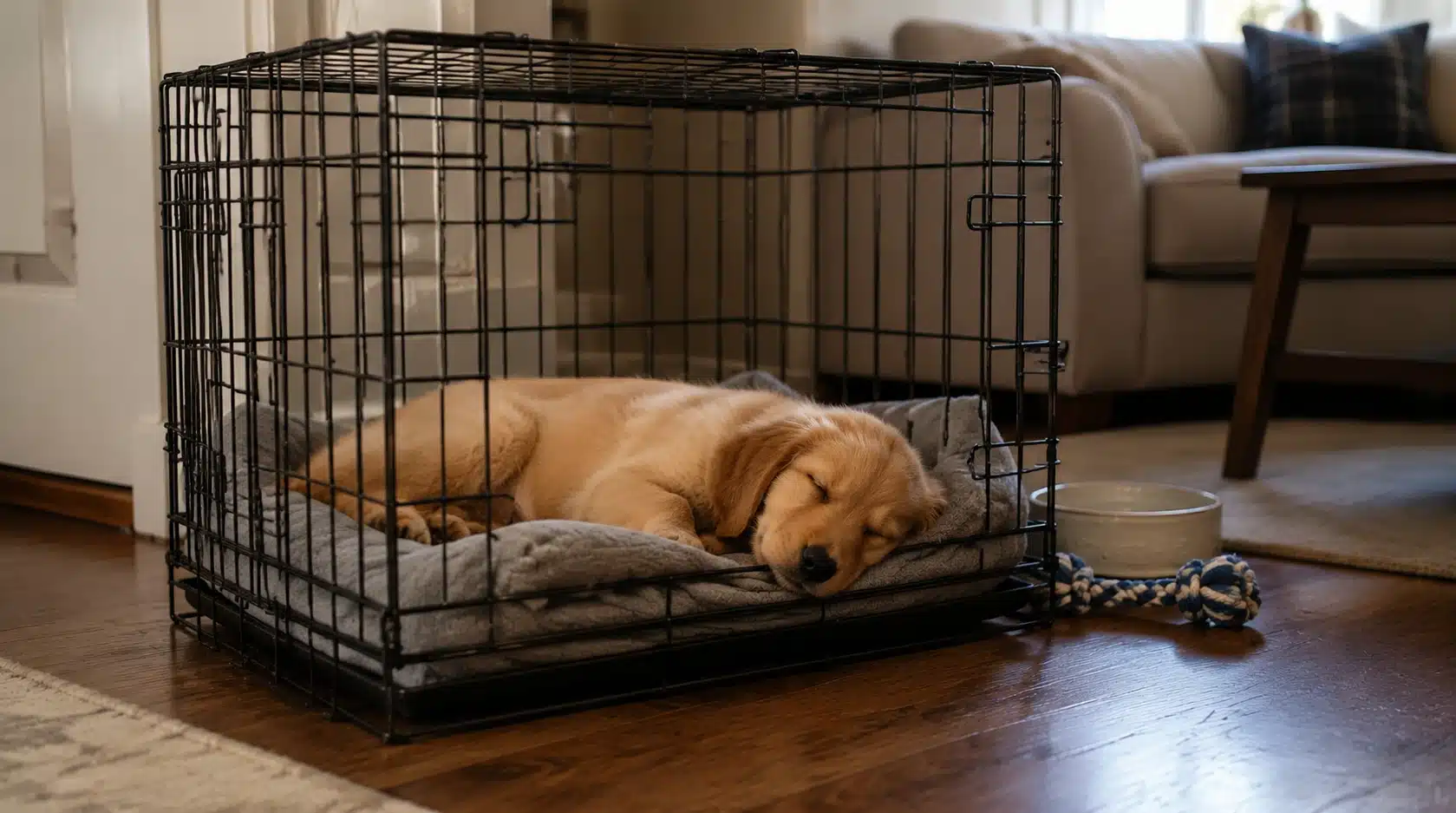
Start crate training while you are home and can observe your puppy. The crate should predict food, rest, and safety rather than punishment or sudden isolation.
- Choose a crate that allows your puppy to stand, turn around, and lie down comfortably.
- Leave the door open at first and place treats or meals inside.
- Close the door briefly while you remain nearby.
- Open it during relaxed behavior, before your puppy becomes distressed.
- Increase either the duration or your distance gradually, not both at once.
- Shorten the next session if whining becomes persistent or escalates.
- Use another safe confinement option if your puppy repeatedly panics or attempts to escape.
The University of California, Davis School of Veterinary Medicine recommends increasing crate time slowly and returning to a duration the puppy tolerates when whining persists.
Successful crate practice builds comfort through manageable steps instead of testing how long a puppy can endure distress.
When Crying Needs Professional Attention
Some vocalizing is associated with adjustment or frustration, but a sudden or intense change may signal pain, illness, or serious distress. Look at the whole puppy rather than the sound alone.
Contact your veterinarian promptly if crying occurs with:
- Vomiting or diarrhea
- Poor appetite or unusual weakness
- Breathing difficulty
- A swollen or painful abdomen
- Limping or a suspected injury
- Difficulty urinating or defecating
- Pain when touched
- Collapse, confusion, or seizures
These signs require professional assessment rather than a crate-training response. Seek behavioral help if departures repeatedly trigger panting, drooling, pacing, food refusal, destruction near exits, indoor elimination, or frantic escape attempts.
These behaviors may indicate separation-related distress, particularly when they occur only during departures or absences. Record a safe video when possible because behavior during your absence may differ from what you see while at home. Early assessment can prevent a medical or behavioral problem from becoming harder to manage.
Final Whine
Puppy crying is easier to handle when you respond to the cause instead of following a fixed rule. In my training work, I first check for a bathroom need, illness, discomfort, hunger, thirst, or an unsafe setup.
Mild, intermittent whining may pause without intervention when those needs are met. Escalating distress, frantic escape attempts, heavy panting, drooling, or sudden unusual vocalizing calls for support and possibly professional help.
Keep crate practice short, positive, and gradual. Reward relaxed behavior, use quiet nighttime bathroom trips, and shorten the next session if your puppy struggles.
Progress will vary, so judge readiness by body language rather than a timer. If the crying changes suddenly or causes concern, contact your veterinarian.
Frequently Asked Questions
Should I Cover the Crate at Night?
A partial cover may reduce visual stimulation for some puppies, but others become warmer or more unsettled. Keep airflow clear, secure the fabric beyond reach, monitor your puppy, and remove the cover if panting or distress increases.
Can Teething Make a Puppy More Vocal?
Yes. Teething discomfort can make some puppies restless or more vocal, especially when chewing. Offer veterinarian-approved chew options and supervise them. Contact your veterinarian if crying is sudden, persistent, or paired with swelling, poor appetite, or lethargy.
What Should I Record for a Trainer?
Record the timing, duration, location, what happened beforehand, and how your puppy recovered. Video from a safe distance can reveal pacing, panting, escape attempts, or outside triggers that are easy to miss while you are away.
Why Did the Whining Return After Improving?
A temporary setback can follow a schedule change, illness, frightening event, longer absence, or training step that progressed too quickly. Return to the last comfortable duration and consult your veterinarian if the change is sudden or persists.