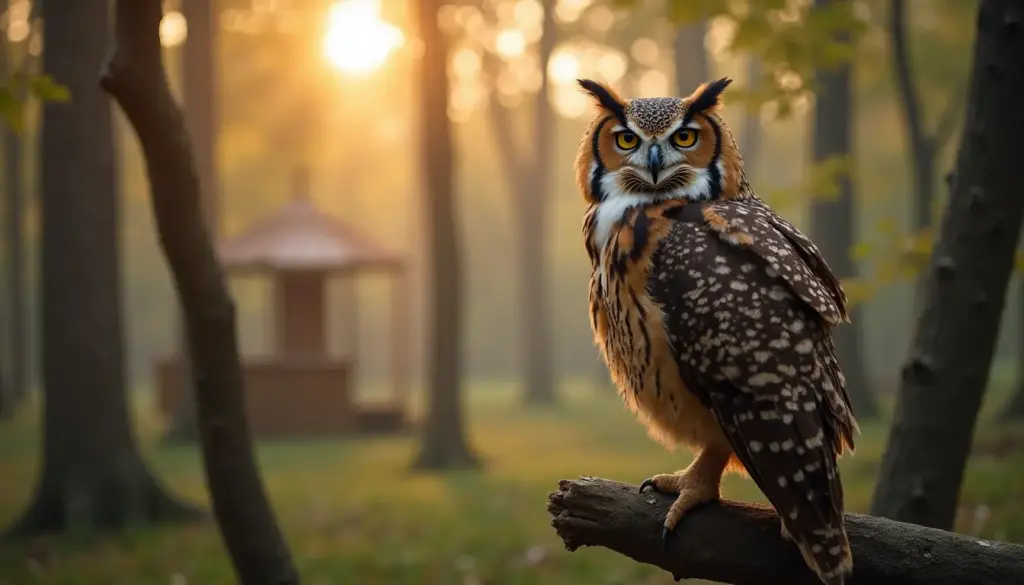
That wide-eyed clip of an owl perched calmly on someone’s arm makes the whole thing look effortless: just point, click, adorable. We get why it’s tempting.
But the gap between that thirty-second video and the daily reality of owl ownership is bigger than most people realize, and it’s worth understanding before you fall in love with the idea.
Here’s the short version: most owls native to the United States cannot legally become a pet without specific federal and state permits, and even where a legal path exists, daily care involves far more than a perch and a quiet room.
Let’s go through what the law actually allows, why owls struggle in home settings, what real care requires, and what it costs over a long lifespan.
A quick note: laws vary by state, so we’re focusing on federal rules here along with common state patterns. This isn’t a substitute for checking your own state’s specific requirements.
What Does “Pet Owl” Actually Mean?
Before any legal question makes sense, it helps to separate the different situations people lump together under one label. Not everyone shown handling an owl online actually owns that bird as a personal pet.
- A wild owl living independently isn’t owned by anyone, no matter how often it visits a yard or nest box.
- A licensed educational bird belongs to a permitted organization and works under close supervision for teaching programs.
- A falconry bird lives with a permitted falconer for a hunting partnership, not companionship, following strict housing and training rules.
- A rehabilitation bird stays temporarily with a licensed caretaker until it can return to the wild or move to permanent placement.
Once you separate these out, it’s a lot easier to see why so much of what looks like “owl ownership” online isn’t quite what it appears to be.
Why Owls Usually Do Not Make Good Pets
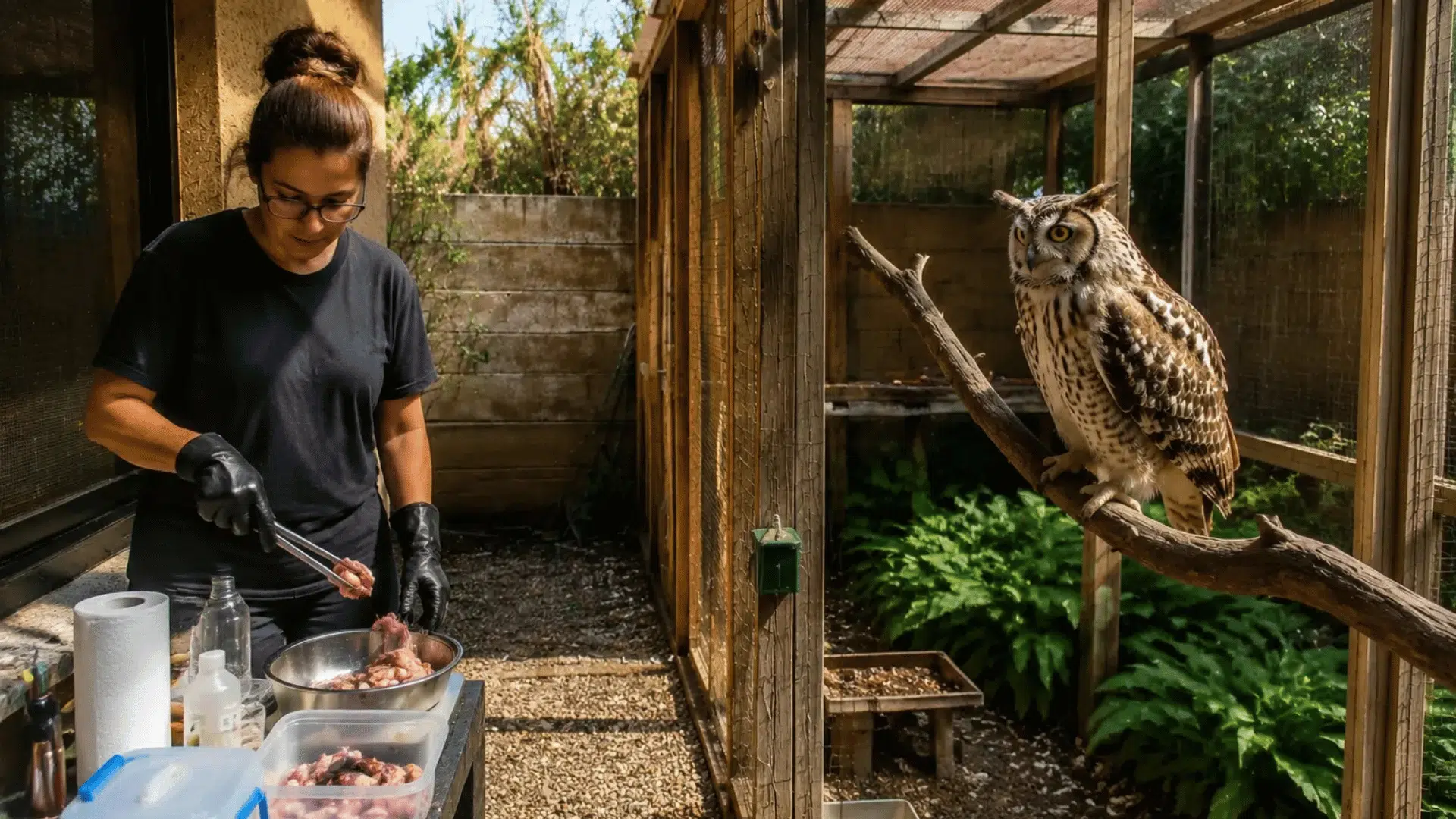
Legal barriers are only one factor. Owls are wild predators with specialized needs that rarely fit into ordinary home life, even for permit holders with genuine dedication.
1. They Need Whole-Prey Diets
Owls depend on whole prey like mice, rats, and day-old chicks rather than anything you’d find at a pet store.
The University of Minnesota Raptor Center notes that licensed facilities source poultry and rodents from breeding operations specifically to meet nutritional needs a regular store simply can’t supply.
Frozen prey also requires proper storage, thawing schedules, and portion control tied to each bird’s size and activity level, not something you can improvise.
2. Owls Cannot Be House Trained
Owls produce droppings and regurgitated pellets wherever they perch, since no training method changes this instinctive behavior.
Feathers shed constantly and carry dust that some people find irritating. Odor builds up quickly without a rigorous cleaning routine. That level of daily cleanup can be difficult for people with limited time, especially compared with some low-maintenance pets that require less hands-on care each day.
Indoor surfaces, furniture, and electronics face ongoing damage from talons and beaks that treat every object as a potential perch, toy, or target.
3. They Can Injure People
Talons apply strong gripping pressure that can break skin during calm handling. Beaks deliver a sharp bite when threatened or overstimulated.
Defensive behavior appears suddenly, since owls read body language unlike domestic animals.
Children face higher injury risk since quick movements trigger a startled response. Other pets face risk too, since an owl may see a small dog as prey.
4. Their Natural Behavior Does Not Suit Home Life
Nocturnal habits mean an owl is most active while a household sleeps, creating noise and activity at inconvenient hours.
Territorial instincts make an owl defensive of its space, perch, or food. Solitary behavior means owls do not seek companionship the way dogs or parrots do.
Flight needs require open space most homes cannot provide, since a confined bird faces stress.
For people interested in keeping a larger companion bird, large parrot species are generally a more relevant group to consider, though they come with demanding care needs of their own.
Can You Legally Adopt an Owl in the United States?
Owning most native owls is prohibited without a federal permit, and this restriction surprises many first-time researchers.
Current owl laws trace back to conservation legislation that predates modern pet culture by a century, and understanding them is the first step toward figuring out whether a legal pet owl is even possible in your state.
Why Most Owls Are Protected by Federal Law
- The Migratory Bird Treaty Act of 1918 implements international conservation agreements, and owls fall under its protection
- Capturing, possessing, selling, or transporting a covered species without federal authorization is illegal
- The law exists because unregulated capture and trade once devastated bird populations
- Even injured or orphaned birds are covered—good intentions don’t override permit requirements
- Permits allow qualified institutions to hold birds for conservation, education, or research, without opening ownership to the public
Who Can Legally Keep Owls?
- Wildlife rehabilitators working under a state and federal rehabilitation permit
- Zoos and accredited wildlife parks operating under exhibitor licensing rules
- Educational facilities that use birds for public teaching programs
- Researchers studying owl behavior, health, or population trends
- Licensed falconers who meet the training and housing standards required for their permit class.
A note on the legal information above: this reflects the general framework under the Migratory Bird Treaty Act, but state-level rules, permit categories, fees, and application processes vary and do change over time. Before assuming any path applies to your situation, confirm current requirements directly with the U.S. Fish & Wildlife Service and your state wildlife agency. This article is meant to help you understand the landscape; it isn’t legal advice and shouldn’t be treated as the final word on your specific circumstances.
Once the legal landscape is clear, the practical question becomes whether ownership makes sense even where a permit path exists.
How Much Does Owl Ownership Cost?
Costs continue for the owl’s entire lifespan, which can stretch well beyond a decade depending on species. Planning for ongoing expenses matters as much as the upfront investment.
| Expense | Estimated Cost |
| Aviary | $500 to $4,000+ to build, depending on size and materials |
| Whole prey food | Roughly $30 to $100+ per month, depending on species and size |
| Veterinary care | $75 to $150 per routine exam, more for bloodwork or imaging |
| Equipment | Several hundred dollars for perches, gloves, and telemetry gear |
| Permits (where applicable) | Roughly $15 to $100 per state permit, plus renewal fees |
Owl lifespans often range from ten to twenty years or longer depending on the species, meaning a caretaker commits to years of consistent spending rather than a single purchase. Figures above are general estimates, since state permit fees and regional food prices vary.
What Caring for an Owl Actually Involves
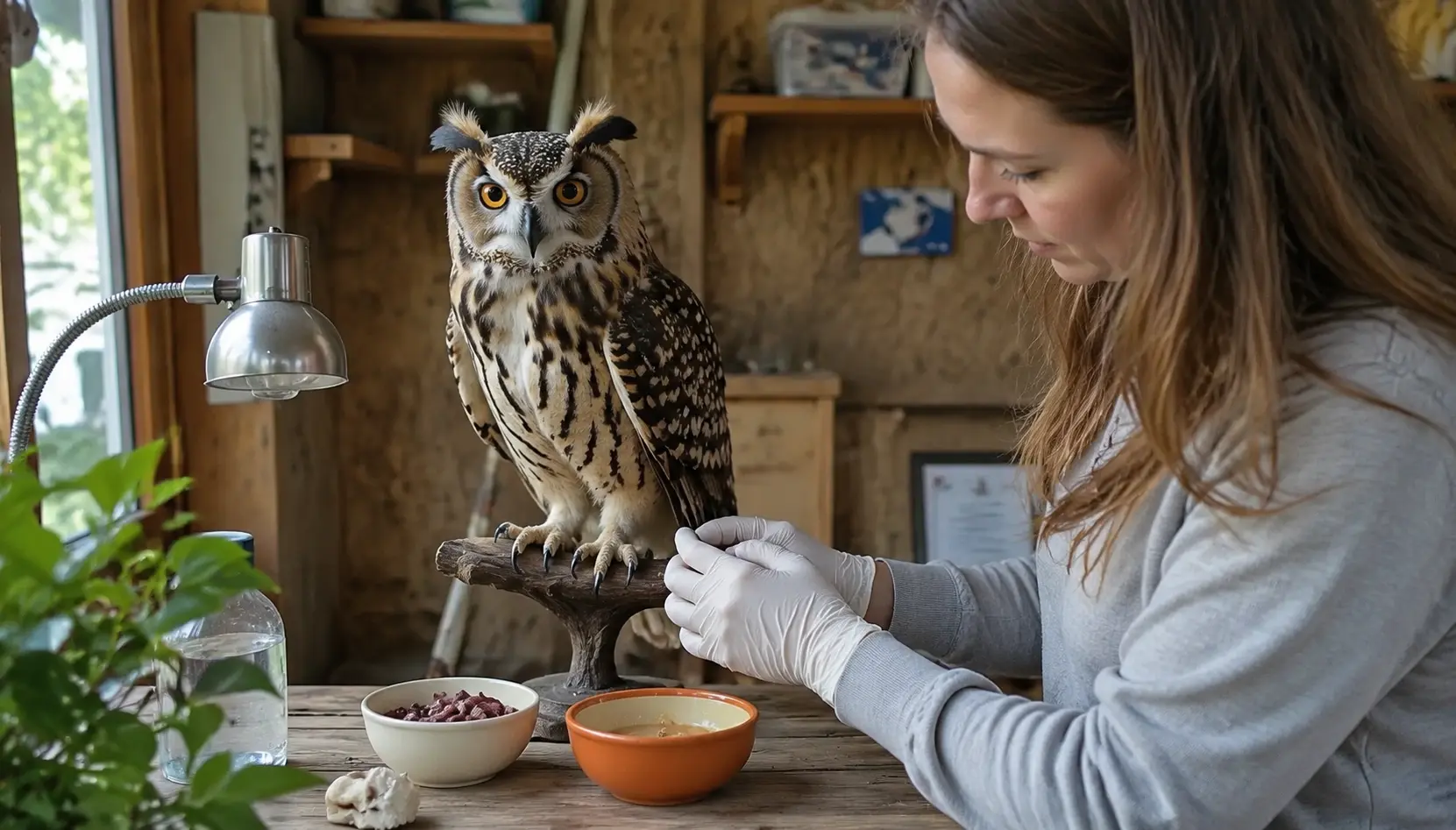
Even licensed caretakers spend significant time meeting an owl’s needs every single day. Proper owl care extends well beyond feeding and cleaning a cage, touching housing, veterinary support, and daily observation.
1. Housing and Flight Space
An aviary large enough for real flight, several appropriate perches, environmental enrichment items, and shelter from extreme weather all form baseline housing requirements.
Owls hunt small rodents, small birds, and insects in the wild, and enclosure design should reflect that natural hunting behavior, including varied perch heights, hiding spots, and quiet resting areas away from constant daily foot traffic nearby.
2. Feeding and Veterinary Care
Whole prey feeding on a consistent schedule keeps nutrition balanced, and a caretaker needs access to an exotic or avian veterinarian for regular health checks and emergency care.
Owls feed on a variety of prey depending on species, including rodents, squirrels, rabbits, and smaller birds, so diet planning should match the specific bird rather than a generic formula found online.
3. Daily Time Commitment
Daily responsibilities include cleaning the enclosure and removing waste, preparing and offering whole prey at appropriate times, and providing supervised exercise or flight opportunities whenever weather and space allow.
Careful observation matters just as much, since caretakers must watch behavior and health closely for early signs of illness, injury, or stress before problems become serious enough to require veterinary intervention.
Common Misconceptions About Pet Owls
Popular culture often creates an unrealistic impression of what owl ownership actually involves. Correcting these misconceptions helps set expectations before anyone makes a decision based on entertainment rather than fact.
Harry Potter Did Not Create Pet-Friendly Owls
Fictional owls that deliver mail and sit calmly on a shoulder bear little resemblance to real bird behavior.
Wildlife officials have repeatedly raised concerns about spikes in owl demand following popular films, since the resulting interest often ignores welfare and legal reality entirely.
Social Media Shows Only Short Moments
A thirty-second clip hides the hours of preparation, cleanup, and training behind it. Much of the calm handling seen online comes from professional handlers with years of specific experience. Edited content also skips the mess, noise, and occasional injuries that come with the territory.
| Myth | Fact |
| Owls can be trained like dogs | Owls retain wild instincts regardless of upbringing |
| Any owl can be kept at home | Native species require federal permits |
| Owls bond like companion parrots | Owls are largely solitary by nature |
With realistic expectations in place, it helps to look at what alternatives actually let owl enthusiasts get involved responsibly.
Better Alternatives if You Love Owls
Genuine interest in owls does not require ownership, and several paths offer meaningful involvement without the legal or welfare concerns tied to private possession.
- Support owl adoption or sponsorship programs run by accredited wildlife centers
- Volunteer with a wildlife rehabilitation organization in your area
- Take up birdwatching to observe owls in their natural habitat
- Visit an owl center or raptor education program that hosts permitted birds
- Practice wildlife photography focused on owls in protected areas
- Attend educational experiences hosted by zoos or nature centers
These options let you engage closely with owls while supporting the professionals equipped to care for them properly.
Conclusion
An owl might look tempting after one viral clip, but the reality involves federal owl laws, strict permits, and daily care most households cannot realistically sustain long-term.
Native species almost always fall outside legal pet owl territory unless you’re a licensed rehabilitator, educator, researcher, or falconer, and even then, owl care means whole-prey diets, real flight space, and a lifetime financial commitment.
Loving owls doesn’t require owning one, though. Supporting a rehabilitation center, visiting an education program, or simply watching them in the wild can give the bird a better life and give you a genuine connection without the legal risk.
Have you ever encountered a wild owl or visited a raptor center? Share your story in the comments below.
Frequently Asked Questions
Can You Legally Own an Owl Feather You Found on the Ground?
No. The Migratory Bird Treaty Act prohibits possessing feathers from protected species, even ones picked up outdoors with no bird involved. Exceptions exist mainly for Native American cultural and religious use under separate permits.
Is it Legal to Import an Exotic Owl Species from Another Country?
No, in most cases. Import laws add another layer beyond U.S. domestic rules, often requiring CITES permits and health certifications even for non-native species. Many countries also restrict export of owls regardless of U.S. entry rules.
Can a Zoo or Sanctuary Give You an Owl for Free if They Can’t Care for it Anymore?
No. Transfers of owls between facilities or to individuals still require the same permits and licensing as any other acquisition. A “free” owl doesn’t bypass federal or state ownership restrictions.