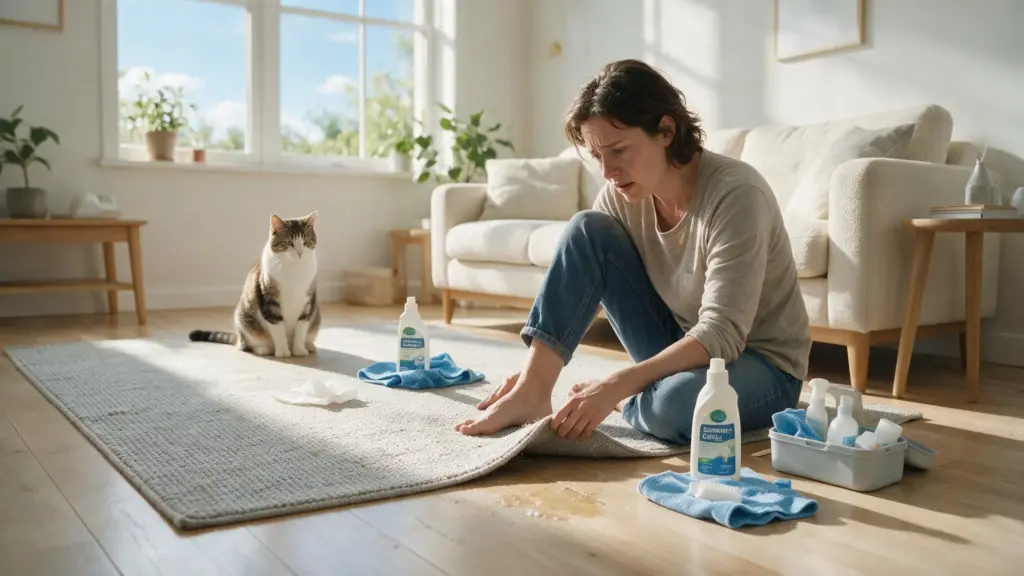
That moment when your home feels clean, your cat is relaxing on the couch, and suddenly you notice an unpleasant smell can be frustrating.
Cat pee odor can linger even when the mess is no longer visible, hiding in carpets, fabrics, furniture, and small areas around your home.
If you are wondering how to get rid of cat pee smell, the first step is finding the source instead of covering it with air fresheners. Proper cleanup takes more than a quick spray.
Enzyme cleaners, careful blotting, and surface-specific methods can help remove fresh stains and reduce stubborn odors from different areas.
Why Cat Pee Smell is so Hard to Remove
Cat pee smell can be surprisingly difficult to remove because the odor comes from more than just the visible wet spot. Cat urine contains uric acid crystals that adhere tightly to surfaces such as carpets, fabrics, wood, and grout.
The smell may seem gone at first, but trapped uric acid residue can remain deep inside materials and release the odor again when exposed to moisture or humidity. Ammonia-based cleaners should also be avoided when dealing with cat urine. So it seems like it’s gone. Then humidity hits, or the air gets a little damp, and suddenly that smell is back like it never left.
Tip : Stay away from ammonia-based cleaners for this. They don’t help and can honestly make things more confusing (ammonia is a component of urine, so that it can smell similar to a cat).
How to Remove Fresh Cat Pee Smell: Step by Step
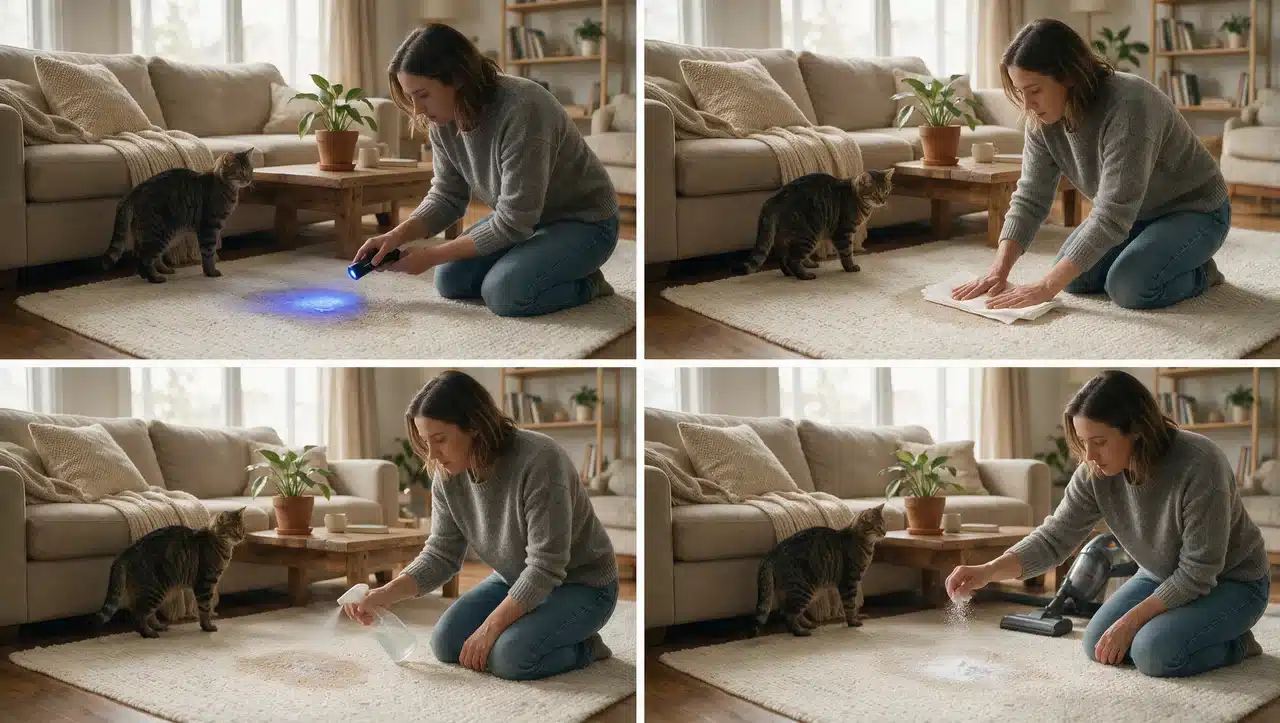
Removing cat urine odor requires more than surface cleaning. Following the right steps helps eliminate lingering smells and discourages repeat marking.
Step 1: Find the Exact Spot Causing the Smell
Start by locating every affected area, not just the spot you can see. Check behind furniture, under rugs, along baseboards, and in corners where urine may have dried unnoticed.
For older stains, a black light can help reveal some hidden spots that are difficult to see normally. Mark the areas you find so you can treat each one properly during cleaning.
Step 2: Blot the Urine Instead of Scrubbing
Avoid scrubbing the area, even though it may feel like the fastest way to clean it. Rubbing can push urine deeper into carpet fibers or fabric, making the odor harder to remove later.
Instead, use paper towels, an old cloth, or another absorbent material. Press firmly on the spot and allow it to soak up as much liquid as possible before applying any cleaner.
Step 3: Use an Enzyme Cleaner to Break Down Odor
Enzyme cleaners help break down organic urine residue that contributes to lingering odors. Products like Nature’s Miracle Cat Urine Destroyer and Simple Solution Extreme Cat are commonly used for pet urine cleanup.
Apply enough cleaner to fully cover the affected area and follow the product instructions for soaking time.
Step 4: Use Odor-Neutralizing Methods After Cleaning
After the area has dried, supporting methods can help reduce any remaining odor. Sprinkle baking soda over the cleaned spot, leave it for a few hours, then vacuum it away.
Diluted white vinegar may help reduce sharp ammonia-like smells, but it should not replace proper urine cleanup. Never mix vinegar with bleach because the combination can create harmful fumes.
How to Get Cat Pee Smell Out of Different Surfaces
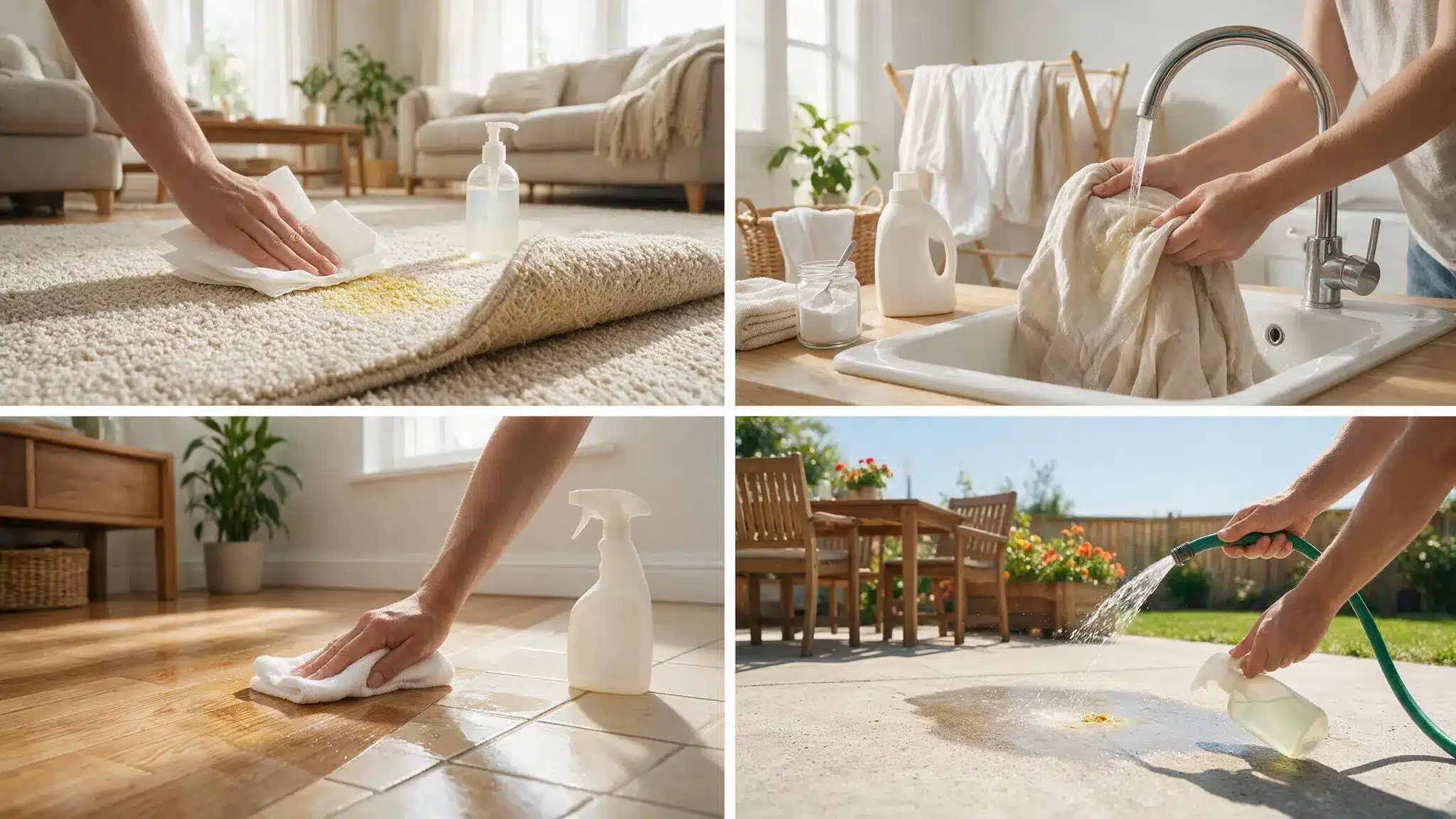
Different surfaces hold onto urine in totally different ways, which is why one method doesn’t fix everything. Here’s how to handle the big ones.
1. Carpet and Rugs
Carpet is probably the worst offender. Urine gets deep into the fibers and sits there. Blot fresh spots with paper towels, don’t rub, and use enzyme cleaner generously enough that it reaches the deeper layers (treat a bit wider than the visible stain, since urine spreads).
Let it dry, then vacuum. If the smell’s still there after a few rounds, the padding underneath is probably the culprit, and it may need replacing.
2. Clothes and Bedding
Rinse with cold water first to get out as much urine as you can; then wash normally with detergent. Baking soda or white vinegar (not together) added separately can help knock out what’s left.
Air dry and check before it goes in the dryer; heat can actually set in whatever smell is still hanging around, so don’t rush that part.
3. Hardwood, Tile, and Other Floors
Hard floors are generally easier, but urine still finds its way into cracks and grout lines. Wipe fresh spots quickly with a damp cloth. For lingering smells, use an enzyme cleaner made for your flooring type.
Unfinished wood needs a lighter touch; too much liquid soaking in can actually warp or stain it. Check grout lines and seams especially, since that’s where things tend to settle.
4. Outdoor Areas
Patios, concrete, outdoor furniture- cats don’t discriminate. Rinse fresh spots with water, then use an outdoor-safe enzyme cleaner.
Concrete’s porous, so it might take a couple of rounds before the smell’s fully gone. Staying on top of regular cleanup outside keeps things from building up in the first place.
Natural Ways to Reduce Cat Pee Odor
Looking for simple ways to manage cat pee smell between cleanings? Some natural odor reducers can help freshen areas after the primary source of urine has been removed. These options work best as supporting steps rather than a replacement for proper urine cleanup.
| Option | What It Does | How to Use | Important Note |
|---|---|---|---|
| Baking soda | Absorbs surface odors | Sprinkle on a dry area, wait, then vacuum | Does not remove urine residue |
| Diluted vinegar | Reduces sharp odors | Test first, then apply lightly | Never mix with bleach |
| Activated charcoal | Absorbs airborne smells | Place near odor-prone areas | Keep away from pets |
| Washing and airflow | Removes odors from fabrics | Wash fabrics and open windows | Air-dry before checking |
Natural odor reducers like baking soda, vinegar, and activated charcoal can help manage lingering odors after thorough cleaning. Use them alongside source removal and regular upkeep to keep your home feeling fresh.
How to Remove Years-Old Cat Urine Smell?
Old urine smell is a different beast entirely. If it’s been sitting for months or years, one round of cleaning rarely cuts it; it’s usually soaked into layers you can’t even see, like the padding under a carpet.
Start with a UV light again. Check the usual suspects: carpet edges, under furniture, baseboards, fabric. Once you’ve found the spots, really saturate them with enzyme cleaner and give it time to do its job.
For big areas or really deep buildup, it might be worth calling in a professional carpet cleaner. They can get into layers you can’t reach on your own. Go back and recheck the same spots more than once. Missed spots are usually the reason the smell keeps returning.
Sometimes, though, the material’s just too far gone. If padding or furniture still smells after repeated treatments, replacing it might genuinely be less work than fighting it forever.
Community Tips for Cat Pee Smell Problems
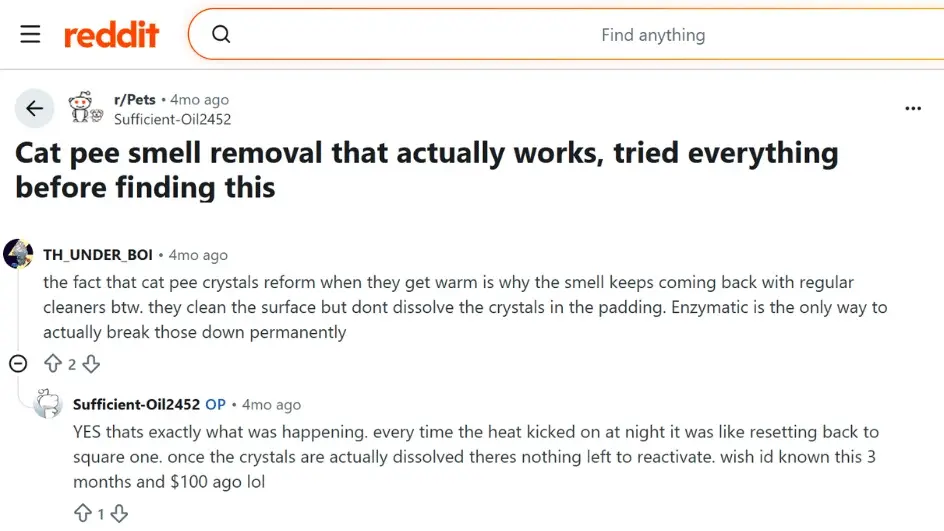
Many cat owners turn to Reddit after struggling with cat urine odor that keeps returning despite repeated cleaning.
In one Reddit discussion, an owner dealing with recurring accidents said that finding every hidden urine spot and treating each area with an enzyme cleaner worked better than using ordinary odor sprays.
Other users recommended using a UV light to locate dried stains, protecting repeat areas with washable covers, and checking whether litter box problems, cat spraying behavior, or a health concern could be causing the accidents.
These discussions show that lasting odor removal depends on finding the full source, using a suitable cleaner, and addressing why the cat keeps returning to the same area.
Common Mistakes That Keep the Odor Around
Small cleaning errors can leave urine residue behind or make the affected material harder to treat. Avoid these mistakes before deciding that a cleaner has failed.
- Scrubbing fresh urine: Rubbing pushes liquid deeper into carpet fibers, upholstery, or padding. Blot firmly with an absorbent cloth instead.
- Using too little enzyme cleaner: The product must reach as deeply as the urine traveled. Treat slightly beyond the visible stain and follow the label directions.
- Checking the area too soon: Enzyme products need time to work and dry. Assess the odor only after the treated material is fully dry.
- Applying steam or hot water: Heat may set urine residue into fabric and carpet fibers. Use cool or lukewarm water unless the care label states otherwise.
- Mixing cleaning products: Combining bleach with vinegar or ammonia can release dangerous fumes. Use one suitable product at a time.
- Ignoring the underlying cause: Repeated accidents may be connected to litter box conditions or stress, while possible physical problems require veterinary attention.
Correcting these mistakes can prevent repeated treatments and help you tell when urine has reached padding, unfinished wood, or another material that may need professional cleaning or replacement.
Final Thoughts
Cat pee odor often returns because the residue remains even after the visible mess is gone.
Learning how to get rid of cat pee smell starts with treating the source instead of covering it with air fresheners. Enzyme cleaners, quick cleanup, and regular litter box care can help keep your home smelling fresher.
If a certain area keeps causing trouble, check it again and treat it properly before the odor becomes harder to remove.
Small habits, like cleaning accidents quickly and watching for repeated spots, can make a big difference over time. Try these steps for your next cleanup and share what worked best for you in the comments.
Frequently Asked Questions
What Removes Cat Pee Smell Permanently?
Enzyme cleaners, hands down. They break down what’s actually causing the smell instead of masking it. Bad stains might need more than one round, or replacing the material entirely if it’s too far gone.
Why Does My House Still Smell Like Cat Pee After Cleaning?
Because it’s probably hiding somewhere you can’t see: padding, cushions, grout, wood. Find that spot first, and the rest gets a lot easier.
Is Cat Pee Smell Harmful to Humans?
Usually not in small doses. But if it’s strong and sticking around, that can point to poor air quality, and it’s worth taking seriously, especially if anyone in the house is sensitive to it.