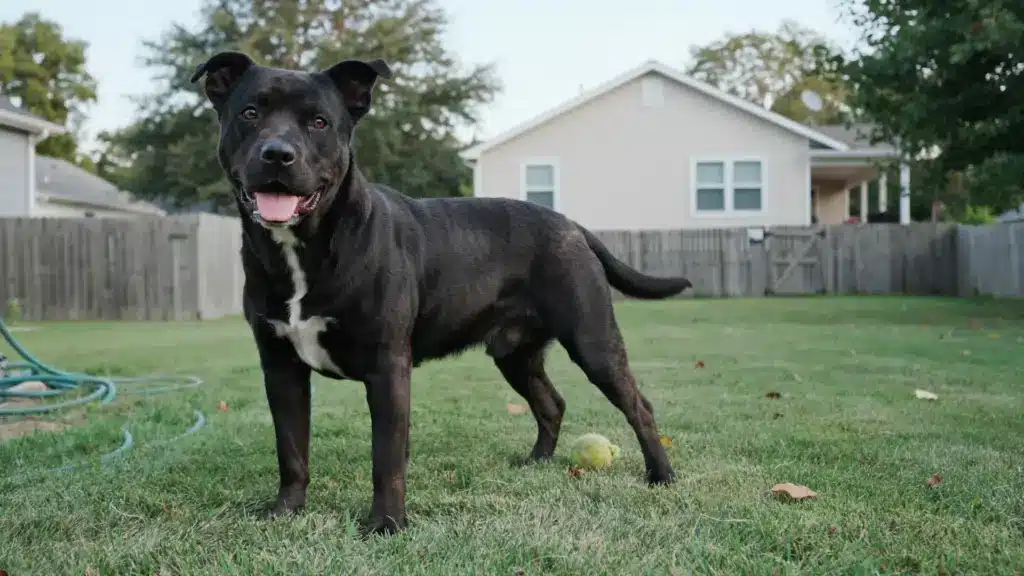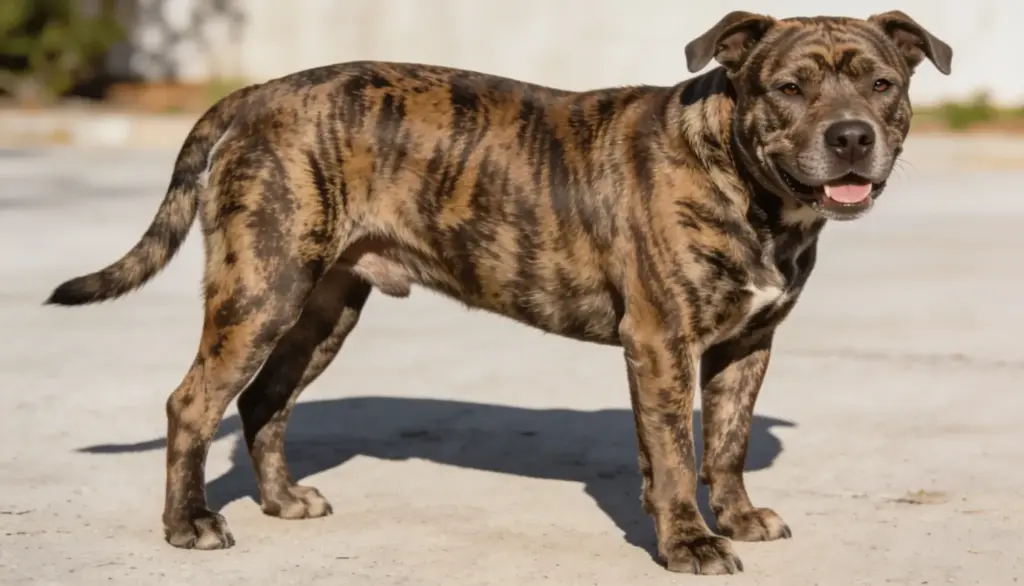
A Brindle Pitbull stands out right away for its striped, tiger-like coat pattern layered over a solid base color. It’s a striking look, but one thing is worth clearing up from the start: brindle is a coat pattern, not a separate breed.
That means two brindle Pitbulls can come from entirely different lineages and still share that same eye-catching stripe pattern.
Brindle is a coat pattern, not a breed in its own right, and the term “Pitbull” actually encompasses several related breeds and mixes rather than a single breed.
So, when someone says, “brindle Pitbull,” they usually mean one of these breeds (or a mix of them) with a brindle coat, not a distinct breed on its own.
Brindle is a Coat Pattern, Not a Breed
“Brindle” describes a coat pattern, not a breed. It shows up as irregular streaks or stripes of a darker color layered over a lighter base coat, somewhat like the pattern on a tiger or a tabby cat, but expressed through short, smooth fur.
A brindle Pitbull, then, is simply a Pitbull-type dog that happens to carry this coloring.
Several breeds and mixes commonly labeled “Pitbull” can display brindle markings, including the American Pit Bull Terrier and the American Staffordshire Terrier, as well as countless mixed-breed dogs that share ancestry with these breeds.
The Genetics and Look of a Brindle Coat
Brindle coloring is determined by genetics. The genes controlling stripe placement and density make every brindle Pitbull’s coat pattern unique.
1. Size, Weight, and Physical Features
Most brindle Pitbulls stand somewhere between 17 and 21 inches at the shoulder and weigh between 30 and 65 pounds, though exact size depends on the specific breed and bloodline involved.
Their body structure is compact and powerfully built, with a broad head, strong jawline, and a short, low-maintenance coat that lies close to the body.
2. The Science Behind the Stripes
The striped appearance of a Brindle Pitbull is due to genetics. The brindle pattern is created by a specific coat color gene that affects how pigment is distributed in the hair.
Instead of producing one solid color, the gene creates darker stripes over a lighter base coat, giving the dog its tiger-like appearance.
The exact pattern, stripe width, and color intensity vary from dog to dog because each puppy inherits a different combination of genes from its parents.
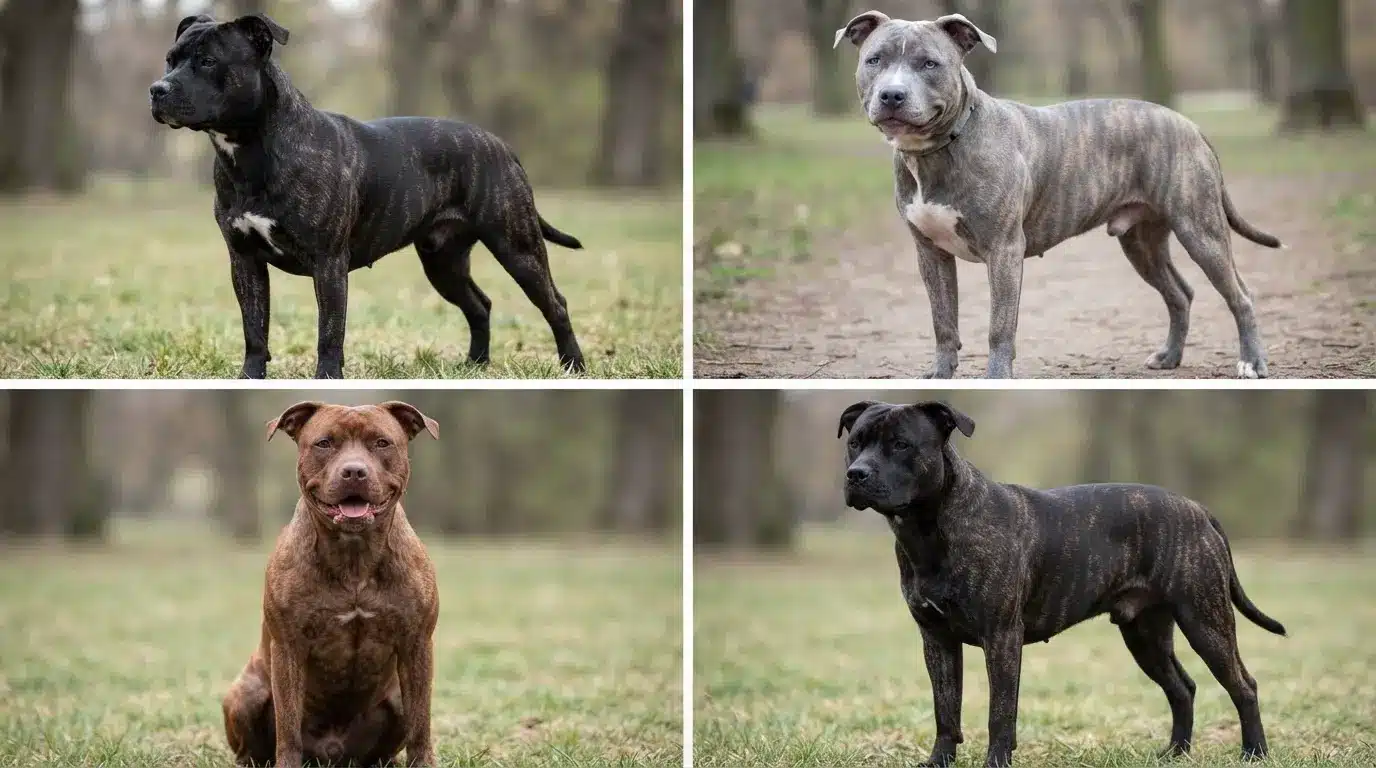
3. Common Colors and Patterns
Each variation looks a little different depending on how much of the base color shows through the stripes, but they’re all still classified as brindle. It really just comes down to personal preference when it comes to looks.
Brindle Pitbulls come in a range of shades, since the pattern’s appearance depends heavily on the base coat color it layers over.
Here’s a quick look at the most common variations:
- Black brindle: Dark stripes over a lighter base coat
- Blue brindle: Gray-blue tones with darker stripes
- Brown brindle: Brown shades mixed with black markings
- Reverse brindle: Darker coat with lighter stripes
How Does the Brindle Coat Pattern Develop?
Brindle is a genetic trait that is inherited in the same way as other coat colors and patterns. It occurs when a specific gene interacts with a dog’s base coat color, creating darker striping over a lighter background.
Because base colors can vary widely, such as black, brown, fawn, blue, and others, the resulting brindle pattern can look very different from one dog to another.
Even when both parents have a brindle coat, their puppies may show a range of stripe intensity, color shades, and pattern variations.
This genetic diversity is what makes each brindle Pitbull’s coat unique. The combination of base color and striping produces endless visual differences, making brindle dogs instantly recognizable while ensuring that no two coats are exactly alike.
Brindle Pitbull Temperament and Personality Traits
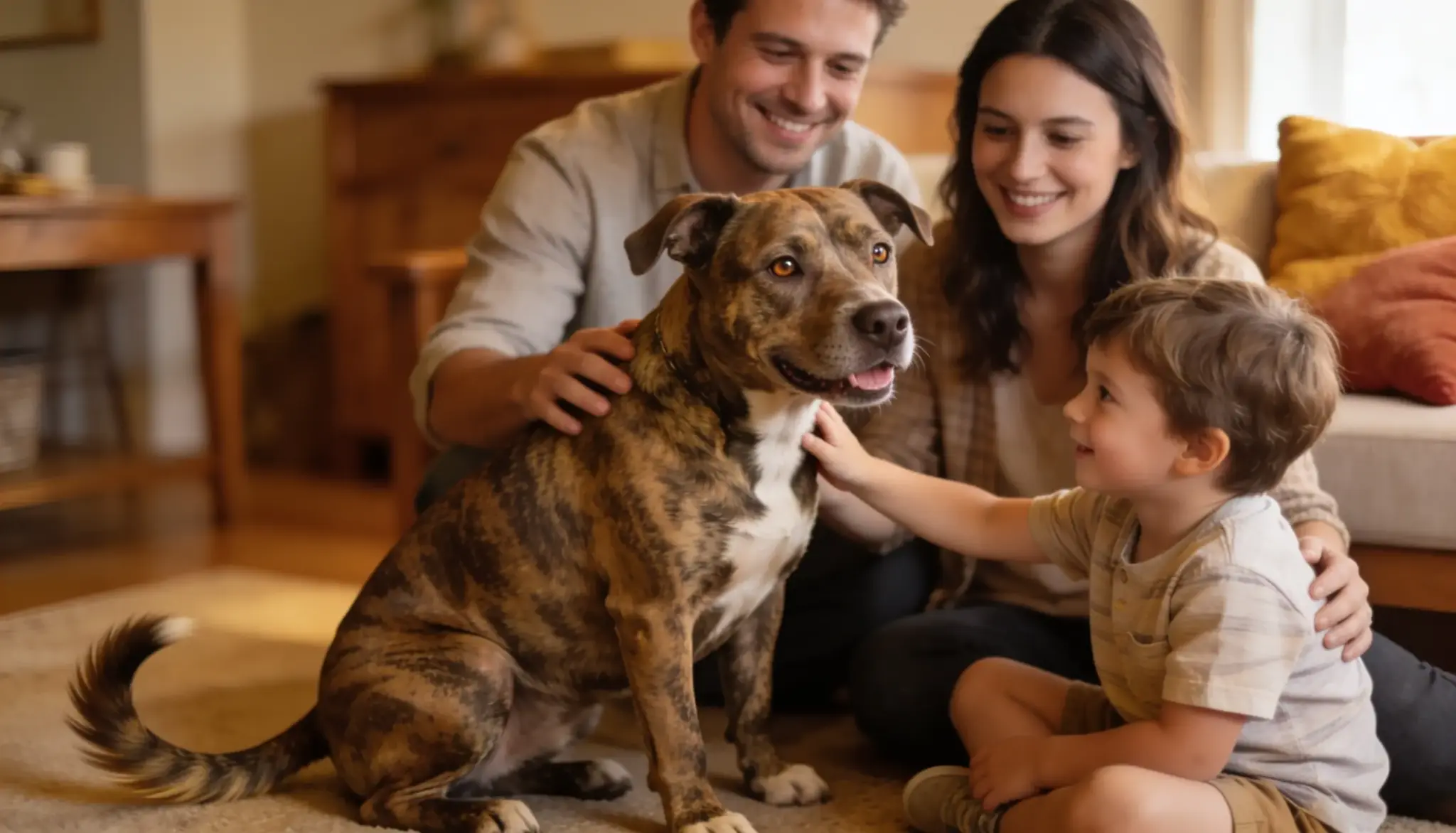
Brindle Pitbulls are generally loyal, intelligent, and affectionate dogs. Early training, socialization, and regular exercise play a major role in shaping their temperament and behavior.
1. Brindle Pitbulls as Family Dogs
Many brindle Pitbulls form close bonds with their families and can do well around children, especially when they’ve been raised and socialized properly. Many pit bull community owners and enthusiasts share and discuss their experiences and the lifestyle they develop after getting a pit bull.
That said, supervision matters with any strong, energetic breed, and early training goes a long way toward building good habits around kids and other pets in the household.
2. The Truth About Brindle Pitbull Aggression
Brindle Pitbulls carry the same reputation, fair or not, that follows Pitbull-type breeds in general, but coat color has nothing to do with temperament.
Behavior is shaped far more by socialization, training, and upbringing than by genetics or appearance. A well-socialized brindle Pitbull is no more prone to aggression than any other well-raised dog.
Brindle Pitbull Care Essentials
Daily care for a brindle Pitbull covers the same basics as any active, medium-to-large breed: regular exercise, simple grooming, and a balanced diet. A diet built around quality protein sources for dogs helps support the muscles and steady energy these active dogs draw on every day.
- Exercise Needs and Activity Level
- Grooming Requirements for a Brindle Pitbull
- Feeding and Nutrition Basics
- Mental Stimulation and Enrichment
- Socialization Needs
With the right daily routine and responsible care, a Brindle Pitbull can remain healthy, happy, and a well-adjusted companion.
How to Train a Brindle Pitbull
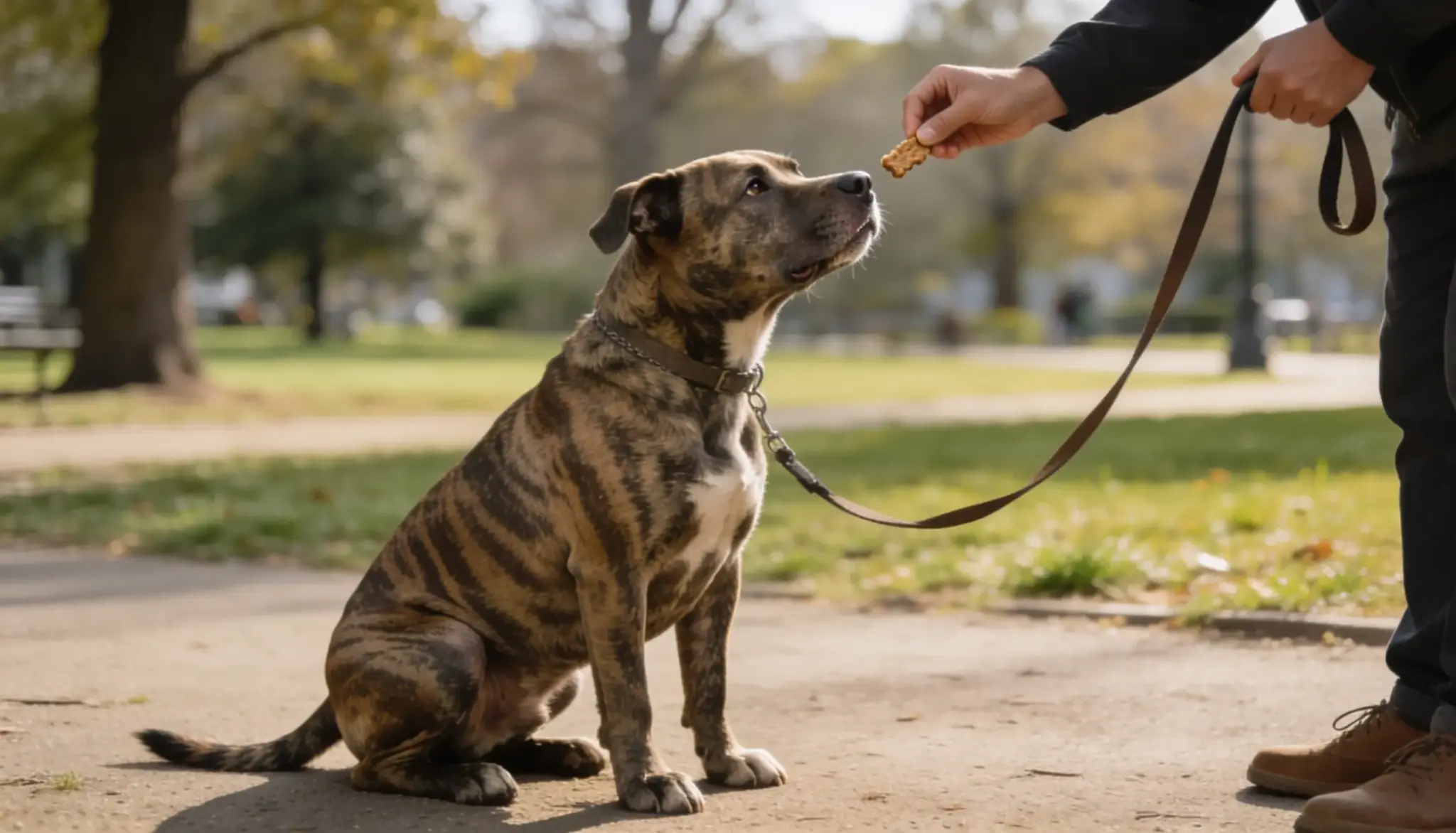
Pitbull-type dogs are intelligent, strong, and full of energy; training isn’t optional. It’s essential for a good quality of life for both the dog and the owner.
Fortunately, these are eager, food-motivated dogs that generally respond very well to structured training. Since they respond so readily to food, small rewards such as homemade frozen dog treats can keep training sessions fun on warmer days.
Training Tips for Brindle Pitbull Puppies:
- Start basic commands (sit, stay, come, leave it) as early as possible.
- Introduce the puppy to a wide variety of people, animals, and environments during the critical socialization window.
- Teach loose-leash walking early, before the dog is strong enough to pull hard.
- Lean on rewards-based training rather than harsh corrections.
Common Training Challenges:
- High energy levels: These dogs need an outlet, or that energy shows up as unwanted behavior.
- Strong physical ability: A powerful, athletic dog can be a handful on leash if not trained early.
- Excitement around people: Many Pitbull-type dogs are so friendly they struggle with jumping or over-the-top greetings.
- Need for mental stimulation: Physical exercise alone often isn’t enough; these are smart dogs that get bored without a mental challenge too.
Positive reinforcement, which rewards good behavior with treats, praise, or play rather than punishing mistakes, tends to work especially well with this breed.
Consistency matters too: using the same commands and expectations every time helps the dog understand what’s being asked of it.
How Pitbulls Became Family Dogs

Public perception has shifted along with that role, too, with more owners on Reddit pushing back against outdated stereotypes and highlighting how much these dogs thrive when properly trained and cared for.
Pitbull-type dogs trace back to breeds developed in the 19th century for a mix of working roles, valued for their strength and determination at the time.
As those original roles faded over the years, their loyalty and affection toward people made them a natural fit for family life, and today most Pitbulls, brindle included, live as companions rather than working dogs.
Brindle Pitbull vs Other Pitbull Colors
Coat color is the main distinguishing factor among differently colored Pitbulls; none of them represent separate breeds, and temperament comes down to the individual dog rather than to color.
| Feature | Brindle Pitbull | Blue Pitbull | Red Nose Pitbull |
| Main difference | Brindle striped coat | Blue-gray coat color | Red nose and coat shades |
| Breed type | Not a separate breed | Not a separate breed | Not a separate breed |
| Temperament | Depends on training and genetics | Depends on training and genetics | Depends on training and genetics |
The comparisons between brindle, blue, and red nose Pitbulls aren’t competing categories so much as different cosmetic expressions of the same underlying dog.
Is a Brindle Pitbull the Right Dog for You?
Brindle Pitbulls can be loving, loyal companions, but they require the right environment to thrive. These dogs are best suited for owners who can provide regular exercise, consistent training, and plenty of attention.
Their energetic and affectionate nature makes them excellent for active households, families who enjoy outdoor activities, or individuals ready to invest time in socialization and obedience.
On the other hand, Brindle Pitbulls may not be ideal for owners who prefer low-energy pets, have limited time for exercise, or cannot commit to structured training routines.
Without proper guidance and engagement, they can become bored or restless. Understanding your own lifestyle and ability to meet a Brindle Pitbull’s physical and mental needs is essential to ensure a happy, balanced relationship for both dog and owner.
Final Thoughts
The brindle Pitbull’s striped coat makes it one of the most visually distinctive dogs around, but that’s where the differences end.
Underneath the pattern is a dog whose personality is shaped by genetics, upbringing, and the care it receives, not by coat color. Most brindle Pitbulls live between 12 and 16 years with good care.
With responsible ownership, consistent training, proper socialization, and plenty of exercise, brindle Pitbulls can make loving, loyal, and playful companions for the right household. Have a Brindle Pitbull at home? Share your experience and tell others what makes these dogs special.
Frequently Asked Questions
Do Brindle Pitbulls Change Color as They Age?
Yes, brindle Pitbulls can shift slightly in color and stripe intensity as they mature, since coats often lighten or darken somewhat between puppyhood and adulthood. Major changes are uncommon, but subtle shifts in shade are normal.
Are Brindle Pitbulls Hypoallergenic?
No, brindle Pitbulls are not hypoallergenic. Their short coat still sheds and produces dander, so allergy sufferers may still react to them despite the low-maintenance grooming needs.
Are Brindle Pitbulls Restricted or Banned in Certain Areas?
Yes, some cities and rental housing policies have breed-specific legislation that restricts or bans Pitbull-type dogs, including brindle Pitbulls, regardless of the individual dog’s temperament. It’s worth checking local regulations before bringing one home.