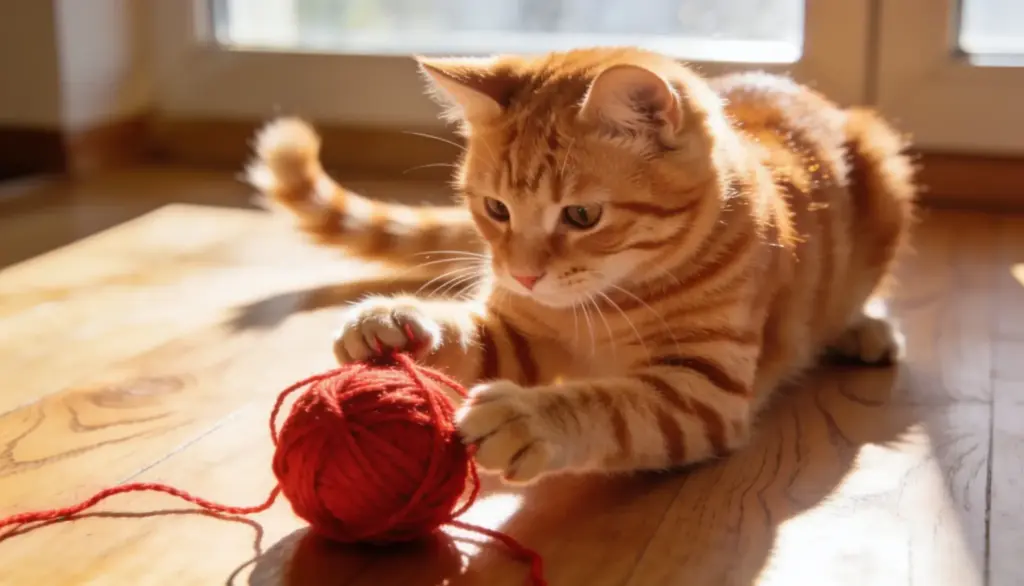
Ever thought why so many cats named Garfield or Milo are orange? It’s not a coincidence, and it’s definitely not a coincidence.
If you’ve just brought home an orange tabby, or you’re eyeing one at a shelter, you’ve probably noticed something confusing: no two orange cats look, act, or grow to quite the same size.
That’s because “orange tabby” isn’t a breed at all; it’s a color that can pop up in almost any cat.
Ahead, I’ll break down what actually decides an orange tabby’s looks, personality, lifespan, and why most of them turn out male.
What is an Orange Tabby Cat?
An orange tabby is not a specific cat breed. Instead, it is a coat color and pattern that can appear in many different breeds and mixed-breed cats.
These cats are known for their orange, ginger, or marmalade-colored fur, along with classic tabby features such as stripes, swirls, or spots. The orange color comes from genetic traits that affect coat appearance, not from belonging to one breed.
This is why orange tabbies can be found in shelters, farms, and purebred cat families.
Their size, personality, grooming needs, and health can differ greatly depending on their breed background, genetics, and lifestyle. While their warm orange coat connects them visually, each orange tabby can have its own unique traits.
How Cats Get Their Orange Color
Orange cat fur gets its color from pheomelanin, a pigment that creates red and orange shades. The orange-colored gene is linked to the X chromosome, which determines how this trait is passed from parents to kittens.
- The orange color and tabby markings, like stripes, swirls, and spots, come from separate genes.
- These genes work together to create different coat shades, from light cream to deep ginger.
- Genetic differences mean no two orange tabbies have the exact same coat pattern or shade.
The interaction between pigments and genetics is what creates the many shades and patterns seen in orange tabbies. From pale cream coats to rich ginger fur, each cat carries a slightly different combination of traits. While their orange coloring connects them visually, their individual markings make every orange tabby’s appearance distinct.
Orange Tabby is a Color, Not a Breed
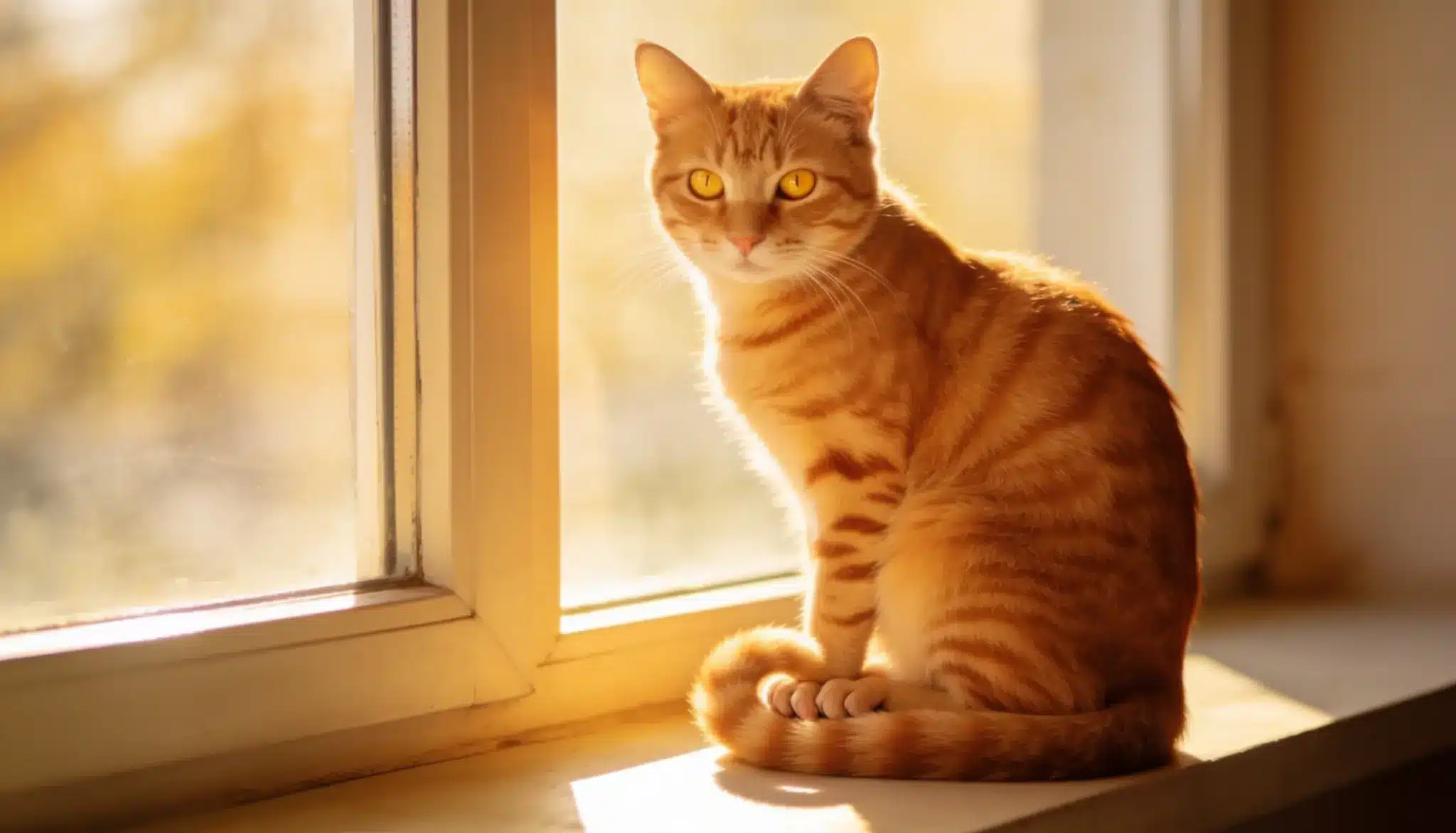
A lot of people assume that “orange tabby” is its own cat breed. It isn’t. It’s simply a way of describing how a cat looks, not what kind of cat it is underneath that color.
You can find orange coloring in many different breeds, including Domestic Shorthair and Domestic Longhair (the most common), Maine Coon, British Shorthair, and Persian.
Since breed has a significant effect on size, coat length, and personality, two orange tabbies can look and behave very differently, even though they share the exact same coat color.
A small orange Domestic Shorthair and a large orange Maine Coon are a good example of just how different two orange cats can be.
Orange Cat Personality and Behavior
Orange tabby cats are often described by owners as friendly, playful, and affectionate, but these traits come from the individual cat rather than its coat color. A cat’s personality is shaped by genetics, early experiences, socialization, and its environment. Orange tabbies can have different temperaments, just like cats with other coat colors.
Common behaviors owners may notice include:
- Seeking attention and enjoying interaction with people
- Showing curiosity about new surroundings
- Using different vocal sounds to communicate
- Creating strong routines around feeding and playtime
Social and Playful Behavior: Cats are social animals that can form strong bonds with people and other pets. Many cats use behaviors like rubbing, vocalizing, playing, and staying near their owners to interact and build relationships.
Orange tabbies may enjoy play sessions, toys, and activities that provide mental stimulation, but these behaviors are based on the individual cat’s personality. A well-socialized cat is more likely to feel comfortable around people, other animals, and new situations.
Their care also includes maintaining a healthy coat through regular brushing. Owners can follow these cat grooming tips for owners to support coat health and reduce common grooming issues.
What Orange Tabby Cats Look Like
Color is just the start. Look closer, and every orange tabby carries the same core “tabby kit” underneath its coat. So the color is shared, but the breed behind it decides everything else, from how big the cat gets to how long its fur grows.
Coat shade: pale apricot to deep rust | Markings: stripes, swirls, and spots | Body: comes down to breed
Coat Patterns
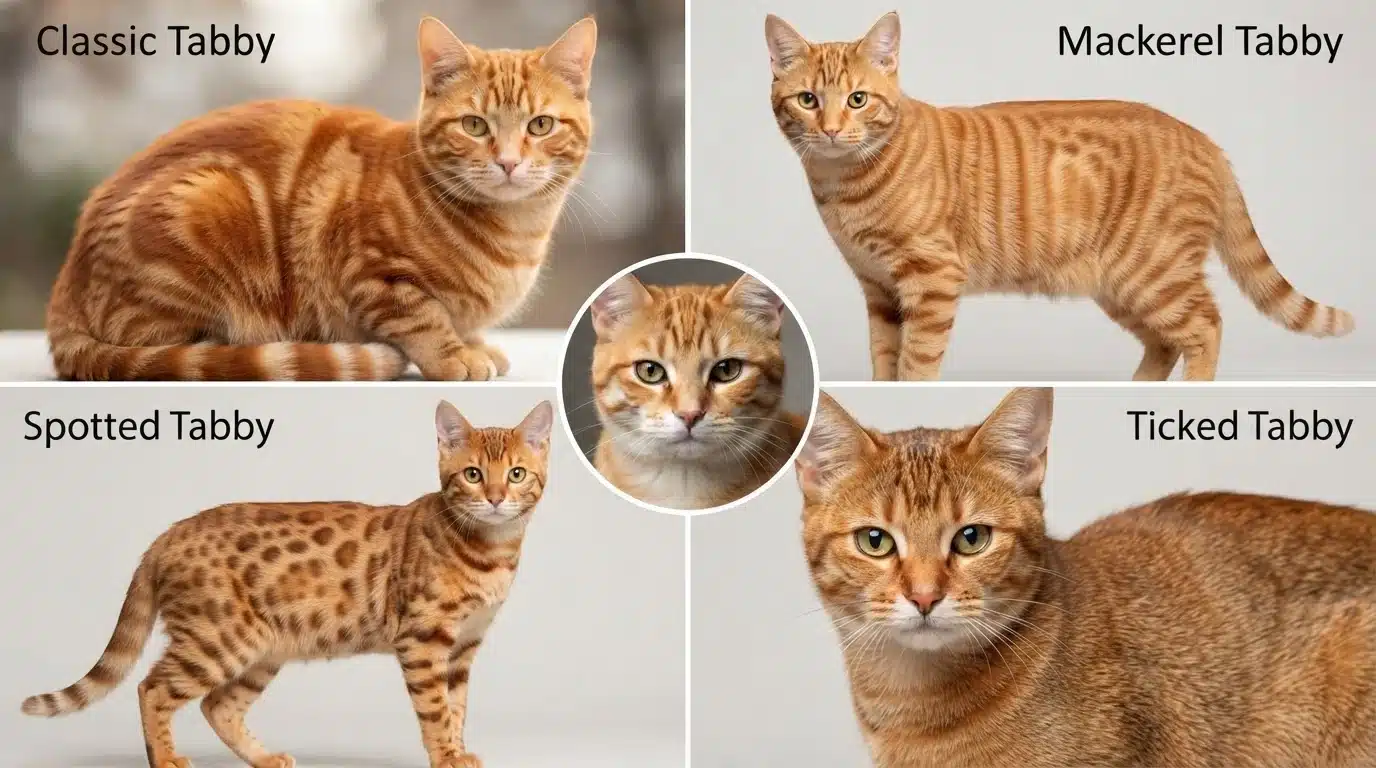
The tabby pattern is separate from the orange color itself, which is why there’s so much variety even among cats with the same coat shade.
| Pattern Type | What It Looks Like |
|---|---|
| Classic (Blotched) | Bold swirls and circular markings on the sides |
| Mackerel | Narrow, parallel stripes, like a fish skeleton |
| Spotted | Distinct spots scattered across the body |
| Ticked | Individual hairs banded with color, with little to no striping |
Most orange tabbies also have a few classic tabby features no matter which pattern they carry: an “M” shape on the forehead, dark rims around the eyes, and lighter fur on the belly.
Size and Physical Features
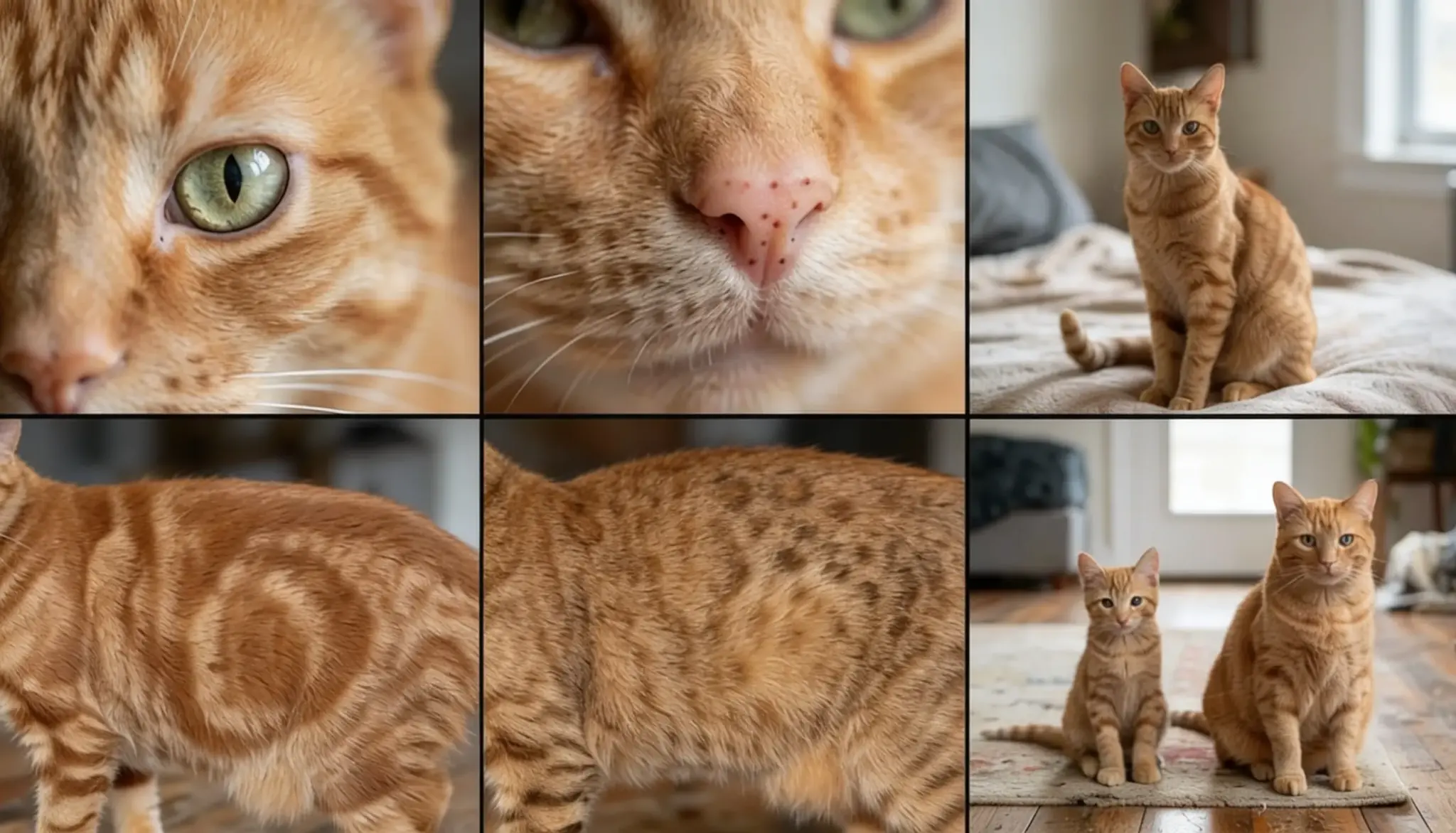
Size and build depend mostly on breed rather than coat color, though many orange tabbies tend to be medium to large cats. Males are usually bigger than females, partly because the orange gene shows up more often in male cats.
| Feature | What to Expect |
|---|---|
| Eyes | Round or almond-shaped, usually green, gold, or copper |
| Nose | Pink or orange-toned, matching the coat |
| Body | Muscular and sturdy, especially in domestic shorthair lines |
| Coat length | Ranges from short and dense to long and fluffy |
| Size | Mostly decided by breed, not color; males tend to run bigger |
Breed plays such a big role here that an orange Maine Coon can weigh nearly twice as much as an orange Domestic Shorthair, even though both share the same bright coloring.
Are Orange Cats Smart?
Cat intelligence is hard to measure with a single test, so most of what we “know” about orange cats comes from owner impressions rather than lab studies.
One survey of cat owners found that orange cats scored higher than other coat colors on being trainable, friendly, and calm, though researchers noted that the sample size was too small to confirm the trend.
That trainability often appears in daily routines, with many owners noticing their orange cats learn schedules, respond to their names, and understand feeding or play patterns with practice. Keeping their minds active is still important.
Puzzle feeders, interactive toys, and regular play sessions can provide healthy stimulation while helping prevent boredom-related behaviors. A mix of activities can keep curious cats engaged and satisfied.
How Long Do Orange Cats Live?
Lifespan is one of the most practical questions new owners ask. Since “orange tabby” describes a color rather than a breed, there’s no single number that applies to every cat. Still, most fall within a fairly predictable range.
Genetics, breed, whether the cat lives indoors or outdoors, and the quality of care all matter far more than coat color when it comes to lifespan.
Most orange tabbies live between 12 and 16 years, which lines up closely with the average lifespan for domestic cats in general.
| Lifestyle | Typical Lifespan |
|---|---|
| Indoor-only | Often 14 to 16+ years |
| Indoor-outdoor | Often 10 to 14 years |
| Outdoor-only | Often under 10 years |
Breed can shift these numbers a bit too. For example, larger breeds like Maine Coons may have slightly different average lifespans than smaller Domestic Shorthairs, even with the exact same coloring.
A few factors that make the biggest difference in lifespan:
- Diet quality and portion control, to help prevent obesity
- Regular veterinary checkups and up-to-date vaccinations
- Spaying or neutering, which can lower certain health risks
- Living indoors, which reduces exposure to accidents and disease
- Dental care, since untreated dental problems can affect overall health
Owners who stay on top of these basics often see their orange tabbies live comfortably into their mid-to-late teens. Regular health monitoring also helps owners notice changes early. Learning about common cat illnesses and their warning signs can help you understand symptoms that may need veterinary attention.
Note: Day to day care is simple measured portions of quality food, fresh water always available, regular brushing based on coat length, toys or climbing space for activity, and annual vet checkups (twice a year once a cat is a senior). None of it depends on coat color, but staying consistent is what actually adds years to a cat’s life.
Common Myths About Orange Cats
Orange cats carry a lot of popular beliefs, not all of them true. Some come from real genetics stretched a little too far, while others are just internet jokes that stuck around. Here’s what’s fact and what’s fiction:
| Myth | Fact |
|---|---|
| All orange cats are male | Females exist too, just less often. It comes down to how the orange gene sits on the X chromosome |
| Orange cats are less intelligent | Intelligence depends on the individual cat, not coat color |
| Orange tabby is a specific breed | It’s a coat color and pattern found across many breeds |
| Orange cats are always aggressive or clumsy | Behavior comes from genetics, socialization, and environment, not fur color |
Orange cat myths often come from assumptions about their appearance rather than facts about their biology or behavior. Understanding the role of genetics, personality, and environment helps separate common jokes from reality and gives a clearer picture of these unique cats.
The Last Paw
By now, you know an orange tabby isn’t a breed at all; it’s a color that comes down to one gene, which is also why most of these cats turn out male.
You’ve also seen how personality, size, and lifespan depend far more on breed and daily care than on that ginger coat.
So the next time someone tells you orange cats are “all the same,” you’ll know better. If you’re bringing one home soon, the best place to start is with the basics: good food, regular vet visits, and plenty of playtime.
Have questions about a specific orange tabby in your life? Drop them in the comments below.
Frequently Asked Questions
Do Orange Tabbies Have Any Specific Health Risks?
No breed-wide risks exist since it’s a color, not a breed. However, some studies suggest orange cats may have a slightly higher rate of skin cancer on light-colored ears and noses.
Can Two Orange Cats Have Kittens that Aren’t Orange?
Yes. If the mother carries other color genes alongside orange, kittens can end up black, brown, or tortoiseshell depending on which genes get passed down.
Why Do Some Orange Tabbies Have White Patches on Their Fur?
White patches come from a separate gene, unrelated to the orange-color gene. It’s common and simply adds extra white spotting to the coat.
Are Orange Tabbies More Sensitive to Sunburn?
Their pink noses and ear tips have less pigment for protection, making them slightly more prone to sunburn during prolonged exposure to direct sunlight outdoors.