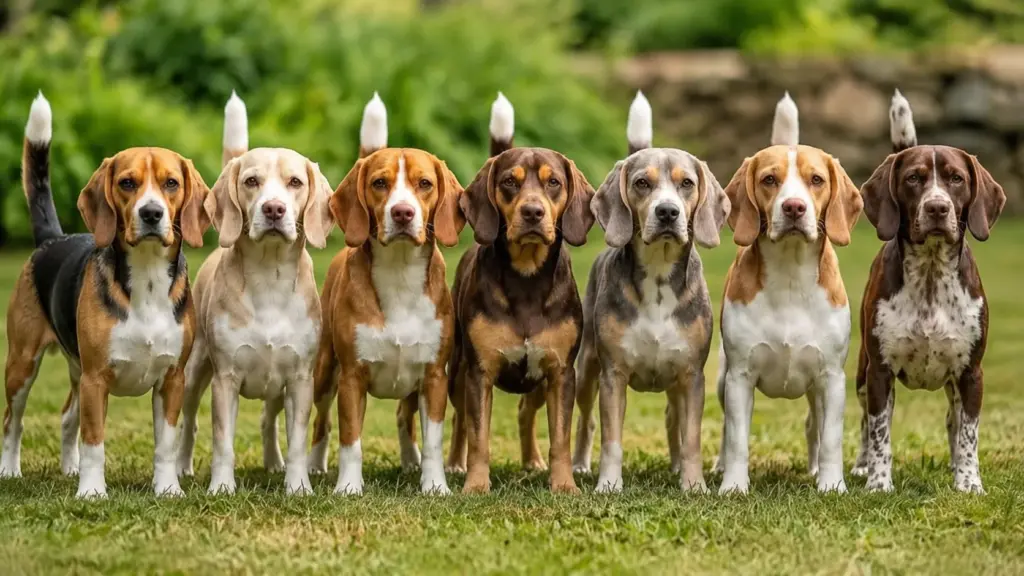
Ever thought why no two Beagles seem to look exactly alike? From classic black-tan-white trios to soft lemon hues and rare blue ticking, this beloved hound breed carries an impressive range of coat colors and patterns, more than most people realize.
But color is just one piece of the puzzle. Beagles are also defined by their compact, sturdy build, expressive brown eyes, and famously friendly, curious temperament, all shaped by decades of official breed standards.
Everything you need to know about Beagle appearance, personality traits, and breed standards, with a special look at how coat colors fit into the bigger picture.
Why Beagles Stand out as a Breed
Beagles are among the most recognizable hound breeds, valued for their compact size, keen sense of smell, and friendly nature.
Originally developed in England for tracking small game, they were bred to follow scents with focus and endurance. This history contributes to their curiosity, alertness, and energetic personality.
Their appearance adds to their appeal, with a sturdy body, long floppy ears, expressive eyes, and a short smooth coat available in several color patterns. However, a Beagle’s charm goes beyond its looks.
These dogs are known for being social, playful, and affectionate companions. Their combination of hunting ability, distinctive features, and family-friendly temperament has made them a popular breed worldwide.
Their mix of hunting ability, distinctive features, and family-friendly temperament has made them one of the most popular breeds worldwide.
A Quick Look at Beagle Physical Features
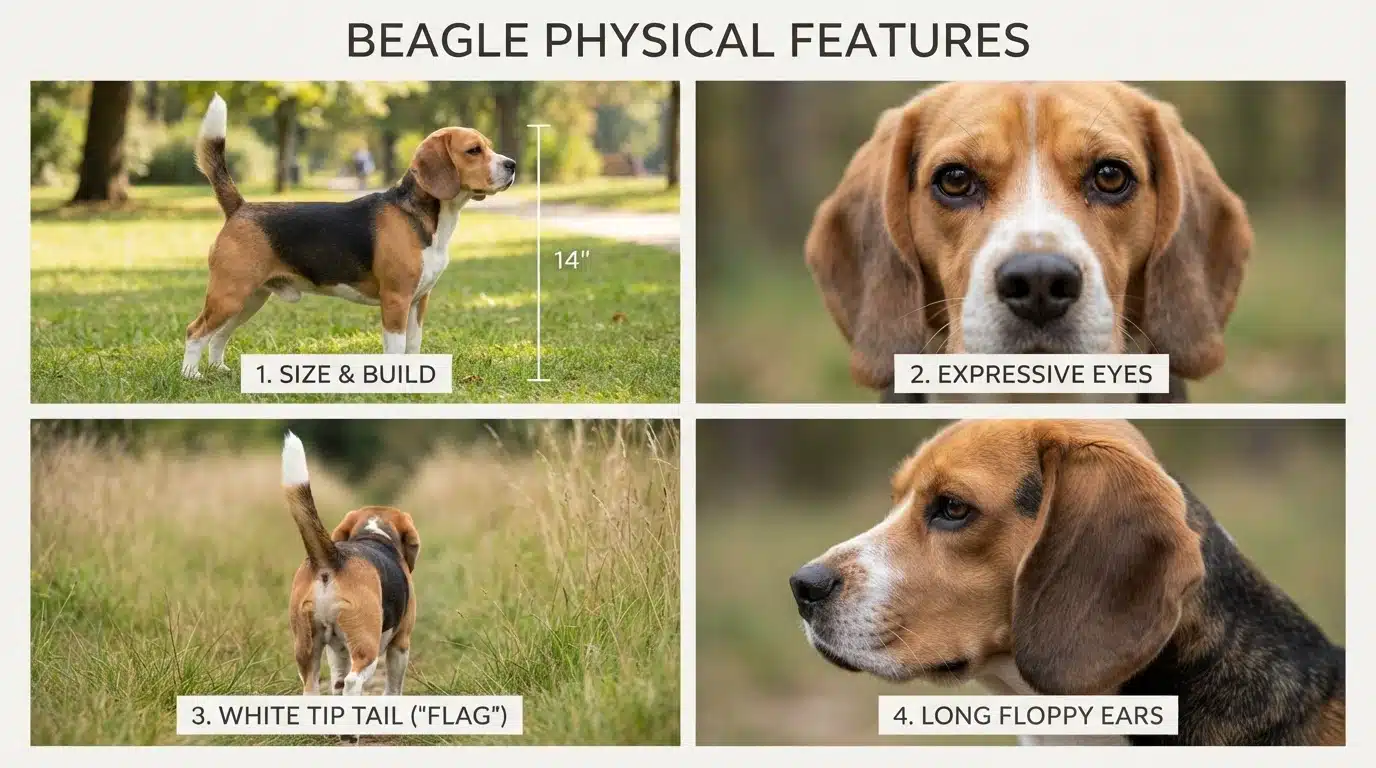
Beagles are compact, sturdy dogs built for stamina, with balanced proportions, expressive features, and a signature tail. Understanding these core traits offers helpful context before looking at their wide range of coat colors.
1. Size & Build (Height, Weight Ranges)
Beagles are a small-to-medium-sized breed, usually standing 13 to 15 inches tall and weighing around 20 to 30 pounds. Their size can vary based on height category, genetics, and overall build.
Despite their smaller frame, Beagles have a strong, athletic body with a deep chest, level back, and powerful legs.
Their muscular build supports stamina and steady movement, stemming from their history as hunting dogs that followed scents across varied terrain.
2. Head, Ears & Eyes (Expressive Brown Eyes, Long Floppy Ears)
One of the most recognizable features of a Beagle is its expressive face, largely defined by its large, round eyes and long, low-set ears.
Beagle eyes are typically brown or hazel, giving the breed its characteristically warm, soulful expression that many owners find irresistible. This gentle, appealing look is one of the reasons Beagles are so popular as family pets.
Beagles have long, rounded ears that hang close to the head and help direct scents toward their nose while tracking. Along with a slightly domed skull and defined muzzle, these features create their recognizable friendly appearance.
3. Flaggy Tail
A Beagle’s tail is another defining feature, especially its common white tip known as a “flag” marking. This bright tip historically helped hunters spot their dogs while moving through tall grass or dense areas.
The tail is usually medium in length, set high, and carried upright without curling over the back.
This combination of shape and marking remains one of the breed’s most recognizable traits, regardless of coat color or pattern.
Quick Facts:
| Attribute | Details |
|---|---|
| Breed Name | Beagle |
| Breed Type | Purebred |
| Size | Small to medium |
| Height | 13–15 inches |
| Weight | 20–30 lbs. |
| Build | Compact and sturdy |
| Coat Type | Short and smooth |
| Coat Colors | Tricolor, lemon & white, red & white |
| Health Concerns | Obesity, ear infections |
| Lifespan | 12–15 years |
These details help explain why Beagles are popular family dogs. Their friendly nature, compact build, and moderate care needs make them suitable for many households.
Common Beagle Personality Traits
Although every Beagle has its own personality, the breed is known for several common characteristics that make it a popular companion dog.
- Friendly nature: Beagles are affectionate and often enjoy being involved in family activities.
- Strong sense of smell: Their powerful nose comes from generations of scent-based hunting work.
- High energy levels: They need regular walks, playtime, and activities to stay active and engaged.
- Social behavior: Many Beagles enjoy companionship and can get along well with people and other dogs.
- Curious personality: Their natural tracking instincts make them interested in new scents and surroundings.
A Beagle’s temperament develops through daily interactions, training, and care. Positive experiences and consistent routines help shape a confident and well-behaved dog. When choosing a Beagle, health, temperament, and responsible breeding matter more than coat color.
The Different Types of Beagles Chart
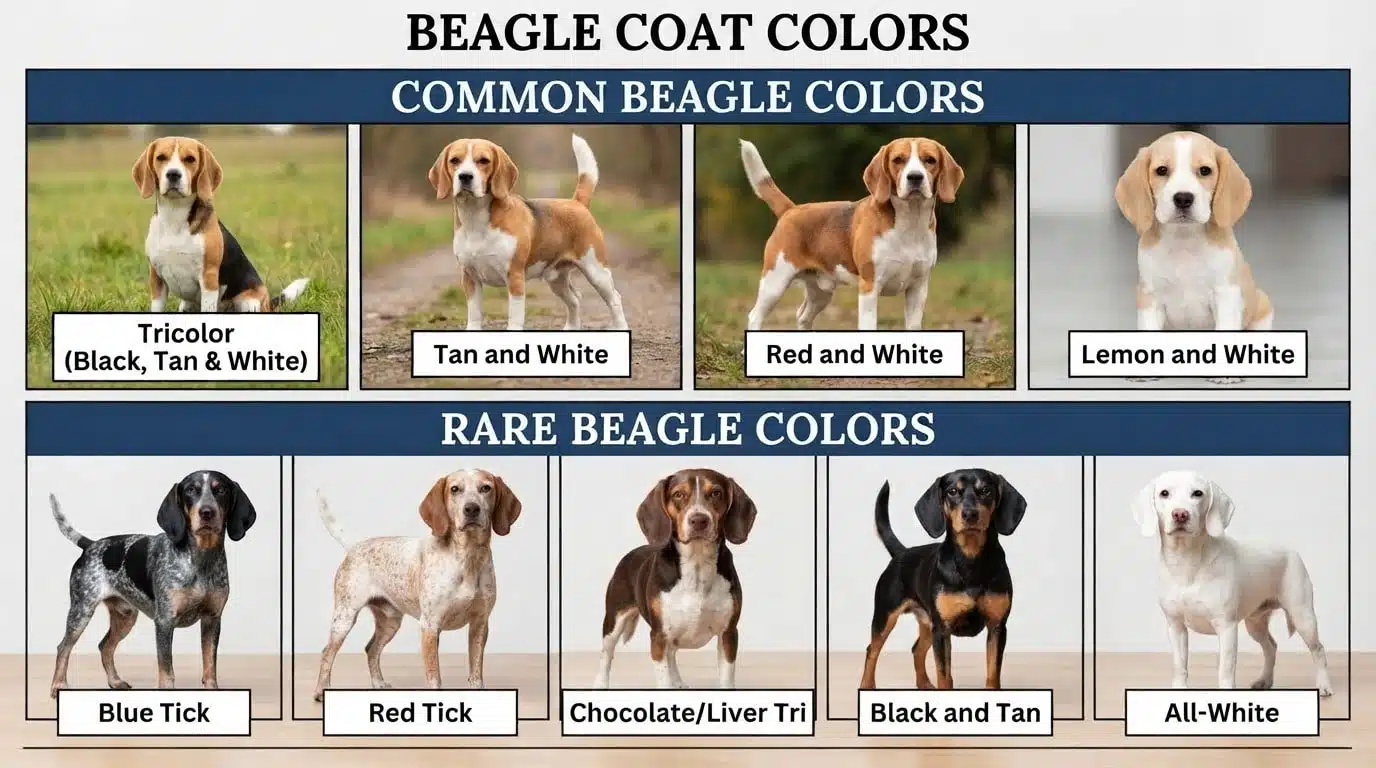
Beagles are recognized for their wide range of coat colors and patterns, with some combinations appearing regularly and others being much harder to find. Their coat appearance depends on genetics, which determines the shades, markings, and patterns a Beagle inherits.
Common Beagle Colors
The most frequently seen Beagle coat colors include tricolor, tan and white, red and white, and lemon and white. These patterns are widely accepted within the breed and are often seen in family pets and show-quality Beagles.
- Tricolor (Black, Tan & White): Classic Beagle pattern with black back markings, tan face and leg areas, and white chest, paws, and tail tip.
- Tan and White: Features tan patches combined with white areas on the chest, legs, and underside.
- Red and White: Has reddish patches mixed with white markings for a warmer coat appearance.
- Lemon and White: A lighter pattern with cream or pale-yellow patches instead of darker shades.
Beagle coat colors can vary in appearance, but each pattern adds to the breed’s recognizable look. These markings are mainly a matter of genetics and do not affect a Beagle’s personality or overall quality
Rare & Unique Beagle Colors
Some Beagle colors are less common and stand out for their unusual patterns or shades. These variations arise from specific genetic combinations and can give Beagles a different look while maintaining their recognizable features.
- Blue Tick: A white coat covered with small blue-gray or black spots, creating a speckled pattern.
- Red Tick: A white base coat with reddish-brown ticking, giving the dog a freckled appearance.
- Chocolate/Liver Tri: A tricolor pattern where the usual black areas are replaced with chocolate or brown shades.
- Black and Tan: A two-color pattern featuring black areas with tan markings around the face, chest, and legs.
- All-White: An extremely uncommon coat color with little to no visible colored markings. It is not a typical Beagle pattern and is rarely seen.
These rare Beagle colors show the breed’s wide range of coat variations. While their appearance may differ, their friendly personality and classic Beagle traits remain the same.
Do Beagle Colors Affect Personality or Behavior?
A Beagle’s coat color only affects its appearance and does not decide its personality, intelligence, or behavior. Whether a Beagle has a classic tricolor coat or a less common shade like lemon and white or blue tick, temperament develops through genetics, training, socialization, and everyday experiences.
There is no scientific evidence showing that a specific Beagle color is linked to certain personality traits. A tricolor Beagle is not naturally more energetic than a lemon-and-white Beagle, and a rare-colored Beagle does not have a different temperament.
A Beagle’s behavior depends more on factors such as:
- Breeding quality: Responsible breeding can support healthy physical and behavioral traits.
- Training: Consistent guidance helps Beagles learn good habits.
- Socialization: Early experiences with people, animals, and surroundings shape confidence.
- Daily care: Exercise, attention, and mental activities support overall well-being.
Beagle Breed Standards and Accepted Colors
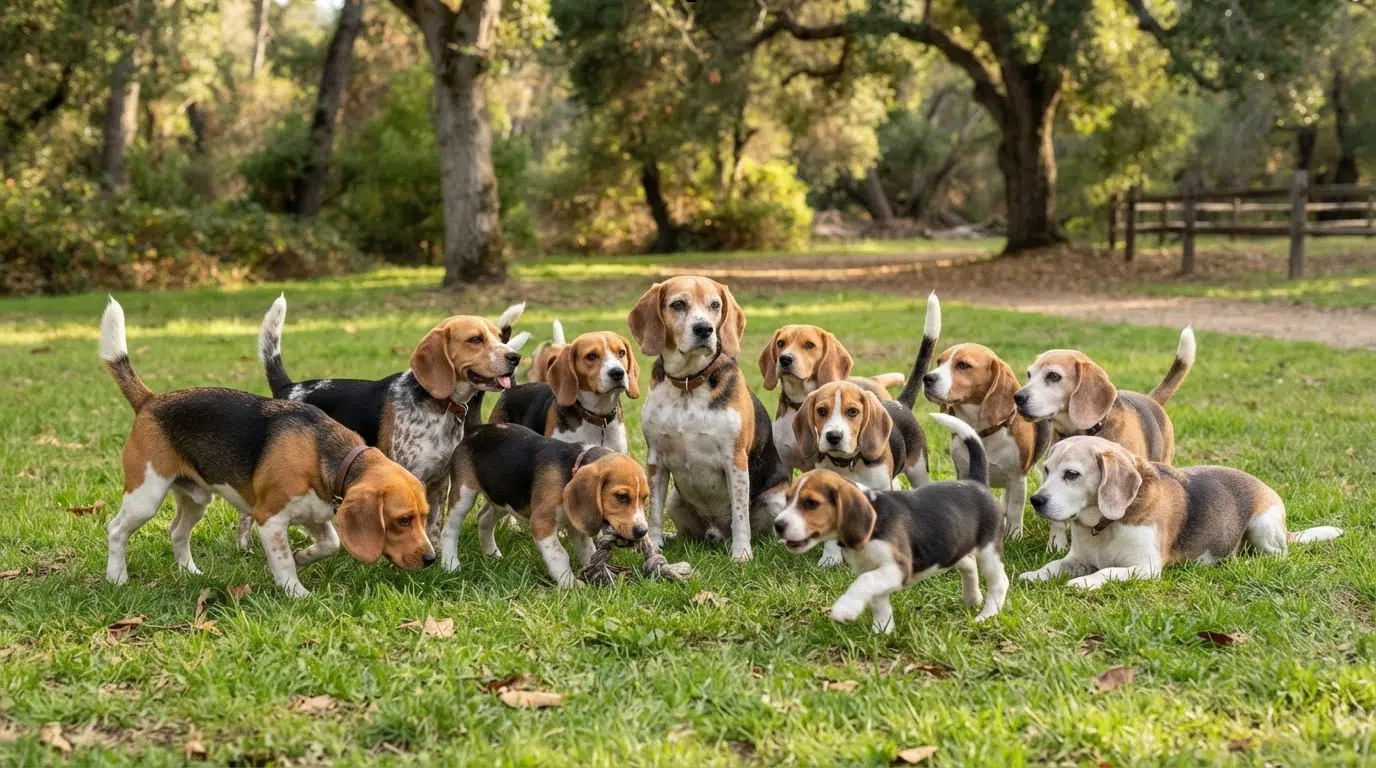
Official Beagle breed standards focus on the dog’s overall structure, movement, health, and temperament rather than coat color alone.
Accepted coat patterns commonly include tricolor, red and white, lemon and white, and other recognized markings in accordance with the Kennel Club guidelines.
While some unusual coat colors or patterns may not be preferred in certain show competitions, they do not affect a Beagle’s ability to be a healthy and loving companion.
A Beagle’s quality as a pet depends on responsible breeding, good health, proper care, and temperament rather than the color or pattern of its coat.
Beagle Breed Standard Overview: A Beagle’s physical features reflect its history as an active scent hound. From its strong build to its signature ears and expressive eyes, every trait supports its hunting ability and friendly nature.
While appearance helps identify the breed, a Beagle’s structure, temperament, and overall health are more important than any single physical feature or coat pattern.
How to Choose the Right Beagle Color?
Choosing a Beagle color comes down to personal preference, as coat patterns only affect appearance and do not determine a dog’s personality or quality.
- Color Preference Is Personal: Tricolor, lemon-and-white, red-and-white, and other Beagle patterns each have their own appeal, so the best choice depends on individual preference.
- Coat Care Is Similar Across Colors: All Beagles have short, smooth coats with similar grooming needs, shedding levels, and maintenance requirements regardless of their color pattern.
- Prioritize Health and Breeding: Focus on a breeder’s reputation, health testing, temperament, and proper care rather than choosing a puppy based only on its coat color.
- Choose Personality Over Appearance: A Beagle’s behavior, energy level, and compatibility with your lifestyle matter more than its markings or color rarity.
A Beagle’s color may catch attention, but personality, health, and responsible breeding are what truly define a great family pet.
Final Thoughts
Beagle coat colors are one of the many features that make this breed special, but a Beagle’s personality, health, and care needs matter far more than appearance alone.
From classic tricolor patterns to lemon and red variations, each Beagle has its own unique look and charm. When choosing a Beagle, focus on temperament, lifestyle compatibility, and responsible breeding practices.
Share your favorite Beagle color in the comments and tell us about your furry companion. Your experience may help other Beagle lovers learn more about this friendly and curious breed.
Frequently Asked Questions
Can Beagle Puppies Change Color as They Grow?
Yes, some Beagle puppies may experience slight coat changes as they mature. Markings can become more defined, and certain shades may lighten or darken over time.
Are Beagles with Rare Colors More Expensive?
Rare-colored Beagles may sometimes have higher prices due to demand, but cost should depend on breeding quality, health checks, lineage, and care rather than color alone.
Do Male and Female Beagles Have Different Coat Colors?
No, both male and female Beagles can have the same coat colors and patterns. Gender does not determine which markings a Beagle can develop.