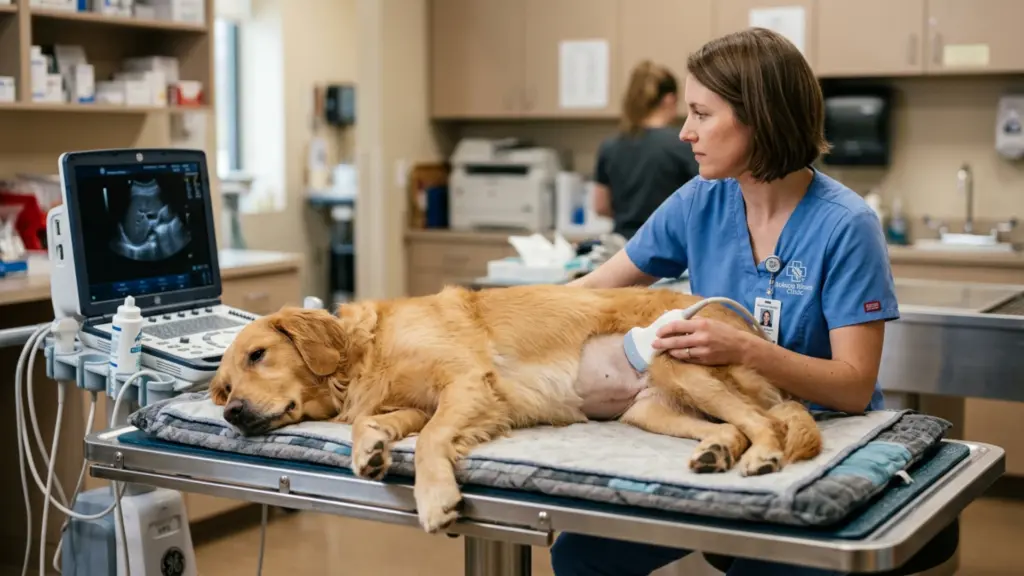
When your vet recommends imaging, it can feel worrying instantly.
You may picture something serious before you even understand what the test does. In reality, this scan is usually a simple, painless way for vets to look inside your dog’s body using sound waves.
It helps them check organs, assess the heart, or confirm pregnancy without radiation.
Most dogs stay awake for the appointment, and sedation is rarely needed. The process gives your vet real-time information, which can make the next steps clearer and faster.
Your dog cannot explain what feels wrong, so this kind of exam often becomes a practical way to find answers. Knowing what to expect can turn fear into calm, informed confidence for worried owners too.
What is a Dog Ultrasound, Exactly?
A dog ultrasound uses high-frequency sound waves to create real-time images of your dog’s internal organs. Your vet applies a special gel and usually shaves the area so the handheld probe can make good contact with the skin.
Ultrasound is best for examining soft organs such as the liver, kidneys, spleen, bladder, uterus, and heart. It can also guide procedures like biopsies or fluid removal.
Since it uses sound waves instead of radiation, it is a safe, non-invasive imaging test.
However, ultrasound has limits. It cannot clearly image lungs because air blocks sound waves, and it cannot see through dense bone. For lung conditions or suspected fractures, X-rays or CT scans are usually the better choice.
Ultrasound Limits: What Owners Should Know
A dog ultrasound excels at evaluating soft tissues and internal organs, but it isn’t the right imaging test for every condition. Understanding its strengths and limitations helps explain why your vet may recommend additional imaging.
- Great for Soft Tissue Organs: Ultrasound can show the liver, spleen, kidneys, bladder, uterus, and heart movement in real time.
- Useful for Guided Procedures: Vets can use it during a biopsy or fluid draw to watch needle placement more accurately.
- Not Reliable For Lungs: Air-filled areas scatter sound waves, so breathing concerns may need an X-ray or CT scan.
- Not Reliable For Dense Bone: Bone blocks sound waves, so suspected fractures usually still need an X-ray.
- How It Works: A handheld probe sends sound waves into the body. Gel and shaving help the probe contact the skin, while echoes create live images without cuts, injections, or radiation.
Note: This section is for informational purposes only and does not replace veterinary advice. Always ask a qualified veterinarian to explain your dog’s results.
Why Would a Vet Recommend One for Your Dog?
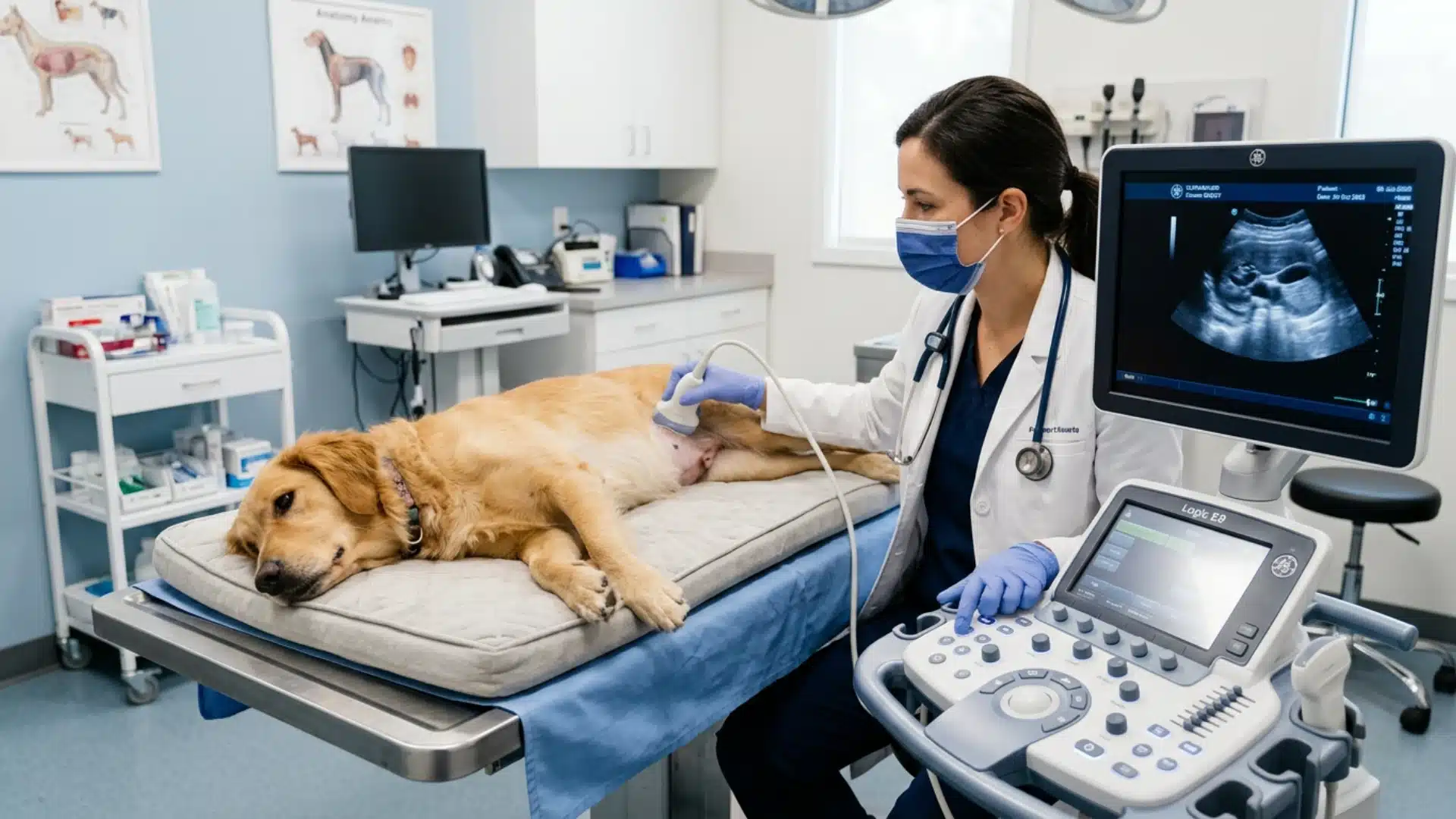
Vets usually recommend imaging when an exam, symptoms, or bloodwork does not give the full answer. It does not always mean an emergency.
- Vomiting or Diarrhea: Ongoing symptoms may indicate inflammation, blockage, or organ trouble.
- New Lump or Bump: Imaging helps determine whether a lump looks harmless or needs a biopsy.
- Urinary Problems: Blood in urine or straining can suggest stones, bladder changes, kidney issues, or masses.
- Pregnancy Check: It can confirm pregnancy early and later give a rough idea of litter size.
- Abnormal Bloodwork: Unusual liver or kidney values may need a closer look at the organ.
- Swollen Belly or Weight Loss: Sudden bloating or unexplained weight loss may need fast evaluation.
- Monitoring Conditions: Repeat scans help track tumors or chronic organ disease.
Note: This section is for informational purposes only and does not replace veterinary advice. Consult a qualified veterinarian before making care decisions.
Different Types of Dog Ultrasounds
Not every ultrasound looks at the same thing. The type your vet orders depends entirely on what they’re trying to rule out.
| Type | What It Looks At | Common Reason Used |
|---|---|---|
| Abdominal ultrasound | Liver, spleen, kidneys, bladder, intestines | Vomiting, diarrhea, abnormal bloodwork, suspected masses |
| Echocardiogram (cardiac) | Heart chambers, valves, blood flow | Heart murmur, coughing, suspected heart disease |
| Pregnancy ultrasound | Uterus and developing puppies | Confirming pregnancy, estimating litter size |
| Ultrasound-guided biopsy | Targeted organ or mass | Collecting tissue samples without open surgery |
Not every ultrasound looks at the same area. The type your vet orders depends on what they’re trying to rule in or rule out.
What Happens During an Ultrasound
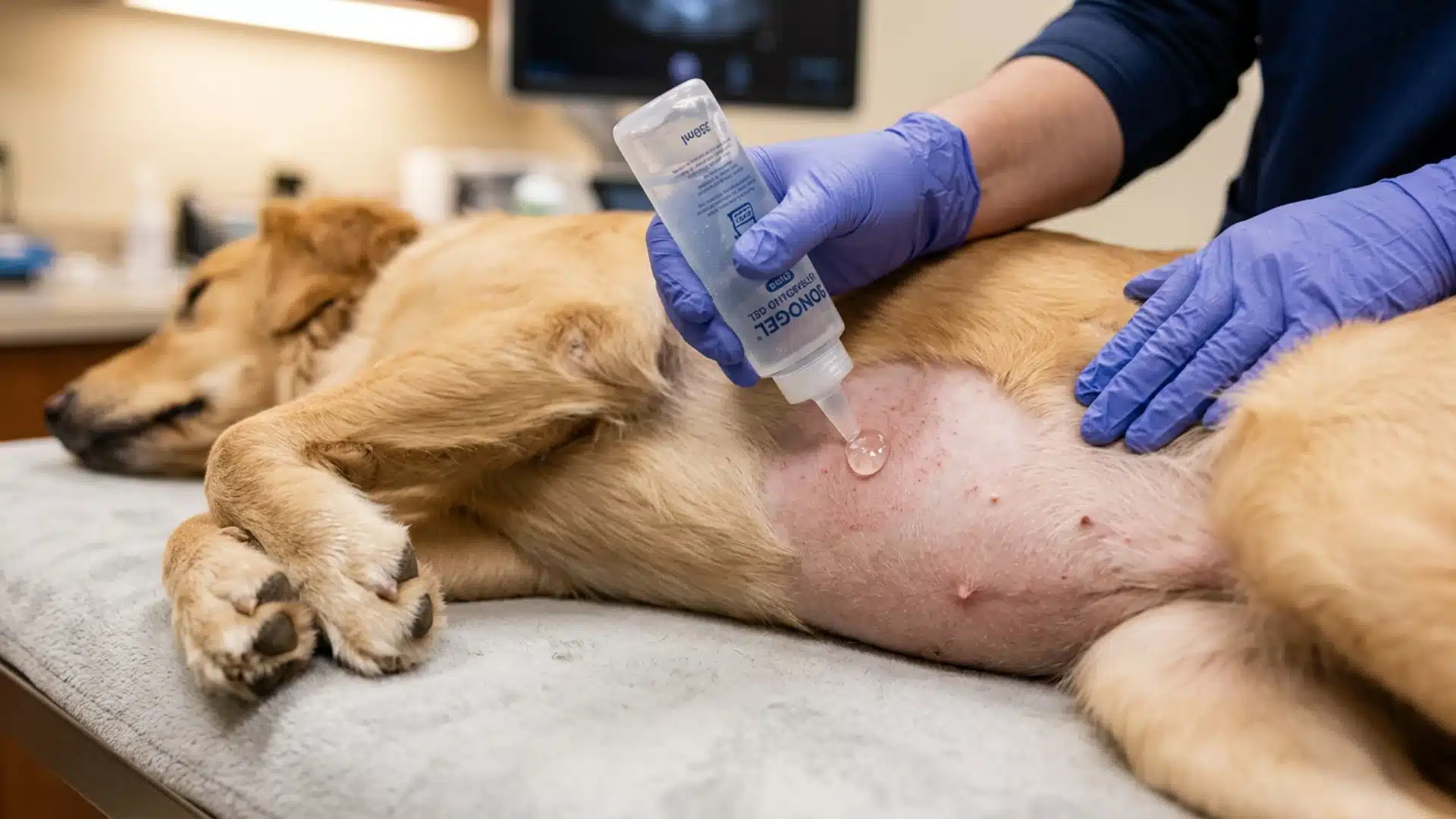
For a scan, the process is usually simple and calm.
- Getting Settled: Your dog lies on a padded table, usually on their back or side, in a quiet exam room.
- Shaving The Area: Belly fur is clipped short so the probe can touch the skin and sound waves can pass clearly.
- Applying Gel: A water-based gel removes tiny air gaps between the probe and the skin, resulting in a cleaner image.
- Moving The Probe: The vet or technician glides the probe over the belly and views organs in real time.
- Reviewing The Findings: Some results are explained right away. Complex cases may go to a veterinary radiologist.
Most dogs do not need sedation, though anxious or wiggly dogs may need mild calming support.
How Much Does a Dog Ultrasound Cost?
Most dog ultrasounds run $300 to $600, though prices can range as low as $250 or climb past $800 depending on where you live and who performs the scan. I’m not fully certain of the exact figures for your area, since pricing shifts by region and clinic, so treat these as a general planning range rather than a quote.
What Changes the Price
The cost of a dog ultrasound isn’t fixed. Several factors, including the type of scan, your location, and whether your dog needs extra care during the procedure, can affect the final bill.
- Type of scan: A basic pregnancy or abdominal ultrasound tends to cost less than a cardiac echocardiogram, which needs more specialized skill
- General vet vs. specialist: A sonogram specialist or referral center usually charges more than your regular vet
- Location: Clinics in larger cities tend to charge more than rural practices
- Sedation: Most dogs don’t need it, but an anxious or uncooperative dog may require it, which adds to the bill
- Visit fee: The ultrasound price often doesn’t include the office visit, which can run $50 to $100 or more on its own
Ultrasound vs. X-Ray: Cost Comparison
Although both are imaging tests, they serve different purposes and come with different costs. Your veterinarian chooses the test based on what they need to examine, not simply the price.
| Test | Typical Cost Range | Best For |
|---|---|---|
| Dog ultrasound | $300–$600 | Soft tissue, organs, pregnancy, biopsy guidance |
| Dog X-ray | $150–$250 | Bones, fractures, swallowed objects, lungs |
If your vet orders both, that’s not overkill. Each test shows something the other can’t.
Insurance and Financing
The cost of a dog ultrasound can be easier to manage if you understand your insurance coverage and available payment options before scheduling the scan.
- Pet insurance: Accident and illness plans typically cover ultrasounds tied to a covered condition. Pregnancy-related scans and pre-existing conditions are often excluded
- Payment plans: Many clinics accept CareCredit or ScratchPay if you need to spread out the cost
- Get an estimate first: Ask your vet for a written range before the scan, including what happens if a biopsy or follow-up is needed
Note: This section is for informational purposes only and doesn’t replace financial or veterinary advice. Costs vary by location and clinic, so confirm pricing directly with your vet before booking.
Why Your Vet Might Recommend a Dog Ultrasound
It usually just means your vet wants a closer look at something bloodwork or a physical exam couldn’t fully explain. Common reasons vets order an ultrasound:
- Ongoing vomiting or diarrhea rules out a blockage, inflammation, or an organ that isn’t working right.
- A new lump or bump: If you’ve felt a new lump or bump under the skin, imaging tells a harmless cyst apart from something that needs a biopsy.
- Blood in the urine or straining to pee can point to bladder or kidney stones, thickened walls, or masses that a urine test alone might miss.
- Suspected or confirmed pregnancy: Detects pregnancy early, with a rough litter size estimate later on.
- Abnormal bloodwork: Often needs a look at the organ itself to explain results that don’t explain themselves.
- Monitoring a known condition tracks whether treatment for a tumor or chronic issue is actually working.
How to Prepare Your Dog for the Appointment
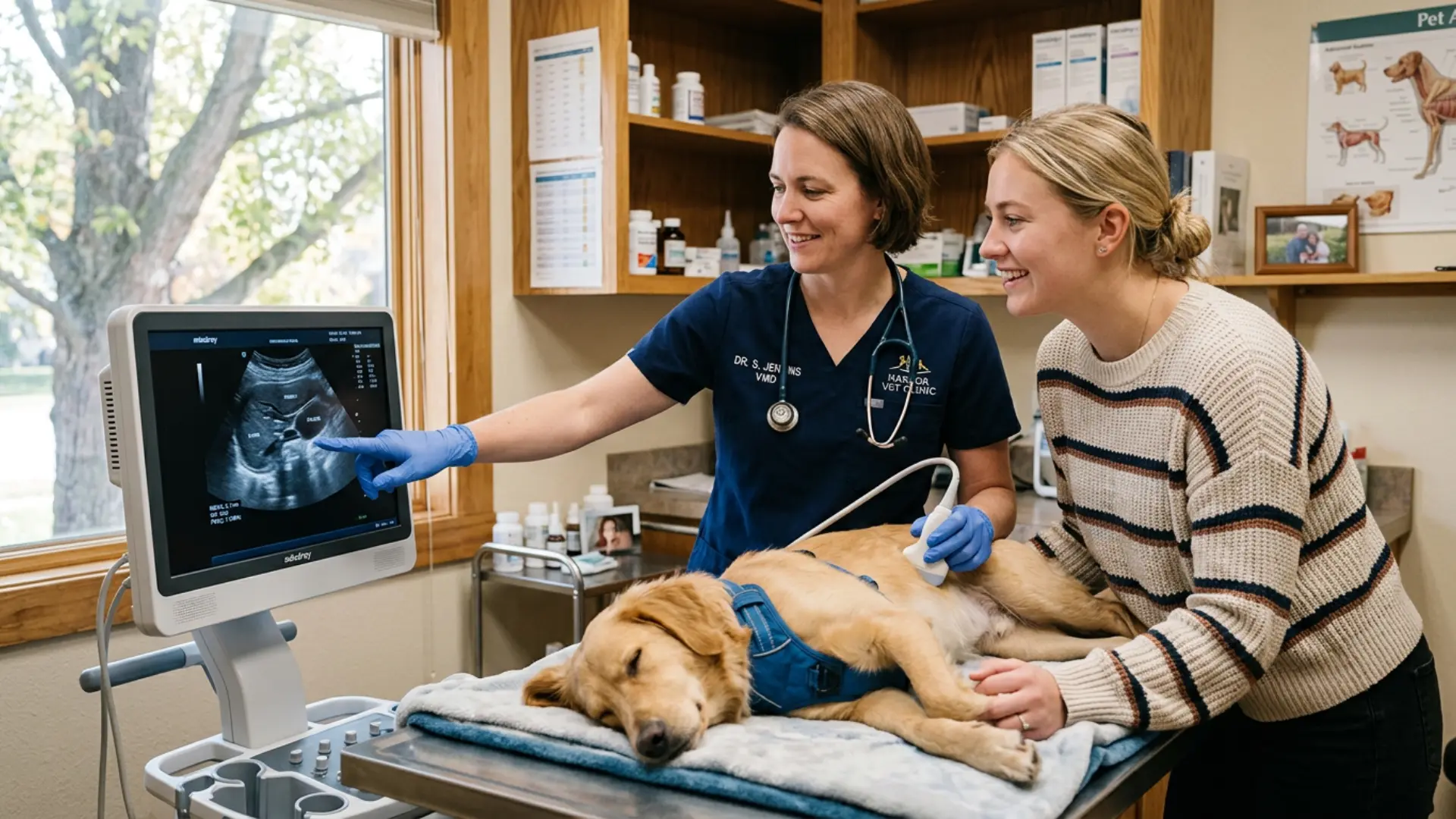
A little prep goes a long way toward a smoother visit for both of you.
- Ask about fasting: Many clinics still recommend withholding food for 8 to 12 hours before an abdominal scan, though one controlled study on fasting before an ultrasound found routine fasting didn’t significantly change image quality. Follow your own vet’s specific instructions either way.
- Ask about bladder timing: A full bladder actually helps some exams, so check whether your vet wants your dog to hold it before arrival.
- Bring a favorite blanket or toy: Familiar comfort items can help an anxious dog settle on the table.
- List current medications: Some drugs can affect sedation decisions or interpretation of results.
- Keep your dog calm on the drive over: Stress before the appointment can make positioning harder for the technician.
Conclusion
A scan can sound stressful at first, but it is usually a safe and simple way for your vet to get clearer answers.
There is no radiation or incision, and most dogs do not need sedation unless a biopsy or additional stillness is required.
It does have limits, especially with lungs and bones, but for soft tissue concerns, pregnancy checks, stubborn symptoms, or unusual lumps, it can help your vet move from guessing to understanding. The more you know before the appointment, the less intimidating it feels.
Ask your vet what they are looking for, when results will be ready, and whether a specialist will review the images.
Has your dog ever had a scan? Share your experience in the comments to help another worried pet parent feel prepared.
Frequently Asked Questions
How Soon Will I Get the Results?
Many vets share initial findings during the visit, especially for simple cases like pregnancy checks. If a specialist review is needed, the full report usually arrives within 24–48 hours.
Can I Stay with My Dog During the Scan?
Often yes. Many clinics allow owners in the room because it helps keep dogs calm. Some may ask you to wait outside for longer or more complex exams.
Does Pet Insurance Cover This Test?
Most accident and illness plans cover it when used for diagnosis. Pregnancy-related scans and pre-existing issues are often excluded. Coverage varies by provider.
Does It Replace an X-Ray?
No. It complements X-rays. Ultrasound is best for soft tissues, while X-rays are better for bones and air-filled areas like lungs.