A kitten age chart can help you guess a kitten’s age by looking at simple signs like eyes, ears, teeth, weight, and movement.
This matters because a newborn kitten needs very different care from one that is already walking, playing, and eating solid food.
Tiny kittens change fast, and even one week can make a big difference in feeding, warmth, litter training, and vet care.
A kitten with closed eyes and folded ears needs milk, warmth, and close care, while an older kitten may be ready for soft food, gentle play, and litter training.
Teeth, body size, and movement can also give helpful clues. Once these signs are checked together, it becomes much easier to estimate a kitten’s age and give the right care at the right time.
What is a Kitten Age Chart?
A kitten age chart is a simple guide that shows how kittens usually grow week by week. It looks at signs like eyes, ears, teeth, weight, movement, and behavior.
These signs can help guess how old a kitten may be, especially when there is no birth date. For example, newborn kittens have closed eyes and folded ears.
Around two weeks, their eyes start opening. By three to four weeks, they begin walking better and may start showing tiny teeth.
As they grow, their bodies become stronger, and their behavior changes too. Still, a chart is only an estimate. Not every kitten grows at the same speed.
Some may be smaller, weaker, or late to develop due to poor nutrition, illness, or early birth. A vet can give a more accurate age by checking the kitten’s teeth, weight, and overall health.
Kitten Age Chart by Week
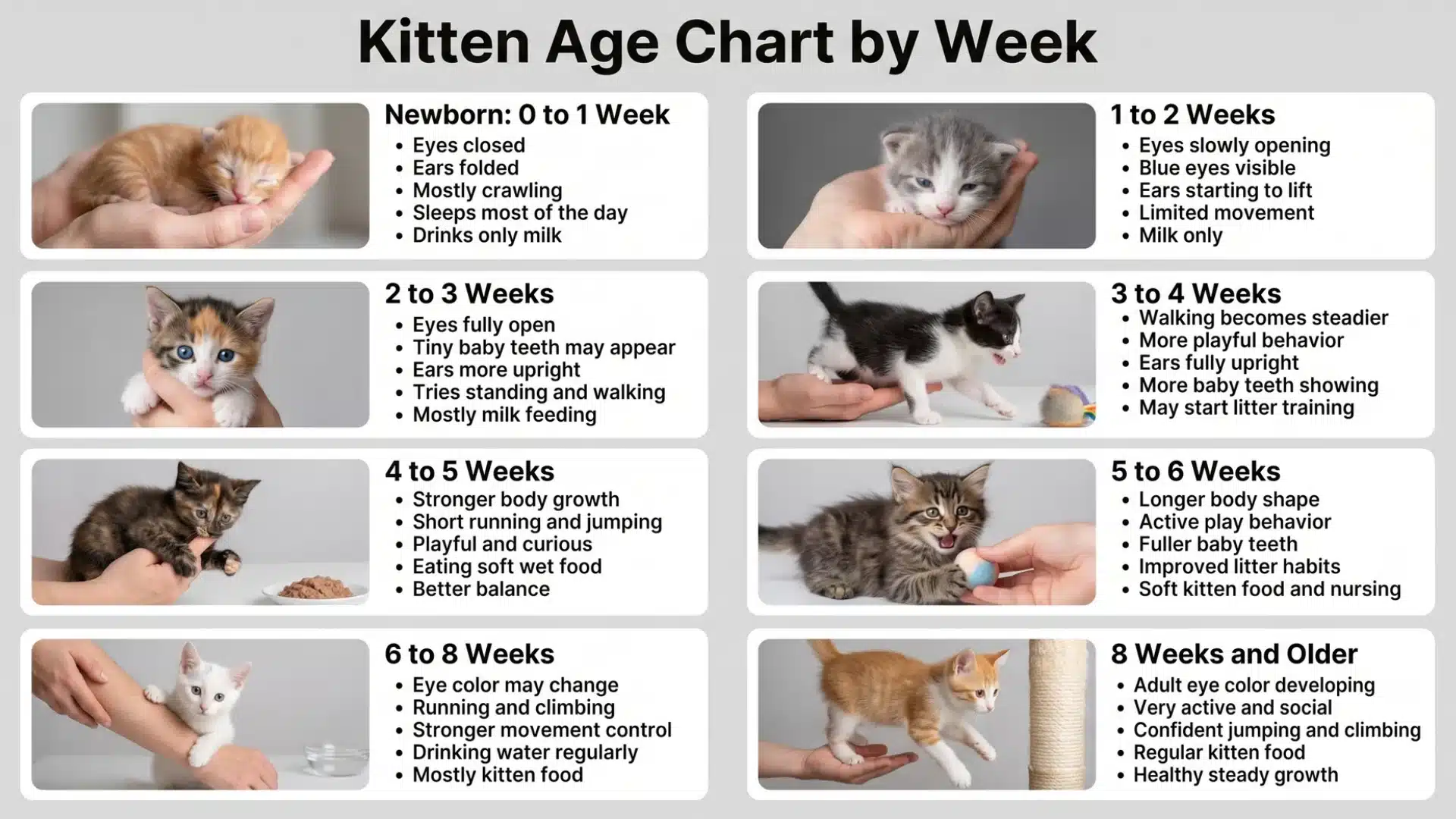
A kitten’s body changes very quickly during the first few weeks. This simple kitten age chart can help estimate age through growth, movement, and behavior signs.
1. Newborn Kitten: 0 to 1 Week
Newborn kittens are tiny, sleepy, and fully dependent on their mother. Their eyes stay closed, and the ears remain folded against the heads.
Most kittens cannot walk at this stage and only crawl slowly. They spend nearly all their time sleeping or feeding. The body also cannot stay warm without help, so warmth is very important. A newborn kitten usually weighs around 50 to 150 grams.
Crying often means the kitten is cold, hungry, or uncomfortable. The umbilical cord may still be attached during the first few days after birth.
2. 1 to 2 Weeks
Kittens begin showing small signs of growth during this stage. The eyes slowly start opening, although vision remains blurry at first. You can learn more about this in our guide on when kittens open their eyes.
Most kittens still have blue eyes during these early weeks. The ears also begin lifting slightly, but hearing is not fully developed yet.
Movement is limited, and walking is still not possible for most kittens. Weight increases steadily when feeding is going well.
Kittens continue sleeping for long hours every day. At this age, they still rely completely on milk and need help staying clean and warm throughout the day and night.
3. 2 to 3 Weeks
By this stage, kittens become slightly more active and aware of their surroundings. The eyes are usually open, and the ears begin to stand up more clearly.
Small baby teeth may start appearing around this age. Kittens also begin trying to stand and walk, although the movement often looks wobbly and unsteady.
Hearing improves, and they may react to sounds nearby. Curiosity slowly starts developing as they notice people, littermates, and movement around them.
Feeding still mostly comes from milk, but physical growth becomes more noticeable with each passing week.
4. 3 to 4 Weeks
Kittens become more playful and mobile during this period. Walking improves, and balance becomes much steadier than before.
The ears usually stand upright, and the kittens react more clearly to sounds and movement. More baby teeth begin appearing, which helps prepare them for soft food later on.
Kittens may start grooming themselves and interacting more with littermates. Play behavior becomes common as they begin chasing and climbing around small spaces.
Some kittens may also begin early litter box training during this stage because body control improves as they grow stronger and more active.
Kitten Age Chart After One Month
Kittens grow faster after the first month, with clear changes in teeth, movement, eating habits, and overall behavior during each stage.
| Age | Physical Signs | Movement and Behavior | Feeding Stage |
|---|---|---|---|
| 4 to 5 Weeks | Stronger body growth and more baby teeth developing | Running slowly, making short jumps, and showing playful behavior | Starts eating soft, wet food |
| 5 to 6 Weeks | Longer body and fuller baby teeth | Better balance, active play, and improved litter habits | Soft kitten food with some nursing |
| 6 to 8 Weeks | Eye color may begin changing, and the body looks stronger | Running, climbing, and jumping with better control | Mostly kitten food and water |
| 8 Weeks and Older | Adult eye color develops with steady body growth | Very active, social, and confident movement | Regular kitten food and fresh water |
How To Tell a Kitten’s Age by Weight?
A kitten’s weight can help estimate age, especially during the first few weeks of life. Most newborn kittens weigh between 50 and 150 grams at birth.
Healthy kittens usually gain weight every day when fed properly. By the second week, many kittens have almost doubled their birth weight.
As the weeks pass, body size and weight continue increasing along with movement and activity levels.
Still, weight can vary from one kitten to another. Breed, feeding habits, health conditions, and early care can all affect growth speed.
Some kittens naturally stay smaller even when healthy, while larger breeds may gain weight faster than average.
Very low weight can sometimes be a warning sign. Weakness, poor feeding, dehydration, or illness may slow growth and development.
If a kitten looks underweight, sleepy, or struggles to eat, a vet check is important for proper care and treatment.
When a Kitten’s Age is Hard to Guess
Sometimes a kitten’s age is not clear, especially with rescue kittens, outdoor kittens, or kittens that have not had steady food. One kitten may have open eyes but low weight.
Another may have teeth but still move weakly. These mixed signs can make age harder to judge.
Underfed kittens may look younger because they are smaller, while sick kittens may seem sleepy and less active than expected.
Some kittens also develop a little faster or slower than others. When the signs do not match, do not guess by size alone. Look at teeth, ears, eyes, movement, and feeding behavior together. A vet can give a better estimate.
Age-Based Kitten Care Tips for Healthy Growth
Kittens need different kinds of care as they grow, so feeding, warmth, litter training, and daily habits should match their age and development stage.
- Warmth: Very young kittens need a warm and safe sleeping area because they cannot control body temperature properly.
- Feeding: Newborn kittens need milk, while older kittens can slowly move to soft food and later regular kitten food.
- Litter Training: Gentle litter box training usually starts after a few weeks, once kittens can walk more steadily.
- Play and Handling: Older kittens need safe playtime, gentle handling, and social interaction to build confidence and movement skills.
- Vet Care: Regular checkups, vaccines, and weight monitoring become important as kittens continue growing and changing quickly. Following a kitten vaccine schedule helps you stay on track with every shot.
When to Take a Kitten to the Vet?
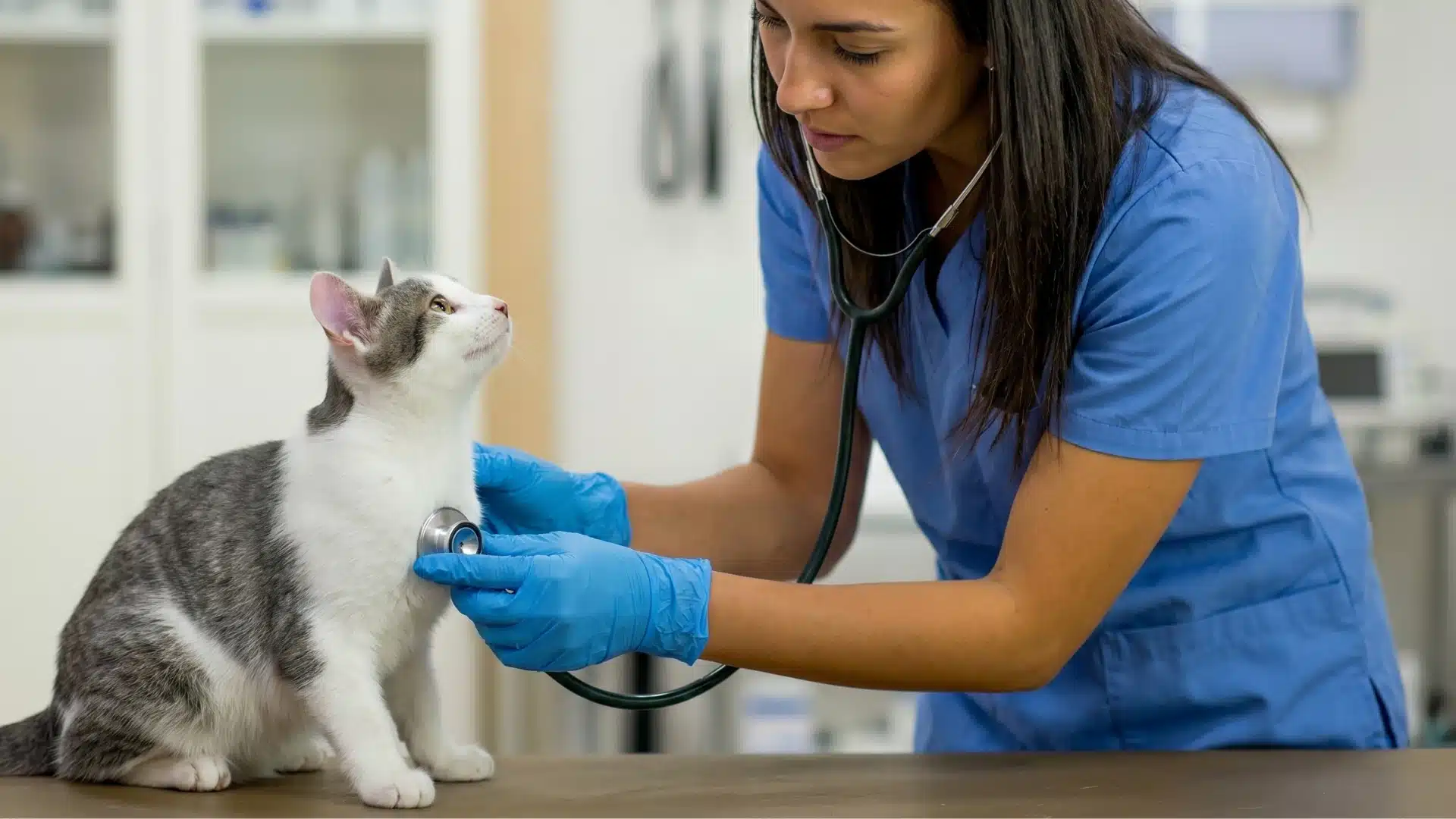
A kitten age chart can help estimate age, but it is not always fully accurate. Some kittens grow faster or slower than others due to health, nutrition, or early-life conditions.
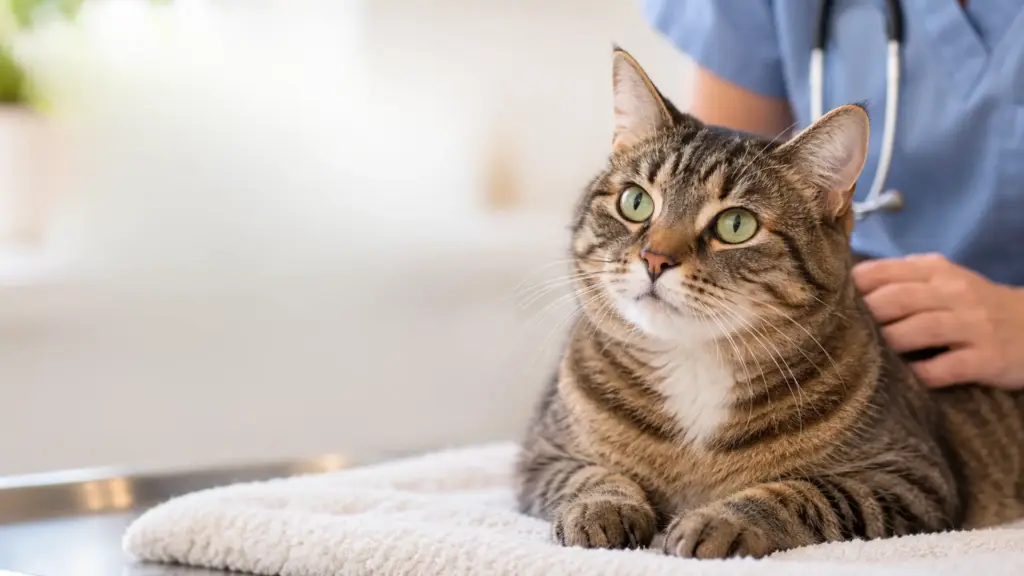
This is why a vet check still matters, especially when the kitten’s exact age is unknown.
Vets can look at important signs like teeth development, body weight, eye changes, and overall health to estimate age more closely.
They can also check for common problems such as dehydration, infections, worms, or poor growth.
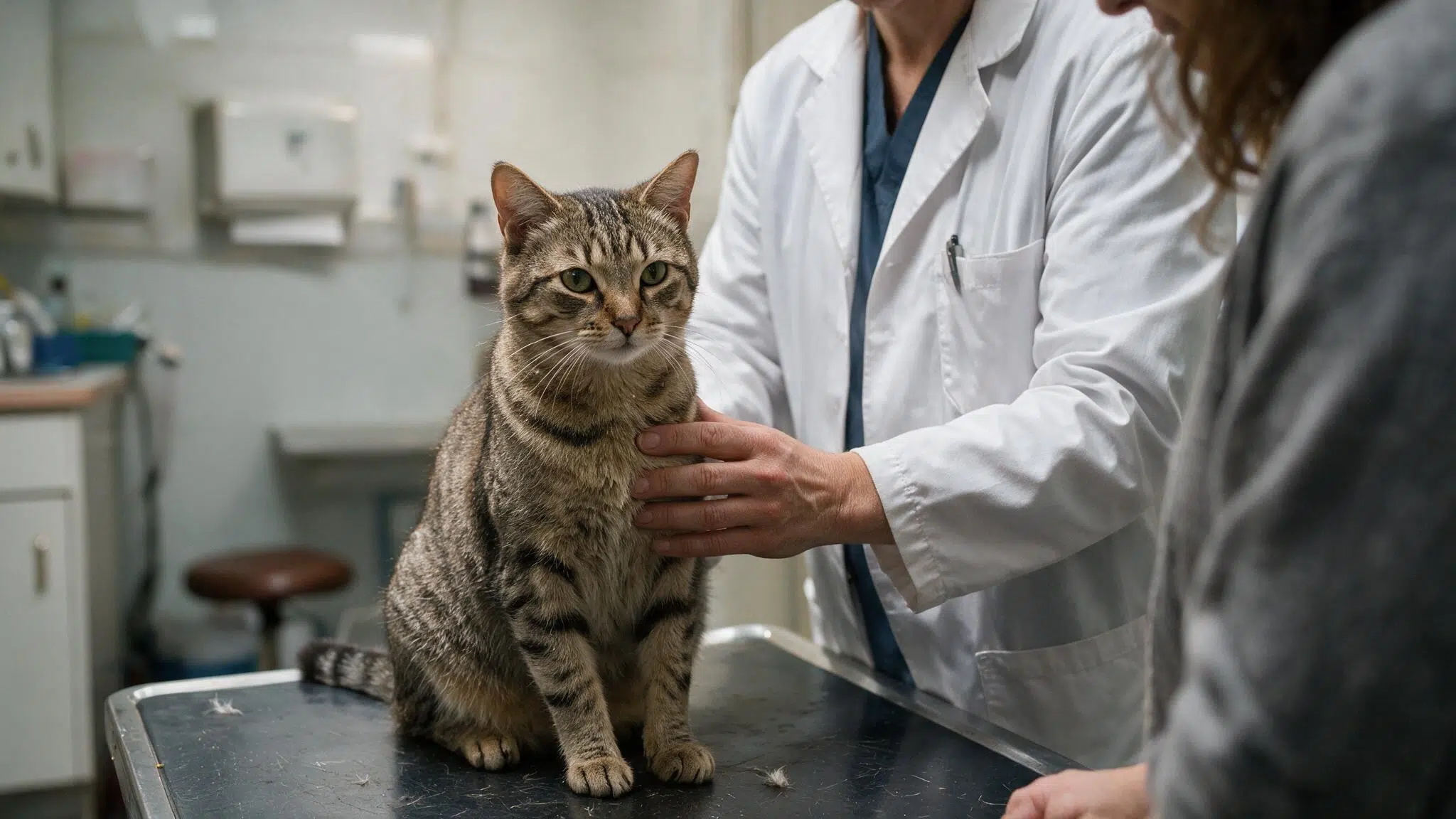
This becomes even more helpful for stray or rescued kittens that may not have received proper care after birth. A vet visit also helps kittens start the right feeding plan, vaccines, and treatment at the correct time.
Even a simple checkup can make a big difference in keeping a young kitten healthy and safe as it grows.
Conclusion
A kitten age chart is a helpful starting point, but the best answer usually comes from checking several signs together. Eyes, ears, teeth, weight, movement, and feeding behavior all tell part of the story.
I would start with the easiest clues: Are the eyes open? Are the ears upright? Are there teeth? Is the kitten walking, playing, or still crawling?
From there, the age becomes easier to narrow down. If a kitten seems weak, cold, sick, or too young to eat on its own, a vet visit is the safest next step.
Tiny kittens need the right care at the right time, and even a small age estimate can make feeding and care much easier.
Have you ever tried to guess a kitten’s age? Share your experience in the comments and help other cat owners learn what signs to check first.
Frequently Asked Questions
Can Kittens Recognize Their Mother After Being Separated?
Yes, many kittens can still recognize their mother through scent and sound, especially if the separation happens for a short time. The bond becomes weaker as they grow older and become more independent.
At What Age Do Kittens Start Cleaning Themselves?
Most kittens begin trying to groom themselves around three to four weeks old. Grooming improves with age as coordination and balance become stronger over time.
Do All Kittens Grow at the Same Speed?
No, kittens can grow at different rates depending on breed, nutrition, health, and early care. Some may appear smaller or larger than average for their age.