Walk into any pet store, and you’ll find a child pointing at a hamster’s tank asking, “Is that a mouse?” It’s a fair question. With their round bodies, chubby cheeks, and pint-sized charm, hamsters look nothing like the rats and mice most people picture when they hear the word “rodent.”
Yet the science is unambiguous, and understanding exactly what that means transforms how you see and care for these fascinating animals.
This article answers the question of whether a hamster is a rodent with scientific precision, then goes on to do so. You’ll discover their full taxonomic classification, an evolutionary history stretching back 16 million years, the unique biological traits they share with other rodents, and why getting this classification right has real, practical consequences for every hamster owner.
If you’ve ever wondered where hamsters truly fit in the animal kingdom, you’re in the right place.
What Exactly is a Hamster?
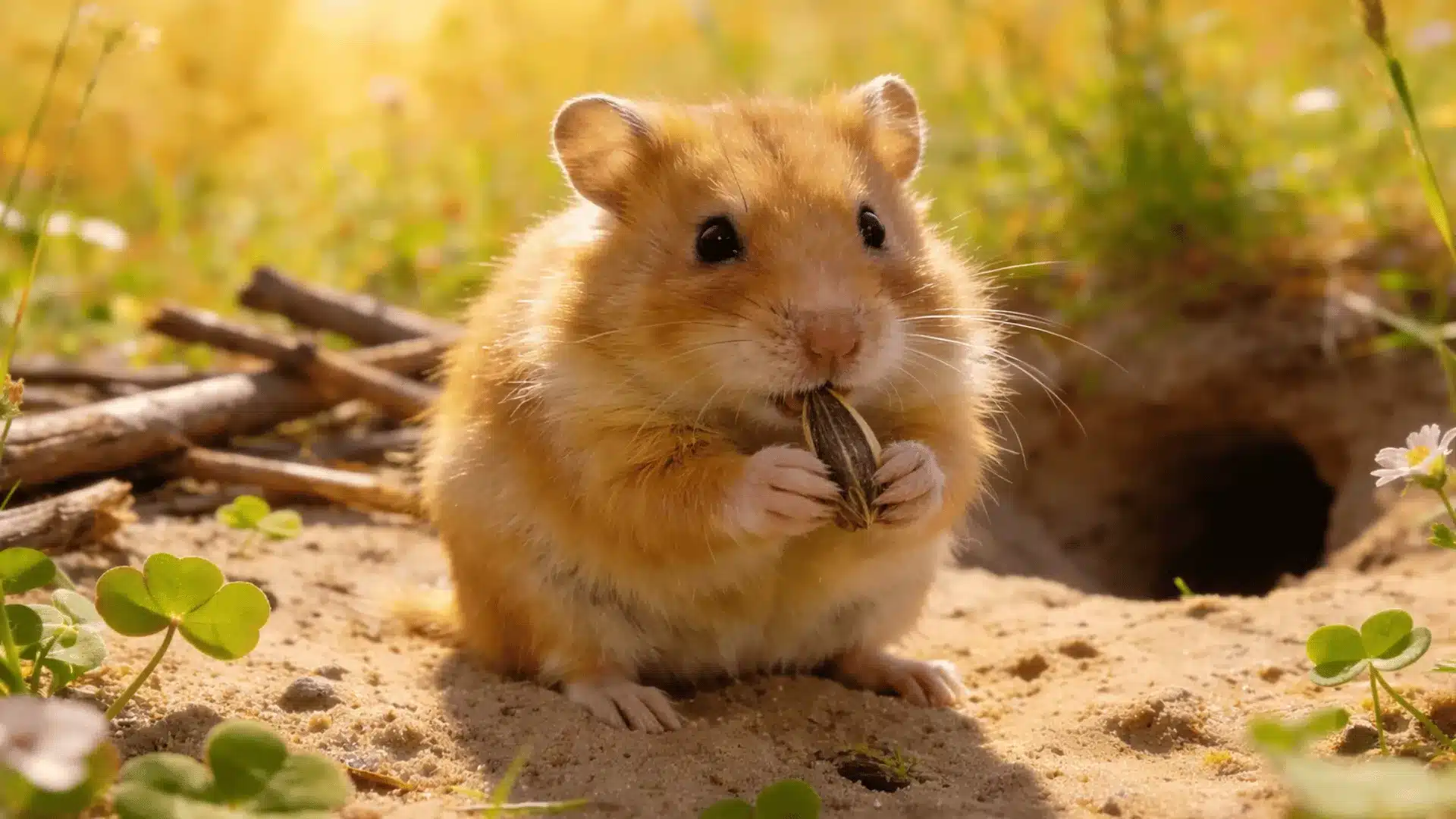
Hamsters are small mammals with a very distinctive look: compact, stout bodies, extremely short tails, wide feet, small furry ears, and most famously, internal cheek pouches that can stretch to store astonishing amounts of food.
In fact, the very word “hamster” is rooted in the German hamstern, meaning “to hoard,” a nod to this signature food-stuffing behavior. Hamsters range widely in size depending on species.
The dwarf desert hamsters of genus Phodopus are the tiniest, with bodies just 5–10 cm long, while the European or common hamster (Cricetus cricetus), the largest of all hamsters, can reach up to 34 cm in body length, not counting its stubby tail.
Their thick, dense fur ranges from grayish to reddish-brown depending on species, and their undersides tend toward white, gray, or black tones. Some species, like the Djungarian hamster, even sport a dark dorsal stripe running down the back as natural camouflage.
Wild hamsters are not the tropical, lush-forest creatures their fluffy appearance might suggest. They thrive in harsh, dry, open environments, desert borders, rocky foothills and plateaus, vegetated sand dunes, mountain steppes, and river valleys stretching from central Europe through Siberia, Mongolia, and northern China, and south from Syria to Pakistan.
There are 18 to 19 recognized species of hamsters, classified across seven genera within the subfamily Cricetinae. Despite this diversity, only five species are commonly kept as pets.
Is a Hamster Really a Rodent?
Yes, a hamster is definitely a rodent. Hamsters belong to the order Rodentia, the largest order of mammals on Earth, and to the subfamily Cricetinae within the family Cricetidae. Like all rodents, their defining anatomical trait is a pair of upper and lower incisors that grow continuously throughout their lives, requiring constant gnawing to keep them in check.
While hamsters may not look like “typical” rodents compared to rats or mice, this is a matter of appearance, not biology. Scientifically, their classification as rodents is unambiguous and universally accepted by veterinary, zoological, and taxonomic authorities, including the Merck Veterinary Manual and Britannica.
To understand where hamsters sit in the tree of life, here is their complete taxonomic hierarchy:
| Rank | Classification | Notes |
|---|---|---|
| Kingdom | Animalia | All animals |
| Phylum | Chordata | Animals with a spinal column |
| Class | Mammalia | Warm-blooded, fur-bearing, milk-producing |
| Order | Rodentia | The defining rank — largest mammalian order (~40% of all mammals) |
| Superfamily | Muroidea | Within the suborder Myomorpha (rat-like rodents) |
| Family | Cricetidae | Includes voles, lemmings, New World rats & mice |
| Subfamily | Cricetinae | The true hamsters — 7 genera, 18–19 species |
| Genus (example) | Mesocricetus | Includes the Syrian hamster |
| Species (example) | Mesocricetus auratus | Syrian / golden hamster |
A Note on The Syrian Hamster’s Endangered Status
Here’s something that surprises most pet owners: the Syrian (golden) hamster, the most popular hamster species in the world, is listed as Endangered on the IUCN Red List in its native habitat of Syria and Turkey.
Ironically, the species is thriving in living rooms globally while facing severe population declines in the wild due to habitat loss, agricultural expansion, and rodenticide use on farms. This makes responsible breeding and awareness genuinely important beyond casual pet ownership.
Hamster’s Full Biological Classification

The hamster lineage is far older than most people realize. According to fossil and molecular evidence, the evolutionary history of Cricetinae extends back 11.2 to 16.4 million years to the Middle Miocene epoch in Europe and North Africa, and 6 to 11 million years in Asia. Fifteen extinct fossil genera have been documented, and four of the seven living genera include extinct species.
Every rodent on Earth shares one anatomical non-negotiable: incisors that never stop growing. In hamsters, as in rats, mice, squirrels, and beavers, both the upper and lower pairs of front teeth grow continuously throughout the animal’s life. Left unchecked, they would curl, impede eating, and eventually cause serious injury or infection.
Nature’s solution is elegant: a self-sharpening system in which the incisors grind against each other during gnawing, wearing the softer dentine on the inner surface faster than the hard enamel on the outer face.
The result is always a sharp, angled cutting edge. For pet hamsters, this means wooden chew toys, hay, and appropriate cage furniture are not optional enrichment; they are dental necessities with direct health consequences.
Extraordinary Senses of Hamsters
Two sensory capabilities of hamsters are almost entirely unknown outside specialist literature.
1. UV vision: Hamsters, like many rodents, can see ultraviolet light. The RSPCA notes this is thought to be involved in social communication and improved twilight vision. The mechanism is poorly understood in hamsters specifically, but it is a documented trait shared with other members of the Rodentia order.
2. W hisker whisking: Hamsters use their vibrissae (whiskers) to sense their environment with remarkable precision. According to RSPCA guidance on hamsters, these whiskers vibrate backward and forward at rates of up to 30 whisks per second across a variety of behaviors, enabling the hamster to gather detailed spatial information about nearby objects.
This whisking behavior is a sophisticated sensory tool directly analogous to how other rodents navigate their environments. Offsetting these sharp senses: hamsters have notably poor eyesight. They are both nearsighted and colourblind, with limited depth perception; they frequently misjudge distances, which is why they sometimes tumble from heights.
Unique Internal Anatomy
Hamsters share several internal anatomical features typical of rodents, but also possess some distinctive traits. They have two-chambered stomachs and, unlike many mammals, lack a gall bladder.
Their diploid chromosome count varies considerably by species, ranging from 20 to 44 chromosomes, depending on the genus, a broader range than in most rodent families. Their large intestines and ceca are moderately complex and well-adapted to processing the fibrous, varied omnivorous diet typical of rodents.
Why Do People Think Hamsters Are Not Rodents?
The misclassification of hamsters is not random; it follows predictable psychological patterns, each grounded in how we perceive and categorize animals emotionally rather than scientifically.
- Appearance is the primary driver. The word “rodent” carries a cultural image: a sharp-featured, beady-eyed creature scuttling through walls. Hamsters, with their round bodies, fluffy fur, and wide dark eyes, look nothing like this. Their physique is closer to that of a child’s stuffed toy than to that of a Norway rat, and our brains use appearance as a shortcut for classification, overriding taxonomy.
- Pet status creates a cognitive category shift. Rodents like rats and mice are coded in most cultures as pests, uninvited, disease-associated, and destructive. Hamsters are sold in pet stores, named, kept in decorated cages, and loved. This radical difference in social role makes people unconsciously place them in a different mental category entirely: “pet,” not “rodent.”
- Pop culture reinforces the divide. In cartoons and films, rats and mice are often scheming villains or grime-associated scavengers. Hamsters, by contrast, tend to appear as adorable companions or comic heroes. The famous hamster-on-a-wheel image is one of gentle domesticity, not pestilence. When the cultural archetype of a rodent is “Ratatouille’s villain,” it’s easy to feel that your pet couldn’t possibly belong to the same family.
- The cheek pouch effect. The cheek pouch behavior actually reinforces the misclassification instinct. Watching a hamster calmly fill its cheeks with seeds feels so endearing and singular that observers mentally file it as “a hamster thing” rather than recognizing it as one of the most effective food-hoarding adaptations in the entire rodent order. It’s biology, not a personality quirk.
How Hamsters Differ from Other Rodents?
Knowing hamsters are rodents naturally prompts the follow-up question: how do they compare to the other rodents people know best? The table below lays out the key differences across five common pet rodent species:
| Feature | Hamster | Rat | Mouse | Gerbil | Guinea Pig |
|---|---|---|---|---|---|
| Family | Cricetidae | Muridae | Muridae | Muridae | Caviidae |
| Subfamily | Cricetinae | Murinae | Murinae | Gerbillinae | Caviinae |
| Body shape | Compact, stout | Elongated, robust | Slim, triangular head | Slender, arched back | Rounded, no visible tail |
| Tail | Very short ( | Long, scaly | Long, thin | Long, tufted tip | None |
| Cheek pouches | Yes, large internal pouches | No | No | Small, less prominent | No |
| Social nature | Solitary | Highly social | Social | Pair-bonded | Social (herd animal) |
| Activity pattern | Crepuscular/nocturnal | Nocturnal (adaptable) | Nocturnal/crepuscular | Crepuscular/diurnal | Diurnal |
| Lifespan (pet) | 2–3.5 years | 2–3 years | 1.5–2.5 years | 3–5 years | 4–8 years |
| Diet type | Omnivore | Omnivore | Omnivore | Herbivore-leaning | Herbivore (needs Vitamin C) |
| Burrowing | Strong burrower | Yes | Yes | Strong burrower | Minimal |
Hamster Care Basics Every Owner Should Know
Housing Problem: Solitary Territory and Burrowing Instincts
Two rodent traits, territorial solitude and burrowing, directly dictate housing requirements. Syrian hamsters in particular must be housed alone; placing two adults together triggers serious and potentially fatal fighting.
This is not a preference but a deep evolutionary hardwiring: Syrian hamsters in the wild inhabit solitary burrow systems and defend them aggressively.
The burrowing instinct means that deep, loose substrate (at least 15–20 cm, ideally more) is not a luxury; it is a psychological necessity. Hamsters deprived of burrowing opportunities show higher stress markers and reduced welfare.
Glass aquariums or deep, wire-caged enclosures with a plastic bottom and closely spaced bars (to prevent escape) are preferable to shallow plastic enclosures that limit natural behavior.
For a popular variation like the Teddy Bear hamster, housing details often need a bit more attention. Substrate depth, cage size, and enrichment setups should be slightly adjusted to better suit this breed, as standard setups don’t always meet their needs as effectively.
Dietary Need of a Hamster
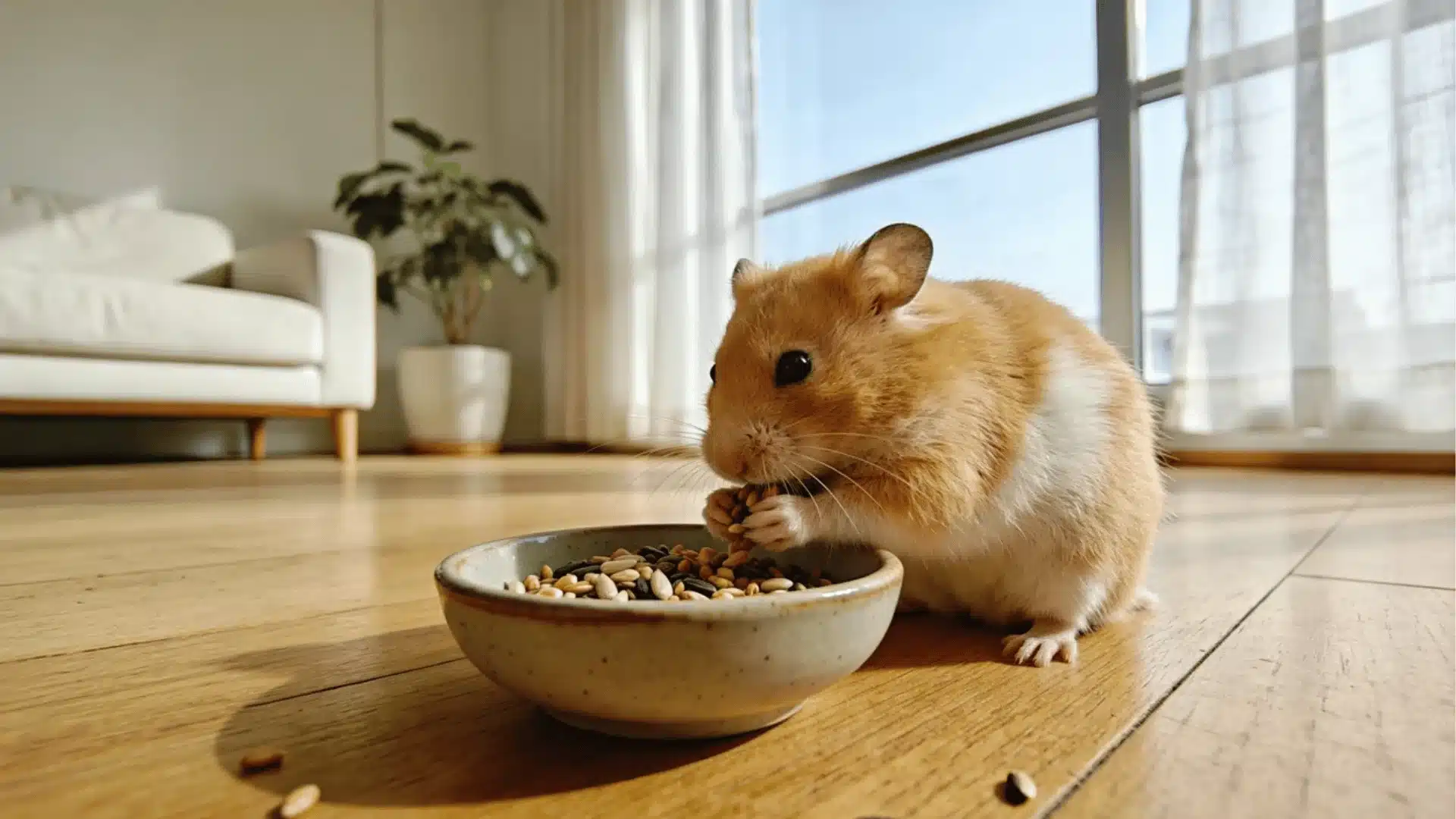
Hamsters are omnivores, meaning their diet should include both protein and plant matter. A seed-only diet is inappropriate and can lead to obesity and vitamin deficiencies, as hamsters will selectively eat the most calorie-dense seeds while ignoring more nutritious options.
Commercial rodent pellets, such as Oxbow Essentials Hamster & Gerbil Food, provide a balanced nutritional baseline, supplemented with small amounts of fresh leafy greens (kale, bok choy, dandelion greens, Swiss chard), limited fresh fruit, and very occasional protein.
For those who prefer a more natural mix, options like Higgins Sunburst Gourmet Hamster Food can be included alongside pellets rather than used as a replacement.
Hay serves double duty: its fiber promotes healthy GI motility (preventing the serious condition of GI stasis, where the digestive system slows or stops), and chewing on it aids dental health. Avoid feeding hamsters leeks, chives, onions, or cabbage, as they are harmful to them.
Conclusion
The answer to whether a hamster is a rodent has never been in doubt scientifically, yes, unambiguously, by every measure of taxonomy, anatomy, and evolutionary history.
Understanding that hamsters are rodents, with 16-million-year-old evolutionary roots, continuously growing teeth, crepuscular wild instincts, and a flagship species listed as endangered, makes you a better observer, a better owner, and a more informed advocate for these animals.
The appearance that fools people into thinking hamsters are “something other” than rodents is itself a product of rodent evolution, compact burrowing physiques, sensory adaptations, and food-hoarding behaviors honed over millions of years of survival.
Being a rodent is not a diminishment. It is a biological heritage shared with some of the most adaptable, widespread, and ecologically important mammals on Earth. Hamsters simply happen to carry that heritage in the most endearing package imaginable.
Frequently Asked Questions
Do Hamsters Spread Diseases Like Other Rodents?
The risk with domestic hamsters is very low when basic hygiene is maintained. However, hamsters can carry some pathogens, and notably, as the RSPCA confirms, hamsters are highly susceptible to human cold viruses and can catch a cold from their owner, and vice versa. This is an unusual and often surprising fact. Washing hands before and after handling, and keeping sick owners away from hamsters, is sensible practice.
Are Hamsters Nocturnal?
In captivity, yes, hamsters typically become most active after sunset. But in the wild, hamsters are technically crepuscular, meaning they are most active during the twilight periods around dawn and dusk. Captivity removes the predator pressure that shaped this timing, shifting their pattern toward conventional nocturnality. A hamster that sleeps all day is behaving naturally.
Do Hamsters and Rabbits Belong to The Same Animal Group?
No. Hamsters are rodents (order Rodentia); rabbits are lagomorphs (order Lagomorpha). They are in different orders entirely. Both orders belong to a larger clade called Glires, meaning they share a common ancestor further back in evolutionary history, but at the order level, they have been on separate evolutionary paths for tens of millions of years.