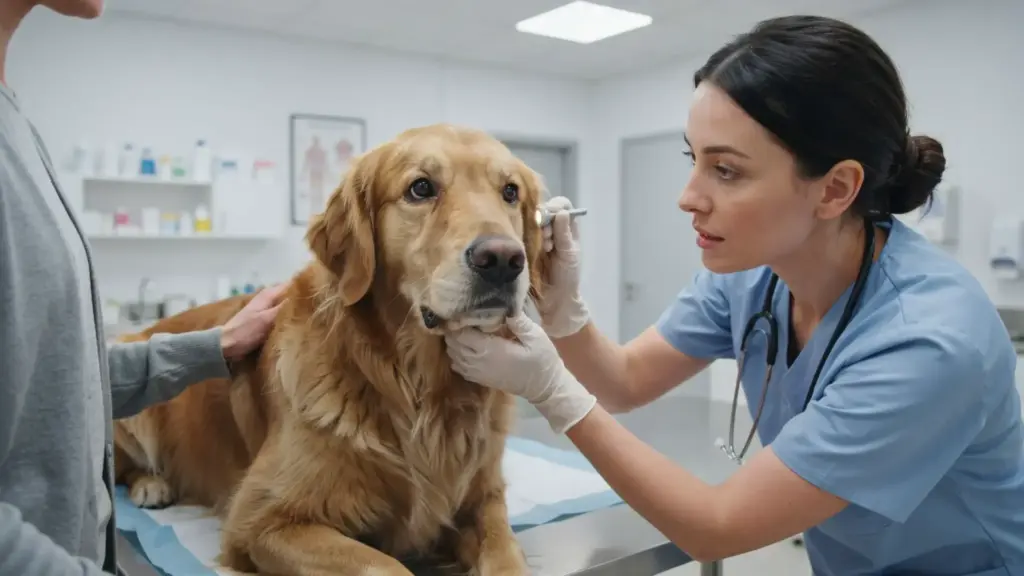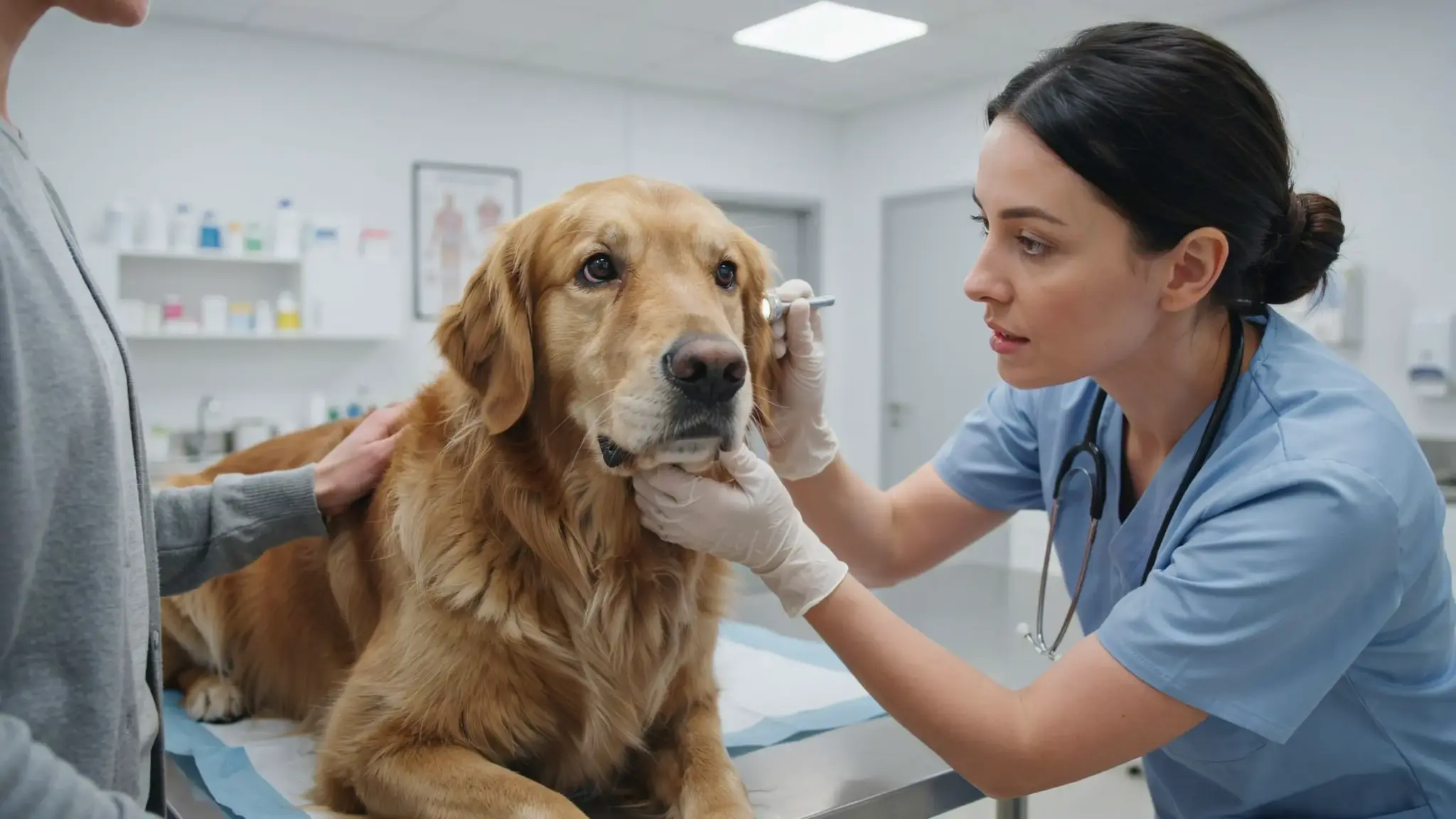



Every week, a cat comes into my practice looking perfectly fine until a hands-on exam reveals something the owner couldn’t see under the fur.
Most small lumps, appetite changes, or quiet days do not mean cancer. Still, I have treated enough feline patients to know that early cat cancer symptoms can look much like aging, digestive trouble, dental disease, or a temporary behavior change.
Cats are also good at hiding discomfort, which makes persistent changes especially important. Weight loss, reduced appetite, hiding, slower movement, or an unusual lump all deserve attention when they continue.
Here is what I look for during an exam, which cancers occur more often in cats, how testing works, and what treatment and home care may involve.
What Is Cancer, and Why Does It Develop?
This is one of the first things I explain when an owner hears the word cancer. Cancer begins when cells stop following the body’s normal instructions for growth and replacement.
Healthy cells eventually die and are replaced. Cancer cells continue dividing. Some form a tumor that damages nearby tissue, while others can spread through the blood or lymphatic system to another part of the body.
Veterinarians also classify cancers as primary or secondary. Primary cancer begins where the abnormal cells are found. Secondary cancer has spread from another location.
That difference matters because the place where cancer started, how far it has moved, and the type of cells involved all affect the tests and treatment we consider next.
Common Types of Cancer in Cats
In my practice, a few feline cancers come up more often than others. Knowing the tumor type matters because growth, location, spread, and response to treatment can vary greatly.
1. Lymphoma
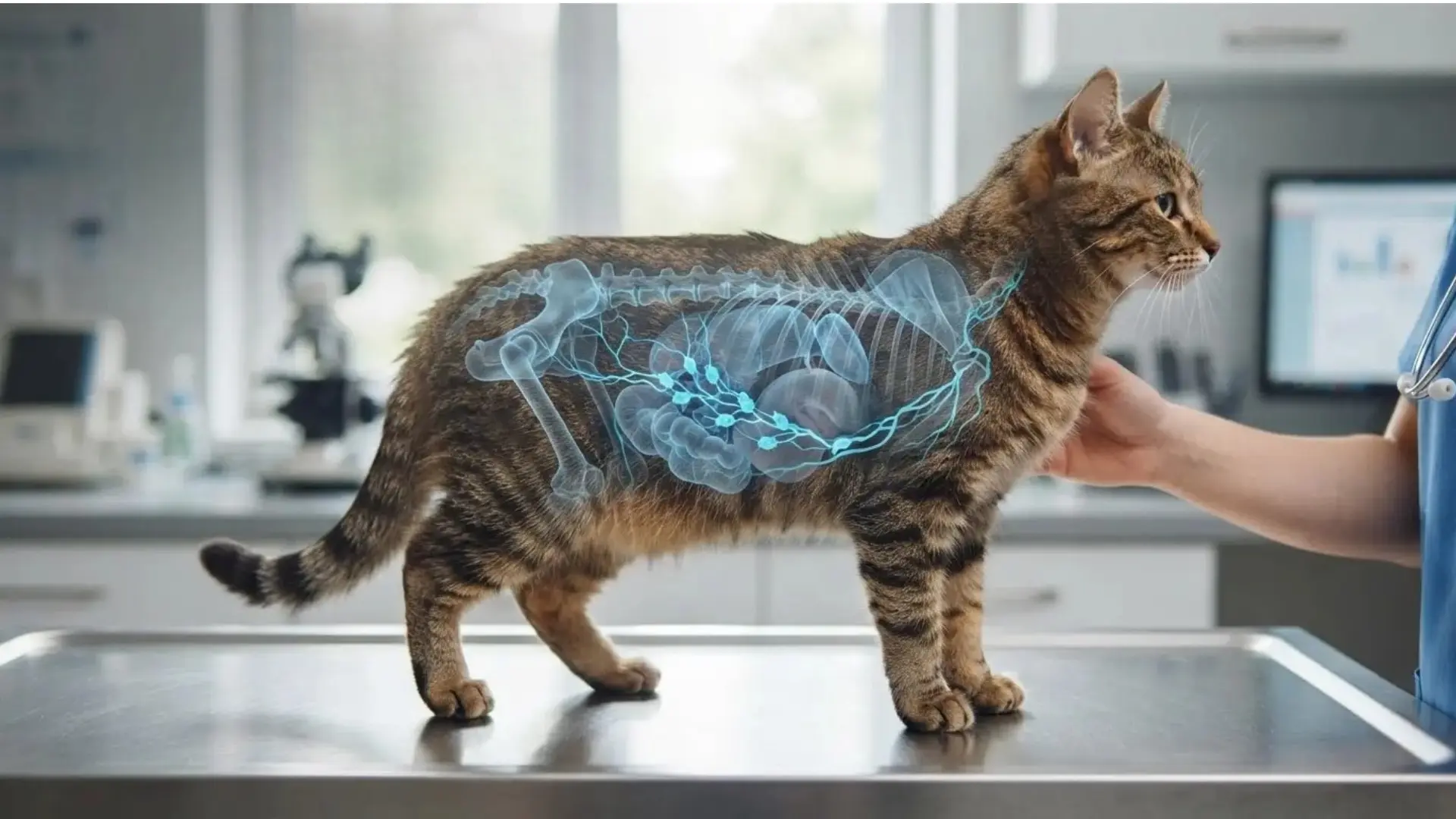
Lymphoma is one of the most common cancers diagnosed in cats. It begins in lymphocytes, white blood cells involved in immune function, and is associated with feline leukemia virus, although cats without FeLV can develop lymphoma too, which is part of why discussing FeLV vaccination during a kitten’s early visits is worth doing with your vet.
- Origin: Begins in lymphocytes within the immune system
- Location: Often affects the intestines, chest, kidneys, or lymph nodes
- Speed: Some forms progress much faster than others
- Spread: More than one body site may already be involved
The intestinal form can be difficult to spot early because vomiting, loose stool, weight loss, and reduced appetite resemble ordinary digestive problems. If those signs keep returning, I prefer testing over repeatedly assuming the stomach will settle.
2. Squamous Cell Carcinoma

Squamous cell carcinoma commonly affects either the skin or mouth. White and light-colored cats face greater risk from sun-related skin damage, particularly on areas with thin hair coverage such as the ears, nose, and eyelids.
- Origin: Develops from flat cells in skin or tissue lining
- Location: Ears, nose, eyelids, gums, or tongue
- Speed: Can damage nearby tissue as it enlarges
- Spread: Oral forms generally behave more aggressively
I have seen early skin lesions mistaken for scratches and mouth tumors treated initially as dental trouble. A sore that repeatedly returns, changes shape, or refuses to heal deserves a closer veterinary examination.
3. Mammary Tumors
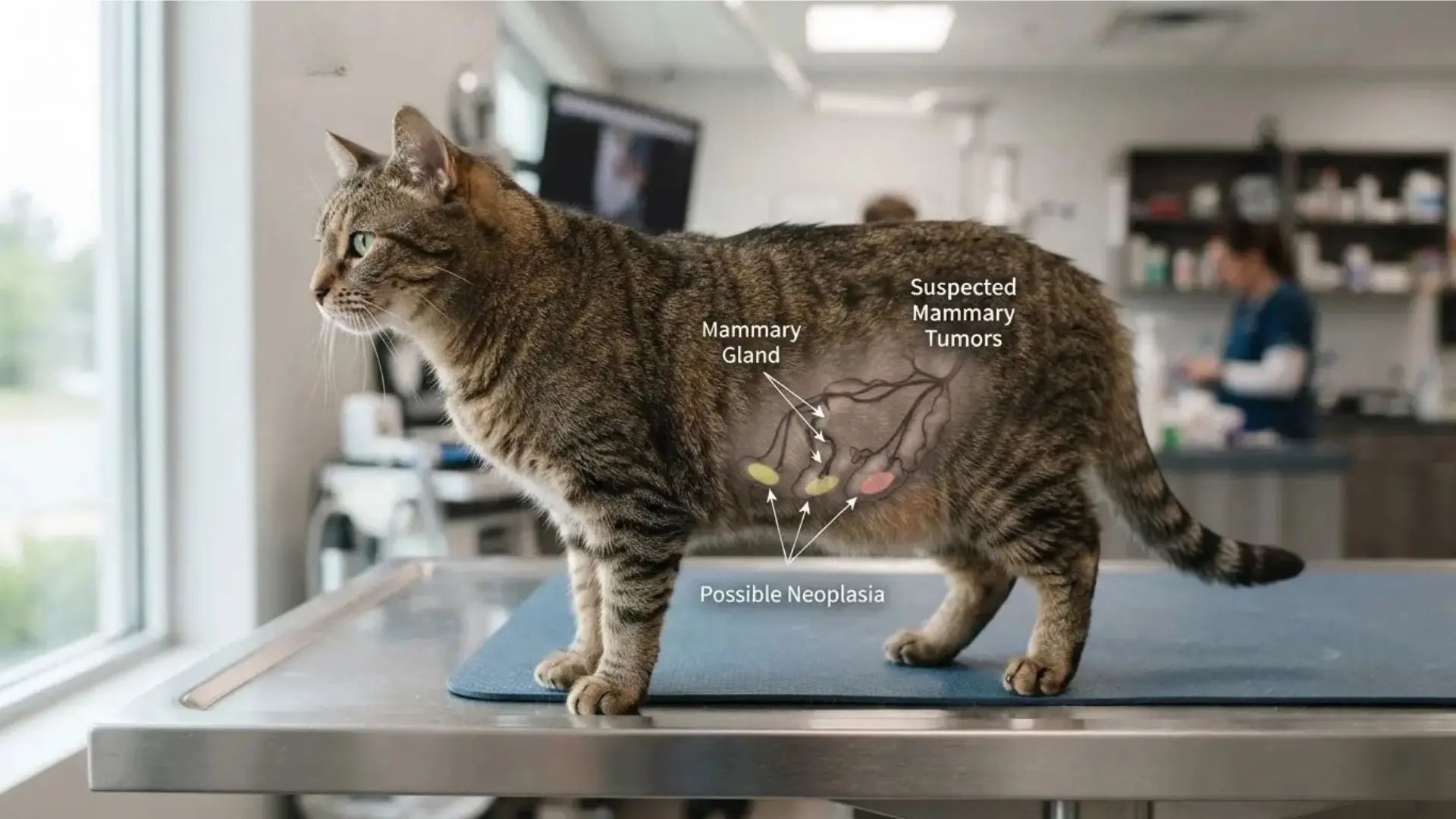
Mammary tumors deserve particular attention because most feline mammary tumors are malignant. They usually appear as firm nodules along the mammary chain and occur most often in females that were not spayed or were spayed later, which is one reason spaying at a younger age is often discussed as part of reducing this specific risk.
- Origin: Begins in mammary gland tissue
- Location: One or more glands along the abdomen
- Speed: Growth varies between individual tumors
- Spread: Nearby lymph nodes, lungs, and other organs can become involved
During a physical exam, I check the entire mammary chain rather than only the area an owner has noticed. A very small lump may be easier to assess and manage than one that has had months to grow.
4. Injection-Site Sarcoma
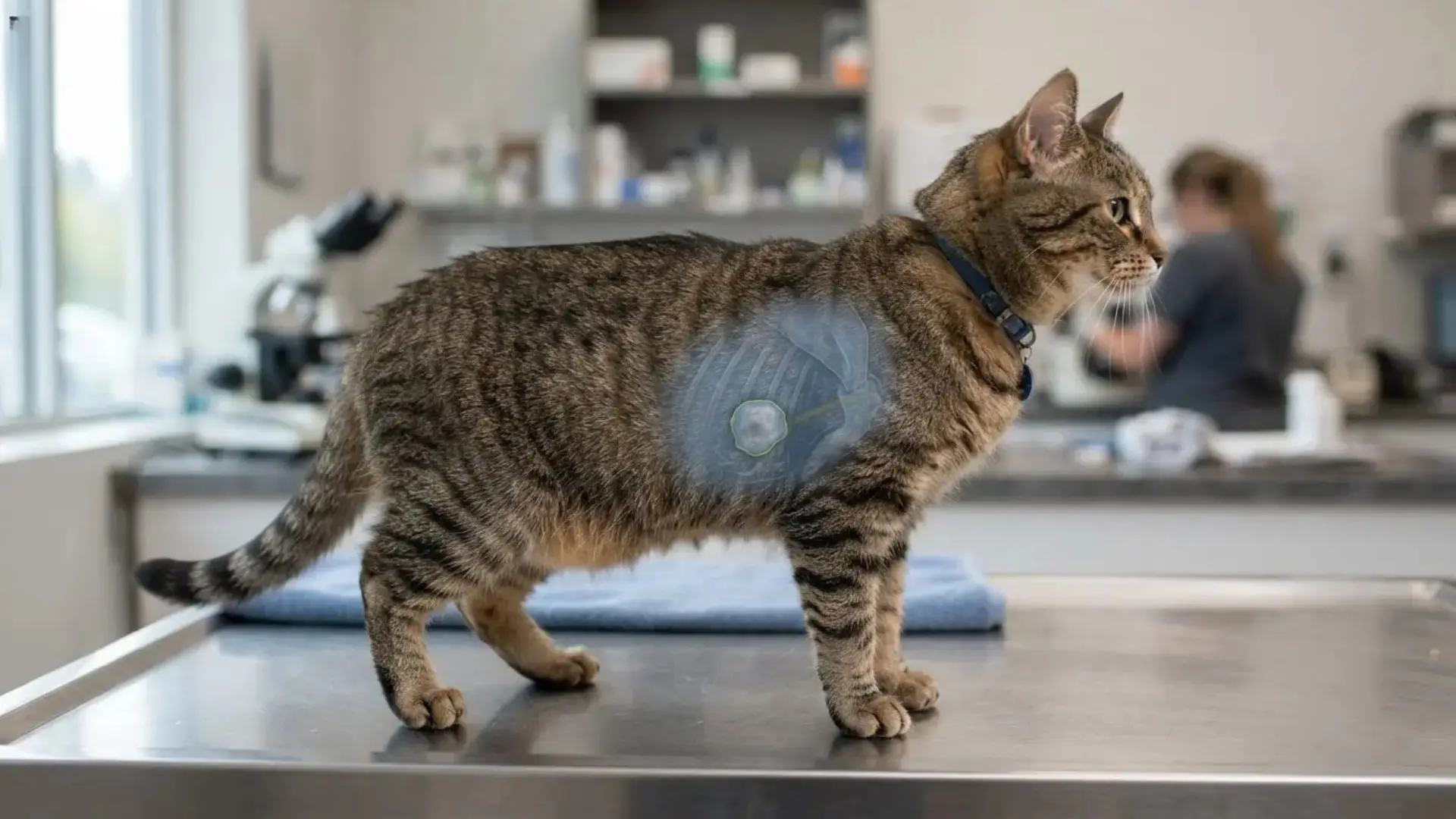
Injection-site sarcoma develops from connective tissue in an area of persistent inflammation. Some cases occur at places where a cat previously received a vaccine or another injection.
- Origin: Develops from fibrous connective tissue
- Location: May appear at a previous injection site
- Speed: Can grow aggressively into surrounding tissue
- Spread: Local recurrence can occur after incomplete removal
This is why I do not ignore a lump that remains after an injection. Temporary swelling can happen, but a mass that persists, enlarges, or becomes firmer should be checked rather than assumed to be a routine reaction.
Cancer can also affect the bone, spleen, blood, lungs, and other internal organs without producing a visible lump. That makes appetite, weight, breathing, energy, and behavior important clues too.
Early Signs and Symptoms of Cancer in Cats
Cat cancer symptoms can resemble aging, dental trouble, digestive illness, or a minor injury. These are changes I ask about during senior wellness visits:
- Lumps: A new mass or one changing in size, shape, or firmness
- Sores: A wound, scab, or ulcer that does not heal normally
- Weight: Unplanned weight loss over several weeks
- Appetite: Eating less or suddenly refusing familiar foods
- Energy: Sleeping more or losing interest in normal activity
- Breathing: Rapid, difficult, or open-mouth breathing
- Bleeding: Blood from the mouth, nose, urine, or stool
- Odor: Persistent bad breath or smell from a skin lesion
- Litter box: New straining or changes in urine or bowel habits
- Behavior: Hiding, irritability, withdrawal, or reduced interaction
I look for patterns rather than one isolated bad day. A cat that skips breakfast once is very different from one that eats progressively less for a week, and the same pattern-over-single-day thinking applies to recognizing pain in a cat more broadly, since discomfort and illness often show up through similar subtle changes.
Advisory: Breathing trouble, collapse, heavy bleeding, or severe weakness needs urgent veterinary attention. Persistent but less severe changes should still be checked rather than watched indefinitely.
Which Cats Have a Higher Cancer Risk?
Cats do not show the same strong breed patterns seen with several cancers in dogs. Age, reproductive history, coat color, viral exposure, and breed-specific associations may still affect risk.
Cat or Breed | Why Risk May Be Higher |
|---|---|
Siamese | Reported higher occurrence of mammary tumors and some lymphomas |
White or light-colored cats | Lower pigment leaves exposed skin more prone to UV damage |
Sphynx | Hairless skin receives more direct sunlight |
Persian and Himalayan | Some tumor types have been reported more often |
Older cats | Cancer becomes more common as cellular damage accumulates |
Clinically, age matters more to me than breed alone. I watch an older mixed-breed cat with unexplained weight loss just as carefully as a pedigreed cat with a known risk pattern.
Some cancers can also occur in younger cats, particularly when viral infections such as FeLV are involved.
Can You Lower Your Cat’s Cancer Risk?
My preventive-care advice focuses on risks we can reasonably reduce. No habit can guarantee that a cat will never develop cancer.
- Spaying: Ask your veterinarian about timing because early spaying can greatly reduce mammary tumor risk.
- Sunlight: Limit strong sun exposure for white, pale, and hairless cats, especially around the ears and nose.
- Weight: Keep your cat at a healthy body condition with appropriate portions and regular activity.
- Smoke: Keep tobacco smoke and residue away from cats.
- FeLV: Discuss feline leukemia virus testing and vaccination based on your cat’s exposure risk.
- Body checks: Feel over your cat monthly for new lumps, swelling, sores, or painful areas.
- Vet exams: Keep regular appointments; vets often recommend more frequent exams as cats age.
I have found important lumps during routine exams that were almost impossible for the owner to see through the coat. That is why hands-on checks still matter when a cat seems well.
How Cancer Is Diagnosed
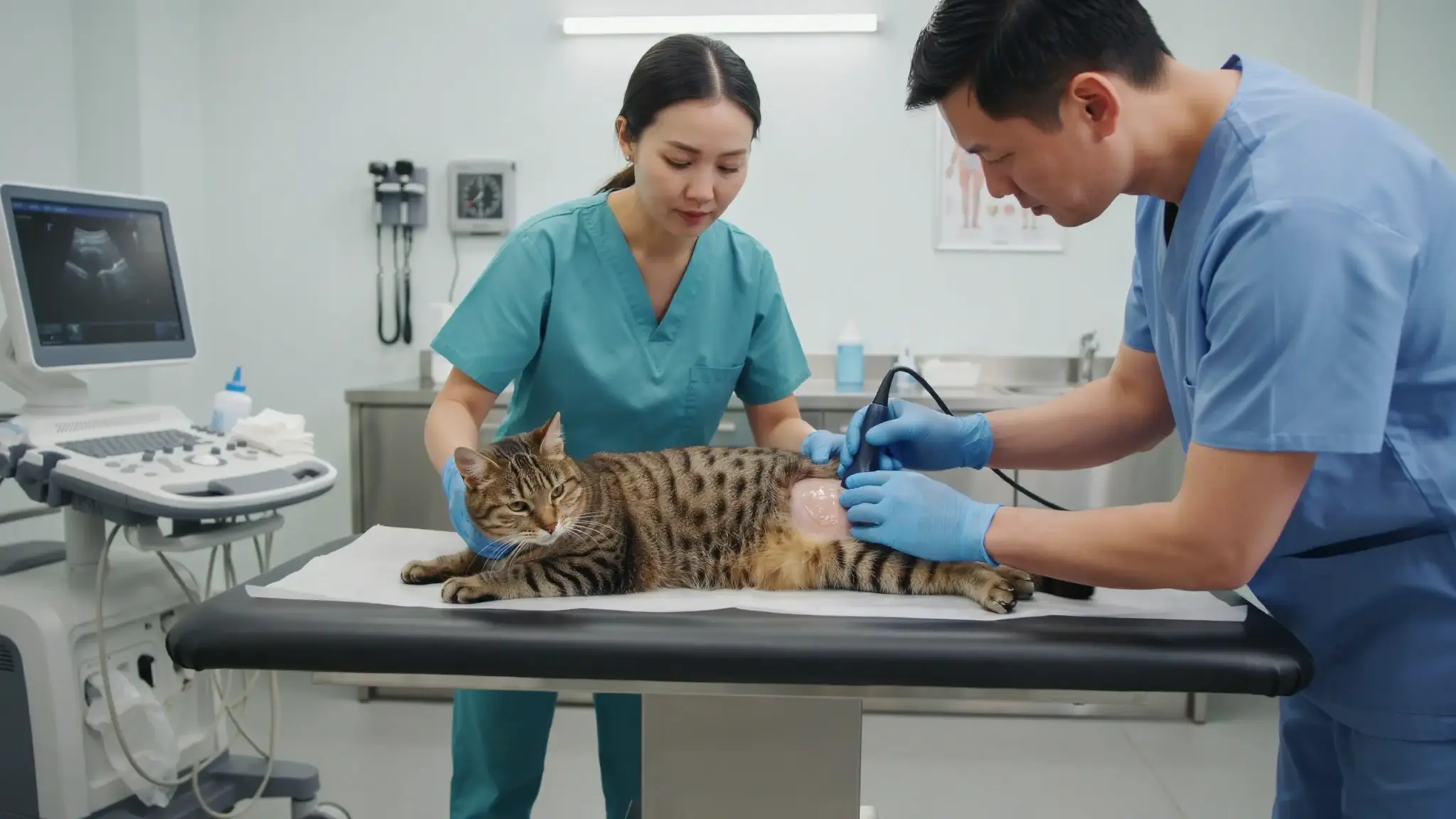
Finding an abnormal lump or an unusual imaging result does not confirm the type of cancer present. A diagnosis requires identifying the cells involved and understanding how far the disease may have progressed.
I begin with a thorough physical examination and may recommend imaging, such as X-rays or ultrasound, to evaluate areas like the chest or abdomen. If needed, a needle sample or biopsy lets a lab examine the cells and determine the tumor type.
Additional staging tests, including bloodwork, chest imaging, ultrasound, or CT scans, help assess whether cancer has spread and evaluate overall organ function.
A confirmed diagnosis provides much more information than a lump alone because the tumor type, location, grade, and stage all influence treatment decisions. That is why I avoid making predictions based only on how a mass feels during an exam.
Treatment Options for Cancer in Cats

The right treatment depends on the cancer, where it is located, whether it has spread, and how well the cat is feeling overall. Comfort remains part of every decision.
1. Surgery
Surgery is often considered when a tumor is limited to one area and can be removed with enough surrounding tissue.
Depending on location, that might involve removing a skin mass, mammary tissue, part of an ear, or an affected organ. Some cats recover quickly from smaller procedures, while larger operations require stricter rest, wound checks, medication, and scheduled follow-up visits.
2. Chemotherapy
Chemotherapy is commonly used for lymphoma and may also be recommended when cancer has spread or when microscopic cells could remain after surgery.
Owners often expect the same side effects associated with human chemotherapy. Veterinary protocols generally place more emphasis on maintaining daily comfort. Many cats continue eating and interacting normally during treatment, although reduced appetite, tiredness, or other side effects can still occur.
3. Radiation and Pain Relief
Radiation may be considered when a tumor cannot be completely removed or when reducing its size could improve comfort.
Pain control also changes as a cat’s needs change. I base medication choices on the cat’s diagnosis, kidney and liver health, other medicines, and current symptoms rather than using one standard approach for every patient.
Disclaimer: Never give a cat human pain medication unless your veterinarian specifically instructs you to do so. Several medicines commonly used by people can be highly toxic to cats.
What Does Cancer Treatment Actually Cost?
Cost is one of the first practical questions families ask me, and itis best to discuss it early. Prices can differ considerably by location, specialist availability, tumor type, and treatment length.
Item | Estimated Cost (USD) | What Can Affect It |
|---|---|---|
Diagnosis and staging | $300–$1,500+ | Consultation, bloodwork, pathology, X-rays, ultrasound, or CT |
Surgery | $500–$4,000+ | Tumor location, size, anesthesia, and hospital stay |
Chemotherapy | $150–$600 per dose | Medication used, monitoring, and number of sessions |
Full chemotherapy course | $3,000–$8,000+ | Length and complexity of the protocol |
Radiation | $1,000–$10,000+ | Number of treatments and treatment goal |
Combination care | $8,000–$15,000+ | Surgery combined with chemotherapy or radiation |
I encourage owners to request a written estimate rather than trying to calculate the final bill from online averages.
Ask what the quote includes, what follow-up visits may cost, and which parts of treatment are considered essential versus optional.
What Real Cat Owners Say
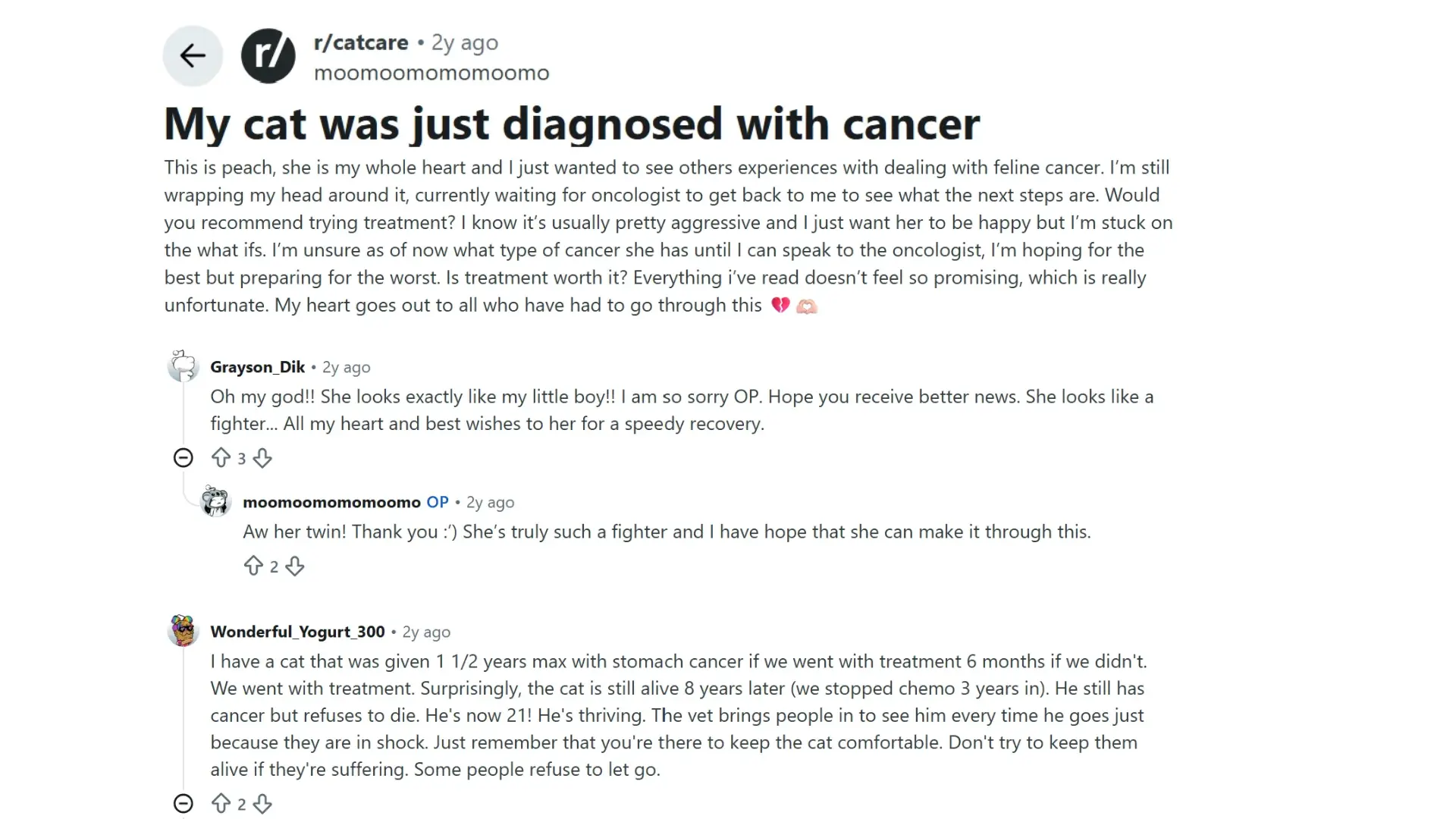
Cat owners on Reddit often describe how difficult it can be to make treatment decisions immediately after a cancer diagnosis.
In this discussion, one owner said they were waiting to speak with an oncologist and felt unsure about treatment because they wanted their cat to stay comfortable without unnecessary suffering.
Another owner shared a very different experience with a cat diagnosed with stomach cancer. They chose treatment after being given a limited prognosis, and said their cat was still alive many years later. Their main takeaway was that treatment decisions should stay focused on the cat’s comfort and quality of life, not simply extending time at any cost.
Experiences like these show how differently feline cancer can progress. Individual stories can offer perspective, but treatment choices should be based on the cancer type, stage, overall health, and your veterinarian’s or veterinary oncologist’s advice.
Caring for a Cat With Cancer
What happens between appointments matters. I ask families to watch ordinary routines closely because subtle changes can tell us when treatment, pain control, or feeding support needs adjustment.
- Pain: Give medications exactly as prescribed and report new discomfort.
- Food: Contact your vet when appetite drops, or chewing becomes difficult.
- Rest: Provide a warm, quiet sleeping area that is easy to reach.
- Litter box: Use a low-entry box if weakness or stiffness makes climbing difficult.
- Routine: Keep meals, medication, and quiet time predictable.
- Monitoring: Track weight, breathing, grooming, movement, and social behavior.
- Rechecks: Attend scheduled visits even when the cat seems stable.
Home care cannot remove the cancer, but it helps us understand how well the cat is coping day to day.
A short written record of appetite, medication, and behavior can also make follow-up appointments far more useful.
Disclaimer: Contact your veterinarian promptly if your cat stops eating, develops breathing trouble, collapses, cannot stand, or shows pain that prescribed medication no longer controls.
Final Thoughts
Cats rarely make illness obvious at the beginning. A small lump, gradual weight loss, less interest in food, or a change in hiding habits may be the only clue that something needs attention.
That does not mean every unusual sign points to cancer. It means persistent changes deserve an explanation, not months of waiting.
I would rather examine a cat and tell an owner the lump is harmless than meet that same cat much later after the problem has progressed.
Watching for cat cancer symptoms, keeping routine veterinary appointments, and acting when something stays different can give your cat access to testing and care sooner.
If you have noticed a change that is not settling, book the exam rather than waiting for your cat to look seriously ill.
Frequently Asked Questions
Can a Blood Test Alone Diagnose Cancer in Cats?
Usually not. Bloodwork can reveal changes linked with illness or organ function, but confirming cancer commonly requires imaging, cell sampling, biopsy, or additional testing.
Can a Cat With Cancer Live With Other Cats?
In most cases, yes. Cancer itself does not spread between cats. Your veterinarian may recommend separate precautions if an infectious disease is also present.
Should a Cat With Cancer Stay Indoors?
Usually, indoor living is safer during treatment because it limits injury, infection exposure, extreme temperatures, and missed medication while making daily monitoring much easier.