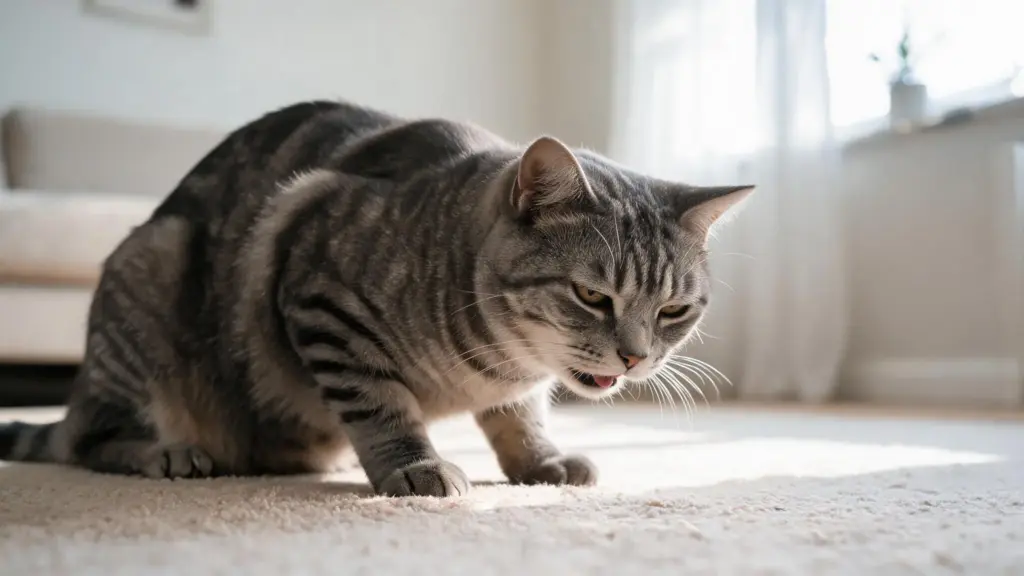
I’ve had owners sit in my exam room and describe, almost word for word, the same “hairball” story: a cat crouched low, coughing hard, nothing ever coming up. More often than not, they’d been watching that pattern for weeks before booking the visit.
Cat asthma symptoms tend to start small and vanish just as fast, which is exactly what makes them so easy to write off as a bad day rather than early feline asthma.
A cough, a stretched-out neck, breathing that’s a little too fast at rest- these are the details worth tracking once they start repeating.
Here, we’ll separate a genuine breathing episode from a passing cough, flag which signs mean it’s time to call the vet, and cover what happens once you’re in the exam room.
How to Recognize Feline Asthma
Feline asthma is chronic inflammation in the lower airways, often flared by common household allergy triggers that irritate people too. Swelling, tightened air passages, and extra mucus make it harder for air to move in and out.
Some episodes are mild and pass quickly. Others build fast, sometimes while your cat is lounging on the couch, sometimes right after a burst of zoomies.
Plenty of cats look completely fine between episodes, which is part of what makes this condition tricky to catch. Coughing and wheezing point toward a problem,
but they don’t confirm asthma alone. Heart issues, infections, parasites, and chronic bronchitis can all mimic it closely. If your cat keeps “trying to cough up a hairball” and nothing ever comes up, that pattern deserves a closer look, not a shrug.
Who’s Most Likely to Develop This Condition?
Feline asthma most often shows up between two and eight years old, though it can develop in kittens and senior cats too.
Siamese and related Oriental breeds appear to be genuinely predisposed, based on referral-hospital case data. However, the majority of diagnosed cats are still domestic shorthairs with no special breed background at all.
Cats carrying extra pounds, along with cats in households with indoor smoking, frequent aerosol use, or dusty litter, tend to have more frequent and more severe episodes.
However, excess weight or irritant exposure doesn’t cause asthma outright; it aggravates it in a cat already prone to it. I’d add one thing charts don’t capture well: stress matters more than owners expect.
I’ve watched genuinely stable asthmatic cats flare during a move, a new pet in the house, or even a loud renovation next door.
Kittens, Adults, and Senior Cats: Does Age Change What You’ll See?
In my experience, age changes the picture more than owners expect. Kittens with asthma are the trickiest to catch, because a young cat’s occasional cough gets brushed off as “just growing” or a reaction to a new home; vets usually want to see two or more episodes before taking it seriously at that age.
Middle-aged cats are where most textbook cases sit, with the classic cough-and-wheeze pattern showing up clearly enough to prompt a vet visit. The youngest case I’ve personally diagnosed was under a year old, and it took three separate visits before the pattern stopped looking like coincidence. (added this pass)
Senior cats are the group I watch most closely because heart disease and asthma can look almost identical on the surface: fast breathing, reduced activity, occasional coughing, and a senior cat is statistically more likely to have both a heart and a respiratory issue at once.
That overlap is exactly why I push for chest X-rays before starting any senior cat on asthma medication, rather than treating on symptoms alone.
Caution: Some asthma medications, particularly bronchodilators, can put extra strain on a heart that’s already compromised. In a senior cat, ruling out heart disease before starting treatment isn’t optional caution, it can be the difference between the right treatment and a harmful one.
Common Cat Asthma Symptoms
Cats rarely show every sign at once; some show one, others show several. How often it happens, how hard they’re working to breathe, and how quickly they bounce back matter just as much as the sound itself.
1. Repeated Coughing or Hacking
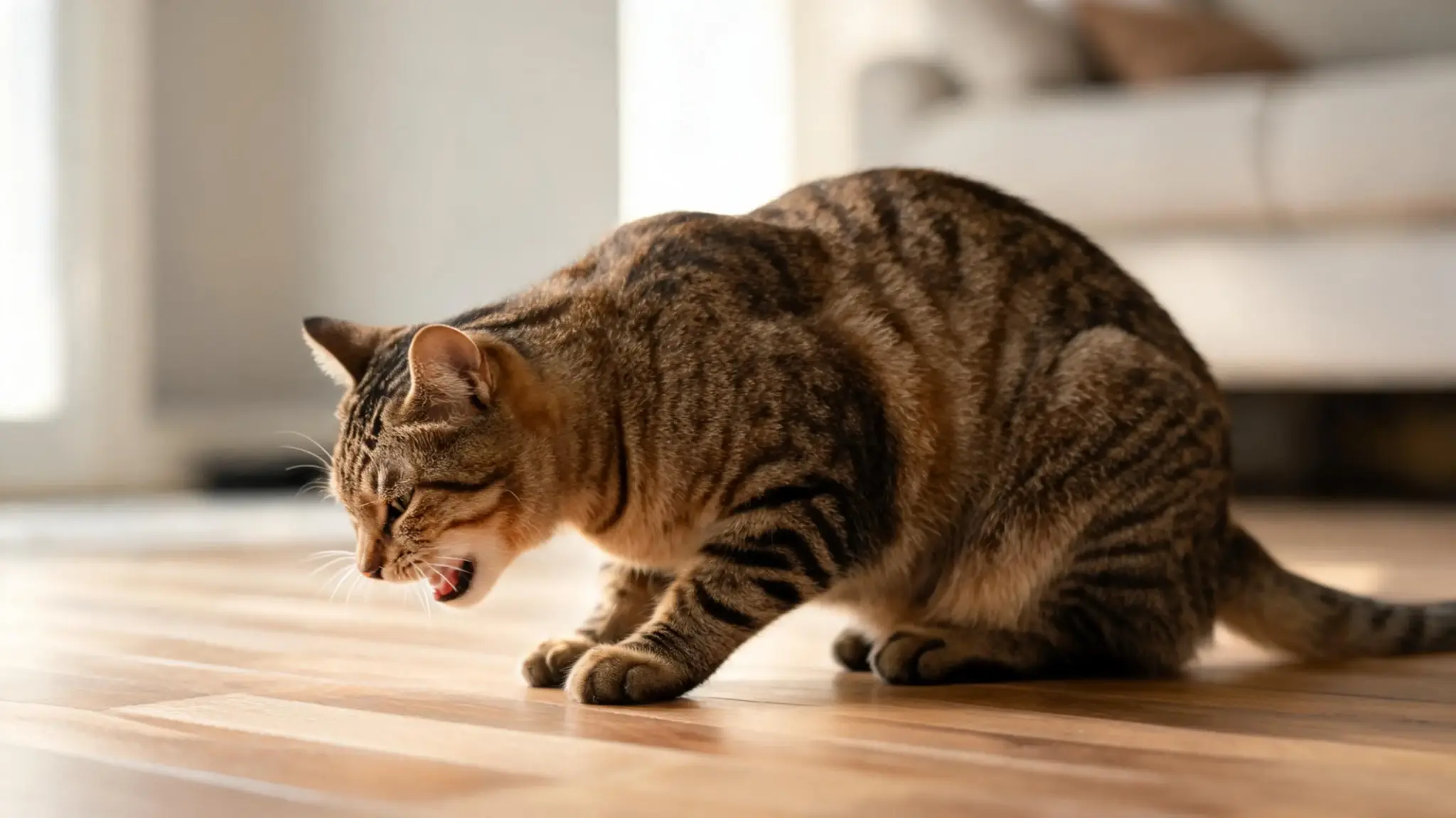
A short, forceful cough that comes in clusters is one of the most recognizable signs. Your cat may crouch low and stretch its neck out, almost like it’s trying to bring something up, but nothing appears, quite unlike when a cat actually vomits its food.
These episodes can last seconds or repeat several times before your cat catches its breath. Some cats cough once and shake it off; others do it several times a day, which is worth tracking closely.
2. Wheezing While Breathing
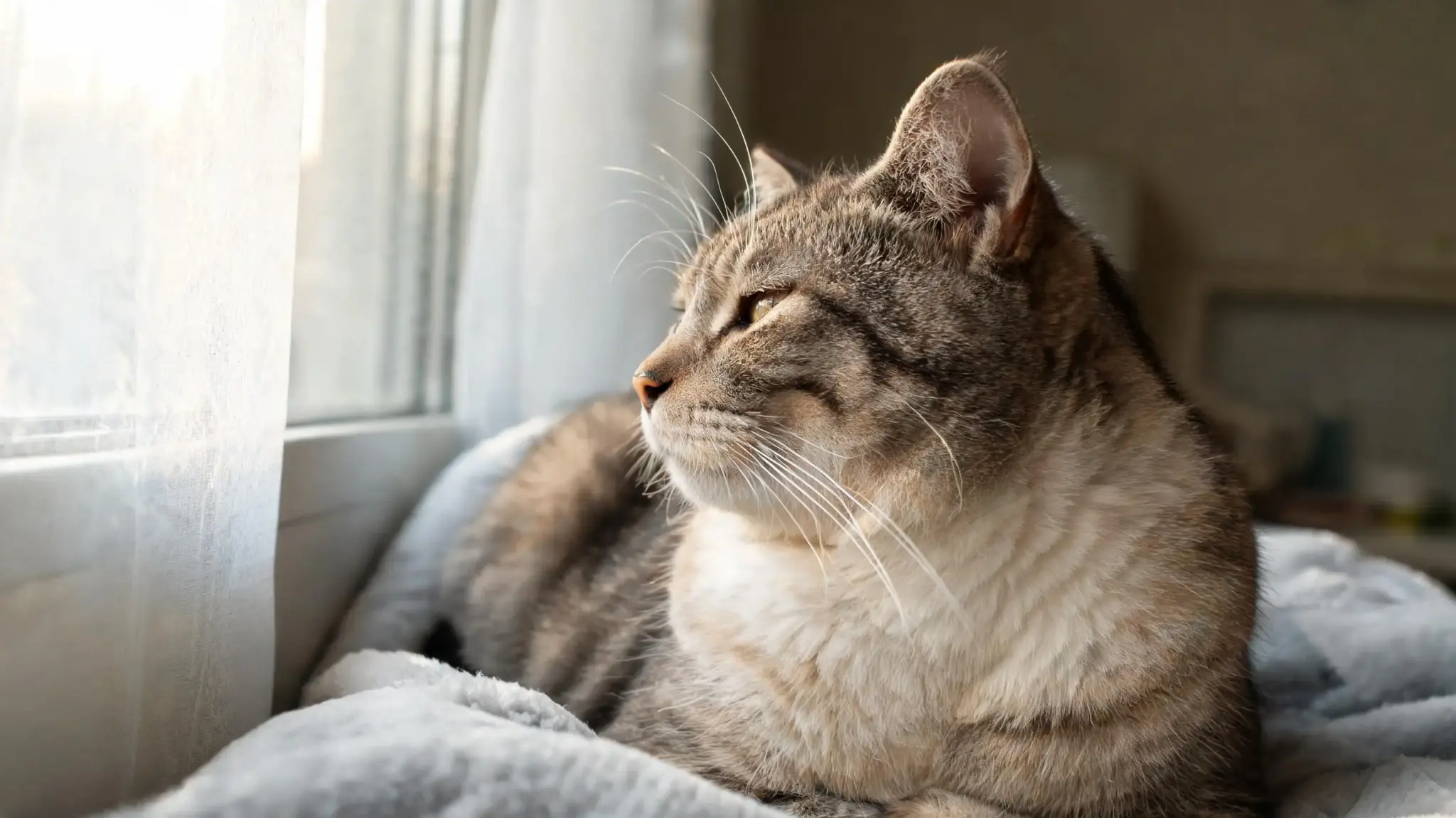
Listen for a faint whistle or squeak, usually louder on the exhale. Not every asthmatic cat wheezes audibly, though; some cough with no wheeze at all, which throws owners off.
One of the more useful tricks I give clients: sit with your cat in a quiet room for five minutes with no TV or fan running. That’s usually when a subtle wheeze finally becomes obvious. If it happens more than once, note the time of day and what your cat was doing beforehand.
3. Rapid Breathing While Resting

Count breaths only when your cat is calm or asleep, never after play. A resting rate that’s noticeably faster than usual is worth flagging, though speed alone can’t confirm asthma.
A healthy resting cat typically breathes between 15 and 30 times a minute, though most sit closer to 20–30. If you count consistently higher over several days, or notice the chest moving faster than normal during sleep, mention that pattern at your next vet visit.
I usually have owners film this at home before they ever get to me, since a cat that’s stressed in the car breathes differently than one relaxed on its own couch
4. Increased Effort to Breathe
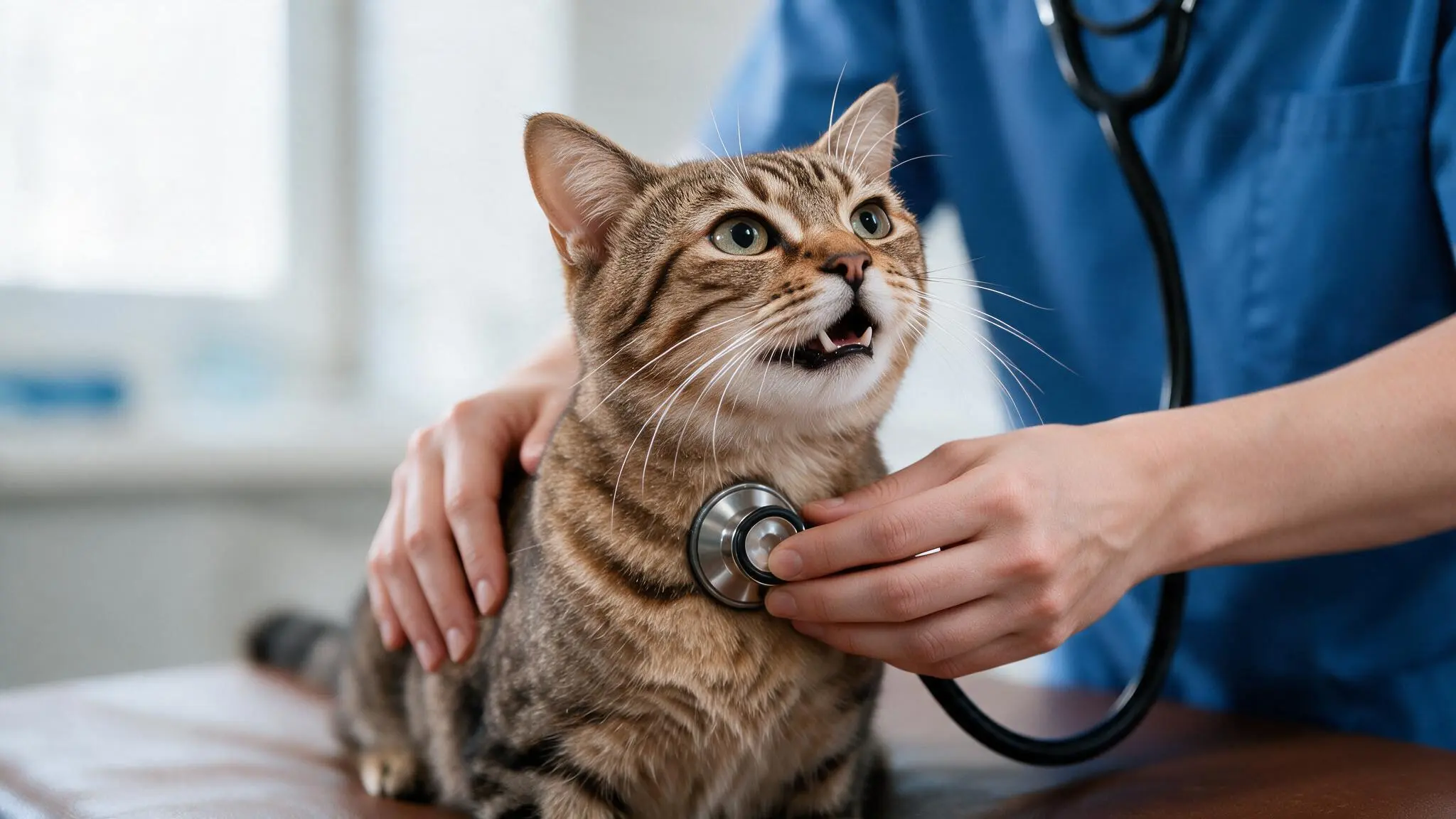
Watch for heaving sides, visible belly movement with each breath, flared nostrils, or a cat that can’t get comfortable lying down.
This is different from simple huffing after a sprint across the living room, and it’s worth weighing causes behind labored breathing before assuming asthma is the reason. Effort shows up as strain, not just speed.
A cat working hard to breathe often looks tense through the shoulders and chest, shifts position often, and may seem unusually alert or anxious even at rest.
5. Low Crouch and Extended Neck
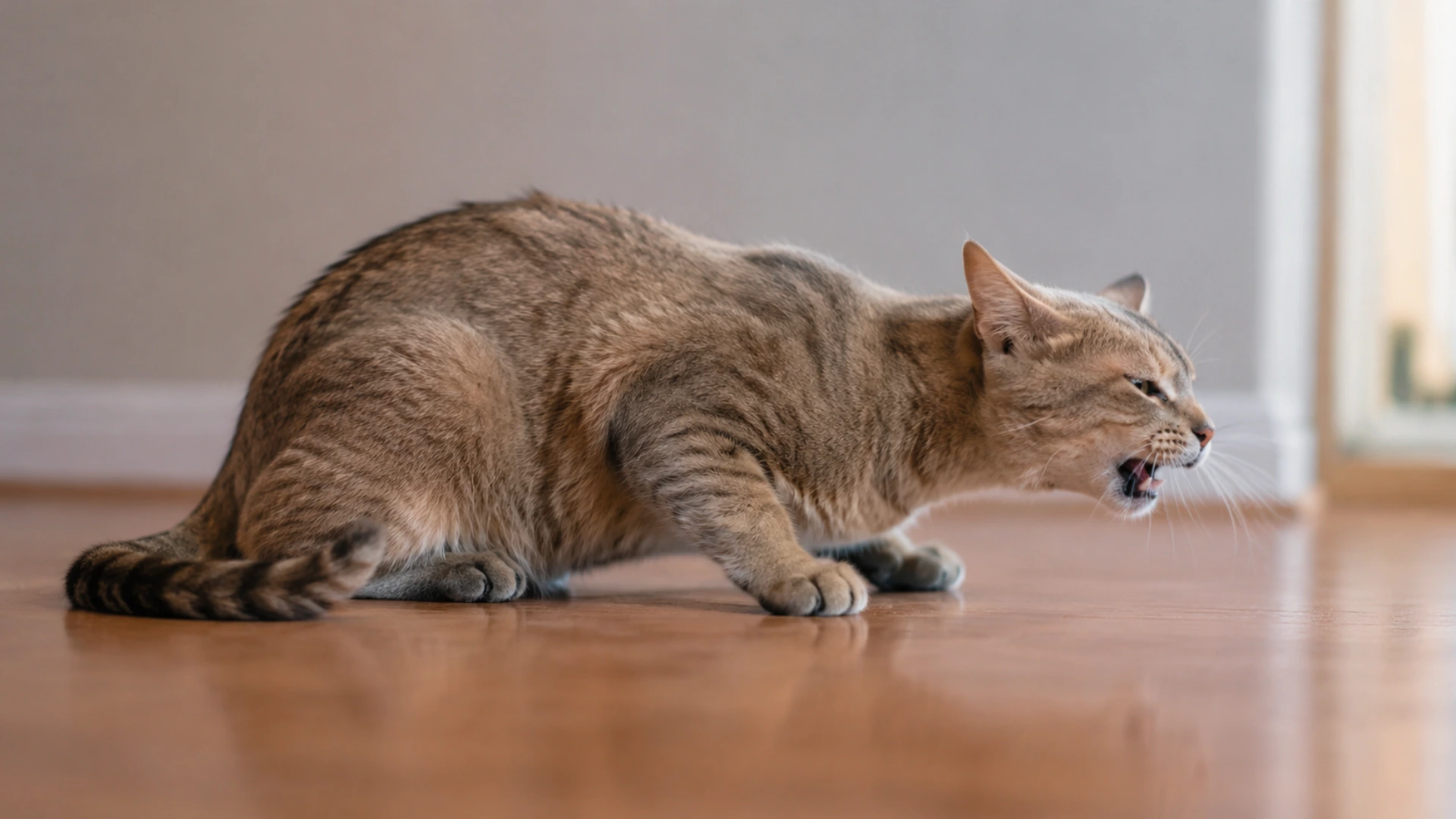
Chest pressed close to the floor, elbows pointed outward, neck or head stretched forward; this posture opens the airway and makes breathing feel easier for a struggling cat.
It often shows up right alongside coughing or rapid breathing rather than on its own. If your cat repeatedly settles into this stance, especially paired with another sign on this list, it’s a strong enough pattern to bring up with your vet.
6. Reduced Energy After Activity
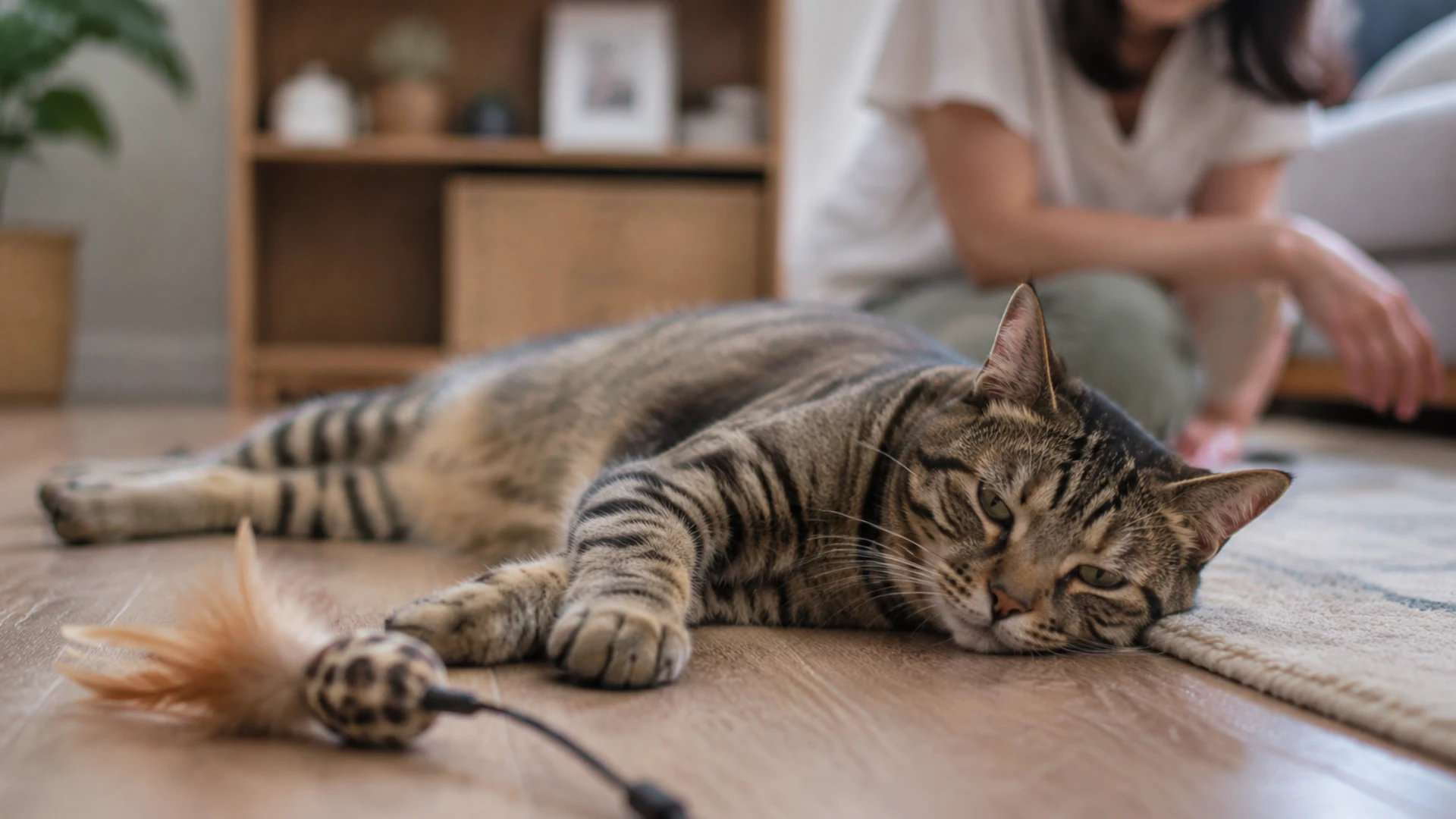
Stopping mid-play, hiding more than usual, seeming weak, or taking much longer than normal to recover from light activity can all be quiet signals that something’s off.
A cat that used to chase a toy for ten minutes and now stops after thirty seconds is telling you something, even without a cough. These changes creep in slowly, so comparing behavior over a few weeks reveals more than a single day.
I ask owners this literally: how many minutes did the toy chase last, compared to six months ago? Most can answer it faster than they expect.
7. Open-Mouth Breathing or Panting
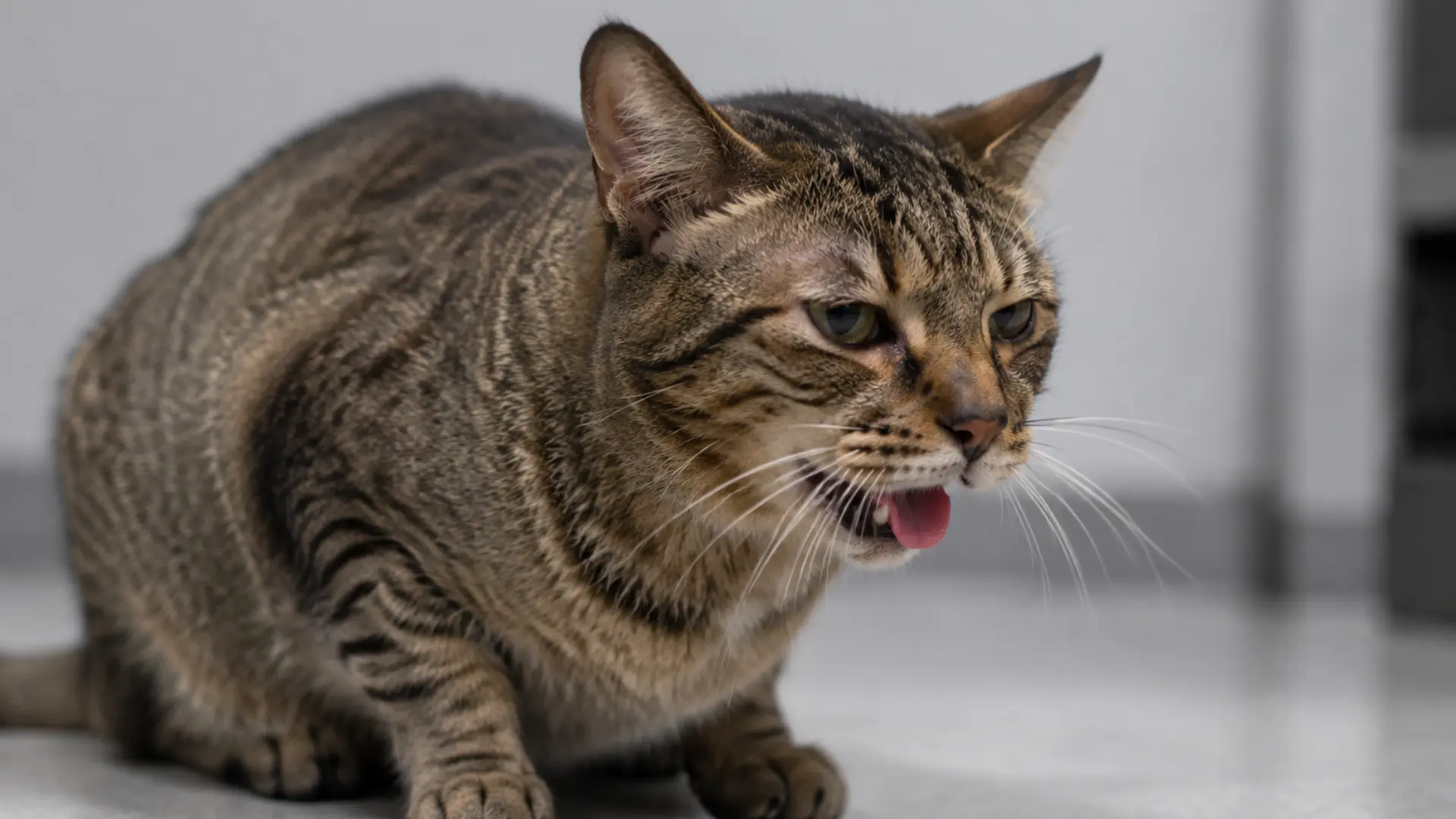
Cats don’t pant as dogs do. A resting cat breathing through an open mouth is a red flag on its own, and it’s an emergency if paired with heaving, weakness, or pale or bluish gums.
Unlike dogs, which cool off after exercise, cats rarely pant as a normal response to heat or activity. If it happens even once while resting, treat it as urgent and get emergency care right away.
Spotting one of these signs is the first step. Figuring out how urgent it is comes next, andthat’ss where breathing effort and gum color come in.
How Serious Are the Symptoms
Severity comes down to breathing effort, behavior, gum color, and how fast your cat recovers, not just how often they cough, and the core signs echo recognized asthma symptom patterns seen elsewhere.
A cat coughing daily but breathing easily is a different situation than one struggling for every breath.
Severity | Signs an owner may notice | Appropriate response |
|---|---|---|
Possible early signs | Occasional cough, mild wheeze, reduced stamina, brief recurring episodes | Schedule a veterinary exam |
Worsening signs | Frequent coughing, rapid resting breathing, belly effort, can’t settle | Contact a vet promptly |
Emergency signs | Open-mouth breathing, blue/gray gums, collapse, severe heaving, extreme weakness | Seek emergency care immediately. |
A cat can go from stable to struggling fast. Don’t force food, water, or pills. Skip unnecessary handling. Only use rescue medication if it was prescribed for that specific cat, and never delay a vet trip to grab a video first.
Caution: If you’re genuinely unsure which row your cat falls into, treat it as the more serious one. It’s always safer to have a vet examine a cat who turns out to be fine than to wait through one who isn’t.
What to Do During Asthma Episodes
Keeping your cat calm and watching how hard they’re working to breathe matters more than trying to figure out the trigger in the moment.
- Reduce stress: Cut down on noise, people, and handling around your cat.
- Remove nearby irritants: Stop any sprays, smoking, candles, or cleaning products nearby right away, since these sit close to irritants known to trigger reactions in people too.
- Observe breathing: Watch the chest and belly move without restraining your cat.
- Check for emergency signs: Look for open-mouth breathing, blue gums, collapse, or heavy heaving.
- Record stable episodes: Film a short clip only once breathing looks safe and steady.
- Note useful details: Jot down how long it lasted, the sounds, posture, and anything nearby that might have set it off.
- Follow prescribed instructions: Give only the rescue medication specifically prescribed for this cat.
- Contact a veterinarian: Report repeated coughing even if your cat seems totally fine an hour later.
Never reach for human inhalers, cough syrup, throat pressure, or steam exposure. And don’t wait around expecting a hairball if your cat is visibly struggling to breathe.
Asthma Cough or Hairball Attempt: How to Tell the Difference
These two get confused constantly, since both can involve crouching, a stretched-out neck, and repeated body movements. The difference usually comes down to sound, what appears afterward, and how breathing settles once it’s over.
Feature | Possible asthma cough | Possible hairball attempt |
|---|---|---|
Main action | Repeated coughing from the chest | Gagging or retching from the stomach |
Sound | Dry cough, hack, or wheeze | Retching or gagging sounds |
Body position | Low crouch, neck extended | Crouching may also occur |
What appears | Usually nothing | Hair, fluid, food, or foam |
Breathing afterward | May stay fast or strained | Often returns to normal |
Pattern | May recur over days or weeks | Usually ends once material comes up |
No amount of watching from the couch can tell you for certain which one you’re dealing with. If your cat’s been “clearing a hairball” repeatedly with nothing showing up, that’s worth a vet visit.
Coughing, gagging, and vomiting can look nearly identical but come from very different places.
What Else Can Mimic Feline Asthma
Several conditions cause coughing, wheezing, or rapid breathing that looks almost identical to asthma, which is why symptoms alone can’t tell you what’s really going on.
- Chronic Bronchitis: Inflames the lower airways and causes recurring coughing; hard to tell apart from asthma without testing.
- Respiratory Infection or Pneumonia: Coughing or labored breathing with fever, nasal discharge, appetite loss, or fatigue; signs vary from cat to cat.
- Heart or Circulatory Disease: Fast or difficult breathing, weakness, low activity, or collapse, sometimes without a coughing pattern.
- Lungworms and Other Parasites: Can also trigger coughing and abnormal breathing; exposure history and testing help rule these out.
- Feline Heartworm-Associated Respiratory Disease (HARD): Even a small number of heartworms can inflame a cat’s airways and produce a cough and wheeze that’s nearly indistinguishable from asthma on exam — heartworm testing is part of why a full workup matters.
Treatment differs a lot between these conditions, so unprescribed asthma medicine could delay the care your cat actually needs to feel better.
How Veterinarians Diagnose Asthma
No single test nails down every asthma case, so vets piece together your cat’s history, a physical exam, and targeted testing to build the full picture.
Your vet asks about episode frequency, reviews any home videos, and checks environmental exposures, recent illness, and parasite prevention, then listens closely to the heart and lungs.
Chest X-rays can reveal airway changes or trapped air pockets, while bloodwork, fecal tests, or heartworm-related testing help rule out other causes hiding behind the same symptoms.
When things stay unclear, or initial treatment doesn’t produce the expected response, vets may turn to cytology, bronchoscopy, or more advanced imaging tools to get a clearer answer.
Diagnosing by ruling things out protects your cat from treatments meant for a completely different respiratory or heart condition entirely.
Common Asthma Triggers in Cats
A trigger isn’t the same as a diagnosis, and several of these overlap with irritants known to trigger reactions in people too. Exposure can make symptoms worse in a cat that already has asthma, but it doesn’t prove asthma is the cause.
- Smoke: Cigarettes, fireplaces, incense, and candles
- Fragrances: Perfume, air fresheners, and scented litter
- Aerosols: Cleaning sprays, hairspray, and pesticides
- Dust: Dusty litter, home renovations, household dust
- Outdoor allergens: Pollen, grass, mold, and mildew
- Stress or activity: Possible contributors to an episode in a cat already affected
Instead of overhauling your house or diet overnight, track the pattern first and bring it to your vet before making big changes.
How is Cat Asthma Managed
Management is usually long-term, shaped by how often symptoms show up, how severe attacks get, and how well your cat responds to treatment over time.
Corticosteroids calm inflammation inside the lower airways and can be given through an inhaler, injection, or oral medication, depending on your cat’s needs.
Bronchodilators open up narrowed airways but don’t treat the underlying inflammation, so they’re rarely used alone long term.
Inhaled medication is delivered through a feline aerosol chamber and mask when your vet prescribes it. Environmental changes, cutting back on smoke, fragrances, sprays, and dusty litter, can lower everyday exposure to irritants.
Follow-up visits let your vet check how well symptoms are controlled, confirm your inhaler technique is working, and watch for side effects or shifts in how often attacks happen.
Asthma isn’t curable, but with the right ongoing care, most cats go on to live comfortable, active lives.
What Feline Asthma Costs to Manage Long-Term
Owners rarely ask me about the science of asthma first; they ask what it’s going to cost. Here’s the honest range I give in the exam room, not a marketing estimate:
- Diagnosis: Exam, chest X-rays, and bloodwork typically run a few hundred dollars, more if bronchoscopy or advanced imaging is needed.
- Ongoing medication: Inhaled steroids plus a feline aerosol chamber are a one-time equipment cost, with refills recurring every few months.
- Follow-up visits: Most stable cats need a recheck every six to twelve months; newly diagnosed cats are seen more often at first.
- Emergency visits: The highest, least predictable cost; a single ER visit for a severe attack often costs more than a full year of maintenance care.
This is exactly why I bring up pet insurance or a dedicated savings buffer at the first diagnosis conversation, not after the first emergency trip. Asthma is manageable, but it’s rarely a one-time expense.
Note: Don’t start heartworm prevention, antibiotics, or asthma medication on your own based on symptoms matching a list like this one. Several of these conditions need a specific test to confirm, and treating the wrong one can delay diagnosis of the real problem.
Monitoring Symptoms After Diagnosis
Write these down consistently instead of relying on memory alone. A shrinking gap between episodes or growing breathing effort is worth a call to your vet. What to track:
Category | Details to Note |
|---|---|
Breathing signs | Coughing frequency and duration, wheezing or unusual sounds, breathing effort while sleeping |
Activity | Recovery time after normal activity, changes in appetite or behavior |
Environment | Possible household triggers |
Treatment | Prescribed rescue-medication use, any missed doses |
Records | Videos of unusual episodes, dates of veterinary follow-ups, new or worsening emergency symptoms |
Write these down consistently instead of relying on memory alone. A shrinking gap between episodes or growing breathing effort is worth a call to your vet.
Real Cat Owner Experiences with Feline Asthma
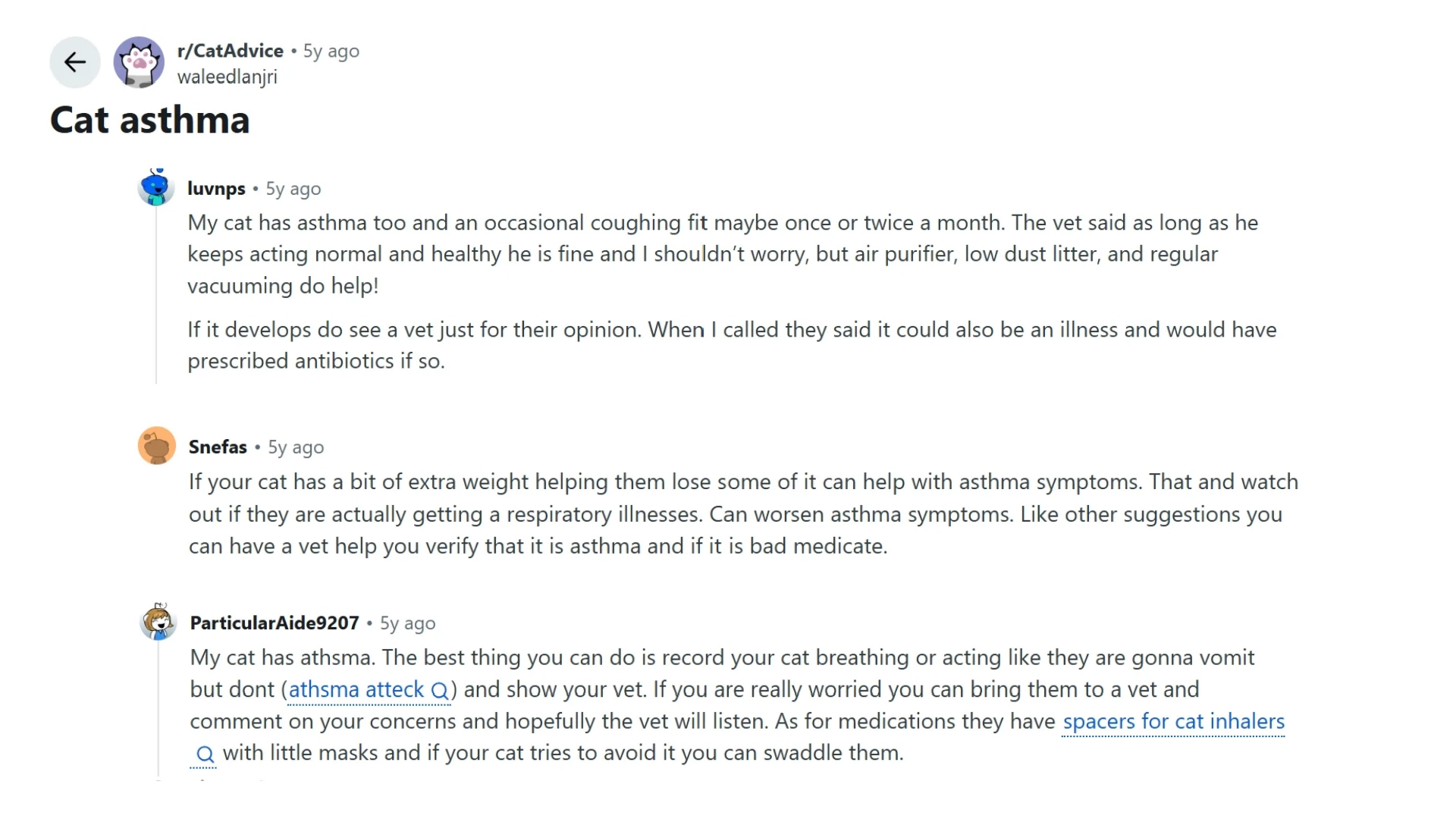
In a Reddit thread, cat owners described asthma attacks that often looked like unsuccessful hairball coughing, sometimes with wheezing or louder breathing. Some said episodes happened only occasionally, while others noticed symptoms worsening during respiratory illness.
Owners also shared practical steps that seemed helpful, including low-dust litter, air purifiers, regular vacuuming, and avoiding strong scents. One commenter recommended recording unusual coughing or breathing so a veterinarian could see exactly what happens during an episode.
Several owners mentioned vet-prescribed inhalers, spacers, and steroids. Overall, the thread highlights why veterinary evaluation matters, since asthma can resemble other respiratory problems.
Everyday Care Tips and Mistakes to Avoid
Small daily habits and a few honest slip-ups both shape how well your cat manages long-term. Knowing both helps you stay ahead of flare-ups.
Tips for supporting a cat prone to breathing issues
- Keep a symptom log on your phone for vet visits
- Choose low-dust, unscented litter where possible
- Avoid smoking or vaping indoors around your cat
- Stick to a calm, consistent routine to ease stress
Common mistakes owners make
- Assuming every cough is a hairball without checking the pattern
- Waiting too long to call the vet after a first episode
- Giving medication that wasn’t prescribed specifically for that cat
- Skipping follow-up visits once symptoms seem to settle down
A little consistency now saves a lot of guesswork later. These habits help you catch changes early and keep your cat breathing easier.
Final Thoughts
A struggling breath rarely looks the same twice, and that’s exactly why paying attention matters more than trying to name the cause on your own.
You’ve now got a clearer picture of what a real coughing episode looks like, how it differs from a hairball attempt, and which signs mean it’s time to move fast.
Cat asthma symptoms can be sneaky, showing up mild for weeks before building into something serious, so I always tell owners to trust what they’re seeing over what they’re hoping it is.
Catching a pattern early, writing it down, and getting your vet involved sooner rather than later makes a real difference in how comfortable your cat stays long-term.
Drop your own experience in the comments, and take a look at our other cat health guides while you’re here.
Frequently Asked Questions
Can Indoor-Only Cats Get Asthma if They’re Never Exposed to Outdoor Allergens?
Yes, most diagnosed cats are strictly indoor. Indoor triggers like scented litter, candles, and aerosol sprays can set off an airway flare just as easily as outdoor allergens, so “indoor-only” isn’t protective on its own.
How Soon Should I Expect to See Improvement After Starting Treatment?
Most cats show noticeably easier breathing within one to two weeks of starting an inhaled corticosteroid, though full airway healing takes longer. If there’s no change after two to three weeks, that’s a sign to recheck the diagnosis rather than just raising the dose.
Do Asthma Symptoms Get Worse with The Seasons?
Some cats flare more in spring and fall, in step with pollen and mold spore counts, much like seasonal allergies in people. Others I follow show no seasonal pattern at all and react mainly to indoor triggers year-round. (added this pass)
Can One Cat “catch” Asthma from Another Cat in The Same Household?
No, feline asthma isn’t contagious or infectious. It’s an immune-driven airway condition specific to the individual cat, so two cats in one home reacting to the same environment is a coincidence of shared triggers, not something passed between them.