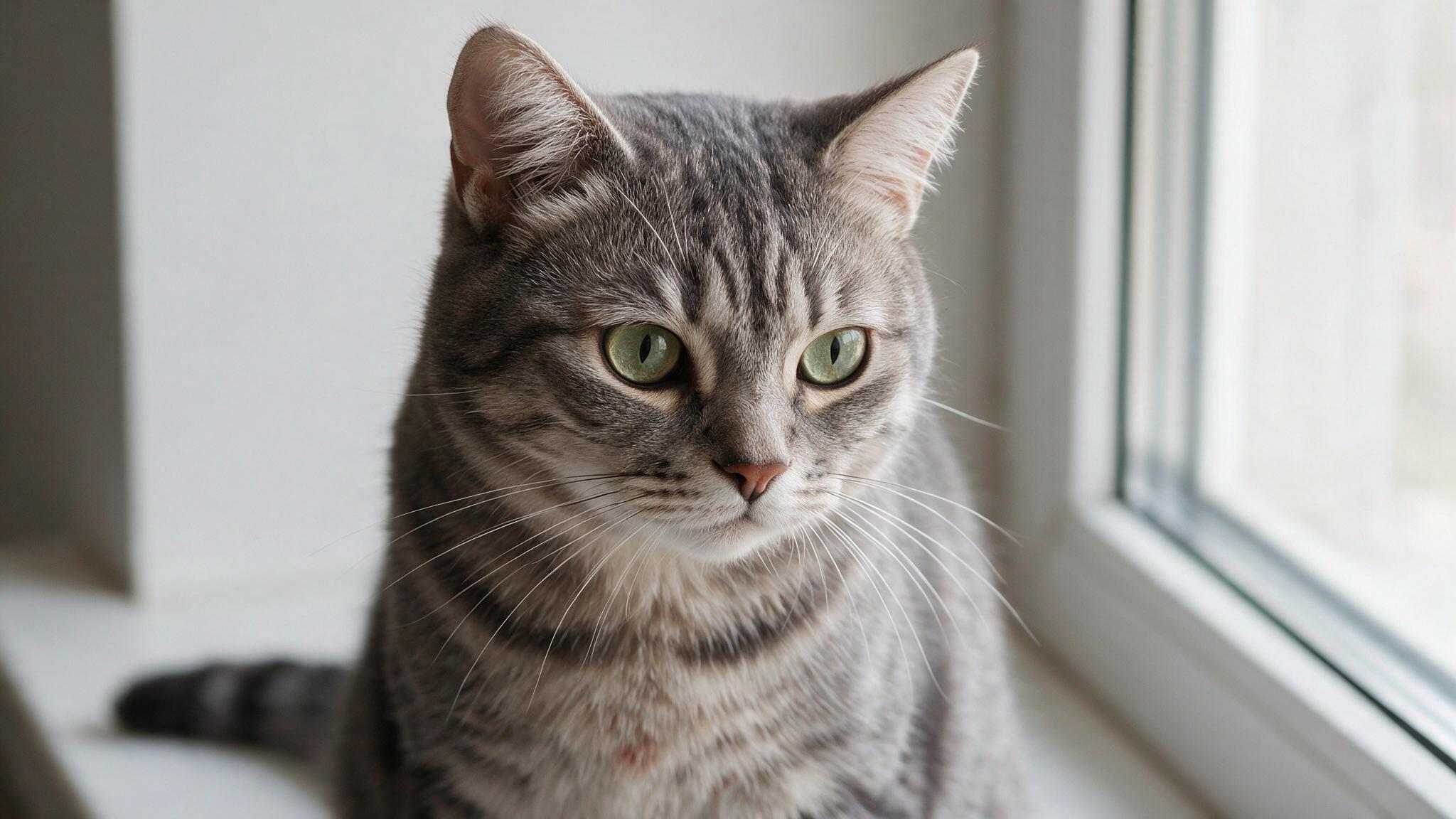


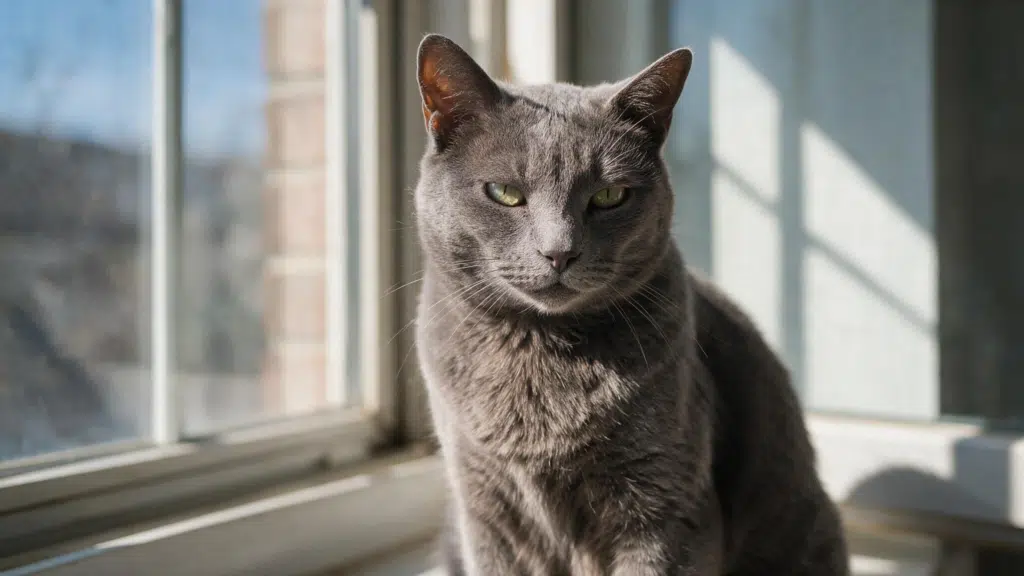
A grey coat can make almost any cat look distinctive, but figuring out the breed behind that color is not always easy.
You may see green eyes, silver fur, or a plush blue coat and immediately think Russian Blue. In reality, many grey cat breeds share similar colors while differing in size, temperament, coat type, and facial features.
I find the easiest way to tell them apart is to look beyond color and compare the details that truly matter.
Below, you’ll see the most recognizable grey breeds, their key physical traits, personality differences, grooming needs, and simple clues that can help you identify which cat may be in front of you.
What Makes a Cat Grey?
Grey cat fur can range from pale silver to deep charcoal, although breed registries frequently describe the color as blue. Genetically, blue is a diluted form of black pigment.
Instead of appearing fully black, the individual hairs look softer and bluish-grey. Without that dilution, the same genetics can produce cats with deep black coats instead.
That grey coloring can appear in several forms:
- Solid blue-grey
- Silver tabby
- Smoke
- Shaded silver
- Grey and white
- Blue-point coloring
Coat color alone cannot confirm a cat’s breed. A solid-grey shelter cat, for example, may resemble a Russian Blue while actually being a gray short hair cat. For identification, grey should therefore be treated as the starting clue rather than the final answer.
Grey Cat Breeds at a Glance
Some breeds have a much stronger connection with grey coloring than others.
| Grey Coat Type | Breeds |
|---|---|
| Strongly associated with blue-grey coats | Russian Blue, Chartreux, Korat, Nebelung |
| Famous grey variety | British Shorthair, Persian |
| Grey among several accepted colors | Burmese, Scottish Fold, Oriental Shorthair, Norwegian Forest Cat, Devon Rex, Siberian, American Shorthair, Cornish Rex, Maine Coon, Turkish Angora |
| Grey appears as points or patterns | Siamese, Egyptian Mau, Tonkinese |
| Mixed ancestry with possible grey coats | Domestic Shorthair |
This distinction is useful when identifying a mystery cat. A blue-grey coat provides a stronger breed clue for a Korat than it does for a Maine Coon or Domestic Shorthair.
Grey Cat Breeds and Their Identifying Features
Grey appears across many cat breeds, but not always in the same way. Some are naturally grey, while others offer grey among several colors. Below, you’ll find breeds with descriptions, stats, and identification clues.
1. Russian Blue
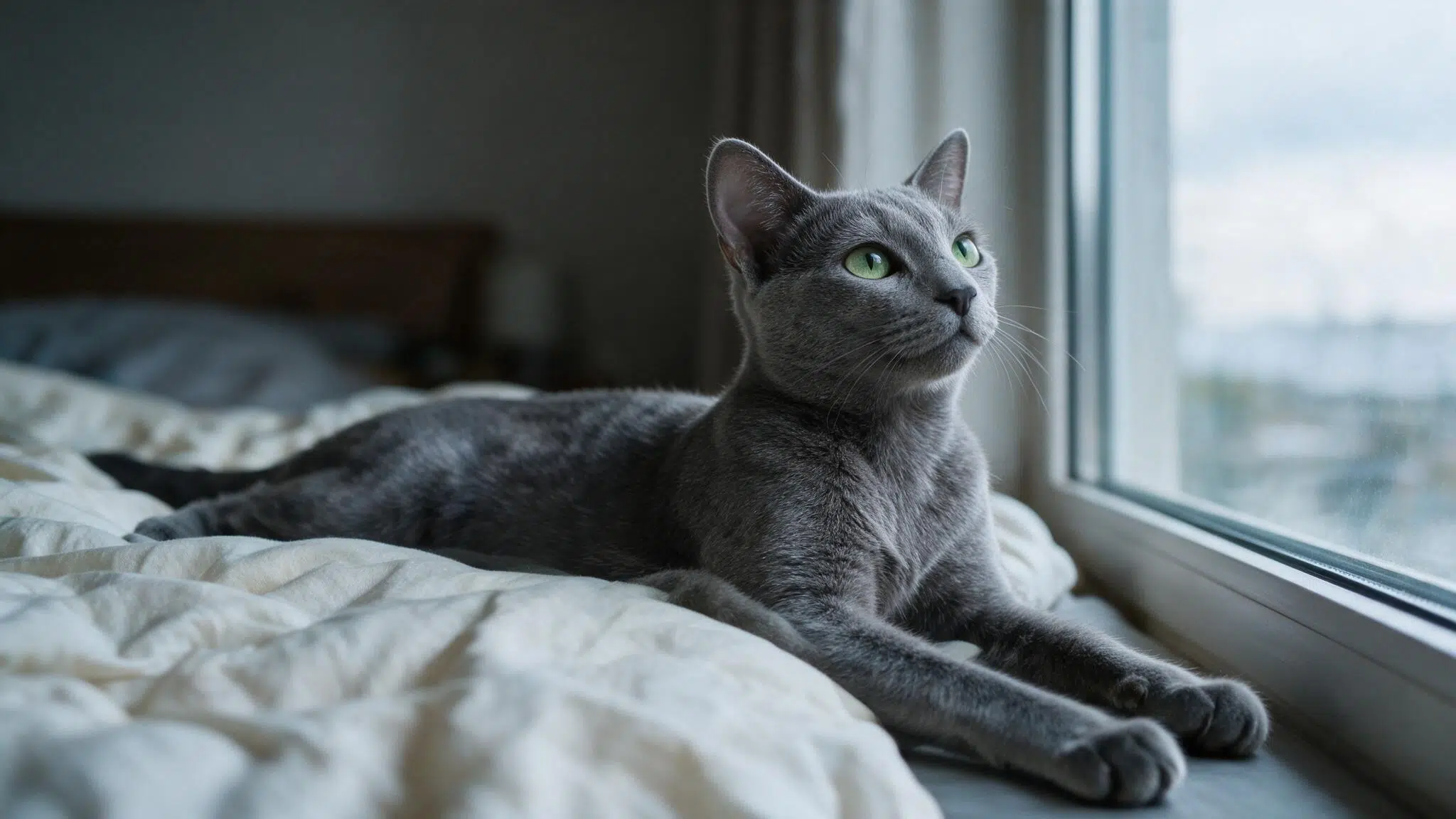
The Russian Blue is one of the breeds most closely associated with solid grey coloring. It has a short, dense double coat with distinctive silver tipping that can make the fur appear almost luminous in bright light.
Vivid green eyes, a lean body, long legs, and a refined face help separate it from stockier grey breeds. Russian Blues tend to be reserved around unfamiliar people while forming close bonds with their household.
- Height: 8–10 inches
- Weight: 7–12 lbs
- Lifespan: 15–20 years
- Grey coat: Solid blue
2. Chartreux
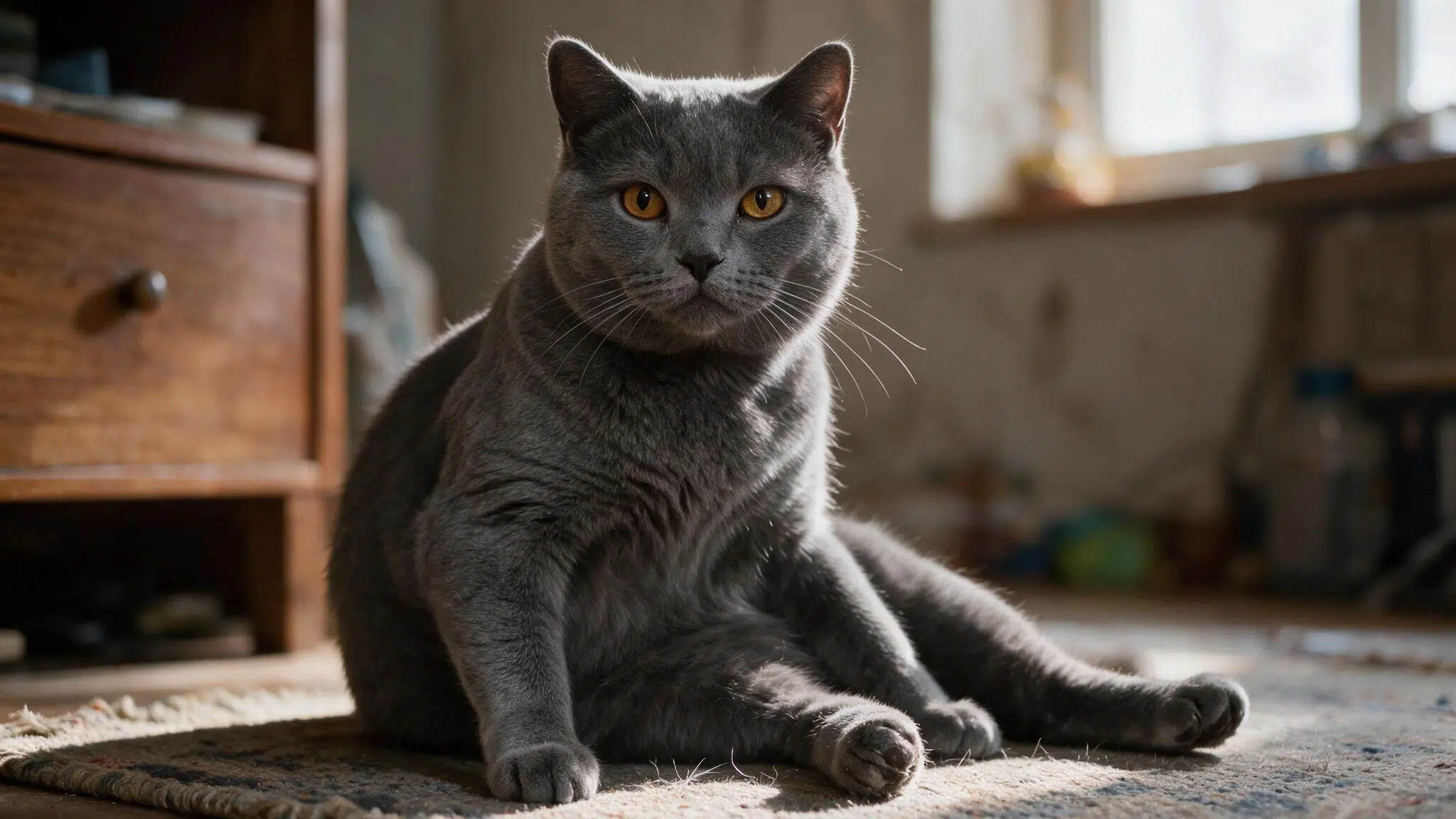
The Chartreux may initially resemble a Russian Blue, but its heavier build quickly sets it apart. This French breed has a muscular body, rounded head, dense woolly coat, and copper or golden eyes.
Its blue-grey fur is short but noticeably thick, creating a plush appearance. Chartreux cats are generally quiet and gentle and may become particularly attached to one person without constantly demanding attention.
- Height: 9–11 inches
- Weight: 7–16 lbs
- Lifespan: 12–15 years
- Grey coat: Solid blue-grey
3. Korat
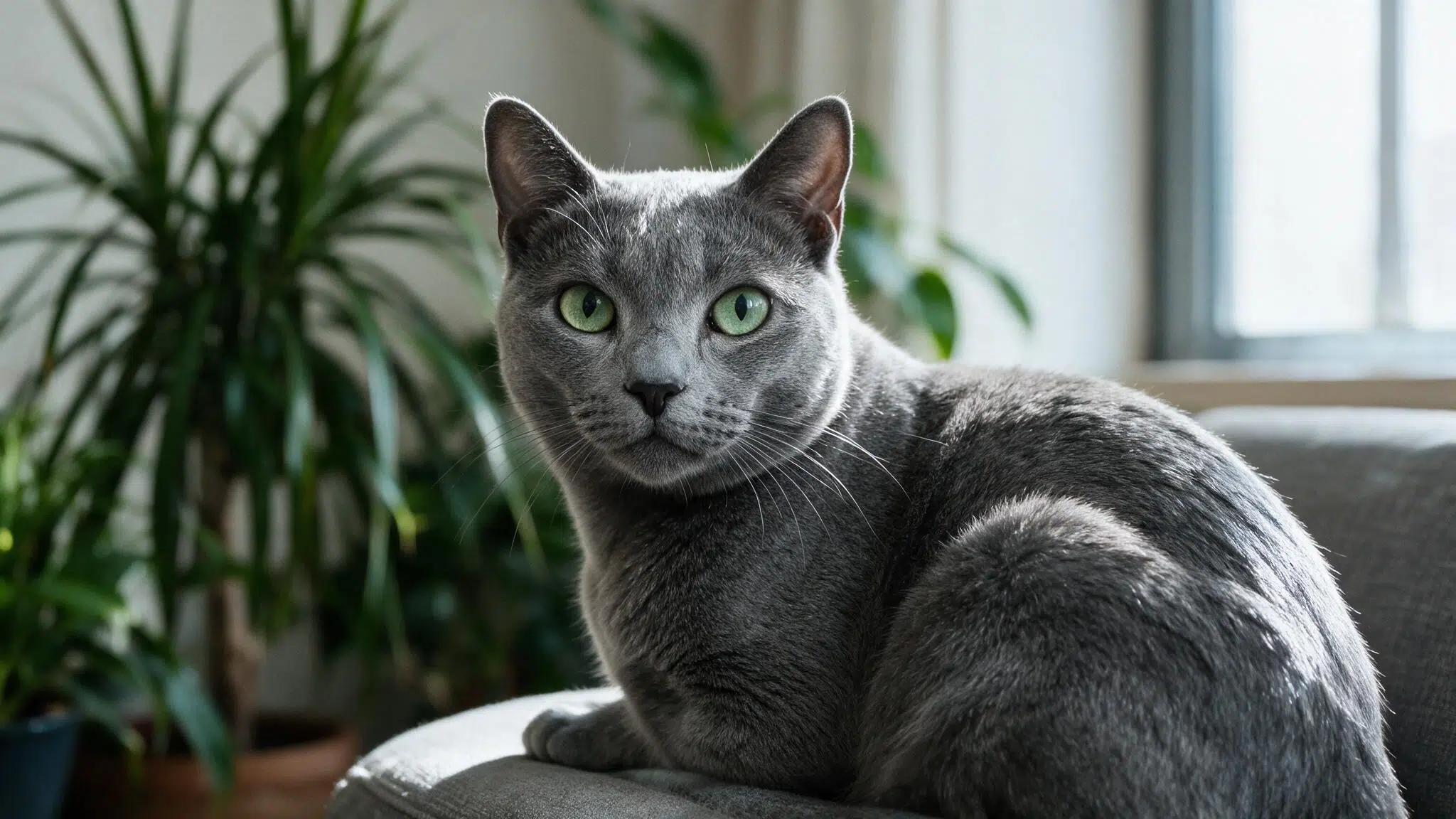
The Korat combines a short silver-blue coat with one of the most recognizable faces among grey cats.
Its broad, heart-shaped head, large green eyes, and silver-tipped fur create a distinctive appearance. Unlike some quieter grey breeds, Korats tend to be highly involved with their people.
They are intelligent, affectionate, and often vocal when they want attention, making them better suited to households that enjoy plenty of feline interaction, particularly those who make time for regular interactive play sessions.
- Height: 8–10 inches
- Weight: 6–10 lbs
- Lifespan: 15–20 years
- Grey coat: Silver-blue
4. Nebelung
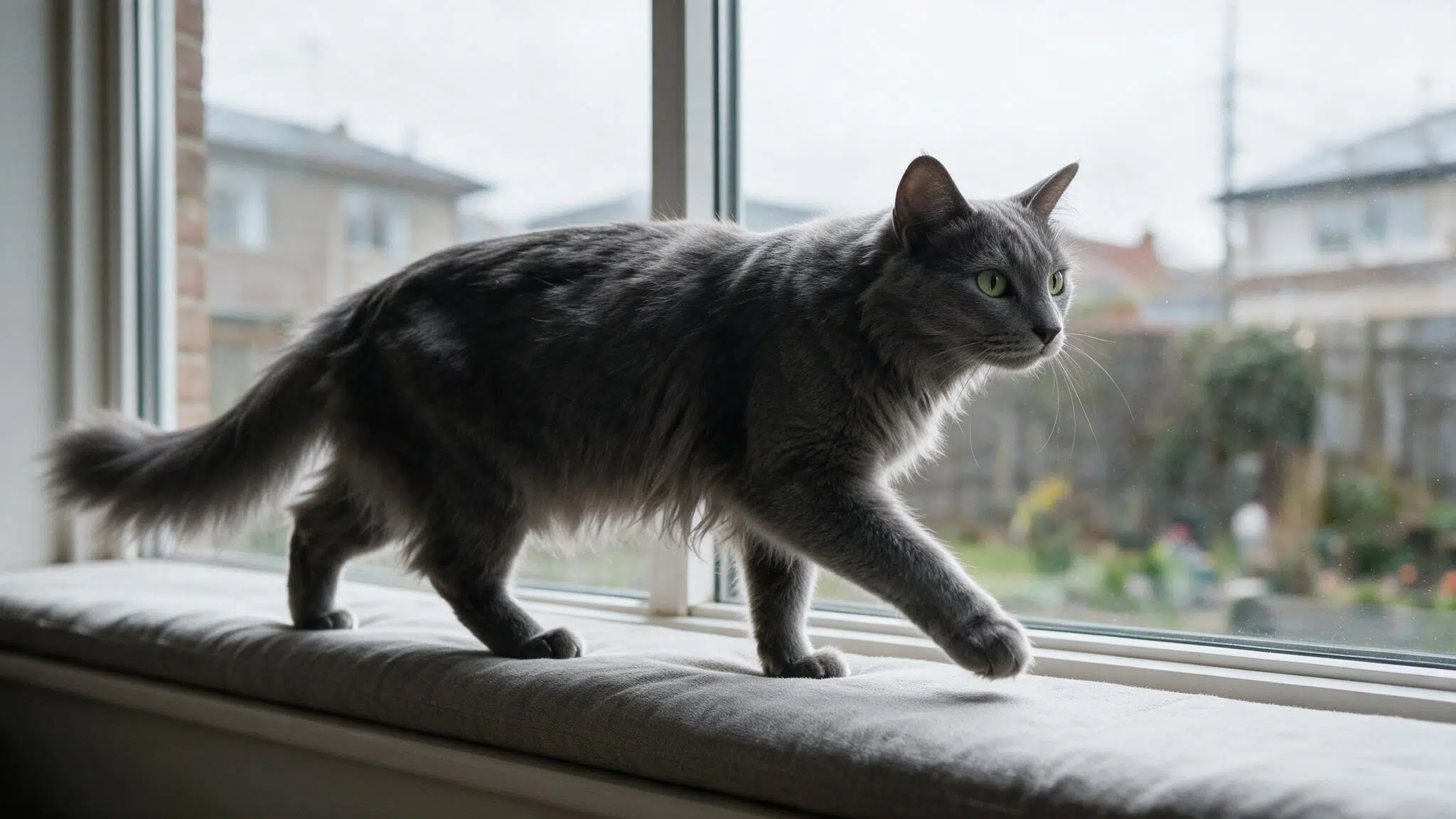
The Nebelung looks somewhat like a long-haired relative of the Russian Blue.
Its semi-long blue-grey fur has a silky texture and subtle silver sheen, while green eyes and a wedge-shaped face reinforce the resemblance. The longer coat is the easiest feature to use when separating the two.
Nebelungs tend to be quiet and cautious with unfamiliar people but can become deeply attached to family members once settled.
- Height: 9–13 inches
- Weight: 7–15 lbs
- Lifespan: 15–18 years
- Grey coat: Blue-grey
5. British Shorthair
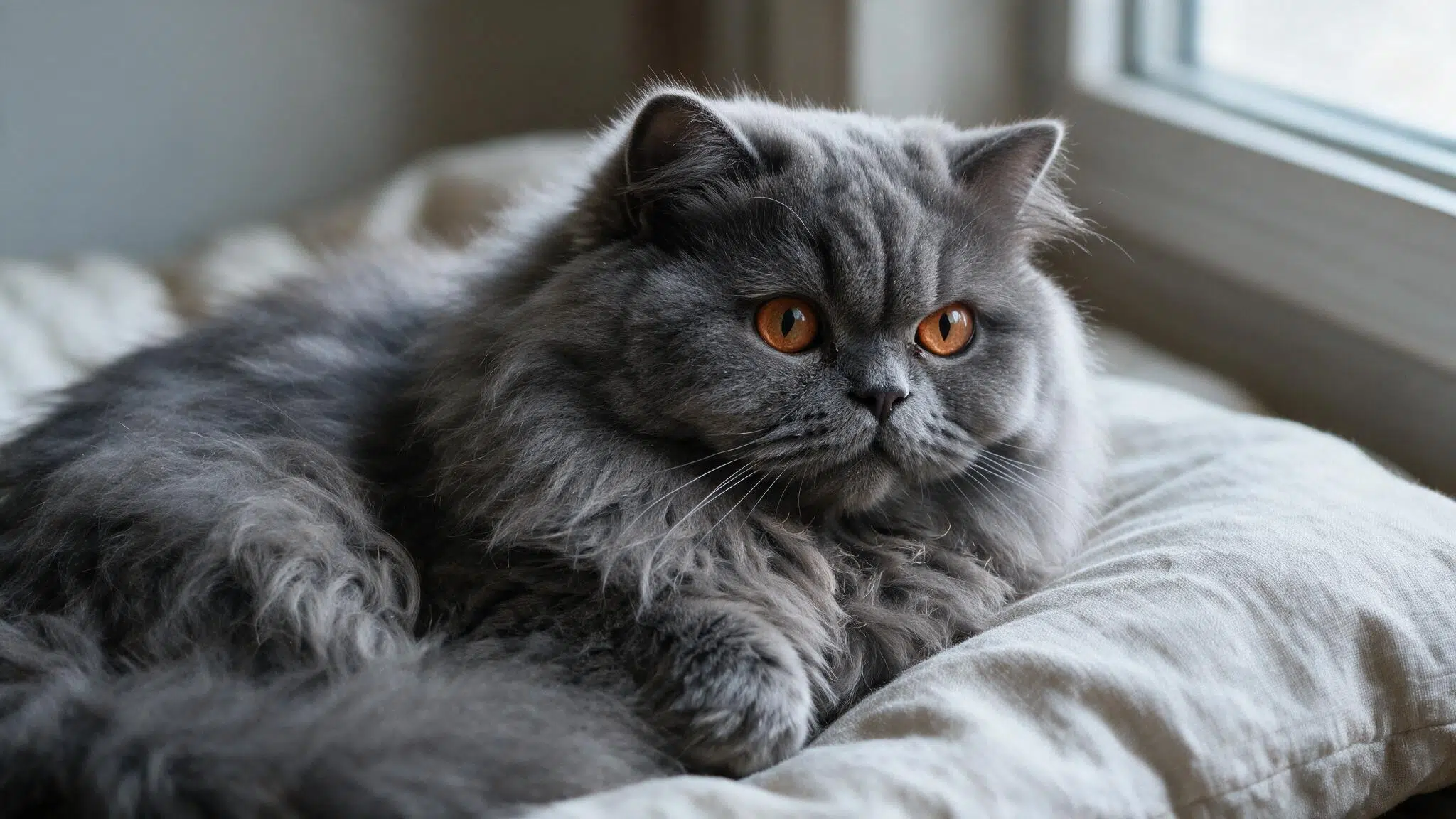
Few grey cats are as recognizable as the blue British Shorthair.
The breed has a broad chest, stocky frame, round face, full cheeks, and exceptionally dense coat. Copper or golden eyes contrast strongly with the famous blue-grey variety.
British Shorthairs come in many colors, so not every cat from the breed is grey. Their relaxed, independent temperament often works well for people who want an affectionate companion without constant attention.
- Height: 12–14 inches
- Weight: 9–18 lbs
- Lifespan: 12–17 years
- Grey coat: British Blue is its best-known variety
6. Persian
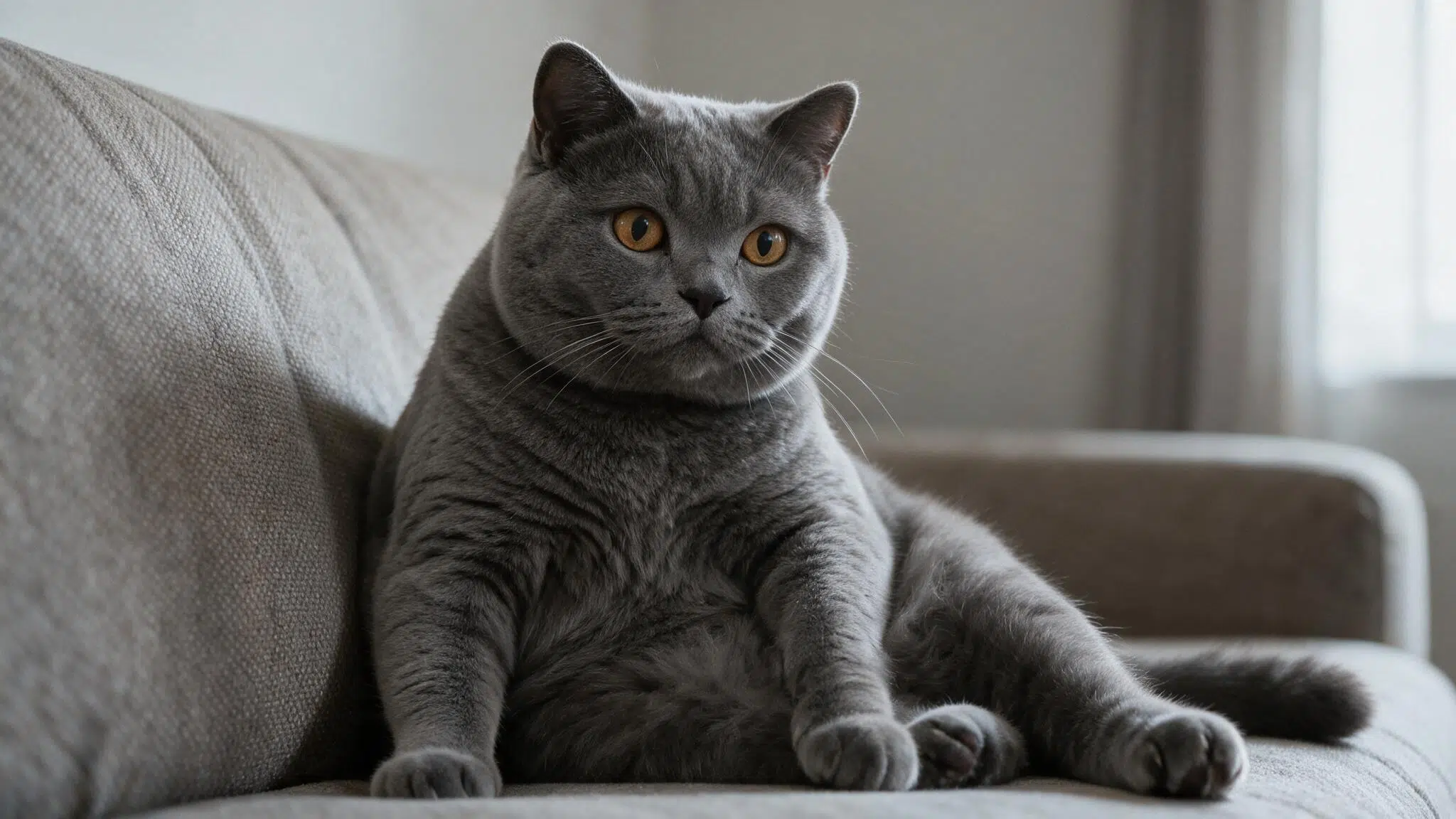
Persians can display grey in several forms rather than only one.
The solid Blue Persian has an even blue-grey coat, while other Persians may appear in silver, shaded silver, or tabby variations.
Whatever the coloring, the breed remains recognizable through its round head, shortened face, stocky build, and extremely long, dense fur. That coat requires considerably more maintenance than the fur of short-haired grey breeds.
- Height: 10–15 inches
- Weight: 7–12 lbs
- Lifespan: 10–17 years
- Grey coat: Blue, silver, shaded, and patterned varieties
7. Burmese
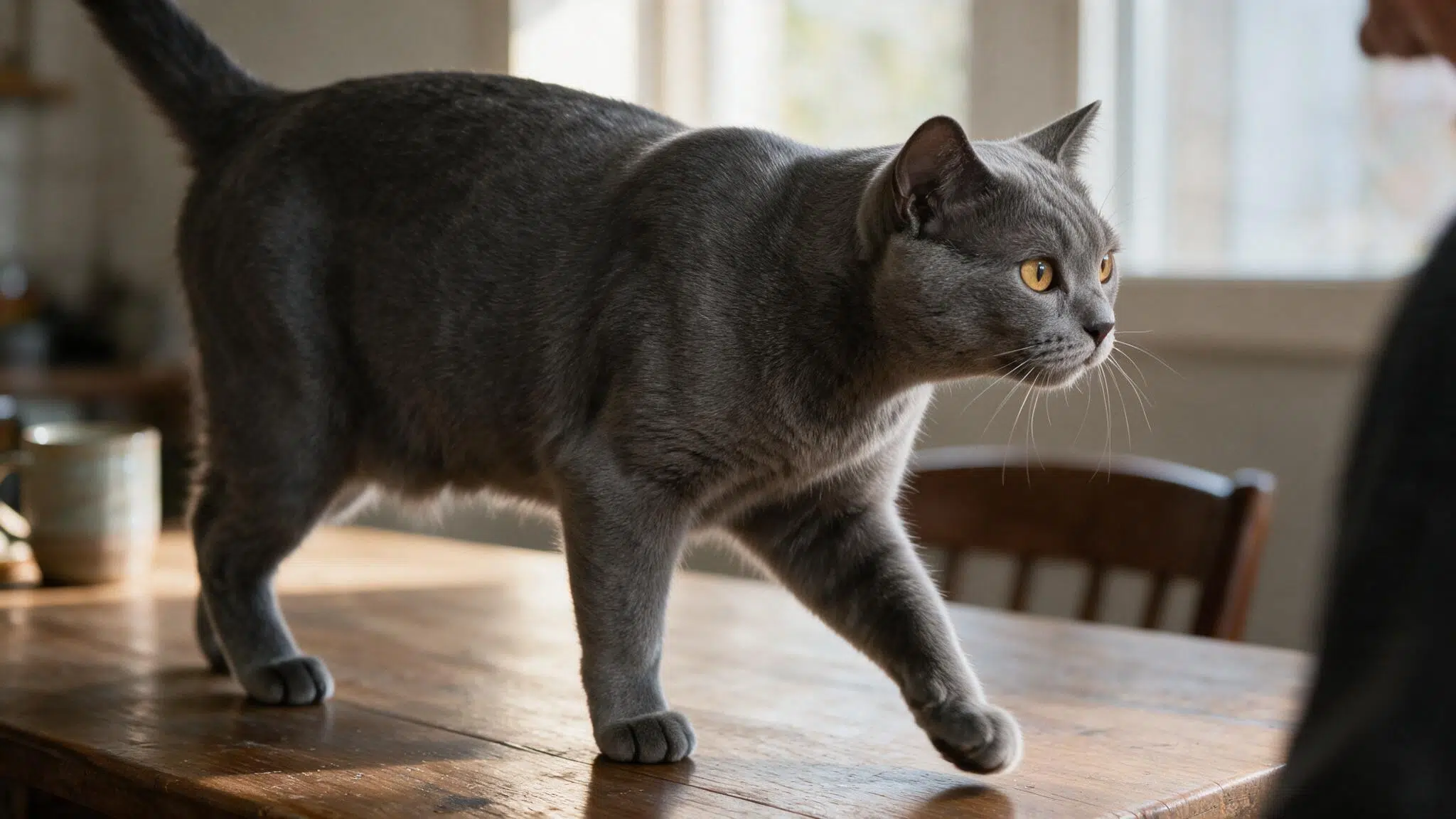
The Burmese has a compact body that often feels heavier than its size suggests. Its short, glossy coat lies close to the body, emphasizing the breed’s muscular shape.
Blue and platinum shades can create a grey-toned appearance, depending on the registry and individual cat.
Large yellow or golden eyes provide another useful identification clue. Burmese cats are generally highly social and often prefer frequent interaction over spending long periods alone.
- Height: 8–10 inches
- Weight: 6–14 lbs
- Lifespan: 10–16 years
- Grey coat: Blue or platinum varieties
8. Egyptian Mau
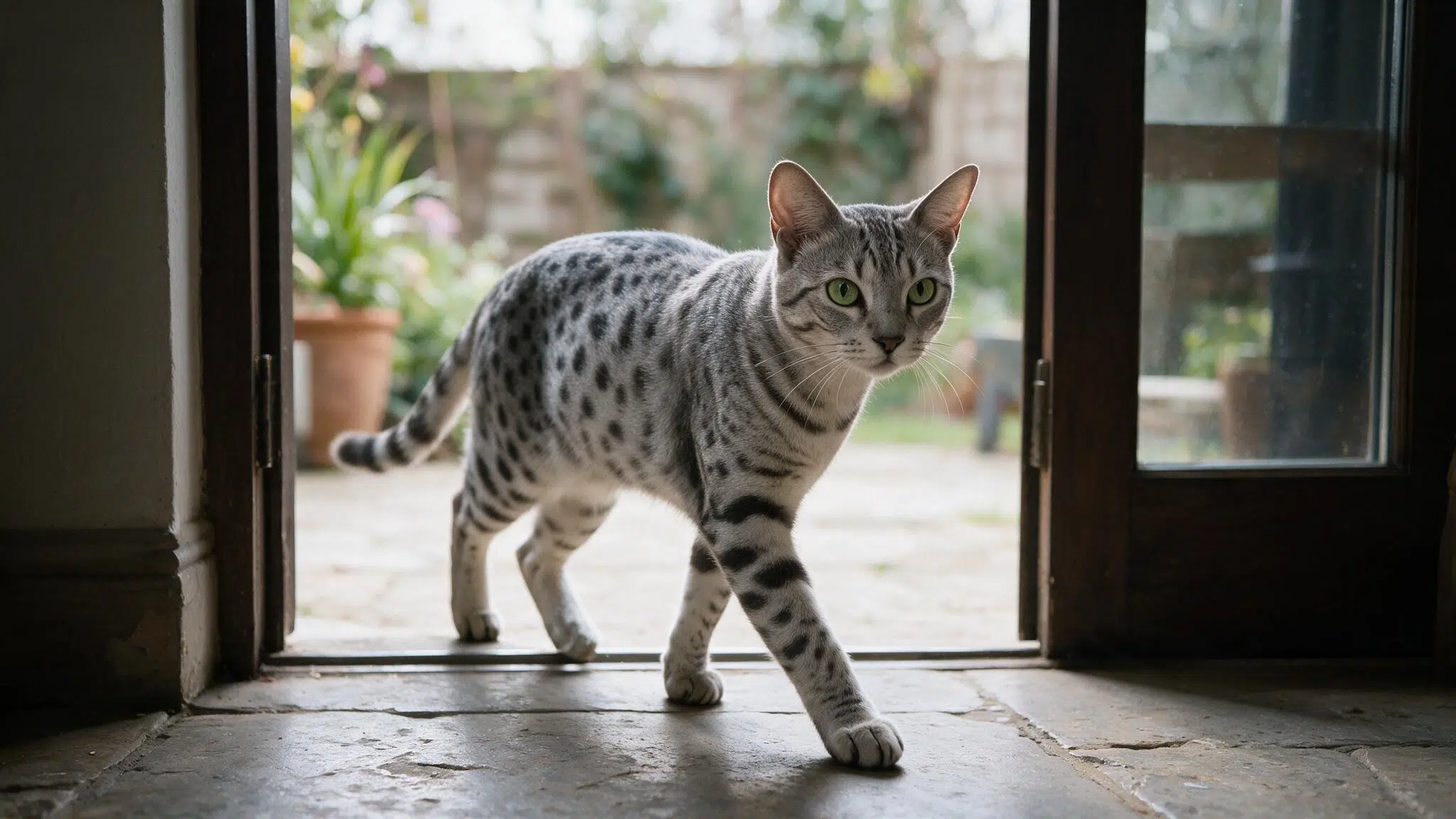
The Egyptian Mau offers a very different version of a grey coat.
Instead of solid blue fur, its silver variety carries naturally occurring dark spots over a lighter silver-grey background. Green eyes, an athletic build, and the spotted pattern make it easier to distinguish from most other cats on this list.
The breed is active and agile, so its appearance is accompanied by significantly more athletic energy than many heavier grey breeds.
- Height: 8–10 inches
- Weight: 6–11 lbs
- Lifespan: 12–15 years
- Grey coat: Silver and smoke varieties
9. Scottish Fold
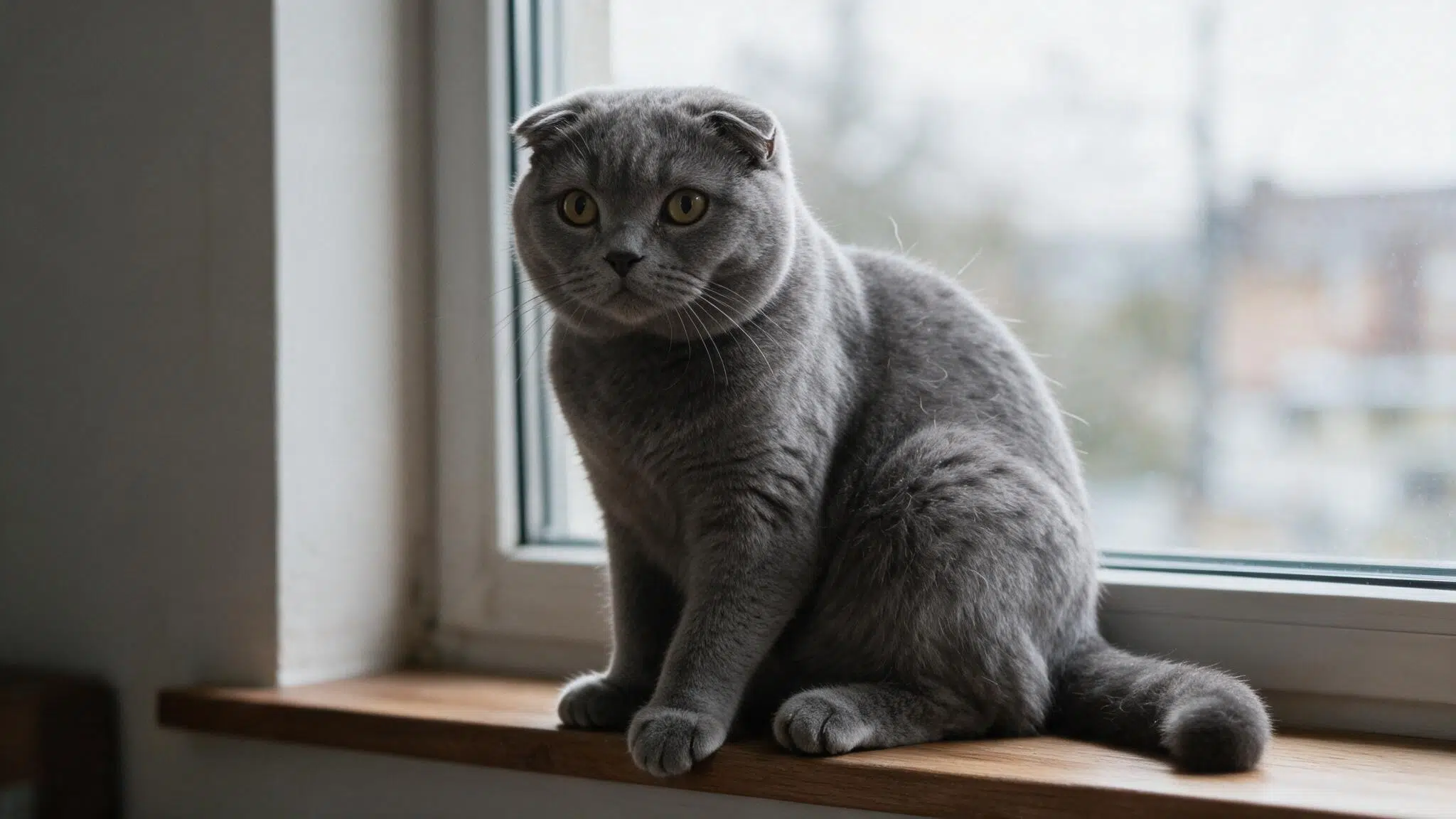
The Scottish Fold’s ears provide a much stronger identification clue than its coat color.
Its characteristic folded ears result from a cartilage mutation that also affects other parts of the body. The breed usually has a rounded head, large eyes, and soft coat and may appear in blue-grey among many other colors.
Because the mutation can be associated with painful cartilage and joint problems, health considerations deserve particular attention with this breed.
- Height: 8–10 inches
- Weight: 6–13 lbs
- Lifespan: 11–15 years
- Grey coat: Blue-grey is one possible color
10. Domestic Shorthair
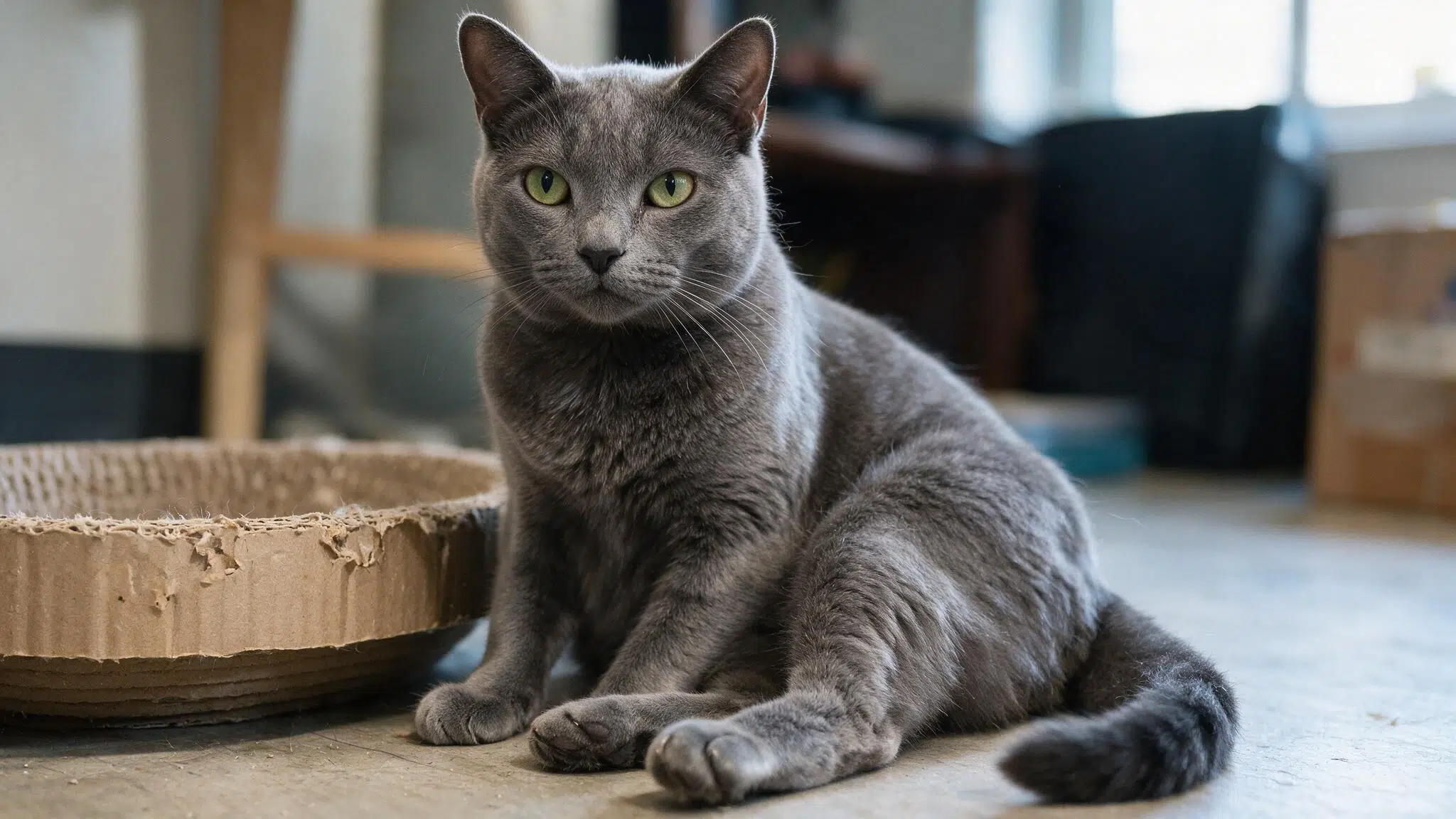
If a grey cat has no pedigree records, Domestic Shorthair may be a more realistic identification than any specific pure breed.
Domestic Shorthair describes mixed-ancestry cats with short coats rather than one standardized breed. They may be solid grey, blue-and-white, silver tabby, or almost any other shade and pattern.
Their eye color, facial structure, body size, and temperament vary widely because there is no single breed standard.
- Height: About 8–10 inches
- Weight: About 6–12 lbs
- Lifespan: 12–18 years
- Grey coat: Any grey shade or pattern can occur
11. Oriental Shorthair
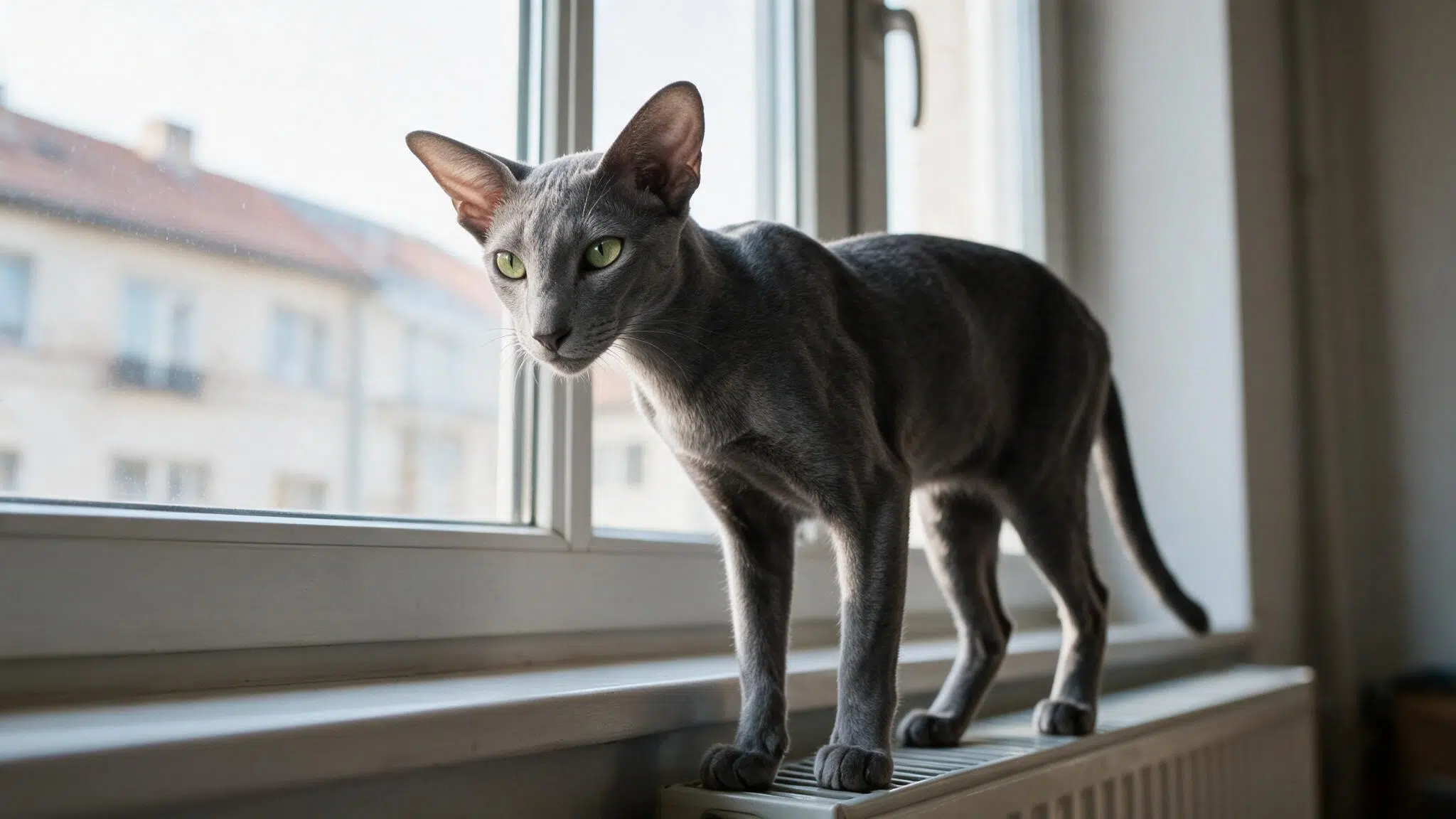
The Oriental Shorthair is difficult to confuse with a round-faced British Shorthair or Chartreux.
Its body is long and slender, while enormous ears and a narrow wedge-shaped head create an angular appearance. Blue-grey is only one of the breed’s many possible coat colors.
The coat itself is very short and sits close to the skin, making the breed’s fine-boned frame particularly visible.
- Height: 8–10 inches
- Weight: 6–11 lbs
- Lifespan: 10–15 years
- Grey coat: Blue is one of many colors
12. Norwegian Forest Cat
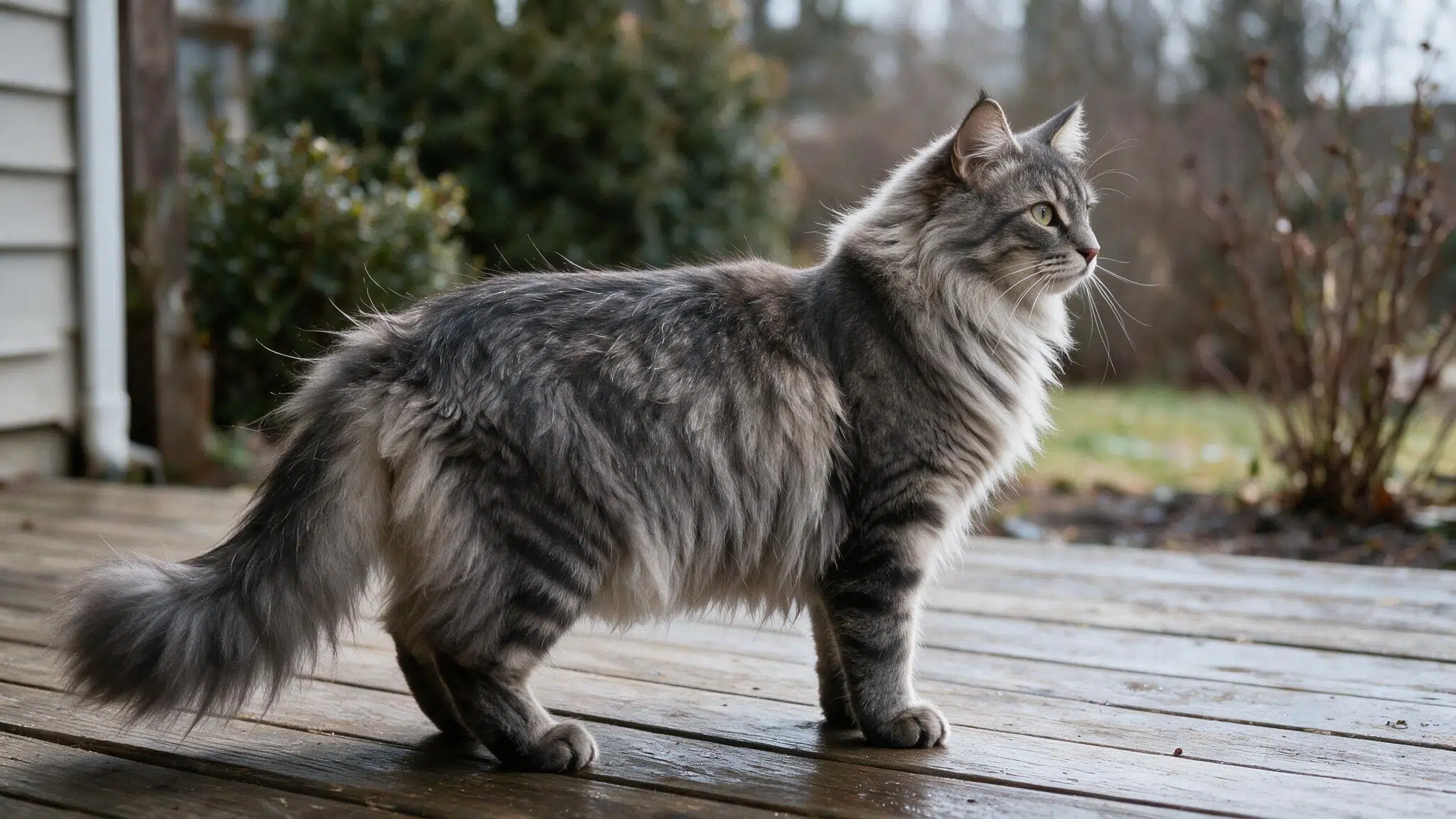
The Norwegian Forest Cat is a large, heavily coated breed built for cold conditions.
A thick water-resistant coat, triangular face, tufted ears, full neck ruff, and bushy tail give it a rugged appearance. Grey and silver varieties can look particularly dramatic because of the amount of fur.
Despite that wild appearance, Norwegian Forest Cats are generally known as adaptable and relatively easygoing companions.
- Height: 9–12 inches
- Weight: 9–20 lbs
- Lifespan: 14–16 years
- Grey coat: Grey and silver varieties occur
13. Siamese
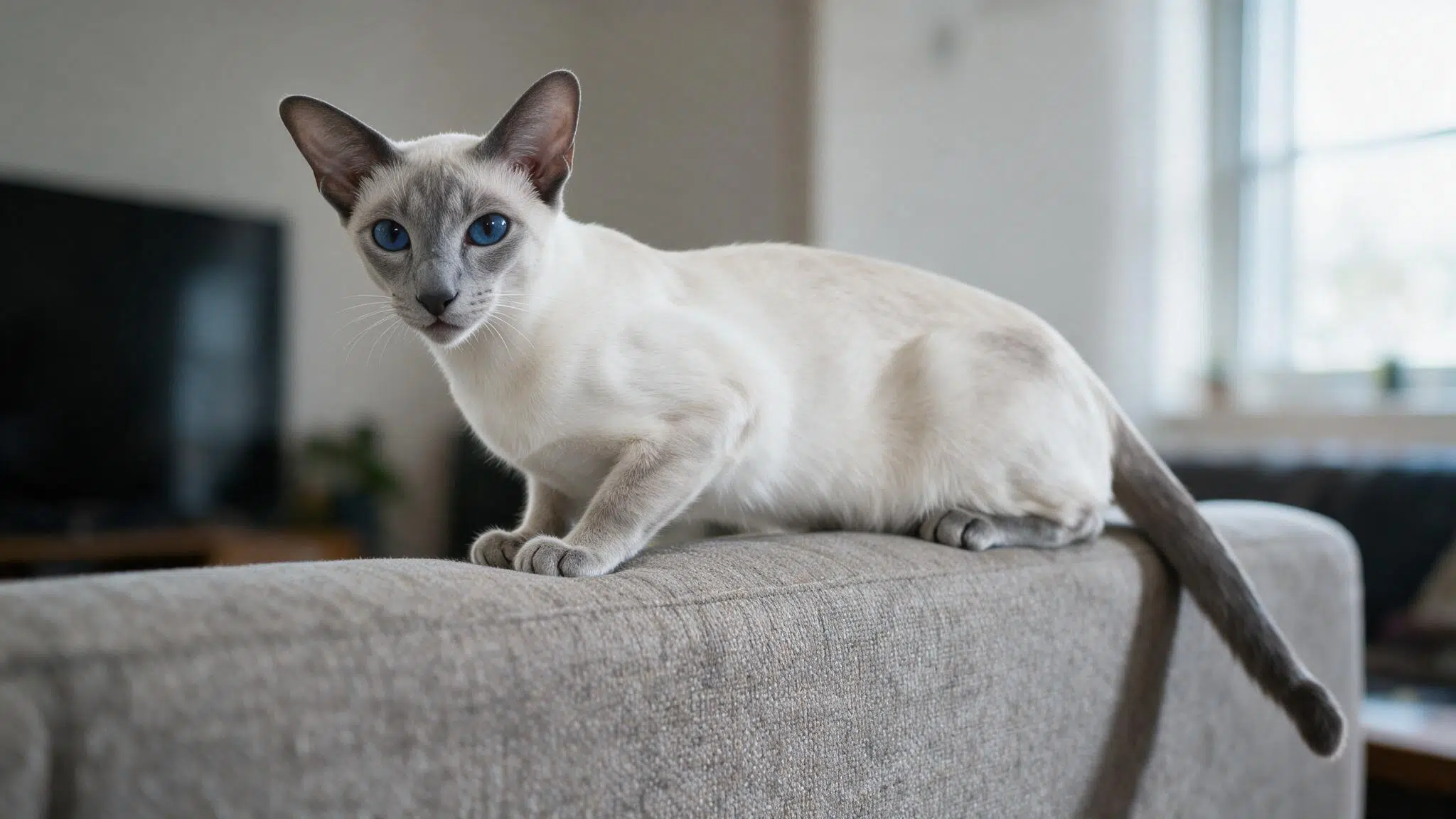
A Siamese cat normally does not have an entirely grey body, but blue-point Siamese cats still fit naturally into discussions of grey coloring.
Their bodies remain lighter while the face, ears, paws, and tail develop darker blue-grey points. Deep blue eyes are one of the strongest identification features.
The breed is also notably social and vocal, making behavior almost as recognizable as physical appearance.
- Height: 8–10 inches
- Weight: 6–12 lbs
- Lifespan: 12–15 years
- Grey coat: Blue-point coloration
14. Devon Rex
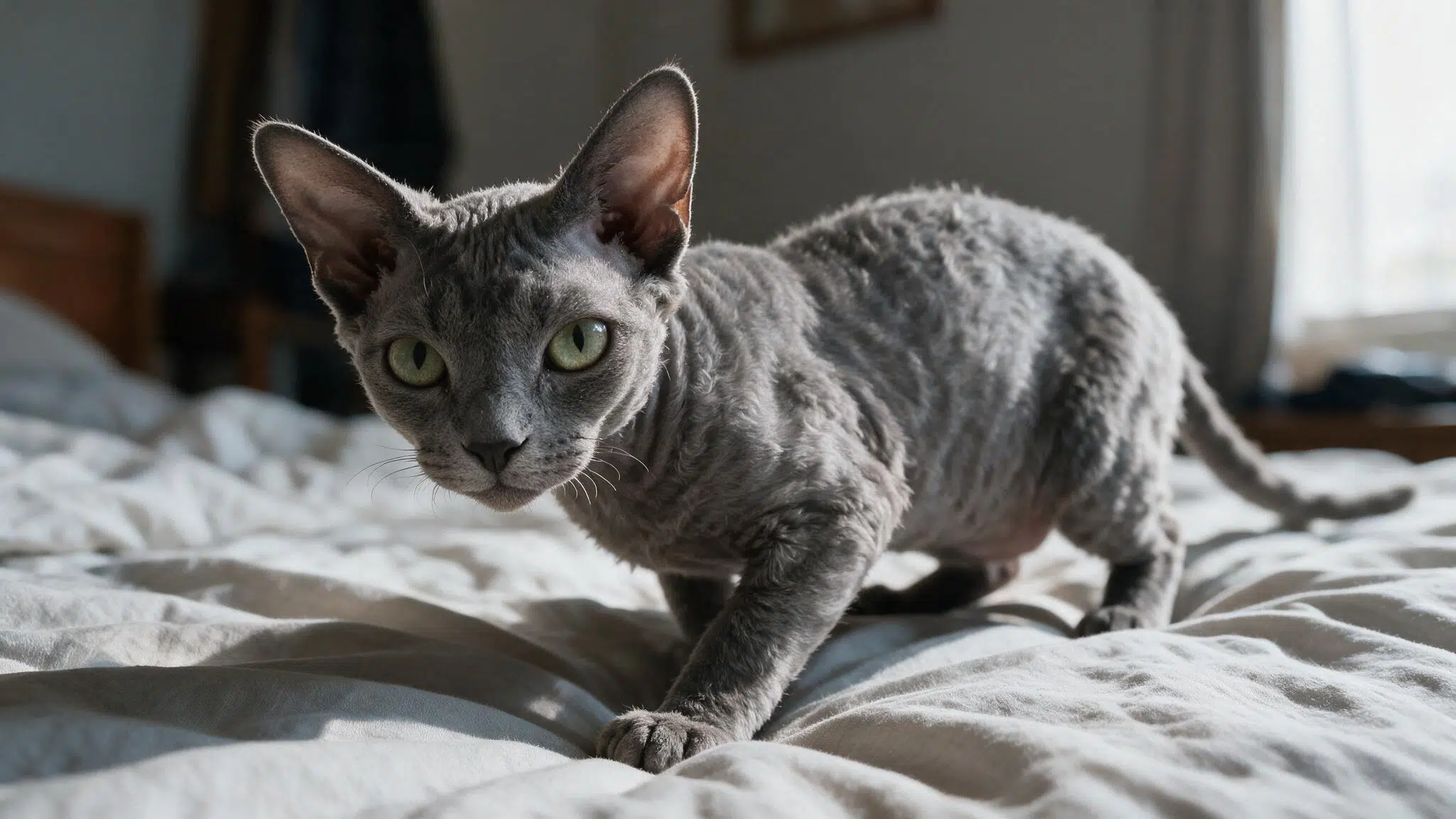
The Devon Rex combines unusual fur with an equally unusual facial structure.
Its short coat forms loose waves or curls rather than the straight plush fur seen on many grey cats. Oversized ears, prominent cheekbones, and a pixie-like face make it easy to recognize.
Blue-grey is possible among many coat colors and patterns. Devon Rex cats are generally playful and people-focused rather than quiet or independent.
- Height: 10–12 inches
- Weight: 5–10 lbs
- Lifespan: 9–15 years
- Grey coat: Blue-grey is one of many possibilities
15. Siberian
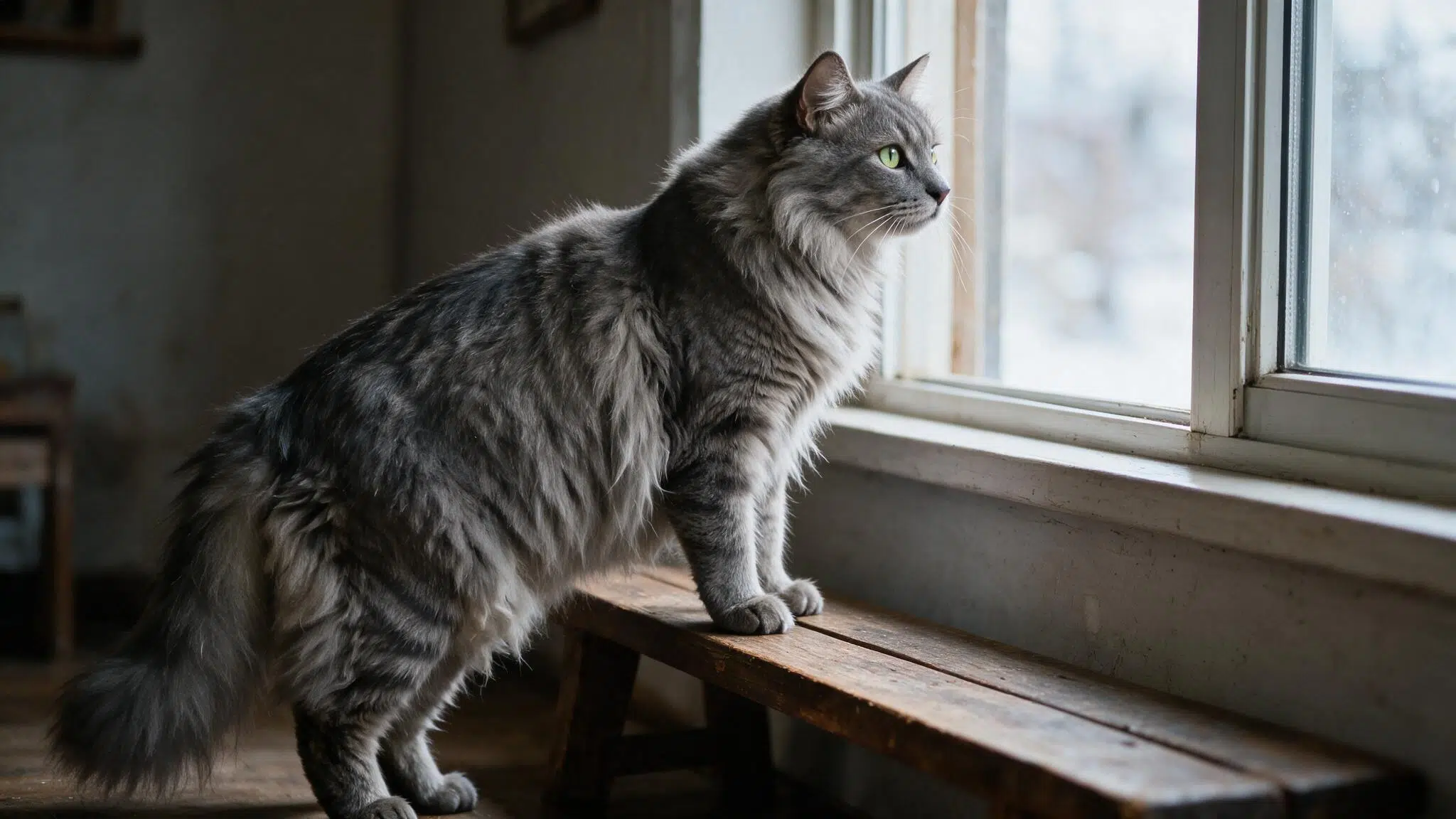
The Siberian is a powerful long-haired breed with a dense triple coat developed for cold climates.
Its substantial body, rounded facial structure, and thick fur help distinguish it from the more triangular Norwegian Forest Cat. Grey, blue, and silver coloring can appear across several patterns.
Siberians are sometimes promoted for allergy-sensitive households, but individual reactions vary and no cat breed should be considered completely hypoallergenic.
- Height: 9–11 inches
- Weight: 8–17 lbs
- Lifespan: 11–18 years
- Grey coat: Blue and silver varieties occur
16. American Shorthair
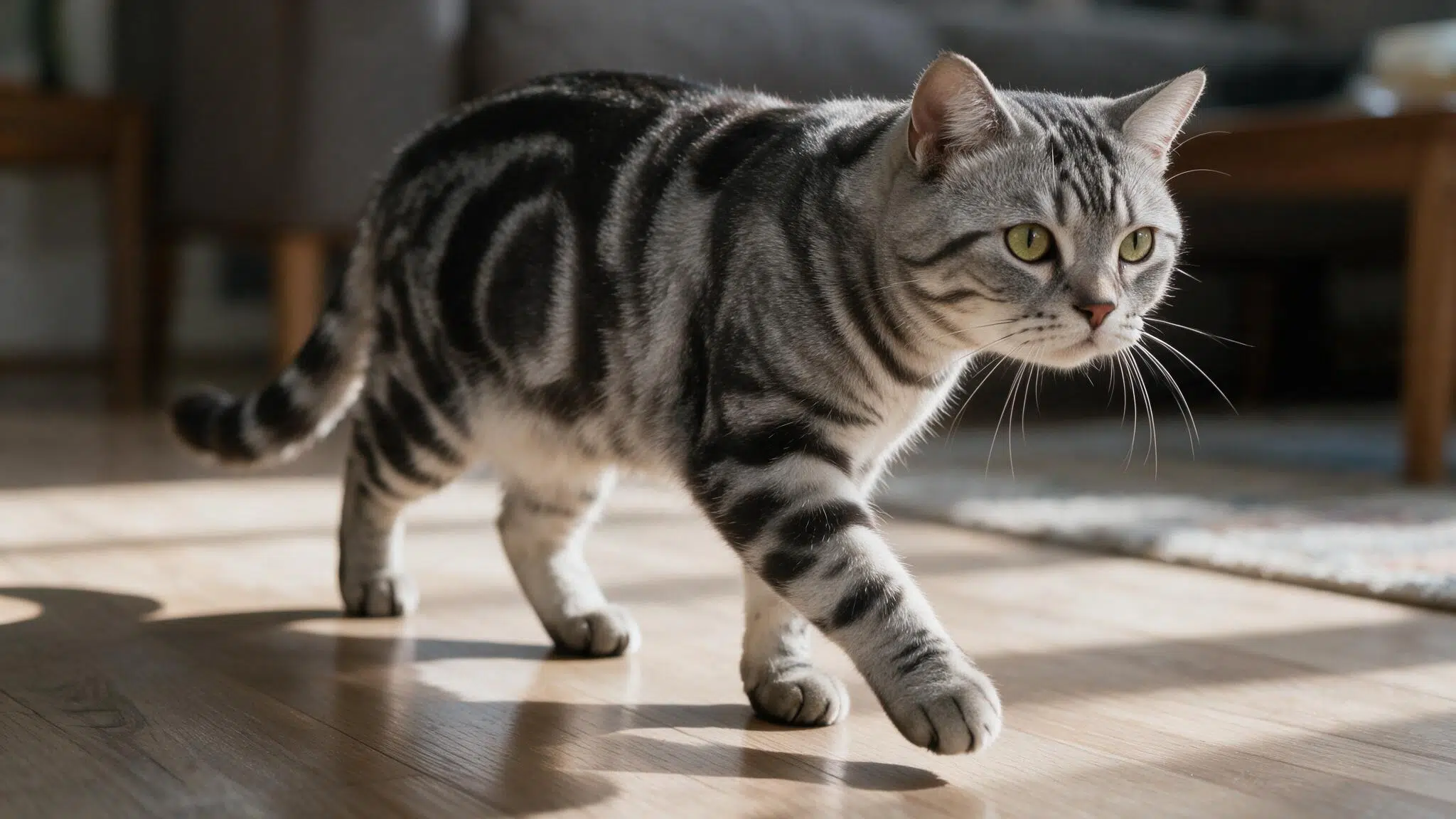
The American Shorthair and Domestic Shorthair are easy to confuse, but they are not interchangeable terms.
American Shorthairs have documented pedigrees and a standardized body type. They usually have muscular frames, rounded faces, and thick short coats.
Silver tabby coloring is especially recognizable, with dark markings running through a pale silver-grey background rather than an entirely solid coat.
- Height: 8–10 inches
- Weight: 8–15 lbs
- Lifespan: 15–20 years
- Grey coat: Frequently silver or grey patterned
17. Cornish Rex
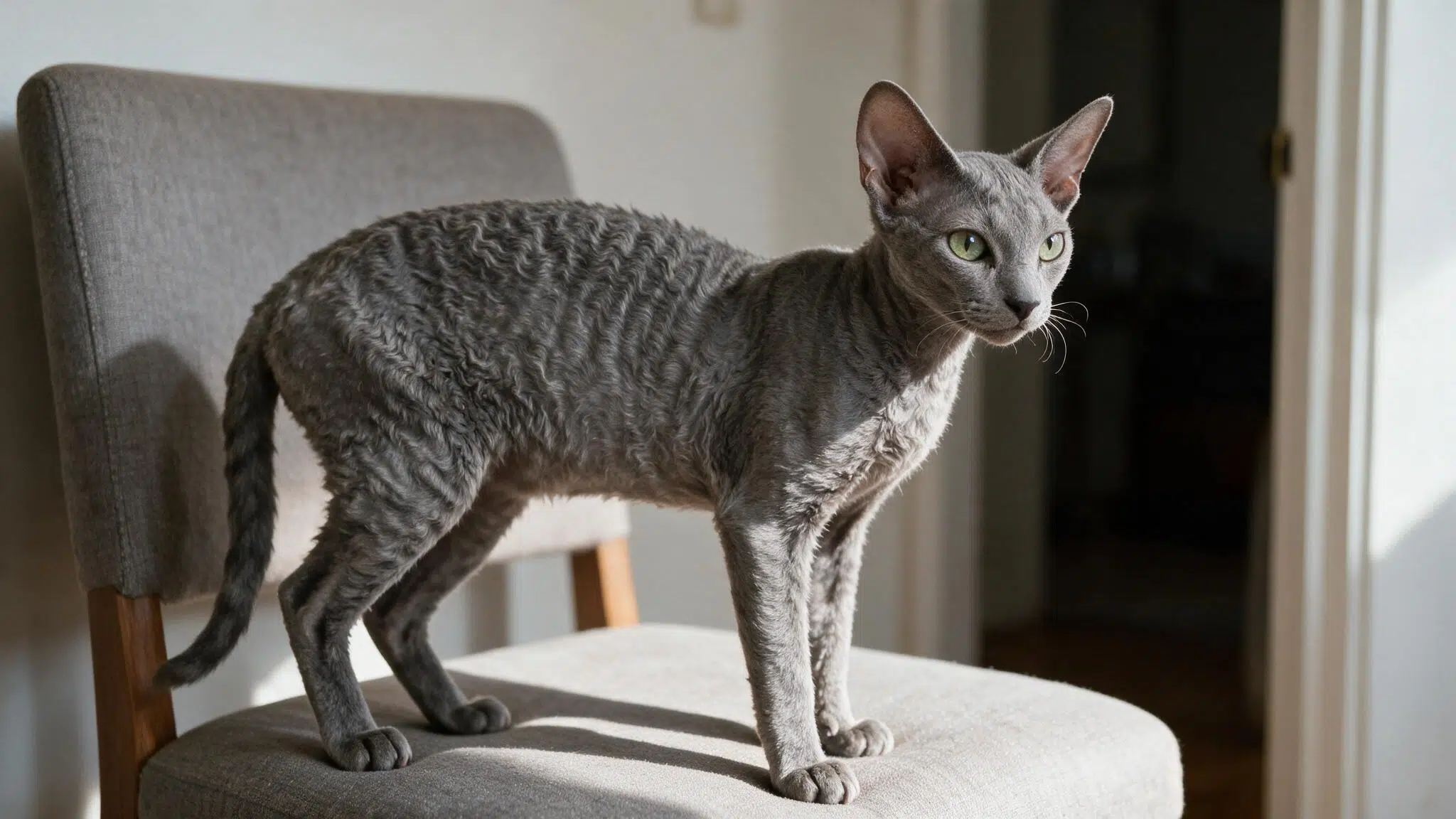
The Cornish Rex stands apart through coat texture.
Its extremely short fur forms tight waves and lacks the typical guard hairs found in most cat coats. The slender arched body, oversized ears, narrow waist, and high cheekbones reinforce its distinctive appearance.
Grey or blue coloring can occur, although coat shade is far less useful for identification than the breed’s unusual fur and body structure.
- Height: 8–10 inches
- Weight: 5–9 lbs
- Lifespan: 11–15 years
- Grey coat: Blue-grey is one possible color
18. Maine Coon
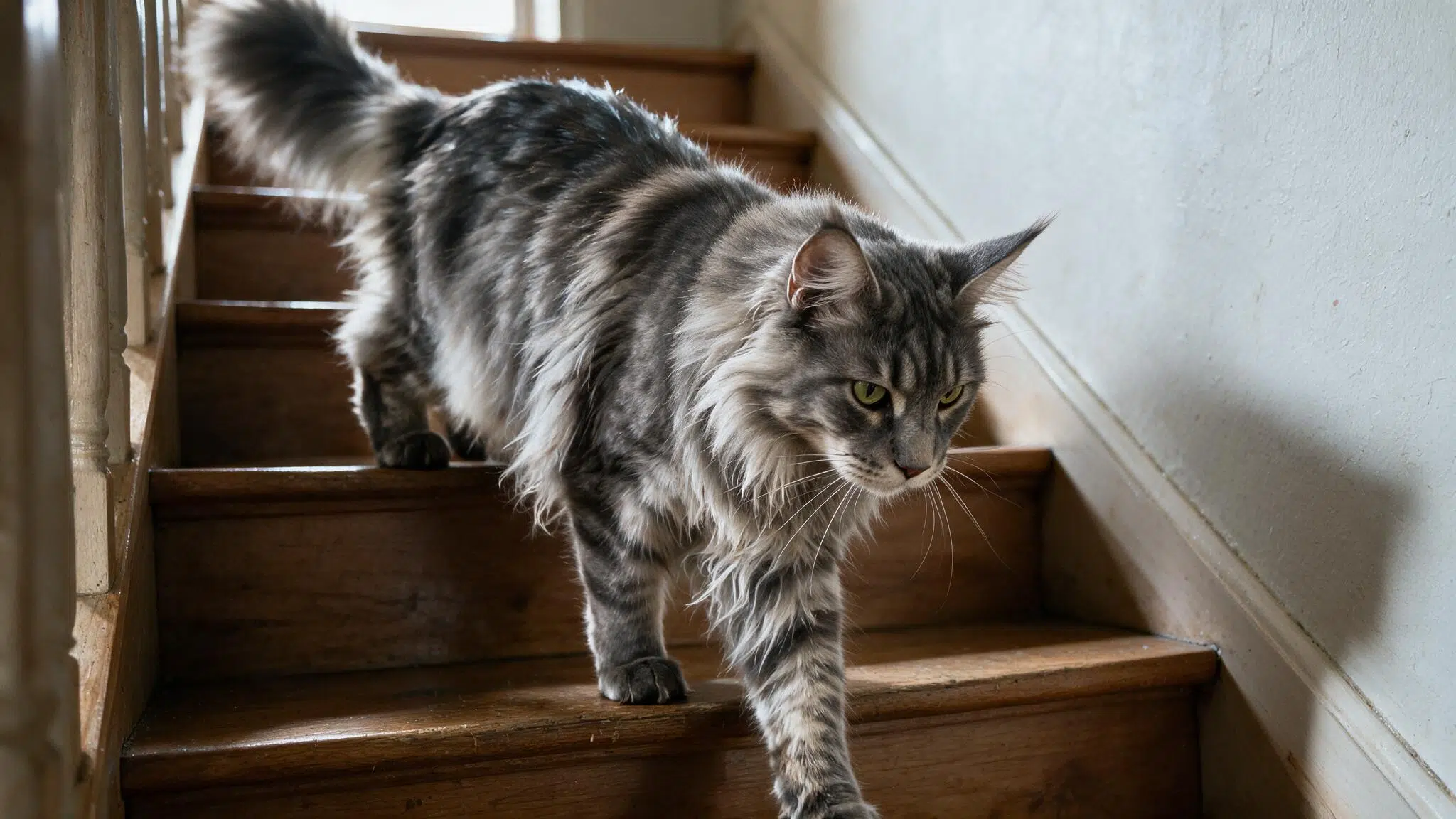
The Maine Coon is among the easiest cats on this list to recognize by size alone.
It has a broad frame, shaggy coat, tufted ears, large paws, and an exceptionally long, bushy tail. Grey usually appears as blue, smoke, silver, or tabby coloring instead of one uniform shade.
The breed combines its imposing build with a generally social temperament, which contributes to its popularity as a family companion.
- Height: 10–16 inches
- Weight: 8–25 lbs
- Lifespan: 12–15 years
- Grey coat: Common in silver, smoke, blue, and tabby forms
19. Tonkinese
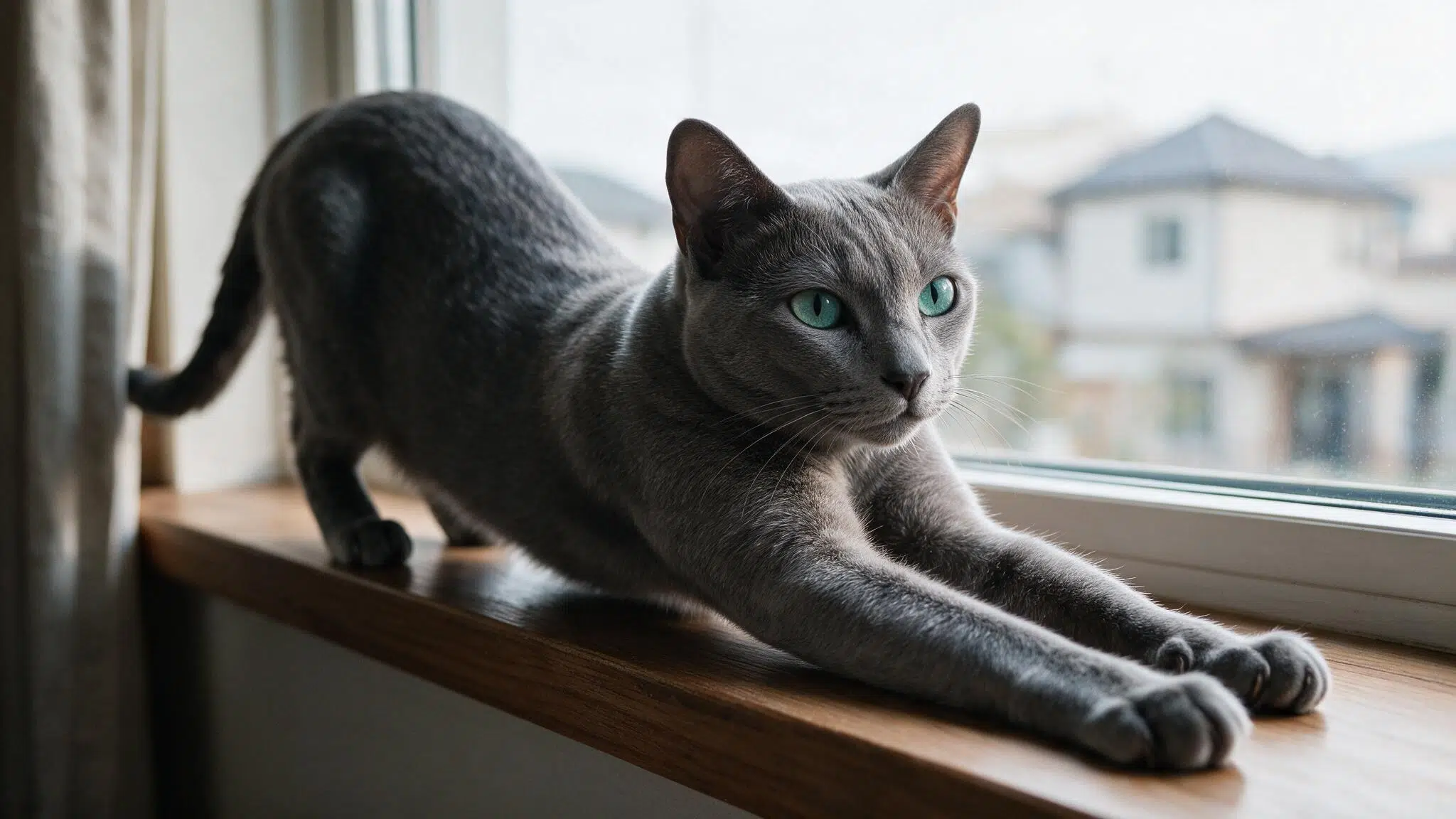
The Tonkinese combines characteristics associated with Siamese and Burmese cats.
It has a medium-sized muscular body, short silky coat, and moderately pointed coloring. Blue-based varieties can produce soft grey tones, while aqua or blue-green eyes are especially characteristic of some Tonkinese coat patterns.
Its proportions are more moderate than the slender Siamese, helping distinguish the two when their coloring appears similar.
- Height: 8–10 inches
- Weight: 6–12 lbs
- Lifespan: 12–16 years
- Grey coat: Blue is among several accepted colors
20. Turkish Angora
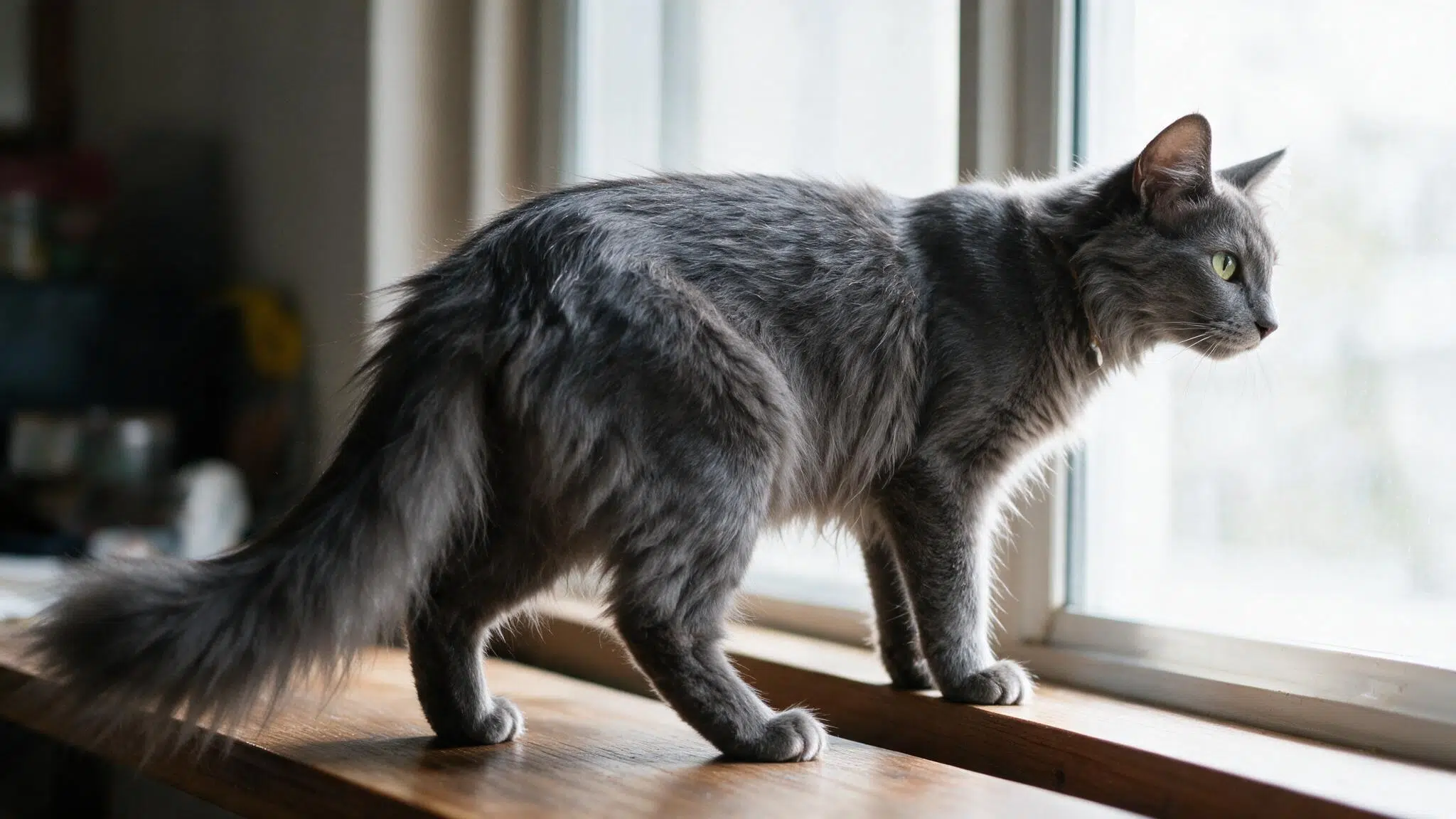
The Turkish Angora has a much lighter and finer appearance than heavier long-haired breeds.
Its body is slender and delicate, paired with a silky single-layer coat and long plumed tail. Grey and smoke are among the possible colors, although the breed appears in several others as well.
Some Turkish Angoras have differently colored eyes, known as heterochromia, providing another striking physical feature.
- Height: 9–10 inches
- Weight: 5–10 lbs
- Lifespan: 12–18 years
- Grey coat: Grey and smoke varieties occur
Is a Grey Short-Haired Cat a Specific Breed?
A grey short-haired cat is not automatically a particular breed.
Several pedigree breeds can have short grey coats, including the Russian Blue, Chartreux, Korat, British Shorthair, Burmese, and American Shorthair.
A grey cat without pedigree records may simply be a Domestic Shorthair.
That distinction matters because coat color and length can suggest possibilities without proving ancestry. Eye color, facial structure, body proportions, coat texture, and documented parentage provide stronger evidence.
Registration records remain the clearest confirmation of pedigree, while cat DNA testing may provide additional ancestry information.
Russian Blue vs Chartreux and Korat, British Shorthair
These four breeds create much of the confusion around solid-grey cats because their overall coloring can appear similar at first glance. Their body structure and eye color provide much stronger clues.
| Breed | Body Type | Eyes | Coat |
|---|---|---|---|
| Russian Blue | Lean and fine-boned | Green | Dense double coat with silver tipping |
| Chartreux | Muscular and sturdy | Copper or gold | Thick and woolly |
| Korat | Medium build, heart-shaped face | Green | Short with silver sheen |
| British Shorthair | Stocky with round face | Usually copper | Dense and plush |
A chunky grey cat with copper eyes is more suggestive of a Chartreux or British Shorthair, while green eyes combined with a finer build point more strongly toward a Russian Blue or Korat.
These characteristics can narrow the possibilities, but they still cannot establish pedigree without documented ancestry.
Choosing the Right Grey Cat for Your Home
Coat color may attract you to a particular cat, but temperament, activity level, grooming, and health should have far more influence on the final decision.
Consider these factors before choosing:
- Activity level: Russian Blues and Chartreux cats may suit quieter households, while Burmese, Korat, Siamese, and Devon Rex cats generally need greater social interaction.
- Coat maintenance: Short-haired cats usually require simpler coat care. Persians, Maine Coons, Nebelungs, Siberians, and Norwegian Forest Cats benefit from a consistent brushing routine to manage shedding and prevent mats.
- Adult size: Maine Coons and Norwegian Forest Cats require more room than smaller breeds such as the Cornish Rex or Turkish Angora.
- Social needs: Some breeds prefer frequent interaction, while others are more comfortable entertaining themselves for part of the day.
- Health considerations: Breed-specific inherited conditions can matter more than coat color, so health records and responsible breeding practices deserve careful attention.
- Pedigree preferences: If documented ancestry is not important, shelters may have grey Domestic Shorthairs and mixed-breed cats with the same striking coloring.
The Centers for Disease Control and Prevention also recommends considering long-term care, veterinary needs, lifestyle, and household circumstances before bringing home a cat.
Are Grey Cats Rare?
Grey cats themselves are not necessarily rare because blue, silver, smoke, and grey-patterned coats occur across many pedigreed and mixed-breed cats.
What may be uncommon is encountering a specific purebred grey cat.
A solid-grey shelter cat is much more likely to be a Domestic Shorthair than a rare pedigree simply because its coloring resembles a Russian Blue, Korat, Chartreux, or another blue-coated breed.
Finding the Right Grey Cat Breed
Grey coloring can appear in many cats, so coat shade alone rarely gives you the full answer.
I’d focus on eye color, body shape, face structure, coat length, and fur texture before guessing a breed. Some grey cat breeds are strongly associated with solid blue coats, while others may appear in silver, smoke, tabby, or pointed patterns.
These differences also matter when choosing a cat for your home. Temperament, activity level, grooming needs, size, and health considerations should guide your decision more than appearance alone.
Use the breed comparisons above to narrow your options, then share which grey cat caught your attention or check out related cat breed guides for more helpful comparisons.
Frequently Asked Questions
Is a Grey Cat Always a Russian Blue?
No. Many pedigree breeds and mixed-breed cats can have grey coats. Russian Blues have a specific combination of green eyes, a lean body, dense double fur, and silver-tipped blue coloring. A grey coat on its own cannot confirm the breed.
Why Are Grey Cats Called Blue?
Cat registries commonly use blue to describe a diluted black coat. The dilution changes the visual appearance of black pigment, producing fur that looks slate, silver-grey, or bluish-grey rather than true blue.
What Grey Cat Breeds Have Green Eyes?
Russian Blues and Korats are especially recognized for combining green eyes with blue-grey coats. Nebelungs also commonly have green eyes. Eye color alone still cannot establish breed because mixed-breed cats may share the same feature.
What Is the Fluffiest Grey Cat Breed?
Several long-haired breeds can produce a very fluffy grey appearance. Persians have exceptionally dense coats, while Maine Coons, Siberians, Norwegian Forest Cats, and Nebelungs also carry substantial long or semi-long fur.
Are Grey Cats More Expensive?
Coat color alone does not determine price. Cost depends much more on breed, pedigree, breeder practices, health screening, location, and availability. A grey Domestic Shorthair from a shelter may cost far less than a pedigreed Russian Blue or British Shorthair.
Do Grey Cats Need Special Grooming?
No. Grooming requirements depend on coat length, density, and texture rather than color. A short-haired Korat needs much less coat maintenance than a long-haired Persian, even though both can have grey coloring.
Can a Mixed-Breed Cat Be Completely Grey?
Yes. Mixed-breed cats can inherit solid blue-grey coats without belonging to a recognized grey breed. Domestic Shorthairs with solid grey fur are common examples, which is why appearance should not be treated as proof of pedigree.
Do Grey Kittens Stay the Same Color?
Most remain relatively close to their original shade, although the coat may become lighter, darker, or more defined as the kitten matures. Pattern contrast and point coloring can also become more noticeable with age.