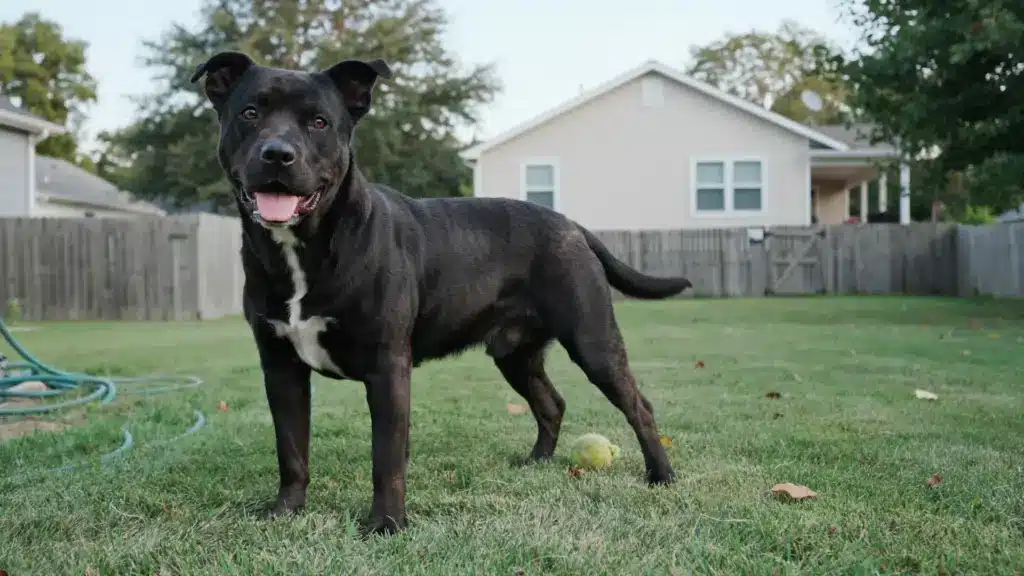
Why does one Labrabull look like a stocky black Lab, while another looks almost like a lean, floppy-eared pit bull? A Pitbull Lab mix can land anywhere between its two parent breeds, and that unpredictability is exactly what makes this cross tricky to size up from a photo alone.
In my years volunteering at rescue shelters, I’ve watched littermates grow into dogs with completely different builds, coats, and energy levels.
Below, I’ll break down what usually shapes a Labrabull’s body, temperament, and health, along with what matters most before you bring one home, from daily exercise needs to what a shelter’s breed guess can and can’t actually tell you about your dog.
What Is a Pitbull Lab Mix?
A Pitbull Lab mix is generally a cross between an American Pit Bull Terrier and a Labrador Retriever. It isn’t an officially standardized breed, so there’s no single appearance, weight, coat color, or temperament that every dog must have.
Breeders started crossing the two on purpose in the late 1990s, hoping to combine the Labrador’s easygoing nature with the Pit Bull’s strength and drive.
Because “pit bull” often gets used as an umbrella term, some Labrabulls also carry genes from the American Staffordshire Terrier, Staffordshire Bull Terrier, or American Bulldog, even when a shelter or breeder lists just one parent breed.
The Labrador Retriever is recognized by the American Kennel Club, the oldest single-breed dog registry in the U.S. and the main place most owners check for breed standards and typical size ranges.
The American Pit Bull Terrier, meanwhile, is recognized by the United Kennel Club rather than the AKC. Neither registry treats the Labrabull itself as a standardized breed, though some designer-dog registries do.
Because puppies can inherit different combinations of genes, one may end up with floppy Labrador-like ears and a longer muzzle, while another develops a broader head, muscular chest, and shorter coat. Even littermates can grow into noticeably different-looking adults.
The most common names for this cross include Labrabull, Pitador, Pitlab, Lab Pit mix, and Pitbull Labrador mix. Bullador shows up sometimes too, though that name can also point to other Labrador crosses, so known parentage matters more than the nickname.
Pitbull Lab Mix Breed Profile
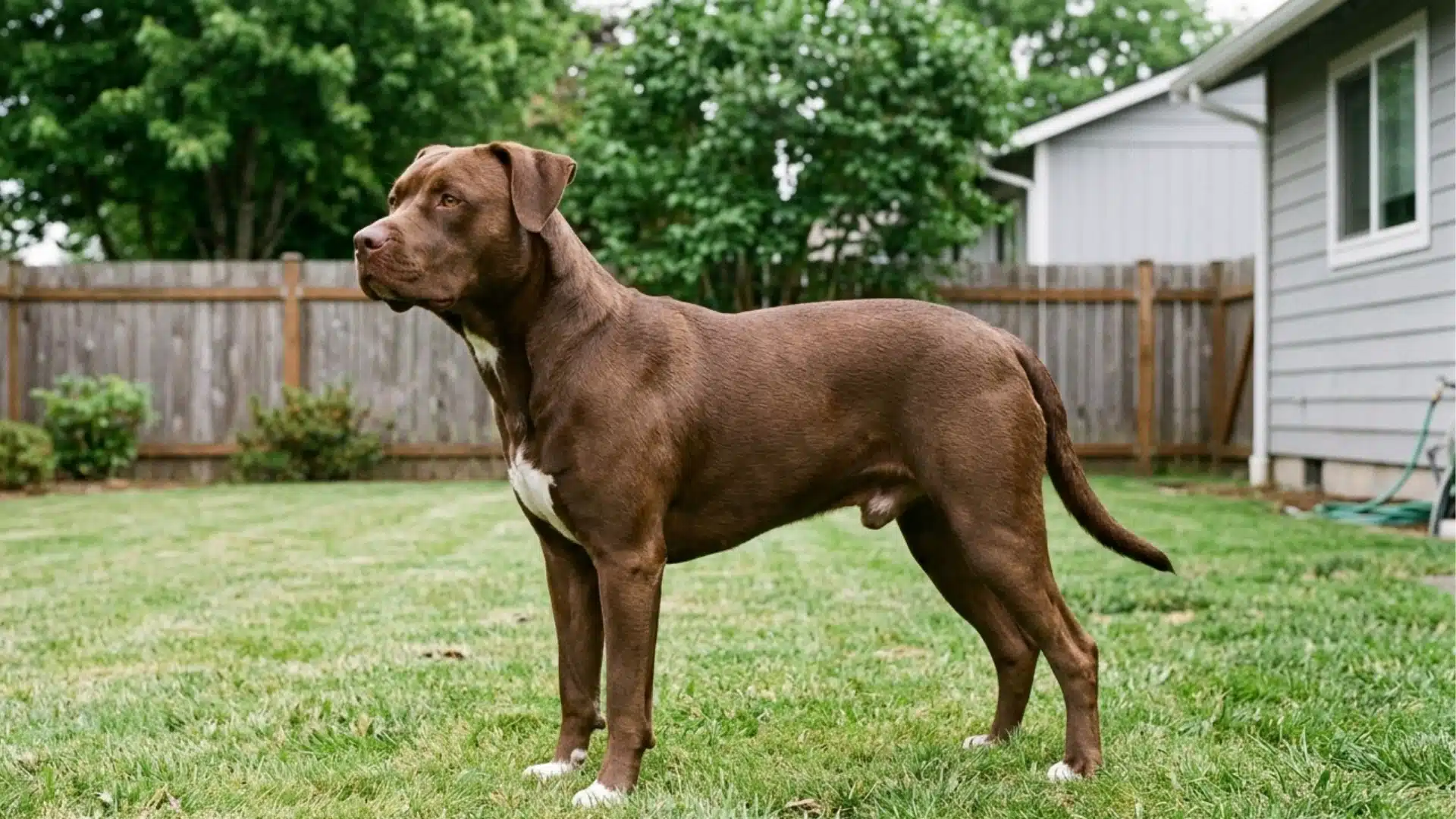
A Labrabull usually combines the athletic build, energy, and people-oriented nature of both parent breeds. That said, mixed-breed genetics make exact characteristics hard to predict.
1. Breed Traits
The Pitbull Lab mix usually has a strong, athletic frame. Many have a broad chest, muscular shoulders, powerful legs, and a medium-length muzzle. Others favor the Labrador’s more balanced, sporting-dog build.
Ear shape ranges from fully floppy to semi-folded. The tail might be thick like a Labrador’s, or slightly narrower and more tapered like a Pit Bull’s.
Most have short coats, though dogs with more Labrador influence can grow a noticeably denser one. The overall look often leans toward one parent more than the other, rather than splitting evenly down the middle.
2. Size and Appearance
Most adult Pitbull Lab mixes land in the medium-to-large size range.
A typical adult stands around 17 to 24 inches tall at the shoulder and weighs about 40 to 90 pounds. Actual size depends on the parents, sex, genetics, nutrition, and body condition — some Labrabulls stay close to Lab-sized, while others end up shorter and more compact like a Pit Bull-type dog.
Common coat colors include:
- Black
- Chocolate or brown
- Yellow
- Cream
- White
- Tan
- Brindle
- Black and white
- Brown and white
- Mixed markings
The coat is generally short and smooth, but thickness varies. Dogs with the Labrador’s dense double coat tend to shed more, and using the right coat brush can cut down on the loose hair around the house.
Most puppies reach much of their adult height in the first year, though they keep filling out with muscle as they mature.
3. Temperament and Personality
Pitbull Lab mixes are often described as affectionate, energetic, playful, loyal, and people-focused.
The Labrador side may add sociability and enthusiasm, while the Pit Bull side often brings confidence, strength, and persistence. Trainers who work with this mix often say the combination makes for a dog that’s eager to please, but strong-willed enough that inconsistent rules won’t stick.
Many Labrabulls like staying close to their families and joining in on walks, games, training sessions, and other activities. Still, breed ancestry doesn’t decide personality on its own.
Genetics, early experiences, socialization, training, environment, and past handling all shape behavior. Two dogs with similar ancestry can react very differently to kids, strangers, other dogs, or new places.
What matters most is the individual dog’s actual temperament, not assumptions based on a breed label.
How to Tell If Your Dog Is a Pitbull Lab Mix
Appearance alone can’t reliably confirm that a dog is a Pitbull Lab mix.
Shelters and past owners often guess breed from physical traits: a broad head, muscular chest, short coat, floppy ears, or a Labrador-like body. The trouble is that plenty of mixed breeds share those same traits. A dog labeled a Labrabull could carry genes from several breeds, not just an American Pit Bull Terrier and a Labrador Retriever.
If the parents are unknown, a canine DNA test can offer more insight into likely ancestry, though results are still estimates rather than a perfect record.
Knowing the probable parent breeds helps when you’re talking through expected adult size, inherited health risks, exercise needs, and preventive care. This kind of breed-specific vet guidance can make those conversations more useful, since a vet who knows the likely mix can watch for the right issues early.
Exercise, Training, and Grooming
A Pitbull Lab mix needs a routine that blends real exercise, mental stimulation, consistent training, socialization, and simple grooming to stay balanced day to day.
| Care Area | Typical Need |
|---|---|
| Exercise | Around 60–90 minutes of daily activity for many healthy adults |
| Training | Consistent reward-based practice with clear commands and routines |
| Grooming | Weekly brushing to remove loose hair and maintain the coat |
| Mental activity | Puzzle toys, scent games, interactive play, and short training sessions |
| Socialization | Positive exposure to different people, pets, places, and environments |
| Feeding | Measured meals based on age, activity level, weight, and body condition |
These needs shift with age, health, and energy level, so treat this table as a starting point rather than a fixed formula. If your Labrabull seems bored between walks, a few engaging puzzle toy options can fill the gap on rainy days or slow evenings.
Pitbull Lab Mix Health and Lifespan
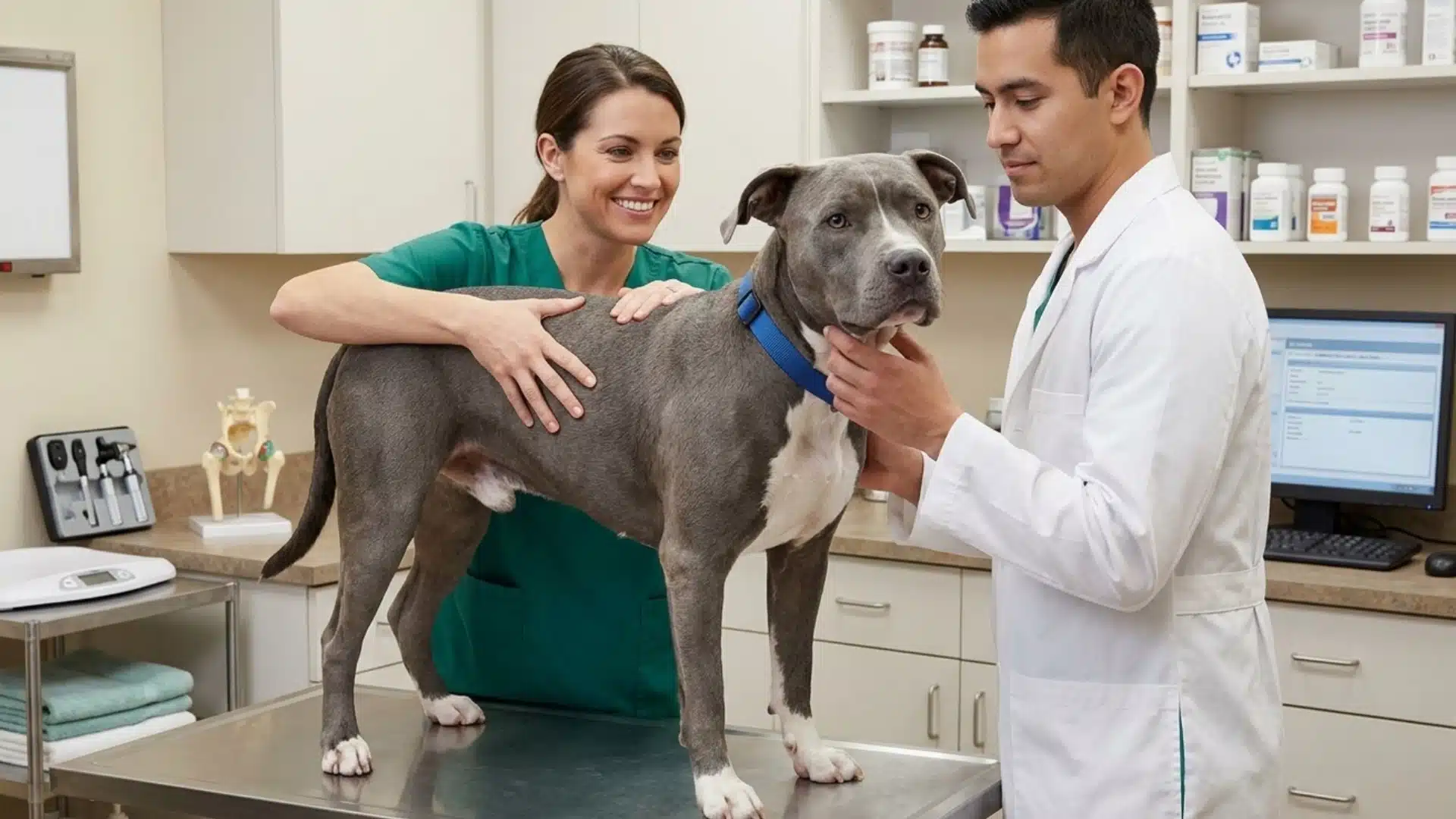
Both parent breeds carry known health risks that can turn up in the mix.
Hip dysplasia and elbow dysplasia show up in both Labrador Retrievers and American Pit Bull Terriers, and a Labrabull can inherit either condition from one or both parents. According to VCA Animal Hospitals, a nationwide network of veterinary hospitals, joint conditions like these often develop gradually and are best caught early through regular exams and imaging, rather than waiting for visible limping.
Some breeders and vets point to “hybrid vigor” — the idea that mixing two breeds can lower the odds of inheriting concentrated genetic problems compared with a purebred dog. That may hold some truth, but it isn’t a guarantee. A Labrabull can still inherit issues from either parent, so it’s not a reason to skip health screening.
Skin allergies, ear infections, and obesity are also common concerns tied to the Labrador side of the mix, since Labs are prone to overeating and gaining weight when portions aren’t measured. Most Pit Bull Lab mixes live 10 to 14 years with routine veterinary care, a balanced diet, and regular exercise.
Are Pitbull Lab Mixes Dangerous?
A Pitbull Lab mix shouldn’t be labeled dangerous just because of its name or appearance.
Dog behavior comes down to a mix of factors, including temperament, socialization, training, past experience, health, environment, supervision, and handling. The American Veterinary Medical Association, the leading professional group for U.S. veterinarians, recommends focusing on responsible ownership and dog-bite prevention rather than assuming risk from a breed label alone.
That doesn’t mean owners should ignore the dog’s physical strength. A friendly but poorly trained Labrabull can still be hard to manage if it pulls hard on the leash, jumps on people, gets overexcited, or lacks impulse control.
Early obedience training, secure handling, the right amount of exercise, and supervision matter no matter how social the individual dog seems.
It’s also worth checking current local housing, insurance, and municipal rules, since some policies still apply restrictions to dogs identified as pit bull-type mixes — and those rules can vary a lot from one city or landlord to the next.
Are Pitbull Lab Mixes Good Family Dogs?
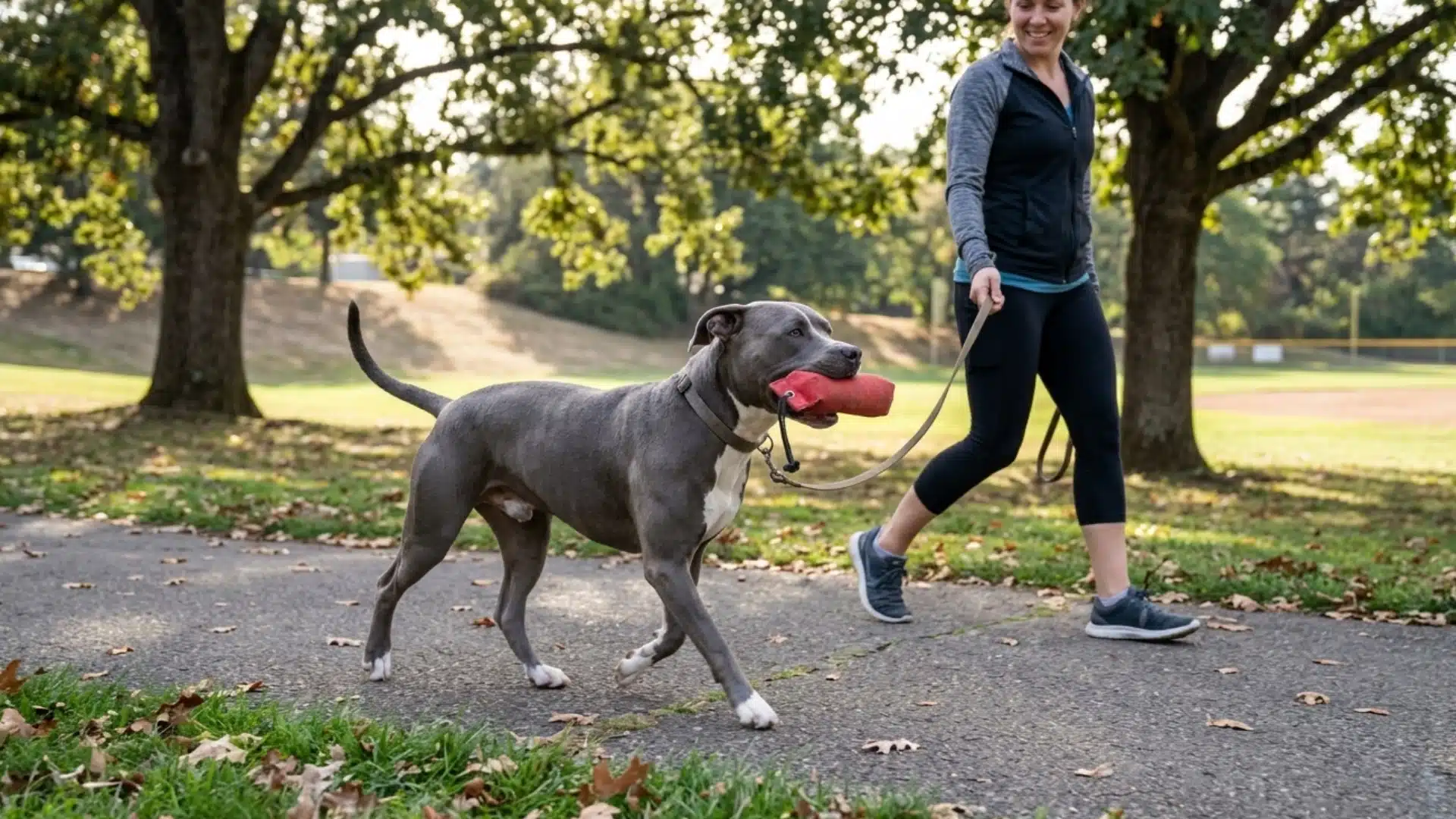
Many Pitbull Lab mixes can make affectionate family companions when their temperament and exercise needs fit the household.
They often love attention, games, walks, and time spent close to family members.
Their enthusiasm works well in active homes, but their size and strength deserve some thought around younger kids. An excited dog can knock over a small child by accident, without any aggression involved at all.
Adults should supervise time between dogs and young children, and teach kids not to bother a dog while it’s eating, sleeping, or resting.
Training also helps set up calm greetings and appropriate play.
Rather than leaning on the Labrabull label, families should look at the individual dog’s known behavior, energy level, social history, and comfort around children before adopting.
Pitbull Lab Mixes With Dogs and Other Pets
Pitbull Lab mixes can live successfully with other pets, but compatibility depends on socialization, past experiences, prey drive, and each animal’s individual temperament.
| Other Pet | What to Expect | Best Approach |
|---|---|---|
| Other dogs | Some Labrabulls are social, while others are more selective about canine companions. | Use gradual, supervised introductions in a neutral environment. |
| Cats | Compatibility varies, especially if the dog has a strong chasing instinct. | Introduce slowly and give the cat safe escape spaces. |
| Small pets | Rabbits, rodents, and other small animals may trigger prey drive in some dogs. | Keep interactions closely supervised and use secure separate areas when needed. |
| Existing household pets | Previous socialization and experience can strongly affect how the dog responds. | Ask shelters about known pet history before adoption and introduce animals gradually. |
Successful multi-pet living depends more on the individual dog than its breed label. Separate feeding areas, supervision, and careful introductions all help prevent conflicts.
Feeding and Weight Management
There’s no single feeding amount that works for every Pitbull Lab mix.
Daily food needs depend on age, adult size, body condition, exercise level, health, and the calorie content of the chosen diet.
Measured meals make portion control easier than keeping a bowl constantly full. Treats, chews, table scraps, and training rewards also add up calorie-wise, so factor them in alongside regular meals.
Focus on maintaining a healthy body condition rather than chasing one predetermined weight. If ribs become hard to feel, the waist disappears, or body weight changes unexpectedly, a veterinarian can help figure out whether portions need adjusting.
Puppies, adults, seniors, working dogs, and dogs with medical conditions may also need different diets.
Can a Pitbull Lab Mix Live in an Apartment?
Yes, some Pitbull Lab mixes can live successfully in apartments when their exercise and enrichment needs are consistently met.
Apartment suitability depends more on the individual dog’s behavior and routine than on floor space alone.
A Labrabull living in a smaller home may do well with daily walks, structured play, training, sniffing opportunities, and interactive activities. A large yard, by comparison, does little if the dog spends most of its time outside without exercise or interaction.
Labrabulls also tend to do best when they aren’t left alone for long stretches. This mix can get anxious or a little destructive if it’s regularly on its own all day, so apartment living works best when someone can break up long stretches with a midday walk, a dog walker, or doggy daycare.
Apartment owners should also think about barking, bathroom access, stairs or elevators, nearby exercise areas, and the dog’s ability to settle indoors. Housing rules deserve attention too, some landlords or insurance providers restrict pit bull-type dogs, so checking policies before adoption can prevent complications later.
Who Is a Pitbull Lab Mix Best For?
A Labrabull generally suits someone ready for an active, strong, highly interactive companion. This mix may work particularly well for:
- Active families: Regular walks, games, hiking, and outdoor activities give useful outlets for energy.
- Owners interested in training: Intelligent, energetic dogs often benefit from structured obedience and enrichment.
- People wanting companionship: Many Labrabulls enjoy staying close to their household.
- Owners comfortable with larger dogs: Their strength makes leash manners and impulse control genuinely important.
- Homes with daily time available: Exercise, attention, and mental activity need to be part of the regular routine.
The best match depends on the individual dog rather than the breed name alone.
Who May Prefer a Different Dog?
A Pitbull Lab mix may not suit someone looking for an extremely low-energy or hands-off companion. Another dog may be a better fit when:
- Daily exercise time is very limited.
- Regular training can’t be provided.
- Moderate shedding is a major concern.
- The household prefers a small dog.
- Existing pets can’t safely live with an energetic dog.
- Housing restrictions prohibit pit bull-type dogs.
- The owner isn’t comfortable managing a physically strong dog.
Appearance should be one of the least important factors in deciding whether the mix fits a household. Temperament, activity level, training commitment, living situation, and long-term care requirements matter considerably more.
Pitbull Lab Mix Cost and Adoption
The cost of getting a Pitbull Lab mix depends largely on where the dog comes from. Shelter and rescue adoption fees often cost less than buying a deliberately bred mixed-breed puppy, and may already cover vaccinations, microchipping, or spay and neuter surgery.
Adult rescue dogs offer one advantage: their size and established personality can be easier to assess than a young puppy’s. If you’re considering a breeder, price shouldn’t be treated as proof of responsible breeding.
Ask about:
- Health testing for both parents
- Veterinary records
- Parent temperament
- Puppy socialization
- Living conditions
- Return policies
Budget for ongoing food, veterinary care, grooming supplies, training, parasite prevention, toys, equipment, and possible emergency medical expenses too.
Frequently Asked Questions
Is a Labrabull the Same as a Pitbull Lab Mix?
Yes. Labrabull is a common informal name for a Labrador Retriever crossed with a pit bull-type dog. Pitador, Pitlab, and Lab Pit mix are also used. None of these are standardized breed names, so knowing the actual parent breeds tells you more than any nickname.
Do Pitbull Lab Mixes Need a Fenced Yard?
A fenced yard helps, but it isn’t essential. Daily walks, structured play, training, and mental enrichment can meet an active dog’s needs even without private outdoor space. Think of a yard as a bonus, not a replacement for real exercise.
Do Pitbull Lab Mixes Bark a Lot?
It depends on the dog. Some stay fairly quiet, while others bark from excitement, boredom, frustration, or habit. Regular exercise, enrichment, training, and a steady daily routine usually help cut down on unnecessary barking.
Are Pitbull Lab Mixes Good With Kids?
Many live comfortably with children when they’re well socialized and trained. Their size and enthusiasm can still cause accidental bumps during play, so young kids should always be supervised around any dog and taught how to interact respectfully.
How Much Do Pitbull Lab Mixes Shed?
Most shed a moderate amount year-round. A dog with the Labrador’s dense double coat may shed more heavily, especially during seasonal coat changes. Regular brushing helps clear loose hair and keeps the coat easier to manage.
Do Pitbull Lab Mixes Like Water?
Some do, especially dogs that lean toward the Labrador Retriever’s love of swimming and retrieving. Others may be hesitant or simply uninterested. Introduce water gradually, and never push a dog into deep water just because of its ancestry.
Final Thoughts
A Pitbull Lab mix can be a loving, active companion, but the right fit depends on more than appearance or breed labels.
I would look closely at the individual dog’s temperament, energy level, training history, and comfort around people and pets before deciding.
You should also be ready for regular exercise, consistent training, moderate grooming, healthy feeding, and routine veterinary care. Size and personality can vary because mixed-breed genetics are not predictable.
That is why understanding the dog as an individual matters most. If its needs match your lifestyle, it can fit well into an active home. Share your experience below, or check related dog guides before choosing your next companion.