You are sitting on the couch when your dog hops up next to you, and suddenly that unmistakable fishy smell hits you.
As a veterinarian, I hear this concern regularly, especially from owners who notice the smell appearing out of nowhere after their dog sits, sleeps, or settles in beside them.
And then suddenly you’re searching for why does my dog smell like fish at odd hours, trying to figure out what changed so quickly.
This happens to a lot of dog owners, and it is usually not something to panic about. Dogs can smell like fish for several reasons, and most of these are fixable with the right care.
Knowing where the smell is coming from on your dog’s body is the fastest way to figure out what is going on, helping you act quickly and appropriately.
What a Fishy Smell Usually Means in Dogs?
The smell usually comes from natural biological secretions in your dog’s body.
A fishy smell in dogs is often a signal that something in the body is out of balance, even if your dog appears normal otherwise.
It may come and go or appear suddenly after certain activities like sitting or resting. While the smell itself is not a diagnosis, it acts as an early warning sign that should not be ignored.
It can also reflect changes in hygiene, internal processes, or external buildup on the coat.
When any of these systems fall out of balance due to impaction, infection, diet issues, or illness, a fishy odor can be one of the first signs you notice.
Sometimes the smell may appear suddenly. In other cases, it builds up slowly over time and becomes stronger after certain activities.
Changes in weather, grooming habits, or routine can also affect how noticeable the smell becomes.
Common Reasons Behind the Fishy Smell
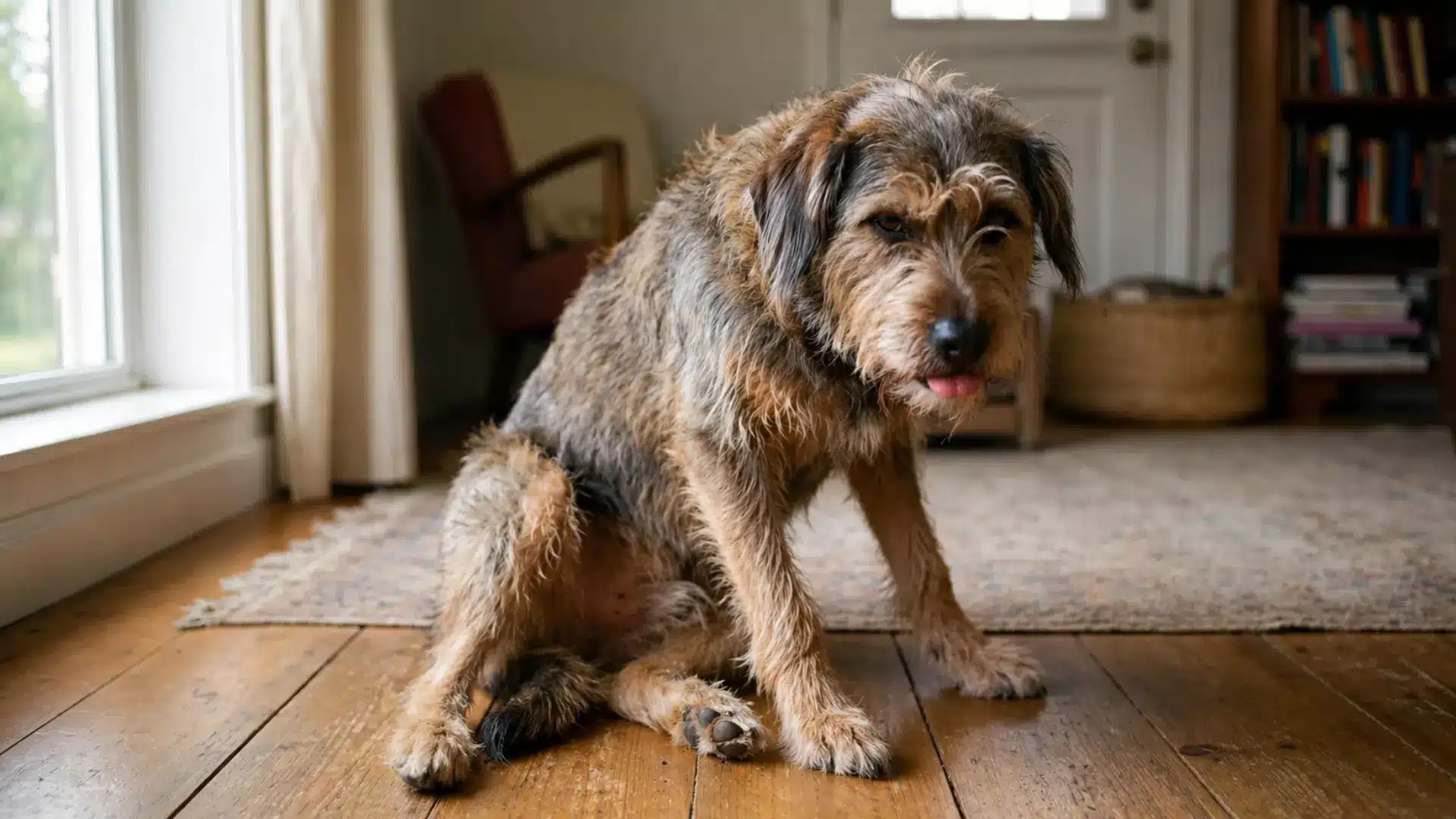
A sudden fishy smell in dogs is more common than many owners expect, and it usually points to a specific underlying issue rather than poor hygiene.
1. Anal Gland Issues
Anal glands are small sacs on either side of your dog’s anus, around the 4 and 8 o’clock positions, and they produce a strong-smelling fluid that can smell fishy.
Impacted anal glands are especially common in smaller breeds and in older or overweight dogs.
As per Cornell University College of Veterinary Medicine, one of the most frequent signs is “scooting,” which is when dogs drag their rear end along the floor, lawn, or another surface.
In more serious cases, the glands can become infected or form an abscess. These situations can worsen quickly.
2. Dental Problems
Dental disease is more common than many dog owners expect, as plaque buildup turns into tartar and creates a breeding ground for bacteria that can produce a fishy odor.
If you are also seeing yellow or brown deposits on your dog’s teeth or your dog seems reluctant to chew harder food, dog tooth decay is worth understanding in more detail.
In my clinic, dogs often come in with owners who assume bad breath is just normal “dog breath.”
When the breath smells genuinely fishy rather than just stale, I always check for periodontal disease first.
3. Skin Infections
Dogs can develop bacterial or yeast infections on their skin, especially in warm and moist areas such as skin folds, between the toes, or under the legs.
These infections usually come with other signs like redness, itching, flaking, or greasy fur. Dogs that repeatedly lick one spot are often reacting to irritation caused by an underlying issue.
Mild cases may improve with medicated shampoos, but ongoing infections need proper diagnosis since treatment depends on the cause.
4. Ear Infections
Ear infections can cause odor, redness, head shaking, scratching, swelling, and discharge.
Dogs with floppy ears or those that swim often are more likely to develop them.
If the smell seems stronger around the head, checking the ears can help. Signs often include scratching, head shaking, redness, swelling, or dark discharge.
These infections usually do not resolve on their own, so early treatment is important.
5. Urinary or Reproductive Issues
In some cases, the smell may be linked to urinary or reproductive problems rather than the anal glands.
Urinary tract infections can cause a noticeable odor, especially when paired with discharge or irritation.
Unspayed females in heat may also produce a stronger scent, but a persistent, foul fishy odor in an unspayed female can sometimes indicate pyometra, a serious uterine infection that requires immediate veterinary care.
Other signs include frequent urination, straining, licking the area, or accidents indoors, and these symptoms should be checked by a vet rather than ignored.
6. Diet and Digestion
What your dog eats directly affects how they smell. Fish-based foods are an obvious factor, as they are rich in omega fatty acids, but can sometimes lead to a fishy body odor.
Fish oil supplements are another common cause that owners often overlook.
These supplements are widely used for coat and joint health, but the oils can be absorbed through the skin or released through the breath, producing a noticeable fishy scent even when your dog is otherwise healthy.
Switching to a better-suited diet can often improve this over time.
How to Tell Where the Fishy Smell is Coming From?
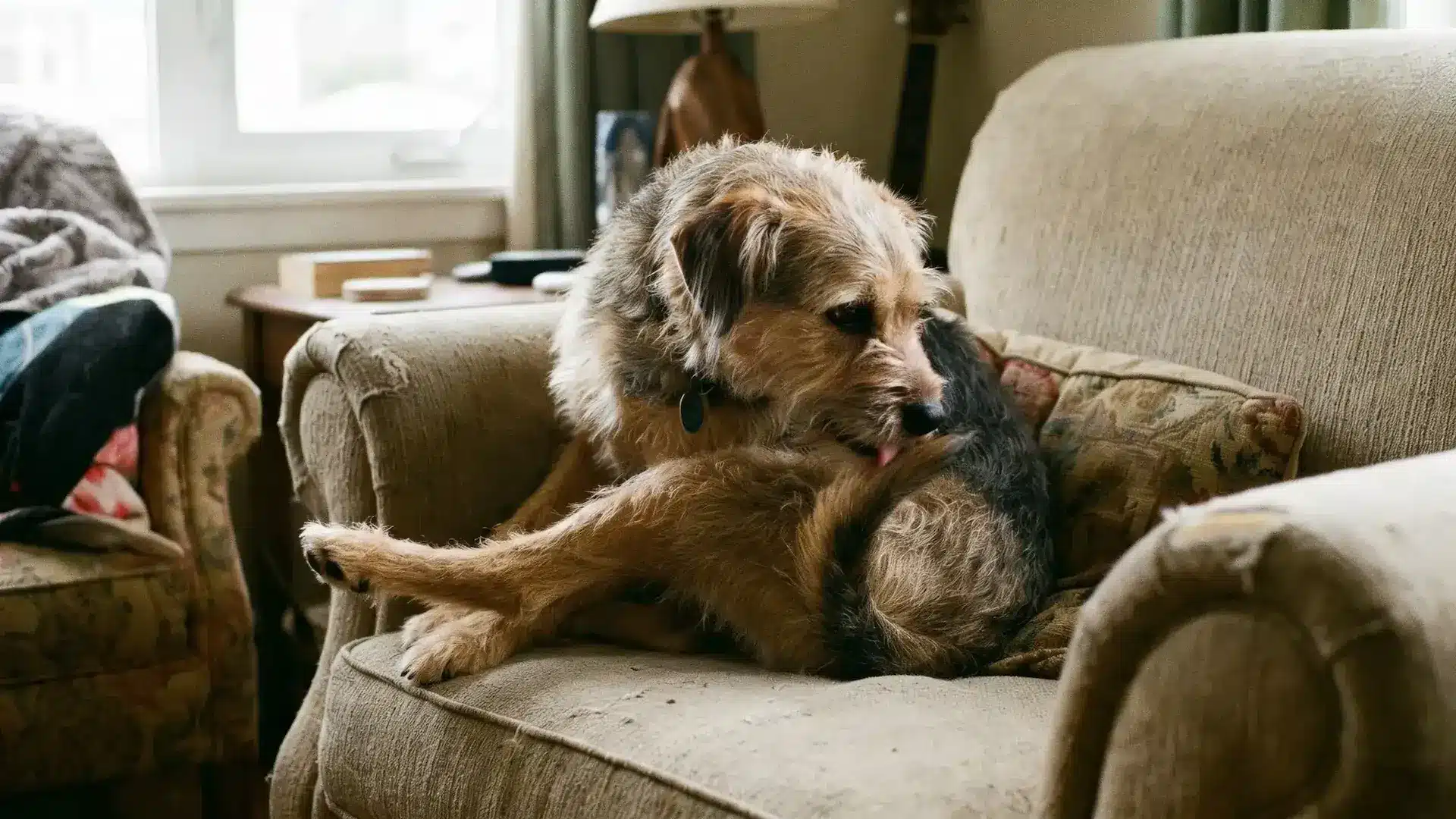
Pinpointing the location of the smell is the fastest way to narrow down what is going on.
Start by noticing where the odor is strongest before your dog has had a bath or a chance to move around much.
A smell coming from the mouth points to dental disease or diet. Check for brown or yellow buildup on the teeth, red gums, or hesitation when chewing.
A smell near the ears suggests an ear infection, especially if your dog has been scratching or shaking its head.
Odor near the tail and rear is most commonly from the anal glands. You will often notice it more after your dog sits, scoots, or licks the area.
A smell from the coat or skin may indicate a bacterial or yeast issue, while odor near the genital area in a female dog may point to a urinary or reproductive concern.
When I ask owners to describe where they notice the smell most, the answer almost always points directly to the cause.
It is worth doing a calm, close inspection before calling the vet — the more specific you can be, the faster they can help you.
Preventative Measures to Get Rid of the Fishy Smell
Before jumping into solutions, it’s important to identify what’s actually causing the smell. Once you know the source, treatment becomes much more effective.
1. Fixing Anal Gland Problems
If the glands are full but not infected, a groomer or vet can express them safely, and some owners learn to do it at home with guidance.
Increasing fiber in your dog’s diet can also support natural expression over time.
If there is infection, swelling, or severe discomfort, professional treatment is necessary, as home handling can make things worse.
2. Improving Oral Hygiene
Brushing your dog’s teeth daily helps prevent plaque and bacterial buildup, which are common causes of bad breath and odor.
Use dog-specific toothpaste and a soft brush for safe cleaning, and introduce the routine gradually so your dog gets comfortable.
Dental chews and water additives can support oral hygiene, but more serious cases usually require professional cleaning by a vet.
3. Treating Skin and Ear Issues
Mild skin infections can often be managed with medicated shampoos and regular cleaning, especially in areas prone to moisture.
Keeping the skin dry reduces the chance of recurring problems.
Ear infections require the right diagnosis, since bacterial and yeast infections need different treatments. Once treated, regular cleaning can help prevent future issues.
4. Changing Diet
If food is the cause, switching to a diet that does not rely on fish as the main protein can help reduce the odor.
If your dog is on fish oil and the smell is the only concern, try switching to an algae-based omega-3 supplement, which delivers similar benefits without the fishy odor
Choosing high-quality ingredients and a more suitable protein source often improves digestion and overall body smell over time.
Any diet change should be done gradually over about a week to avoid digestive upset and discomfort.
When to See a Vet About Your Dog’s Fishy Smell
Some cases are simple and can be managed at home, but others require proper medical attention.
A vet visit becomes important if the smell appears suddenly, grows noticeably stronger, or is accompanied by swelling, discharge, redness, or signs of pain.
These symptoms often point to infections or impacted glands that should not be handled without professional care.
Other warning signs include constant scooting, excessive licking of the area, sudden behavior changes, loss of appetite, or unusual tiredness.
You should also watch for symptoms of a urinary issue, such as straining while urinating, frequent attempts, accidents indoors, or blood in the urine.
Ignoring these signs can allow the condition to worsen and lead to more serious complications.
Early diagnosis and treatment not only relieve discomfort quickly but also prevent long-term health problems.
Conclusion
A fishy smell coming from your dog usually has a clear cause, and most of the time, it is manageable once you know where it starts.
Understanding why a dog smells like fish comes down to paying attention to the clear signals the body is giving.
In most cases, a dog smells like fish due to anal glands, dental issues, skin infections, or diet-related factors that can be managed with the right care.
Acting early makes a real difference, and a quick check, better hygiene, or a simple diet change can often resolve the issue before it becomes serious.
Staying observant and proactive keeps your dog healthy, comfortable, and odor-free.
Have you noticed this smell in your dog recently, or found a solution that worked well? Share your experience in the comments.
Frequently Asked Questions
Can Stress Make a Dog Smell Different?
Yes. Stress can change a dog’s scent by increasing sweating, excessive licking, digestive changes, and altering natural skin oils, leading to unusual odors.
Why Does My Dog Smell Fishy after Sleeping?
Odors can feel stronger after sleep because your dog has been lying in one place. Heat and trapped moisture can make the smell more noticeable.
Can Dog Bedding Hold a Fishy Smell?
Yes. Bedding, blankets, collars, and harnesses can trap odor over time. Regular washing and proper drying help prevent buildup and keep your home smelling fresh.
Can a Fishy Smell Transfer to Furniture?
Yes. If the odor is on your dog’s coat, it can transfer to couches, rugs, and car seats. Deep cleaning fabrics helps remove lingering smells effectively.