A dog wagging the tail is one of the first things people notice when meeting a dog. It looks simple at first, and a wagging tail often feels like a clear sign of happiness.
But that idea does not always hold true. A wag can carry different meanings depending on the situation. It may show excitement, but it can also point to nervousness, curiosity, or even a warning.
Dogs do not rely on words; their bodies do most of the communicating. The tail is a big part of that, and small changes in movement can shift the meaning completely.
In this blog, you will get a clear breakdown of what different tail wags actually mean. You will also see how speed, position, and direction affect the message.
Some breed differences also play a role. By the end, it becomes easier to read these signals and understand what a dog is trying to express without having to guess.
What is Tail Wagging in Dogs?
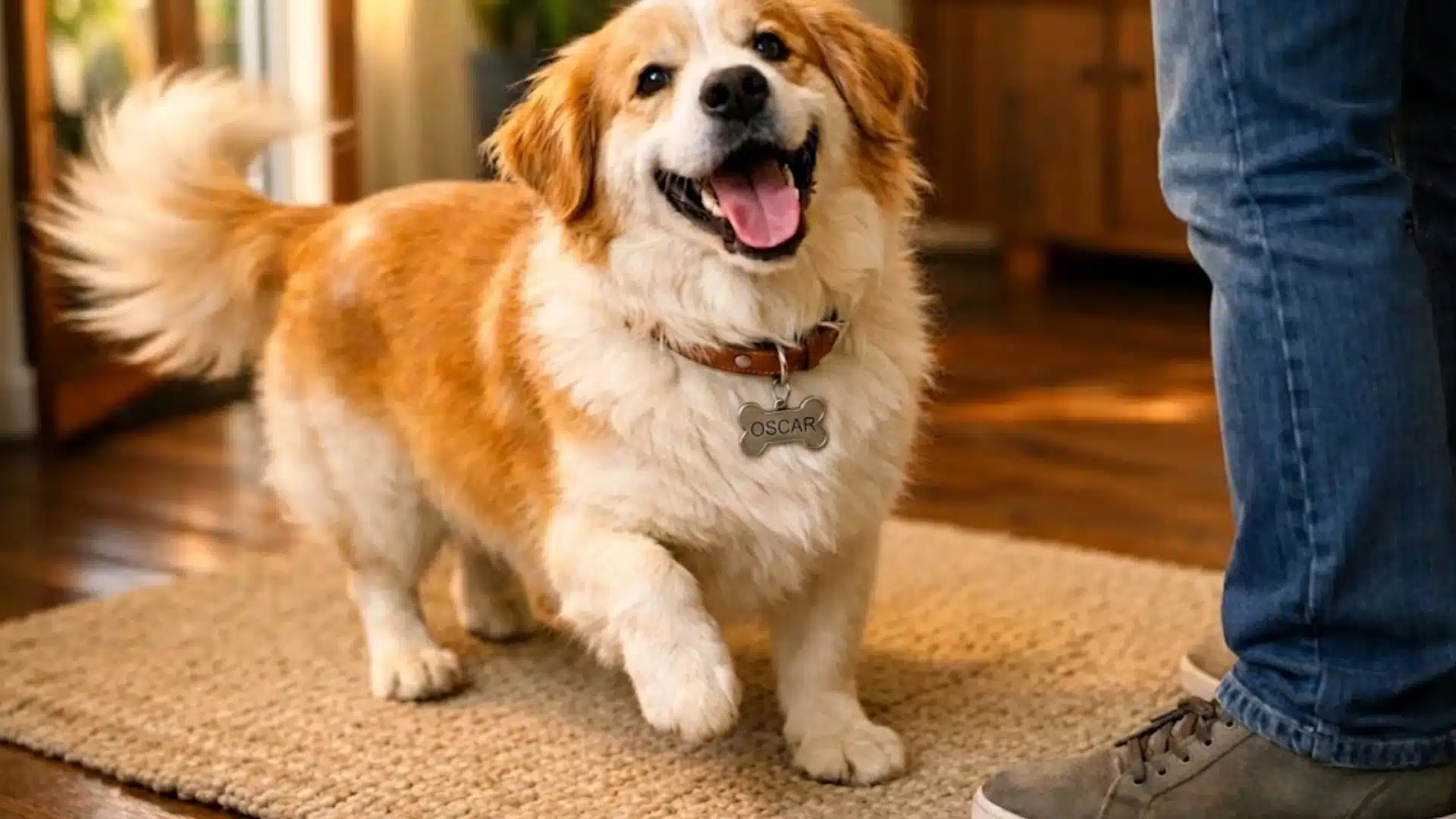
Tail wagging is a natural way dogs express what they feel in the moment. Instead of using words, they rely on body language, and the tail plays a key role in that communication.
Each wag is not random; it carries a signal based on how the tail moves. This behavior does not start at birth.
Puppies usually begin wagging their tails around three to four weeks of age, once they start interacting with their littermates and surroundings. It develops alongside their early social skills.
At its core, tail wagging is a simple form of communication. Dogs use it to respond to people, other animals, or changes in their environment.
The meaning depends on the movement, but the purpose remains the same: to express emotion and intent clearly without sound.
Keeping that early curiosity engaged with the right dog enrichment toys can support healthy social development. The meaning of each wag depends on its speed, position, and direction, working together.
Why Do Dogs Wag Their Tails?
Dogs wag their tails mainly as a response to triggers in their environment. Common triggers include seeing a familiar person, noticing another animal, picking up a scent, or reacting to sudden sounds.
The tail responds quickly, reflecting what the dog is experiencing in that exact moment. There is also an evolutionary angle.
Over time, dogs that showed more visible, friendly signals like tail wagging were easier for humans to trust.
This helped them build stronger bonds with people and increased their chances of being cared for and kept around. Tail wagging can be both intentional and automatic.
Sometimes dogs move their tails on purpose to communicate, while in other cases, it happens as an instinctive emotional reaction.
It works as a natural response system, showing feelings without the dog having to think about it consciously.
Dog Wagging the Tail: Different Meanings
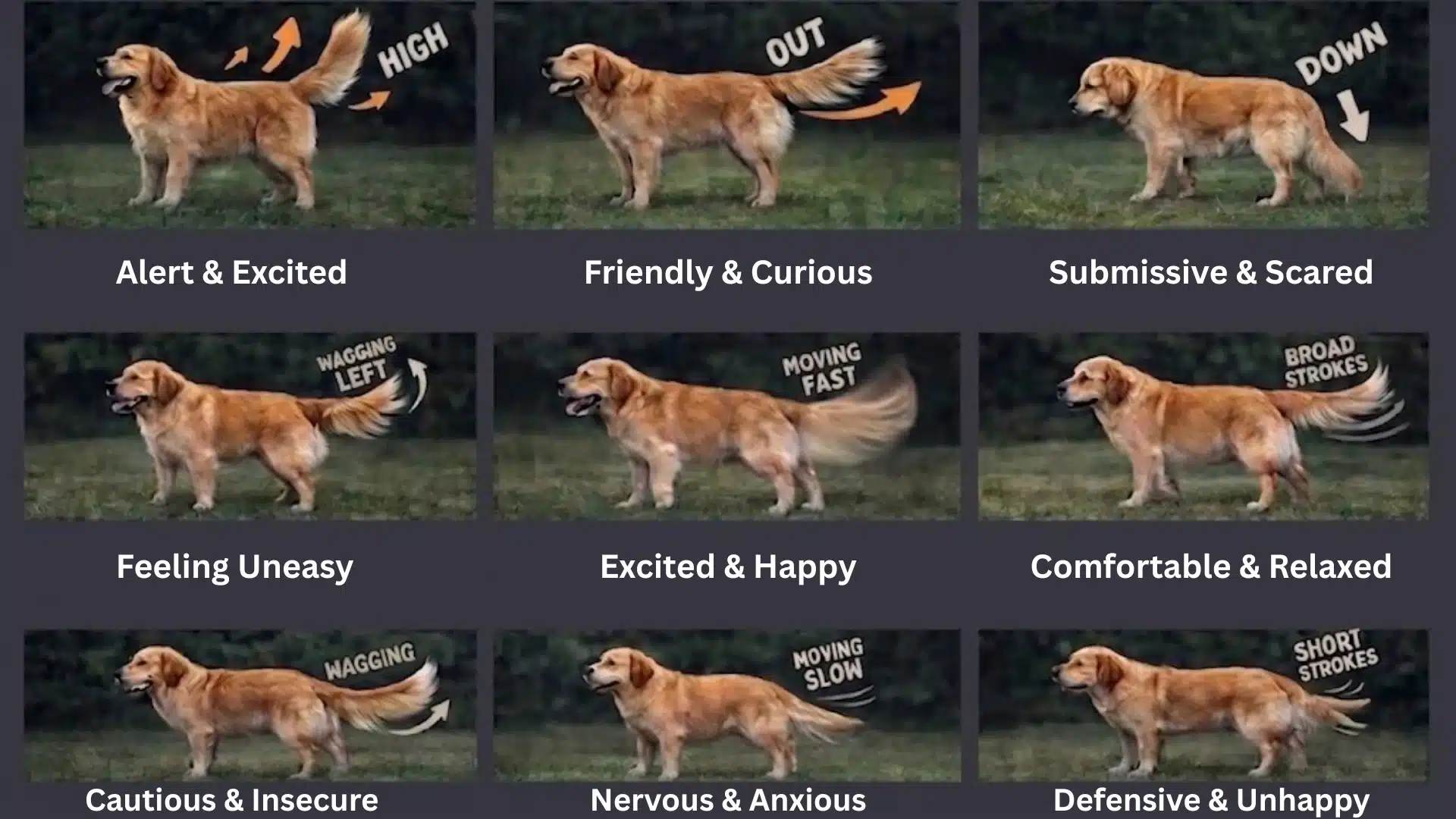
A dog’s tail can reveal a lot about its emotions. By noticing position, speed, and movement style, you can better understand what the dog is feeling in different situations.
- Alert & Excited: A high, fast-moving tail often shows strong excitement and alertness. The dog is fully engaged, possibly reacting to a person, sound, or activity, and is ready to interact or respond quickly.
- Friendly & Curious: A tail held out and wagging gently signals curiosity. The dog is interested in what is happening around it and is open to interaction, but still observing before making a full move.
- Submissive & Scared: A low or tucked tail with minimal wagging shows fear or submission. The dog is trying to appear non-threatening and may feel overwhelmed, so giving space helps it feel more secure.
- Feeling Uneasy: When the tail wags slightly toward the left with controlled movement, it often indicates discomfort. The dog may not feel safe or confident and is unsure about the situation or the people nearby.
- Excited & Happy: Fast and loose tail wagging, often involving the whole body, reflects happiness. The dog feels safe, energized, and ready to engage, usually seen during greetings or playful moments.
- Comfortable & Relaxed: Broad, smooth tail strokes show a calm and comfortable state. The dog feels at ease in its environment and is not under any stress or pressure at that moment.
- Cautious & Insecure: A mid-level tail with slow, careful wagging suggests hesitation. The dog is unsure and assessing its surroundings, often deciding whether to approach or keep a distance.
- Nervous & Anxious: Slow tail movement combined with a lower position signals anxiety. The dog may feel stressed or uncertain, especially in unfamiliar settings, and might need reassurance or space.
- Defensive & Unhappy: Short, stiff tail movements indicate tension or irritation. The dog may feel threatened or annoyed, and this is often a warning sign to avoid approaching or escalating the situation.
Tail Position and Direction: What They Reveal
Small details like position and direction can completely change the meaning of a word, and paying attention to them helps avoid wrong assumptions.
Tail position gives the first clue. A high tail usually shows confidence or alertness, while a neutral tail signals a calm and relaxed state. A low or tucked tail often points to fear, anxiety, or submission.
The ASPCA canine body language resource confirms that a fearful dog will tuck its tail between its rear legs, while a relaxed dog holds the tail in a neutral position extending from the spine.
It is also important not to rely solely on speed. A fast wag can still signal tension if the tail is held high and stiff, so both speed and position need to be read together.
Breed differences also play a role, as some dogs naturally carry their tails low, like Greyhounds, while others, like Beagles, hold them higher. Breeds such as Huskies have curled tails by default.
If you are still exploring which breed suits your lifestyle, this guide to adorable small dog breeds covers temperament and physical traits that affect how you read their body language.
Dogs with docked or short tails can be harder to read, which may cause other dogs to react cautiously.
Direction adds another layer; a right-side wag often signals positive feelings, while a left-side wag can signal stress or uncertainty.
Interestingly, dogs pick up on these subtle differences better than humans do and adjust their behavior accordingly.
Common Misunderstandings About Tail Wagging
One of the biggest mistakes people make is thinking every wag means a friendly dog. It sounds simple, but it often leads to risky situations.
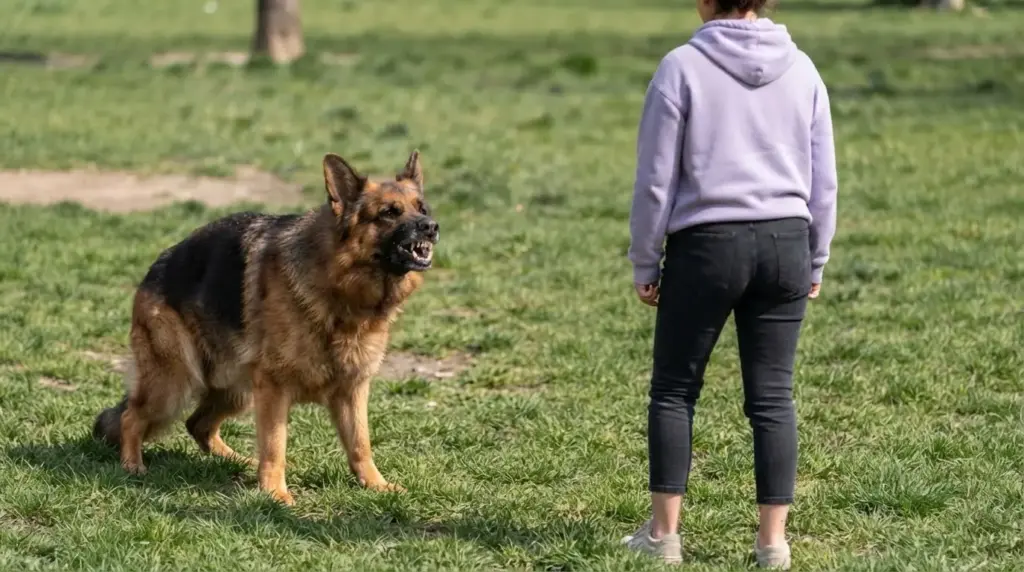
A wagging tail can still signal tension. If the movement is stiff, the tail is held high, and the body looks tight, that’s a warning sign.
Many people miss these details and assume it is safe to approach, and that is where things go wrong.
Understanding why dogs wag the tails becomes important here. The movement alone does not tell the full story. The way the tail moves, along with body posture and eye contact, gives the real signal.
Children are more likely to misread these signs. They often walk straight up to dogs without noticing the difference between a relaxed wag and a tense one.
Context also matters, as a dog wagging at home feels different from a dog reacting to a stranger near its space.
When to Be Concerned About Your Dog’s Tail Behavior
Not every tail movement is about emotions. Sometimes, changes in how a dog uses its tail can point to physical discomfort or health issues that should not be ignored.
- Tail Always Stiff with No Wagging: If the tail stays rigid even when the dog seems calm, it could signal pain or an underlying orthopedic issue that needs proper medical attention.
- Sudden Limp Tail (Limber Tail): A tail that suddenly hangs down after swimming or heavy activity may indicate limber tail, a painful condition that often needs rest and basic treatment.
- Change in Wagging Pattern: If your dog’s usual wagging style suddenly shifts, like tucking the tail more often, it may be linked to pain, illness, or a new stress factor.
- Excessive Tail Chasing: Constant or obsessive tail chasing is not just play. It can point to anxiety, skin irritation, or even neurological concerns that need to be checked.
- Tail Sensitivity or Flinching: If your dog reacts when the tail is touched or avoids movement, it may indicate injury, soreness, or discomfort in that area.
- Swelling or Visible Injury: Any swelling, cuts, or unusual bumps on the tail should not be ignored, as they can cause pain and affect normal movement.
Conclusion
A dog wagging the tail may look simple, but it carries more meaning than most people expect. A wag can show happiness, but it can also signal stress, curiosity, or even a warning.
The key is to look beyond just the movement. Speed, position, and direction all matter, and they work together with the dog’s overall body language.
Once these small details become clear, it gets much easier to understand what a dog is trying to express. It also helps avoid situations where a signal is misread.
Paying attention to context, breed differences, and posture makes a big difference in correctly interpreting reading behavior.
If you have ever been confused by a wag, you are not alone.
Have you noticed different types of tail wagging in your dog? Share your experience or observations in the comments below.
Frequently Asked Questions
Can Dogs Control their Tail Wagging, or is it Automatic?
Dogs can do both. Sometimes tail wagging is a natural emotional reaction, while in other cases, they use it intentionally to communicate with people or other animals.
Do puppies Wag their Tails the same Way as Adult Dogs?
Not exactly. Puppies start wagging around three to four weeks of age, and their control improves over time as they learn social behavior and communication.
Does Tail Wagging Change as a Dog Gets Older?
Yes. Older dogs may wag less frequently or with less intensity due to lower energy levels or health-related changes, but the meaning behind the wag still stays similar.