I talk to my dogs every single day.
After over a decade of training dogs in North Carolina, I still catch myself having full conversations with them. One morning, I told my Lab, Biscuit, that we had a “vet visit” later.
She immediately hid under the bed. That moment made me ask a bigger question. Can dogs understand English, or do they pick up on our energy?
The truth sits somewhere in the middle. Dogs do not process English the way you and I do. Still, they recognize specific sounds, read your tone, and watch your body closely.
In this blog, I break down what research actually confirms about canine language processing. You will also learn practical ways to help your dog respond more effectively to words.
How do Dogs Process Human Words?
Dogs do not understand language the way humans do. There is no grammar or sentence structure in play. What they actually do is connect sounds to outcomes.
Your dog hears a word like “sit” again and again. Each time they respond correctly, they get a reward. Over time, that sound becomes linked to the action. Eventually, just hearing “sit” triggers the behavior.
The word itself is not the key factor. Repetition and reward are what build the connection.
This is also why dogs may react the same to “sib” and “sit.” Their brain focuses on the general sound pattern, not the exact wording.
This is similar to how human babies under 14 months process speech.
A common mistake is using long sentences like, “Biscuit, I need you to sit down right now.” Dogs usually pick one or two familiar sounds and ignore the rest.
What Science Says About Canine Language Skills?

Multiple brain studies now confirm that dogs do far more with words than we once assumed. These findings change how we approach verbal cues, even in routines like crate training at night.
1. The Brain Study that Changed Everything
A study published in NeuroImage used fMRI scans on 18 dogs.
Researchers read The Little Prince in both Hungarian and Spanish. They also played scrambled, computer-generated speech.
Dogs’ brains activated differently for real speech compared to scrambled sounds.
They could also tell familiar and unfamiliar languages apart. This made dogs the first non-human animals to show this ability in a controlled lab setting.
2. How Many Words Can a Dog Learn?
Most dogs pick up around 80 to 100 words through daily life, according to my review of the breakdown of canine vocabulary.
A 2022 study involving 165 dogs found that the average dog understands around 89 words. Psychologist Stanley Coren’s research puts the upper range closer to 165 words for highly trained dogs.
Some dogs go much further. A border collie named Chaser learned over 1,000 words. In the Genius Dog Challenge, 6 dogs learned 10 to 12 new toy names in just 1 week.
3. Dogs Form Mental Images of Words
A 2024 study in Current Biology revealed something remarkable about referential understanding.
Researchers used an EEG to measure brain activity in 18 dogs. When a dog heard a toy’s name but saw a different object, its brain showed a surprise reaction.
This showed that dogs form mental images of objects from words alone. This response closely mirrors what scientists see in human EEG readings when people encounter unexpected words.
It suggests that canine word recognition involves a level of mental representation, not just a conditioned reflex.
Why Tone and Body Language Matter More Than Words?
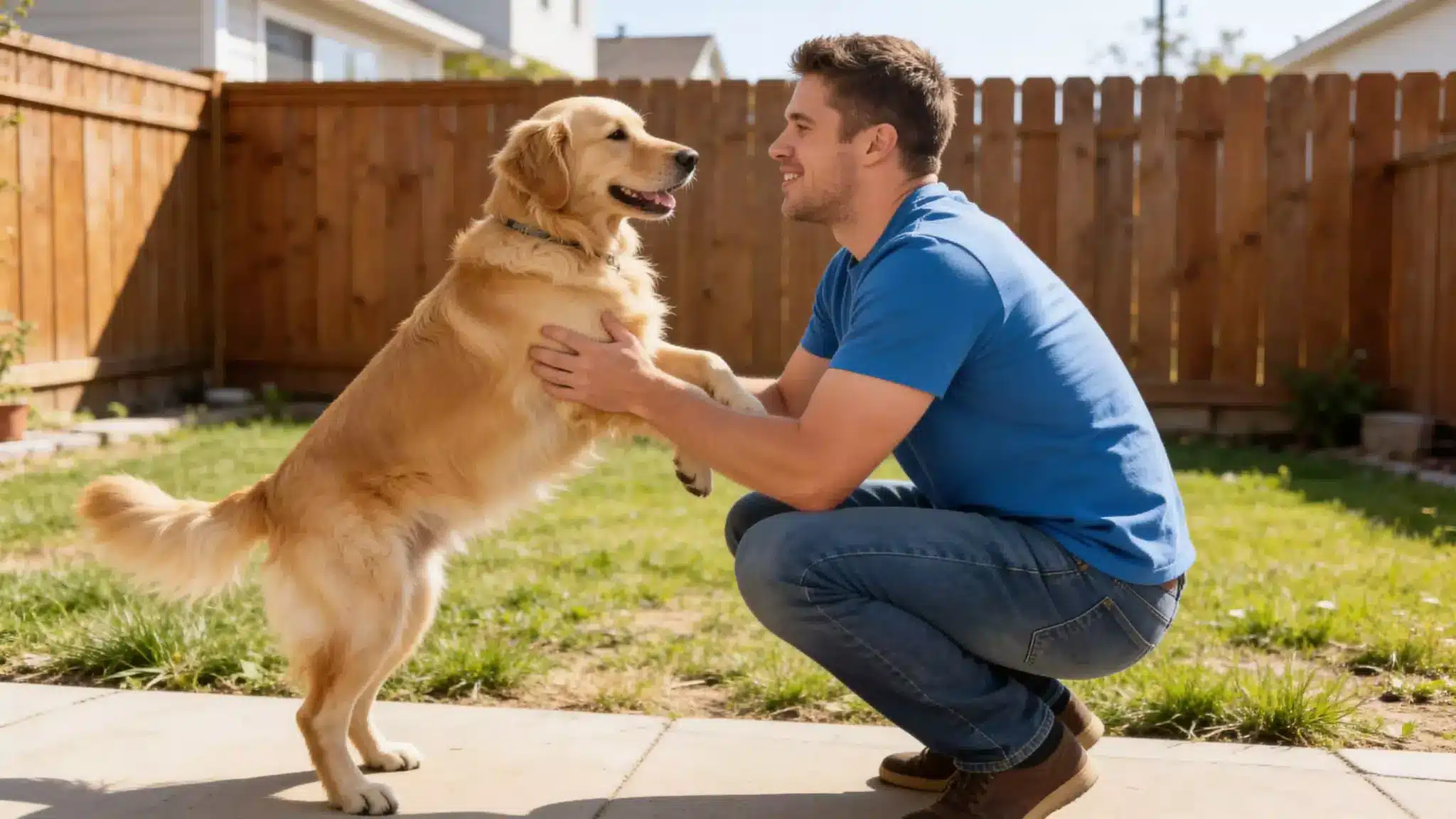
Dogs care far more about how you say something than the actual word itself. Tone and body language do most of the work.
When you say “good boy” in a flat voice, it does not mean much to your dog. They are paying attention to your pitch, your facial expression, and even how you stand.
These signals tell them whether something is positive, negative, or unclear. This sensitivity comes from thousands of years of living alongside humans. Over time, dogs have become very good at reading subtle human cues.
In real training situations, this often shows up. Many owners weaken their commands without realizing it. Saying “sit?” or “stay?” with an upward tone sounds unsure.
To a dog, that feels like a question, not a clear instruction. A calm, steady tone with a slight downward finish makes your message much clearer and gets faster, more consistent responses.
Understanding why dogs bark at certain tones can also help you adjust your communication style.
Simple Ways to Help Your Dog Learn Words
You do not need special tools to teach your dog new words. Consistent repetition paired with positive reinforcement works best. I use these methods with every dog I train.
- Pick short, distinct words: Commands like “sit,” “stay,” and “come” work well because they sound clearly different, making it easier for your dog to recognize and respond quickly without confusion.
- Pair every word with an action and a reward: Say “sit,” wait for your dog to perform the behavior, then immediately reward them so they clearly connect the sound with the action.
- Avoid long sentences: When you speak in full sentences, your dog usually filters out most of it and focuses on one or two familiar sound cues.
- Use hand signals alongside words: Adding clear hand gestures to verbal commands helps your dog understand faster, since they process visual signals very effectively alongside sound cues.
- Stay consistent: Make sure everyone in your home uses the same words and cues for each command so your dog doesn’t get mixed signals or confused.
Verbal cues become stronger when you build daily routines. This approach also works well when you leash-train a puppy for the first time. Repetition builds a reliable mental link between sound and action.
What Dog Owners and Trainers Say Online?

Real-world stories from dog owners add a personal layer to this topic. One Reddit user shared that their dog learned the word “cheese” without any formal training.
Every time someone said it in conversation, the dog sprinted to the kitchen. The user noted they now have to spell C-H-E-E-S-E around the house.
Another user mentioned that their Australian Shepherd picked up the names of 5 different toys.
The dog fetched the right one on command, even when all 5 sat in the same room. The user credited daily play sessions for building that recall.
On X, a professional trainer posted that most dogs respond to routine and context more than vocabulary.
Still, she confirmed that dogs trained with positive reinforcement show far better word recall than those trained inconsistently.
What Comes Next in Dog Language Research?
Dog language research is moving quickly, and things are getting interesting. One major area right now is button communication.
Researchers at UC San Diego are studying dogs that press buttons with recorded words like “play,” “outside,” or “food.”
Some early results show that dogs can combine two buttons to make simple requests. A well-known example is a Sheepadoodle named Bunny, who once pressed “squeaker” and “car” while reacting to an ambulance.
That said, scientists are careful not to jump to conclusions. There are concerns that these buttons may not represent true language.
The recorded words can sound slightly distorted, so dogs might just be reacting to familiar sound patterns rather than the actual meaning.
Another area picking up speed is wearable EEG devices for dogs. These tools could soon allow owners to see, in real time, how their dog’s brain responds to specific sounds and commands at home.
Conclusion
So, can dogs understand English? Not the way you read a book or follow a conversation.
But they absolutely pick up on specific sounds, link them to actions, and respond with real purpose. Science now confirms that their brains process speech in ways we did not expect even a decade ago.
From my 14 years of working with dogs across North Carolina, I can say this with confidence. The more you talk to your dog with clear, consistent words, the more they respond.
Pair those words with the right tone and body language, and the connection only grows stronger. Your dog is listening, probably more than you think.
I would love to hear your experience. Drop a comment below and tell me a word your dog clearly knows. Let us see how big our collective canine vocabulary really is!
Frequently Asked Questions
Can Dogs Understand Different Human Languages?
Yes, dogs can adapt to different languages if trained consistently. They respond to sound patterns, not the language itself, so switching languages works as long as the cues remain clear.
Do Dogs Recognize Their Own Names or Just the Tone?
Dogs can learn their names as a distinct sound pattern. Over time, they associate it with attention, interaction, or commands, making it meaningful beyond just tone.
Can Older Dogs Still Learn New Words?
Yes, age is not a barrier. Older dogs may take slightly longer, but with repetition and rewards, they can still learn and respond to new verbal cues effectively.
Why Does My Dog Respond Better to One Person than Others?
Dogs respond best to consistency. If one person uses a clearer tone, timing, and repetition, the dog will naturally respond better to them.
Do Certain Breeds Learn Words Faster Than Others?
Yes, breeds bred for working closely with humans, like Border Collies and Poodles, tend to pick up word associations faster due to higher focus and trainability.