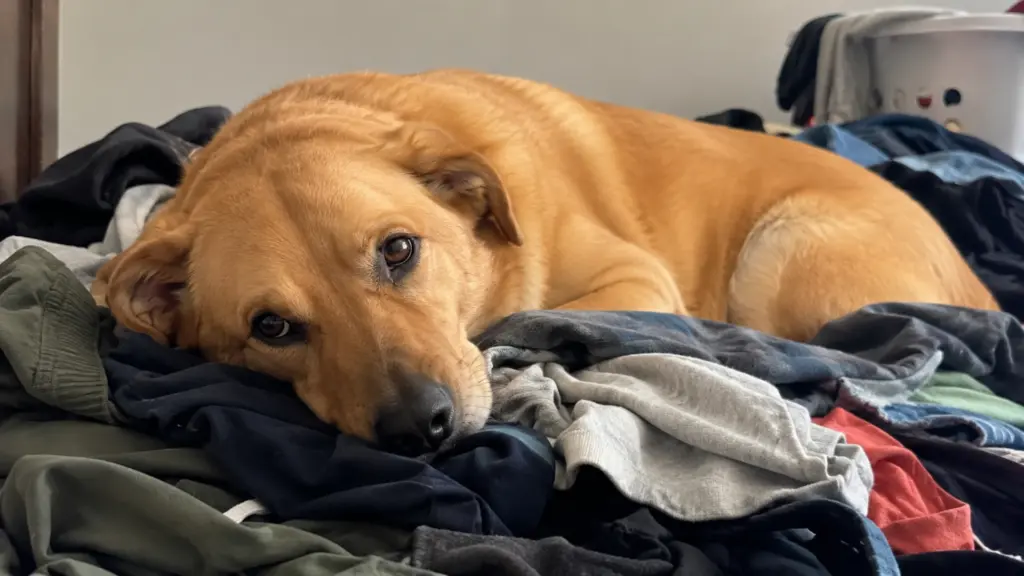
Ever notice your dog instantly claims that pile of laundry you just set down? Maybe it’s your favorite T-shirt or the hoodie you wore all day.
They curl up on it like it’s their personal treasure and give you those contented puppy eyes. It’s cute, but it leaves you wondering why they are so obsessed with your clothes.
Your scent, woven into the fabric, is more than just familiar. It’s a comfort, a memory, and maybe even a secret source of happiness for your pup.
But is this all there is to it? Maybe there’s a hidden message in this sweet act. There’s more to this quirky canine ritual than meets the eye.
Let’s learn about unexpected insights- some heartwarming, some downright surprising- about your dog’s hidden world.
Why Does Your Dog Find Comfort in Your Clothes?
Most owners see their dog curled up on clothes and call it a cute habit, but the behavior runs deeper than just laundry-stealing. Your scent is the real reason.
Dogs read the world through smell, not sight, and with up to 300 million olfactory receptors compared with about 6 million in humans, your worn shirt gives them details they cannot get from a clean room or empty bed.
It carries body chemistry, daily traces, and emotional cues like stress or calm. To your dog, that fabric becomes a scent archive, almost a portable version of you.
Curling up on it helps them feel close, safe, and settled when you are away.
What looks adorable is really comfort, bonding, and instinct working together in one small, familiar pile of clothes. That is why the habit often feels sweet, personal, and deeply loyal.
This instinct is closely linked to other nesting and comfort behaviors in dogs, such as digging and circling before settling down.
Reasons Why Dogs Lie on Your Clothes
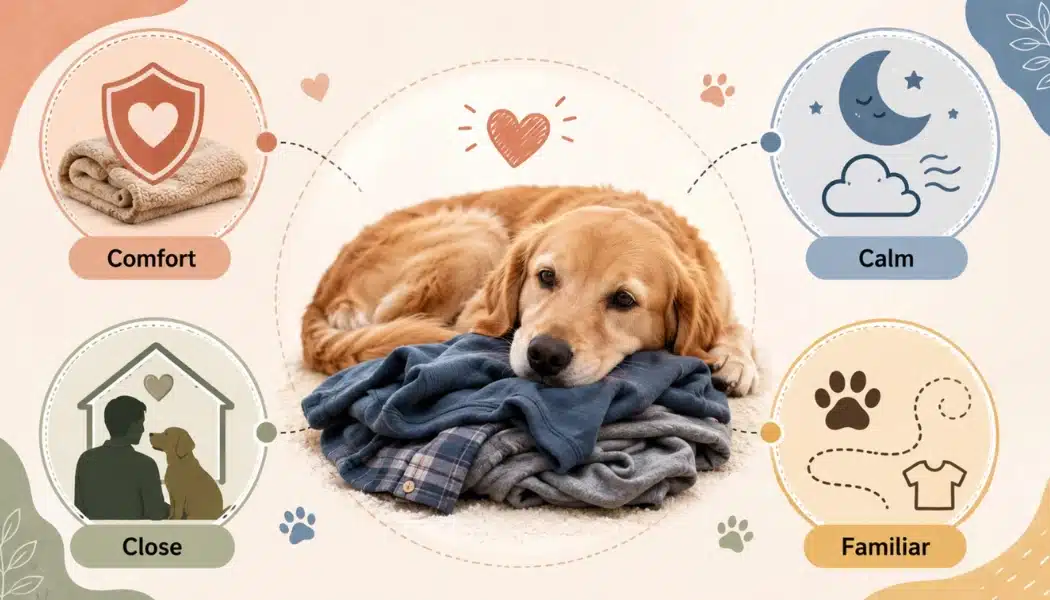
Scent is the trigger, but the reason your dog lies on your clothes usually goes deeper.
1. Security and Comfort
Your scent can make your dog feel safe, close, and settled, especially when you are not nearby. Even a pile of laundry carries familiar smells that remind them of you.
To your dog, that fabric is not just clothing. It feels like a comfort object, giving them reassurance, warmth, and a sense of security when they need calm.
2. Self-Soothing
Dogs may turn to your clothes when they are alone, bored, or mildly stressed. Your scent gives them something familiar and comforting to focus on, which can help them settle down.
A worn shirt, hoodie, or blanket may feel like a safe reminder of you, making quiet moments feel less lonely and more secure.
3. Closeness & Familiarity
When you leave, your clothes hold the strongest version of your scent.
For dogs with strong attachment bonds, resting on your clothing can make separation feel safer and easier to handle.
Your scent represents routine, affection, and the person your dog trusts most. In most cases, this is completely normal and shows a healthy attachment.
If your dog seems panicked, destructive, or unable to settle at all when you’re gone, those signs deserve more attention than the clothes-lying habit itself.
Why Do Dogs Prefer Lying on Dirty Clothes & Not on Clean Ones?
Dogs usually prefer dirty or worn clothes because they contain the strongest concentration of their owner’s scent, which provides comfort, reassurance, and a sense of connection.
Fresh laundry can also attract dogs due to its warmth and soft texture, making it feel like a comfortable resting spot.
Even clean clothes may appeal because of their familiar fabric and lingering scent. Items such as T-shirts and sweaters are often favorites because they come into direct contact with the owner’s skin and carry a stronger scent.
Warm laundry can also trigger a dog’s natural denning instinct, encouraging them to settle in a safe, cozy space.
Do Different Breeds Show This Behavior Differently?
While every dog is an individual, breed tendencies can influence how often or intensely they seek out your clothes. Scent sensitivity and attachment style play big roles.
| Breed Group | Examples | Tendency & Intensity | Notes |
|---|---|---|---|
| Scent Hounds | Beagle, Bloodhound, Basset Hound | High | Extremely scent-driven; the owner’s odor is highly activating |
| Toy/Companion Breeds | Chihuahua, Shih Tzu, Cavalier | Very High | Bred for closeness; prone to attachment behaviors |
| Herding Breeds | Border Collie, Australian Shepherd | Moderate to High | Strong bonding but high intelligence/energy |
| Retrievers/Sporting | Labrador, Golden Retriever | High | People-oriented and comfort-loving |
| Working/Guardian Breeds | German Shepherd, Rottweiler | Moderate | Protective; use scent for security |
| Terriers & Independent | Jack Russell, Akita, Chow Chow | Low to Moderate | More aloof or energetic |
| Rescue/Anxious Dogs | Any breed | Often High | Past instability increases scent-seeking |
Rescue dogs, in particular, may show stronger scent-seeking as they build trust and attachment in their new home.
Why Does My Dog Lie on My Clothes When I Leave?
Your clothes carry the strongest version of your scent, especially shirts, hoodies, pajamas, socks, and anything you wore recently.
When you leave, those clothes may feel like the closest thing to having you nearby. That is why your dog may choose your laundry pile instead of their bed.
An anxious dog may grab your clothes because your scent is the only thing helping them cope while you are gone.
Signs of Separation Anxiety to Watch for:
Note: This section is for informational purposes only. If you suspect your dog has separation anxiety, consult a licensed veterinarian or certified animal behaviorist before making changes to your dog’s routine.
- Barking or howling: Begins shortly after you leave and continues for long periods instead of settling down once the house becomes quiet.
- Destructive chewing: Focuses on doors, windows, crates, furniture, or personal belongings as your dog tries to cope with being alone.
- House soiling: Happens despite reliable house training and often appears only when your dog is left by themselves.
- Pacing or restlessness: Continues for much of your absence rather than turning into a relaxed nap or quiet downtime.
- Clinginess: Becomes noticeably stronger before you leave, with your dog following you constantly or reacting to departure cues.
- Drooling or shaking: Shows physical signs of stress that go beyond normal disappointment when you walk out the door.
If these signs are present, the clothes habit is no longer the issue worth addressing. The underlying anxiety is.
Managing separation anxiety with a crate is one structured approach that can help, and your vet or a certified behaviorist can guide you through options suited to your dog specifically.
Does This Behavior Change With Age?
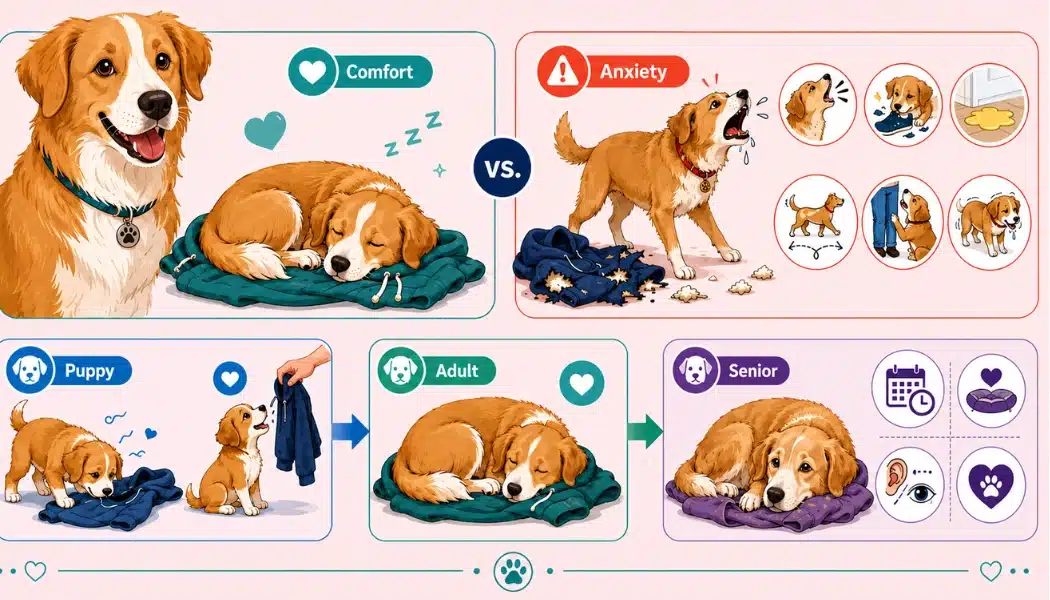
Yes, this behavior can change as your dog gets older. Your clothes may represent comfort, safety, routine, or connection, depending on your stage of life.
Most of the time, it is harmless, but sudden changes should still be noticed.
- Puppies: They often seek out your scent as they adjust to life away from their litter. Your clothes help them feel protected and build trust with you.
- Adult dogs: The habit usually becomes a familiar comfort routine, especially if your clothes feel warm, soft, and safe.
- Senior dogs: The behavior may increase as hearing, vision, confidence, or memory changes. Your scent can become a stronger anchor when their world feels less predictable and they need extra reassurance.
How to Manage or Redirect the Behavior?
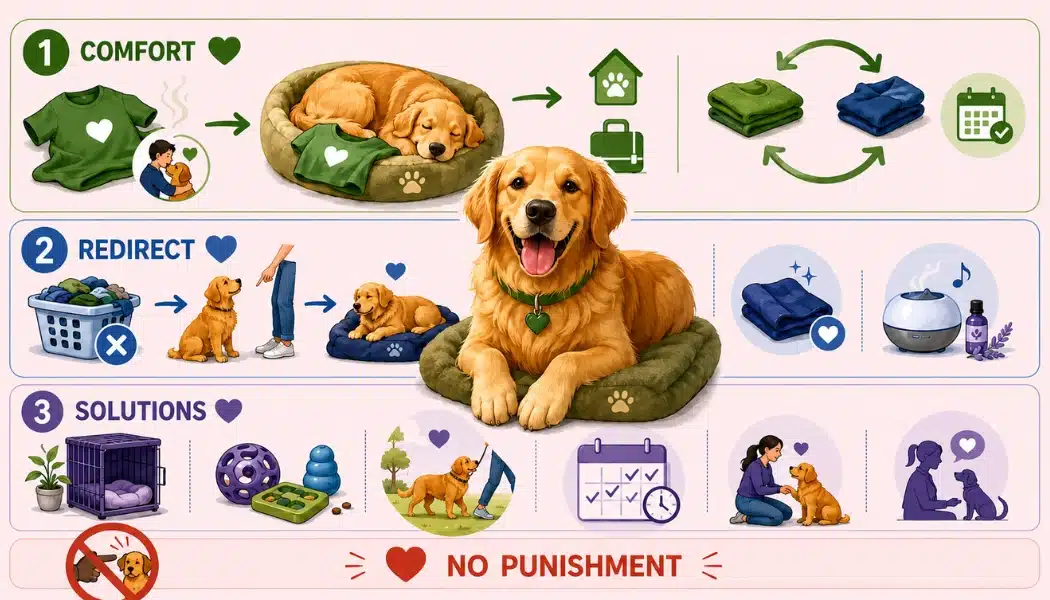
Once you understand why your dog seeks out your clothes, the next step is deciding whether the habit bothers you.
In most cases, it is not bad behavior; it is comfort showing up in the wrong place. The goal is not punishment but to give your dog the same comfort in a place that works for you.
Ways to manage a dog who lies on your clothing:
- Create a comfort item: Use an old t-shirt, hoodie, or blanket that smells like you. Place it in their bed, crate, or favorite spot.
- Use it during stress: Offer it during work hours, travel, storms, or routine changes. Your scent can help them settle.
- Rotate items: Keep two or three comfort items so the scent stays fresh. Wash or replace them when they get too dirty.
- Build a safe space: Add the scented item to your dog’s bed, crate, or quiet corner. Pair it with chews, toys, or meals.
- Avoid punishment: Do not scold or scare your dog away from laundry. Redirect them to their comfort spot instead.
- Address boredom directly. Dogs that are under-stimulated are more likely to seek comfort from clothing during long stretches alone. Enrichment activities to reduce boredom can lower the baseline stress that drives the habit in the first place.
What Reddit Dog Owners Say About This Habit?
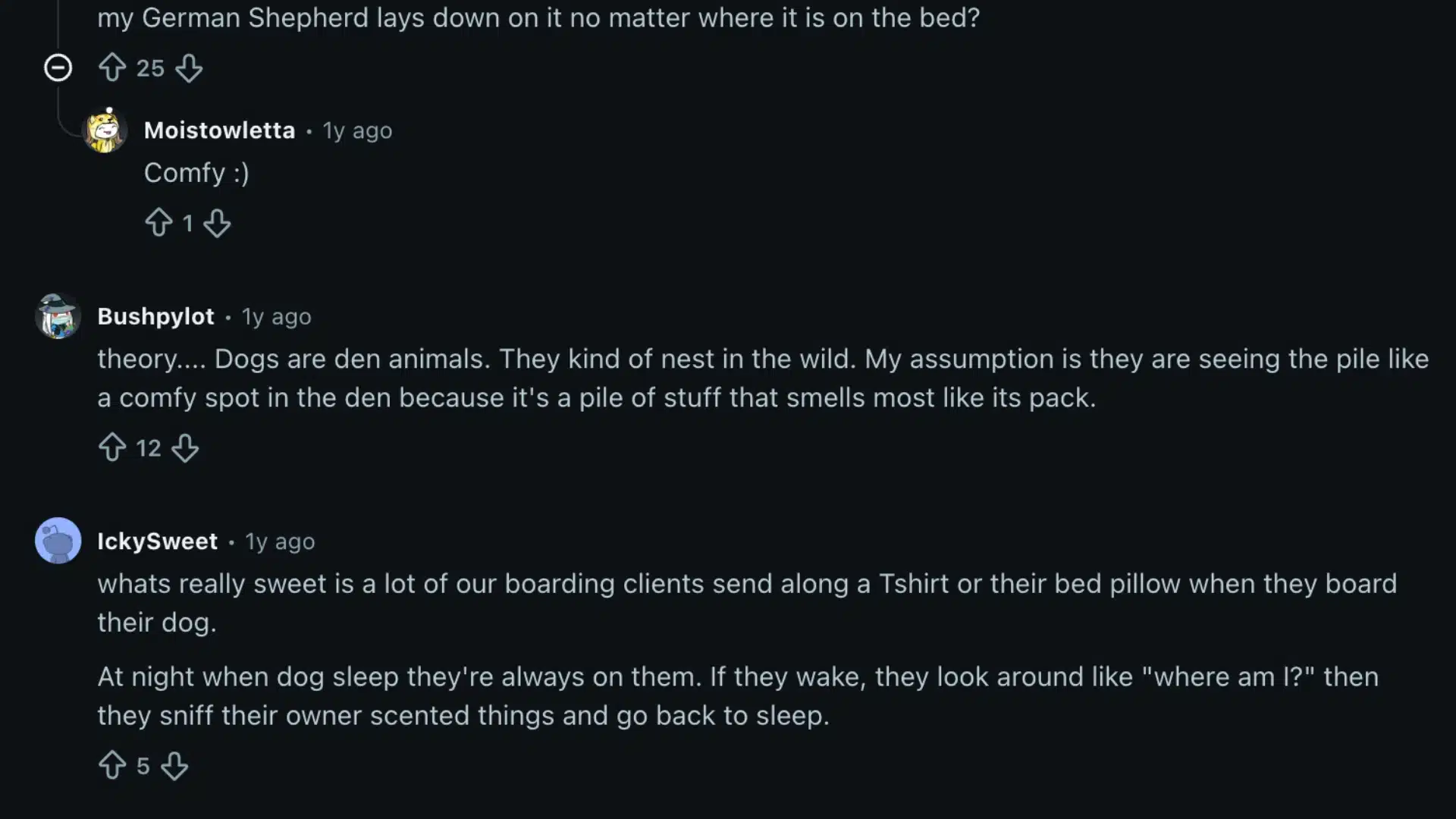
Reddit comments mostly agree that dogs lie on clothes because they love their owner’s scent and want to feel close to it.
Several people said dogs may rub on clothing to put that smell into their fur, the same way they roll in strong outdoor smells.
Others framed it as a denning or nesting habit, where a laundry pile feels soft, safe, and full of familiar pack scent.
A few owners joked that even clean clothes left out for seconds become instant dog beds.
The most touching comments came from people who send shirts or pillows when boarding their dogs, because the scent helps their dogs settle at night.
Overall, the community sees it as a source of comfort, affection, and scent-based security.
When Should You Be Concerned?
Clothes-lying is normal when your dog curls up, relaxes, naps, and can leave the clothes without panic. It usually means your scent feels safe.
It becomes concerning when the habit turns intense, destructive, or strongly linked to being left alone. Watch the timing, body language, and whether your dog can settle elsewhere.
Signs that need prompt attention:
- Destructive chewing: If your dog shreds clothes or swallows fabric, treat it as urgent because fabric can cause a blockage
- Physical stress: Shaking, drooling, panting, whining, or vomiting when alone
- Sudden change: The habit increases after months of calm
- Anxiety signs: Pacing, house soiling, appetite loss, or clinginess before departures
A vet can rule out physical causes and assess ingestion risks. A certified veterinary behaviorist can work through the anxiety piece with you if the problem runs deeper.
Conclusion
When your dog lies on your clothes, it usually means your scent helps them feel safe while you are away. I would not rush to stop it unless you see chewing, panic, barking, or signs that your dog cannot settle alone.
Instead, give them one soft shirt or blanket that smells like you, and keep clean laundry somewhere they cannot reach.
This gives your dog comfort without making every fresh pile of clothes their new sleeping spot each day inside your room.
If the habit feels stressed, speak with your vet, since separation anxiety needs a calmer plan than simple training at home.
What item does your dog choose when you leave, and what helps them feel calmer? Tell us, share with us in the comments below
Frequently Asked Questions
Can My Dog Develop Allergies from Lying on My Worn Clothes?
Rarely, but it can happen if your dog has sensitive skin. Sweat, detergent, pollen, or outdoor allergens on clothes may cause itching, redness, or hair loss. Wash comfort items more often and speak with your vet if irritation appears.
Do Dogs Prefer Bedding or Pillows over Clothes?
Some dogs do, because bedding and pillows retain your scent longer than a shirt worn once. If your dog keeps choosing your pillow or blanket, they may be seeking stronger comfort, closeness, or reassurance.
Can Changes in Detergent or Perfume Affect This Habit?
Yes. Dogs follow your natural scent more than the smell of products.
Strong detergent, fabric softener, perfume, or cologne can cover that scent and make clothes feel less familiar. Some dogs may lose interest, while others may search for older items that still smell like you.