If your bathroom trips come with a furry companion who insists on sitting on your lap, scratching at the door, or loudly announcing their arrival, you’re not alone.
This surprisingly common behavior has less to do with the bathroom itself and more to do with how cats view comfort, routine, and their favorite humans.
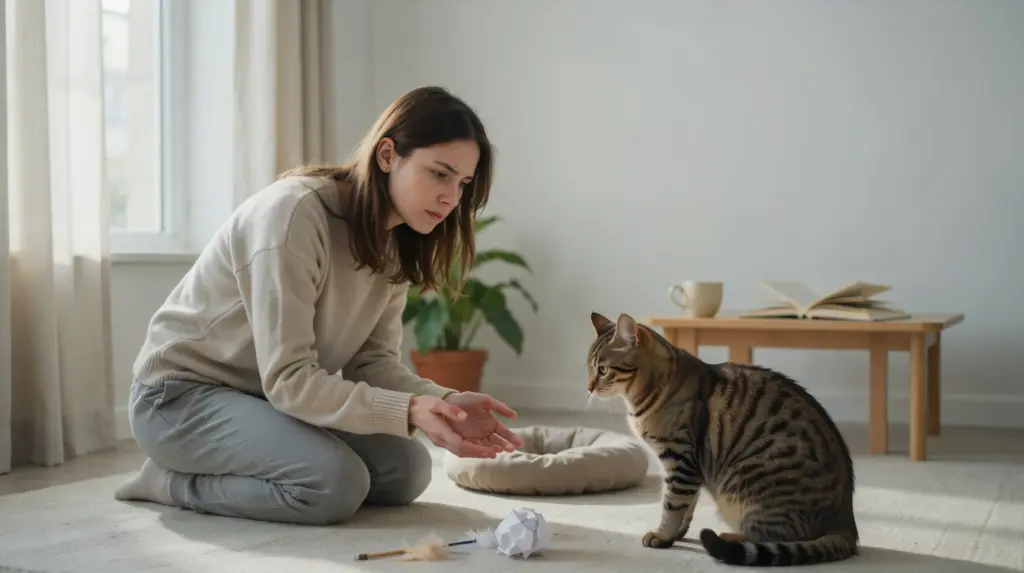
I used to think my cat was simply being weird. The second I closed the bathroom door, paws appeared underneath it, followed by impatient meows and a determined effort to get inside.
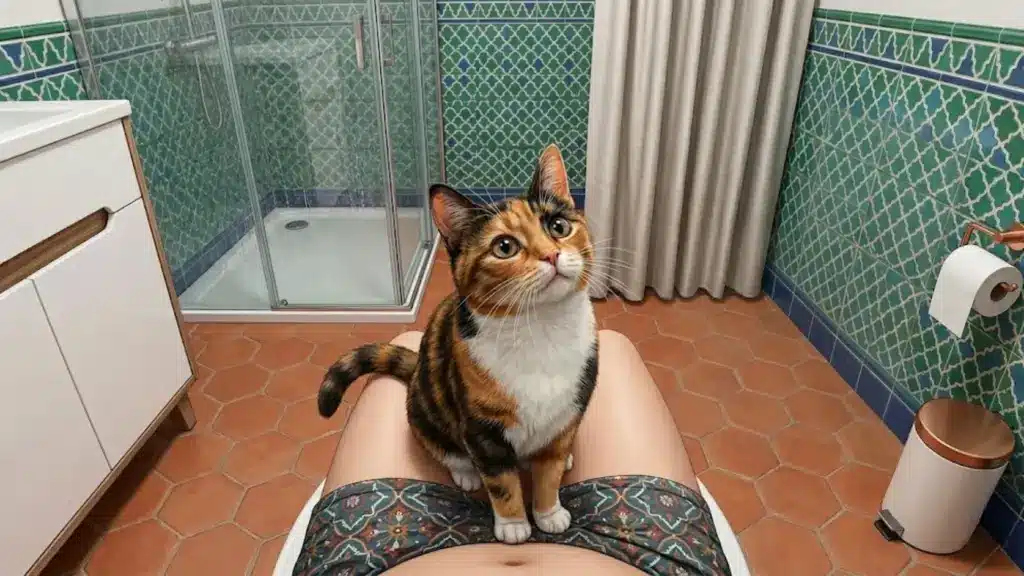
Once I sat down, my lap instantly became the most desirable spot in the house. As odd as this habit seems, there’s actually a fascinating reason behind it.
Is It Normal for Cats to Follow You to the Bathroom and Sit on Your Lap?
Yes, it is normal for many cats to follow you to the bathroom and even sit on your lap.
Cats are curious, routine-loving animals, and a closed bathroom door can make them want access even more.
When you sit still, your lap becomes warm, steady, and easy to claim. Your cat may also see this as a quiet moment to get attention, comfort, or closeness without other distractions.
For some cats, it becomes a daily habit because they learned that bathroom time means petting, talking, or eye contact.
This behavior is usually harmless if your cat seems calm and healthy.
However, sudden clinginess, loud crying, hiding, or changes in eating or litter box habits may signal stress or a health issue that needs attention from a vet or behavior expert.
Common Reasons Cats Sit on Your Lap in the Bathroom
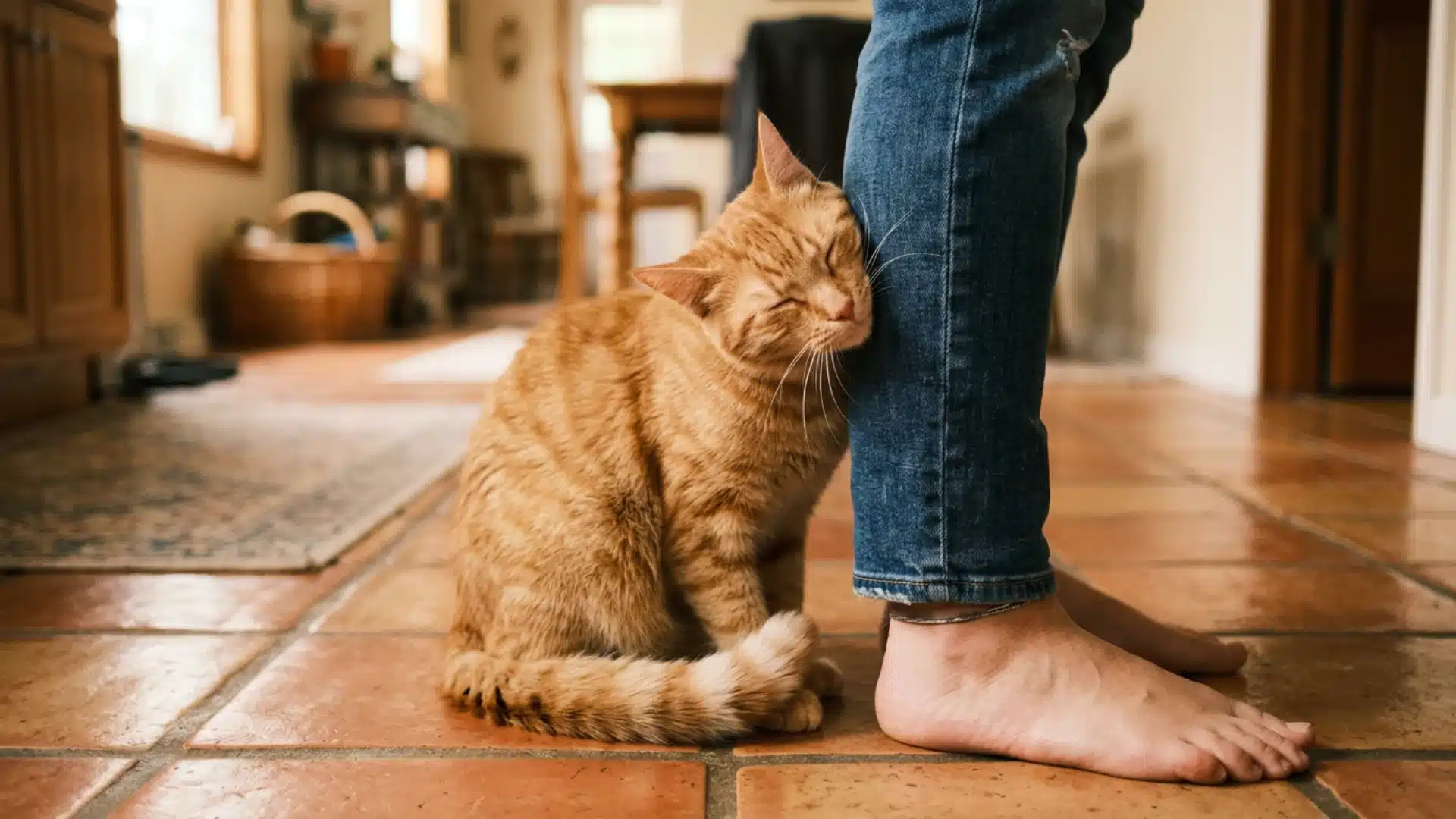
While every cat has its own personality, several instincts and learned behaviors help explain why your cat chooses your lap during bathroom breaks.
1. Seeking Warmth and Comfort
Cats naturally gravitate toward warm, comfortable resting spots. Your lap provides body heat, stability, and familiarity, making it an attractive place to settle, especially during cooler months.
Bathrooms can also feel calm and quiet compared to busier areas of the home, giving your cat an additional sense of comfort while they relax.
Since you’re sitting still for several minutes, your lap becomes a predictable and secure place where your cat can rest without interruptions or sudden movements.
2. Strengthening Social Bonds
Research shows that cats form meaningful attachments to their owners and often seek physical closeness with people they trust.
Sitting on your lap during a quiet moment can simply be a way for your cat to enjoy your company and reinforce that connection.
Cats that display signs of anxiety often seek reassurance through proximity, while confident, secure cats may sit nearby simply because they enjoy being close to their favorite person.
For many cats, sharing these small daily moments is part of maintaining a strong bond with their human companion.
3. Territorial Monitoring and Protective Instincts
Although domestic cats live comfortable lives, they still retain instincts from their wild ancestors.
Some behaviorists believe cats like to keep track of important members of their social group, which may explain why they choose to stay nearby while you’re occupied.
By remaining close, your cat can monitor what’s happening around them and stay aware of your location. While they’re not necessarily “guarding” you, they may feel more comfortable knowing where you are.
4. Scent Bonding and Familiarity
Cats rely heavily on scent to identify trusted companions. Sitting on your lap, rubbing against you, or resting nearby helps reinforce familiar scent associations that contribute to feelings of security and belonging.
This scent-sharing behavior is a normal part of feline communication.
By spending time in close contact with you, your cat strengthens the familiar smells that help them recognize members of their social group.
5. Curiosity About Closed Spaces
Cats are creatures of habit and quickly learn household patterns.
Once your cat associates bathroom visits with attention, lap time, or access to an interesting room, the behavior can become part of their daily routine. Closed doors often make the situation even more intriguing.
Many cats are naturally curious about spaces they can’t freely access.
If the bathroom door is usually closed or only opened at certain times, your cat may view each visit as an opportunity to investigate what they’re missing.
Why Does Your Cat Hate When You Close the Bathroom Door?
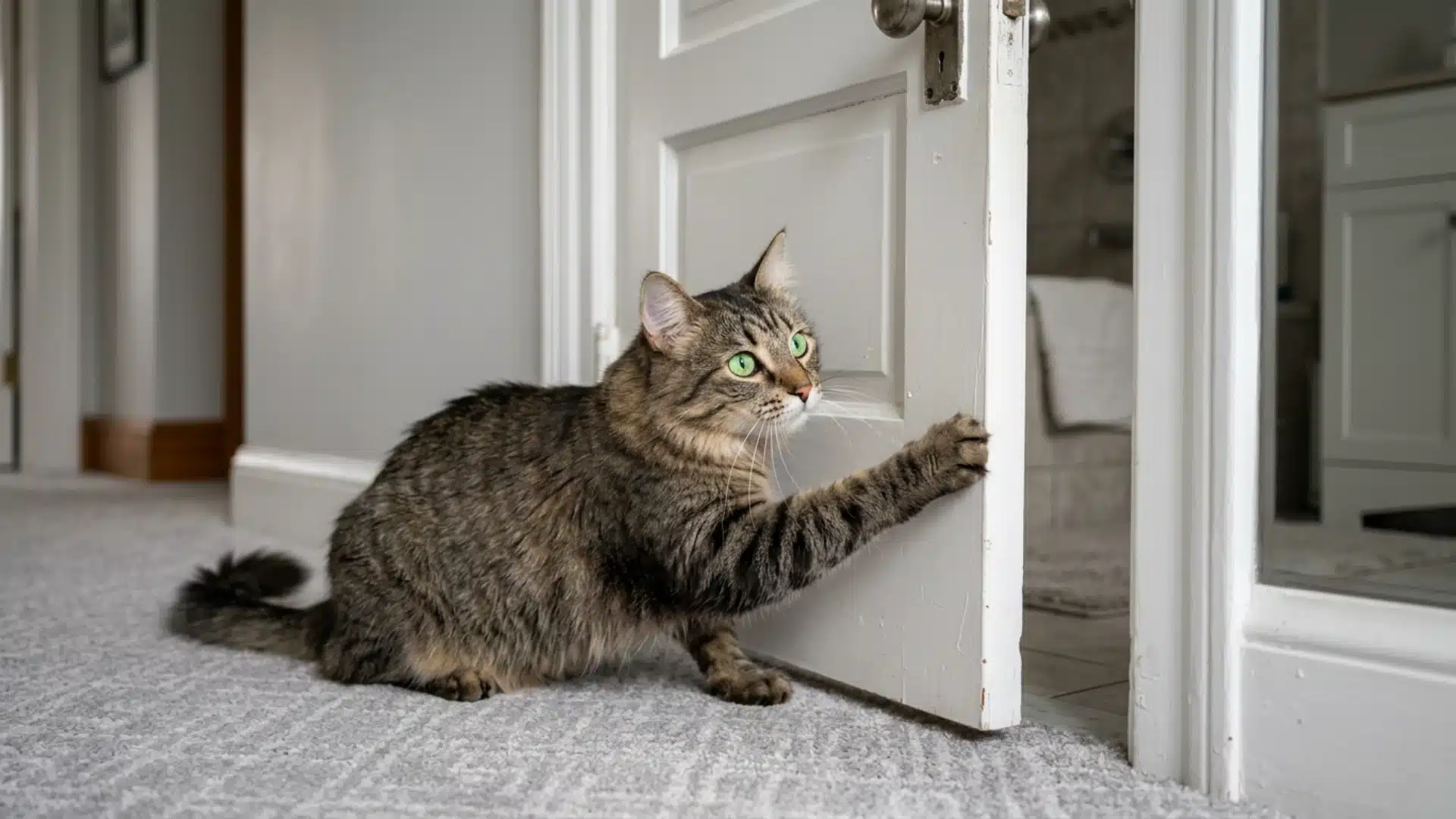
Ask any cat owner, and they’ll tell you: the moment a bathroom door closes, their cat suddenly wants in. Cats like access to their territory, so a closed door can feel frustrating, especially when you and your scent are on the other side.
This can lead to scratching, meowing, or determined attempts to get inside.
Some cats become frustrated when a bathroom door closes because:
- It blocks access to part of their territory.
- Your scent remains on the other side.
- The barrier creates a sense of mystery and exclusion.
For naturally curious cats, a closed door can instantly become more interesting than an open one. Allowing your cat into the bathroom may reduce scratching and persistent meowing.
Once the space becomes familiar and accessible, much of the curiosity and frustration fades.
Cats thrive on predictability and positive experiences. For cats that build confidence through positive reinforcement with cats, familiarity and freedom of movement can help them feel more secure.
When Should You Be Concerned About Bathroom Following?
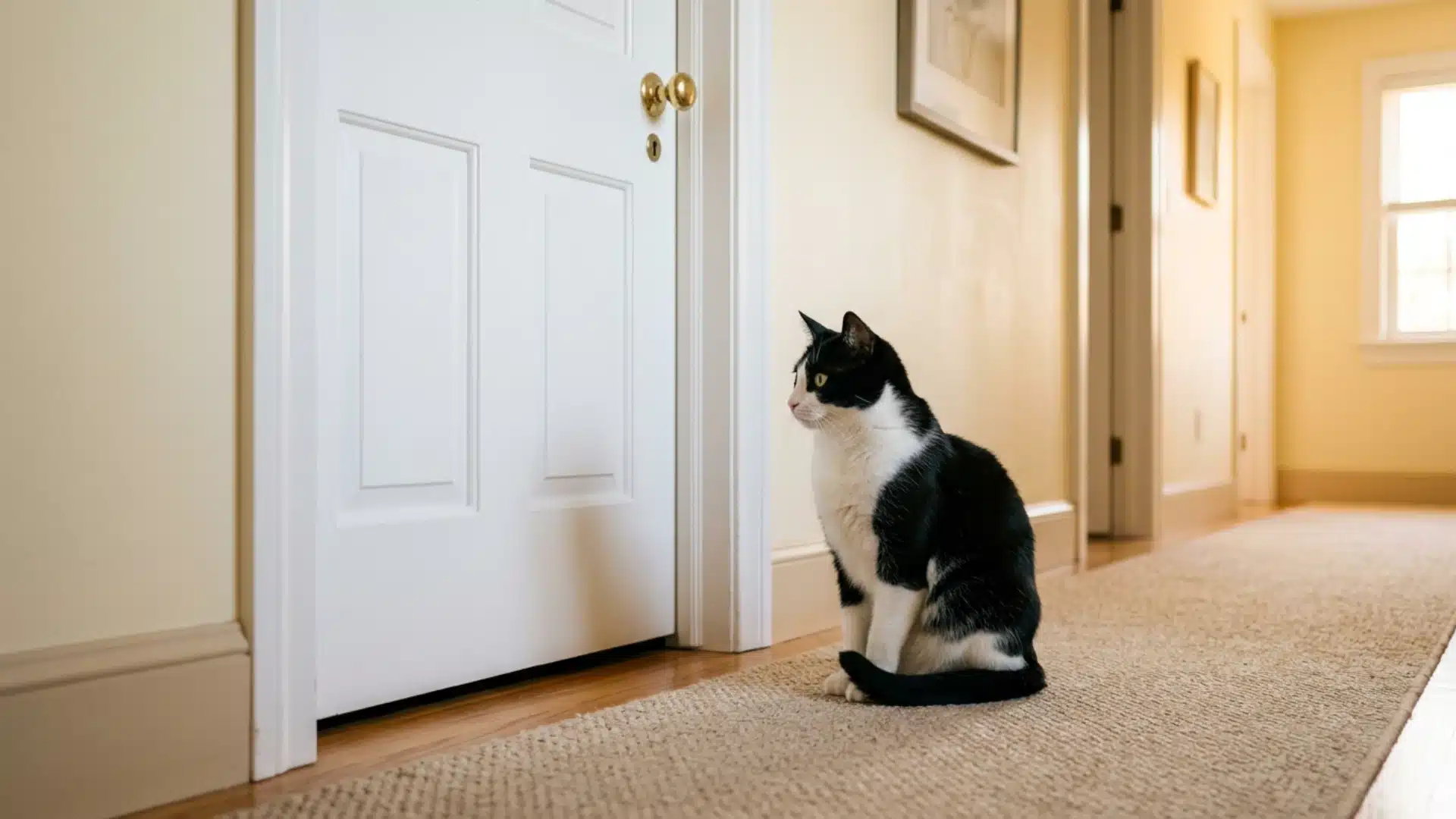
While bathroom-following is usually harmless, the behavior may be worth a closer look if it’s accompanied by other changes, such as:
- Excessive Vocalization: Loud, persistent crying when a door is closed, even for a short time.
- Inability to Settle: Pacing, restlessness, or difficulty relaxing when you’re out of sight.
- Constant Shadowing: Following you to every room without engaging in independent activities.
- Sudden Onset: A cat that never followed you before suddenly becomes unusually clingy.
On its own, bathroom-following is rarely a problem. However, it may be worth a closer look if it’s accompanied by lethargy, changes in appetite, hiding, or signs of discomfort.
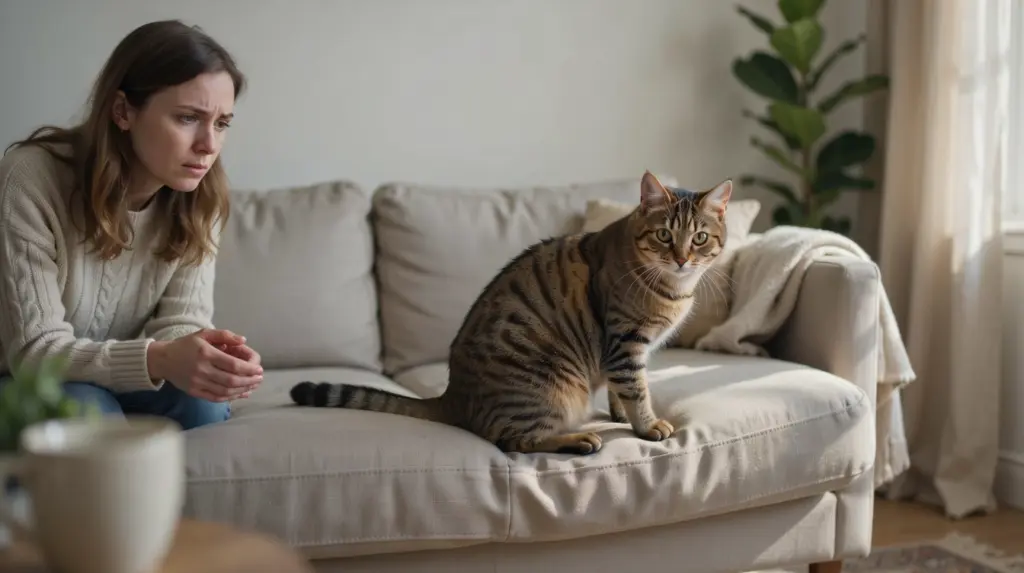
In some cases, sudden or intense clinginess can be linked to separation anxiety in cats or other sources of stress. If your cat has always followed you to the bathroom, it’s likely just a harmless quirk.
But if the behavior appears suddenly or becomes noticeably more intense, consult your veterinarian.
How to Manage Your Cat’s Bathroom Lap Habit?
Whether you enjoy your cat’s bathroom visits or prefer a little privacy, the key is to manage the behavior gently rather than punish it.
- Reward Calm Behavior. If your cat settles nearby instead of climbing onto your lap, offer praise, petting, or an occasional treat.
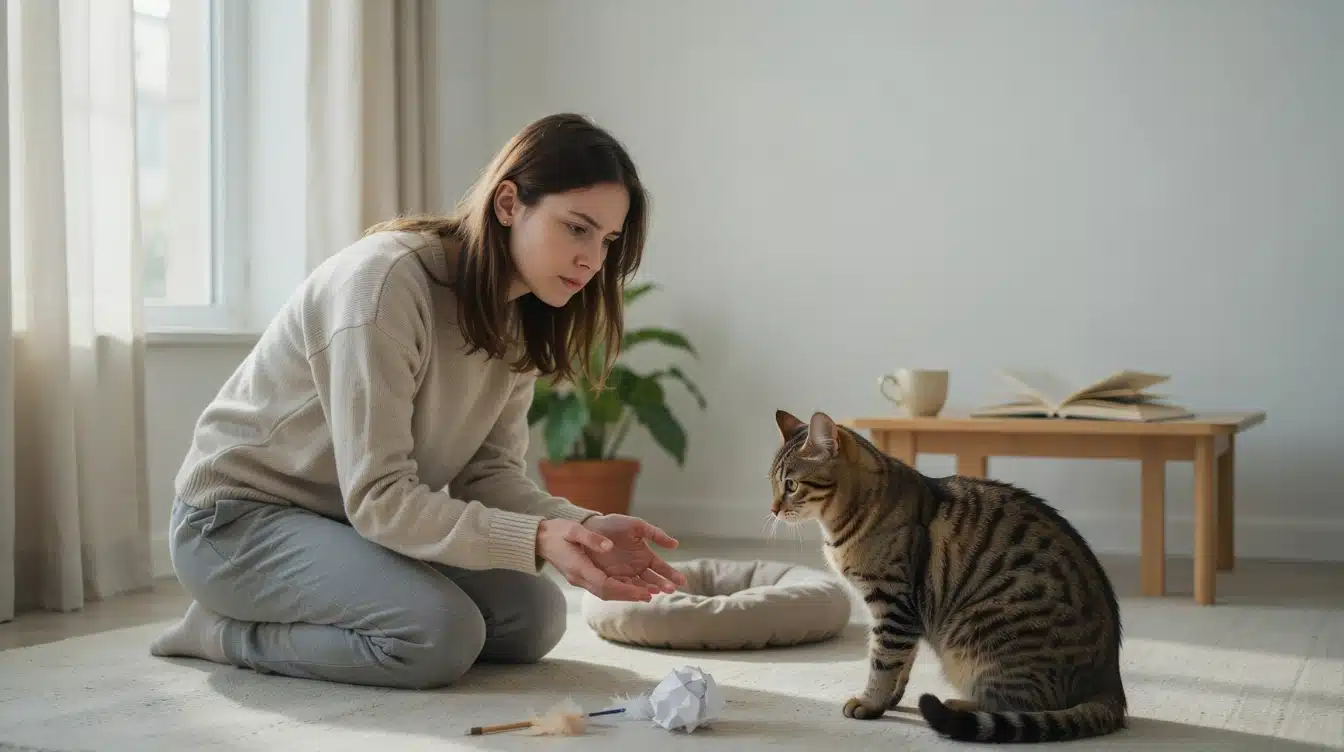
- Redirect Them to Another Spot. Guide your cat toward a nearby bed, perch, folded towel, or cozy resting area where they can still see you.
- Give Them More Attention Throughout the Day. Cats that receive regular interaction are often less likely to seek attention during every bathroom trip.
- Add Short Play Sessions. Interactive toys and daily play can help satisfy your cat’s mental and physical needs.
- Include Grooming or Cuddle Time. Brushing sessions and quiet affection can strengthen your bond outside the bathroom.
- Use Puzzle Toys and Treat Games. Mental stimulation helps reduce boredom and gives your cat something else to focus on.
- Create a Comfortable Alternative. A cat bed, window perch, heated mat, or sturdy shelf can provide a cozy place to relax while staying close to you.
Conclusion
I used to think my cat’s obsession with the bathroom was just another of their strange habits. But the more I learned, the more it made sense.
When your cat sits on your lap while you use the toilet, they’re usually doing what cats do best: seeking comfort, companionship, and a safe place.
In many ways, it’s a positive sign. Cats that feel secure and bonded to their humans often seek out opportunities to be close, even during the least glamorous moments of the day.
Unless the behavior appears suddenly or comes with other concerning changes, it’s usually nothing more than an affectionate quirk.
Does your cat have a bathroom ritual of their own? Share it in the comments.
Frequently Asked Questions
Why Does My Cat Scratch at the Bathroom Door?
Many cats dislike closed doors because they restrict access to part of their territory. Scratching is often an attempt to investigate what’s happening on the other side.
Why Does My Cat Stare at Me While I’m Using the Toilet?
Cats are naturally observant and often watch their owners simply because they’re curious. Some cats also enjoy monitoring the activities of people they trust.
Do Certain Cat Breeds Follow Their Owners to the Bathroom More Often?
Yes. Breeds known for being highly social, such as Siamese, Burmese, Ragdolls, and Maine Coons, are often more likely to follow their owners from room to room.
Should I Let My Cat Sit on My Lap in the Bathroom?
If you don’t mind the behavior, there’s usually no reason to stop it. However, if you’d prefer more privacy, gently redirect your cat to a nearby bed, perch, or resting spot and reward them for using it.