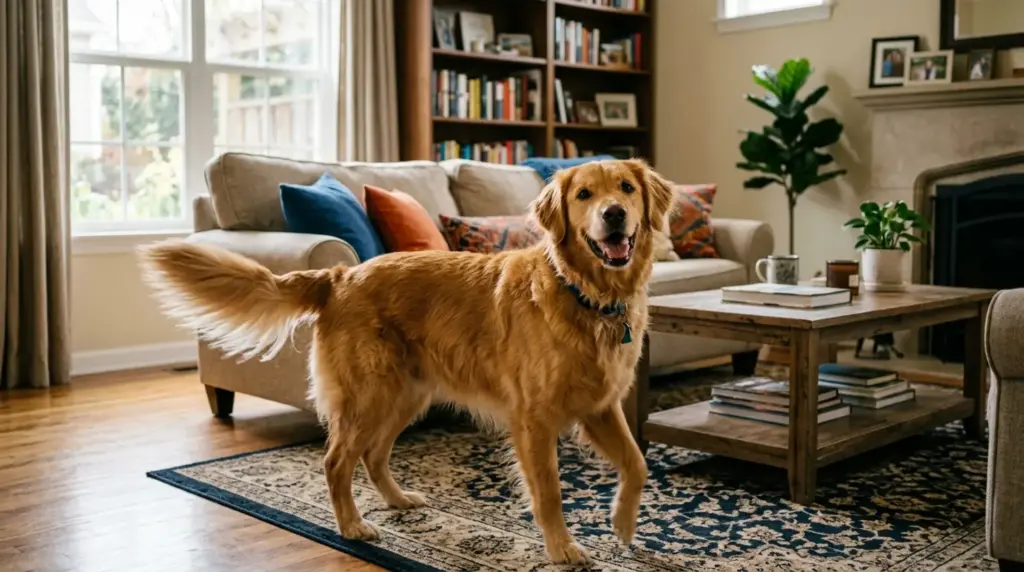
A wagging tail usually means pure joy, but what if that happiness turns into an injury?
Many dog owners notice small blood spots on walls or floors without realizing the cause. That constant, powerful wagging, especially in tight spaces, can lead to a condition known as happy tail.
It occurs when a dog repeatedly hits its tail against hard surfaces, resulting in cuts, swelling, and persistent wounds that struggle to heal.
In my decades of veterinary practice in Minnesota, I’ve seen even the most well-cared-for dogs develop this condition sometimes overnight, after a single exciting weekend at a boarding facility.
Happy tail may sound harmless, but it can quickly become painful and difficult to manage if ignored.
Understanding what a happy tail really is and why it happens helps dog owners spot early signs and protect their pets before the problem worsens.
What is Happy Tail in Dogs?
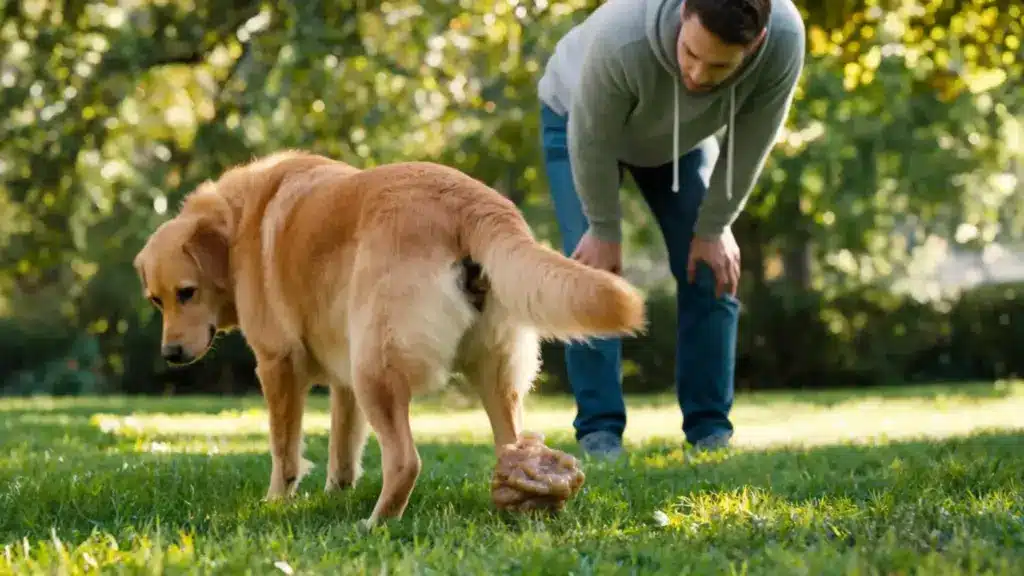
Happy tail is a condition where a dog injures the tip of its tail from repeated wagging against hard surfaces.
Also called a kennel tail or split tail, it usually happens when a dog is excited and keeps hitting its tail against walls, furniture, or tight corners without stopping.
Over time, this constant impact leads to small cuts, swelling, and open wounds. The tricky part is that the tail rarely gets enough rest to heal.
Every time the dog wags its tail, the wound reopens, creating a cycle hard to break.
Dogs with long, thin tails and high energy levels are more likely to experience a happy tail, especially in confined indoor spaces where there is less room to move freely.
Why Does Happy Tail Happen
Happy tail is not caused by a single issue. It usually develops from a mix of environment, behavior, and physical traits.
- Environment: Tight spaces and hard surfaces like walls, crates, or furniture increase the chances of the tail hitting something repeatedly.
- Behavior: Dogs that wag constantly or get overly excited tend to hit their tail more often and with more force. Dogs with separation anxiety are particularly at risk. The frantic excitement when an owner returns home can turn a hallway wall into a repeated impact point.
- Tail Type: Long and thin tails have less protection, making them more likely to get injured from repeated impact.
- Breed Factors: Large, energetic breeds often wag more forcefully, increasing the risk of injury over time.
When these factors come together, even a simple wag can turn into a repeated injury cycle.
Common Signs of Happy Tail To Watch For
Happy tail often starts small, so early signs can be easy to miss. Paying attention to these symptoms can help prevent the condition from getting worse.
- Bleeding From The Tail Tip: Small cuts or fresh blood at the end of the tail are often the first sign.
- Swelling or Redness: The tail may look inflamed or slightly puffy due to repeated impact.
- Repeated Reopening Of Wounds: The injury seems to heal, then breaks open again because of constant wagging.
- Dog Constantly Wagging Despite Injury: Even with pain, many dogs keep wagging, which worsens the condition.
- Blood Marks On Walls Or Furniture: Random blood spots around the home can be a clear indicator of tail injury.
- Hair Loss at the Tail Tip: Patches of missing fur near the end of the tail are a common early indicator — often appearing before significant bleeding starts.
- Sensitivity or Flinching: Your dog may pull away, flinch, or lick the tail repeatedly when it is touched, signaling pain even before a visible wound has fully formed.
How Serious is Happy Tail for Dogs
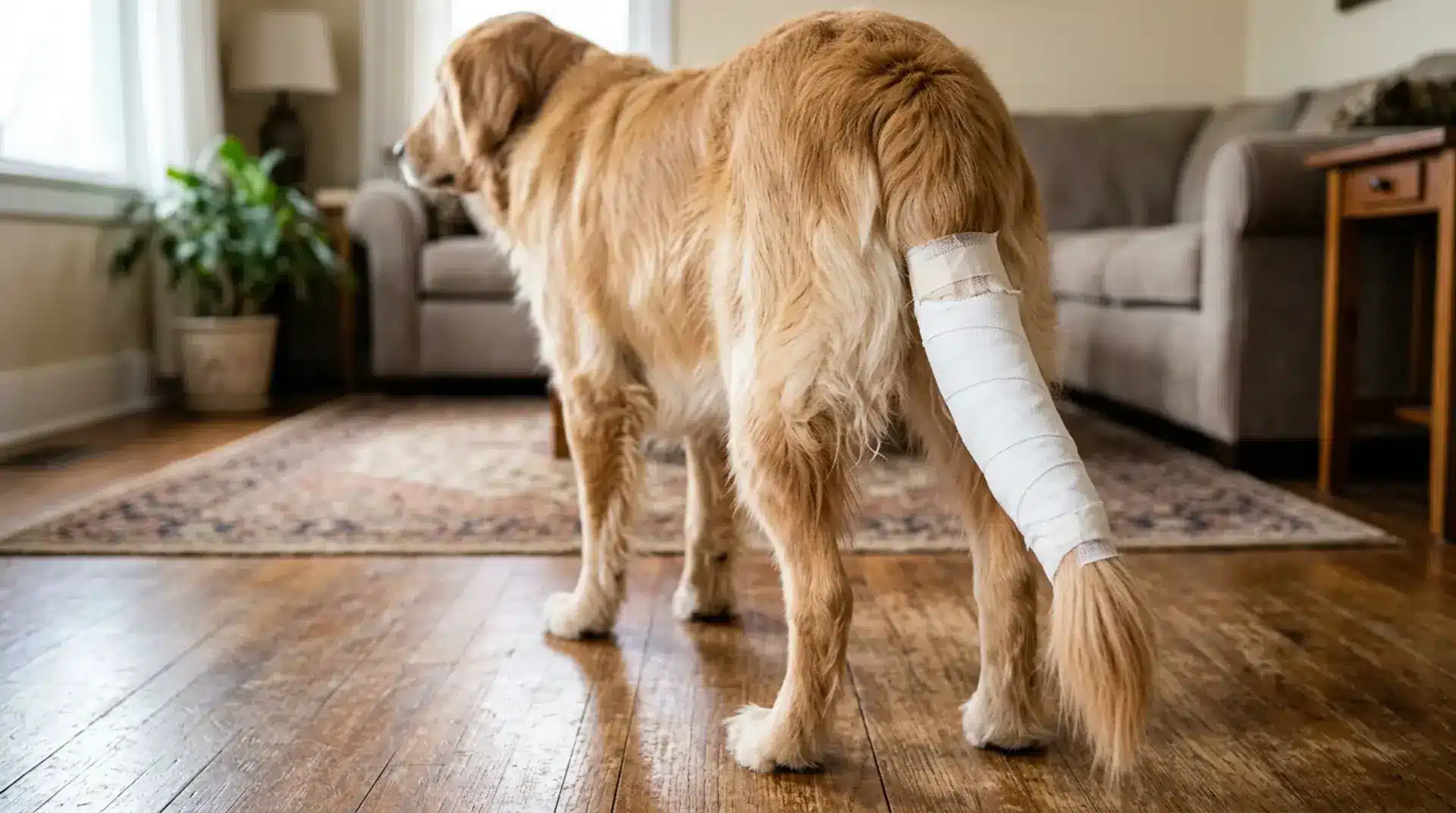
Happy tail may sound harmless, but it can become a painful and frustrating condition if not taken seriously. The tail has sensitive nerves, so repeated injuries can cause ongoing discomfort every time the dog moves or wags.
In more advanced or untreated cases, this repeated trauma can lead to permanent nerve damage at the tail tip, affecting sensation and normal tail function long-term.
One of the biggest concerns is infection. Open wounds on the tail are exposed and constantly irritated, making it easy for bacteria to enter.
Recognizing the signs of an infected dog wound early on can help you act before the infection takes hold and treatment becomes significantly more involved.
Without proper care, this can lead to swelling, discharge, and delayed healing. Over the years, I’ve had several patients arrive at the clinic with happy-tail wounds their owners believed were healing on their own, only to find the infection had already reached deeper tissues. By that point, treatment is significantly more involved
Another challenge is how often the injury comes back. Even if the wound starts to heal, a single wag can reopen it, creating a cycle that is hard to break.
If ignored for too long, the condition can worsen to the point where more intensive treatment is needed.
What to Do in the First 24 Hours
What you do in the first few hours after noticing a happy tail injury can significantly affect how quickly it heals. Here is a practical first-response guide:
- Stay calm and move your dog to a quiet space: Excitement triggers more wagging. A calm environment immediately slows further impact.
- Do not attempt to bandage it yourself unless directed by a vet: A wrap applied even slightly too tightly around a tail can cut off circulation and cause tissue damage. If you need to cover the wound temporarily, use a clean gauze pad held loosely in place, not tightly.
- Put on an e-collar right away: A cone collar prevents your dog from licking or biting the wound, dramatically slowing bacterial contamination and preventing the wound from being further torn open.
- Limit movement and excitement: Skip walks, keep greetings low-key, and avoid active play until you know the severity of the injury.
- Call your vet: Even if the bleeding looks minor, a quick phone call helps you decide whether home care is appropriate or whether the wound needs to be seen the same day.
Treatment Options For Happy Tail
Treating a happy tail focuses on healing the wound while preventing it from reopening repeatedly.
- Pain Relief and Antibiotics: Medication may be given to reduce pain and control any infection that develops.
- E-Collar (Cone of Shame): This is non-negotiable during recovery. Dogs will lick and bite at the wound, or chew off any bandage, dramatically increasing infection risk and undoing days of healing. Do not skip the cone.
- Limiting Movement in Early Healing Stage: Reducing excessive excitement and activity helps the wound heal without constant reopening.
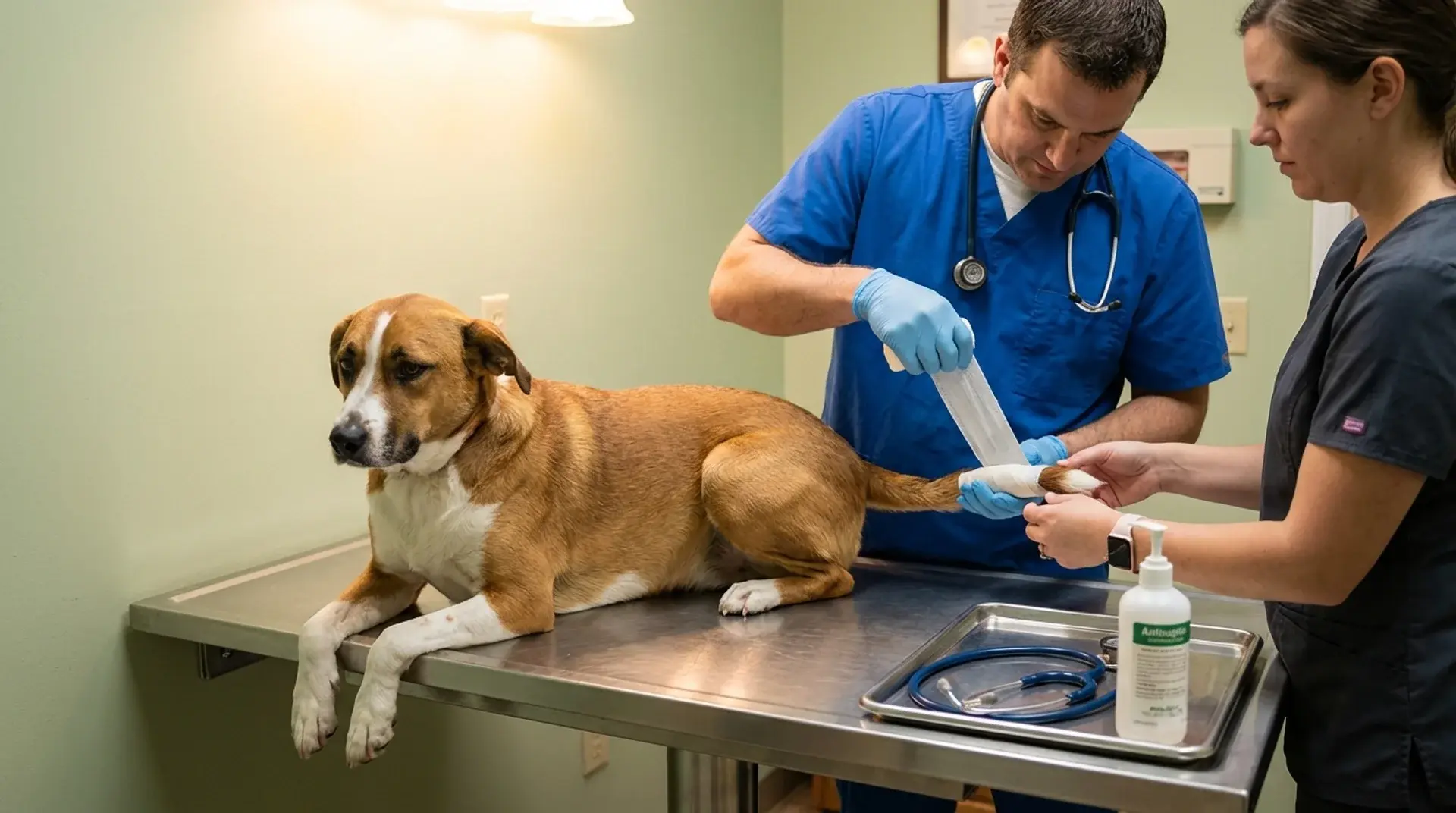
- Cleaning and Bandaging the Tail: The wound is cleaned properly and covered to protect it from further injury and contamination. Important: bandaging a tail at home carries real risk. A wrap applied even slightly too tightly can restrict blood flow to the tail tip, causing serious tissue damage. Unless your vet has specifically shown you how to do this safely, leave bandage changes to the clinic.
- Sedatives for Healing: One of the most effective and often overlooked tools in treating happy tail syndrome is short-term sedation. Since dogs cannot willingly stop wagging, mild sedatives prescribed by a vet help keep the tail still long enough for the wound to form a proper seal. In my practice, adding this step has saved many dogs from progressing to surgical amputation.
- Supplements and Topicals: Some vets recommend omega-3 fatty acids to support skin repair, along with topical vitamin A or E oil applied to the tail tip to prevent drying and cracking, which cause the wound to repeatedly split back open.
- Protective Coverings to Prevent Re-Injury: Tail guards, wraps, or padding help cushion the tail during wagging. Specialized products like the Happy Tail Saver use a harness-and-strap system to keep the tail padded and contained. Some owners also improvise with foam pipe insulation or a pool noodle cut to length. Just make sure any covering is not so bulky that the dog starts chasing or chewing it, which creates a new problem entirely.
- Partial Tail Amputation: If the injury recurs and does not heal, removing the damaged tip may be necessary. This is not as alarming as it sounds. Dogs recover well and return to being their full, happy selves afterward. A shorter tail simply cannot generate enough force to cause the same re-injury.
How to Prevent Happy Tail at Home
Preventing happy tail is mostly about reducing repeated impact and creating a safer space for your dog to move freely.
- Padding Hard Surfaces: Cover walls, furniture edges, and tight corners with soft padding to reduce impact-related injuries.
- Creating More Open Space: Rearrange furniture so your dog has enough room to wag without constantly hitting objects.
- Using Tail Guards or Wraps: Protective covers help cushion the tail and reduce the chances of cuts during wagging.
- Managing Excitement Levels Indoors: Keep high-energy moments calm in confined areas to limit forceful wagging.
- Supervising High Activity Moments: Pay extra attention during playtime or greetings when wagging is at its peak.
- Behavior Modification: Work with a professional trainer to reduce overexcitement, particularly during greetings. Teaching a calm sit-and-wait at the door instead of a frantic welcome can noticeably reduce both the force and frequency of tail impact.
One tip I consistently share with clients: when you arrive home, ignore your dog for the first two minutes. Greet them only once they have settled. It takes a few weeks of consistency, but the difference in wagging intensity is visible.
Simple adjustments at home can significantly lower the risk of happy tail and keep your dog comfortable.
Breeds More Prone to Happy Tail
Breeds commonly affected by happy tail syndrome include Labrador Retrievers, Pit Bulls, Great Danes, German Shepherds, and Boxers.
What these breeds share is a combination of high energy, thin or low-fat tails, and powerful wagging mechanics.
Research also indicates that working breeds as a category face elevated risk, likely because their drive and excitement levels remain consistently high regardless of environment.
In my Minnesota clinic, Labrador Retrievers and Pit Bulls make up the majority of happy-tail cases I see, young dogs under three years old who are still at peak energy and excitement.
Greyhounds are a notable exception: despite being fairly calm indoors, their extremely the tail tips make them surprisingly vulnerable.
Another factor is tail structure. Dogs with long, thin tails have less natural protection, making them more vulnerable to cuts and injuries when hitting hard surfaces.
Larger breeds also tend to live in indoor spaces that may not fully match their size, leading to frequent contact with walls or furniture. This combination of power, tail shape, and environment raises the chances of a happy tail in dogs.
Happy Tail vs. Limber Tail
Both conditions affect a dog’s tail but differ in cause, symptoms, and treatment.
| Aspect | Happy Tail | Limber Tail |
|---|---|---|
| Type Of Condition | Wound-based injury | Muscle injury |
| Cause | Repeated impact against hard surfaces | Overuse, intense exercise, or cold water exposure |
| Visible Signs | Cuts, bleeding, open sores | No visible wounds |
| Tail Movement | The dog continues wagging despite the injury | Tail hangs limp or droops |
| Pain Behavior | A dog may ignore pain and stay excited | The dog avoids wagging due to pain at the tail base |
| Onset | Gradual due to repeated impact | Suddenly, after activity or exposure |
| Rule Of Thumb | Bleeding tail that keeps wagging | Limp tail with no visible injury |
| Treatment Approach | Wound care and protection | Rest, pain relief, and recovery support |
When to See a Vet Immediately
A happy tail can worsen quickly, so knowing when to seek help is important.
If the tail is bleeding continuously and does not stop with basic care, it needs medical attention. Ongoing blood loss can make healing difficult and increase the risk of complications.
Watch for signs of infection such as swelling, warmth, pus, or a strong odor. These symptoms indicate the wound is no longer just a surface injury.
Repeated injuries are another warning sign. If the wound keeps reopening despite care, the condition may not heal on its own and can become more serious over time.
In these situations, a vet can provide appropriate treatment and prevent the issue from becoming a long-term problem.
How Vets Diagnose Happy Tail
A vet usually starts by examining the tail. The focus is on the tip, where most injuries occur. The vet looks for cuts, swelling, scabs, or signs that the wound keeps reopening.
To rule out more serious issues, the tail may be gently checked for fractures or deeper tissue damage.
If there is severe pain or unusual movement, an X-ray might be recommended to make sure the bone is not affected.
In cases involving repeated or heavy bleeding, vets may also run routine bloodwork to check for anemia or clotting disorders.
While these findings are uncommon in typical happy tail presentations, they help rule out underlying conditions that could be making healing more difficult than expected.
The vet also checks for infection. Signs such as pus, a strong odor, or excessive redness can indicate that bacteria have entered the wound.
In some cases, other skin conditions or injuries are considered and ruled out to confirm that the issue is truly a happy tail caused by repeated impact.
Conclusion
Happy tail may sound like a harmless expression of joy, but it can quickly turn into a painful and recurring issue if ignored.
The good news is that it is both preventable and manageable with the right awareness. Small changes at home, early attention to symptoms, and timely care can make a big difference in protecting a dog’s health and comfort.
Recognizing the early signs, such as minor bleeding or repeated tail injuries, allows for faster action before the condition worsens.
Staying observant and creating a safer environment helps break the cycle of injury and healing. Every wag tells a story, and keeping it safe matters.
Have you ever noticed signs of happy tail in your dog or found a way to prevent it? Share your experience in the comments and help other dog owners learn from it.
Frequently Asked Questions
Can Happy Tail Heal on its Own?
Mild cases may heal if the tail is protected and wagging is limited, but most cases reopen easily without proper care and protection.
How Long Does Happy Tail Take to Heal?
Healing can take anywhere from a few days to several weeks, depending on the severity and how well the tail is protected from repeated injury. When sedatives are used to reduce wagging, healing tends to progress noticeably faster. Without controlling the wagging, even well-bandaged wounds often reopen.
Can Happy Tail Come Back after Treatment?
Yes, a happy tail can return if the root causes, like constant wagging in tight spaces, are not addressed, making prevention just as important as treatment.
Is Tail Amputation the Only Permanent Solution?
Not always. Many dogs heal completely with proper bandaging, sedation, and environmental changes. Amputation is only recommended when the tail fails to heal after multiple treatment attempts or when recurring injury is causing serious quality-of-life issues. When it is performed, recovery is similar to a routine surgical procedure, and the vast majority of dogs adjust remarkably well.