Why do dogs jump on you is something most dog owners deal with sooner or later.
You walk in, and within seconds, paws are on your chest, your shirt gets wrinkled, and whatever you are holding ends up on the floor.
It feels sudden, but this behavior builds over time and becomes a habit. In many cases, it keeps happening because it gets a reaction every single time.
Dogs repeat what works, and even small attention can reinforce it. There is also a mix of instinctand learned behavior behind it, which makes it harder to ignore.
This blog explains it clearly and simply. It covers what leads to jumping, what actions often make it worse without people realizing it, and how to handle it the right way.
It also walks through practical steps to manage this behavior at home, with visitors, and even during walks.
Why Do Dogs Jump on You?
Honestly, dogs don’t jump for no reason at all.
There is always a pattern behind it. Once that pattern becomes clear, the behavior starts to make sense.
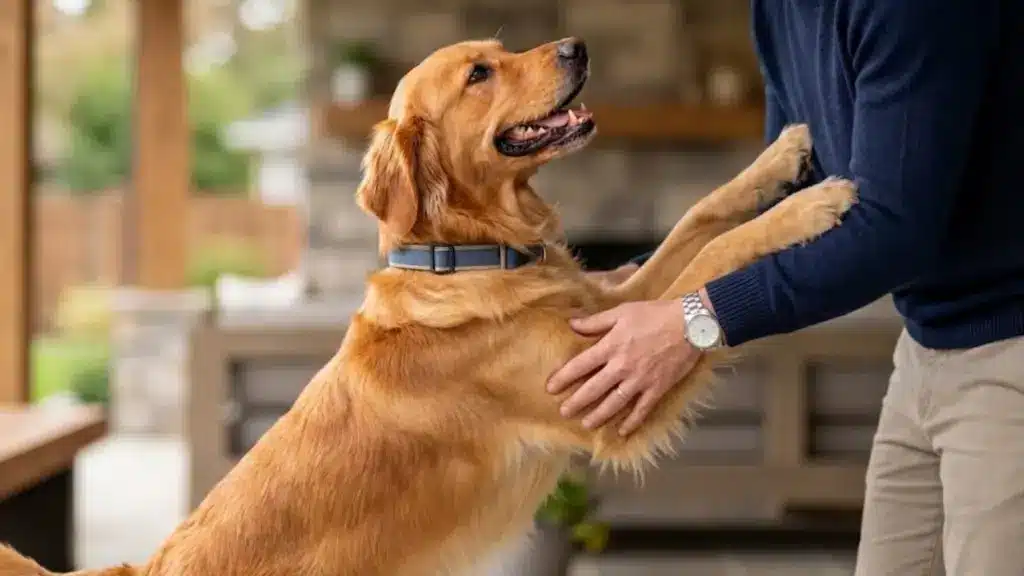
Jumping often starts with natural greeting behavior. It comes from old instincts. Wolf puppies used to jump up and lick adult wolves when they returned.
Dogs still carry that wiring. So when a dog jumps toward your face, it is simply trying to greet you in a natural way.
Attention plays a big role. Dogs repeat what works. If jumping gets any reaction, the behavior continues.
What makes this especially stubborn is that jumping is often self-reinforcing. Many dogs find it rewarding on its own, without needing praise or treats from you.
Simply making contact or getting close enough to sniff a face can be enough of a payoff to keep the behavior going. Even pushing the dog away or saying “no” still counts as attention. From the dog’s point of view, it worked.
Past reactions make it worse. One day the dog gets petted, another day it gets pushed away, and sometimes guests reward it. This inconsistency teaches the dog that jumping is worth trying.
Excitement without control is another reason. Many dogs feel happy but do not know how to stay calm.
Impulse control has to be taught. Until then, jumping becomes their way of releasing energy. Incorporating daily enrichment activities can help reduce the pent-up excitement that often fuels this behavior.
Puppy habits also carry forward. A small puppy jumping feels harmless, so it is often allowed. As the dog grows, the same habit becomes harder to manage.
Sometimes, jumping is linked to anxiety. In over a decade of working with dogs of all temperaments, I’ve seen anxiety-based jumping misidentified as excitement jumping more often than most owners realize.
The dog’s body language tells the difference: a loose, wiggly body usually signals excitement, while tight muscles, whale eye, or excessive panting alongside the jump often point to stress. In such cases, it is a way of seeking comfort and needs a different approach.
Types of Dog Jumping at a Glance
Not all dog jumping is the same. This quick table breaks down the common types, their triggers, and what they look like.
| Type | Common Trigger | What It Looks Like |
|---|---|---|
| Excitement jumping | Arrivals, guests, walks | Wiggly, loose body, tail wagging |
| Attention-seeking jumping | Owner ignoring the dog | Persistent, often paired with pawing |
| Anxiety or panic jumping | Stress, unfamiliar environments | Tight body, panting, may whine |
| Habit jumping | Any arrival or greeting | Automatic, regardless of mood |
Is Jumping Always a Problem?
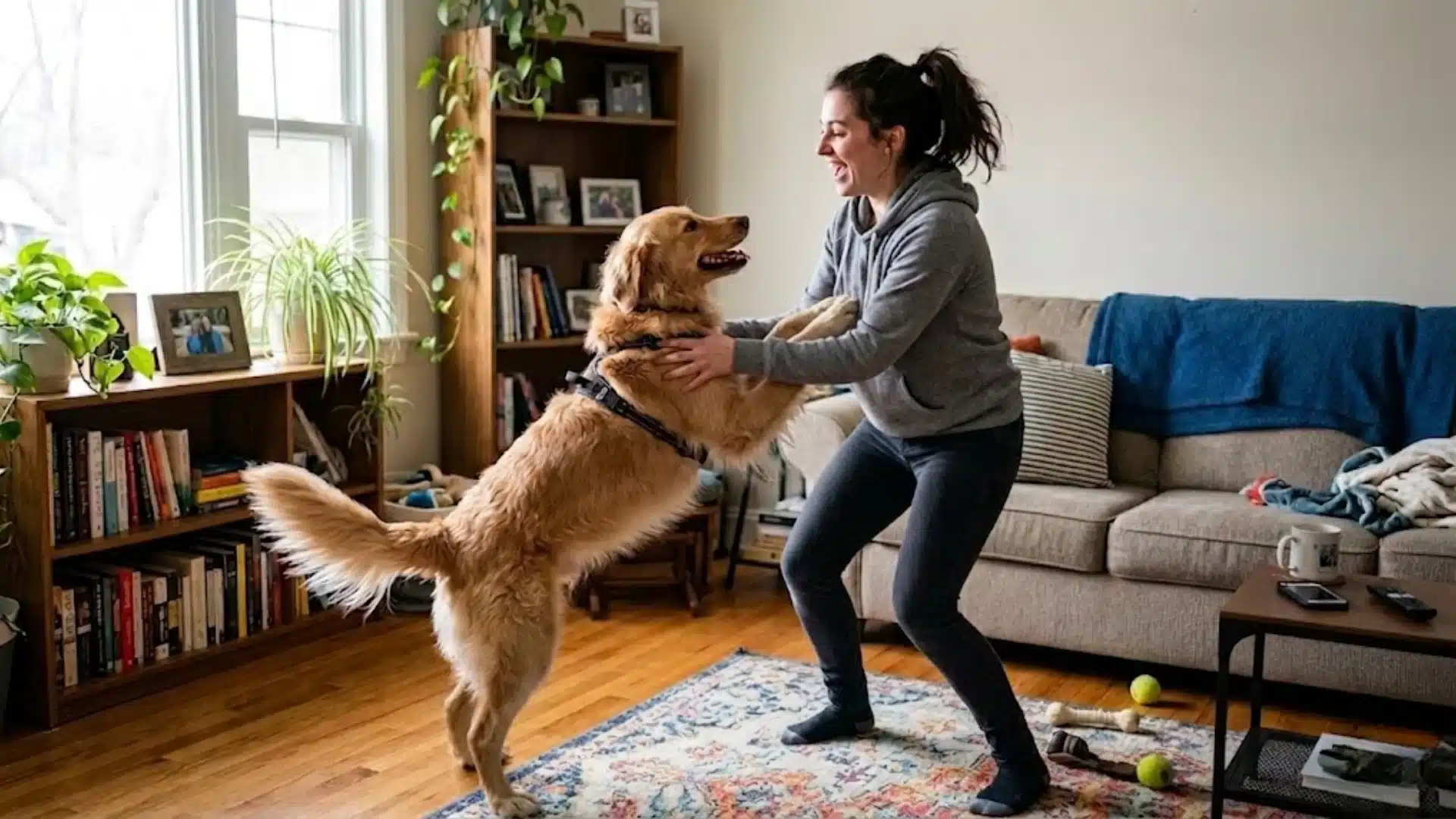
Some owners actually like it. A dog running up and jumping can feel like a warm welcome. With a small dog, it may not seem like a big deal at all. In that case, allowing it can feel harmless.
The issue starts when the dog does not understand limits. A dog cannot tell the difference between people it can jump on and people it should not.
If jumping is allowed at home, it becomes a default behavior everywhere. That includes guests, neighbors, kids, and even strangers outside.
This is where problems show up. A large dog jumping on an older adult can easily cause a fall. Kids can get knocked over or scratched.
Some people may develop fear when caught off guard. Even smaller dogs can leave marks on skin, damage clothes, or make guests uncomfortable.
There have been cases where this turned serious. A medium-sized dog that was always allowed to jump at home once knocked down an elderly family member during a visit.
No major injury happened, but it was enough to raise concern. Fixing the behavior later took weeks of daily effort because the habit was already strong.
Handling this early makes a big difference. The longer it continues, the harder it becomes to change.
Common Mistakes Owners Make
Small mistakes in daily reactions can quietly reinforce jumping without you noticing.
- Giving attention when the dog jumps: Looking, talking, or pushing the dog away still counts as attention. For the dog, any interaction feels like a reward. This is a key reason dogs keep jumping on you.
- Inconsistent rules at home: If one person allows jumping and another does not, the dog gets mixed signals. It learns that the behavior sometimes works, so it keeps trying.
- Using punishment instead of guidance: Forceful reactions like pushing or sprays can increase stress or excitement. Some dogs get more active, others become anxious. Neither helps.
- Ignoring early signs in puppies: Puppy jumping feels harmless, so it is often ignored. As the dog grows, the same habit becomes harder to manage. This is why dogs jump on you later on.
- Letting guests decide the rules: Even one guest allowing jumping can undo progress. Dogs learn from every interaction, so consistency matters with everyone.
How to Stop a Dog from Jumping on You?
The focus should be on preventing the jump, not reacting after it happens. Once the dog jumps, the behavior gets repeated.
Simple steps like tossing a few treats on the floor as you enter can shift attention and reward staying grounded. If jumping still happens, give no reaction at all.
Turn away, avoid eye contact, and stay silent. The moment all four paws are on the ground, offer calm praise without building excitement.
Along with this, start building better habits. Reward calm greetings whenever you see them, even outside of arrival moments.
Teaching a sit as a default response helps a lot, since a dog cannot sit and jump at the same time. In situations like when guests arrive, prepare the dog with a short walk or an activity to reduce excess energy.
Visitors should also be advised to avoidjumping and to engage only when the dog is calm. With steady, consistent practice, the dog begins to choose calm behavior over jumping.
One thing I always recommend during the learning phase is placing a baby gate just inside the entry door.
It keeps the dog from practicing jumping the moment a guest steps in, which gives you the window to ask for a sit and reward four paws on the floor before the greeting begins.
Visitors should also be advised to avoid jumping and to engage only when the dog is calm. The same impulse-control principles that apply indoors also carry over to outdoor situations, and managing leash behavior on walks can reinforce the habit of staying calm around new people.
With steady and consistent practice, the dog begins to choose calm behavior instead of jumping.
Training Tips That Actually Work
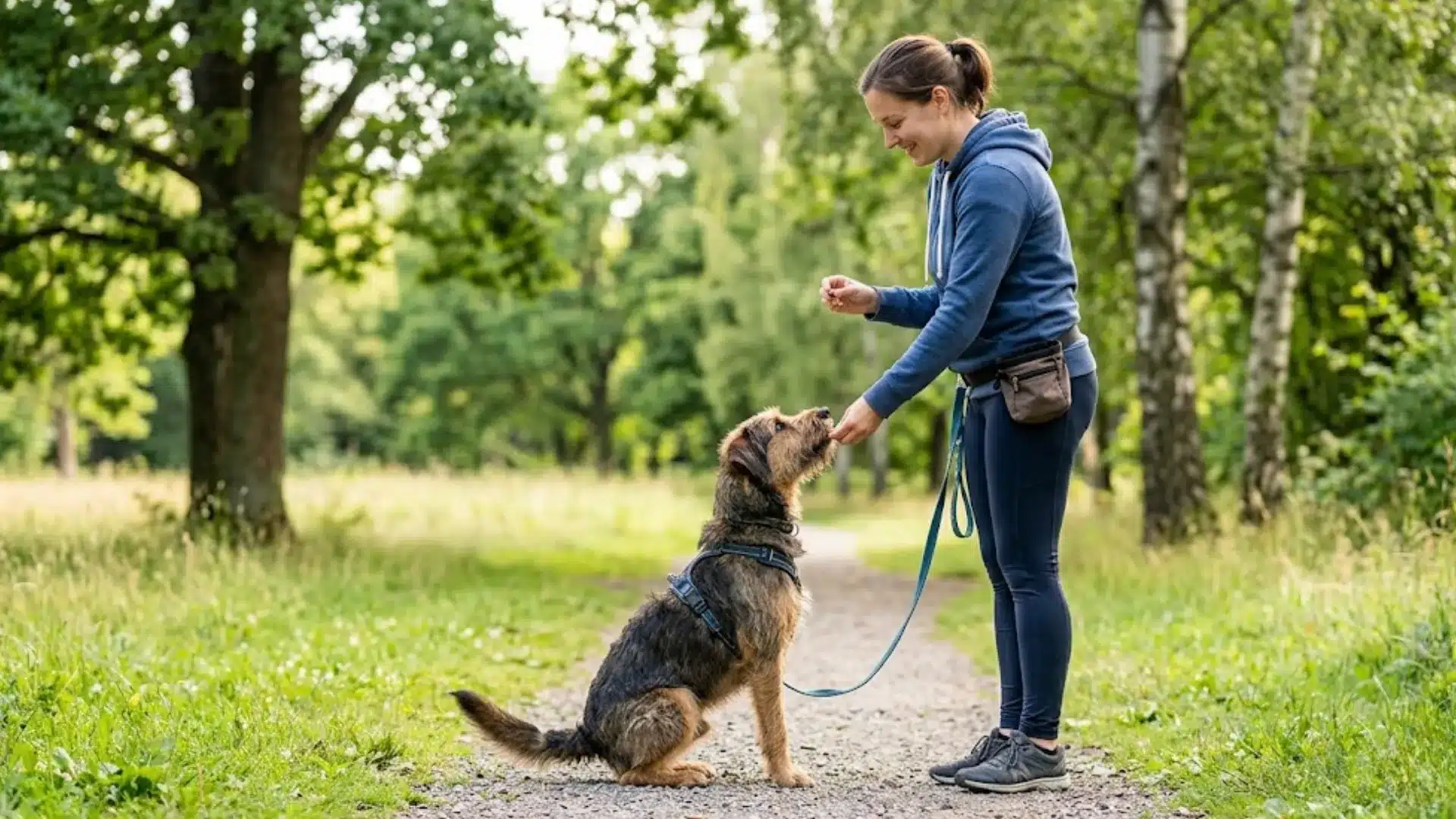
The right approach is not complicated, but it needs to be steady and repeated the same way every time.
- Keep sessions short and frequent: Short daily sessions work better than long, irregular ones. A few minutes at a time, keep the dog focused and avoid frustration. Repeating small wins builds stronger habits.
- Use rewards with proper timing: Rewards should come at the exact moment the correct behavior happens. Delays can confuse the dog and reinforce the wrong action. A clear marker helps connect behavior and reward.
- Understand how long it takes: Some dogs improve in a few weeks, while others take longer if the habit is strong. Progress depends on consistency, not quick results.
- Stay calm during interactions: Your behavior affects your dog. Calm greetings lead to calmer responses, while excitement can trigger more jumping.
- Be consistent every day: Consistency across all situations and people is what makes training work. The more predictable the response, the faster the dog learns what is expected.
- Know when to bring in a professional: If jumping is paired with growling, snapping, or lunging, or if weeks of consistent training have not produced any change, a certified trainer can assess what is actually driving the behavior. Some dogs have anxiety or arousal thresholds that need a more tailored plan. Basic leash training from a professional foundation course is often where impulse-control work starts.
Conclusion
Why do dogs often jump on you? It comes down to habit, attention, and natural instinct. It is not random, and it is not something a dog does to annoy.
The behavior builds over time through repeated reactions, even small ones. Once that pattern is understood, it becomes easier to manage.
The key is to stay consistent, reward calm behavior, and avoid giving attention at the wrong moment.
Simple steps like teaching a sit, preparing for guest visits, and keeping greetings calm can make a big difference.
One should remember that progress may take time, but steady effort leads to clear results.
Have you noticed what triggers your dog to jump the most? Share your experience in the comments below.
Frequently Asked Questions
Why Do Dogs Jump on You When You Come Home?
Dogs get excited when they see someone they like. Jumping becomes their way of greeting, especially if it has worked before.
Should You Punish a Dog for Jumping?
Punishment usually does not help. It can confuse the dog or increase excitement. It is better to ignore jumping and reward calm behavior.
At What Age Should You Stop a Dog From Jumping?
Training should start as early as possible. Puppy jumping may seem harmless, but it can turn into a strong habit later.