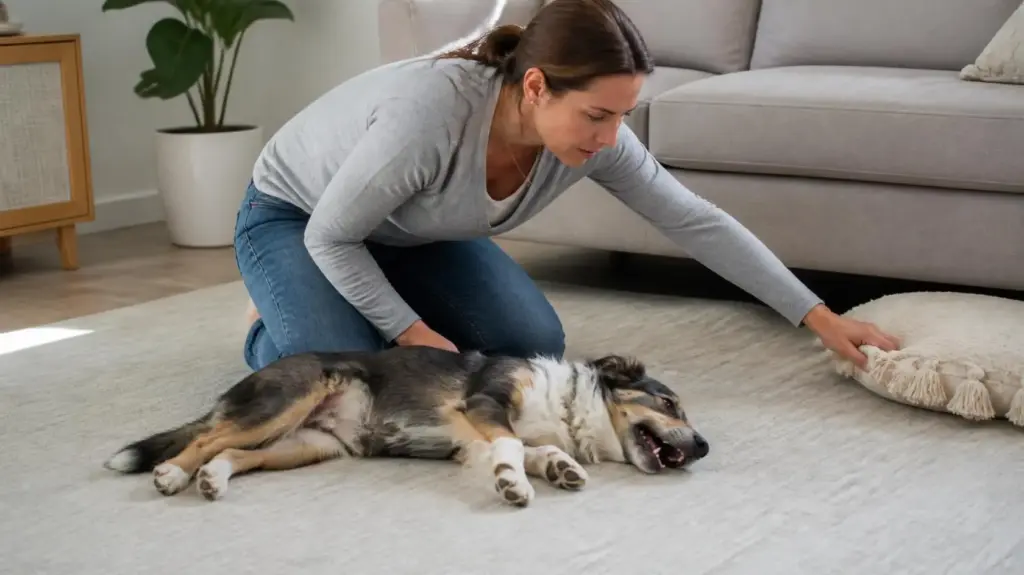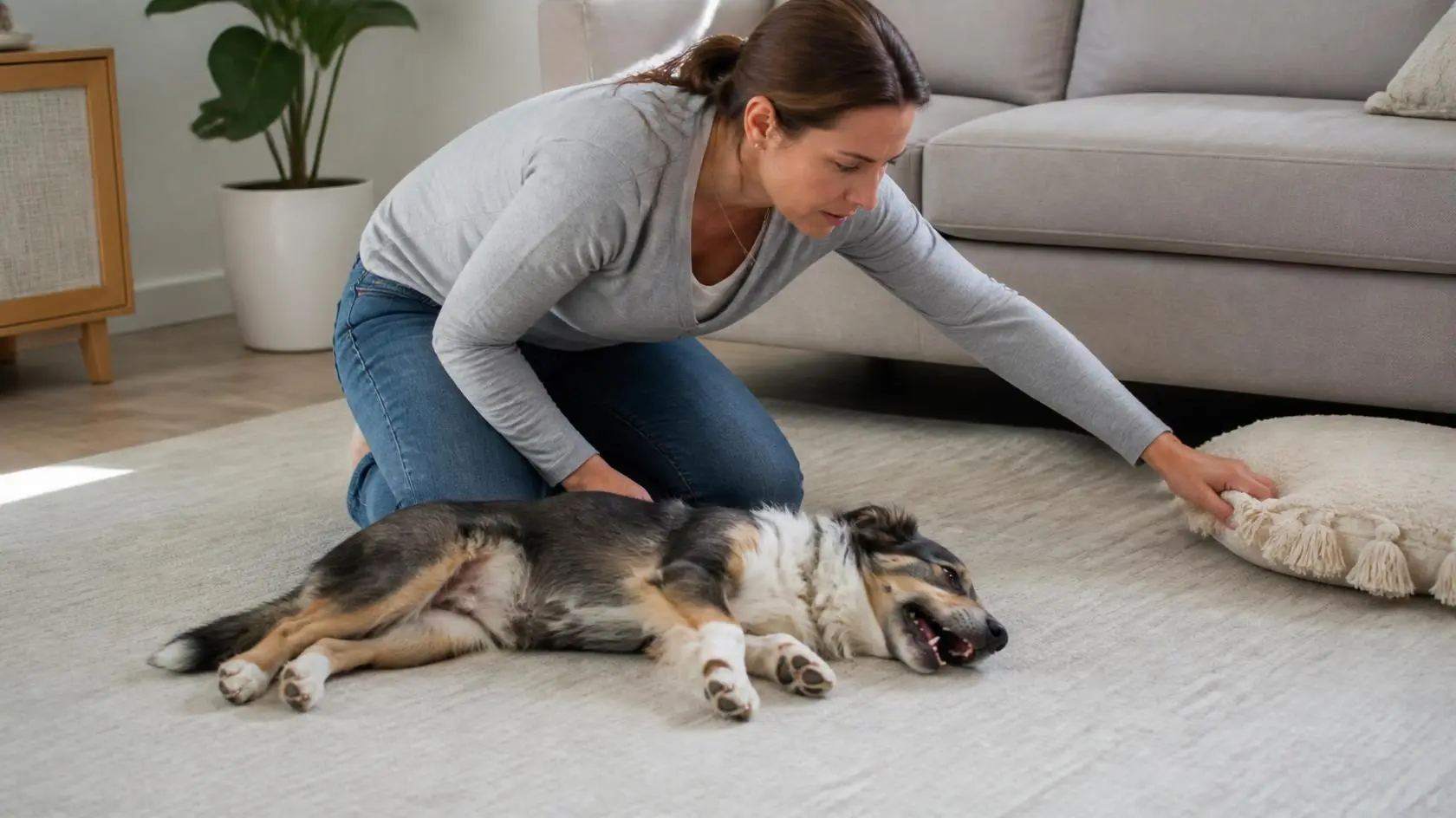
The final days can change quickly. One hour, your dog may be resting, and the next, she may start pacing, panting, or tearing at her bedding.
A pregnant dog usually carries puppies for about 63 days from ovulation, but a breeding date does not always give an exact due date.
As delivery approaches, changes in behavior, temperature, discharge, and contractions can help you gauge how quickly labor is progressing. Some changes are expected. Others need a fast call to a veterinarian.
I’ll walk you through the last weeks, the birth process, timing between puppies, and warning signs that need urgent care.
You will also learn how to prepare the birth space and check the mother and newborns after delivery.
What to Expect Before Your Dog Goes Into Labor
The final part of the stages of dog pregnancy usually covers weeks seven through nine. Puppies grow quickly, the mother needs more rest, and her body starts preparing for delivery.
| Timing | What you may notice | What to do |
|---|---|---|
| Weeks 7 to 8 | A larger belly, stronger puppy movement, and more rest | Continue gentle walks and follow your veterinarian’s feeding plan |
| Final week | Nesting, enlarged mammary glands, smaller meals, and discomfort | Prepare the whelping area and confirm emergency contacts |
| Last 24 hours | Appetite loss, restlessness, panting, and a temperature drop | Stay nearby and watch for changes in discharge or contractions |
| Active labor | Visible abdominal tightening, fluid, a puppy sac, and pushing | Start timing and watch for steady progress |
Pregnancy averages about 63 days from ovulation. Mating dates are less exact because sperm can remain alive for several days, while the eggs need time to mature after ovulation. Before labor begins:
- Ask your veterinarian if a late-pregnancy X-ray is needed. An X-ray during the final two weeks can help estimate litter size and show when delivery may be complete.
- 2Offer several small meals using the food approved by your veterinarian.
- Provide fresh water at all times.
- Do not give calcium, vitamins, or other supplements unless they are prescribed.
- Do not press on her abdomen to count or check the puppies.
- Watch for changes in her belly, but do not use its shape alone to predict labor.
- Save your regular veterinarian and emergency clinic numbers.
- Confirm the driving route and prepare safe transport before the due window.
These steps give you a clear plan for the final days, but labor can still begin earlier or later than expected. Watch her behavior closely, keep your emergency contacts ready, and focus on steady changes rather than trying to predict one exact hour.
Visual Signs of Dog Labor That Matter Most
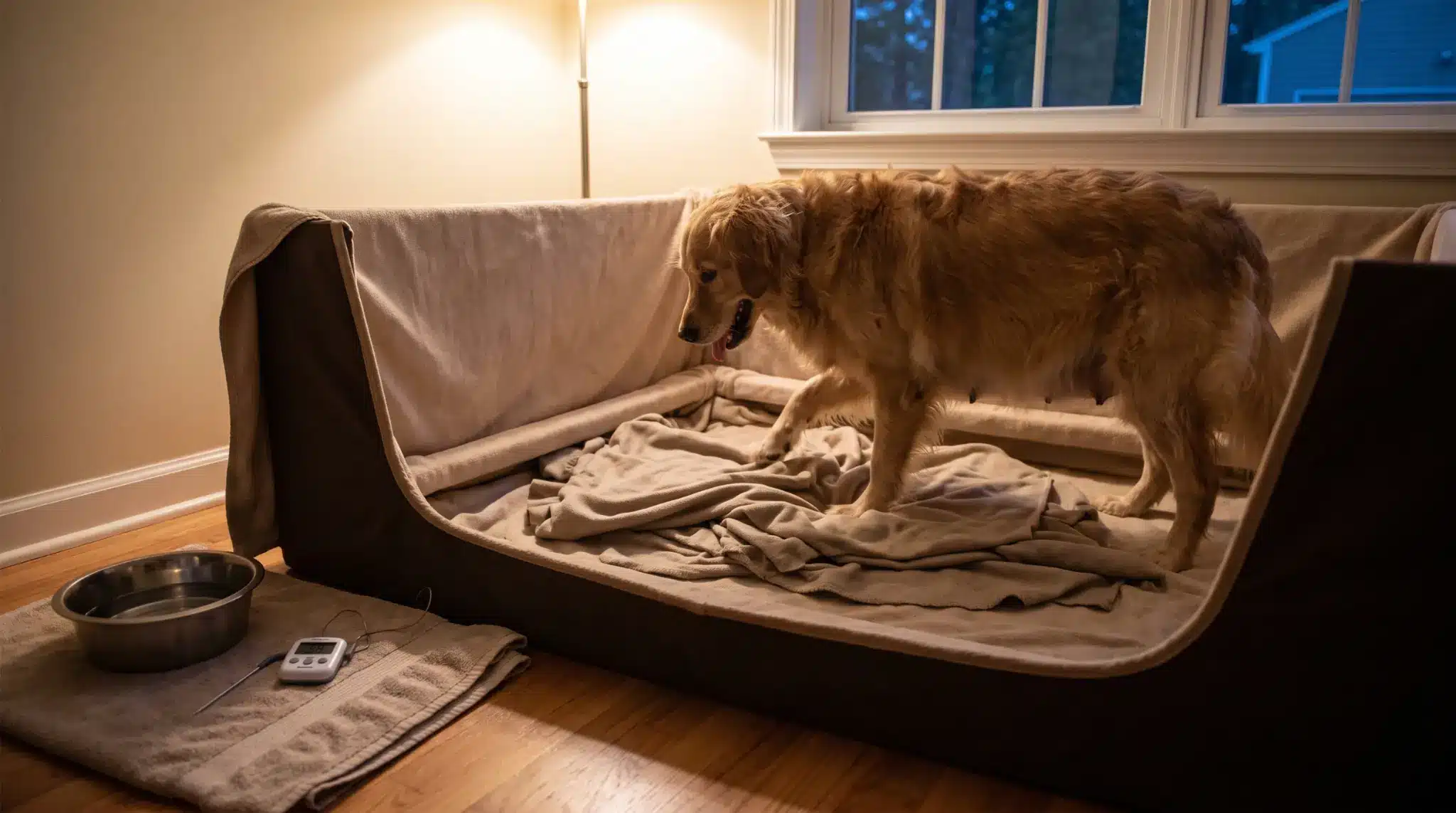
The visual signs of dog labor often begin before strong contractions can be seen. Look at the full pattern, because a single sign may not tell you how close delivery is. You may notice:
- Repeated nesting, digging, or shredding bedding
- Pacing and difficulty settling
- Panting, trembling, or shivering
- Refusing food or vomiting
- Hiding or staying close to you
- Frequent licking around the vulva
- Clear or white vaginal discharge
- A temporary rectal temperature below 99°F
A temperature drop often occurs within 24 hours of delivery, but it may be brief or go unnoticed. First-stage signs commonly last 6 to 12 hours, though some dogs remain in this stage for up to 24 to 36 hours.
As active labor begins, the changes become more physical. Her abdomen may tighten, she may start forceful pushing, and a fluid-filled sac or puppy may appear at the vulva.
Green discharge can indicate that the placenta has separated. Start timing immediately and call your veterinarian if no puppy is delivered within 15 to 30 minutes.
Behavior varies among dogs, especially in a first litter. Focus on steady progress rather than relying on a single sign.
Whelping Box Setup for First-Time Dog Owners
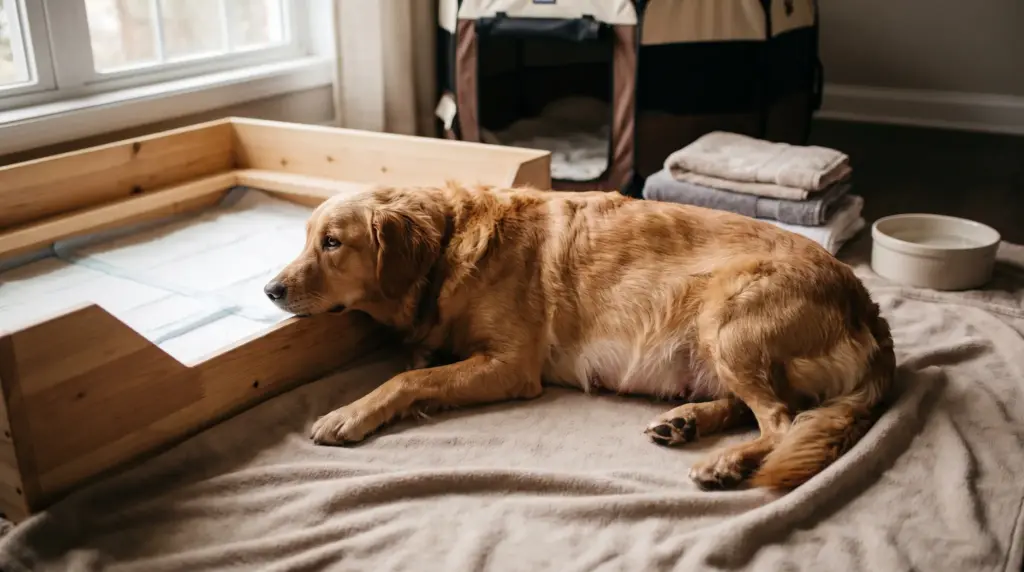
A quiet, warm space helps the mother settle and lets you watch without standing over her. Let her rest there before the due window so the area feels familiar when contractions begin.
Prepare:
- A whelping box large enough for her to stretch out
- A low entrance with secure sides for the puppies
- Flat, washable, non-slip bedding
- Clean towels and disposable gloves
- A digital thermometer and kitchen scale
- A safely secured heat source that warms only part of the box
- A room thermometer so puppies can move away from excess heat
- A notebook, timer, and pen
- Veterinarian and emergency clinic details
- A safe carrier or box for transport
During delivery, limit noise and visitors. Record when active labor starts, each puppy’s birth time, weight and markings, the number of placentas seen, nursing activity, and any delays or unusual discharge.
Keeping newborns warm and confirming each one nurses within the first two hours ties directly into the early habits covered in our puppy growth stages breakdown, which walks through what typically happens in the days right after birth. Replace wet bedding carefully. Watch closely while giving the mother enough privacy to settle.
What Normal Whelping Looks Like
Whelping is the veterinary term for canine labor and delivery. It has three stages, and the second and third stages repeat until the full litter and all placentas have passed.
Stage 1: The Cervix Opens
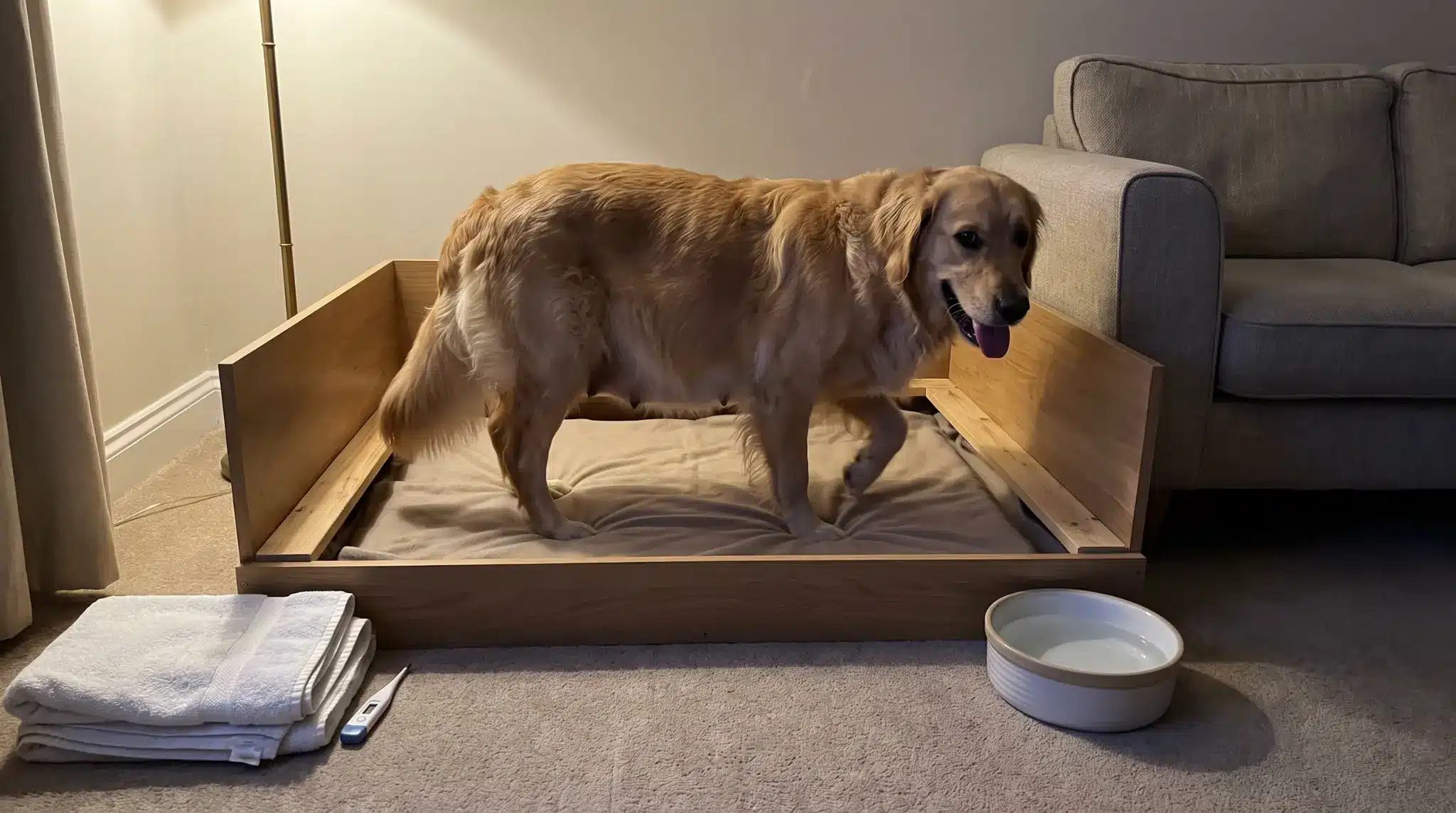
Internal uterine contractions begin, but they may not be visible. The mother may nest, pant, tremble, hide, refuse food, vomit, or pass a small amount of clear fluid.
Maintain a quiet room, offer water, and allow short leashed bathroom trips. Write down when these signs begin and avoid crowding her.
Stage 2: Puppies are Delivered
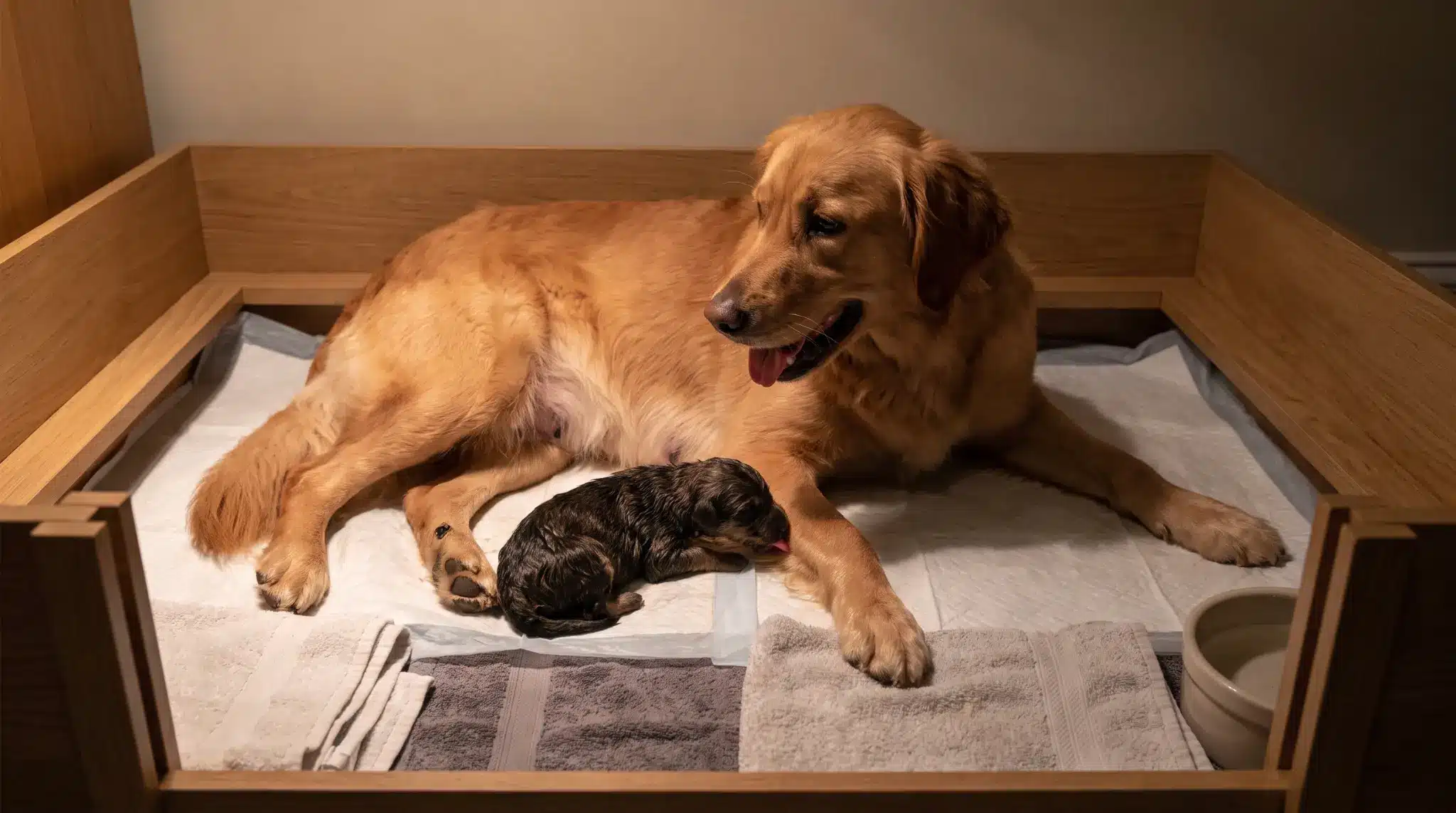
Visible abdominal contractions and forceful straining mark active delivery. A puppy may arrive headfirst or rear-first, and both can be normal when the legs are extended.
The mother usually opens the sac, licks the puppy, and chews the umbilical cord. If she does not open the sac, remove the membrane from the face first.
Gently wipe or suction fluid from the nose and mouth, then rub the puppy with a clean, warm towel, the same clearing and stimulating steps VCA’s guide to whelping in dogs walks through in more detail, including what to do if a puppy is slow to start breathing.
Call your veterinarian immediately if the puppy does not begin breathing or responding. Do not swing a puppy, pull forcefully, or insert fingers into the birth canal without veterinary direction.
Stage 3: Placentas Pass
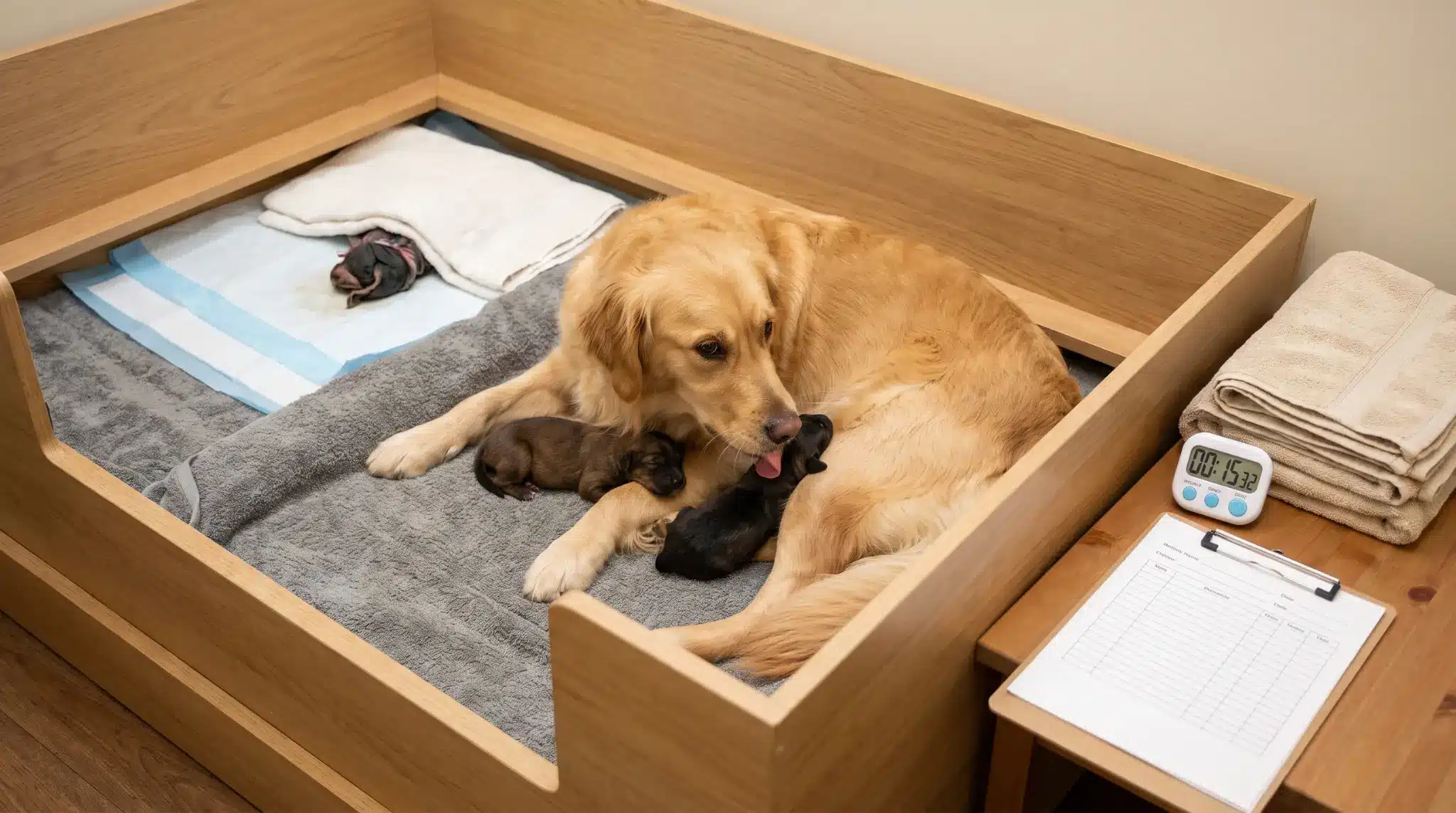
One placenta forms for each puppy, but they may not pass in the same order. Several placentas may come out together, and the mother may eat them before you can count them.
Stages two and three alternate until delivery ends. Once she settles and begins nursing, continue watching for renewed straining, distress, or signs that another puppy may still be inside.
Note: The signs below can indicate a medical emergency. If you see any of them, call your veterinarian or the nearest emergency animal hospital right away rather than waiting to see if things resolve on their own; delays during dystocia can put both the mother and puppies at serious risk.
When Birth Needs Emergency Help
A difficult birth is called dystocia, and delays can threaten both the mother and puppies. Call early when progress stops instead of trying medicines, pulling, or other home treatment.
Seek urgent veterinary care when:
- Strong contractions continue for 20 to 30 minutes without a puppy
- Weak contractions continue for 1 to 2 hours without progress
- Green discharge appears, and no puppy follows within 15 to 30 minutes
- A sac or puppy remains visible for more than 15 minutes
- More than two hours pass between puppies when more are expected
- Heavy or steady bright-red bleeding occurs
- Discharge has a foul smell
- Her temperature rises above 103°F
- She becomes very weak, collapses, has severe pain, or seems seriously ill
- Labor has not started within 24 to 36 hours after a confirmed temperature drop
- She passes a due date calculated from ovulation
- More than 70 days have passed since a known breeding date
Flat-faced dogs, very small breeds, older dogs, overweight dogs, and dogs carrying very small or very large litters face a higher risk of difficult delivery, a pattern VCA’s overview of birth problems in dogs also points to, with head shape and breed among the strongest predictors of trouble. Prior birth trouble or an abnormal pelvis also raises concern.
Do not give calcium, oxytocin, supplements, or pain medicine unless a veterinarian has examined her and directed you to do so. Prepare the car before labor, and call the clinic on your way out so the veterinary team can get ready.
Timing matters when labor stops moving forward. Written details help the clinic judge what is happening.
Postpartum Care for Dogs and Newborn Puppies
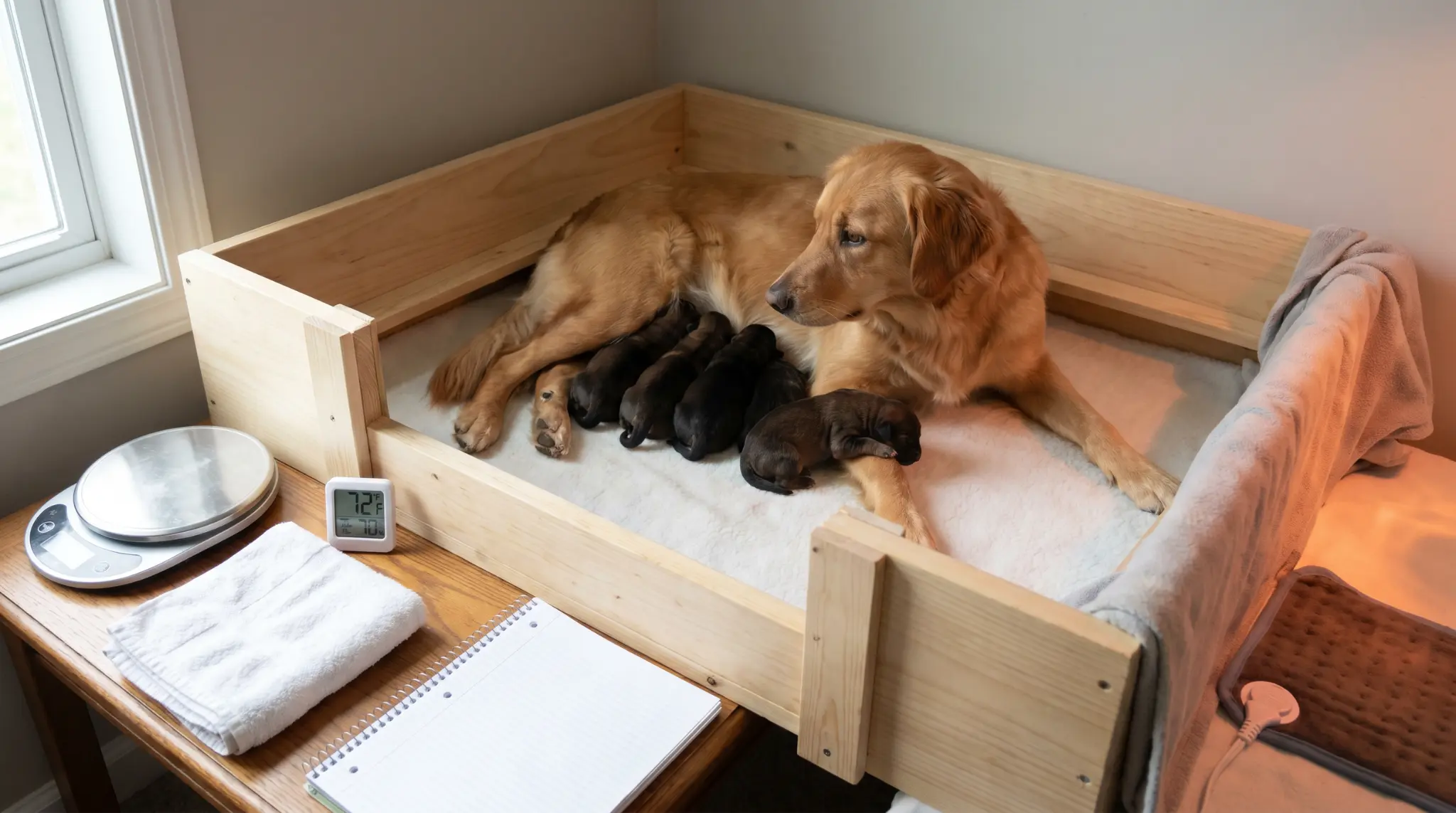
Care continues after the pushing stops. The mother should settle, clean the puppies, allow them to nurse, and remain alert enough to respond to them.
Check the Mother:
- Continued hard straining
- Heavy or steady bleeding
- Foul-smelling discharge
- Fever, weakness, pain, or pale gums
- Hot, swollen, or painful mammary glands
- Refusal to drink or care for the litter
Green, red, brown, or dark discharge without a bad smell can be normal after birth. The amount should steadily decrease. Call your veterinarian if the discharge increases, smells foul, or is accompanied by fever, pain, weakness, poor appetite, or continued straining.
Check the Puppies and Arrange Veterinary Care:
- A warm body
- Steady breathing
- A pink tongue
- A strong suck
- Quiet sleep after nursing
- Regular daily weight gain
Contact your veterinarian if a puppy cries constantly, feels cold, seems weak, cannot nurse well, or fails to gain weight. That same steady weight gain matters just as much once puppies reach the stage described in our piece on when puppies open their eyes, since both milestones depend on consistent nursing and warmth.
Arrange a veterinary examination for the mother and puppies within 48 hours of birth, or sooner after a difficult or assisted delivery. Record each puppy’s weight every day so you can spot early changes.
Final Delivery
The final days feel more manageable when you know what to time and which changes need action.
Early behavior shifts may signal that labor is close, but contractions, discharge, puppy arrivals, and resting periods give you the clearest view.
Stay near your pregnant dog without crowding her, and contact the clinic as soon as progress falls outside the safe limits. Avoid home medicines, forceful pulling, or unapproved supplements.
After delivery, watch her discharge, comfort, mammary glands, and care of the litter while checking each newborn’s warmth, nursing, and daily weight.
Speak with your veterinarian before the due window, confirm your emergency plan, and prepare the whelping area now so you can respond calmly when labor begins. Drop a comment and tell me what you decided to name them.
Disclaimer: This guide is meant to help you recognize what’s normal and what’s not; it isn’t a substitute for veterinary care. Every pregnancy is different, and your veterinarian is the best source for guidance specific to your dog’s breed, health history, and due date.
Frequently Asked Questions
Can Other Pets Stay Near the Whelping Box?
Other pets should stay outside the room during labor and the early newborn period. Their presence may upset the mother or make her protective. Ask your veterinarian when calm, closely supervised contact can begin safely.
When Can the Mother Go Outside After Delivery?
Take her outside on a leash for a brief bathroom break once she is settled and willing to leave. Return promptly, avoid contact with unfamiliar dogs, and watch for signs of weakness, pain, heavy bleeding, or difficulty walking.
Should I Bathe Her After She Gives Birth?
Avoid a full bath immediately after delivery unless your veterinarian advises it. Clean soiled fur with a warm, damp cloth, dry her completely, replace wet bedding, and make sure the newborns stay warm during the cleanup.
Why Does She Keep Moving Her Puppies?
She may move them because the box feels noisy, exposed, cold, hot, or uncomfortable. Check the bedding and room temperature, reduce nearby activity, and call your veterinarian if she handles them roughly or cannot settle.
When Can Visitors Meet the Puppies?
Limit visitors during the first days so the mother can rest, and the newborns face less exposure to illness. Anyone entering should feel well, wash their hands, stay quiet, and avoid handling puppies unless there is a care-related reason.