

Dogs bring comfort and companionship, but questions about parasites can leave anyone uneasy.
If can humans get worms from dogs has crossed your mind, the reassuring answer is yes, some dog worms can infect people, though the risk is generally low with proper hygiene and routine parasite prevention.
That quick answer often leads to bigger questions, and that is where the details become important. You may be surprised to learn that everyday interactions with a dog are rarely the main concern.
Instead, specific situations create most of the risk. Understanding which worms infect humans, how they are transmitted, the signs to watch for, and practical prevention measures helps separate common myths from reliable, science-backed facts.
Can Humans Get Worms From Dogs?
Yes, people can catch worms from dogs. These infections are called zoonotic because they can move between animals and humans. Still, the parasite usually does not jump straight from a dog during normal cuddling or petting.
Roundworm eggs can reach the mouth through contaminated hands, soil, food, or objects. Hookworm larvae can enter uncovered skin after contact with infected soil or sand.
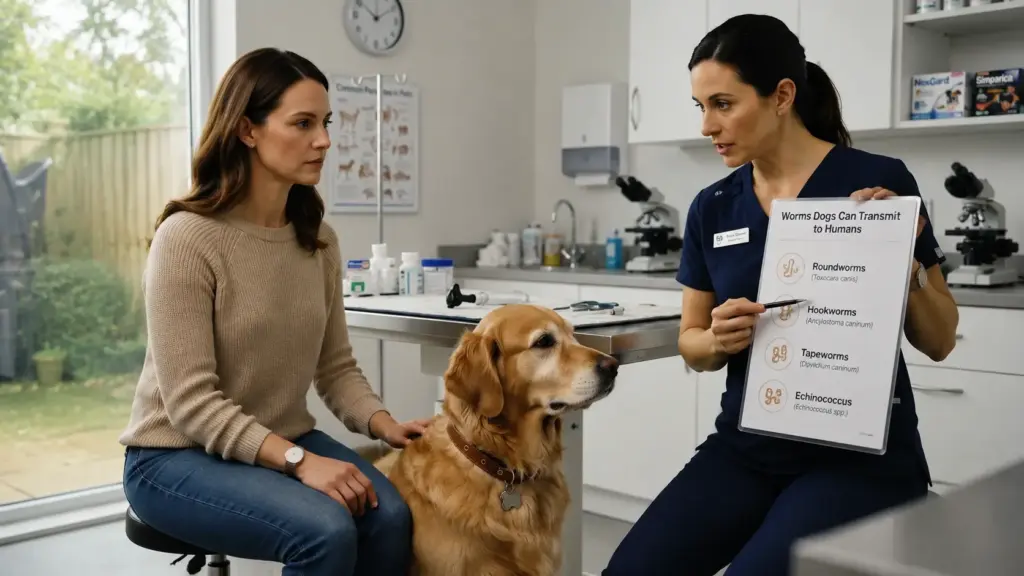
The common flea tapeworm requires a person to swallow an infected flea. Echinococcus tapeworms spread when microscopic eggs from infected animals contaminate hands, food, soil, or water.
Risk is generally low in a clean home where dogs receive consistent veterinary checkups, feces are removed quickly, and fleas are controlled.
Risk rises when puppies are untreated, yards remain contaminated, children play in dirty soil, or dogs hunt and scavenge. The exact worm matters because each one follows a different route.
Which Dog Worms Can Infect Humans?
Several parasites linked to dogs can affect people, but their routes and health effects are not the same. Knowing the name helps clarify the real concern.
1. Roundworms
Toxocara canis is the primary dog roundworm that causes human toxocariasis. People usually swallow microscopic eggs from contaminated soil, hands, food, or objects.
Many infections cause no illness, but migrating larvae may affect organs or the eye. Young children face greater exposure because they often play close to the ground.
2. Zoonotic Hookworms
Dog hookworm larvae can enter human skin after bare feet, legs, or other exposed areas touch contaminated soil or sand.
The usual result is cutaneous larva migrans, an intensely itchy rash with raised, winding tracks. The larvae generally remain within the skin rather than becoming adult intestinal worms in people.
3. Flea Tapeworm
Dipylidium caninum is common in dogs and cats, yet human infection is uncommon. A person must accidentally swallow a flea carrying tapeworm larvae.
Young children are reported more often because hand-to-mouth behavior makes accidental swallowing of fleas more likely. Touching a dog or seeing rice-shaped segments does not, by itself, cause infection.
4. Echinococcus Tapeworms
Echinococcus tapeworms, the parasites that cause echinococcosis, are less common but more serious. Dogs may carry adult worms after eating infected animal tissue and then shed microscopic eggs in their feces.
People can swallow those eggs through contaminated hands, food, soil, or water. Larval cysts may grow slowly in the liver, lungs, or other organs for years.
How Do Humans Catch Worms From Dogs?
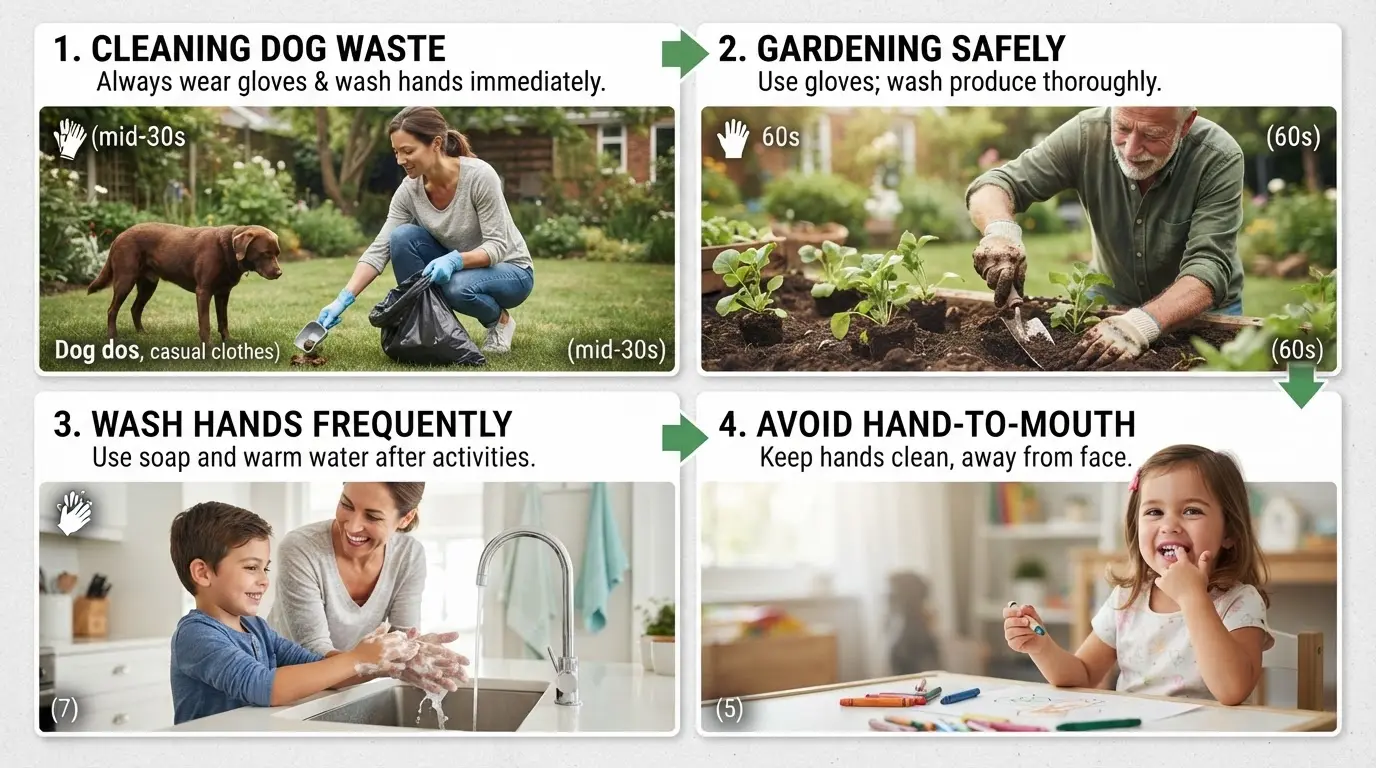
Knowing the transmission routes is often the best way to reduce risk. Most infections happen through accidental environmental exposure rather than direct interaction with a pet.
| Source of Exposure | How Infection Can Happen |
|---|---|
| Dog feces | Microscopic worm eggs left in stool can contaminate hands, tools, or surfaces during cleanup. |
| Contaminated soil | Gardens, parks, playgrounds, and yards may contain parasite eggs or larvae from infected dog waste. |
| Poor hand hygiene | Touching contaminated surfaces and eating without washing hands allows eggs to enter the body. |
| Infected fleas | Accidentally swallowing a flea carrying tapeworm larvae may result in infection. |
| Outdoor play | Children playing in contaminated sand or dirt are more likely to unknowingly ingest parasite eggs. |
Many people assume petting a dog automatically spreads worms, but that is rarely true. Parasites generally require contact with contaminated feces, soil, or infected fleas before transmission becomes possible.
How Likely Is It to Catch Worms From a Dog?
For most families, the chance of catching worms from a dog is low when parasite care is consistent. Simply living with, touching, or cuddling a healthy dog usually does not provide meaningful exposure.
Lower-risk situations
- The dog receives regular parasite prevention.
- The stool is picked up soon after it is passed.
- Fleas are controlled on every household pet.
- Hands are washed after yard cleanup.
- Children use covered, clean play areas.
Higher-risk situations
- A puppy that has never completed its vaccine and deworming schedule is at greater risk.
- Dog feces remain in soil, sand, or shared yards.
- Family members walk barefoot where animals defecate.
- A flea infestation is active, especially without a consistent flea prevention routine in place.
- The dog hunts wildlife, eats carcasses, or receives raw organs.
Risk is not all or nothing. It changes with the worm, environment, location, and behavior. A confirmed diagnosis in the dog helps the veterinarian explain which household precautions matter most.
Who Has a Higher Risk of Exposure?
Anyone can be exposed to dog parasites, but certain situations increase the likelihood of contact with worm eggs or larvae. A higher risk of exposure does not necessarily mean infection will occur.
Young Children: Children often play in soil or sand and may put unwashed hands in their mouths. Regular handwashing and clean play areas help reduce exposure.
People Who Work Outdoors: Gardeners, landscapers, kennel workers, and beachgoers are more likely to encounter contaminated soil. Wearing gloves, closed-toe shoes, and washing hands after outdoor activities lowers the risk.
Owners of Higher-Risk Dogs: Puppies, free-roaming dogs, pets with fleas, or those that hunt or scavenge are more likely to carry parasites. Routine deworming and veterinary care are essential.
People With Weakened Immune Systems: Those with reduced immunity may be more vulnerable to infections. Practicing good hygiene and keeping pets on a parasite prevention plan offers added protection.
A known exposure plus symptoms deserves medical advice, especially for young children or anyone with reduced immunity. A clinician can assess personal risk without assuming infection.
Symptoms of Dog Worms in Humans

Symptoms of Dog Worms in Humans
Symptoms vary depending on the type of worm and how the body responds, and some people may not develop any symptoms at all. Roundworm infections can cause fever, coughing, wheezing, abdominal pain, or, in rare cases, issues affecting the eyes if the larvae reach them.
Hookworms typically cause an itchy, raised, winding red rash where the larvae enter the skin, most often on the feet or legs after contact with contaminated soil.
Tapeworm infections are often mild or symptom-free, though some people may experience digestive discomfort or notice small, rice-like segments near the stool.
Because these symptoms can resemble many other conditions, only a healthcare professional can confirm the cause, and any unusual symptoms after possible exposure should be evaluated promptly.
What to Do After a Possible Exposure
A possible exposure does not mean infection, but clear details help a healthcare professional judge the next step.
Right away: Wash hands and any exposed skin with soap and water. Remove dirty shoes or clothing, and stop children from returning to the contaminated area.
Before calling, write down the dog’s worm diagnosis, treatment date, stool test result, flea status, and the suspected contact. Note travel, gardening, exposure to sand barefoot, hunting, or raw feeding when relevant.
During medical advice: Explain any skin, digestive, breathing, or eye changes. Ask which examination or test fits the suspected parasite. Human diagnosis may involve blood work, a skin check, an eye examination, stool testing, or imaging, depending on the concern.
Never take the dog’s dewormer or use leftover human medicine. The correct treatment depends on the parasite and the person. Contact the veterinarian as well, so the dog’s infection and the household source are controlled together.
What to Do When a Dog Has Worms
A dog with worms needs veterinary treatment, but household cleanup should begin the same day. Use this checklist while following the veterinarian’s instructions:
- Give prescribed doses on schedule.
- Arrange repeat stool testing when advised.
- Pick up feces with a sealed bag.
- Wash hands after handling waste, bedding, or dirty fur.
- Keep children away from the dog’s toilet area.
- Wash bedding on the hottest safe setting.
- Vacuum floors and furniture when fleas are present.
- Treat all pets for fleas if the veterinarian recommends it.
- Stop the dog from eating feces, prey, carcasses, or raw organs.
- Clean fecal material from paws and rear fur.
Do not pour bleach, pesticides, boiling water, or harsh disinfectants over the yard. Outdoor parasite stages can be difficult to remove, and chemicals may harm people, pets, plants, or soil. Fast feces removal and prevention provide better control.
Practical Tips to Prevent Dog Worms From Spreading

Small habits work best when they happen consistently. These practical prevention tips protect the household while also reducing the dog’s risk of re-contracting parasites.
- Follow a year-round parasite plan chosen by the veterinarian.
- Submit stool samples as recommended, even when the dog looks healthy.
- Remove poop promptly from yards, parks, and paths.
- Wash hands after cleanup, gardening, soil contact, or handling bedding.
- Keep shoes on outdoors and use a towel on sand.
- Cover sandboxes when they are not being used.
- Control fleas on pets and inside the home.
- Avoid feeding animal organs.
- Prevent hunting, scavenging, and access to carcasses or rodents.
- Teach children to wash before eating and keep soil away from their mouths.
No single step completely blocks every worm. Veterinary care, clean outdoor spaces, handwashing, flea control, and safer feeding effectively close the main routes parasites use.
Common Mistakes That Increase Exposure
Exposure often increases through ordinary shortcuts rather than dramatic mistakes. Correcting these common habits keeps parasite control focused on the routes that genuinely matter daily.
- Waiting to pick up poop: Eggs and larvae can develop, so leaving stool outside allows contamination to build.
- Deworming without flea control: Dipylidium can return when infected fleas remain on pets or in the home.
- Using one treatment for every worm: Products target different parasites, and the wrong choice may leave the infection untreated.
- Assuming a clean-looking dog is parasite-free, many infected dogs show few signs, making stool tests and prevention important.
- Giving medicine without advice: Doses and safety limits differ, and self-treatment can delay the correct diagnosis.
The safest response is specific, not extreme. Identify the parasite, treat the dog correctly, clean the relevant source, and seek human care when exposure or symptoms justify it.
Common Myths About Dog Worms
Misunderstandings about dog worms often cause unnecessary fear. Separating myths from facts helps pet owners make informed decisions and focus on genuine prevention rather than misinformation.
| Myth | Fact |
|---|---|
| Every dog with worms will infect people. | Only certain parasites can infect humans, and transmission usually requires specific exposure. |
| Petting a dog is enough to catch worms. | Simply touching a dog rarely spreads worms without contact with contaminated material. |
| Indoor dogs never get worms. | Indoor dogs can still become infected through fleas, contaminated environments, or prey animals. |
| One deworming treatment provides lifelong protection. | Dogs require regular parasite prevention because reinfection can occur. |
| Healthy-looking dogs cannot carry parasites. | Many infected dogs show few or no obvious symptoms while still shedding parasite eggs. |
Understanding these facts encourages practical prevention rather than unnecessary worry. Accurate information helps protect both pets and people while strengthening responsible pet ownership.
When Medical or Veterinary Care Cannot Wait
Most exposures are not emergencies, but certain signs should prompt the call to move forward.
Contact a healthcare professional promptly for:
- New vision loss, flashes, eye redness, or an unusual pupil
- A spreading, painful, or infected-looking skin track
- Fever, wheezing, coughing, or belly pain after exposure
- Chest or upper abdominal symptoms after time in an Echinococcus-risk area
- Concerning symptoms in a young child, a pregnant person, or someone with reduced immunity
Contact the veterinarian promptly when the dog has:
- Worms or rice-like segments in stool
- Bloody or black stool
- Repeated vomiting or diarrhea
- A swollen belly, poor growth, weight loss, pale gums, or weakness
- A heavy flea problem
- Access to carcasses or raw animal organs
Severe breathing trouble, collapse, vision loss, or intense pain needs urgent human medical care. A weak puppy, uncontrolled bleeding, or repeated vomiting requires urgent veterinary care.
Conclusion
Dog-related worm infections sound frightening, yet the real risk becomes easier to manage once the transmission route is clear.
I would focus first on the parasite named by the veterinarian, because roundworms, hookworms, and tapeworms do not spread in the same way.
You can reduce exposure by promptly removing feces, washing hands, keeping shoes outside, controlling fleas, and maintaining regular parasite control.
Can humans get worms from dogs? Yes, but normal affection is rarely the main issue when a dog is clean, treated, and properly monitored.
Medical advice matters when symptoms appear or a clear exposure occurs, while veterinary care addresses the source. Share your questions in the comments and check related dog health blogs for more practical help.
Frequently Asked Questions
Can Dog Worm Eggs Stick to Shoes?
Yes. Worm eggs can cling to muddy shoes after walking through contaminated areas. Removing shoes before entering the house and regularly cleaning footwear help reduce the risk of bringing parasite eggs indoors, especially in homes with young children.
Can Vacuuming Remove Dog Worm Eggs from Carpets?
Vacuuming helps remove dirt and debris but may not eliminate all parasite eggs. Regular vacuuming combined with steam cleaning, prompt pet waste management, and routine parasite prevention offers better protection against environmental contamination inside the home.
Does Feeding a Commercial Diet Reduce a Dog’s Risk of Worms?
A balanced commercial diet alone does not prevent worms, but it reduces the risk associated with feeding raw or undercooked animal products. Regular deworming, flea control, and veterinary checkups remain the most effective ways to protect dogs from parasites.
Can Traveling with a Dog Increase Exposure to Parasites?
Yes. Different regions may have varying parasite risks depending on climate and local wildlife. Before traveling, consult a veterinarian about recommended parasite prevention and continue preventive medications throughout the trip to minimize exposure.
Do Dog Parks Increase the Chance of Parasite Exposure?
Dog parks can pose a higher risk of exposure if owners fail to clean up after their pets. Choosing well-maintained parks, preventing dogs from ingesting feces, and practicing good hygiene after visits help reduce the risk of parasite transmission.